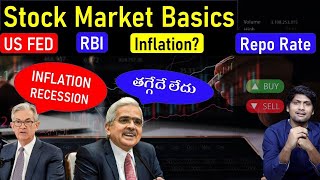

Stock Market Basics: Key Economic Events Explained
45sEducational value for beginners looking to understand market-moving events.
▶ Play Clip"The title promises a complete basics guide, and the video delivers a thorough explanation of economic events, though it is lengthy and includes some filler."
This video provides a comprehensive overview of key economic events and indicators that influence stock markets, commodities, and currencies. It explains concepts like CPI, WPI, repo rate, CRR, SLR, and geopolitical factors, aiming to equip viewers with the knowledge to interpret market movements.
The video targets short-term traders and commodity investors, promising to explain economic events like Fed rate decisions, CPI inflation, and employment data that impact markets.
Inflation is the root cause affecting the entire economy, leading central banks like the Fed and RBI to adjust interest rates, impacting real estate and commodities.
Two types of inflation: CPI (Consumer Price Index) and WPI (Wholesale Price Index). WPI tracks wholesale prices of 697 products, while CPI focuses on consumer goods and services.
CPI data releases are critical for stock markets. In India, headline CPI is more relevant due to high food and fuel spending, while core CPI (excluding food and fuel) is key in developed countries.
RBI targets CPI inflation at 4% with a tolerance band of +/-2%. Recent data at 5.9% is below 6%, reducing pressure on RBI to hike rates aggressively.
The Fed's aggressive rate hikes since mid-2022 caused stock markets to fall. Continued hikes mean investors should not expect big returns as liquidity tightens.
Central banks raise rates to control inflation, which disproportionately hurts lower-income groups. High inflation reduces purchasing power, impacting consumption and economic growth.
Governments use fiscal policy (taxes, spending) and central banks use monetary policy (CRR, SLR, repo rate) to control money supply and inflation.
CRR requires banks to keep a portion of deposits with RBI (currently 4.5%), while SLR requires investing in liquid assets like gold or government securities (18%). Increasing these reduces liquidity, negatively impacting markets.
Repo rate is the rate at which RBI lends to banks. Currently 5.9%. Higher repo rates increase borrowing costs, reducing liquidity and negatively affecting commodities and stocks.
Reverse repo is the rate RBI pays banks for parking excess funds. Increasing it encourages banks to deposit with RBI, reducing money in the economy.
Hawkish statements signal future rate hikes, negative for markets. Dovish signals indicate possible rate cuts, positive for markets.
Central banks buy government securities to inject liquidity (QE). Reducing bond purchases (tapering) is negative for markets.
Central banks balance inflation control with economic growth. Weak economic data can be positive if it signals less aggressive rate hikes.
A weak rupee is positive for IT and pharma stocks but negative for overall markets due to FII outflows. It also increases imported commodity prices like gold.
Geopolitical conflicts impact commodity prices by affecting production and consumption. For example, Russia-Ukraine war increased metal prices.
Sudden events like wars create uncertainty, causing price volatility. Traders should analyze whether production or consumption is impacted.
OPEC+ controls 75% of global crude production. Production cuts increase prices; increases lower them. EIA inventory data (Wednesdays) also influences prices.
Understanding these economic indicators and central bank actions is crucial for predicting market movements. The video emphasizes that inflation is the primary driver, and traders should monitor data releases and policy statements to make informed decisions.
What is the difference between CPI and WPI?
CPI measures consumer price inflation, while WPI tracks wholesale price inflation of 697 products.
04:53
What is the RBI's inflation target?
4% with a tolerance band of +/-2%.
11:48
What is the current repo rate mentioned in the video?
5.9%
23:39
What does a hawkish stance indicate?
It signals future interest rate hikes, which is negative for markets.
27:10
What is quantitative easing?
Central banks buying government securities to inject liquidity into the economy.
29:29
How does a weak rupee affect IT stocks?
It is positive for IT and pharma stocks due to higher export revenues.
39:04
What is the impact of increasing CRR?
It reduces liquidity in the economy, negatively impacting banks and markets.
19:39
What is the role of OPEC+?
It controls 75% of global crude oil production and influences prices through production decisions.
45:39
Inflation is the root cause
Establishes the foundational concept that all market movements stem from inflation.
03:34Fed rate hikes impact markets
Directly links central bank actions to stock market performance.
13:09Hawkish vs dovish explained
Provides a clear framework for interpreting central bank statements.
27:10Currency and market correlation
Explains how currency strength affects different asset classes.
37:08OPEC's influence on crude
Highlights the geopolitical and supply-side factors in commodity pricing.
45:26[00:00] Friends, today's video is for those who want to gain in the short term and for those who are trading commodities After you enter the stock market,
[00:13] you will learn stock analysis, technical analysis, psychology the market will suddenly fall Then the market will rise
[00:25] because the FEDs reduced the interest rates or RBI reduced the interest rates Like this, the FED are increasing the interest rates or CPI inflation these have a name, like repo rate, reverse repo rate
[00:39] and even these words can be heard They have stated it in a hawkish way, or in a dovish way employment data, unemployment data is coming, GDP data is coming
[00:54] home sales data, IIP data, ISM manufacturing, ISM service data There is no dedicated video covering all these events and topics in our channel In fact, you won't find this anywhere in most of the stock market channels
[01:07] But we regularly cover these in the data we talk about starting market related in our daily news videos they are asking us to make a video about the these topics
[01:25] I am bringing the complete video that explains all these things and since it is lengthy, don't speed up the time below Don't watch it to watch the video quickly
[01:39] and in fact, don't watch this video while talking to someone or doing something If you don't have free time at this point, end the video here because in this video, I am trying to convey to you
[01:52] but the domestic and international markets related economy I have worked hard to explain it to you in a way that you can understand it easily
[02:10] you will never be wondering why the markets have fallen and grown should we look at the stock market as bullish or bearish?
[02:23] Depending upon global economic activity, you will have an idea about all these and try to understand what I am saying in a diagrammatic way or try to represent it through your handwriting
[02:38] I am trying to give you the total concepts covered in this video in a PDF form After listening to all these concepts, prepare your notes
[02:50] After preparing your notes, there should be a reference for you, So, I will prepare a PDF document and post it in the first comment I have already uploaded it in Telegram
[03:04] I have been telling you regularly that if you find our efforts to simplify all the topics and bring them to you valuable, then do try to encourage the efforts we are making by liking the video
[03:18] If you like the video and feel that the efforts we are making are being made at any point, and YouTube will recommend this video to 4 more people Friends, what is ruling the entire economy?
[03:34] Due to inflation, central banks like the Federal Reserve in the US, Due to which the economy is impacted,
[03:46] real estate will be damaged The basic origin of all these is in inflation I will take some time to explain this here
[03:59] why the Fed raises the interest rates, all this is understood here how the economy is impacted,
[04:12] and even on the commodities, You also try to listen to this carefully and patiently
[04:25] Meaning, the rate of growth of prices in our economy So, if inflation is growing then it implies that the prices in economy are increasing
[04:39] the clothes we wear, the metals we use, we can understand that the rate of growth is increasing the faster the rate of growth increases
[04:53] we hear two types of inflation The other is WPI, Wholesale Price Index I have a question for you
[05:07] whether they want to raise or decrease the interest rates? Please share your thoughts in the comment section I think you all pay more attention to CPI
[05:22] only WPI was considered We don't need to go into the details too much
[05:34] they go to wholesalers they go to wholesalers If we compare it with the previous price,
[05:48] it is called Wholesale Price Index So, if inflation is increasing in wholesale, If inflation is increasing in wholesale,
[06:02] Then, what is the rate of inflation in Wholesale Price Index? Almost 697 product prices are tracked 1. Products made in manufacturing
[06:18] 2. Primary articles and food materials But, from 2014 onwards, WPI's services inflation was not covered
[06:33] WPI shifted to CPI inflation This is the most important thing You should be alert when CPI data is released in the entire stock market
[06:49] Be careful when Indian CPI inflation data is updated You will understand why we are focusing on US
[07:01] and why we are not focusing on Indian inflation data when CPI data is updated in a country, Consumer Price Index
[07:15] As shown in the image, goods are produced in a country If the prices are increasing in between, It is good there
[07:29] If the prices are increasing in that country, I am trying to explain it to you in a simple way as CPI inflation is increasing,
[07:44] In the stock market, CPI inflation means the prices of the goods, services, food, power, and fuel we buy are increasing
[07:58] Headline means normal CPI It is not that nothing is there But, there is a small logic in it
[08:10] We give more weightage to Reliance, HDFC, and banks in Nifty 50 Do we spend more on food we eat in a month?
[08:22] Or do we spend more on cream? Because we use the same thing for 2-3 times But these, we can use it or not
[08:36] should it be food or shaving cream? So, to which items we spend more, They have more weightage
[08:49] Compared to the less we spend, weightage is less inflation for all products is combined Remember this well
[09:02] to the rest of the products manufactured If we compare it with that, We call it normal CPI
[09:16] I think present is 5.89 India CPI data and Headline CPI data are the same We consider everything
[09:29] Food and fuel are taken from it If we do not consider the growth in food and fuel, and the remaining prices are increasing
[09:43] Why do we have to take food and fuel aside Because food and fuel prices are very volatile Next day it will be 25
[09:57] 100 Because production and supply because of drought,
[10:09] Their prices will increase or decrease If we see the prices that are increasing only for the remaining products, In developed countries,
[10:24] There is no need to consider food and fuel we can't see only the Core inflation data Because our spending is going towards food and fuel
[10:40] So, we observe the Headline inflation in India Core is more important than the Headline Views that should be viewed from the perspective of inflation
[10:55] It is not wrong to see the Headline and the core in both cases in developing economies like India, we should see the growth rates of Headline inflation in all products
[11:08] if we look at the data of these countries, This is mostly inflation data then what month should we compare it with?
[11:22] But we compare the product prices with the recent months If we compare it with the last month,
[11:34] It means that the money we spent in the last month Okay, everything is fine that the RBI should be 4 plus or minus 2
[11:48] or 4 minus 2 should be the lowest 2 If you look at the image, inflation was higher than the RBI
[12:03] The recent inflation data for December is 5.9 The 6 is below because there is no pressure on them
[12:16] to control inflation at least There is no pressure on RBI
[12:28] That is why at present Indian CPI inflation is not relevant The US Federal Reserve target should be 2 It decreased in recent months
[12:42] So, when should it reach 7.12? we are not going to step back in increasing these interest rates Even after that,
[12:54] even after cutting the economy I will talk about this too but it is 7.1
[13:09] is increasing in the present Until June-July 2022, that it is difficult if we don't take strong measures
[13:24] From there, the stock markets started falling There is no return for investors from there The Feds have started taking action on this
[13:40] they will keep increasing the rates we should not expect a big return Because, if the Feds keep increasing the rates,
[13:53] pull back the money and the Feds keep increasing the rates Let's keep the stock markets aside for a while
[14:07] why do the central banks come forward? If the rates keep increasing People keep buying it
[14:19] Then, why do the inflation keep increasing? Friends, we should not see everything in one perspective For a person, 1 lakh might not be a big amount
[14:32] and it might be a dream for some people there are different class or categories of people are not only to serve ultra-rich or rich upper middle class
[14:46] It is their responsibility to look after the middle class and poor people If the prices of the things they buy keep increasing, Prices keep increasing and the incomes remain same
[14:59] They should compromise and go for low standard living So, when inflation keeps increasing in the economy, We think that big companies like FMCG,
[15:16] biscuits, chocolates, food products, etc. They have small packets 5 rupees packets, 1 rupee packets, 10 rupees packets, 20 rupees packets
[15:28] They earn more profit from the products they sell in the rural economy So, if the purchasing power in the rural economy keeps decreasing, Why should we buy this time?
[15:42] If we leave it as it is, and the growth in the economy will also decrease and their purchasing power keeps increasing, it's okay
[15:56] The salaries are the same the RBI, Central Banks, and other big banks So, because of inflation increasing,
[16:10] people have to buy more products than they have previously bought their purchasing power keeps decreasing It also impacts their personal life
[16:23] How do they try? One is through Central Banks' measures Another is through Central and State governments' measures
[16:39] So, through monetary and fiscal policy measures, by reducing the money in the economy we can automatically control the progress
[16:53] If the government increases taxes, If they reduce the public expenditure, if they reduce the infrastructure-related spending,
[17:06] will the money go to the public's treasury? if they invest in this scheme, they can save up to 9-10% of the next 5-10 years
[17:20] This is how the government does it Our theme is RBI, US Federal Reserve You can see it here
[17:35] We should talk about SLR, CRR, Repo Rate, Reverse Repo Rate, Like bond purchases Let's talk about CRR and SLR
[17:49] This is based on RBI Bank deposits are coming in How much is some portion?
[18:01] Let's say, if a bank gets Rs. 100, That means, they ask us to deposit it in RBI Understand this logic
[18:15] But the money comes from the depositors So, in CRR, is being wasted by the banks
[18:29] That means, Rs. 4.5 should be kept in RBI and if we are making it 5% from 4.5,
[18:42] till now, the bank would have kept only 4.5 in the money But now, if we are making it 5% I'm saying this for 100 rupees
[18:55] the banks keep in the bank 0.25%, 0.5% the banks should keep the 1000 crores without interest
[19:12] The banks try to make more money from the remaining money I'm making 5% interest on 100 rupees If the RBI comes and keeps 50 rupees in my 100 rupees
[19:26] I should get the same profit and return as the previous 50 rupees So, automatically, I'm trying to increase interest rate
[19:39] It applies to all the banks If the interest rate increases in the economy, they won't take it the banks are bearing the loss
[19:52] that's for big negative banks At any point, if the CRR and RBI are decreasing, Not just the banks, but the entire stock market
[20:06] They are also positive the banks will automatically increase the interest rate because the RBI has gone to them
[20:19] Because of this, the liquidity in the economy will decrease Because of this, the price of commodities and metals will also decrease If they had invested more money before,
[20:33] the banks will lose We can take the metals and commodities negatively SLR is another one
[20:49] This is the RBI taking to keep the banks stable If the bank is giving the deposits to everyone from time to time,
[21:01] and all the depositors come and ask for their money, no matter how much you get, they ask you to take a portion and invest in liquid assets
[21:14] Either cash, gold or government securities This means, the money that goes to the banks, nearly 18% of that money should be invested in gold, cash or government bonds
[21:30] that is also negative for the banks the CRR is applying the same concept The way the inflation is controlled by the growth and reduction of the CLR and SLR,
[21:43] If the RBI increases the CRR and SLR, if the previous profits are to be earned by the banks, The number of people who take loans with the increased VAT rates will also decrease
[21:59] Because of that, the inflation will decrease there is no growth in the economy, If the RBI cuts the prices of the CLR and SLR to boost the economy,
[22:15] for the money that the RBI has The banks will get a good profit by giving the same amount to others If the CRR and SLR are cut,
[22:28] the banks will not take more money if the VAT rates are high they will take home loans, car loans, So, money will be driven into the economy
[22:43] control the liquidity in the economy The banks will keep reducing the inflation and increasing it Friends, I was very confused when I was learning this
[22:59] Why is it enough to reduce VAT rates? So, I am giving you a simplified image on the screen If we need money,
[23:12] If the banks also need money, the banks will have the scope to raise money through bonds and other routes They can take money from the RBI
[23:25] The bank will deposit the government securities it has with the RBI will be given to the banks to the RBI So, the RBI lender is the person who gives the money
[23:39] The present repo rate is 5.9% I will deposit the government securities I have with you
[23:51] and I will give you 5.9% per annum VAT for the money I take from you Since you are a RBI, you will get 5.9% and 6.5% and 7%
[24:07] because I will not take money from you for 7% I will give the money to others for 8, 9, 10, 12 I will either reduce the amount I take from you
[24:22] and if I understand that there is a demand in the economy, I will try to give you a higher VAT rate than this the VAT I charge for the money I give you
[24:35] if you give me the money you gave me for 7, 8, 5.9% So, if the RBI repo rate has increased,
[24:50] So, if the banks try to take the previous profits, So, to protect their profitability,
[25:02] When there is more VAT, the people don't take more money Liquidity in the economy decreases the RBI gives loans to the banks and the VAT increases
[25:17] the banks increase the VAT on the loans they give to others The banks don't take the money they took from the RBI before the scope for money to go to the economy decreases
[25:31] Overall, if there are updates that the RBI increased the repo rate, the commodities are negative, Because ultimately, the money in the economy decreases
[25:45] What is reverse repo rate? the banks park the free money they have with them at the banks in savings accounts and fixed deposits
[26:00] Even if we give loans to everyone, The banks take that money and deposit it at the RBI If you park the money you have with us,
[26:14] If we increase this, then most of the banks will give the free money they have with them The RBI is giving us the money they have parked
[26:27] They will deposit it with them The money they have with the economy will also decrease If we increase both of these,
[26:40] The metals will also be negative the stock market and the economy will be positive So, CRR, SLR, repo rate and reverse repo rate
[26:56] If we increase it, if we hike it, it will be negative It is called hawkish statements We are thinking of increasing interest rates
[27:10] We will increase the interest rates in the upcoming times If you are making such statements, they are saying it is so hawkish and negative
[27:23] Let's take back the money they invested If you talk about dovish, the interest rates may not increase that much
[27:39] then why do we step back to reduce the interest rates? If you give statements that we are ready to reduce the interest rates, they will bring money to the economy
[27:52] So, hawkish means negative So, after the central banks increase or decrease the interest rates, What is their tone?
[28:06] by increasing the interest rates in the upcoming times? If they talk negatively, they will say dovish statements
[28:19] For all the asset classes, Let's talk about gold separately But, for most of the asset classes, it is negative
[28:33] all these should be seen as negative we have been talking about this concept CRR, SLR, repo rate, reverse repo rate
[28:50] Whatever they are decreasing, it is positive There will be a press conference they will make statements related to economy and inflation
[29:05] and inflation will also get controlled These statements are The economy is getting weaker than we thought
[29:17] We have thought of increasing the interest rates for this There is another thing here Quantitative easing
[29:29] If RBI and LORELS Fed We can do what we have thought earlier
[29:41] There are government securities If they try to buy the bonds from the central bank Central banks will give us the bonds
[29:57] These bonds will have a maturity and money will be in the economy The bonds will be mature
[30:10] Again, the central banks will purchase the bonds Once the bonds are mature If the central banks want to infuse money into the economy
[30:26] They will say that they will purchase bonds from the open market If the central banks want to reduce the liquidity in the market
[30:40] If they are buying the bonds for 100 rupees They will reduce it to zero Until then, the bonds will be mature
[30:54] If they stop buying the bonds slowly Quantitative easing If they want to reduce the bond purchases
[31:10] If they want to spend the bond purchases we have to look at it positively This logic should be remembered by those who trade in commodities
[31:23] already the prices are increasing are already increasing Because, until inflation keeps increasing
[31:38] Most of the metals prices will keep increasing and give the statement that they will control inflation they might increase the rates in the upcoming times
[31:52] In the upcoming times, if the Fed and RBI What does it mean to reduce inflation? will be controlled by inflation
[32:07] That is what the RBI and central banks do and they will get a sell-off and if we feel that the RBI and Fed can enter the market
[32:22] We can't guess in the long term whether the Fed will control inflation or not They have a scope to make strong statements
[32:36] it is better to stay away from them in the short term You can do shorting opportunities if you have clarity If the RBI and Fed are coming forward to reduce inflation in the economy
[32:52] then most of the asset class except gold and safety assets like dollar Okay, will they only look at inflation? Will it be enough if the rates are reduced?
[33:08] Don't companies in the economy need to survive? the people should have the right things to buy No The work of RBI and the work of the US Federal Reserve
[33:22] is to balance inflation and economic growth In some cases, people think that it is okay to increase inflation and the economy was impacted
[33:34] they infused liquidity thinking that it is okay to increase inflation To control inflation, it is okay if the economy is impacted but if inflation increases, it will impact the people
[33:50] and in another cycle, it will impact the economy as well they will take steps to control the economy by the attempt to reduce inflation
[34:04] and the economy is negative they will increase the VAT rates less than the VAT rates they should increase Okay, let's wait for a few quarters
[34:18] Then, the economy will stabilize and they will increase the VAT rates we look at weak economic data positively for the stock markets and metals if jobs data is falling
[34:33] if IAP data, ISM manufacturing data, ISM services data GDP, IAP, index of industrial production ISM manufacturing data
[34:49] If inflation is high and give a statement that the economy is not impacted if it is strong
[35:03] because, inflation is already high even after hitting the economy, if they understand that the economy is good Not like that, when they hit the economy for the first time
[35:19] if the economy is suffering from the previous situation they will try to hit it with less force So, I will tell you a structure
[35:34] good economic data When inflation is low like GDP, Employment data, ISM manufacturing data
[35:48] When inflation is high When inflation is normal economic data is straightforward
[36:01] When inflation is normal but if inflation is high and the economy is good
[36:14] The economy is not getting impacted If we increase the VAT rates, the liquidity will decrease in the economy So, when inflation is high
[36:28] we will see it as negative we will see it as positive Let's avoid gold and dollar
[36:41] I hope most of the content If you liked it, you would have liked it already If you really liked it that much
[36:55] Try to store it in your account So definitely watch it and understand it Now, let's talk about currency
[37:08] What does it mean to get strong? What does it mean to get weak? So, what happens to rupee against dollar?
[37:21] 1 dollar is equal to 70 or 72 We should see it positively as rupee is 80 Before that, we should have given 70 rupees
[37:37] It means we are weak So, rupee is getting strong not weak That should be seen with another currency
[37:50] But if we compare with other emerging markets' currencies How rupee is getting strong or weak We export rice, sugar and IT services to other countries
[38:09] Do we have to pay money to people living in other countries? Majority of currency is in dollars Compared with dollar, rupee is getting strong
[38:24] It means we are exporting more Particularly crude oil If exports are increasing, what should we pay?
[38:37] We convert all our rupees and send it to other countries So, when imports are increasing than exports
[38:49] If rupee is weak, what about stock markets? If rupee is weak, what about commodities? With respect to some stocks, like IT stocks and pharma stocks
[39:04] Is not that good Stock markets are not set by us All of them set it
[39:17] Now, it is 72, 73 Will you convert your dollars into rupees or not? Let rupee become weak
[39:30] If rupee is getting weak So, if we invest 1 dollar equal to 1 rupee, it will be 70 rupees Because rupee is getting weak
[39:43] Funds will stop coming to stock markets We will get 1 dollar from 70 rupees We will not lose, we will not get selling pressure
[39:57] It is positive for particular sectors So, it is positive for them But, it is positive for commodities
[40:11] We track the prices of international markets So, remember this Multiplied by 1 dollar is equal to how many rupees?
[40:24] Gold in terms of dollars If we add that, we get Indian gold price India's gold price increases
[40:37] Means, Indian rupee is weak Or, if international gold price decreases If that decreases
[40:50] This is also for the rest of currencies We also know the relation between currency and equity markets We also know how currency gets strengthened and how currency gets weakened
[41:06] If there is an issue between two countries Or, if two countries go to war Ultimately, the countries that are involved in the impact
[41:19] Or, will they have production or consumption of metals? For example, if sugar exports from India increase If we are the only country that exports 20-30% of sugar from India
[41:34] Or, if Pakistan goes to war Price will increase If it goes down
[41:47] If we stop going down for some reasons in India So, when geopolitical tensions are created The metals related to them
[42:01] Particularly, copper, zinc, nickel, aluminum, steel, iron ore Or, are they importing and using them more? The economy will get impacted
[42:14] If production impacts, prices will increase This is purely for commodity markets Steel related to Tata steel, JSW steel
[42:28] Nalco, etc But, overall in broad prospect Or, if they are banning one another
[42:44] Or, if there is a conflict between them Whatever the reasons are If production impacts, prices will increase
[42:57] Here, we should talk about the most important nation They will spend more on metals The quality will increase
[43:12] That's why, they said to reduce the production of metals Steel prices, copper prices, everything increased But, when the virus impact started
[43:26] Most of the factors went into lockdown So that, you have clarity But, China is saying restrictions related to virus
[43:40] In fact, it will decrease a bit Inequality decreased Again, they are removing the lockdown restrictions
[43:52] So, if there is any update related to China They are trying to reduce the coalitions It will go on consumption
[44:06] For some reason, consumption is there They are saying something about lockdowns or economy activity So, whatever geopolitical tension related issue is coming
[44:20] Let's say, if there is an issue between X and Y countries What are the consumption of metals? America is the largest exporter of what metals?
[44:33] We have to search and find out If they impose restrictions on Russia Prices will increase
[44:45] What will be the impact? Now, let's talk about uncertainty and other events Friends, suddenly war
[44:59] We didn't expect this, right? All these things that happen quickly Even when there is uncertainty like this
[45:12] All the prices, whether it is stocks or metals Most of the times, everything will be correct Then, we have to apply some logic
[45:26] Will consumption impact or production impact? OPEC, OPEC+, Nearly 13 countries
[45:39] Countries that explore Control 75% of the global crude oil production If it is Russia, then the majority portion is the same
[45:53] Organization of the Petroleum Exporting Countries These 13 countries are formed as an organization These 13 countries actually get more money through this
[46:06] So, if mudi chamaru and crude oil are growing So, when those countries are growing Or, even if crude oil is stable at that price
[46:23] Even when crude oil is growing And earn more profits at that time If they produce more crude oil
[46:38] If the production is increasing, the price will fall even more They try to cut the production they were producing So, if OPEC meeting is going on
[46:53] If they are increasing the production They are saying that they will increase the supply So, OPEC means 13 countries
[47:05] The global crude oil stocks They also export it as crude oil When these two meetings are happening and updates are coming
[47:17] If they are cutting, the price of crude oil will increase Demand and supply concept If the supply is increased, the price will fall
[47:33] If it is related to crude oil Every Wednesday, it comes between 8 pm to 9 pm Mostly, it should be alert from 8 pm every Wednesday
[47:45] You have a factory You are updating how much raw material is in your factory every week This week, you got a report that your raw material is 4 kgs more than expected
[48:00] If your raw material is 4 kgs more than your estimates Your inventory, your raw material is 4 kgs more than expected Because if your inventory is not getting your stock
[48:15] Then the demand for the raw material will be less If the inventory is more than expected If the inventory is less than expected
[48:32] Then crude oil prices will go up because the demand is more than expected And the image that is explained with examples of inventory data Friends, I hope you found this video interesting
[48:46] Please like this video You can go directly to our websites Referral links related to them will be in the description comment section
[49:02] If you think our work really adds value to you Try to use the referral links related to our channel If you liked it, please like our video
[49:14] Please share it and subscribe to our channel If you think that content is useful to you I will come again with another interesting video
[49:30] Jai Hind!
⚡ Saved you 0h 49m reading this? Transcribe any YouTube video for free — no signup needed.