
Anime with no fights beats all sequels
45sChallenges expectations by claiming a quiet drama outperformed action-heavy sequels.
▶ Play Clip"Title accurately reflects the video's claim that this anime won winter 2026, though it's subjective."
The video reviews 'Journal with Witch', an anime from winter 2026 that focuses on two people living together without fight scenes or magic. It highlights the show's honest depiction of grief and its quiet, introspective nature, which the reviewer finds superior to other original anime that season.
The best anime of winter 2026 had no fight scenes, magic, or powerups; it was 13 episodes of two people living in a messy apartment talking.
The English title 'Journal with Witch' is misleading; the Japanese title 'Ioku Nikki' translates to 'Diary of a Strange Land', which is more metaphorical.
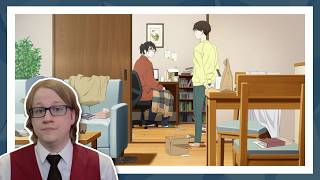
Makio is a 35-year-old novelist who avoids people; her apartment is messy, and she broke up with her boyfriend because his emotional stability exhausted her.
Makio's sister and brother-in-law die in a car accident, leaving behind their daughter Assa. Makio takes her in with no preparation.
The series is aggressively quiet; the most dramatic thing is Makio staring at a blank document. It shows ordinary life as worth taking seriously.
Makio is not a cruel person but can only offer acceptable guardianship, not a mother's love. She fears projecting her feelings about Assa's mom onto Assa.
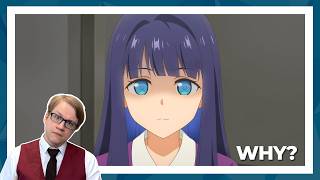
Assa keeps a journal and wants to write lyrics but feels she has nothing to say. She imagines walking through a desert alone, representing her loneliness.
The show depicts adolescent and adult depression and grief honestly, without stereotypes. Assa responds with muted anger rather than sadness.
The anime adapts 32 of 54 manga chapters, so some subplots are missing, including Assa's relationship with her dad. The ending lands but differs from the manga.
The series scored 8.75/10 on MyAnimeList, ranking 49th best anime of all time, surprising for a quiet drama without a built-in audience.
The slow pace and introspection may cause some to drop off, but those who appreciate its warmth will find it rewarding.
The show respects your time and rewards engagement. It's not a perfect adaptation but is more than enough.
Journal with Witch is a quiet, introspective anime that honestly portrays grief and everyday life, making it a standout of winter 2026 despite its slow pace.
What is the Japanese title of 'Journal with Witch'?
Ioku Nikki, which translates to 'Diary of a Strange Land'.
1:00
Who are the two main characters in 'Journal with Witch'?
Makio, a 35-year-old novelist, and her niece Assa.
1:34
What event triggers the plot of 'Journal with Witch'?
Makio's sister and brother-in-law die in a car accident, leaving Assa orphaned.
2:13
How does Assa primarily respond to her parents' death?
With muted anger, not sadness.
9:13
What percentage of the manga does the anime adapt?
32 out of 54 chapters, about 2/3.
10:11
What score did 'Journal with Witch' have on MyAnimeList at the time of the video?
8.75 out of 10.
11:21
What is a key criticism of the anime adaptation?
It cuts subplots, including Assa's relationship with her dad, and the ending differs from the manga.
10:28
Best anime of winter 2026
Claims a quiet, character-driven show beat action-heavy sequels.
Aggressively quiet
Describes the show's unique tone and pacing.
3:19Honest depiction of grief
Praises the show's realistic portrayal of depression and grief.
9:34High rating surprise
Highlights the unexpected popularity of a niche drama.
11:08Respects your time
Summarizes the show's philosophy and appeal.
14:27[00:00] The best anime of winter 2026 was one
[00:03] that had no fight scenes, no magic
[00:06] systems, no dramatic powerups. It was 13
[00:11] episodes of two people living in a messy
[00:14] apartment talking to each other. And in
[00:17] my eyes, it beat out all other original
[00:20] anime from that season comfortably.
[00:24] Sure, it didn't touch the sequels like
[00:26] Jiu-Jitsu Kaizen or Frierin and so on,
[00:29] but the fact that we're even having it
[00:30] in the same conversation, making that
[00:32] comparison, it says something. This is
[00:36] Journal with Witch. It's a series that
[00:40] you should not judge based on its title
[00:43] because if you went in completely blind
[00:45] to this series, like many people did to
[00:48] be fair, you'd probably expect something
[00:50] completely different. Is there a
[00:51] journal? Yes, several. Is there a witch?
[00:55] No, actually no witch at all. You're
[00:57] going to need to go to a different
[00:58] italier for that. The Japanese title for
[01:00] this series is Ioku Nikki, which better
[01:03] translates to Diary of a Strange Land. A
[01:07] title which still does not accurately
[01:09] describe the show, but it's at least a
[01:11] lot more metaphorically similar. It just
[01:14] doesn't prepare you for what this show
[01:16] actually is. Perhaps I'm just too
[01:18] isachide pill where the light novel
[01:19] titles are very exact to what the
[01:21] synopsis is. So, welcome back ladies,
[01:24] gentlemen, and others. My name is
[01:25] Tristan, and this is Glass Reflection,
[01:28] where today we are talking about Journal
[01:31] with Witch. Let's jam.
[01:34] Makio is a 35-year-old novelist who has
[01:38] arranged her entire existence around not
[01:41] having to deal with other people [music]
[01:43] if she can avoid it. Not in a hikamorei
[01:46] type way, more of a people are a pain
[01:49] and I don't want to deal with them type
[01:50] way, which is fair. Her apartment is a
[01:53] mess. She forgets to eat. She has so
[01:56] many introverted traits built up that
[01:58] she broke up with her boyfriend because
[02:00] his emotional stability exhausted her.
[02:03] He seemed to have his whole life figured
[02:04] out. And you know that was a problem.
[02:07] Makio is a lot, but she knows that she's
[02:10] a lot and she's fine with being a lot.
[02:13] And then her sister and brother-in-law
[02:16] die in a car accident, leaving behind
[02:18] their young daughter, Assa. Assa is a
[02:21] girl that Makio doesn't know. She's the
[02:24] daughter of a woman who Mchio was not on
[02:27] the best of terms with. And since no one
[02:29] else in the family seemed to want to
[02:31] deal with this girl, Mchio takes it upon
[02:33] herself to bring Assa home. With zero
[02:36] preparations and no instruction manual
[02:39] on how to be the guardian to a teenager.
[02:42] That's the setup here. It is a series
[02:44] about two people from modern Tokyo who
[02:46] are trying to figure out how to exist in
[02:49] the same place, preferably without
[02:51] breaking one another. It's not as if
[02:53] they fight a lot. Quite the opposite,
[02:56] though things might have gone a lot
[02:57] faster if they did. Assa is a good kid,
[03:00] a very good kid. One who doesn't know
[03:02] how to process that her parents are
[03:05] gone, nor how exactly she can deal now
[03:08] with living with her aunt, an aunt who
[03:11] speaks somewhat negatively about her
[03:13] mom, the same mom she remembers loving
[03:16] so much. And if overall the show sounds
[03:19] quiet and chill, that's because for the
[03:21] most part it is. By design, this is a
[03:24] series that is almost,
[03:27] I want to say, aggressively quiet at
[03:30] times. It's a series where the most
[03:32] dramatic thing that happens in an
[03:33] average episode is Mchio staring at a
[03:36] blank document and a deadline looms
[03:37] overhead. It's 2:00 a.m. in the morning
[03:39] and she's living in a kind of despair
[03:41] that is common for someone in her
[03:44] writing profession while her teenage
[03:46] niece sleeps on a cot in the corner of
[03:48] her office. It would not surprise me if
[03:51] a lot of people out there would use the
[03:53] word boring to describe this series. I
[03:56] mean, I would use it as well, except I
[03:58] would use it as a compliment because
[04:00] Journal with which is in some ways
[04:03] boring, but it is doing it in a way that
[04:05] feels natural. It's trying to show us
[04:08] that an ordinary life is one worth
[04:11] taking seriously. Boredom and all. And
[04:14] also, as tragic [music] as it is, losing
[04:17] a sibling or a mother, those life
[04:20] experiences are more common than we
[04:23] think. And how people deal with that in
[04:25] different ways is not something that I
[04:27] see explored often. A lot of the
[04:29] episodes here are splitting our
[04:30] attention between Makio's adult
[04:33] storyline and Assa's more teenaged one.
[04:35] With Makio, we get her new
[04:37] responsibilities. Uh, we have the ghost
[04:39] of her sister putting her down. We have
[04:41] the book that she's working on. For
[04:43] Assa, we have this girl attempting to go
[04:46] through her normal teenage life, but she
[04:49] still tries to present herself in a way
[04:51] that no one would know. She just lost
[04:53] her parents. She can hide it, and she
[04:56] does, though sometimes not as well as
[04:58] she thinks. [music] Mchio isn't a messy
[05:01] person in like a cute or quirky way.
[05:03] She's messy in a way where like things
[05:05] ended up in her apartment where they are
[05:07] because everything was just placed
[05:09] off-handedly. She would have dirty
[05:11] clothing spread out everywhere because
[05:12] it just needed to be moved out of the
[05:14] way at some point and not because she
[05:16] has some system for how she handles
[05:18] laundry. Laundry is something for future
[05:20] Mchio to deal with. She's socially
[05:23] awkward. She doesn't like talking to
[05:24] people. She finds it exhausting. And any
[05:27] competency that she has in that regard
[05:29] is more of a like a survival mechanism
[05:31] that she's developed rather than a
[05:33] natural personality trait. And yet, when
[05:36] AA needs someone to explain something
[05:39] about what she's going through, Mchio
[05:41] can do it. She is a novelist. So,
[05:43] despite how she personally acts, she
[05:47] does understand people quite well. She
[05:49] just can't always apply what she knows
[05:52] in her own life. But what really makes
[05:55] her work as a person, a real person,
[05:57] [music] and not just a character, is she
[05:59] has this level of fear underneath it
[06:04] all. Like Mchio is very upfront with
[06:06] both Assa and the audience that she is
[06:09] someone who really shouldn't be taking
[06:11] in a teenager. She's not really capable
[06:14] of loving her the way that Assa needs.
[06:17] Makio is not a cruel person, but she can
[06:20] only offer what is like acceptable in
[06:23] the role as a guardian, not as a mom.
[06:26] She can't be Assa's new mom. That is not
[06:30] and cannot be her role. So, with all of
[06:33] that, Makio is just terrified about
[06:36] [music] projecting all of the feelings
[06:38] she has about Assa's mom back onto this
[06:41] kid. This kid who is oblivious [music]
[06:44] and has nothing to do with any of that.
[06:47] Makio is fairly set in her ways, but
[06:50] she's still trying to get a handle for
[06:51] how best to care for Assa in her own
[06:54] way. And Assa just keeps [music]
[06:57] wanting direction. She wants help from
[07:00] people, but everything that she gets is
[07:03] vague. Either because people don't know
[07:05] how to help her or they don't want to
[07:07] say the wrong thing. Perhaps she gets
[07:09] this from like her therapist who just
[07:11] asks her to talk about whatever she
[07:14] wants or like when Makio texts her
[07:16] saying, "Oh, well, she's drained, so can
[07:18] you just pick up whatever you want from
[07:20] the grocery store." Whatever you want is
[07:23] what she keeps being told. But Assa
[07:25] doesn't know what she wants. [music] She
[07:27] has her journal full of scribbles and
[07:29] notes of things that people have told
[07:31] her, things that have stuck into her
[07:33] mind, but she desperately [music] wants
[07:35] to write something here. She wants to
[07:38] make lyrics for a song and then sing it
[07:40] to people. She keeps feeling like she
[07:43] has nothing to say. Throughout her grief
[07:45] process, Asa constantly imagines herself
[07:48] walking through a desert alone. [music]
[07:50] It is vast. It is empty. and it works
[07:53] really hard to showcase just how lonely
[07:55] Assa has become, even if she doesn't
[07:57] realize it at first or can't vocalize it
[08:00] later. So, between the pair of them,
[08:02] like Makio could have had like some kind
[08:04] of development on becoming a proper
[08:06] mother figure to this young girl with
[08:08] Assa being the child she never had. And
[08:11] like AA could have some big inspiration
[08:14] moment about how she now wants to handle
[08:16] her life, but none of that really
[08:18] happens. These two don't have some kind
[08:21] of like big reconciliation to get them
[08:23] closer as a family. At no point do they
[08:26] tell each other, "I love you." Even if
[08:28] their actions might say otherwise,
[08:30] though, to be honest, I think I find it
[08:31] hard for Makio to for me to imagine
[08:34] Makio saying that to anyone under any
[08:36] context. There's a layer of warmth to
[08:41] the series, but also an occasional bit
[08:43] of friction. Like the show is helping us
[08:46] to have a sense this relationship, the
[08:48] relationship between these two
[08:49] characters is the most interesting thing
[08:52] here. And it really is because if you
[08:53] had a child teenager who hears their new
[08:56] guardian speak with apathy toward their
[09:00] parents' death, that would be a kind of
[09:03] freakout moment and deservedly so. But
[09:05] Assa doesn't do that. Instead, we get
[09:07] the emotional writing that proves the
[09:10] show is earning its reputation. Assa
[09:13] doesn't respond to her parents' death
[09:15] with sadness. She actually responds with
[09:18] anger, but it's not anger in the
[09:20] traditional way. She doesn't scream or
[09:24] yell or get upset. But the anger is
[09:27] still there. It's just buried, muted,
[09:30] and hidden for the vast majority of the
[09:32] series until it's not. It is without a
[09:34] doubt one of the more honest depictions
[09:37] of both adolescent and adult depression
[09:39] in grief that I've seen in anime. like
[09:42] period. It's not a stereotypical
[09:44] depiction because well, how someone
[09:46] deals with this situation can't really
[09:48] be stereotypical. We all handle these
[09:51] things in a different way. And I really
[09:53] do appreciate how this series has taken
[09:55] a a different path from the norm. But
[09:57] then again, I feel like the norm is to
[09:59] just not talk about it at all. So
[10:01] instantly, this is better. From a story
[10:03] perspective, there's only one real
[10:04] caveat that I need to add here because I
[10:06] think it would be wrong of me to not
[10:08] mention it. This anime is an adaptation
[10:11] of, if my counting is right, 32 of the
[10:14] manga's 54 chapters, so only like 2/3 of
[10:18] it. If you watch this without having
[10:20] read the manga beforehand, it does land
[10:23] exceptionally well. But as with most
[10:25] incomplete adaptations, there is always
[10:28] missing threads, a subplot about Assa's
[10:31] dad that is more or less completely
[10:33] gone. We don't get much of their
[10:34] relationship at all. The show has an
[10:37] ending that well, it lands, but manga
[10:40] readers will argue that it didn't do it
[10:42] as well as they'd hoped. But to me, the
[10:45] story that made it here to our screens
[10:47] is about as honest and human as anime
[10:50] got this year so far. And so, at the end
[10:52] of the day, is it worth it? Short
[10:55] answer, yes. The longer answer is also
[10:58] yes, though with some caveats attached.
[11:01] The caveats will end up being, you know,
[11:02] what determines if this show is a new
[11:04] favorite of yours or just something that
[11:06] you're going to bounce off of within
[11:07] three episodes. I am quite surprised
[11:08] though at the amount of high praise that
[11:10] the show has gotten since it started. I
[11:12] mean, this is the kind of show where I
[11:14] expected a level of cult following. But
[11:17] at the time of writing the script for
[11:19] this video, the series had a score of
[11:21] 8.75 out of 10 on my anime list, and
[11:24] that put it at number 49 on their chart
[11:27] for the best anime of all time. This was
[11:29] also like over a month and a half after
[11:31] the season ended. Like, if it's still
[11:33] airing and people are still talking
[11:35] about it, that's one thing. But I would
[11:36] have expected it to be kicked off the
[11:38] top list by now. But for a quiet little
[11:40] 13 episode drama series about a novelist
[11:42] and her niece in a season that was as
[11:45] stacked as winter 2026 was, I always
[11:49] shocked and surprised. Journal with
[11:51] Witch did not have like a guaranteed
[11:54] built-in audience like the sequels did.
[11:56] It was a new adaptation of a manga that
[11:59] itself didn't see much chatter within
[12:01] the wider discourse of the fandom. And I
[12:03] mean, on paper, the synopsis might not
[12:06] be considered all that special to a
[12:07] majority of people. And despite all of
[12:10] that, I mean, it won the season for me
[12:12] anyway. Sure, the sequels and the larger
[12:15] franchises will win the war of discourse
[12:18] in the long term. Yeah, okay, fine. But
[12:20] if I'm just talking about shows that
[12:22] started in that season, Journal with
[12:24] Witch was at the top for me. It's on my
[12:26] short list for anime of the year
[12:28] already, though, you know, the
[12:30] competition is getting pretty stiff as
[12:32] the year progresses, but you know, I
[12:34] don't feel like I'm alone with this
[12:36] opinion. I normally am, but this time
[12:38] I've got backup, and that just feels
[12:40] great to be honest. When it comes to
[12:42] like caveats, the slower pace and the
[12:45] introspectionheavy nature of the series
[12:47] is going to make people drop off. That's
[12:49] fine. That might end up being something
[12:51] that stops it from like truly reaching
[12:54] [music] uh more mainstream success
[12:56] because this is a series that asks for
[12:59] your patience and it wants you to meet
[13:01] it where it is rather than it rushing up
[13:05] to meet you. The show's not going to
[13:06] drop you with a cliffhanger to try and
[13:08] bring you back next episode or beg for
[13:11] your attention. But if you can handle
[13:13] that, if you can appreciate the warmth
[13:15] that it offers, you know, within the
[13:18] depths of loneliness that the show
[13:20] explores, you're going to find it all
[13:22] the more rewarding. If you have seen
[13:24] comments from people who have bounced
[13:25] off the show complaining or lamenting
[13:27] that it was too slow or too quiet, they
[13:29] are just looking for something else. And
[13:31] that's fine. There's plenty out there
[13:34] for them. Even my my biggest personal
[13:37] criticism against the series is
[13:38] something that I don't really think is
[13:40] fixable. so I can forgive it. And as I
[13:43] mentioned earlier, this doesn't cover
[13:45] everything from the manga. There are
[13:46] plot threads that got cut, subplots
[13:48] dropped, and the ending is a bit
[13:50] different from the original material
[13:52] because things are missing. But with how
[13:55] long anime seasons are, I'm not sure how
[13:59] best we could have fixed that without
[14:01] then introducing new problems. A second
[14:04] core of the series would have made
[14:06] things drag even with the extra
[14:08] material. There's not enough or full 24.
[14:10] and then doing these episodes but then
[14:12] having an OVA to cover everything else
[14:14] afterwards would have still left this
[14:17] without an ending. One that would
[14:19] probably have been worse than the one we
[14:20] got. So really I just feel like it's a
[14:22] limitation on what the series can do
[14:24] with only 13 episodes. So here's my
[14:27] bottom line with it. Journal with Witch
[14:30] is the kind of show that that reminds me
[14:32] why I started watching anime in the
[14:33] first place and why I've been talking
[14:35] about it since 2009. And it's not just
[14:37] because of like how much I relate to
[14:39] Makio as a character, though that is
[14:41] certainly part of it. This is the kind
[14:43] of show that I won't say treats you like
[14:46] an adult, but it definitely is one that
[14:48] respects your time. You don't have to
[14:50] interact with it, but if you do, you get
[14:53] rewarded for it. This is a show that
[14:54] believes that 13 episodes showcasing the
[14:57] small moments of two people trying to
[14:59] navigate grief is worth it. It is not a
[15:02] perfect adaptation, but I don't think it
[15:05] needs to be. And what we got is more
[15:07] than enough. So the real bottom line, if
[15:10] you haven't watched it yet, you probably
[15:13] should.
[15:14] And that's it for our show today. Thank
[15:16] you for watching if you haven't seen
[15:18] Journal with Witch. It's available for
[15:19] streaming over on Crunchyroll. And I
[15:21] urge you to do that at your earliest
[15:23] convenience if you haven't already. I
[15:25] also wanted to give shoutouts to
[15:26] supporters [music] of this channel over
[15:28] on Patreon. This video is not sponsored,
[15:30] and the more support that we get over
[15:32] there, the less sponsors that Glass of
[15:33] Flection will need at any given time.
[15:35] [music] So, an immense thank you
[15:36] especially to patrons like Siri Yamako,
[15:39] Ryen Bonapart, Omar Showman, Ross
[15:41] [music] Emerson, Hector Montto, Mayor
[15:44] Geekwig, and Aiden. We can't continue
[15:47] this without your support. So, however
[15:48] much you are able to help, I am
[15:50] eternally grateful. So, subscribe if you
[15:52] haven't, hit the like button if you
[15:53] enjoyed the video, and until next time,
[15:55] whenever that happens to be, watch more
[15:58] anime and stay frosty.

⚡ Saved you 0h 16m reading this? Transcribe any YouTube video for free — no signup needed.