
The Real Job of a Manager
57sChallenges common misconceptions about management with a clear, memorable framework that sparks reflection.
▶ Play Clip"Solid content that delivers on the title's promise of tips and tricks, though it's an interview format with some conversational filler."
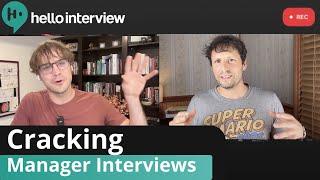
In this interview, Gilad, a former engineering manager at Amazon and Meta, shares his insights on how to excel in people management interviews. He emphasizes that the core of a manager's role is to create positive and sustainable change in the organization's performance, and he provides concrete strategies for framing stories, handling behavioral questions, and avoiding common pitfalls.
Gilad introduces Andy Grove's framing that a manager's output is the output of the organization, but he offers a more useful framing for interviews: a manager's job is to create a positive and sustainable change in the performance of the organization. The current output is not interesting; the change (delta) is what matters.
Using the example of helping an engineer grow, Gilad explains that most managers tell a story of promoting an engineer, but interviewers want to know how the manager contributed. He uses a weight loss analogy: if the person would have succeeded anyway, the manager's role is not impressive. Managers should focus on how they identified gaps, stretched the person, and created a safe space to fail.
For conflict resolution, merely resolving a conflict is not enough. Managers should create change by coaching the parties to resolve conflicts independently or by fixing underlying relationship issues between teams, leading to healthier collaboration post-conflict.
To avoid sounding fluffy when discussing empathy or culture, Gilad advises being specific and giving concrete examples of actions taken. Instead of saying 'I used empathy,' describe what you did: e.g., 'I met with the other manager, realized what their org valued, and brainstormed a way to frame the work to meet both goals.'
For questions like 'What's your approach to one-on-ones?' Gilad recommends discussing frameworks and models but quickly tying them to specific examples. This helps the interviewer see that you can apply the framework in practice, especially under tough tradeoffs.
When asked about strategy vs. tactics, Gilad suggests presenting a 'table of contents' overview—a high-level summary of your approach—and then asking the interviewer where to dive in. This gives you control, plants seeds for follow-up questions, and helps the interviewer help you navigate.
Common red flags include not focusing on creating change. For example, telling a story about managing a low performer who is a new hire raises questions: who is the low performer? The manager may have set them up for failure. Also, being at odds with the company's conflict resolution style can be a flag.
Gilad emphasizes that 90% of preparation should be choosing stories and creating a 'hashmap' of stories for common situations (low performer, hiring, conflict, prioritization). Precomputing these stories helps you handle tough questions and allows you to propose pivots when a question doesn't match a prepared story.
New managers often lack experience. They should understand what managers actually do and spend time preparing stories from their limited experience. They should also be authentic and not try to appear as a five-year experienced manager when they have one year, as this can backfire.
For managers with long tenure at one company, the biggest concern is demonstrating continuous growth. If there are no promotions, they need to craft a narrative of growth in other dimensions, such as switching from platform to AI teams or from back-end to product roles. Address the elephant in the room head-on.
Gilad believes managers should expect technical rounds, including coding and system design, in 2025. Companies can afford a higher bar. He cites Amazon's CTO writing an AI tool as an example of staying hands-on. However, managers should time-box coding prep and not overdo it.
When managers consider constraining their job search to areas they are good at, Gilad advises being honest about motivation. If it's out of fear of atrophied skills, it's worth investing in ramping up on those skills (e.g., algorithms) rather than limiting options.
Gilad recommends against using a job hop to transition from EM to IC or vice versa. It's better to make the transition within your current job family and then move companies later, as trying both simultaneously sets you up for failure.
The key to acing a people manager interview is to frame every story around the change you created, be specific with examples, and prepare a strong set of stories in advance. Avoid common pitfalls like not showing growth or being inauthentic, and remember to stay technical in 2025.
What is the core framing of a manager's job according to Gilad?
To create a positive and sustainable change in the performance of the organization.
01:38
What analogy does Gilad use to illustrate that a manager's contribution must be significant?
A weight loss commercial where the person would have lost weight anyway, so the manager's lemon juice advice is not impressive.
02:35
How should a manager frame a conflict resolution story to show change?
By coaching the parties to resolve conflicts independently or by fixing underlying relationship issues between teams, leading to healthier collaboration.
04:57
What is the 'table of contents' approach in interviews?
Presenting a high-level overview of your approach without details, then asking the interviewer where to dive in.
11:22
What is a common red flag when a manager tells a story about managing a low performer who is a new hire?
It raises questions about who the low performer is—possibly the manager who set them up for failure.
15:00
What percentage of preparation should go into choosing stories, according to Gilad?
90%.
16:37
What is the biggest hurdle for seasoned managers with long tenure at one company?
Demonstrating continuous growth, especially if there are no promotions.
22:21
Should managers expect technical rounds in 2025?
Yes, including coding and system design, but they should time-box preparation.
26:10
What is the advice about using a job hop to transition from EM to IC?
Avoid it; make the transition within your current job family first, then move companies later.
31:06
Manager's Job is Change
This reframing is the central thesis of the interview, guiding all advice.
01:38Weight Loss Analogy
A memorable analogy that clarifies the need for manager contribution.
02:35Table of Contents Technique
A practical technique to control the interview and guide follow-ups.
11:22Low Performer New Hire Red Flag
Highlights a subtle but critical interviewer perception.
15:00Growth Trajectory for Tenured Managers
Addresses a common concern for experienced candidates.
22:21Technical Rounds in 2025
Provides a clear, current expectation for managers.
26:10[00:02] Interviews where we get a chance to talk with some interesting personalities and experts in in the industry. I've noted that uh in all of our discussions so far on this channel, we haven't really covered manager interviews in specific.
[00:16] So I thought it'd be great chance to bring on Gilad to talk about these tough bring on Gilad to talk about these tough loops. Gilad is a former EM from Amazon and and Meta. He's actually coached hundreds of managers on how to succeed
[00:28] in interviews and I really can't think of anyone who uh would be better to go deep with. So, welcome to the channel, Gillad. Yeah, happy to be here. Fantastic. What would you say distinguishes a great people management
[00:42] interview from a mediocre one? like when you are talking with various candidate what stands out from those those managers who are you know really have their stuff together versus someone who maybe doesn't have that experience or
[00:54] wouldn't make the the cut. Yeah, I think that that's a a great question. So I'll I'll tie to you know concrete and specific tips that uh viewers can use. Perfect. And it all starts with what is management really about? What is the
[01:09] manager's job? Like what is it really when you get down to it? And there's a lot of you know stuff in the literature but in Silicon Valley you know there's basically Andy Grove's framing which is a manager's output is the output of the
[01:24] organization under their responsibility and this framing is of course correct. I think there is a framing that is more useful especially in the context of an useful especially in the context of an interview and my framing here is that a
[01:38] manager's job is to create a positive and sustainable change in the performance of the organization. Put another way the current output of the organization is not really interesting. What is interesting is how you as the
[01:53] manager create a change in the performance of the organization. So like a lift or a delta. Is that kind of what you're getting at? Exactly. Exactly. change. And if we apply this lens to various
[02:08] manager interview questions, I think it really distinguishes between mediocre and really great engineering managers. We can run through a couple of examples like tell me about a time you helped an engineer grow in their career. And most
[02:21] managers would lean towards a story where they helped promote one of their engineers. I'll start with an analogy here which is think about those weight loss commercials you may have seen with a before and an after picture. There's a
[02:35] clear transformation. So in this analogy if we have a person who wants to lose tracking their calories, they're doing great, and then you step in and say, "Hey, you should drink some lemon juice twice a day." And then afterwards you go
[02:49] and show the before and after, it's not really impressive. you know the person would have lost weight anyways in the promotion story you know most engineers who are up for promotion are motivated they're skilled they're doing great
[03:03] often they're self-learners and as an interviewer when you tell me this story what I'm looking for is how did you contribute here would this person have been promoted just as quickly without you and so this is an example of going
[03:16] into the interview with the framing of creating change and framing your story around where you fit in How did you have those deep conversations with a person? Really help them identify their gaps. Set them up for success. Actually
[03:31] stretch them. Create a safe space where they can fail so that they give themselves permission to try harder. Those are all examples of ways where you know you can really contribute. Most often I just see a case of basically the
[03:45] manager's role in this story was moving papers from here to there. Yeah, exactly. It sounds like it the the core of what you're getting at is it's not enough to just witness or or be around for the change. You really need to prove
[03:59] in the interview that you were responsible and in some sense show the insight or the behaviors that kind of led to the outcomes that uh are at least partially attributable to you. I'd love to hear a couple more examples. Yeah.
[04:12] Conflict resolution. This is a really common situation that most big companies look for and also true for IC's, right? this is exactly okay. What is different for a manager role and if there's a
[04:28] conflict between engineers on your team or between you and someone else and you resolve the conflict, well that's fine. This is what the organization knows to do. There are conflicts. Maybe you escalate that. You resolve the conflict.
[04:42] Maybe everyone's happy. But it's not as interesting as if you create a change in the performance of the organization. And so this can be as you're doing that you're also coaching and uplifting the people who are involved in this so that
[04:57] conflict on their own they don't need you anymore or they can just avoid the conflict altogether. Another common example in conflicts is a situation like example in conflicts is a situation like there's a culture or a bad relationships
[05:12] that are already existing between different parts of the organization between your team and another team and then you leverage the situation of the conflict as an opportunity to fix the relationships so that after the conflict
[05:27] is done not only is the conflict resolved but those two different organizations can collect collaborate much in a much more healthy manner. So those are two examples of creating change and and really framing your
[05:40] storytelling in the interview around creating that change. I love that. Yeah, other day and they they basically set up their story by saying, "I joined an between these two groups and it was really obvious to me when I first
[05:54] started and I knew I was going to need to make a change here and so here's the is it showed awareness. they were able to show off all of the things that they did and I didn't blame them for all of the, you know, mistakes of their
[06:07] predecessors. So, I think what you're getting at is just really showing uh the impact that you're able to have beyond kind of manager 101, keep people from punching each other in the office. Yeah, exactly. Perfect. I I love generally
[06:20] speaking the idea behind the things that you're proposing here, but I worry in some cases that candidates will get a little bit fluffy. Like it it's easy to but when it gets down to the details, it's hard to express like how do you
[06:35] show empathy in an interview or how do you show that you were building culture on your team? What is the trick to getting these things across without sounding overly fluffy? Yeah. And it's a really interesting challenge. And in
[06:50] these situations, I think it is really helpful to be specific and to give examples of what you actually did. So if we look at the example of empathy for example we can take you know the
[07:03] conflict example and another common scenario maybe for a bit more senior managers is you're working on this really high priority project maybe it comes from the CEO or the CTO and you just want to push it through but you
[07:19] those teams may have different priorities and so a common way of okay priorities and so a common way of okay how do I show empathy the incorrect way is saying yeah I met with a manager from the platform team and I needed their
[07:34] support to get this project off the ground and I used my empathy skills to know what they're dealing with and bottom line I had to escalate it was the co priority and that's what we did and so you're saying you did that but it
[07:49] doesn't really come through an alternative view where you don't even use the word empathy can be something like the same story. I met with the other engineering manager and I realized what their organization actually valued
[08:04] and so I met with them and brainstormed the way how we can frame the work that matters to the CEO in a way that their organization also values. And by doing
[08:16] this creative brainstorming, we were able to propose a slight change to the goals where we could both meet our goals and do work that our managers valued. So here I didn't use the word empathy at all. But the impact that I created as a
[08:32] leadership. I was able to create a win-win situation instead of just forcing a compromise and I improved collaboration in the future. So that's a way of talking about specifics about what you actually did and the outcome of
[08:48] empathy. You can think that, but you don't necessarily have to say that. Yeah, I love that. And it it seems like for many managers, they're so used to kind of the basics that it just kind of comes through in all of their actions.
[09:02] And so in some ways just describing what went down and what you did is sufficient to kind of tell that story without you resorting to you know some fluffy language about uh you know what you ought to do or what you should do in
[09:15] that case. Yeah. And we could touch on that a little bit because it it does come up more in manager interviews than in IC interviews. Behavioral interviews specifically are all about tell me about a time. When you get to manager
[09:28] interviews, you often get questions like tell me about your approach to one-on- ones. And it's not really about tell me about a time, it's what's your approach. And in these cases, I do recommend to talk about the frameworks, the models
[09:42] that you have. I think this is really important. I also think you should really quickly tie to specific examples. So, you want to kind of help the interviewer get to that behavioral style interview of talking about specifics.
[09:56] Otherwise, I can think okay you have this great framework of you know how do I prioritize things but I have no confidence that you can actually apply it in practice especially when it's hard to apply it when you have to make hard
[10:09] decisions and tradeoffs. There you go. One part of this is have you read the together? And then the other part is can you actually put it into practice road. I think a lot of good management is about what happens in those 10% of
[10:23] cases where everyone's hair is on fire. and the the ship is not in the right direction. Maybe talking about a tension here, I also see a lot of cases where managers will struggle between kind of the highle strategy uh which a lot of
[10:38] managers like to dabble in and think is important to their role coupled with the things that you know my team needs to get done in order to make their goals. How do you recommend managers balance the two of these things? How should they
[10:54] think about how to come across in an interview setting? So that's really depends on the specific interview. Some interviews would be more structured. For example, meta has a manager project retrospective. And then there's a
[11:07] reasonable structure of when to go broader, when to go deep, when to talk strategy, when to talk tactics. If it comes up in a different setting, well, I generally recommend just presenting the interviewer with a menu
[11:22] of options. I like to call it the table of contents version of the answer or the 10,000 over feet overview or the minimum viable answer where you basically present a highle overview without going into any details of how do you approach
[11:38] the specific situation where the interviewer is asking about from strategy and tactics. just give the the headlines and then ask the interviewer, "Where do you want me to dive in first?" And when you frame it like that in an
[11:52] interview setting, you're actually accomplishing a couple of things. You're subtly taking control of the interview. Even if they won't go deep into one specific section, it'll still open a background thread. And so, their
[12:05] follow-up questions will more likely go in those directions. And so, you're kind of getting more agency in the actual interview. you're also planting seeds in all these things that you are willing to talk about. And so if you won't have
[12:20] time to go over all of that, the interviewer will still unconsciously even think that yeah, like Gilead was willing to talk about those things and I probed him in two others. And so I have some confidence that had I probed in
[12:35] those areas, it would also be fine. And the last thing that you're accomplishing here is you're helping the interviewer help you. You're helping the interviewer help you navigate the discussion. And so on these strategy versus tactics, what I
[12:50] recommend is think about having a dialogue and continuous discussion with the interviewer to help the interviewer help you navigate on what they actually care about in that specific interview. Love it. I think that table of contents
[13:03] is super useful, at least in in my experience in uh interviewing managers. You'll occasionally kind of touch on something that seems like a skeleton in dancing around it. And if you don't get
[13:16] left with this lingering thought. They they have something there that I wasn't able to touch on or they lack some skill there. But if on the other hand, they here's all the places that I'm happy to go into, it's hard for me to leave with
[13:30] couldn't have gone down, you know, door A. This is this is super cool. I I'd actually love to take a maybe more negative posture here and talk a little bit about red flags. I I I don't want to
[13:42] of cases it's it's more important that you you really think about what you're hoping to present yourself as a manager, but are there red flags that you see come across more frequently in manager interviews that people should steer
[13:56] clear of and and try to avoid? Yeah. So there the the typical red flags that I don't think are worth, you know, talking about here around, you know, biases and so forth. Then there are specific company culture uh red flags that I'll
[14:11] touch on really briefly like we talked about conflict resolution. How to actually resolve conflict correctly quote unquote is different for look different between Amazon and Block for an example. And so if you really are
[14:29] doubling down on one style which is completely at odds with the company you're interviewing for, that may be a kind of slight red flag. Other than that, I I think the most common red flags I see are all about people who
[14:44] don't think about creating that uh positive and sustainable change. as an example looking at you know managing a low performer again with the quotes often times maybe too often candidates will talk about a new hire and when
[15:00] someone talks about a low performer who's a new hireer I immediately have a lot of questions going on in my mind as an interviewer I'm wondering who's the low performer here basically that's the question I have is it the manager that
[15:14] did not set up a new person for success maybe they set them up for failure. Maybe the hiring process did not go well. And so just choosing that story, I already have a lot of questions. And if the manager doesn't have a good answer
[15:31] for that, then I would consider that a negative flag. I wouldn't say it's necessarily a red flag, but it would definitely be a negative. No, it's a great response. And I I think that is an underrated aspect of manager
[15:43] interviews is that your interviewer has their own perception about how certain situations should unfold or the the problems that are are likely to occur. And if the candidate either realizes them late or makes them the climax of
[15:57] I we we knew this was going to happen. You were running a migration project. Surely you should have anticipated that you're going to discover some scope late in the the game that you're going to need to solve. um these can come across
[16:10] as as really I guess more junior uh of a manager that maybe you you weren't even you're the underperformer in those cases. Yeah. So I think avoiding those is super helpful. What would you suggest for managers who maybe aren't sure
[16:23] whether you know what they're about to say is going to come across with a foot in their mouth or or be judged by the interviewer as as negative. So I think here prep it's mostly about preparation. the the more you can prepare ahead of
[16:37] time, the better you will do. I think 90% of the effort should go to choosing the stories, creating that hashmap of these are the stories for the common situations like low performer, hiring, conflict, uh you know, prioritization,
[16:52] hard tradeoffs, and choosing one to two stories ahead of time that are really strong. By offloading, by precomputing as much as possible, you do yourself
[17:04] service of, you know, being in the best possible spot when you get those tough questions. And then if you do get a question that doesn't neatly map to one of your prepared stories, often times you can subtly propose a pivot, propose
[17:19] to actually use one of your prepared stories. A a common example here is you mistake or tell me about some constructive feedback. Most companies
[17:31] actually look for growth. They look for someone who is continuously growing and really looks at how can I improve in each situation. They don't really care as much about the actual mistake but what you did afterwards. Did you own up
[17:45] to that? Did you do an internal retrospective? How did you change? what is your kind of before and after picture from the previous analogy after this situation. And so if your most, you know, impactful personal growth story
[18:01] didn't start with act necessarily making a clear mistake, you can propose a pivot to the story to the interviewer by saying something along the lines of, "Hey, I've certainly made a lot of mistakes. Is it fine if I tell you about
[18:16] it about about some growth that was really influential in my managerial career? And by proposing that you're giving the interviewer what they actually care about while still leveraging the premputee that you've
[18:29] done ahead of time. And so you don't really need to face as much of the pressure of trying to come up with a story on the fly. Yeah, it's a good point. I think a lot of people kind of neglect that that facet. they feel like
[18:42] got a question I need to answer it as literally and directly as possible. But the reality is generally speaking even in conversation people don't respond in such a way and and interviews are no different. So having that uh that
[18:54] different. So having that uh that hashmap I think is quite useful. Um I I some specific situations that are are start with new managers. I think people
[19:06] time. Some will actually go back to being an IC. oftentimes they're they're a part of. It's basically, you know, we think you'd make a good manager, but like let's just prove it out. And as a result, when they go
[19:19] looking for a job, there's usually this weird position where they don't have enough experience to really prove out how effective they've been as a manager um and uh they're hoping to leave the company that's kind of incubated them.
[19:32] their preparation, do you have any advice or or things that you think that they should avoid as they're preparing for these manager loops? Too often, you know, if you switch transition internally, often you are the best
[19:46] engineer. Most companies would take the best engineer and lose them in exchange best engineer and lose them in exchange for a newish mediocre manager. That's started. We most of us did not go to school to learn management. And so
[20:01] you're starting with this really challenging situation and so understand what is it that managers actually do and then spend the bulk of the time really trying to come up with those situations. Now some companies would be more uh
[20:18] detailed oriented and really drilled deep to make sure you're talking about actual situations you live through. And in those cases, it's going to be really hard if you don't do that preparation work. And I highly recommend just find
[20:33] the best example that you actually have that you actually live through. And depending on how much time you have, that may actually point to a personal growth area that you may want to actually focus on over the next coming
[20:45] weeks in your actual job to gain some real experience there. Yeah, I think leaning into that preparation and thinking about what are the things that I I need to have ready is actually a somewhat useful way to think about your
[20:59] things that I probably ought to be doing. I wanted to add just one quick comment on this one that sometimes managers will get out in front of their skis. They'll try to be the five-year experienced manager when they've clearly
[21:11] got one year of experience. And it it can make sense in the sense that you are competing with experienced managers in some cases. But for a lot of companies talent, they have someone specific in
[21:24] mind and sometimes they might have a new org that they need a bit of a TLM, and a manager who's going to grow into the position. And if you're experienced manager because you don't really have any substance while
[21:37] simultaneously kind of edging yourself out of that earlier um uh role job, yourself well. So make sure you come across as authentic. You're you're kind of trying to present the the best side of yourself, but you don't want to be
[21:51] someone that you're not yet at least. Uh it doesn't serve you very well. I want to talk about the flip side. So there is just so many people I think who I've have been very successful. They've treated me very well. You know obviously
[22:06] you know I want to go make the switch. I want to go join uh Google or I want to go join Meta. What should these seasoned managers kind of anticipate? What are the objections that that hiring committees are typically looking at?
[22:21] Yeah. So the biggest concern companies would have is the signal we mentioned a few minutes ago which is that continuous growth. As an example, you know, I spent nine years at a single company and then my role kept changing from an engineer
[22:34] to supporting several teams. And so there's a clear growth trajectory there. And so if you're nine years in a in a the same company, the question is can you point to a clear growth trajectory that you had there? Now for some people
[22:49] there isn't an externally visible trajectory that is you know clearly communicated in their resume and so as an interviewer when I get into that again I'm starting with a question mark and so the best thing you can do is
[23:04] address it headon there's an elephant in the room and you need to address it and so that's I believe the biggest hurdle you have to overcome if like there are no promotions
[23:18] That's fine. Many companies have a terminal promotion level, especially for managers. You're not necessarily expected to get to senior manager, but companies are looking for people who continuously grow. And so, you have to
[23:31] prepare a story. It's all about storytelling. You need to have a clear narrative of how you grew during this period. When you were ex at least externally, it appears as if you were static. And that can be you know
[23:45] switching from you know supporting platform teams to maybe supporting AI teams. That's one dimension of growth. It can be switching from a more back-end role to a more product oriented roles. So you have to come up with your own
[24:00] story your own narrative of how you still grew in within that time frame. still grew in within that time frame. And the main message the takeaway you want the interviewer to take is hey I'm Gilad. I may have not been promoted in
[24:15] these nine years, but I am always looking to grow and improve, even if that doesn't mean a promotion. So, I think that's the biggest thing that more experienced candidates that have been in the same role for a long time, that's
[24:28] the thing they should prepare for. I love that. Yeah, the challenge orientation, I think, is actually useful across behavioral interviews. And it's kind of like, show me that you haven't um kind of been static. Uh that way I
[24:41] know when you're going to make this big shift into a new company uh that you're because you've been doing it. You've been adapting to new circumstances all the time. I wanted to add one more that I always see and it's managers who fall
[24:55] back to kind of how their company does things. So at Microsoft this is how we do things or here's the process that I follow. And while it's true in a company of cases what interviewers are looking for is that you have something that you
[25:10] bring to the table. You know, I actually think we should do it this way, but my how I adapted. Um, in those circumstances, what they're hearing is, circumstances, what they're hearing is, okay, uh, Jim or Jane has been working
[25:23] come into my company and I think they're going to be a great fit. I think we aligns with with how they are set up. Uh, so avoiding those potholes can be really useful, especially if the the tenure is pretty high. Yeah. Awesome.
[25:39] little bit about some higher level questions. I I think, you know, generally speaking, you mentioned this earlier, but the EM kind of field has changed a lot with Zer winding down and with AI moving. I want to hear your
[25:55] opinion. Should managers expect to field technical rounds in their interviews? Is this something that that you feel like people should be preparing uh for? So I people should be preparing uh for? So I I think in 2025 100%. And I think just
[26:10] because companies can afford to have a higher hiring bar. I recommend you know managers get into the habit of being technical and staying technical uh throughout their careers. And the example I like to share recently is
[26:26] actually Amazon's CTO who shared a recent post about writing an AI tool to help him have meetings with his office of the CTO. And that's an example of the
[26:38] CTO of a company with tens of thousands of engineers being hands-on and coding. And I think every manager should figure out how they can stay technical in their
[26:50] role. So that's a general statement about you know engineering management in general in the context of interviewing. Yes, you need to prepare for technical interviews including coding including system design and different companies
[27:05] would have different expectations especially around coding and system design. There are different level expectations when comparing to the comparable IC ladder. But at the end of the day, you need to show that you can
[27:20] really support engineers that you can build empathy that you can understand what they are going through and a lot of management is filling in is being whatever the team needs you to be. If there's no product manager, you need to
[27:35] step into that role. If the team doesn't have a tech lead, you need to step into that role. And so you need to show that you have those capabilities. So I definitely say yes, managers should prepare for coding system design
[27:49] And now after I've said all of that, I will say a mistake I see too many managers make is actually spending too much time preparing for the coding and really nervous about that because that's not part of their routine. So you should
[28:04] really time box that. But you should definitely still do it. Yeah, that's a great point. I've definitely talked with a bunch of managers who've done 200 300 lead code questions and it's kind of like they're probably not actually
[28:17] assessing you in that way. I know at Meta they had a rusty coder standard. So, they were really anticipating that managers wouldn't be all that effective at coding. I also see, and I'd love to get your opinion on this, managers who
[28:30] really honing my leadership and organizational capabilities. I know my my technical skills have atrophied. I'm actually going to self- select out. I'm only interviewing for those things that I think I'm really good at. Do you think
[28:46] ought to kind of constrain themselves and then move around or do you think, people should just put in the reps and and bring those skills back up to speed? So, first of all, if you're really really good and really exceptional, when
[29:01] likely to find something within those constraints. And so if the reason that you're constraining is when you look honestly at yourself, at your motivation, if you're putting those constraints really because you're really
[29:16] looking to double down on this area to find companies that really value that, that may be the right call. However, I think in most cases, if you're really honest with yourself, you're putting those constraints out of fear. out of
[29:32] fear that you know you have atrophied in these other areas and it's fine if you want to double down and focus on these areas. That should not necessarily excuse you from ramping up on areas that you've already learned in the past in
[29:46] memory and data structures and algorithms and coding. And so I would recommend for most people that it's worth the investment to ramp up on these
[29:58] areas that you knew in the past and not necessarily constrain yourself on those grounds at least. Yeah, I like it. And that fear motivation I think is pervasive. It's actually worthwhile I think especially at career transitions
[30:13] which are tumultuous in nature. you get some friends who will actually give it to you straight and say, "Yeah, Gilad, it seems like you're running away from, good at. Are you sure you want to do that?" Or maybe you got to put in the
[30:26] the effort here. Uh it can be such a challenging uh environment to make a decision about your career because in a lot of times people are choosing to move jobs in part because they don't like the previous job they were in. Uh and so
[30:41] sometimes there's some biases that creep in there as well. Just real quick on a similar situation that I've seen happen several times. It it's similar. It's not several times. It it's similar. It's not exactly the same. Many managers enjoy
[30:53] management and as you mentioned many managers also transition back to being managers also transition back to being an IC. And I've seen some people and I was myself guilty of this of trying to use a job hop as an opportunity to
[31:06] transition from EM to IC or vice versa. And I would generally recommend against that. You want to have those stories that are fresh in your memory, that are aligned with what you've done recently, that's up to date and make that
[31:20] transition within your current job family and then transition, you know, a year afterwards internally. That is just a much healthier uh uh setup that will set you up for success. Trying to do both a new company and a new job family
[31:35] is just setting yourself up for failure. Agreed. There are probably some situations where that's the only option that's available, but go exhaust those other options before you, you know, make your job twice as hard. Uh, and
[31:47] something that's already pretty stressful. Hard agree on that one. Well, I learned a lot here. I feel like you gave us some good frameworks on how we think about manager interviews as kind of emphasizing that leveling up. um how
[32:00] we can get into the details and be concrete while also being able to talk about frameworks and abstractions and also some practical advice about you know flags to avoid and and ways that managers ought to think about preparing
[32:12] for their interviews. I wanted to do a quick pitch for Gilad. He's got a the description. I he has a lot of great thoughts on management and uh if you are an experienced manager, you've probably would benefit from some of his wisdom.
[32:27] Also, if you want to work with folks like Elon um on a kind of an interview mock interviews with a lot of experienced managers who can kind of help you craft your stories and and work through some of these difficulties. So,
[32:40] um Gilad, really appreciate all of your time and um uh thanks for coming on the time and um uh thanks for coming on the channel. Yeah, it was a pleasure.



⚡ Saved you 0h 32m reading this? Transcribe any YouTube video for free — no signup needed.