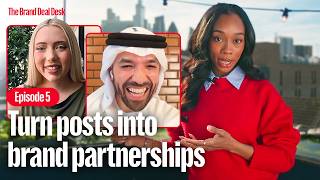

Don't Post & Ghost: The #1 Rule After Upload
38sCreators instantly connect with the painful mistake of posting and ignoring their video, and this rule offers a simple way to maximize every brand deal.
▶ Play Clip"Delivers practical post-publishing advice with real creator examples, though a few segments feel like filler."
In this episode of The Brand Deal Desk, creators Erin White, Max Fosh, and Grace Andrews explore what to do after a branded YouTube video goes live. With insights from industry experts and fellow creators, they cover metrics brands care about, amplification strategies, disclosure rules, and how to build long-term brand relationships.
Once a brand video is out, creators need to maximize the partnership, stay transparent with the audience, and turn one deal into a lasting relationship.
Erin's number one rule is to not just post a video and leave it. Titles are the 'shop window' that get people through the door; if a video starts slow, change the title and thumbnail.
Brands care about four key metrics: how many viewers were served the content, how many watched, how long they watched, and how many clicked through to take action.
Giving brands direct access to your audience data and metrics in Google Ads builds trust, but doesn't mean you can put your feet up—use those numbers to create better content.
Boosting branded content on YouTube helps reach the brand's exact target audience. Emmy Booz advises discussing boosting during negotiation, not after the video goes live.
Khalid amplifies branded content by using long-form video, Shorts, and the community tab, and does A/B testing on titles and thumbnails at the start.
After every campaign, Khalid sends a 24-hour report covering analytics and platform performance. Creators should not ignore the data in YouTube Studio—it shows you're constantly improving.
Nela Rose says most brands want you to mention them within the first 10 seconds. Audiences are on board when creators are completely upfront about brand deals.
Label content with the paid promotion disclosure, mention it in the caption, on-screen, and verbally. Check local advertising and disclosure guidelines to avoid fines.
YouTube's reach across mobile, TV, and desktop is a selling point. Share brand partner access, use boosting, disclose properly, and send a deal wrap report with key stats and learnings.
Success isn't about random brand deals—it's about building relationships that keep brands coming back.
The key takeaway is that publishing a branded video is just the beginning. Creators who optimize titles, share metrics, amplify content, stay transparent, and send polished reports will stand out and earn repeat brand partners.
What are the four metrics brands care most about in a branded YouTube video?
How many viewers were served the content, how many watched, how long they watched, and how many clicked through to take action.
01:53
What is Erin White's number one rule after publishing a video?
Don't post and leave it. Treat titles as the shop window and optimize them if the video starts slow.
00:46
What does 'Brand Partner Access' allow brands to see?
It gives brands direct access to your audience data and metrics in Google Ads.
01:39
When should boosting a branded video be discussed with the brand?
During the negotiation phase, not after the content has gone live.
08:03
How does Khalid amplify his branded content after the long-form video is live?
He puts it on Shorts, uses the community tab, and does A/B testing with titles and thumbnails.
03:31
What kind of report does Khalid send after every campaign?
A 24-hour report that goes through all the analytics and how the content performed on the platform.
03:56
Why does Nela Rose insist on being 100% transparent about brand deals?
Because audiences are totally on board when you're upfront; most brands want you to mention them within the first 10 seconds.
04:45
What are the disclosure methods mentioned for labeling brand partnership content?
Use the paid promotion disclosure label, disclose in the caption above the fold, on screen, and verbally.
06:31
What can happen if creators don't follow disclosure regulations?
Creators and brands have been fined, so honesty is the best policy.
06:45
What is the ultimate goal beyond one-off brand deals according to the video?
Building long-term relationships with brands that keep coming back.
09:20
Treat titles as a shop window
Reframing titles as the storefront of your content gives creators a concrete post-publish optimization tactic.
00:46The four metrics brands care about
A clear, testable framework for what brands evaluate, making it easier for creators to focus their effort.
01:53Boost during negotiation, not after
Practical timing advice that saves creators from awkward post-live conversations about extra budgets.
02:20Disclosure rules vary by region
A critical legal reminder that transparency is not just ethical but also protects creators from fines.
06:04Long-term relationships over one-offs
Shifts the mindset from transactional deals to repeat partnerships, which is the real revenue driver.
09:20[00:02] excited [music] because we are talking all things brand deals. [music] No, but seriously, you are in your
[00:14] business era. But now what? Once that video is out into the world, what do you actually need to do next? How do you make sure you make the most out of work with the brand, [music] and transparent with your audience, and turn this into
[00:28] figure it out. >> I'm Erin White, and I'm a business YouTuber. >> I'm Max Fosh, and I'm a YouTuber and >> I'm Grace [music] Andrews, and I'm a creator entrepreneur.
[00:46] gets started. >> My number one rule is don't post and video, right? We put so much effort into the pre-production, the scripting, the >> Yeah. >> I always think titles are your shop
[01:00] people through the door, you know the content's going to do the rest. The feeling that you get when a video is starts out slow, you change a few especially >> It's always better than when the video
[01:12] >> Yo, absolutely. You're like, I know what I'm doing. the conversation. Take them on the journey. I share screenshots of the the sentiment, and then I'm thinking about what ideas I can pitch them next.
[01:25] >> Who wants to talk about metrics? >> That sounds a little bit like math, so >> I'll take this one. >> Oh, math glasses are on.
[01:39] that you post, because it gives them direct access to your audience data and metrics in Google Ads. But it doesn't mean that you can put your [music] feet the numbers that the brands want, so we can create content with that in mind.
[01:53] >> So, how many of your audience were served the content? How many of your audience actually watched the content? How long or how much of the content were who watched, how [music] many clicked through to take action? Those four
[02:07] through to take action? Those four metrics brands really care about. >> If anyone knows how the brand deal world really works from the inside, it's Emmy Oh Booz, senior vice president of creator marketing at one of the world's
[02:20] largest PR and marketing agencies. >> How do you get more reach on YouTube from branded content? >> By boosting, you're going to be able to reach such a large audience and the brand's exact target audience.
[02:34] their analytics and seeing that more and more viewers are watching on those larger screens, which is great and it can help them really decide how they want to format their content. >> wait to tell Grace and I'm sure she's
[02:48] >> wait to tell Grace and I'm sure she's going to want to talk to you, too. his video's reach is Khalid. >> I am in Hyderabad and this is Haleem.
[03:02] >> His YouTube channel about food and culture has amassed a huge global audience. Erin and I are meeting him to find out his top tips. doing? >> Hello, sir. How are you, Max? I'm doing
[03:17] >> Can I just say your videos are so so excellent. I have been salivating ever since your best dosa in Dubai video. I wish I had some of that. >> It is done. >> Okay, good. I'm excited.
[03:31] >> Okay, Khalid. So, once the branded video is live, how do you amplify it to make audiences? >> For me, it's just about, you know, using provides. We'll do the long-form video, we'll put it on shorts, we'll do a post
[03:44] on our community tab, on our post tab. Uh we do a lot of the AB testing in the beginning with titles and thumbnails. >> At At end of a campaign, brand is asking how it went. Are there things that you do to kind of tie it up in a pretty
[03:56] brand? >> After every campaign, you know, we we have a 24-hour report. You know, it goes through all the analytics, you know, how it's performed on the platform. Don't ignore the data that's in our YouTube
[04:08] studios. Who doesn't want to work with a creator that's constantly improving >> There must have been so many different places you have >> [laughter] >> No way! It's the dosa that you said
[04:20] >> I told you. I told you when it's done, it's done, Max. It's done. >> I will save some for you as well, Aaron. Don't worry.
[04:32] >> Right. >> Oh, yeah. >> Oh, yeah. >> Mhm. >> I'm good. >> Is Nela Rose, content creator, but most
[04:45] >> Is Nela Rose, content creator, but most importantly, one of my good friends. how transparent are you with the audience that it's a brand deal? >> 100% transparent cuz most brands will tell you to mention the brand within the
[04:58] first 10 seconds. So, it's pure transparency from the start. >> I found the audience is totally on board if you are super, super transparent. >> Super transparent. >> When you do get comments that might say,
[05:10] "Boo, sell out. What you doing?" Are you engaging? Cuz I'm not. >> To be honest, very early on in my career because it's you see money that you've never seen before. But then you realize that, "Wait, hold on. Some of this stuff
[05:23] doesn't mesh well with my brand or my content if that makes sense." But now product. I have to want the product. Now, more time I approach brands. >> Yeah, yeah. That's actually such a good point for people who are starting out,
[05:37] yourself. >> Yeah, it is very important. that you have interest. And brands are very flattered when that happens. absolutely. I'd love to work with you. As you grow as a creator, you get better
[05:49] at understanding which brand deals you want to do and which ones you should do. telling me all about your conversation, and I have some burning questions. Do
[06:04] >> So, a huge thing in the community right now, the conversation that's happening is like, how are we supposed to label brand partnership content? >> Everyone's favorite conversation, right? >> This is her. What's important to note is
[06:17] that disclosure regulations may vary from region to region. So, it's really informed and you're using the most up-to-date local advertising and disclosure guidelines. Also, being open and honest with your audience, including
[06:31] the best thing you can do to really build that long-term trust with your >> You can use the paid promotion disclosure label. You can disclose within the caption above the fold, on screen, and verbally as well.
[06:45] >> And from a creator perspective, I hate to ask, but what kind of trouble can we >> You may have seen some headlines. Creators and brands have been fined. So, obviously, as a creator, you want to avoid that. So, at the end of the day,
[06:59] honesty is the best policy. >> This was so helpful. Thank you so much, and thank you for jumping back on. Erin was right, you have all the knowledge.
[07:12] >> Stop flirting. >> Okay.
[07:24] >> Okay, that is a lot of content, I know. So, let's just recap. And to do so, unnecessary three-camera setup in order to keep your brain stimulated throughout the entire process. Got it? Let's go. >> One of YouTube's biggest strengths is
[07:38] reach. Your [music] content can show up across every screen, mobile, TV, desktop, all in one deal. [music] So, don't forget to report this in your >> That's a real selling point to brands because in other platforms you need
[07:50] of coverage. >> Exactly. YouTube is about one creator, screen, which, you know, it does sound terribly efficient. even further, [music] there's creator partnerships boost, which is a great way
[08:03] for them to reach their audience and for you to potentially grow your fan [music] early in your brand discussions. And you know, if boosting is part of the plan, [music] during the negotiation phase rather than when the content has gone
[08:16] live cuz that can get a bit awkward. >> And if a video includes any kind of paid partnership, [music] money, gifts, any benefit, you need to disclose it. promotion box when you hit upload.
[08:28] >> Yes. Creators need to follow legal requirements, and this also helps you stay transparent with your audience. >> Which matters because that trust is the very thing brands are buying into. >> Make sure you're checking the age rules
[08:40] you're setting the content up properly from the start. >> And if anyone in the audience calls you a sellout, try not to spiral. Be calm, >> If you want brands to see your value, you got to make it [music] easy for
[08:53] them. Share brand partner access so they can view your metrics directly. screenshots, and it means they can boost the video if that's part of the care about the most are views, audience retention, and click-through rate.
[09:06] simple deal wrap report, your [music] key stats, what worked, and anything >> Most creators don't do that, which is exactly why it makes you look organized, strategic, and easy to work with.
[09:20] not really about having one random brand deal [music] every now and then. It's about building long-term relationships that just keep on coming back.
[09:36] genuinely learned loads. >> We're living the brown deal dream, guys. >> If I've learned anything this series Let's get another one. Come on. Series New contracts. Thumbs up. We got a thumbs up. [laughter] That is literally
[09:49] mind-blowing. >> Same time next week, guys.
⚡ Saved you 0h 09m reading this? Transcribe any YouTube video for free — no signup needed.