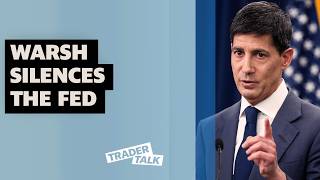

The Fed's Safety Net Is Officially Dead
54sExplains a historic shift in Fed policy that directly impacts everyone's money, making viewers fear what happens in the next crisis.
▶ Play Clip"Title accurately reflects the core thesis: the Fed under Warsh is stepping back from market bailouts."
The video features a panel discussion with portfolio managers Chad Morganlander and Ben Emons about the Federal Reserve's shift under Chairman Kevin Warsh away from the market-supportive 'Greenspan put.' They explore the implications for credit spreads, rate policy, Fed communications, and specific trades like Micron and SpaceX's bond offering.
The Fed under Kevin Warsh is pivoting away from rapid crisis-averting liquidity injections, which distorted markets for years.
In a Hoover Institute interview, Warsh said QE should not be continuous, but it is an effective tool in a crisis.
The bank mismanaged duration by buying long-term Treasuries, and when rates moved, it collapsed—an example of Fed policy distortions.
High-yield spreads are similar to 2007 and 1999, indicating markets are not properly pricing risk across fixed income, private credit, VC, and equities.
Warsh says rates are not restrictive except for housing; the Fed is expected to keep them unchanged.
Warsh slashed Fed officials' media appearances from ~35 to ~10-11 per month, reducing market confusion.
A 150 bps widening in credit spreads could cause the Nasdaq to drop 25-30%.
MU is up 290% this quarter and 300%+ for the year, but the move is unsustainable and vulnerable to a sharp drawdown.
Micron options imply a 14% move after earnings, three times the usual 4%, signaling extreme uncertainty.
SpaceX opened at $150, traded to $225, and fell back to ~$156 while raising $20B in bonds—sign of euphoric conditions.
The S&P 500 dividend yield is ~1.05%, the lowest since at least 1870.
The market is navigating a major regime change as the Fed under Kevin Warsh steps back from its bailout mentality. Investors should brace for more volatility and a potential repricing of risk assets, while opportunities may emerge for long-term investors during pullbacks.
What did Kevin Warsh say about quantitative easing in a Hoover Institute interview?
He said QE should not continue on a continuous basis, but in a crisis situation, it is an effective tool.
01:09
What example did the panel cite of a bank failing due to Fed policy?
Silicon Valley Bank, which bought long-term Treasuries and mismanaged duration.
02:18
Why are credit spreads considered distorted?
They are historically tight, similar to 2007 and 1999, indicating markets are not properly pricing risk.
03:12
By how much has the Fed reduced the frequency of Fed officials' media appearances?
From about 35 to 10-11 per month.
07:54
What could happen to the Nasdaq if credit spreads widen by 150 basis points?
It could be down 25-30%.
11:17
How much has Micron risen this quarter according to the panel?
It's up 290% this quarter and 300%+ for the year.
12:50
What is the current S&P 500 dividend yield?
About 1.05%, the lowest ever recorded.
24:58
Why does the panel suggest the PCE report will be hotter?
Because it still reflects the period before the war ended, and energy prices were high.
19:10
Fed Regime Change
The Fed under Warsh is moving away from crisis-era liquidity injections, marking a structural shift in market support.
00:29Risk Mispricing
Credit spreads are similar to 2007/1999, signaling that risk is not properly priced across asset classes.
03:12Nasdaq Shock Risk
A 150 basis point widening of spreads could cause a 25-30% Nasdaq sell-off.
11:17Micron's Stretch
Micron's parabolic rise is mathematically unsustainable and vulnerable to a sharp correction.
12:50Market Euphoria
SpaceX's bond offering and low S&P dividend yield highlight ultra-euphoric conditions.
22:44[00:03] Yahoo Finance. I am Kenny Polcari, your host. And today we're talking to Chad Morganlander, who's the senior portfolio manager and co-founder of Washington Crossing Advisors, and Ben Emons, who's the founder and chief investment officer
[00:16] of Fed Watch Advisors, as well as the managing director of Highline Wealth Partners located in LA. Gentlemen, thank you for Thank you for joining me today and welcome to the conversation cuz there is a lot to talk about concerning
[00:29] start with the Fed because that's going to be very important. And the death of this Greenspan put, while Alan Greenspan's historic legacy relied on market microstructure and pragmatism and the rapid crisis-averting liquidity
[00:42] injections, otherwise known as the Greenspan put, the central bank's mechanism is drastically pivoting under Kevin Warsh, right? He'd like to eliminate the systemic market distortions that that creates. So, let's
[00:54] think that's a great idea cuz I thought there was way too much Fed talk by don't we start Why don't we start with you, Ben? Tell us a a little bit Fed Watch advisory group. I think it's perfect that you're here.
[01:09] >> Yeah, I know it it will be a significant change because if we're ever getting another type of financial crisis or another sort of pandemic style type of the markets were conditioned that the Fed would bail everybody out, would come
[01:23] >> all the time. So, if that truly is changing, then we're in unprecedented territory in a crisis like that. Now, I don't believe that Kevin Warsh would let it come to that, actually. In fact, he
[01:36] said in a Hoover Institute interview last year that QE should not continue on a continuous basis, but in a crisis situation, it was an effective tool. >> I think in a crisis situation, it is an effective tool. But the way it's been
[01:51] happening since 2009 or 2010 when the when the great kept it running and running and running, right? And so, that that's part of the problem because the market had gotten so used to it. It's elevated. I think this,
[02:05] and saying, "You might see some more volatility, I think, at least in the >> I think that's right because, you know, if you have so much QE pumped into the >> That's right. >> And if you think of this is a real good
[02:18] example, the Silicon Valley Bank crisis that happened 2023 >> That's right. >> They brought rates down too far. >> That bank bought a bunch of long-term Treasuries and mismanaged the duration
[02:32] >> Right. >> and the bank is out of business. >> So, I I think that is one of the ideas of that the Fed's influence can be not so significant that it causes financial market No, financial system
[02:45] but created all kinds of chaos in the you know, during >> during its during that whole process. >> was just a bump in the road. >> That wasn't a financial crisis, and you're 100% right. Price discovery up
[02:58] and down the quality spectrum has been distorted for the last 10 years. In fact, right now, credit spreads are historically tight when you look at high-yield bond spreads, similar to 2007, similar to '99.
[03:12] >> It tells me that they're not properly pricing risk in not only for fixed income, but for private credit as well as venture capital and equities. And that is in a carbon monoxide detector, that's not chirping, it's actually going
[03:27] >> So, is that is that a direct result of prior Fed policy change? >> I think it is, you know, that that really because there's so much liquidity that's been generated in the system,
[03:43] banking system. There's like 3 trillion still, but it led to all these market value gains that have been accumulated in money market funds. >> And because it's there and even that it doesn't get deployed people are seeking
[03:57] out investment grade markets to quote unquote park cash so to speak and I think that's that's a distortion. In addition that those spreads are tight right now so so there's not much default risk. So that is another major like
[04:12] getting a different economy and gain more risk. the economy is on fire which I agree cuz I think the economy is fairly robust out continues to sign none of it suggests we're falling off the edge at
[04:26] But what does that really mean for Kevin Warsh in the sense of I I don't see how he can possibly justify cutting rates. >> No I I he cannot. In fact even if energy prices are declining right which is
[04:41] start moderating cuz we had a big energy shock. inflation comes down and the economy remains strong there's still no reason >> No in fact actually the fact that gas prices will go down likely is going to
[04:54] be stimulus to the economy. And we're accelerating investment in the economy juncture here where the Fed's going to confront a economy picking up. So how economy? >> Somebody in the White House is not going
[05:08] >> Unfortunately [laughter] but you know he I do think that that's got passion who's sort of managing that situation can convince that message saying keeping rates on hold at still low rates
[05:22] >> Well because I think rates are I don't think rates are usurious by any stretch >> Not not really they're not. >> No 3 and 1/2 375 is relatively at the historically. >> And if and Warsh said in the press
[05:35] conference that he didn't see the rate being restrictive except for housing. Now the president has canceled his bill but they're going to sign this bill on improving the housing market right just new bill that came out and so it's
[05:47] really there about cost and supply and demand and balance but rates don't have much of an influence. So I think the war is set like we're just in a very neutral >> Yeah. >> No, no, and I agree which is why I which
[06:00] is why I'm amazed because actually the market is pricing in a rate hike by the banks, I don't know if it's Bank of America, somebody was pricing in if you know what it is. >> No, I don't. But you you may say that
[06:15] perhaps they don't raise rates this year, early part of next year they bump effect of that may actually be that the long duration bond actually rallies, yields go down which may be somewhat more of a stimulative effect.
[06:29] >> Yes, if they can do that that's great, but the Fed doesn't typically manage they they can't manage the long end. The long end is completely a market kind of >> Yeah, even at the Fed, believe it not, they control 40% of the outstanding
[06:44] >> And yet you can't really control what happened with the war, they went up from from 3.75 to almost 4.75 in the on the 10-year. >> And and the 30 is kissing 5% right now.
[06:58] >> Right, so >> Right, which is up dramatically. >> So I do think that this rate hike is a bit mispriced if you base upon energy prices just itself. But my other conclusion on that is that well, if this
[07:12] economy is picking up, right, and we're having all those investments with AI, then this rate hike probability, so to speak, may not be so mispriced because sort of eye on that if an accelerating economy in a fiscally inflationary
[07:28] rate unchanged. >> And I agree. I think they'll keep them unchanged. I think they have to put the idea of a hike on the table. I think one's surprised, right? That it's kind of that it's kind of permeated the
[07:42] necessarily be surprised. Although, I'm not sure it's actually going to happen. But, let's move on. Let's talk about the muting now of the under prior
[07:54] Fed chairs, everybody went to the market. Everybody went out in the market. But, Chairman Warsh, he's aggressively dialing that back the frequency of which individual Fed governors and members of the committee
[08:06] have media appearances as slashing their monthly average speaking arrangements, right? Um from what was about probably 35 down to maybe 10 or 11, which I actually think is a good idea because I think too much
[08:20] talk created way too much confusion. >> That's absolutely correct. And what you're going to see now is perhaps just a lot more silence, which is actually bodes well for the overall markets. The real question is, when credit spreads
[08:33] start to widen out, what the definition of a crisis will be? And when what the reaction function to that behavior in the in the credit system, uh and what the actual signaling will be from all of the players within the Fed.
[08:50] crisis? What's it going to be? >> Look, I mean, if you turn around and spreads blow out by 400 basis points, that's going to be a shock to not only markets across the globe. >> 100%.
[09:03] >> But, what happens when it drifts up by 150 basis points? Is that when you pull signal that you're going to be more accommodative? And this definition is real tricky situation
[09:18] where they're going to have to evolve into county coming in with a kind of a a into county coming in with a kind of a a a a process for how they actually behave and and signal to the market. >> Well, so do you think under Warsh
[09:31] going to change? Like that that that that that he's not going to be as quick to come to the rescue. He's going to have to let the market hash it out and figure it out. So, he takes sort of the same Greenspan approach, right? Let the
[09:45] market figure it out. But without promising that I'm going to step in right away when there's a little flare-up, right? let's just say 150 basis points, not bad turbulence. Oh my god, we got to jump
[09:59] because it's going to cause all this ripple effect in the economy. That I'd also think that he, by the way, will will move the Federal Reserve and the will move the Federal Reserve and the FOMC particularly to more centralized
[10:13] message as opposed to all the speakers out there that, although they can have their opinion, and particularly the regional presidents always have that, but they they have at least a consistency about this is our policy,
[10:25] should keep that message out at the same way. I think that's when I came into this business in 1980 when Greenspan was the Fed chair, and I Stock Exchange, and I remember when the Fed used to come out and make an
[10:38] announcement, Greenspan would come out behind the curtain, he'd put his book on the podium, he'd open it up, he'd say, "This is the decision we made." He'd sit there and ask questions, he wouldn't take questions. He said, "You go figure
[10:51] to figure it out. Now, we've got to the point where holding my hand and taking a Xanax, and oh my god, like that that's got to go >> Yeah, that it will be cuz that got so exaggerated.
[11:05] problem with that is there's a whole generation of people that grew up having >> Yeah. And then when spreads widen out by an additional 150 basis points, the
[11:17] Nasdaq is going to not going to be down 5%. It could be down potentially 25 to 5%. It could be down potentially 25 to 30%. And that's the the Xanax Right, but that's the Kenny that's the Xanax moment where
[11:30] to have to centralize their messaging. >> Right. Well, so let's let's hope it doesn't get to that point, but I will say when we talk about Kevin Warsh and he talks about trying to dial it back. I think back to, you know, when
[11:44] Greenspan was there and I think back about how little and said, "Here's the decision we made. You guys, that's your job. You go figure >> So, if you take that statement that they put out now, it's so brief and short and
[11:57] exactly what you need to know. That's all we need to know. And I can go back and go trade it and doesn't matter, right? Instead of this really lengthy, long statement, all kinds of stuff in there that could be and ultimately
[12:10] >> then you get you get all the journals in the room, they're all asking questions. Everybody hears what they want to hear. You know, he can say X, Y, Z, you know, and somebody hears that it's raining out and cloudy.
[12:23] what ends up happening and so creates this, you know, one person writes his story, the other person writes that so it creates complete chaos. >> So, so I actually that's the one thing I think is great about this new Kevin
[12:35] that back cuz I actually think the market will be better served by having chaos. So, let's talk about single stock referendum. So, tonight's a perfect example. MU, which has become the poster child of the technology trade, right?
[12:50] technology trade is due to come out and you can feel you can feel the excitement Everybody's in on this MU trade that like that. They can't on the edge of investors, whether they're institutions or whatever, but you know, they're
[13:04] they're they're looking at MU as if it's the bellwether for the whole AI trade. I'm not sure it is at all. I like MU. I think it's going to I think they're tonight, but I think that the stock has acted so well this month. I mean, it's
[13:18] acted so well this month. I mean, it's up 290% this quarter alone. And up 300 and some odd percent for the year. It's had this massive move. So, I I even if he says everything's perfect, you can't necessarily always count on how
[13:31] react. >> Yeah, I think like the way the stock price looks it looks really like one stock that's that's mathematically unsustainable.
[13:45] Any trader will understand like a slight change of of of news around the stock is going to meet immediately to a big drawdown. And that happened like about 2 >> It happened yesterday, too, right? >> So, 13 or 14% the risk of that stock is
[14:00] that if you were to buy right now, I've been telling my own clients like, "Okay, the Micron story is really cool story, but you cannot buy 5% of your portfolio. >> not up here you can't. >> No, not at these levels. Even even it
[14:13] can go even higher from here. >> The street I think has 15 or 16 on it all as as a target on it. I think that's the consensus around the street, right? like you said >> chart is just a straight line up. Um,
[14:27] and it doesn't make sense. Like it just doesn't make sense, right? This is a >> It's like lumber back during COVID. It went straight up. >> Right. >> This whole super cycle story, this pitch
[14:40] it could be here today, gone tomorrow. What I mean by that is in 2027 capacity starting to come online from China that you least expected. And then
[14:52] all of a sudden you'll start to see all of these these memory makers start to roll over. And keep an eye out on on on Korean the Korean market. That's up 100% year-to-date. Doing in part because of this supply constraint.
[15:07] >> Right, which is also unsustainable. The index is up >> Correct. >> I mean, it's ridiculous. memory this high bandwidth memory is so key to
[15:21] the whole AI trade, and there is a shortage, so I get it. But that it's very stretched. Look what happened yesterday in South what 2 days the place started to unravel a little bit, which makes sense, but then all
[15:35] those leverage trades and the margin trades and and people are getting margin more chaos in the market. derivative unwind and that creates more volatility in the
[15:47] States, which is where exactly >> And the expectation is that the hyperscalers will continue to spend from infinity to beyond. Uh and that is not actually reality. Eventually they're going to rationalize their CapEx
[16:02] >> Well, I guess you're going to find out tonight when whoever CEO or CAO or CFO, call. What they really say about the demand
[16:14] going forward, you know, what the all hyperscalers are doing, how much they're spending, how far behind we are, how far behind you know, the the the the the the memory industry is to the demands that are going to be upon them.
[16:28] press direction. Also, the the options right now price at something like 14% of a >> Right. >> That's that's that's the highest I've
[16:41] seen over many quarters >> Right. On average it was like a four per Micron always had like a 4% move priced in by the options. That >> That was three times the size. The size, right? Um and the fear is that they
[16:54] could come out with a great report. But if there's but it's but it's already priced to perfection and if somebody senses that there's one line in there you get the trader types that will hit the sell button, which I think is okay
[17:06] got to pull back a little bit, right? I wouldn't buy I'm not saying it's the end think it would be a great opportunity for a long longer-term investor. And to wants to add it to their portfolio, it'd be a great way to start.
[17:20] the last pullback, that was almost 400 bucks on the on the stock itself. So, if this pullback happens, something like that will probably be the case of sort
[17:32] lot of value, right? >> It sure is a lot of value. Look, I don't to be a very good report. >> Sure, yeah. >> But that doesn't mean that you you know that you never know what the you never
[17:44] investors I don't think they're going to overreact at all. I can't imagine at out with a bad report because if they have if they know they're coming out with a bad report and they didn't kind of they didn't lean into the market kind
[17:58] people to know versus they're going to hit somebody at 4:00 and say, "Oh, by numbers." It's a disaster. They wouldn't do that. I don't think they'd do that. >> Yeah, that's an that's an interesting point because
[18:12] insider issue there, right? Because you But but to do just like with the Fed >> they could guide. They could guide the expectation. >> And this is not just a one story a stock story. This is all of the memory makers
[18:26] >> That's right. >> creating this high momentum high velocity trade. The thematic here is momentum and velocity and the low momentum stocks are just being left in the market really what you know just
[18:41] >> Right, but to your point, look at the South Korean market. It's up 95%. it's not even over yet. >> So going back to lumber prices during COVID, it was here and then all of a sudden all of a sudden it went it went
[18:54] precipitously down eventually as that glut started to come online. And this is typical of memory makers. >> Right. So so this this now this memory to hear about tonight because they're going to say there's way too Too demand
[19:10] >> Right. >> Uh and maybe this mispricing of what the Fed is going to do hold rates steady or hike, right? Again, think it's going to be I don't think they're going to hike, but I think you
[19:24] have to keep that out there. Um it is going to is going to create some going to get the PCE report, uh which is expected to be a little bit hotter. So, see what they see, but tomorrow you're going to get a PCE report, which is
[19:38] what you think about the PCE report. Do you think it's going to be hotter than the already hot expectation? >> It's it's going to be hotter because it still reflects the the sort of the before the war really ended.
[19:51] >> Right. >> If you actually plug that number into should actually be hiking by 100 basis points. >> But, that number is also somewhat lagged information, right? Because as energy
[20:04] >> Right. >> the alt- alternative PCE data out there now based on AI, which point more closely to the target. So, there's this big deviation, right? And I think the market's sort of sitting here thinking
[20:17] we're going to look at the specific kind of nuances in that report. I I wrote >> Yeah. >> actually does show up in PCE. This goes >> Okay. >> That shows up. Yeah, that's uh 30% or
[20:32] more annualized inflation running there. Weight is not significant, but it has an Weight is not significant, but it has an impact on a lot of services service PCE because of all the different products that are linked to this DRAM HBM.
[20:46] >> Ah, that's interesting. >> So, people will look at that and say, you know, if that dynamic changes in that space, then PCE could change, opposed to the energy part part because the Fed looks at ex-energy, right? So
[20:59] >> Right. The core is ex-energy and food, which are volatile sectors. But, the DRAM thing is interesting now because there's already the expectation >> Right. >> Right? Which will keep it prices
[21:12] inflation. >> Yep. you got you got oil which has come way down, but it's only started to come the reflected yet in this PCE. Next month it might be.
[21:25] >> I don't think that market participants are going to put too much weight on this PCE and because like you just mentioned this is a dynamic market. They're already pricing in future expectations for the PCE and
[21:39] which we still continue to believe that the Fed right now is just going to sit >> do you think do you think the Fed is going to look through this particular They won't look report >> They won't look through it but they I do
[21:51] just points like as you I think within the Fed there's a group of people who dynamically changing. >> Yeah. >> The the the gas price effect that it had on CPI and PCE was enormous. I mean if
[22:03] >> Yeah. >> That was like 50% annualized change of energy component in the CPI PCE index. So that's huge. So that is where your disinflation will come from. That is like it will moderate quite a bit now.
[22:16] >> Energy prices are down almost 25% over the month, right? So next month the July what we're seeing this week. But the Fed will still sit there and look at this particular service component and say services are sticky. There's more
[22:31] underlying dynamic going on which keeps them in that hawkish hold pattern. >> Right. And I and I agree. They're going to keep that idea of a hike on the table going to happen unless something really changes but I think
[22:44] >> If you get an acceleration like really takes off like what we had in '21 '22 >> No. All right. So listen real quick. You know, SpaceX had that big IPO last week, right? Out of control. Open at 150, traded up to 225, trading back I think
[22:59] today it's trading about 156 again, right? Traded down below the opening come out with this 20 bit they're raising $20 billion in a bond pressure on the stock the other day when that news came out. But it it introduces
[23:14] this unique asset profile, right? So you get this venture capture venture scale optionality backed by this future space economy with SpaceX. But it's wrapped in you're buying you're buying equity like
[23:27] upside with with some bond like risk. Talk to me about that particular product because because it's not really my wheelhouse. I've always spent my time in about that product. >> Yeah, so this this is actually kind of
[23:40] unique bonds, right? It's like you're right. This is based upon a future space like the new economy from the dot com era in a way. this addressable market of of the trillions and trillions and trillions,
[23:53] market is. >> Exactly. So it's in space. So it's bonds in space and I think like, you know, they are the pricing is coming interestingly a little tighter than I had myself priced. Like I but I you look
[24:06] Lab, which is kind of a smaller sort of version of this. >> That's junk bonds what they issued. So they were lucky to get investment grade Elon premium that's in there. >> Right.
[24:19] >> There's definitely an Elon premium in this. Come on, who's kidding who? But even know how when they come up with the total addressable market figures like in this How do we even come up with that figure because it's just I can't even
[24:32] wrap my head around it. >> No. It's it's it's a nonsense type of >> The TAM market >> whatever that you can make it whatever >> So you can price the bonds wherever you would like to price them because you're
[24:44] right now you're in this ultra euphoric stage not only in the equity market but also within the fixed income market up and down the quality spectrum. Keep in mind the S&P dividend yield yeah, the five 500 dividend yield is at the
[24:58] all-time lowest level today. >> What is it? >> It's about 1.05, which is below the 2000 level. >> And if you take it back to the predecessor index, you can go back to
[25:10] 1870 and you you would never have seen such a low level on the S&P 500 dividend yield. So, this is a prime time to raise assets either on the equity side or
[25:22] either on the fixed income side. If you know how to spell the letters A and I and you have a a cage full of squirrels, you can raise $2 billion. >> No. >> Did you buy SpaceX?
[25:35] >> Did you buy Wait, you bought it all on the IPO? You bought it before? the IPO? You bought it before? >> So, the IPO came and I run up to this and I was just sitting there as a trader watching it, and start to come off in
[25:48] bought it there. >> Good for you. I haven't bought it yet. I Look, the the the the first lockup, I think, is August, right? When the when the when the insiders can sell.
[26:01] it's not going anywhere, I don't think, but I'm biting my time. I haven't done >> All right. Gentlemen, listen, it was a great conversation. I enjoyed it very months from now and see where we where
[26:14] end up, right? Whether or not we saw a rate hike, we didn't see a rate hike, uh but I do appreciate you guys coming and and spending your time with me. and and spending your time with me. Until the next time, take good care.
[26:27] Until the next time, take good care. >> [music]
⚡ Saved you 0h 26m reading this? Transcribe any YouTube video for free — no signup needed.