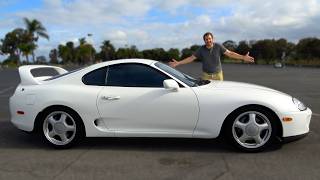

Why the MkIV Supra Is a Legend
45sOpens with iconic Fast & Furious reference and teases a rare unmodified Supra for sale, instantly grabbing attention of car enthusiasts and nostalgia seekers.
▶ Play Clip"The title accurately reflects the car's legendary status and the video delivers a thorough review with all the promised quirks, features, and driving impressions."
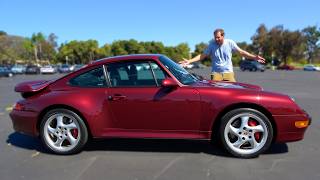
This video is a comprehensive review of a 1995 Toyota Supra Turbo, a legendary Japanese sports car and icon from the Fast and Furious films. The host explores the car's quirks, features, driving experience, and cultural significance, while also promoting its live auction on Cars and Bids and a NordVPN sponsorship.
The 1995 Toyota Supra Turbo is introduced as a legendary iconic Japanese car, hero of the original Fast and Furious, currently being auctioned on Cars and Bids.
NordVPN sponsor segment: features include switching virtual location for streaming, protecting private data, and saving money on bookings.
The Supra started as a sporty trim of the Celica in the 1970s, became its own model in the 1980s, and the Mark IV (1993-1998) is the most beloved.
The Mark IV Supra uses Toyota's famous 2JZ inline-six; the turbo version produces 320 hp, 0-60 in mid-4 seconds, and is known for reliability and tunability.
The Supra's fame from The Fast and the Furious has driven up its value; the Ferrari in the scene is now cheaper than the Supra.
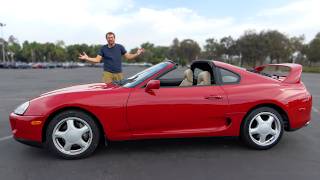
The Supra's clean, swoopy 1990s design, including a giant rear wing and distinctive taillights, has aged well and is highly iconic.
Key exterior quirks: the giant rear wing (not on all models), the 'Supra' font, hidden keyhole in taillight, and the complex sport roof removal procedure requiring specific tools.
Driver-focused cockpit with controls angled toward the driver, circular vents, warning lights hidden to the side, and a generic Toyota steering wheel and radio.
The Supra has standard rear seats (2+2) that fold down; cargo area accessed via hidden keyhole in taillight, but trunk space is limited.
Driving impressions: smooth and solid, with a magical shifter and linear acceleration that builds above 4,000 rpm; handling is more grand touring than focused sports car.
The mark IV Supra Turbo is a legend; Doug scores it 56/100, noting it's not as focused as the NSX but the best all-around combination of beauty, speed, fun, practicality, and durability.
The Mark IV Toyota Supra Turbo lives up to its legendary status as an iconic 1990s sports car, combining a timeless design, a legendary powertrain, and movie fame into a compelling package that is as desirable today as it was decades ago.
What engine does the Mark IV Supra Turbo use?
Toyota 2JZ 3.0L twin-turbo inline-six.
04:01
How much horsepower did the turbo version produce?
About 320 horsepower.
04:57
What was the 0-60 time of the Supra Turbo?
Mid-4-second range.
05:06
What was the original MSRP of the Supra Turbo?
About $50,000 (equivalent to $110,000 today).
05:20
Name three reasons the Mark IV Supra is so beloved.
The legendary 2JZ powertrain (tunability and reliability), movie stardom from The Fast and the Furious, and its timeless, clean design.
03:43
What is the procedure to remove the Supra's sport roof?
Use two tools: one to unlock the center, then an Allen wrench to undo bolts on all four corners; then push up to remove.
12:39
Where is the hidden keyhole to open the trunk?
In the passenger-side tail light assembly.
22:42
What Doug score did the Supra Turbo receive?
56 out of 100.
31:36
How did the Mark V Supra differ from the Mark IV?
It is based on the BMW Z4, smaller, two-seater, more affordable, with a standard four-cylinder engine.
24:10
Is the Mark IV Supra a sharp sports car or a grand tourer in stock form?
More of a grand touring car with a sports car powertrain; it has a smooth, solid ride with some body roll and not ultra-precise handling.
29:43
The Legendary 2JZ Engine
Demonstrates why the engine is iconic: reliable, tunable, and powerful, forming the core of the Supra's fame.
03:58Movie Fame and Value Irony
The Fast and the Furious elevated the Supra's status to the point where it now costs more than the Ferrari it raced.
06:58Timeless 1990s Design
The clean, swoopy lines have aged exceptionally well, making the car instantly recognizable and iconic.
08:22Driving Character: More GT than Sports Car
The stock Supra is smoother and less focused than peers like the NSX, which explains its grand touring appeal and tuner culture.
25:22Doug Score: 56/100
The balanced score reflects the car's all-around strengths without excelling in any single category.
31:36[00:00] This is a 1995 Toyota Supra Turbo and
[00:05] it's one of the most legendary iconic
[00:08] Japanese cars ever made. The hero from
[00:11] the original Fast and Furious movie, one
[00:14] of the great 1990s sports cars. Today,
[00:18] I'm going to review this relatively
[00:20] unmodified Mark IV Supra Turbo and I'll
[00:24] show you all of its quirks and features.
[00:30] Before I get started, great news. This
[00:33] Supra Turbo is currently for sale and
[00:36] it's being auctioned live on Cars and
[00:38] Bids and this is a good one. Factory
[00:41] Supra Turbo, factory manual transmission
[00:44] and it's relatively untouched whereas a
[00:47] lot of these have been heavily modified
[00:49] and you can buy it on Cars and Bids. So,
[00:51] once you finish watching this video,
[00:53] click the link in the description below
[00:55] to visit the live auction for this Supra
[00:58] Turbo where you can bid on it and buy it
[01:01] only on Cars and Bids. This episode is
[01:04] brought to you by NordVPN and if you
[01:07] spend any time online, which obviously
[01:09] you do because you're watching this, you
[01:11] should probably have it. One of the
[01:12] coolest things about NordVPN is you can
[01:14] switch your virtual location. So, let's
[01:16] say you're traveling abroad. You're in
[01:18] Germany, in Japan, wherever and suddenly
[01:20] your streaming services don't work the
[01:22] same. Well, with NordVPN, you just
[01:24] switch your location back to the US and
[01:26] boom, everything works like you're at
[01:28] home. Or maybe there's a sporting event
[01:30] or a show that's only available in
[01:32] another country. Same deal. Click,
[01:34] switch, done. It also protects your
[01:36] private data. Your passwords, bank
[01:38] details, all the stuff you don't really
[01:39] want floating around out there,
[01:41] especially if you're on a public Wi-Fi
[01:43] at a hotel or an airport. I'm constantly
[01:46] on random Wi-Fi networks and NordVPN
[01:48] keeps everything encrypted and secure.
[01:50] And here's something most people don't
[01:52] realize, you can actually save money by
[01:54] switching your virtual location when
[01:56] booking flights, hotels, even
[01:58] subscriptions. Prices can vary depending
[02:00] on the country, and NordVPN lets you
[02:03] take advantage of that. It's super fast,
[02:05] no buffering, no weird slow down, and
[02:07] one account works on up to 10 devices.
[02:10] All of that for basically the price of a
[02:12] cup of coffee per month. So, to get the
[02:15] best discount on your NordVPN plan, go
[02:18] to nordvpn.com/dougdemuro.
[02:22] Our link will also give you four extra
[02:24] months on the two-year plan, and there's
[02:26] no risk with Nord's 30-day money-back
[02:29] guarantee. The link is in the episode
[02:32] description box. Now, all right, time
[02:34] for the quirks and features of the Mark
[02:37] IV Supra Turbo, starting with a little
[02:41] background on why this car is so
[02:43] special. So, the Supra first came out in
[02:47] the 1970s, and initially, it was a
[02:49] sporty trim level of the Toyota Celica,
[02:52] which was sort of the sporty little
[02:55] coupe, kind of fun car in Toyota's
[02:57] lineup. The Celica Supra was the
[02:59] performance version, and in the 1980s,
[03:02] the Supra was spun off to be its own
[03:05] completely distinct, separate car, and
[03:08] the Celica kind of stayed on the sort of
[03:10] entry-level sporty path, while the Supra
[03:13] became the real sports car, the kind of
[03:16] high-performance pinnacle muscle car in
[03:20] Toyota's lineup. This Supra is the
[03:22] fourth-generation model, called the Mark
[03:25] IV by enthusiasts, and it is by far the
[03:28] most beloved Supra of all. It came out
[03:32] for the 1993
[03:34] model year, and it's a legend in the
[03:37] Japanese car world and in the car
[03:40] enthusiast community as a whole. Now,
[03:43] there are three primary reasons why the
[03:46] Mark IV Supra is so beloved. Among
[03:49] Supras, among Japanese cars, it is one
[03:52] of the all-time icons. And a big reason,
[03:55] maybe the most important reason, is the
[03:58] powertrain. All Mark IV Toyota Supras
[04:01] used Toyota's famous 2JZ six-cylinder.
[04:05] It was a 3-liter inline-six, so a very
[04:08] smooth engine, and it was known for its
[04:12] reliability. These are stout
[04:14] powertrains. They're very difficult to
[04:16] mess up or destroy, and for its
[04:19] tunability. This powertrain was in a lot
[04:21] of Toyotas over a long time, and
[04:23] combined with its very robust build
[04:26] quality, a lot of tuners made a lot of
[04:28] engine builds based on this engine. So,
[04:31] there's a lot of tuning capabilities and
[04:33] parts you could buy, and for those two
[04:35] big reasons, people love the 2JZ. Now,
[04:39] there were two flavors of 2JZ in the
[04:42] Supra. The base model had a naturally
[04:44] aspirated version of it that made about
[04:47] 220 horsepower. But, if you stepped up
[04:50] to this, the Supra Turbo, you got a
[04:53] twin-turbo version of the same 2JZ
[04:56] six-cylinder, which made about 320
[04:59] horsepower. And that was a big deal back
[05:02] in the '90s. In fact, this car, even at
[05:05] around 3,400 lb, did 0 to 60 in the
[05:09] mid-4-second range, which really made it
[05:12] fast. It's still pretty quick today, and
[05:14] it was really quick back then. Even at
[05:18] this car's pretty high price point. The
[05:20] sticker price on this Supra, back 30
[05:23] years ago, would have been around
[05:25] $50,000, which translates to about 110
[05:29] grand in today's money. Big money for
[05:33] this car, but it was big, fast, and big,
[05:37] cool, in part thanks to this wonderful
[05:39] powertrain. One 2JZ quirk I've always
[05:42] loved, when you open the engine
[05:44] compartment in this car to see the famed
[05:47] 2JZ six-cylinder. The most prominent
[05:50] words that are staring back at you are
[05:53] traction control mounted directly out
[05:57] and facing anyone looking into the
[05:59] engine bay, I guess to brag about the
[06:01] amazing equipment that this car had,
[06:04] traction control. Now, the 2JZ was used
[06:08] in a lot of different Toyota and Lexus
[06:10] products, including the Lexus SC300,
[06:14] which in Japan was called the Toyota
[06:16] Soarer, and which shared its platform
[06:20] with the Supra. The Soarer and the SC300
[06:23] were more of a grand touring kind of
[06:25] luxury car, and for the Supra, the
[06:27] platform was taken, changed, the car was
[06:29] shortened, the twin turbo powertrain
[06:32] went in, and the Supra was born. And
[06:36] even though this engine is so beloved
[06:38] for its tunability in all Toyota models,
[06:41] the Supra was especially beloved because
[06:43] the twin turbo version was a rarity in
[06:46] Toyota's lineup, and because the Supra's
[06:49] sporty chassis kind of lent itself to
[06:52] performance already before you even
[06:54] started tuning. Reason number two why
[06:58] the Mark IV Supra is so beloved is, of
[07:01] course, its movie stardom, its Hollywood
[07:04] celebrity. This car was basically the
[07:08] hero car in the original Fast and the
[07:11] Furious movie. Of course, many sequels
[07:15] on since then, the Fast and the Furious
[07:17] movies have kind of become the defining
[07:20] car movies of the last 30 years. And in
[07:23] the very first one, Paul Walker drove a
[07:26] Supra as the fast hero car, and it was a
[07:29] big part of maybe the most memorable
[07:32] scene in the whole movie, where Paul
[07:34] Walker, driving the Supra, pulls up next
[07:36] to a Ferrari on the Pacific Coast
[07:38] Highway, and he says, "How much does it
[07:40] cost?" And the Ferrari guy says, "More
[07:42] than you can afford, pal." Ferrari,
[07:45] condescendingly talking down to the
[07:47] loser in the Supra. Of course, the great
[07:49] irony of that scene is that in the years
[07:51] since, the Supra's star status has
[07:54] elevated its price tag well beyond the
[07:57] Ferrari F355 Spider that was used in
[08:00] that scene. And these days, the Ferrari
[08:03] owner would ask the Supra how much it
[08:04] costs, and the Supra owner would tell
[08:06] him that the Supra is far more expensive
[08:10] than that cheapskate Ferrari. And part
[08:12] of the reason for that shoot up in
[08:14] values is the powertrain, but also the
[08:18] movie icon status. And finally, the
[08:22] third reason why the Mark IV Supra, I
[08:25] think, has had so much success and love
[08:27] sent its way, the reason that not as
[08:29] many people talk about, it just plain
[08:33] looks cool. Japan sent us a lot of
[08:36] special sports cars in the '90s, and
[08:38] they didn't always look great. The
[08:41] Subaru SVX and the Mitsubishi 3000GT
[08:44] were awesome cars, but their designs
[08:46] were more fussy. They were a little bit
[08:49] over-styled. The Acura NSX was super
[08:51] cool, but it had more of a focused
[08:53] performance car look. The Nissan Skyline
[08:56] GT-R was an awesome vehicle, but
[08:59] definitely less of a true sports car
[09:01] design, as it started life as a family
[09:04] sedan. The Supra, and honestly, the FD
[09:07] Mazda RX-7, those cars had a clean,
[09:11] simple, swoopy, sporty design that not
[09:14] only, I think, has aged pretty well, but
[09:17] was also very representative of the
[09:20] '90s. A lot of cars from this era had
[09:22] these sort of flowing lines, a little
[09:24] bit of a jelly bean look to them, rather
[09:26] than the angular 1980s that preceded.
[09:29] And this car is really representative of
[09:32] that era. This design really looks like
[09:35] the times, and it was one of the better,
[09:38] more iconic, more emblematic designs
[09:42] that came from that era. And I think
[09:44] that, too, has helped the Supra earn so
[09:47] much status and iconic power over the
[09:51] years since it came out. But anyway,
[09:53] beyond the lore of the Mark IV Supra,
[09:56] there's also a lot of quirks and
[09:58] features to discuss. So, let's start on
[10:00] the outside, and specifically, let's
[10:02] start with the wing. This giant rear
[10:05] wing has become so emblematic of the
[10:07] Supra itself. Although, interestingly,
[10:10] not all Mark IV Supras had the rear
[10:12] wing. Most turbos have it, but it's not
[10:15] a given. And some base model naturally
[10:17] aspirated cars have it, too. I've always
[10:20] found that a Supra without the wing
[10:22] almost looks naked. It just doesn't look
[10:25] quite right. To me, it's like the
[10:26] Countach. Yes, they were made from the
[10:29] factory without a wing, but in my mind,
[10:31] the Supra has a wing. And not just any
[10:34] wing, but this ridiculously large one
[10:36] that was probably the biggest wing on
[10:38] any of those mid-'90s Japanese
[10:40] performance cars, at least from the
[10:42] factory. Definitely a very iconic part
[10:44] of the Mark IV Supra design language. As
[10:47] too was the font written on the back.
[10:50] Supra, written out like this, again,
[10:52] very '90s this sort of font look, but
[10:56] it's also just so characteristic of the
[10:58] Supra. When people think about the Mark
[11:00] IV Supra, they think about this famous
[11:02] font, which was on the back of all of
[11:04] them and which everybody remembered from
[11:06] the posters, the brochures, and the cars
[11:08] themselves. Now, this is a factory Supra
[11:11] Turbo, but it doesn't say Turbo, and
[11:13] that's because they didn't start adding
[11:15] the word Turbo until later in the
[11:17] production run. Early Supra models just
[11:19] said Toyota Supra, whether it was a
[11:21] Turbo or not, that's all you got. Turbo
[11:24] came later. Now, the other distinctive
[11:27] feature around the back is, of course,
[11:29] the taillight situation. You have two
[11:31] taillight housings, as you can see. Of
[11:34] course, one on each side. But, the
[11:35] distinctive part was that inside each
[11:37] housing, you have individual housings
[11:39] for the tail light, the turn signal, the
[11:42] brake light, the reverse light on either
[11:43] side. And that created this very
[11:45] distinctive Toyota Supra lighting
[11:47] signature that was so well known. It
[11:50] combined for this tremendously
[11:52] distinctive rear end with the wing, the
[11:54] Supra badge. It was all very Mark IV.
[11:57] You look back on this car, you won't
[11:59] mistake it for anything else. Now, the
[12:02] other interesting exterior quirk of this
[12:05] car is the roof situation. Because, like
[12:08] other '90s Japanese sports cars, the
[12:10] Supra was offered with different roof
[12:13] options. There were two. You could get a
[12:15] full coupe, just a regular hardtop
[12:18] coupe, pretty normal, pretty standard.
[12:20] Or, you could get the sport roof. And
[12:24] that was a target top that could be
[12:26] removed. Now, this car has the sport
[12:29] roof. You can easily tell because the
[12:31] line across the front, the line across
[12:33] the back, these of course are body lines
[12:35] for the removable top that could be
[12:37] taken off. And removing the sport roof
[12:39] is actually quite difficult. Unlike what
[12:42] they showed us in The Fast and the
[12:43] Furious where the Supras used and they
[12:45] throw the roof off while they're doing
[12:47] that heist on that 18-wheeler on the
[12:49] freeway, it's actually quite a process
[12:52] that requires a Toyota tool bag that
[12:55] comes with the car. This is it. This
[12:57] came with all of the sport roof Supra
[12:59] models. You can see there are two tools
[13:01] in here. And they have very important
[13:04] purposes. This tool is used to unlock
[13:08] the sport roof. And you can see there's
[13:10] a hole in the center that says lock and
[13:12] unlock. And you would stick this tool in
[13:14] here and you could twist it left or
[13:16] right for lock or unlock. That's the
[13:18] beginning of the procedure. Next, you
[13:21] would take this other tool, which
[13:22] actually is basically just an Allen
[13:24] wrench, and you you would stick it in
[13:26] all four holes on all four corners of
[13:30] the Supra Sport roof. You had to do each
[13:33] one, you had to unlock the bolt that was
[13:35] in all four sides, and only then was the
[13:39] roof ready to come off. And from that
[13:41] point, you could just kind of push up on
[13:43] the roof. A lot of these have been
[13:44] sitting in place for years, so they're
[13:46] kind of hard to do, but you push up, and
[13:48] then you can remove the roof, and you
[13:50] have an open-top Targa convertible
[13:53] situation, which is kind of cool. Now,
[13:56] this procedure is a lot more difficult
[13:58] than basically every other car. Even
[14:01] cars from this era had latches you would
[14:03] just open with your hands. You didn't
[14:04] need a tool. For some reason, the Supra
[14:07] just made it more complicated, and that
[14:08] leads most people to just leave their
[14:11] sport roof in place, often for years or
[14:13] even decades. But, they can come out,
[14:16] and that's how. And when they're
[14:17] removed, interestingly, the sport roof
[14:20] has a place in the trunk where it can
[14:22] latch. You see here on the corners of
[14:24] the trunk, you have these plastic pieces
[14:26] where it can latch into place and kind
[14:28] of get stuck down so it doesn't come
[14:30] out, and that way you can bring your
[14:31] sport roof with you once you take it
[14:33] off. The drawback, of course, is once
[14:36] you have it latched in the trunk, it's
[14:37] taking up pretty much all of your trunk
[14:39] space, and it can only latch one way
[14:42] with the painted side up, which means
[14:44] you can't really put anything on top of
[14:46] it, or you risk scratching your sport
[14:48] roof, which isn't the best situation,
[14:50] but at least you can take it with you,
[14:53] which is pretty nice considering it's a
[14:55] fairly large and bulky panel. But
[14:57] anyway, next up, since we've already
[14:58] started discussing the interior, since
[15:00] we're talking sport roof, let's move in
[15:03] here and talk interior quirks and
[15:05] features, starting with the obvious, the
[15:07] cockpit design. You can see the entire
[15:10] center control stack is angled towards
[15:13] the driver, and the result is a very
[15:15] cockpit-like design, very
[15:17] driver-focused, with all the controls
[15:20] within the driver's reach, facing the
[15:22] driver, leaving the front passenger kind
[15:24] of an afterthought in this car. It was
[15:25] all about the driver's experience, and
[15:28] the cockpit design theme was actually
[15:30] pretty common in a lot of these '90s
[15:32] Japanese sports cars. They were trying
[15:34] to go high-tech and feel like a fighter
[15:36] jet, and doing this really created that
[15:39] experience. And from basically anywhere
[15:41] you look in the Mark IV Supra's
[15:43] interior, you have that feeling. From
[15:46] the passenger seat looking over at the
[15:48] cockpit, the driver seat, you're really
[15:50] surrounded by all the controls. That's
[15:52] how it feels in here, and it was very
[15:54] intentional. One ironic thing that I
[15:56] think about this cockpit look is that it
[15:59] all sort of focuses in the center on the
[16:01] steering wheel, which is just a generic
[16:04] '90s Toyota steering wheel. Looks like
[16:06] it was borrowed from a Camry or a
[16:07] 4Runner. It's kind of disappointing the
[16:09] Supra didn't get a sportier wheel.
[16:11] Interestingly, it actually did, but not
[16:14] until '98, which was the final model
[16:16] year here in the States. So, all of the
[16:18] earlier Supra models had this four-spoke
[16:21] generic Toyota steering wheel, and they
[16:23] didn't go true sporty until the year
[16:26] they just got rid of the car entirely.
[16:28] Now, there are a few quirks in this
[16:30] cockpit setup, starting with the climate
[16:33] controls, which again really are faced
[16:35] toward the driver to the point where the
[16:36] passenger is actually almost at a
[16:38] disadvantage in seeing and accessing
[16:41] them. This is all driver focused in
[16:43] here, and I've always loved the fan
[16:45] speed control in this car because you
[16:48] turn on the fan, and then as you twist
[16:50] the dial, it lights up individual lights
[16:53] within the fan speed control kind of
[16:55] corresponding to how much fan speed
[16:58] you've dialed up, which is a pretty cool
[17:00] little quirk. It's a nice touch that
[17:03] they did that. The climate control
[17:04] temperature dial is fairly similar,
[17:06] although unfortunately it does not have
[17:08] those distinctive lights throughout it
[17:10] as you twist the dial, but it's still
[17:12] sort of the same setup and the same
[17:13] feel. Now, the climate vents, as you can
[17:15] see, are circles. There's one in the
[17:17] center on the driver side, and there's
[17:18] one on the other side, both of which are
[17:21] circles sort of focused, I think
[17:23] intentionally, trying to make it seem
[17:25] more fighter jet-ish. The climate vents
[17:27] on the passenger side of the dashboard
[17:28] are just normal vertical rectangles,
[17:31] nothing special for the passenger. The
[17:33] driver gets the cool stuff. And there
[17:35] are a lot of circles. You can see the
[17:36] clock is within a circle, even though
[17:38] it's just a normal clock face read out,
[17:40] they put it in a circle. And same with
[17:42] the power mirror control, again a
[17:44] standard control, but placed inside a
[17:46] circle. I think the circle's there to
[17:47] give a little bit more of a purpose and
[17:49] sort of a jet plane kind of feel than
[17:52] just normal boring car controls. A few
[17:54] other interesting quirks in this area.
[17:56] One thing I love about the gauges, they
[17:58] are very focused, very simple, easy to
[18:01] read with the tachometer in the center,
[18:04] which is a traditional placement for
[18:06] very focused sports cars, where the
[18:09] engine speed is more important to you
[18:11] than the actual vehicle speed since
[18:13] you're driving in a racetrack
[18:15] competition setting, and the speed
[18:16] you're going isn't as important on the
[18:18] racetrack. Something else I love about
[18:20] the gauge cluster setup is that the
[18:23] warning lights are actually placed off
[18:25] to the side. They're over here in this
[18:27] kind of little panel that's actually
[18:29] hard to see behind the steering wheel
[18:31] rim, which makes it perfect for just
[18:34] ignoring the warning lights, which a lot
[18:36] of people do.
[18:38] >> [laughter]
[18:38] >> Especially 90s cars, stuff's hard to
[18:40] fix, just forget about it, put tape over
[18:42] it. That's easy in a Supra, where it's
[18:44] awful over to the side. But anyway, one
[18:46] other interesting note about the cockpit
[18:48] feel, even the center console armrest
[18:51] storage is aimed specifically for the
[18:54] driver. The latch is on the driver side,
[18:56] and it's hinged away from the passenger,
[18:58] meaning the passenger's access to the
[19:00] storage is blocked. This again was
[19:03] intended specifically for the driver of
[19:06] this car. Now, one other interesting
[19:08] quirk in here is the door handle
[19:10] situation, which mounted very low on the
[19:13] door panel. When you look at the door
[19:15] panel, it doesn't seem right. It seems
[19:16] kind of weird how low it is. But, when
[19:18] you close the door, it actually makes
[19:20] perfect sense. It's perfectly in the
[19:21] right spot to fall into your hand when
[19:24] you're going to get out and open the
[19:25] door. More interesting though, on the
[19:27] driver side, again part of the cockpit
[19:30] feel, you can see the power locks and
[19:32] the window switches are mounted right
[19:34] here. It's kind of an odd positioning
[19:36] until you close the door and discover
[19:39] that they're mounted there because it
[19:41] fits with the overall cockpit design.
[19:43] And when the door is closed, those
[19:45] switches are now facing the driver in
[19:48] the same sort of general shape that all
[19:50] the other switches are as a part of that
[19:53] driver-focused cockpit. It's actually
[19:55] kind of cool and interesting design when
[19:57] you think of it that way. And by the
[19:58] way, speaking of those switches, the
[20:00] window switches in this car are just
[20:03] standard Toyota window switches off
[20:05] basically every other Toyota from this
[20:08] era. Same deal with the stocks coming
[20:10] off the steering column, the turn signal
[20:11] stock the headlights on it, the wiper
[20:13] stock. They were on basically every
[20:16] Toyota product in this era. I already
[20:18] mentioned the generic steering wheel,
[20:20] which is another example of this, but
[20:21] also the radio head unit. It's fit into
[20:24] the cockpit shape, but it's just the
[20:25] same Toyota rectangle head unit that was
[20:28] in a lot of different Toyota models for
[20:31] a long, long period of time. It's kind
[20:33] of funny that Toyota, even in the Beast,
[20:36] the highest-performing, most expensive
[20:38] Toyota model, even then you had some
[20:41] generic Toyota stuff that followed in
[20:44] from the rest of the lineup. By the way,
[20:46] one other notable item in here is the
[20:48] transmission lever, the manual shifter
[20:51] as you can see, which I think is
[20:52] perfectly placed. It's sort of short and
[20:54] stubby, but it falls perfectly to hand
[20:57] based on where it is, and it's really a
[20:59] wonderful piece. I'll talk more about it
[21:01] when I'm driving, but the important
[21:03] thing to know is these were offered as
[21:04] six-speed manual transmission cars or
[21:07] with a four-speed automatic. And yes,
[21:10] you could get the Supra Turbo as a
[21:12] manual or automatic. Of course, also
[21:14] true of the base car. These days,
[21:16] everybody wants the manual and a lot of
[21:18] people are swapping the automatics out
[21:20] for manuals, but both were possible when
[21:22] this car was new. Anyway, next we move
[21:25] on to the back seats and interestingly,
[21:27] yes, the Mark IV Supra has back seats.
[21:31] That was actually a pretty big deal
[21:33] because most of these '90s Japanese
[21:35] sports cars didn't. The FD RX-7 never
[21:38] had back seats in the states, the
[21:39] 3000GT, the 300ZX offered back seats,
[21:43] but only in a 2+2 model that had a
[21:46] specific stretched wheelbase and kind of
[21:48] screwed up the whole look of the car.
[21:50] So, it's pretty impressive to see the
[21:51] Supra coming standard with back seats
[21:54] without a long wheelbase or a special
[21:57] version. With that said, the back seats
[21:59] are really basic. You can see two
[22:01] individual buckets back there with seat
[22:03] belts and that's about it. You don't get
[22:05] a climate vent, an ashtray, a roll-down
[22:08] window, even a storage compartment. You
[22:09] get nothing. You should just be happy
[22:11] and feel lucky that you're riding around
[22:14] in the back of a Mark IV Supra. Now,
[22:17] with that said, the seats do have one
[22:19] nice party trick, which is that they
[22:20] fold down to increase your cargo
[22:23] capacity because the cargo area opens up
[22:26] to the entire cockpit and so you can
[22:28] fold the seats down and get more cargo
[22:31] space in back. Kind of a nice feature.
[22:33] Now, and since we're talking cargo area,
[22:35] next up, let's get back here and access
[22:38] it, which is made possible through a
[22:39] pretty cool quirk, a hidden keyhole
[22:42] that's been kind of subtly placed in the
[22:44] tail light on the passenger side. So,
[22:47] you don't have to stick it in the middle
[22:48] in the body where it's very obvious.
[22:50] It's sort of hidden in here in the tail
[22:51] light assembly. You stick the key in,
[22:54] pop open the tailgate, and then you open
[22:57] it up. And you discover that there's
[22:59] actually not really all that much room.
[23:01] You have a pretty high floor in here, so
[23:04] even though it's fairly wide and pretty
[23:06] long, you don't really get much depth
[23:08] for a lot of stuff to be put in back.
[23:10] Now, with that said, of course, you do
[23:12] have the ability to fold down those rear
[23:14] seats like I mentioned before, which
[23:16] adds some cargo space if you're trying
[23:18] to put in a specially large items, and
[23:20] obviously that can make the car more
[23:21] practical. One other interesting quirk
[23:23] back here, you have a little switch to
[23:26] turn on a light. So, if you're loading
[23:28] or unloading stuff in the dark,
[23:30] strangely doesn't come on automatically.
[23:32] You have to find the tiny switch to turn
[23:34] it on, but once you do, then you can get
[23:36] a little illumination when you're taking
[23:39] stuff in or out of your Supra at night.
[23:42] So, those are your quirks and features,
[23:45] but now I want to discuss what exactly
[23:47] happened after this car. So, like I
[23:50] mentioned, the Supra's last year in the
[23:52] States was '98, but production continued
[23:55] globally after that. Demand in the
[23:57] States had fallen, the Supra's getting
[23:59] old, they pulled it off the market, but
[24:01] they sold it in Japan through 2002,
[24:04] and then it was gone. And it would be a
[24:06] long time, more than a decade, before
[24:08] the Supra would return. And about 10
[24:11] years ago, we got the Mark V
[24:14] Supra back in action, but a very
[24:17] different vehicle. No longer a
[24:18] four-seater, smaller car, much more
[24:21] affordable price point, standard
[24:23] four-cylinder engine, although a
[24:25] six-cylinder is optional, and most
[24:28] importantly, it was based on a BMW. The
[24:31] new Supra shares most of its
[24:33] underpinnings with the BMW Z4. It was a
[24:36] totally different Supra, but it's still
[24:40] called the Mark V,
[24:41] and it was embraced by Toyota Supra
[24:44] enthusiasts. And the new Supra has
[24:46] actually found a big tuner culture of
[24:49] its own, just like they had for this one
[24:52] all those years ago. [clears throat] And
[24:53] it's actually been kind of cool and kind
[24:55] of encouraging as a car enthusiast to
[24:57] see the Supra return and still find that
[25:00] culture even in today's world after the
[25:03] name had been dormant for so long. So,
[25:05] the Mark V Supra has brought it back,
[25:07] but the Mark IV still reigns supreme in
[25:10] everybody's mind. And so, with that and
[25:13] all the quirks and features, now it's
[25:15] time to get behind the wheel. Let's talk
[25:17] about how the Mark IV Supra Turbo
[25:19] drives. All right, driving the Mark IV
[25:23] Supra Turbo. I love these cars. I have
[25:26] wanted to own one of these cars for a
[25:28] long time.
[25:29] Um I know that a lot of people think
[25:31] they are overhyped and blah, blah, blah,
[25:32] but I think there's a lot of great
[25:34] reason that this car gets so much hype
[25:36] and so much love. I think it looks
[25:38] awesome. I think the powertrain is
[25:39] fantastic. I know a lot of people say
[25:41] it's a it's kind of a mid car when it's
[25:43] stock like this one mostly is, but to
[25:45] me, it's cool that you can run the gamut
[25:48] for what it can be from a from a fairly
[25:50] stock kind of cruiser car to a really
[25:53] off-the-chain, you know, modified,
[25:56] ridiculous situation. And this
[25:58] powertrain and this platform allows that
[26:00] to happen. First thing I notice in this
[26:01] car is just how smooth it is. I am
[26:04] astonished. This car is coming up on
[26:05] 100,000 mi. And
[26:08] even opening the door, it's like
[26:10] surprisingly high quality. There's not
[26:12] any like shaking or rattling. You turn
[26:13] the engine and the powertrain being a
[26:15] six-cylinder engine, a straight six,
[26:17] that's a smooth engine design based on
[26:19] the laws of physics and it feels very
[26:22] smooth. Sitting here at a light, you
[26:24] feel very little. You feel almost no
[26:26] rumble. Despite being a Toyota from the
[26:29] '90s with a fairly plastic interior, it
[26:31] is a shockingly,
[26:33] uh I don't want to say upscale, but like
[26:36] solid experience that you I wasn't
[26:38] really expecting. You know, I think of
[26:39] cars Toyotas from the '90s, I think of
[26:41] 4Runners, I think of Celicas. They were
[26:43] fine, but they were commuter cars. They
[26:45] were durable and reliable, but they were
[26:47] also pretty plasticky. They were not
[26:49] This almost feels Lexus-like in its kind
[26:52] of quality level, which is interesting.
[26:54] And the ride quality feels like that,
[26:56] too. It is not a particularly harsh
[26:58] ride.
[26:59] Um it's a little It's certainly harsher
[27:00] than the Lexus SC. I did one of those
[27:02] maybe a year ago. It's harsher than
[27:04] that. This car's also been modified a
[27:06] little bit. There's some suspension
[27:07] stuff on it, I think. But it Again, it
[27:09] feels solid. It has a truly like solid,
[27:13] smooth, almost kind of higher-end feel
[27:16] to it uh that I wasn't expecting. Now,
[27:18] one of the things I've always loved
[27:20] about this car, one thing that everybody
[27:21] should love about this car who's
[27:22] spending time in one, is the shifter
[27:25] clutch situation. The clutch itself is
[27:27] fine. Uh linear, it's a little heavier
[27:29] than I would want. Um it's it's not
[27:31] quite as communicative communicative as
[27:33] say the clutch in my Porsche 993, which
[27:35] also comes as from this era as a sports
[27:37] car. However, the shifter is just
[27:40] magical. Just absolutely magical. Short
[27:43] throws, it's the right amount of
[27:45] notchiness. It's just up It's a perfect
[27:47] perfect perfect shifter situation. All
[27:49] right, going to floor it here.
[27:55] Yeah, it's definitely not as fast
[27:57] >> [laughter]
[27:58] >> as some cars are, let's put it that way.
[28:01] It's quick. It's quick. I don't want to
[28:04] take away from it. It It definitely has
[28:05] some speed. I I understand why people
[28:07] get so excited to modify them. You kind
[28:10] of have to get up high to get the power.
[28:12] Although, when you do that, it's like a
[28:13] pretty fast experience, honestly. Uh
[28:17] It It It It just It takes a little bit
[28:19] of a while to build to that level. It
[28:21] definitely is not incredibly quick from
[28:24] zero, but once you get up into the
[28:26] 4,000-plus rev range, it actually is
[28:28] pretty pretty quick.
[28:30] Now, one of the things I think that a
[28:31] lot of people complain about this car is
[28:33] that it's sort of wallowy
[28:35] um in stock form.
[28:37] And that is kind of true. This car
[28:38] definitely It does not have the sports
[28:40] car feel of my 993 Turbo. You know,
[28:43] honestly, the acceleration is actually
[28:45] pretty good. You just got to let it get
[28:47] up there. And then once it does get up
[28:48] there, it's not like a lot of turbo cars
[28:50] where it kicks you in the face all at
[28:51] once. It it it's a little slow to build
[28:54] until 4,000 and then it's not like a
[28:56] smash in your face. It's a linear build,
[28:58] but up to six this car actually feels
[29:00] like legit fast. But what I was going to
[29:02] say about handling is it definitely has
[29:04] less of a focused sports car vibe like
[29:07] an NSX or an FD RX-7 and definitely a
[29:10] little bit more of sort of a touring car
[29:12] type feel to it. It doesn't have the
[29:15] steering precision. The chassis does
[29:16] feel a little bit more prone to some
[29:18] body roll and maybe not like immediate
[29:20] and amazingly precise movements like you
[29:22] just get in some of the other 90s
[29:23] Japanese sports cars or my 993 that kind
[29:26] of stuff. I think that um if you
[29:28] approach the Supra thinking it's going
[29:29] to be like the ultimate sports car,
[29:31] that's not really what it is. It is not
[29:32] an S2000, it is not an FD RX-7 kind of
[29:35] an interesting way because this car was
[29:37] so vaunted from its days in Fast and the
[29:39] Furious and because it has a powertrain
[29:41] that allows you to modify it so well. I
[29:43] think what this car does well is
[29:44] actually uh like grand touring cruising
[29:47] which is it's a fast car that you could
[29:49] probably sit fast on the Autobahn.
[29:52] Yeah, it's quick. It's quick when you
[29:53] get up in the range.
[29:56] But you can feel that suspension float
[29:58] as you go over bumps even at higher
[30:00] speeds. It's kind of interesting. I
[30:01] think this is a in a way I think this is
[30:03] a a grand touring car with a sports car
[30:06] powertrain and a sports car design and a
[30:09] sports car sort of ethos and and
[30:11] history. And so a lot of people really
[30:14] come at it from the sports car lens, but
[30:16] this car is definitely not as eager as
[30:18] like a true purpose-built focused sports
[30:20] car and I think that a lot of the reason
[30:21] the tuner culture exists around this car
[30:23] is because people want it to be that
[30:25] focused sports car and you can make it
[30:28] that focused sports car. It just
[30:29] requires a little bit of effort.
[30:31] Certainly not how it was done from the
[30:32] factory. In fact, from the factory it is
[30:35] just a really solid car. It's just a
[30:38] good nice car. Would be easy to do big
[30:41] miles in. I think that in stock form
[30:43] it's a little misunderstood. People say
[30:45] it's not that great. I think it's more
[30:47] that it's intended to be not necessarily
[30:50] that S2000 type situation. Overall, hard
[30:52] to say bad things about a Mark IV Supra
[30:54] Turbo. It's a It's a cool car. And so,
[30:57] that's the Mark IV Toyota Supra Turbo.
[31:02] This car is a legend. And while the
[31:05] driving experience may not equal an
[31:08] Acura NSX or a Porsche 911 Turbo, even
[31:11] though prices are heading in that
[31:13] direction, this car is just as iconic.
[31:16] Not only for its driving experience, but
[31:18] also because it is simply a legend of
[31:21] our youth. Such a special car, and you
[31:25] can buy this one on Cars and Bids.
[31:27] Anyway, now it's time to give the Supra
[31:30] Turbo a Doug score.
[31:36] And the Doug score [clears throat] is
[31:37] here, 56 out of 100, which puts the
[31:39] Supra here against rivals. At this
[31:41] point, I've driven all of the top
[31:43] Japanese sports cars from this era, and
[31:45] I really think the Mark IV Supra
[31:48] deserves the hype. It's not as focused
[31:50] as the NSX or as high-tech as the
[31:52] 3000GT-R
[31:53] IV, but it's the best combination of
[31:56] beautiful fast fun practical and
[31:59] durable out of all of them. And so,
[32:01] while it doesn't run away with any one
[32:03] category, it scores high marks in all.
[32:05] Plus, its tunability means you can get
[32:08] more in any direction you want to go. If
[32:10] you're looking for more style, or more
[32:11] power, or more handling, the Supra
[32:13] platform is ready. It's a wonderful car,
[32:16] and I want one.
⚡ Saved you 0h 32m reading this? Transcribe any YouTube video for free — no signup needed.