
AI Summary
This video explains how to build a well-developed chest using just two exercises: a pressing movement and an adduction movement. It emphasizes that a flat chest is not a genetic issue but a problem of exercise selection, and provides specific variations to target weak points.
Chapters
The video claims that only two exercises are needed for a chiseled chest: a dumbbell bench press and a cable crossover. Each targets one of the two main anatomical functions of the chest.
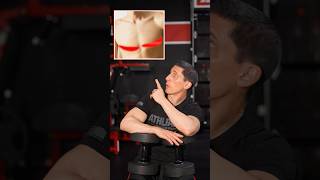
The first step is to identify which part of the chest is lagging. Most people have an underdeveloped upper chest, so they should prioritize incline presses. If the lower chest is lacking, favor decline presses.
Traditional flat bench pressing hits the middle chest and covers the most muscle overall, but it won't fix an underdeveloped upper chest unless you use an underhand grip.
The second exercise is the cable crossover, which targets adduction (bringing the arm across the chest). Variations include standard, high-to-low (for lower chest), and low-to-high (for upper chest).
A flat chest is not a genetics problem but an exercise selection problem. By choosing the right press and adduction variations, you can effectively build a chiseled chest.
Tutorial Checklist
💡 Key Takeaways
Two-Exercise Approach
Simplifies chest training to two fundamental movements, making it easy to remember and apply.
00:01Weak Point Assessment
Emphasizes individualization based on lagging areas, which is a key principle for effective training.
00:16Exercise Selection Over Genetics
Reframes a common excuse (genetics) as a solvable problem (exercise selection), which is motivating and actionable.
01:08Full Transcript
[00:01] Well, it's time to turn those flap jacks into jack slabs. And the good news is it only takes two exercises, each one hitting one of the two main anatomical dumbbell bench press [music] to check the pressing function box. But there's a
[00:16] few considerations to start. Where are you lacking the most development? If you're like most, that upper chest is lagging furthest behind. In this case, make sure you're doing at least three of them from an incline. Lower chest have
[00:30] no clear line or overhang, then favor the decline in the bulk of your sets instead. Traditional flat bench pressing will hit that happy medium and cover the most ground muscle-wise, but it won't fix that underdeveloped upper shelf
[00:42] unless you flip the grip underhand like this. Next up, adduction. The function of bringing your arm across the chest. And for this, there's no better exercise than the crossover. But again, depending on your weak point, you can pick from
[00:55] one of three different cable setups. Standard for overall chest development, high to low to target the lower chest more, and low to high to better follow and hit this area more effectively. The bottom line, having a flat chest isn't a
[01:08] genetics problem, but rather an exercise selection problem. One press, one weakness and you'll flip those pancakes into slabs