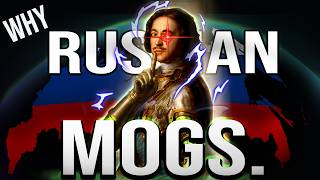

Why Russian Cyrillic is a Misnomer
45sReveals a surprising historical fact that challenges common knowledge, sparking curiosity.
▶ Play Clip"The title promises the ultimate reason to learn Russian, and the video delivers by emphasizing literature as the key motivation."
This video covers the essentials of the Russian language, from its alphabet and pronunciation to grammar and profanity, emphasizing that the ultimate reward for learning Russian is access to its rich literature.
Cyrillic was not invented by St. Cyril; his contribution was Glagolitic. His students created Cyrillic by adapting Greek letters and adding new ones.
Peter the Great reformed the Cyrillic script, removing redundant letters to create the civic script, leading to the modern Russian alphabet.
Russian has 10 vowel letters (5 hard, 5 soft). Consonants are palatalized when followed by soft vowels. Stress is mobile and unpredictable, changing word meanings.
Example: 'pisat' (to write) vs. 'pisat' (to urinate). Incorrect stress can lead to embarrassing mistakes.
Voiced consonants become voiceless at the end of words and in consonant clusters, e.g., 'vodka' pronounced 'votka'.
Russian uses cases (nominative, dative, accusative, genitive, instrumental, prepositional) to indicate word relationships, not word order.
Nouns have three genders (masculine, feminine, neuter) and multiple declension patterns. Numerals affect noun cases.
Verbs are inherently perfective (completed) or imperfective (ongoing). Motion verbs require specifying direction and frequency.
Russian profanity is based on five root words and is additive. 'Blyad' is used as punctuation. Avoid using with strangers or mentioning someone's mother.
Nikolai Gogol's 'The Nose' and 'Dead Souls' are innovative works. 'Dead Souls' follows Chichikov's scheme to buy dead serfs for a loan.
Dostoevsky's 'Notes from the Underground' critiques hyper-rational, isolated thinkers. His cautionary tale has two endings, both bad.
The poem inverts the Don Juan story: an innocent man is destroyed by a statue of Peter the Great, symbolizing the flood caused by building St. Petersburg on a swamp.
Learning Russian is challenging but rewarding, primarily for accessing its profound literature. The video encourages viewers to explore works by Gogol, Dostoevsky, and Pushkin.
Who actually invented the Cyrillic alphabet?
St. Cyril's students at the Preslav Literary School.
00:10
What reform did Peter the Great make to the Russian alphabet?
He removed redundant letters to create the civic script.
00:30
How many vowel letters does Russian have?
10 vowel letters: 5 hard and 5 soft.
01:27
What is the effect of a soft vowel on a preceding consonant?
It palatalizes the consonant, making it sound soft.
01:39
What does the word 'pisat' mean with correct stress?
To write.
02:32
What does the word 'pisat' mean with incorrect stress?
To urinate.
02:35
How many grammatical cases does Russian have?
Six: nominative, dative, accusative, genitive, instrumental, prepositional.
03:45
What case is used to show ownership?
Genitive case.
04:11
What are the three genders of Russian nouns?
Masculine, feminine, neuter.
04:34
What case does a noun take after the numeral 2, 3, or 4?
Genitive singular.
04:58
What is the difference between perfective and imperfective verbs?
Perfective indicates a completed action; imperfective indicates an ongoing or repeated action.
05:27
Name the five root words of Russian profanity (mat).
The pillar of masculinity, the feline of femininity, the act, the lady of the night, and someone else's mother.
06:25
Which Russian author wrote 'The Nose' and 'Dead Souls'?
Nikolai Gogol.
07:36
What is the plot of Gogol's 'The Nose'?
A man wakes up without his nose, which then walks around St. Petersburg in a uniform outranking him.
07:44
What is Chichikov's scheme in 'Dead Souls'?
To buy dead serfs (souls) from landowners to use as collateral for a loan.
08:13
Cyrillic Origin
Clarifies a common misconception that St. Cyril invented Cyrillic.
00:10Stress Changes Meaning
Illustrates the critical importance of stress in Russian with a humorous example.
02:32Cases Explained Simply
Demystifies grammatical cases using a single sentence example.
03:28Gogol's Influence
Highlights Gogol's innovative prose and his influence on Kafka.
07:36Notes from the Underground Relevance
Points out the book's modern relevance to hyper-ironic online thinkers.
10:40[00:00] You try reading Dstoyki, but you end up
[00:02] a mindbroken fool. Many such cases.
[00:04] Today we're covering everything you need
[00:06] to know about Russians, so you never
[00:07] feel out of place again. Cerillic is a
[00:10] bit of a misnomer because St. Sirill
[00:12] didn't invent it. His actual
[00:13] contribution is glagalytic, which is an
[00:15] entirely original alphabet, albeit it
[00:17] was too difficult to write and copy
[00:18] quickly. The solution was brought about
[00:20] by his students in the Preslav Literary
[00:22] School. They took Greek, they added a
[00:24] bunch of letters to represent the sounds
[00:25] it was missing, and they named it after
[00:27] St. Sirill. But this still looks
[00:28] different from modern cerillic. How do
[00:30] we get that? Mm- Peter the Great. The
[00:32] man was completely unstoppable and
[00:34] practically the greatest reformer any
[00:35] country had ever seen. He changed civil
[00:37] administration, religious law, and
[00:39] society as a whole to the point where
[00:40] he'd come cut your beard off personally
[00:41] or force you to pay up. He would
[00:43] initiate and oversee a reform that would
[00:45] give the nation its own civic script. If
[00:47] it was redundant, it was done away with.
[00:49] The decree was only a formality because
[00:50] these letters weren't really used much
[00:52] at that point anyway. Finally, in the
[00:54] beginning of the 20th century, a few
[00:56] leftover letters would be purged, giving
[00:58] us today's modern Russian cerillic, now
[01:00] redundancyfree.
[01:02] Bonus round. This letter was used in one
[01:04] book of Psalms in the 15th century, and
[01:06] for whatever reason, it was turned into
[01:08] an asy character. Biblically accurate
[01:10] Russian letters, I guess. Good news,
[01:13] Russian has dialects, but most people
[01:15] today speak the standardized language.
[01:17] Bad news, nailing Russian pronunciation
[01:19] is like assembling IKEA furniture
[01:21] without a manual. Everyone tries it.
[01:23] Nobody does it well and you always end
[01:24] up pacing your living room going.
[01:27] There's 10 vowel letters. Five of them
[01:29] are hard vowel sounds and five of them
[01:31] are soft vowel sounds. Why are we
[01:33] establishing this distinction? In
[01:35] Russian, consonants are basically held
[01:37] hostage by the vowels. If one is
[01:39] standing next to an ah, it sounds normal
[01:41] to us. But when followed by yah, it's
[01:43] forced to sound soft. It's palatalized.
[01:47] M. The way I think about it, though, my
[01:50] pronunciation isn't perfect. Imagine
[01:52] you're trying to say the consonant and
[01:54] the Y sound that Y makes at the same
[01:56] time. And if you want this effect, but
[01:58] you don't have a vowel handy, it's okay.
[02:00] There's the soft sign and the hard sign.
[02:02] But this isn't universal. Some
[02:03] consonants are always hard, some are
[02:05] always soft, and the vast majority of
[02:07] them can be either. Oh, but hold your
[02:09] horses. We're not done yet. Russian has
[02:10] vowel reduction, like English. The most
[02:12] recognizable example being
[02:14] >> musva,
[02:14] >> musva,
[02:15] >> musva.
[02:16] >> But that's not all. As a newbie, you're
[02:18] going to have to memorize three things
[02:19] at once. The spelling, the reduced
[02:21] pronunciation, and the stress. The
[02:23] stress. Yes, Russian stress is mobile,
[02:25] which is a fancy way of saying it's
[02:27] completely unpredictable. Vada. Vod. You
[02:30] might think, "Who cares if I get it
[02:31] wrong? They'll know what I mean." In
[02:32] Russian, pis means to write. But pis
[02:35] means to urinate. Imagine you're at a
[02:38] bar in Moscow. You successfully language
[02:41] mogged your way through a conversation.
[02:42] You hand her your unlocked iPhone to get
[02:44] her number. You want to confidently tell
[02:46] her to write it down, but that's not
[02:49] what you actually said. Speaking of
[02:51] phones and the importance of stress,
[02:52] it's a widespread cultural phenomena
[02:54] that Russians will refuse to associate
[02:55] with someone who says zonit as opposed
[02:57] to zanit. So stress is incredibly
[03:00] important. Don't get it wrong. Vowels
[03:03] aren't the only letters that change
[03:04] based on placement. At the end of a
[03:06] word, a voiced consonant to voices droo
[03:08] zup. Inside a consonant cluster, the
[03:10] letter to the right decides. It forces
[03:12] the one before it to match its exact
[03:13] state. If the right side letter is
[03:15] voiceless, the previous letter becomes
[03:17] voiceless with it. Vodka. If it's
[03:19] voiced, the previous letter becomes
[03:20] voiced.
[03:22] Oh boy, that Russian sure is easy, huh?
[03:26] Please like and subscribe. That's how
[03:28] you support the channel. Cases might
[03:29] seem like they're these facemelting,
[03:31] mindbreakingly difficult things, but
[03:33] that's only because you've probably had
[03:35] them explained to you through the lens
[03:36] of that horrible linguistic mumbo jumbo.
[03:39] Get it away from me. The relationships
[03:42] between words in Russian are not decided
[03:43] by word order, but instead by case
[03:45] endings. Here's all six of them in one
[03:47] sentence.
[03:53] Nominative marks who or what is the main
[03:55] focus of this sentence. In our case,
[03:57] Broly. Dative marks to whom or for whom
[04:00] an action is being directed. Accusative
[04:02] identifies who or what directly receives
[04:04] the action. In this case, Broly is
[04:06] showing the essence to Goku, but it's
[04:09] the essence of horror, right? Which
[04:11] means it needs to go in the genative
[04:12] case, which shows ownership. No
[04:15] different from apostrophe s in English.
[04:16] Instrumental explains the tool, method,
[04:18] or companion used to accomplish an
[04:20] action. In our case, a vision.
[04:22] Prepositional is used exclusively after
[04:24] certain prepositions to describe a
[04:26] physical location or what you're talking
[04:29] about. The concept of case is easy to
[04:31] wrap your head around. The difficulty
[04:32] comes from gendered nouns. Russian has
[04:34] three genders.
[04:42] There are a lot of declenion patterns
[04:44] and you need to know all of them. As
[04:46] many of my Russian viewers pointed out
[04:47] in my last video, Russian numerals are
[04:49] one of the best examples of the
[04:51] complexity of this whole thing. Russian
[04:53] numbers make nouns change case. With
[04:56] one, the noun stays in the nominative
[04:58] singular. With two through four, it
[05:00] usually takes the form of the genative
[05:02] singular. And with five and above, it
[05:04] usually takes the form of the genative
[05:05] plural. Do you know your animacy status?
[05:08] In Russian, nouns are split into groups
[05:10] of animate, like family members,
[05:13] snowmen, dolls, and the deceased or
[05:16] inanimate like chairs, bacteria, trees,
[05:19] and the deceased. It also affects cases.
[05:25] A key feature of the Russian verb is the
[05:27] aspect. Italian for example marks aspect
[05:30] but only in the past tense. Russian on
[05:32] the other hand categorizes all verbs as
[05:34] inherently perfective or imperfective uh
[05:37] finished or ongoing. Many important
[05:39] verbs come in pairs of both aspects
[05:41] because verbs are then further
[05:42] conjugated for tenses, persons and
[05:44] sometimes gender.
[05:47] Speaking of going places, to go anywhere
[05:49] in Russian, you need to think about how.
[05:51] Is this a one-way trip or are you
[05:53] trudging back and forth? Is this your
[05:55] grand one-time expedition or something
[05:57] you do every year?
[05:59] After you heard all that, you're
[06:00] probably thinking to yourself, "Russian
[06:03] is so precise in particular, and you
[06:05] couldn't be more right. Even commas are
[06:07] written based on concrete rule sets.
[06:10] Style and pause are completely
[06:11] irrelevant." This is a very explosive
[06:13] area of conversation, and I will handle
[06:15] it with incredible caution as to not
[06:17] give you the magic words necessary to
[06:18] get yourself on Fodena's bad side.
[06:21] However, I did say I teach you
[06:23] everything. To summon Russian Exodia,
[06:25] you must gather the five forbidden
[06:27] pieces, the pillar of masculinity, the
[06:29] feline of femininity, the act, the lady
[06:32] of the night, and the ultimate
[06:34] collateral damage, someone else's
[06:36] mother. I know what you're thinking
[06:37] right now. Are they really that few?
[06:39] Yes, they are. But Russian profanity is
[06:41] additive. Let's look at an example using
[06:43] the symbol of masculinity. Depending on
[06:46] what you snap in front of it, it either
[06:47] means you're completely shocked,
[06:49] absolutely apathetic, or enjoying a
[06:51] succulent meal. Ble is my personal
[06:53] favorite. You don't attach anything to
[06:55] it. You just treat it like punctuation.
[06:56] And I want to make sure you understand
[06:58] me when I tell you, you don't use these
[07:00] words with people you don't know, and
[07:02] you never bring up somebody's mother
[07:04] because that's how you get sent to the
[07:05] shadow realm after Yuggeti challenges
[07:07] you to a duel. Imagine learning all of
[07:09] that just to watch Russian brain rot all
[07:11] day. Ratuka. Russian literature has a
[07:13] prestigious reputation, but I bet the
[07:15] first image you're getting in your mind
[07:16] is a heavy thousandpage book full of
[07:18] moral grandstanding, brooding
[07:20] characters, and an obligatory depressing
[07:22] ending. It was great for its time, but
[07:24] now we got better ones, don't we? Wrong.
[07:26] We got to stop acting like Dsttoyk is
[07:28] the only Russian author ever. There's a
[07:30] saying, Russian literature came out of
[07:32] Goy's overcoat. He has some of the most
[07:34] innovative pros and storytelling, and
[07:36] you've never heard of him, have you? He
[07:37] literally inspired Kafka. for Gregor
[07:40] Samson and waking up his monstrous
[07:41] vermin. Major Kavalof wakes up without
[07:44] his nose, which he finds casually
[07:45] walking around downtown St. Petersburg
[07:47] in a uniform. Kavalof is too afraid to
[07:49] directly ask his nose to return to his
[07:51] face because it outranks him. Then he
[07:53] ends up struggling against an
[07:54] indifferent society and bureaucratic
[07:55] hell until the nose is finally brought
[07:57] back to him after getting arrested
[07:58] trying to flee St. Petersburg on a
[08:00] forged passport. The only reason the
[08:02] nose was caught in the first place was
[08:03] because the officer at the border put
[08:05] his glasses on and realized he wasn't
[08:07] looking at a government official, but a
[08:08] giant nose. Speaking of bureaucracy,
[08:11] Chichikov is an ex-government clerk who
[08:13] managed to come up with a cunning
[08:14] scheme. In Imperial Russia, wealthy land
[08:16] owners owned surfs who were legally tied
[08:19] to the land. For tax purposes, the
[08:20] government counted these surfs in a
[08:22] census every few years. What it didn't
[08:24] do is check if the souls are alive
[08:26] before the next census, and so the owner
[08:27] still had to pay taxes on them as if
[08:29] they were living. Titikov wants to amass
[08:31] a massive portfolio of thousands of dead
[08:33] souls and use them as collateral for a
[08:35] massive loan he will not be paying back.
[08:37] On this little undertaking, he has the
[08:39] misfortune of running into some of the
[08:40] most bossly people this side of the
[08:42] Never River. We have a pillar of the
[08:44] aristocracy in a man-like money who
[08:47] spends his days in idle fantasy. He's
[08:49] overly polite and totally indifferent to
[08:50] the morality or even legality of
[08:52] Chicha's little operation. He signs the
[08:54] souls over without asking for anything
[08:56] in return, even wrapping the deed with a
[08:58] nice little ribbon. How thoughtful is
[09:00] he? The next personality he runs into is
[09:02] the widow Kurabachka. She has no qualms
[09:04] about selling dead people, but she is
[09:06] concerned about getting ripped off. They
[09:08] argue for hours about whether there
[09:10] could be a sudden spike in the market
[09:11] price for the dead. She only agrees to
[09:13] the sale after Chichiku promises to buy
[09:15] her lard sometime in the future.
[09:17] Speaking of ripoff, Nazdr is a drunkard,
[09:19] a gambler, and an utter psychopath who
[09:21] tries to force our protagonist to buy
[09:23] all sorts of useless things from him,
[09:25] including but not limited to a blind
[09:27] horse until he offers they gamble for
[09:29] the souls in a game of checkers. He then
[09:31] proceeds to immediately blatantly cheat
[09:33] at the game, is caught, and then tells
[09:35] his servants to attack Chichikov, who is
[09:37] forced to flee for his life. From
[09:39] haggling with a sly aristocrat who knows
[09:41] exactly what he's doing to Chichikov
[09:43] becoming suspected of being an imperial
[09:44] spy or even the escape Napoleon
[09:46] Bonapart, he ends up having to skip
[09:48] town, a town that is rapidly
[09:49] degenerating into an insane frenzy. If
[09:52] you've never heard of these books
[09:53] before, start referencing them on a
[09:54] daily basis. When you get called out,
[09:56] reluctantly confess that you've actually
[09:58] been reading Russian literature for many
[10:00] years, but you're deeply embarrassed to
[10:01] admit it. If they start asking too many
[10:03] questions, start declining nouns.
[10:07] Stoltoy
[10:09] has a wonderful cautionary tale about a
[10:10] man who can't control his urges. It has
[10:12] two endings and both of them are very
[10:14] bad and not really suitable for YouTube.
[10:16] Although he appears normal on the
[10:18] outside, his lust is driving him
[10:19] completely mad. He doesn't share his
[10:21] problems with anybody and he
[10:22] continuously externalizes them, blaming
[10:25] the peasant girl he's infatuated with
[10:27] for everything he feels. And then
[10:28] everyone lives happily ever after. No,
[10:31] something really bad happens. Depends on
[10:32] which ending you read. That varies
[10:34] between really, really bad to just sad.
[10:36] oddly relevant to modern society. And
[10:38] speaking of poignant in the current day,
[10:40] we have DSTVKI's Notes from the
[10:42] Underground, a book that has made me
[10:44] reconsider my life. You almost can't
[10:46] believe this wasn't written yesterday.
[10:48] It feels like a criticism of the type of
[10:50] hyperironic, totally quote unquote
[10:52] logical thinker. These isolated,
[10:55] terminally online people who think they
[10:57] have the whole world figured out, then
[10:58] you look at their life and it's just
[11:00] miserable. Paralysis by Overanalysis.
[11:03] This one you have to read right now.
[11:05] It's so good I can't put it into words
[11:07] and my whole life has been dedicated to
[11:08] communicating things to other people.
[11:09] Okay, I talk about what I want to talk
[11:12] about all the time. I don't know how to
[11:13] describe this because you need to
[11:15] experience it for yourself. It's
[11:17] impossible not to draw parallels between
[11:19] the bronze horsemen and Don Juan, which
[11:21] interestingly enough Pushkin himself has
[11:22] adapted. But unlike Don Huan, which is
[11:24] about a scandal who lives a debaucherous
[11:26] life and is dragged off to hell by a
[11:28] statue of the man he kills, this poem is
[11:31] very different. It's instead an
[11:32] inversion of the original story in which
[11:34] an innocent man is utterly destroyed by
[11:36] a bronze statue of Peter the Great.
[11:38] That's supposed to function as more of a
[11:40] metaphor because the real destruction in
[11:42] his life comes from the flooding of the
[11:43] river Neva. But none of that would have
[11:45] happened if Peter the Great hadn't built
[11:46] his capital at top a literal swamp that
[11:48] was known to flood. But as with all
[11:50] poems, the magic is in the verse. So if
[11:52] you want to know how good it is, you're
[11:53] going to have to read it for yourself.
[11:55] In the original language, of course, you
[11:56] wouldn't read the Divine Comedy in
[11:58] English. I hope the main reason for
[12:00] making this video was to a give people
[12:02] an understanding of how the Russian
[12:03] language actually works like in depth as
[12:06] much as one can cover in 12 minutes or
[12:08] so and b the greatest reason to learn
[12:10] Russian which is the amazing literature.
[12:12] Sure, there's revolutionary animation
[12:14] and some incredible music, but those are
[12:16] pretty easy to find. Good books, those
[12:18] get recommended to you directly by crazy
[12:20] language guys on YouTube. Either way,
[12:22] I've been your host, Plasterine Hart.
[12:24] See you in two weeks when I make the
[12:25] Italian video. Like, subscribe, and
[12:27] donate a trillion dollars to me so I
[12:29] could buy myself a country and become a
[12:31] brutal zar.
⚡ Saved you 0h 12m reading this? Transcribe any YouTube video for free — no signup needed.