AI Summary
This video explores a heated debate in the Sailor Moon fandom over the pink tint that appears in many releases. The tint was caused by physical decay of the original film stock, and the creator walks through the technical, artistic, and philosophical arguments on both sides, ultimately explaining why both the pink and neutral versions deserve to exist.
Chapters
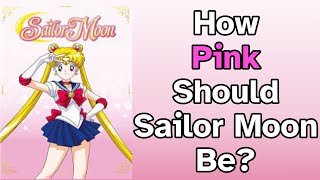
A raging debate in the Sailor Moon fandom: how pink should Sailor Moon be?
Sailor Moon was made by photographing drawings onto film, then played back through a telecine for broadcast. Toei didn't store the film safely, so it decayed and gained a pink tint.
Nepan-san shared before/afters with the pink tint removed; many fans preferred the tinted version because the warm color grade suited the show's cutesy aesthetic.
Critics said liking the pink version retroactively justifies Toei's bad storage, violates original artistic intent, and undermines preservation. They argued white balance should be white.
The video compares it to an evil mastermind poisoning the water supply: discovering outdated pipes doesn't excuse the attempt.
The idea that original intent is sacred comes from auteur theory; the video contrasts it with postmodernism, which sees meaning as shared between audience, work, and environment.
Creators drew Sailor Moon expecting analog broadcasts on CRT TVs; NTSC-J caused luminance and hue to vary widely between screens, so any modern release deviates from the original.
The anime streak effect from car tail lights came from Japanese color TVs' red phosphors decaying slower than others.
Damage becomes part of an artwork's history, like Venus de Milo's missing arms; the pink version is now nostalgic for a generation that grew up with it.
The debate made more people aware of color grading as creative expression, and gave the creator a way to pass time at the airport.
The video argues that both the pink-tinted and neutrally graded versions deserve to exist, while the original film should be preserved. The pink Sailor Moon debate ultimately highlights how technical accidents can become part of a work's cultural history.
Mentioned in this Video
Study Flashcards (10)
What caused the pink tint in later Sailor Moon releases?
easy
Click to reveal answer
What caused the pink tint in later Sailor Moon releases?
The original film stock decayed over time because Toei didn't store it safely, creating a pink tint.
00:52
What was the analog production method for broadcast anime in Sailor Moon's era?
medium
Click to reveal answer
What was the analog production method for broadcast anime in Sailor Moon's era?
Anime was produced by photographing drawings onto film reel, then played back through a telecine (film-to-TV converter) for broadcast.
00:17
Which other anime suffered color weirdness due to film decay?
easy
Click to reveal answer
Which other anime suffered color weirdness due to film decay?
Dragon Ball.
01:22
According to the video, what motivates the view that original artistic intent is sacred?
hard
Click to reveal answer
According to the video, what motivates the view that original artistic intent is sacred?
Auteur theory (described as 'utter theory' in the transcript).
04:21
Who is the postmodernist series director for Sailor Moon's second season?
medium
Click to reveal answer
Who is the postmodernist series director for Sailor Moon's second season?
Kunihiko Ikuhara.
05:01
Why did the original Sailor Moon artwork expect CRT displays?
medium
Click to reveal answer
Why did the original Sailor Moon artwork expect CRT displays?
Because it was drawn with the expectation of being broadcast on analog signal to CRT TVs, which are blurry.
05:28
What is the NTSC-J standard's effect on color?
hard
Click to reveal answer
What is the NTSC-J standard's effect on color?
Luminance and hues can vary widely between screens.
06:12
Why do fast-moving red objects leave streaks in anime?
medium
Click to reveal answer
Why do fast-moving red objects leave streaks in anime?
Japanese color TVs had red phosphors that decayed slower than other phosphors, so bright red objects left trails.
06:53
What example does the video give of damage becoming part of an artwork's history?
easy
Click to reveal answer
What example does the video give of damage becoming part of an artwork's history?
Venus de Milo's missing arms and her lost original paint.
07:21
What should happen with both versions of Sailor Moon according to the video?
easy
Click to reveal answer
What should happen with both versions of Sailor Moon according to the video?
Both the pink tinted and neutrally graded versions should exist as part of Sailor Moon's history.
08:31
💡 Key Takeaways
Toei's film decay
This factual claim is the root of the entire controversy and explains why the pink tint exists.
00:52Retroactive justification is invalid
The water-poisoning analogy crisply refutes a common emotional argument in the fan debate.
03:36Original intent is unattainable
CRT and NTSC-J limitations mean no modern release can perfectly match the original broadcast, complicating the 'authentic version' argument.
05:28Damage becomes history
The Venus de Milo comparison reframes preservation as a nuanced cultural process rather than a simple 'fix it' task.
07:06Color grading as creative expression
The debate popularized a technical skill and showed how audience preference can shape artistic discourse.
08:43Full Transcript
[00:04] and I want to share with you a recent raging controversy that has overtaken the salor moon fandom the question is how pink should saor moon be you see
[00:17] Salam moon was produced during the analog era of broadcast anime in this period anime was produced by taking photographs of drawings onto a film reel then to broadcast Y anime the film was then played back into a tele scene
[00:35] then played back into a tele scene basically a film to TV converter later on this film was used for the creation of vhs's later DVDs and Blu-rays and probably streaming as well the thing is Sailor Moon's production company TOA
[00:52] wasn't a responsible custodian of this film they didn't store it safely and the film DEC somewhat over time a pink tint formed on
[01:05] that film later releases of Salam Moon made from this Decay tape have been made from this Decay tape have been given effectively a pink color grade Sailor Moon was not the only anime to stuffer like this Dragon Ball also has
[01:22] stuffer like this Dragon Ball also has some color weirdness due to film Decay nanan who among other things is highly skilled in film preservation published skilled in film preservation published to Twitter before and afters of Sailor
[01:38] to Twitter before and afters of Sailor Moon with the pink tint removed to his Moon with the pink tint removed to his and quite a few other people's surprises a lot of people preferred the pink tinted version the degradation of the
[01:52] film had given it a warm color grade which was coincidentally well aligned with the core a Aesthetics of the show Sailor Moon has always been a cutesy show and the color grade that is tinted slightly towards pink actually kind of
[02:08] Suits it this irritated many of those who wanted the video to be restored to the version that had been originally broadcast the views expressed by this group were broadly the following by expressing support for the pink tinted
[02:23] expressing support for the pink tinted version it retroactively Justified tow animation's irresponsible storage of the the original film stock that the pink tinted version was counter to original artistic intent of the creators of Salam
[02:38] Moon the white balance of Salam Moon should be white that preservation is important the historical record deserves a copy of the anime that reflects what
[02:50] is broadcast what was not stated but I think might have also motivated some of the feeling was the following color grading is a difficult and and time consuming job to go through all that effort only for people to throw it back
[03:05] into your face and say I liked it before you did all the work to fix it cannot feel good fan works like nepan San's color grade are done out of passion and love and it can be devastating when that effort is not appreciated and to all
[03:22] that the people who like the pink tint have said but I like this one let's have said but I like this one let's examine those basic points one by one retroactive justification this is a this is the concept that by supporting the
[03:36] pink tinted version to it makes toy animations irresponsible storage legitimate however retroactive justification isn't a thing if you're an evil mastermind who tries to poison the water supply I've poisoned the water
[03:52] supply actually because you poison the water supply we discovered that the city's pipe infrastructure is really severely outdated it doesn't matter if this resulted in good things you still attempted to kill a lot of people
[04:07] attempted to kill a lot of people artistic intent the pink tone is not in line with the original artistic intent there is an idea among some people that the original artist intent is sacac a
[04:21] view that comes from a system of artistic criticism called utter Theory artistic criticism called utter Theory orter theory is often contrasted against postmodernism a broad oversimplification of postmodernism is that it looks at
[04:36] artworks as being an interaction between the audience other artworks and the broader environment the author is no longer the only person who has say in
[04:48] what the art means or should be but why am I bringing up such a high futing literat theory for saor Moon because Kuno hio kahara is a postmodernist and
[05:01] was the series director for the second season and the episode director for many of the first season episodes he often says complete nonsense in interviews
[05:14] about his projects because he thinks having different interpretations of a work improves that artwork once something has left his creative control something has left his creative control artistic intent matters little to kahara
[05:28] but kahara isn't the only person who worked on Salam Moon we have tweets from other people who have worked on Salam Moon though they pointed out that when drawing Salam Moon they did it with an
[05:41] expectation it would be broadcast on an analog signal to a CRT television set analog signal to a CRT television set why does this matter well CRT TVs are all a little bit blurry and animation drawn with the intent to look good on
[05:57] drawn with the intent to look good on CRTs can look bad when shown on Modern CRTs can look bad when shown on Modern LEDs or LCD screens moreover saor moon was broadcast using the ntsc-j standard because of the
[06:12] limitations of this standard the luminance and Hues of an image can vary widly between screens so a modern release of Salam moon is never going to
[06:25] release of Salam moon is never going to be perfectly in line with how it was or orally released at this point it becomes more a matter of deciding what deviations from the original acceptable and which you don't wish to accept oh
[06:40] and a fun fact I discovered while researching this you know the anime effect where the car tailights leave red streaks as it moves quickly that was a streaks as it moves quickly that was a thing that Japanese color TVs used to do
[06:53] the light from the red phosphors decayed slower than the other phosphors so a fast moving bright red object on a dark background would leave C streaks
[07:06] preservation now we come to the issue of preservation restoration a question that is one of hot debate not just within the salom moon Community but within the salom moon Community but within the broader artistic Community the changes
[07:21] and artwork gains over time become a part of that artwork's history consider part of that artwork's history consider Venus Deo her missing arms have now become an iconic part of that artwork and like most ancient Greek sculpture of
[07:38] that era she would have most likely been painted the only reason she is white now is that if time has removed that color it would be a denial of that long long
[07:51] history and a crime if someone was to undo that damage since the pink has been undo that damage since the pink has been been released about a decade as passed a
[08:03] 10-year-old child who grew up watching the pink Salam moon is now an adult of the pink Salam moon is now an adult of about 20 years so for them the pink version would be nostalgic this is now a part of that adult's personal history
[08:19] and a part of salamon's history as well both the pink tinted and the neutrally graded versions should exist as a part of Sal Moon's history and of course the
[08:31] original film should be stored in a way that prevents ongoing Decay I think there has been some good outcomes of this debate though I think some people
[08:43] this debate though I think some people have been more exposed to the idea that color grading for aesthetic and Creative Expressions I'm sure that some people are now thinking about where they can use color grading deliberately to get an
[08:59] effect they want and personally participating in this debate helped consume four hours I spent in an airport waiting for my flight no matter what you think about this issue we all have to agree that having a debate about a
[09:15] agree that having a debate about a nostalgic property through literal Rose nostalgic property through literal Rose tinted glasses is Peak
[09:28] and if you wish please watch some of my other videos linked