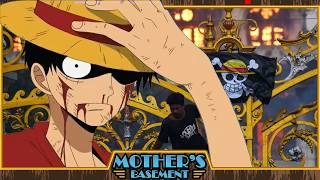

One Piece: The Manga of Revolution
42sShows how One Piece flags appear in real protests worldwide, sparking curiosity and debate.
▶ Play Clip"Title accurately reflects the video's deep dive into One Piece's political themes."
This video explores the political themes embedded in the manga and anime One Piece, arguing that the series is deeply political and has become a symbol of protest and revolution worldwide. The creator examines how the story critiques authoritarianism, justice, freedom, and social structures, and discusses why the Straw Hat flag has been adopted by real-world movements.
The Straw Hat flag has appeared in protests from New York to Palestine, making One Piece the 'official manga of protest and revolution.'
The video asserts that claims One Piece isn't political are wrong, citing arcs that tackle privatized medicine, police corruption, colonialism, racial supremacy, and covert foreign intervention.
Oda keeps a picture of Che Guevara in his studio and has based characters like Dragon on him, embedding revolutionary politics into the story.
The World Government is not a direct allegory but borrows from Age of Sail Britain and modern imperialism, characterized by extortion, racialized underclass, and nepotistic elite.
Different marines embody various justices: Fujitora's humane justice, Ryokugyu's determined justice, Kizaru's fickle justice, and Sakazuki's absolute justice, which is criticized as a child's view of morality.
Even the best marine, Garp, participates in atrocities like the God Valley genocide, illustrating how good individuals can be complicit in an unjust system.
The series pits freedom and justice against each other, aiming for a synthesis: a universal justice that protects freedom, not restricts it.
Luffy fights fascists but not out of ideology; his father Dragon is revolutionary. The series critiques both violent revolution and subjugation, advocating liberation through love.
The crew operates on mutual aid, shared resources, and voluntary association, reflecting anarchist ideals of freedom and equality.
One Piece argues that following dreams makes the world better, and the best world is one where everyone is free to dream. Luffy's dream lifts others up rather than infringing on them.
Gear 5 transforms Luffy's fights into joyful games, contrasting with typical shonen power-ups fueled by anger. It symbolizes that true liberation comes from unrestrained joy and laughter.
One Piece distinguishes between righteous anger on behalf of others and petty anger from personal affronts, advocating directed fury against oppression.
One Piece is a deeply political work that critiques authoritarianism and champions freedom, justice, and the power of dreams. Its themes of liberation and joy have made it a resonant symbol for real-world protest movements.
What real-world figure does Oda keep a picture of in his studio?
Che Guevara.
05:14
Name two political themes explored in One Piece arcs.
Privatized medicine (Drum Island) and colonialism (Skypiea).
03:47
What is the 'absolute justice' philosophy of the World Government?
Everything that opposes the World Government is absolutely evil, and anything it does to stop it is absolutely good.
11:53
How does Gear 5 differ from typical shonen power-ups?
It is fueled by joy and laughter, not anger or sorrow.
27:35
What is the difference between righteous anger and petty anger according to One Piece?
Righteous anger is felt on behalf of others and is useful; petty anger from personal affronts is wasted energy.
29:36
One Piece is Political
Directly counters common claims that the series is apolitical.
03:21Che Guevara Influence
Reveals author's intentional political inspiration.
05:14Garp's Complicity
Illustrates how good people can be complicit in unjust systems.
13:38Gear 5 and Joy
Highlights a unique narrative choice that redefines power and liberation.
27:05Righteous Anger
Provides a nuanced take on anger as a tool for change.
29:06[00:02] cosplay props been showing up in places you'd never expect, at least if you manga that it's from. A goofy little caricature of a skull and crossbones in a jaunty little yellow straw hat flying proudly over desperate protests and the
[00:18] flaming wreckage of a nation's capital. There are a few shonen jump anime one could say have conquered the world over the years, but none quite so literally as this. From New York to Jakarta, Paris
[00:32] to Palestine, Rome to Kathmandu, One Piece is being adopted the world over as the official manga of protest AND REVOLUTION. WHICH MUST be more than a little confusing to folks who mainly know Luffy as that one guy who was
[00:47] always standing next to Boruto's dad and Bleach ego from, you know, that one anime that's way too long to ever watch it. Meanwhile, those who have watched it are just thinking, "Sniper King, shoot down that flag."
[01:06] THE WORLD GOVERNMENT. YEAH, SOUNDS about right. So, in the interest of clearing up that confusion and also just because I think it's really cool and fun to talk about, I want to examine some of the political themes that have made One
[01:19] Piece and the Mugiwaras flag such lightning rods for radical and revolutionary thought among Gen Z. Though, before we can get to that, this video is sponsored by Stella Sora, a classically styled top-down light action
[01:33] adventure RPG with a branching episodic story that'll take you on a thrilling action-packed journey across the slightly retro fantasy world of Nova. A place where knights wield flip phones, adventurers heal up with drinks out of
[01:47] vending machines, and your local news' eye in the sky chopper is a witch on a broomstick. From your own bird's-eye view, you'll guide a team of brave trekkers as they fight through this strange world, your every choice weaving
[02:00] a complex tapestry from their fates. Pick three from a vast cast of charmingly designed characters and assign them to main or support roles. Each trekker has two distinct skill sets to suit each position, allowing for
[02:13] countless viable combinations. Adapt and experiment to craft bespoke strategies for every challenge you face, or hone the perfect squad to suit your personal play style. Either way, the power's in your hands. Along the way, you'll forge
[02:27] lasting bonds with all of your cute quirky companions, like the new five-star warrior Chitose, who sees herself as an extension of her own water-bending sword. Both by fighting alongside them in the field and
[02:41] exchanging messages between battles. And once you're done with story mode, a whole new realm of intense post-game trials and alternate modes awaits, where you can duel the world's best trekkers, dive into bullet hell, or play through
[02:55] endless rogue-like battles with ever-changing skill combos in each run. And you can get even more value out of Stella Sora by using the promo code boss gift for some sweet rewards when you download the game at the link in the
[03:09] doobly-doo. Stella Sora is available now on iOS, Android, and PC. Now, with that we should also probably address all the folks who will adamantly insist One
[03:21] folks who will adamantly insist One Piece isn't political at all. So, uh yeah, they're just completely wrong. Both in the broad everything is political sense that no work of art can fully expunge its own creator's biases
[03:34] and worldview, and the meme sense that it has many queer and racialized characters in it, but also in the more specific sense that Eiichiro Oda has a lot of very strong opinions regarding governments and social issues that he
[03:47] builds most of his story arcs around. Drum Island is explicitly about the evils of privatized and monopolized medicine. The entire East Blue Saga is bookended with stories about different scales of police corruption. Skypiea is
[04:02] about colonialism and its ties to the romanticized Age of Exploration. Fish-Man Island deals with civil rights and the evils of racial supremacy. Alabasta and Dressrosa both examine from different angles how covert foreign
[04:16] actors can destabilize and subvert sovereign states. Water 7 is about basically the CIA doing that and leads directly into a vicious spoof of Japan's guilty until proven innocent court system. Wano explores the pros and cons
[04:31] of open borders with a little side of trans rights. Sabo's backstory is all about how elites divide and conquer through social stratification. Robin's backstory shows how history can be twisted and erased to control political
[04:44] narratives in the Smithsonian. The entire Summit War Saga is about the corruption and politicization of justice itself. Long Ring Long Land is about cheating scandals in the Laugh Olympics. It's a very political manga. And when
[04:59] you dig deeper to look at the underlying narrative connecting those arcs, you find revolutionary politics baked into One Piece and Luffy's very DNA, literally. Oda keeps a picture of Che
[05:14] Guevara hanging prominently in his studio, and he's based more than one character on his likeness and history, including Monkey D. Luffy's own father, Dragon, the leader of the Revolutionary Army. Now, Luffy himself is not a
[05:31] revolutionary, not consciously anyway. His only political priority is the redistribution of meat, but he is a freedom fighter in the most literal sense of the term that he will fight anyone who tramples on his or his
[05:45] friends' freedom. Which naturally leads to him overthrowing a despot or two, since anyone who shares meat with him is his friend for life. And for that, like many freedom fighters the world over, the dominant global hegemony has branded
[06:00] him a criminal and a terrorist. That hegemony, the World Government, isn't a direct allegory for any specific empire, but there are some clear historical parallels. Aesthetically, it borrows a lot from Age of Sail Britain, but the
[06:15] material conditions are a little more modern. A vast network of international extortion that drains the resources of subordinate states in exchange for vague promises of protection, while treating the citizens of unallied states as
[06:30] effectively subhuman, killing them for resources or just for the hell of it. A nation literally built on top of a racialized underclass whose slavery was made illegal several years ago on paper, but is still carried out in practice
[06:44] through loopholes in the prison system, ruled by an elite class of lazy, malignant nepo babies who are treated like gods basically just for existing. And if you so much as think about hurting one of them, they will bring the
[06:58] full weight of the state down ON YOUR HEAD FASTER than you can blink. Though, of course, that last point applies to pretty much every empire, and that is the real point of the World Government. The shape of and justifications for
[07:13] authoritarian regimes change from country to country and era to era, but the villainy masquerading as justice is an eternal constant. Justice, alongside freedom, is one of the two thematic pillars of One Piece, and much of the
[07:29] story concerns itself with figuring out what precisely those two words really mean. Every pirate is living a life of freedom, or at least thinks they are, while every marine at least claims to embody justice. But just as each pirate
[07:43] has a very different view of freedom and who should get to enjoy it, every marine uses their own definition of justice to justify their actions, villainous or otherwise. Fujitora, the samurai admiral, practices humane justice with
[07:59] an emphasis on protecting innocence over attacking criminals. A noble ideal, to be sure, but one that's immediately compromised by the company that he keeps. His efforts to protect people mostly just end up mitigating the
[08:12] collateral damage caused by his less humane allies, which is perhaps why he got promoted despite how many criminals he lets get away. It would certainly be who kind of need him to serve as a counter-balance to the determined
[08:27] counter-balance to the determined justice of Ryokugyu, the cop admiral who seeks to achieve justice by violently subjugating everyone he personally deems to be undeserving of it. Which is pretty much anyone who refuses to submit to the
[08:42] authority of his gods, the Celestial Dragons. Such people he doesn't even see as human anymore. Standing between those two extremes is Admiral Kizaru, a fundamentally fickle man whose ideal of justice is unclear. He's a laid-back
[08:58] sort of guy, some might say too laid-back, inquisitive and open if absent-minded, which makes him a fast friend to Dr. Vegapunk. But he's not particularly decisive, and rather than sorting out the complexities of justice
[09:13] for himself, he'd much prefer to be under orders, which he follows with ruthless efficiency, free of the responsibility of actually passing judgment himself. Though, after the events at Egghead, he may no longer be
[09:27] able to cope through the guilt of that. His arc seems to be paralleling that of former Admiral Kuzan, whose motto of lazy justice came about as a result of his old burning sense of justice being quenched by the atrocities at Ohara, to
[09:43] the point you can scarcely call it justice at all. It's clear that he quit the marines in his heart long before turning in his official resignation. And without that ideal, it's really no wonder that he ends up siding with the
[09:57] Blackbeard Pirates after leaving, despite his kind nature. After all, as Luffy's foil, Teach is the ultimate avatar of selfish, individualistic freedom. And after a lifetime spent sacrificing his own freedom for justice,
[10:13] yet still being denied his final promotion by the Navy, it's only natural that Kuzan would swing all the way in the other direction. Former Fleet Admiral Sengoku's reasons for stepping down are a little more noble. His ideal
[10:28] of reigning justice emphasized giving the people of the world that sense of security born from knowing that the Marines were looking out for them. But when the World Government sought to save face by sweeping the prison break of
[10:42] face by sweeping the prison break of Blackbeard's new Titanic captains under the rug, despite the danger those criminals posed to an unwitting public, Sengoku could no longer reconcile his ideal for what the Marines should be
[10:56] with the reality of what they are. Though unfortunately, his leaving paved the way for someone even worse. In keeping with his magma-based power set, the new Fleet Admiral Sakazuki's approach to justice is full scorched
[11:11] earth. He believes that the world will only become truly just when all of the evil in it, including potential evil, has been rooted out and purged. This is,
[11:23] if I may editorialise a little here, a child's view of morality. The reactionary idea that the world will become good if you can just get rid of all the bad people, as if all the suffering and death that you'd have to
[11:38] cause to make that happen wouldn't make you one of the worst people to ever live. But that childish outlook is right in keeping with the brand of justice endorsed by the World Government itself, absolute justice. Which is a pretty
[11:53] straightforward philosophy. Everything that opposes the World Government is absolutely evil, and anything the World Government does to stop it is absolutely good. Even if that means cutting down innocent civilians just to get a pirate,
[12:09] or testing top-secret experimental weapons on children, or nuking an entire island just to uphold the official narrative. And with that being their official party line, you can probably imagine what the Marines are like as an
[12:26] organization, especially under Sakazuki. Worse than basically all of the criminals that they're actually capable of stopping. Besides a few notable deserters, the only good Marines are the ones who've crafted their own personal
[12:41] ones who've crafted their own personal code of moral justice, like Koby, Smoker, Tashigi, and Garp. But even Garp participated, albeit reluctantly, in the participated, albeit reluctantly, in the God Valley genocide. He saw the same
[12:55] things that made his son want to kill the entire government, and he kept working for them. You can put that down to pragmatism, say he wanted to use the institutional power he gained to do as much good as possible in his life
[13:11] instead of just throwing it away for nothing. And to be fair, he did refuse all offers of promotion after that point, knowing that a full Admiral would have to work even more closely with Celestial Dragons and just follow even
[13:26] more insidious orders. But he still follows the orders he's given, and knowingly lends his not inconsiderable personal strength to protecting a system
[13:38] that ultimately serves unfathomably wealthy monsters who play with innocent people's lives for fun and profit. And Garp is the best of the Marines. So if
[13:50] he's that much of a bastard, they all are. And I think that One Piece is much more persuasive in making that case than a lot of media that says similar things about, say, cops, because it's so sympathetic to guys like Garp who wants
[14:06] to do good. Oda is clearly not saying that every Marine is irredeemably evil, but at some point in their careers, every Marine is called on to defend their fundamentally unjust, corrupt, and oppressive system against the good
[14:23] intentions of good people who just want to fix it. And all of them decided that career was more important for whatever reason than not being bastards at least
[14:35] some of the time. But the reasons do still matter. In a choice between the government and the people, the Garps, Smokers, and Kobys of the world are infinitely more likely to do the right thing, or at least the less wrong thing,
[14:50] than the Rokugyus, Sakazukis, and Nezumis. Despite having hitched themselves to a broken system just because it seems like a lesser evil than piracy, a lot of these bastards do still want to do good, and will do better if
[15:07] they can just be made to believe that better things are possible. That's the kind of nuance that gets lost in simplified, absolutist, potential ally-alienating slogans about all Marines. Oda is never dismissive of
[15:23] people with a sincere passion for justice, but he is deeply critical of how that passion can be twisted to unjust ends. One Piece frequently pits the forces of freedom and justice against each other. It's the most
[15:38] persistent conflict in the entire series, present from the moment that Luffy met Koby. And that conflict is a dialectic one, intended to produce a synthesis between the extremes of the Marines and pirates, between those who
[15:53] claim to uphold justice while protecting the world's greatest and richest criminals from it, and those who seize freedom for themselves at the expense of the weakest and poorest. A truly universal brand of justice that none are
[16:09] allowed to stand above, whose purpose is to protect instead of restrict freedom. Because you cannot have true freedom unless all who would trample on it are brought to justice. And until all men are free, justice can never be truly
[16:27] absolute. Earlier, I called Luffy a freedom fighter, but I'm far from the first influencer to do so. Hasan used those very same words to describe contentious labels at the series, arguing that One Piece is communist and
[16:44] Luffy is antifa. Which are pretty strong claims to make, especially about a kids' cartoon that started in the '90s. But that doesn't mean they're not worth considering. So, is there anything in the text that backs them up? Well, One
[16:59] Piece does portray many of its villains, from Enel with his surveillance state to the World Government with its everything, through explicit, direct parallels to real fascist regimes. And Luffy does punch a whole lot of
[17:14] ethno-fascists and theo-fascists and crypto-fascists and croco-fascists right in their stupid fascist faces. But as I've already said, that's not necessarily out of a committed ideological opposition to fascism
[17:29] itself, so much as the fact that fascists keep getting in the way of him and his friends' dreams and/or meat. Luffy only ends up punching so many of these pieces of because he's a naturally good person. He doesn't need
[17:42] to be told that they're enemies of freedom, he can simply see it for himself from their heinously evil words and violently oppressive actions and act accordingly. So I I really don't think that he'd claim that label, even though
[17:57] he frequently does antifascism. His dad definitely would though. And speaking of Shay, as for the communism thing, on a surface reading, that does immediately seem a little silly. I mean, Nami, one of the core OG Straw Hat trio with us
[18:14] from the very first arc, just loves money and treasure. It's kind of her whole thing. It's just so shiny, and having it makes her so happy, and it's
[18:26] so useless to her when it really counts. Nami saves up her entire life to buy her freedom from Arlong, but when she finally has enough, he just takes it from her and forces her back under his fishy thumb. Because that's how
[18:41] oppressors operate. You can't stop them from oppressing you by playing their game by their rules with their pieces. You have to flip the board. While she never loses the obsession with money that many people who grow up in
[18:56] crippling debt develop, the thing that actually saves Nami is the friends she made along the way doing a whole bunch of violence on her behalf until the oppression stops. Something they do for a lot of their friends all around the
[19:11] world, and it always works. This is a recurring theme that we see cleverly inverted when the crew finally reaches Arlong's hometown of Fish-Man Island, whose new place in the World Government hasn't actually done anything to
[19:27] dismantle the slave trade or make the surface world safer for fish-men and mermaids. Fisher Tiger and the Sun Pirates accomplished far more in that regard with their total disregard for World Government law. Otohime's efforts
[19:43] to change hearts and minds within the system aren't completely worthless. In saving Donquixote Mjosgard, she ultimately saves her own daughter from being enslaved, but they still tried to capture and enslave her daughter at a
[19:59] meeting of the One Piece UN. And despite ostensibly being affiliated with the World Government, the Fish-Men still need the protection of a crime lord to stop raids on their island, just like
[20:13] the giants on Elbaf do. In that context, it's not hard to see how Arlong and Hody it's not hard to see how Arlong and Hody Jones fell down such dark paths. They didn't have many better options. At the same time though, the arc is quite clear
[20:28] on where those paths will lead. Fisher Tiger himself literally died because he couldn't let go of his hatred for humans. One Piece clearly argues that humans. One Piece clearly argues that violent revolution is sometimes, often,
[20:43] necessary to affect real change, but it's also careful to caution that revolutions which aim to subjugate out of hatred for the oppressor, rather than liberate out of love for the oppressed, will ultimately reproduce many of the
[20:59] problems they seek to solve. Blackbeard, whose ultimate goal is world conquest whose ultimate goal is world conquest driven by a desire to avenge God Valley, is a prime example of the former, while Luffy, his rival to be pirate king, is
[21:15] quite literally the embodiment of liberation. Blackbeard's pirates even mirror the organization of the navy with the 10 titanic captains serving under Admiral Teach in contrast to Luffy, who straight up refuses to accept the other
[21:32] captains of the Straw Hat Grand Fleet as his subordinates, instead opting for an informal sake pledge that they will all come to each other's mutual aid if ever called upon, which is the same principle that organizes the Straw Hat crew
[21:48] themselves. Yes, Luffy is their captain, but so's Usopp sometimes, and he rarely but so's Usopp sometimes, and he rarely orders his crew around except when snap life or death decisions must be made. They all follow him willingly as a
[22:02] cohort of comrades who've pledged to help each other reach their dreams, and they are all free to leave if they ever disagree. They all share equally in the spoils of their adventures, too. Nami's in charge of the money, but only because
[22:17] the rest of them are idiots, and they all happily lend their skills to their friends with no expectation of direct compensation. You could certainly call anarchish. And since Luffy's explicit goal is to
[22:34] And since Luffy's explicit goal is to become the freest man alive, Being king of the pirates is about being more free than anyone. You could take that as One Piece arguing that those specific principles of social organization and
[22:48] resource distribution are designed to maximize the freedom of the people living by them. But you could also make the case that that's a selective reading of the text, since Luffy has fought on the side of straight-up monarchists
[23:02] about nearly as often as he's joined up with revolutions. And more than once, with revolutions. And more than once, he's stopped a full-on populist uprising in its tracks on behalf of an embattled king. Both of those times were to stop
[23:15] fascists who'd either manufactured or co-opted the movement, but Luffy still made friends with both of those kings. So, One Piece isn't really advocating for any one specific form of society so much as the idea that groups of people
[23:31] should be able to determine what their society looks like for themselves without being coerced or manipulated into undermining their own culture, traditions, and basic human needs. What really matters is whether a society has
[23:45] good leaders, and while it doesn't commit to any one model of governance, commit to any one model of governance, One Piece does very consistently define what a good leader is. Be they a king, a president, a pirate lord, or a god, good
[24:00] leaders in One Piece always put the needs of their people above their own, while evil ones use their people to serve their own ambitions or needs or just plain old selfish wants in roughly descending order of how evil they are.
[24:17] Oda has a soft spot for dreamers, after all. Even ones with dreams so big they think they have to crush the dreams of others to make them real. There's a certain grudging respect given to villains like Crocodile, Blackbeard,
[24:31] villains like Crocodile, Blackbeard, Arlong, even Buggy, who do bad things to make better things possible for themselves and people they care about, whereas the most despicable villains in One Piece, from Captain Kuro to
[24:43] One Piece, from Captain Kuro to Donquixote Doflamingo, are invariably the ones who cast their dreams aside to indulge in their most base desires at everyone else's expense. Emperors Kaido and Big Mom are the ultimate expression
[24:58] of the former, having achieved their dreams, or at least come close enough, and convinced themselves that because they achieved that, they know what's best for everyone under them, while the Celestial Dragons and World Government
[25:11] represent the worst kind of selfish rule. What makes Luffy so special, then, is that his dream, despite being the biggest and grandest of anyone in the biggest and grandest of anyone in the entire world, never infringes on anyone
[25:26] else's. Quite the opposite, as it grows, it lifts up everyone around him, making it lifts up everyone around him, making their dreams more achievable than ever before. Luffy's ideal of maximal freedom isn't about elevating himself to a point
[25:42] where no one can stop him from getting whatever he wants, it's about destroying the barriers to freedom that hold everyone back. If there's a single overriding ideology that defines all of One Piece, it's that people who follow
[25:58] their dreams make the world a better place, and so the best possible world can only come about when everyone is free to dream. And that, I think, is what makes the Mugiwara flag such a potent universal symbol. Regardless of
[26:15] ideological specifics, every revolutionary is a dreamer at heart, carrying on the will of all the dreamers before them who were crushed beneath the boot of oppression. Though, within the world of One Piece, there is another,
[26:31] even more potent symbol of generational struggle that the World Government fears above all others. So much that they've spent the past eight centuries trying to wipe it and everyone who remembers it from the face of the Earth. A symbol
[26:48] that's been present in the manga since nearly the beginning, though its true meaning was only recently revealed with Luffy's new Gear 5 form. Joy Boy, the first pirate, legend of a lost era, a forbidden folk hero sung of in whispers
[27:05] by those whose mere existence has been deemed a crime against the state. There's been quite a bit of debate since Gear 5's reveal over whether it's truly iconic or just a sillier, squigglier version of Super Saiyan. In my opinion,
[27:21] it is absolutely the latter, and that's exactly what makes it so iconic. When a exactly what makes it so iconic. When a Saiyan becomes super, it's almost always in moments of intense rage or sorrow, those potent emotions fueling the
[27:35] newfound power that they need to kick the ass of the guy who made them feel that way. And this theme has been echoed across countless other shonen battle series when their heroes power up. The villain pushes them to their limits,
[27:49] threatens what they love most, and at their lowest moment, something snaps and they awaken. That's been the genre template for decades now, but Gear 5 doesn't feed on such caustic emotions.
[28:04] It washes them away, drowning out the violent negativity of One Piece's villains with a cheerful drumbeat and uproarious laughter. Rather than just letting Luffy hurt people more efficiently, it transforms both him and
[28:19] the world around him in a way that turns each fight into a goofy little game, and literally makes his dreams, however silly they might be, real. In a world ruled by anger and fear, One Piece posits that the key to true liberation
[28:36] posits that the key to true liberation is to embrace and embody unrestrained joy. To laugh in our oppressors' faces even as they are crushed by conveniently timed pianos. That doesn't mean that anger has no place in the fight for
[28:50] liberation, obviously, but One Piece cautions time and again that anger must be directed and purposeful to do more good than harm. In the very first chapter, Shanks laughs off personal insults and even a mild physical assault
[29:06] from the mountain bandits who end up mistaking that restraint for weakness, but they see just how wrong they are as soon as they lay hands on one of his friends, and Luffy emulates that attitude on Jaya when Bellamy tries to
[29:21] pick a fight with him, refusing to let the petty tyrant control his emotions and only putting a dent in his cocky skull when he starts pissing on someone else's dreams. It's that kind of righteous rage, the kind we feel on
[29:36] behalf of our friends and fellow man, that the world needs more of, while petty anger born from personal affronts is largely useless, wasted energy of no
[29:48] is largely useless, wasted energy of no real concern to anyone with real power. That's why it's the man who can laugh from the bottom of his heart even in the darkest of times that despots fear most. For that man has fully harnessed his
[30:03] anger and can never be ruled by fear. Of course, knowing when and where to direct our fury is easier said than done, especially in this modern algorithmic age where engagement is engagement. We are conditioned to feel as if under
[30:18] attack from all sides at all times, pushed into a state of perpetual panic that paralyzes our ability to make rational decisions and respond to situations that deserve our anger. And often the greatest, most dangerous
[30:32] often the greatest, most dangerous injustices are wholly invisible to us, hidden in plain sight within systems we're taught to take for granted from the day we're born, slowly simmering beneath the cozy little pot of frogs we
[30:46] call society. So, how can we ever know when we really need to act? Another great fictional freedom fighter has a pretty good answer to that question, I think, which I'll paraphrase for you now. Don't compare your circumstances to
[31:01] how they were yesterday. Look at how they were years ago. If it used to be okay, but it's not okay anymore, maybe you should do something about it. We're supposed to be leaving a better world for our children, after all. So, if it's
[31:15] not better, if you're dealing with cruelty, with neglect, with a ruling class that wastes the people's money on frivolous, selfish maybe it's time to get out there and raise your flag. I'm Jeff Thu, professional freedom
[31:29] keyboard warrior, signing out from the cruise.

⚡ Saved you 0h 31m reading this? Transcribe any YouTube video for free — no signup needed.