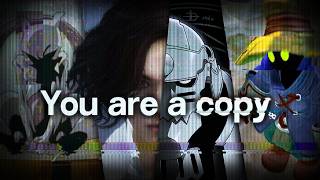

Alphonse's Existential Crisis
60sRelatable existential dread in a beloved anime sparks engagement.
▶ Play Clip"Delivers a thoughtful analysis of the trope, though the title is slightly broad and the video includes a lengthy sponsor segment."
This video essay explores the 'artificial being seeking humanity' trope across several narratives, including Fullmetal Alchemist: Brotherhood, Lies of P, Final Fantasy IX, and the Pokémon movie Mewtwo Strikes Back. The creator argues that the true depth of these characters lies not in their existential crises but in how they navigate moral dilemmas and learn lessons their creators never did, ultimately finding family and home among those who accept them.
In Fullmetal Alchemist: Brotherhood, Alphonse Elric, whose soul is bound to armor, is confronted by Barry the Chopper, who questions whether Al is a real person or a puppet controlled by his brother. This shakes Al's sense of self, highlighting the trope of artificial beings questioning their existence.
The video identifies a common trope in fiction: characters who are artificial and contemplate their existence. Examples include Mewtwo, Vivi from Final Fantasy IX, Vision, Andrew in Bicentennial Man, and Edward Scissorhands. These characters resonate because humans also question their own existence and purpose.
In Lies of P, the protagonist, a puppet, is defined by his ability to lie, which goes against his programming. The game presents moral dilemmas, such as whether to spare a dying woman's feelings or tell her the truth, and these choices are what make him more human.
The video suggests that in Lies of P, 'Ergo' is not just a power source but contains the memories of the deceased. This is hinted at by the character Camille, the first automaton to develop an ego, and raises the question of whose memories power the protagonist.
The Philosopher's Stone in Fullmetal Alchemist is made from human souls, creating a moral dilemma for the Elric brothers. They refuse to use it selfishly, unlike the villains, and this choice separates the 'good guys' from the 'bad guys'.
In Final Fantasy IX, Vivi, a black mage, discovers he was manufactured and is confronted with his own mortality. He learns that other mages live for about a year, and this fear of death is a key part of his character development.
The video identifies a common narrative tool across these stories: the use of crystallized memories or souls (Ergo, Philosopher's Stones, Mist) as a power source. This serves to provide moral dilemmas for the heroes and to explore themes of loss and memory.
The video contrasts the Western release of Mewtwo Strikes Back with the original Japanese cut, which includes a prologue about Dr. Fuji trying to clone his late daughter Amber. This backstory recontextualizes Mewtwo's actions, making him a more sympathetic character.
The video reveals that in Lies of P, the protagonist is built from Carlo's heart, and Geppetto's plan is to revive his son. The tragedy is that Geppetto fails to see that the puppet has become his son, and the game's message is about moving on from loss.
Final Fantasy IX features a cast of characters who are all, in some way, adopted. This reinforces the message that family is not always genetic and that one's worth is not determined by their origins.
The video concludes that the unifying theme is that these characters learn lessons their creators never did: that you can't replace someone you've lost, that your value comes from what you do, and that home can be found in the people you still have.
The video argues that the most compelling aspect of the 'artificial being' trope is not the existential crisis, but the moral choices these characters make and their ability to find family and home among those who accept them, a lesson their creators often fail to learn.
What is the 'Grand Covenant' in Lies of P?
A series of rules made by Geppetto that dictate how puppets behave, including the inability to lie.
06:15
What is the Philosopher's Stone in Fullmetal Alchemist made from?
Human souls, described as 'calcified souls, coagulated memories'.
10:48
What is the 'Mist' in Final Fantasy IX?
The spirits of the deceased that cannot return to the planet due to the Iifa tree's interference.
16:34
What is the significance of the character Camille in Lies of P?
She is the first automaton to develop an ego, and her Ergo may be tethered to a maid automaton, suggesting Ergo contains memories.
08:49
How does the Japanese cut of Mewtwo Strikes Back differ from the Western release?
It includes a prologue about Dr. Fuji trying to clone his late daughter Amber, which recontextualizes Mewtwo's actions.
23:02
What is the main theme of the video regarding the 'artificial being' trope?
The true depth lies in the moral choices these characters make and their ability to find family and home, not just their existential crises.
36:13
Alphonse's Existential Crisis
This moment sets up the core theme of the video, showing how a simple question can shake a character's sense of self.
Ergo as Memories
This is a key narrative twist that recontextualizes the power source in Lies of P, adding depth to the story.
08:49The Common Narrative Tool
This observation ties together all the stories discussed, providing a unifying analytical framework.
17:52The Japanese Cut of Mewtwo
This reveals a significant difference in storytelling that changes the entire emotional impact of the film.
23:02The Unifying Thread
This is the video's thesis, offering a poignant and universal message about family and home.
36:13[00:00] One of the most profound moments in Fullmetal Alchemist Brotherhood goes you just need to know that Edward and Alphonse are brothers, very early in the show a flashback
[00:14] reveals that the boys try to use alchemy to bring their late mother back to life… but the transmutation horribly misfires and Al loses his body in the process. To save him,
[00:26] Ed tethers his soul to this suit of armor and now… This is Alfonse. The show follows their journey to find a way to get Al’s body back. And in episode 8, we find him throwing hands with another suit
[00:39] of armor, a former serial killer called Barry the Chopper. Barry is like Al, he was killed on death row and his soul was bonded to this suit. After learning that Al is just like him,
[00:52] Barry poses an interesting question: "Are you sure that you're not a puppet, created and controlled by your so-called brother?" "Were you ever even a real person to begin with?” This shakes Alfonse to the core… wait… how can he be sure… but hang on,
[01:09] he has memories! Barry: "And who's to say those memories aren't made up?" Al: “But Winry and granny… they know me…” Barry: “That’s easy, they’re in on it too!” What if Barry’s right?
[01:21] How can Al know for sure… does he bring this up to Ed? An existential storm rolls in for Alphonse, how can he be sure that anything he has ever known about himself is real?
[01:37] This small arc of the show paints a particular color of panic that you find across all of fiction. Characters that are artificial in some way and contemplate their existence.
[01:50] The swelling of confusion and fury that Mewtwo feels upon discovering that he was created in a lab, the horror Vivi feels in Final Fantasy IX at the revelation that he was built to be a killing machine, Vision in Marvel, Andrew in Bicentennial Man, Edward Scissorhands from…
[02:08] Lies of P. These characters are fascinating to us… AS humans because in some way we do relate to the questions they ask, right? We have all contemplated our own existence; our own purpose.
[02:20] We have struggled to understand why other humans interact and behave in the way that they do, maybe we have felt robotic in social situations when others seem to take to it so naturally… We can probably all agree that there is also something fascinating about exploring where that
[02:36] line between human and imitation truly resides… is it the ability to do harm for a just cause? Is it the ability to lie out of empathy? Is it true altruism? Is it affection? Is it something else…
[02:54] But I think we, as sluts for good storytelling, get bogged down in these components of the fake human character trope. After all, as humans, we UNDERSTAND what it is to be human and enjoy
[03:06] watching something carry all of the crosses we bear… there is something to delight in seeing something synthetic or unnatural take up the weight of all that is… us. But I’m here to
[03:19] tell you that there is another part of these characters that we lose when we simply focus on the “I think therefore I am” aspect of them. There is something a little more tender at play,
[03:31] something subtle that I think makes us want to protect Vivi at all costs, that makes us yearn for Data to be happy, that makes us want to give Al a hug and let him know that he is, in fact,
[03:44] real. So, I invite you to take a deep seat and allow me to guide you on a tour through one of my very favorite character tropes and a few stories that I have been YEARNING to talk to you about. There will be spoilers, some small, some big, but I’ll mark them with timestamps
[04:00] like always. Most of these narratives serve the same point, so it is okay to skip here and there. Grab a snack, let me knock out this sponsor read, then we will dive right in. As I get older, I find myself enchanted by learning more and it’s kind of that
[04:14] motivation that started this channel. Maybe it’s why you’re here, perhaps you too want to broaden your horizons. Boot.dev is a wonderful avenue to do this if you want to learn to code. And what makes it special is that it uses modern game design to teach you! Instead of slamming you with
[04:30] a textbook and a oceans of information, boot introduces coding concepts by letting you get your hands dirty one concept at a time. This is true if you're a complete beginner or even just need a refresher to pick up where you left off!. Over the course of your lessons you’ll earn XP,
[04:44] Levels, Achievements, complete quests, fight bosses: all of these things are in place to make the grind of coding both approachable and engaging. You don’t want to be overwhelmed but you also want to be bored, and Boot.dev prides itself in keeping you right in that sweet spot,
[04:58] that flow state between the two… just like a game that you can’t stop playing. Imagine that same sensation of itching to get back to playing, but you’re cultivating a marketable skill. The backend development career field is expansive, pays very well,
[05:14] and even has opportunities for remote work! But let’s start small, you’re just curious, right? Why not go view all of their content for free in guest mode and… maybe even give that free demo a try! And if you’re all in, and would like 25% off of your entire first year,
[05:30] go to boot.dev and use my code DARYLTALKSGAMES at checkout. Link in description, QR code on screen. Go learn something new, my friends. It may just impact your future and be exactly what you’ve
[05:43] been looking for. A huge thanks to boot for the sponsor, now let’s get back to the video. Sophia: “One more thing I should mention. The hotel security excludes puppets like you. So
[05:57] you’ll have to lie to get inside. You’re a special puppet, after all.” The first real decision you make in Lies of P is whether or not you… lie to this hotel security system. You see puppets
[06:15] in Krat cannot lie, it’s how they are wired. It goes against something called The Grand Covenant, a series of rules made by Geppetto, the puppets original creator, that dictate how these animatronic people behave. Hotel Krat’s security system simply asks if you are human,
[06:31] and since puppets can’t lie… well they tend to stay out. But your puppet is a clever one… and on his behalf… you do lie to get into the hotel. In case you couldn’t tell from the title,
[06:45] lying is the axis that this game’s narrative and themes revolve around. Yes, you fight stuff and gain something called Ergo which makes you stronger… but the character of the clever one here is really explored through his interactions with others and how you manage his choices. One
[07:01] of my favorite examples is how you handle this request from someone named Belle. She asks if you, when you go to Krat central station, could look for her partner Atkinson. Unfortunately, when you find him, he has been infected by the petrification disease and… there is no
[07:17] cure. When you return to her, you can be honest and say that he has become a monster… or you can spare her pain and tell her that he died with honor. Though heartbroken, she takes solace in
[07:29] the closure and genuinely thanks you. Something inside of the clever puppet reacts. Another one that really stuck with me was a conundrum you face regarding a woman who is dying of the petrification disease. You have a treatment that will keep her alive for longer… but ultimately, it
[07:46] will prolong her suffering… is it better to save her life… at least for now? Or is it more humane to allow her a natural death? Would she really be living if you kept her around? What these
[08:03] moral dilemmas do is present complex emotionally taxing questions to our puppet and it’s because of them that his humanity grows. Initially his springs react to the “more human” responses, but
[08:16] soon the ergo in his heart whispers, eventually he FEELS warmth, the language used to describe these stirrings grows as he does.The hotel cat, once cold and indifferent, eventually warms up to
[08:31] the clever one… the game does a wonderful job of reflecting your humanity in subtle ways like this. And something that you can’t help but notice is that beyond the ergo that you get from taking on basic enemies, is that there is special ergo as well that you get from bosses. Unique veins of
[08:49] Ergo... that’s… curious. It’s also curious when you find excerpts about a puppet named Camille, the first automaton to ever develop an ego. Like the clever one… she once acted altruistically and
[09:03] empathetically: catching a baby who fell from a crib. Upon further research, the order found that nothing was really wrong with her… she was acting completely on her own. She even spoke defensively,
[09:16] motherly… Send me back to my child. Just outside of the Opera House, you can find a statue of a woman named Camille, someone who is dearly missed… Without saying too much here, these
[09:28] matching names are likely not a coincidence and as you piece these things together, you get the sense that ergo may be more than a power source… it may contain the memories of those who are no
[09:40] longer with us. Perhaps Camille’s ergo, like Al’s soul… became tethered to this maid automaton. And if that’s how it works… if the humanity of the puppets comes from
[09:54] someone’s ergo… that begs the question… who is the clever puppet’s ergo from?
[10:06] Fullmetal Alchemist is much less cryptic early on. If you’ve seen the show, you know that it wastes very little time showing you the dark side of alchemy, what can go wrong if you recklessly ask too much of it, the truly horrifying COST of tampering with the divine. Early
[10:21] in the first arc of the show, Ed and Al read about something called the philosopher stone, a legendary artifact that is said to allow you to bend the rules of alchemy to your will. No equivalent exchange, no following the rules of nature, simply transmute whatever you
[10:36] like… and THIS is their first real lead in reclaiming Al’s body and Ed’s limbs. However, they quickly discover that the stones are crafted using human lives. Ed: “This is
[10:48] the devil’s research… it should have been destroyed. Dr. Marco was right, it’s evil. The stones are calcified souls, coagulated memories, that fuel advanced alchemy. And if you
[11:01] watched the Lies of P section just now, you may go… hmmm that sounds familiar. The use of these stones becomes this moral compass that separates the good guys from the bad guys, right? Ed and Al deeply wrestle with the possibility of using these people as fuel for their own desires… Ed
[11:17] knows from experience that souls can be salvaged and have value. Al knows what it’s like to be trapped in something OTHER than his own body… how could they possibly condone the use of these evil
[11:30] gems? … The villains really don’t give a shit. But the existence of these Philosopher’s Stones creates an interesting question that weaves itself into the story… When is someone truly
[11:42] gone? Are these suits of armor really people? Brother: “With bodies like these, are we really even people?” Ed: “I consider you people whether you have physical bodies or not” Do these lost spirits who have no hope of returning to their bodies have value? Or is this the equivalent of
[11:59] keeping someone on life support when they aren’t truly living anymore? . After all, it’s that kind of thinking that got the boys into this mess. If the people truly are gone now… is it morally correct to now use their souls as … gunpowder to save the people that are still with us? Is that
[12:17] a better way to honor them? Heinkel: “Don’t use it for yourself, use it to save the entire world instead. Even though they’re trapped in stone, they still want to fight to protect what matters
[12:30] to them.” Fullmetal Alchemist, like Lies of P, is a narrative that cannot escape the ghosts of its past. In the former, memories shape identity and choices, in the later, memories torment and
[12:42] cling to the characters like a curse. Greed wants to forget his comrades because the memory of them hurts too much to bear. Whereas Al desperately clings to his past like freshly shredded strips of paper, terrified to lose what he once was… after all, without them… he is only a puppet.
[13:04] Music: Lies of P OST - Far East Princess If you ask anyone who has played Final Fantasy IX who their favorite character is, I’d put money on them saying Vivi. Even if you haven’t played, odds are you recognize
[13:17] this little guy. The striped pants, the patchy mage hat, the adorable little glowing eyes, the… incredibly broken magic the gathering card it’s an iconic character design but what makes him so instantly intriguing in this narrative is that he… doesn’t really know much about himself.
[13:34] We find him basically wandering in traffic at the start of the game for goodness sake. But for much of the first act, Vivi is searching for answers about his existence. Where did he come from? Why is he different from everyone else? And over time, he gets those answers.
[13:49] We learn that he’s been manufactured, we find others like him but they… don’t speak to him… we find other others like him… and they… are instruments of war.
[14:02] Is this all he was meant to be? Why does he think for himself whereas the others seem to be mindless killing machines? Is there a chance he could become that again?
[14:16] Just as Ergo powers Krat in Lies of P, the Mist on this continent fuels each industrially booming kingdom. Airships fly with its power, machinery breathes it and converts it into energy, even Vivi
[14:28] himself and all of the other black mages are made using this mysterious Mist. And early in the game, you kind of dismiss that. We don’t know much about the mist other than the fact that it's fuel and it’s causing the animals in the lowlands to morph and act violently. But
[14:43] it does complicate your theories about Vivi… this is what he’s running on, so what exactly is it? But eventually, in the gang’s search to find answers… you’ll happen upon an entire village
[14:56] of mages just like Vivi… mages that are no longer weapons but instead… docile, kind, contemplative, caring… and just as lost as Vivi. It’s here that he learns that other mages have… stopped
[15:13] moving. He must now grasp, for the first time, what it means to… die. Apparently, most of the
[15:25] mages live for about a year before they expire… and this haunts him. It keeps him up at night… And in one of my favorite scenes of the game, he asks Mage number 288 what he feels about
[15:38] the idea of death. And 288 replies, “I don’t know… fear? I don’t want to stop. And maybe I want to run away from it all. But living in the village with everyone fills me with joy. The joy
[15:54] of living with them far outweighs the fear of death.” This gives Vivi a glimmer of purpose, a shred of solace to hang onto. And it drives him to continue his journey with the gang, eventually
[16:07] leading them to the Iifa tree, the source of the mist. And when you scale it and dive into this… Look, as an aside, this is one of the most unbelievable locations I’ve ever been in a game before like… I don’t have adjectives or fair comparisons to describe what this
[16:22] place looks and feels like… I mean, my god why don’t we as a society talk about FF9 more??? At the root of the tree, we get answers. The mist itself is the spirits of the
[16:34] deceased that cannot return to the planet because of the Iifa tree’s interference, the mist’s presence is causing war among the continents. And Vivi, being fully aware that this gaseous lifeblood has allowed him and his brothers to exist,
[16:51] decides it is best to destroy the tree’s core and free the kingdoms of its wrath. It’s a decision that echoes the Elric brother’s refusal to use the Philosopher’s Stones selfishly.
[17:04] This idea that yes, Vivi could potentially extend both his lifespan and keep his kind alive well into the future… but he cannot allow more weapons to be made, he cannot greedily pick himself or
[17:17] his brothers over peace. It is the most altruistic and… human thing he could possibly do… right down to feeling massively guilty about it afterwards. Like Alphonse, like the clever puppet, Vivi’s
[17:33] humanity is explored in his ability to move beyond his existential fears, beyond the ghosts of the past, and make a decision that prioritizes those that are still with us. Even at his own expense.
[17:52] Something I’ve been trying to divert your attention to in all of these stories is this strange commonality they all have. Yes, we have characters that aren't human discovering what it means to be human in each of them but… we also have this bizarre narrative tool
[18:06] in play. Crystalized memories in the form of Ergo, coagulated human souls in the form of the Philosopher’s Stones, stagnant ghosts of the past looming in the form of the mist.
[18:18] Why would each of these stories choose to use something like this instead of just using… electricity or steam to create artificial life and explore humanity in that fashion?Why is it also necessary that humanity or memories be used as a… a battery for these characters to tell their
[18:36] story? And furthermore, why does each power source also cause just as much pandemonium as it does wonder? Why have this in each of these narratives? And I think there are two answers. The first is
[18:51] because each one provides us a moral dilemma to give our heroes a chance to prove they’re human. Vivi’s selflessness, the clever one’s choice to spare pain, Ed and Al’s insistence on ANOTHER way. But the second answer might be a bit more subtle and I think the best way to explore it is to talk
[19:08] about a story that DOESN’T have this narrative tool… which I realize sounds counterproductive, but I want you to see how the story feels WITHOUT the ghosts of the past haunting it.
[19:20] Seeing Mewtwo Strikes Back in theatres as a child was… magical. This was when pokemon was exploding onto the scene in the late nineties and this movie, my goodness. Visually, the animation was so crisp. The hand painted backgrounds,
[19:35] the attention to detail and genuine care that you get from 90s anime. It’s stunning to look at in moments, even today. But watching it as an adult, narratively, it's kinda flat.
[19:48] Mewtwo wakes up, he’s upset that he’s been created in a lab as a clone of Mew… so he blows the place to smithereens. Giovanni finds him and attempts to befriend him, tentatively earning Mewtwo’s trust. But of course, Giovanni is a dick and just sees Mewtwo
[20:02] as a slave. This doesn’t sit well with Mewtwo. So he blows the place to smithereens. He kidnaps and brainwashes Nurse Joy and invites a ton of trainers to this island where he has somehow… built an entire mansion and pokemon stadium… and also he makes a storm that the trainers have to
[20:17] get through to prove their worth. Ash enlists the help of Team Rocket, disguised as vikings, to get across. Brock: “I didn’t know vikings still existed!” Ash: “They mostly live in Minnesota.” Minnesota is canonically a location in pokemon. They arrive and then Mewtwo appears,
[20:32] claiming to be the world’s greatest pokemon trainer. Meanwhile Team Rocket stumbles upon this pokemon cloning machine in the back. This all culminates in several pokemon battles between Ash and the real Pokemon and Mewtwo and his cloned Pokemon.
[20:47] There are more than a few things that don’t work about the movie. There is of course the message that fighting is wrong when the clones and the originals are stripped of their powers by Mewtwo. The biting and clawing just… oh man it’s sad to watch But also… the entire idea of
[21:06] pokemon is that they fight? And this is different somehow? The other BIG thing is that Mewtwo is kind of horrible in this movie. His motivation after the first two betrayals that start the film are that Pokemon and humans… suck? Like he almost becomes Frieza, just listen to this:
[21:24] “...and purge this planet of all who oppose me. Human and Pokemon alike.” Mewtwo in this movie
[21:39] is a stock bad guy. He was wronged a handful of times and now generalizes this to everyone and is essentially motivated by revenge. And that’s fine, it kind of works and it was still a fun movie… but
[21:51] it makes his eventual moment of redemption just… sort of… “oh I’m sorry y’all. Maybe not everyone is so bad.” The pokemon cry, ash is revived, Mewtwo has learned his lesson and is “good” now,
[22:03] we forgive the abduction and attempted murder. When you compare this character to the ones we've talked about leading up to this point, Mewtwo is kind of hollow because there is no attempt to understand himself. There is no moral dilemma he must face. He doesn’t seem like he’s searching
[22:19] for answers, he is just… lashing out. And the question I’d like to pose to you is… would a narrative tool like Ergo, or the Mist, or the philosopher’s stones make his story a more
[22:32] profound one? Would Mewtwo be more interesting… if he too was powered or motivated by a memor- Girl: “I didn’t know a pokemon could talk like a person! Mewtwo: “Pokemon…? Which
[22:45] one am I?” Girl: “Maybe it makes a difference to you if you’re a pokemon or a person, but not to me.” The western release of Mewtwo strikes back, the version I saw in theatres as a kid, the one you’ve likely seen does not include the first 10 minutes of the original cut of the film. We open
[23:02] on a scientific expedition to find Mew’s DNA and subsequently a shot of a young mewtwo in the lab. Inside of Mewtwo's consciousness, he is not alone. A voice comes to him; a young girl named Ambertwo
[23:18] and other pokemon clones join him. It becomes clear that she is the consciousness of Dr. Fuji’s late daughter Amber, the source and catalyst of his research… The endeavor all began because he
[23:32] wants to bring her back. This immediately changes the tone of the film. To know that the pain of loss is the spark that ignited this research adds a somber filter to the narrative. And it’s
[23:46] only bolstered as Ambertwo teaches mewtwo what living is like. Humans, pokemon, wind, the sun, the stars, the moon, happiness… sadness… the other clones are not surviving, they are failed
[24:01] experiments and mewtwo has to process all of this in a very short amount of time. Saying goodbye to his first real friend causes an insurmountable amount of pain and to keep their investment alive,
[24:13] the scientists wipe his memories… leading us to the start of the film that we all recognize. The confusion, the anger, the hint of something lost… all begins to make total sense. You suddenly
[24:28] sympathize strongly with not only mewtwo but also Dr. Fuji. It’s not evil scientists making an evil pokemon… it’s broken people creating something that is just as lost and tormented as they are.
[24:45] And when you apply this knowledge to the rest of the film, it completely recontextualizes Mewtwo’s actions. The shots of him watching Ash and his pokemon don’t read as him looking for powerful pokemon trainers, they read as him longing for that companionship and
[24:59] not fully understanding why. Giovanni’s betrayal becomes less about humans enslaving pokemon and more about his heartbreak that Giovanni won’t be his friend. His first three clone attempts are the fully evolved forms of his first friends… And this WAS the vision by the way,
[25:17] the western script diverts STRONGLY from the japanese one. Takeshi Shudo, the chief writer for the film says that the story was meant to be much more existential and present tough questions… questions that Mewtwo is meant to struggle with. The original script’s direct
[25:34] translation reflects this, you find in it the threads of what the film was meant to feel like. Mewtwo isn’t this cruel tyrant, he doesn’t say tiny human brain, he doesn’t proclaim himself ruler of the world. His actions are less driven by power but instead the need to… validate his own
[25:52] or not, Mew is kind of the confirmation of this fear. In our version, Meowth translates Mew as saying that true strength comes from the heart but… the japanese mew is a little more extreme,
[26:07] it proclaims that the true pokemon will beat the copies if you take their powers away… and that in some translations, it can’t forgive the existence of the copies… that little xenophobic shit!
[26:20] THIS is what leads to the big battle and THIS is what leads Joy to say… What is this fighting? Both the real ones and copies are alive now. Everyone is a living thing. Though they were created,
[26:34] they are living beings that live in this world… A very different message than Joy: “pokemon weren’t meant to fight, not like this.” The dilemma in question wasn’t THAT they were fighting,
[26:47] it was WHY are they fighting? They both have every right to exist. It’s not about heart, it’s about acceptance. There is no need to fight for your worth… your worth is inherent because you
[27:01] live… Amber: “And don’t cry Mewtwo, you should be happy! You’re alive, and life is wonderful!” All of that to say, the movie takes on a whole new meaning when you add that initial component
[27:15] of Dr. Fuji trying to bring Amber back to life. It does the same thing for Mewtwo strikes back that the Elrics trying to bring back their mother does for Fullmetal Alchemist. The foundation of these stories is rooted in the pain of loss… a supernatural attempt to undo that
[27:31] loss… and the suffering that follows that attempt. How being unable to move on lingers and festers inside of you. Each tale is a grand metaphor. Broken memories become a puppet frenzy and an
[27:45] incurable disease. The trapped souls of the past fuel killing machines and stir nations to war. A ruined man’s research to clone his late daughter sets loose one of the most unstable and dangerous creatures the world has ever seen. And left there to pick up the broken pieces are these creations.
[28:04] Now faced with the very same dilemma as the ones that created them… “where do I go from here?” The true tragedy of Lies of P is revealed in the closing moments of the game. If you were paying
[28:23] by a G.G. - most likely being the clever one’s creator, Giuseppe Geppetto. The implication, if you piece all this together, I think is that Camille is Geppetto’s late wife.
[28:38] I think he placed her Ergo in a puppet and when her memories eventually came leaking through and influenced her behavior… This gave him an idea. Perhaps, he can revive his late son Carlo… just
[28:52] as Mr. Fuji attempted to bring back Amber. And I won’t pretend to know EXACTLY Geppetto’s plan here; beautiful as it is, this game is cryptic in some of its details so what I’m about to tell you is my best understanding. But Geppettoo built the clever puppet using Carlo’s heart which contained
[29:10] Carlo’s Ergo. By giving him time to get to know his father, time to build friendships with everyone at the hotel, time to experience the guilt of taking a life, the consequences of telling the truth, the sensation of lying to spare someone’s feelings, the chance to understand
[29:26] what it is to be human… Geppetto essentially prepared Carlo’s heart through this puppet. And before the final boss, Geppetto asks you for Carlo’s heart back. If you say no, you will fight
[29:41] Carlo’s rotting reconstructed body. Part of him is there, part of him is inside you… It’s a viscous encounter, a mirror match, but in the end, Geppetto’s son is too much, the clever one
[29:56] is overwhelmed and *severe coughing* - Geppetto: “Were you… going to… destroy Carlo’s… heart?!”
[30:09] Carlo wasn’t fighting to get his heart back… he was fighting to destroy it so he could finally rest. Seeing his father killed, in a fit of rage, the clever one finishes off Carlo. And
[30:24] as the puppet holds him in his arms, bleeding and angry, Geppetto hesitates as he sees the puppet shed a tear. The tragedy of this game is that in this moment, in his final moment, Geppetto
[30:42] realizes that he HAD in fact revived his son. He just couldn’t see it until it was too late. It’s no coincidence that TWICE in this game you are faced with the moral dilemma
[30:58] of letting someone rest instead of trying to revive them. It’s no coincidence that Carlo was trying to destroy his own heart. Lies of P, ultimately is whispering to you that loss,
[31:10] though it does sting… cannot be allowed to rot and fester while you bargain for ways to undo what is already done. You must, eventually, move forward. If you don’t,
[31:25] you miss the beauty of what is right in front of you, what has been right in front of you this whole time. Geppetto was so obsessed with reviving his own flesh and blood, that he failed
[31:38] to see that his family was there all along. That there is more than one definition of… son. Music: Final Fantasy IX OST - Unforgettable Sorrow
[31:54] Something that I couldn’t help but notice in my time playing Final Fantasy IX is that most of our heroes are… in one form or another, adopted. Zidane cannot remember where he comes from or who his parents are, he refers to Baku, the leader of this theatre group as his father because Baku
[32:10] took Zidane in. Eiko is one of the last of her kind, her parents and grandparents are gone, but the moogles watch over her. Vivi obviously cannot remember his origins, but he calls Quan his father because Quan is the one that took him in and cared for him. Dagger is treated
[32:27] as a princess, but it’s eventually revealed that her real mother gave her life trying to save her. FF IX uses its characters and their interactions in a very dynamic way because although we have
[32:39] a lot of questions about where each of them comes from and how exactly they ended up here… it takes the time to make us care for them as people first before we start digging into origin stories. Note how despite Vivi’s crisis on this airship, he is the only one that calls into question
[32:54] his merit to be here. Even Steiner, the resident stick-in-the-mud, immediately speaks up and says, “why would those mages be the same as you? And why would it matter if they were?” Dagger never
[33:07] questions if Zidane can help her in the first act of the game, she kind of… recklessly trusts him. One of the reasons the cast is so strong is because they pick each other up in dark moments, especially Zidane who never hesitates to lend a kind word. Because so many of them HAVE no past…
[33:25] There is an unspoken understanding that I think they all share. Judge me based on who I *am*, not where I come from… And this message is further bolstered when we get answers about each character’s past. Again, no matter how much we learn about the black mages, Vivi never loses
[33:43] the gang’s trust. Each and every time, they choose to see their friend, not this… manufactured thing. When it’s revealed that Queen Braune is starting a war or when Dagger fails to save Alexandria,
[33:56] in both cases, everyone stands by her. Zidane, in each of these instances stands resolute in his belief that the past does not define a person. Which makes his origin all the more impactful.
[34:17] Zidane, we discover, is a genome clone, created by someone named Garland. Garland's mission, in a way, like Dr. Fuji’s goal on a much larger scale… was to revive his home planet of Terra.
[34:31] By creating these shells that he calls genomes… he will recirculate the planet of Gaia’s souls, its mist, with the mist of Terra. Then, these genomes will inherit the planet, the souls of
[34:43] Terra filling each of them in a cataclysmic planetary event. He wants to absorb this world to revive his people. And Zidane, as well as Kuja, have been sent to the planet to facilitate
[34:57] that. But Zidane lost his memory of this and grew up on Gaia naturally like everyone else. However, upon fully grasping this… he spirals. His philosophy crumbles from underneath him.
[35:14] How can he believe anything he has said to his friends this entire journey about the past being irrelevant? He was sent to kill them. He was sent to prepare this world to be absorbed. He
[35:27] is their enemy, he is dangerous, a threat to all he loves, he doesn’t deserve their kindness, he… One by one, his friends intervene. One by one, they show him the same understanding
[35:44] and comfort that he showed them. In probably the most beautiful sequence of the game, his friends remind him that his existence is valid. That the past and the WAY he
[35:58] found his way to them does not matter. That how he was created does not make him any less their family. They remind him… that he is not alone.
[36:13] To close this out, I want to tell you about my favorite scene from FF9. The one we just discussed is tender and moving but… this one I think best ties all of this together. And
[36:26] is less spoilery. There is a moment in the Mage Village when Vivi is wandering restless and Dagger is worried about him. Zidane says he’s just trying to figure something out for himself, clearly understanding what it’s like to not know everything about his own past.
[36:41] Zidane says… maybe he’ll find what he’s looking for. A place to call home… And to me, that is the unifying thread that ties all of these stories together and what tethers them
[36:55] to us… Because while it is fascinating to watch as these characters slowly earn their humanity, it’s even more deeply and emotionally fulfilling to see them learn the lessons that their creators
[37:10] never did. That replacing someone you’ve lost is a fool's errand. That your value or validity does not come from the circumstances of your birth, but what you do with your life. That a heart fullmetal
[37:25] can love just as deeply as one of flesh and blood. That family is not always genetic and that home didn’t die with the one you lost… it can be found again in the people you still have. These stories
[37:42] gently proclaim that it’s in people that you find your greatest strength, that you find a place to call home… It’s okay to want to run away from it all. But maybe, but it’s through them that you
[37:57] can find joy. Perhaps, the joy of living with them far outweighs the fear of death. You aren’t alone.
[38:14] Hello there, it’s good to be back. I feel like it’s been awhile, has it been awhile? It has been a bit of a creative slump for me in the past few months but with this one I hope to break out of that funk. If you enjoyed this, give it a like and let me know down below what
[38:26] character absolutely belonged in this video. And if you want to see more videos like it, hit that subscribe button down below! Maybe even the bell too if you want to know when I post something new. And of course, if you REALLY want to support the show and help make this possible,
[38:40] join me over on Patreon. For one single dollar a month, you can get access to bonus content like creative input, regular updates, bloopers, editing and behind the scenes livestreams and your name
[38:52] in the credits like you see here. You might even get a shoutout like this month’s featured patrons: Apollyon Yufufuvt parad0x3D Stanley Lam
[39:07] Hans-Florian lohse Arya and Calcifer Starbird Hackattack242 Thanks again my friends, take care of yourselves and please… have yourself a damn good one. You
[39:25] like that new outro screen? That’s pretty nice huh? That’s pretty clean! A buddy of mine made it. If you want animations like that done, hit him up here. His details are here and in the description.
⚡ Saved you 0h 39m reading this? Transcribe any YouTube video for free — no signup needed.