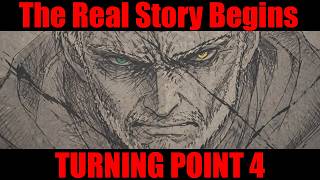

Old Man Rudeus: The Man-God Reveal
45sThe intense reaction of old Rudeus to the mention of Man-God is a dramatic, emotion-packed moment that fans and newcomers will find compelling.
▶ Play Clip"The title is generic and doesn't promise anything specific, but the content is a passionate fan analysis that delivers on the emotional reaction, though it's padded with repetitive praise."
This video analyzes the climactic scene from Mushoku Tensei Season 3, Episode 11, where an older Rudeus appears to warn his younger self against trusting the Man-God. The creator discusses the scene's significance as the true beginning of the story, the character design, and the implications of time travel, while also praising the anime's attention to detail and the passionate production team.
The video opens with the creator expressing excitement about a powerful scene from Mushoku Tensei, emphasizing the emotional impact of the moment when Rudeus confronts the Man-God.
The creator highlights Rudeus's instant animosity when the name 'Man-God' is mentioned, noting the contrast between his feeble appearance and the intense hatred that surfaces.
This scene is described as one that fans have waited over a decade for, especially for those who haven't read the light novels or web novels.
The video explains that Mushoku Tensei inspired much of the isekai genre, earning it the title of 'godfather' of isekai, and this moment marks the true beginning of the story.
Despite being three seasons in with over 50 episodes, the creator argues that everything up to this point was a prologue, and this episode is where the real story begins.
The only negative feedback seen is about the design of Old Man Rudeus, which some find less intimidating than his light novel counterpart, but the creator defends it as intentional.
The creator believes the design is meant to show a man who has been broken by life, not a badass, and that this is perfectly conveyed through the art.
The scene's power lies in the facial expressions and art, which convey Rudeus's hatred for the Man-God without any dialogue.
The creator questions what the Man-God was trying to achieve by asking Rudeus to open the basement door, noting that it seemed like a simple favor but led to drastic consequences.
This scene recontextualizes all previous interactions with the Man-God, making his motives seem more suspicious and raising questions about his true intentions.
The creator discusses how the Man-God's suspicious presentation might lead viewers to expect a twist, but this scene confirms his untrustworthiness.
Old Man Rudeus's reaction to the Man-God mirrors Orsted's anger, suggesting a deeper connection and reinforcing the Man-God's villainy.
The creator questions whether the Man-God's claims about preventing Paul's death are true or a manipulation tactic, adding to the mystery.
The introduction of time travel raises concerns about the story losing its stakes, but the creator assures viewers that it's handled beautifully in the source material.
The creator reassures that the time travel elements are executed perfectly, with no complaints about the conclusion of the light novel.
The creator decides to stop discussing the scene to avoid spoilers, but notes the symbolic use of windows in the episode.
Windows in Mushoku Tensei symbolize a peek into someone's life, and the storm outside the window represents the violence and terror within Old Man Rudeus.
The episode's bright and happy tone contrasts sharply with the dark final scene, making it more impactful.
The episode balances character development and happy moments before abruptly shifting to the ominous ending, highlighting the story's transition.
The same voice actor voices both young and old Rudeus, a nice touch that adds continuity.
The creator appreciates the animators' effort in creating a full alphabet for the Eye of Discernment, showing their dedication to the source material.
The attention to detail indicates that the team behind Mushoku Tensei are genuine fans, going above and beyond to create a faithful adaptation.
This episode marks a pivotal turning point in Mushoku Tensei, delivering a long-awaited scene that sets the stage for the story's true beginning. The creator praises the anime's artistic storytelling and the passionate team behind it, while reassuring fans about the handling of time travel in the series.
What is the significance of the scene in Mushoku Tensei Season 3, Episode 11?
It marks the true beginning of the story, with everything prior being a prologue.
02:22
Why is Mushoku Tensei called the 'godfather of isekai'?
It helped inspire much of the isekai genre.
01:44
What was the Man-God's request to Rudeus?
To open the basement door and check for anything unusual.
06:02
How does Old Man Rudeus's reaction to the Man-God compare to Orsted's?
Both react with anger when the name Man-God is mentioned.
09:19
What does the window symbolize in Mushoku Tensei?
A peek into someone's life.
13:29
What is the creator's opinion on the time travel handling in the light novel?
It's handled beautifully and perfectly, with no complaints.
11:45
Who voices Old Man Rudeus?
The same voice actor as young Rudeus.
16:18
True Beginning
Reveals that the entire series up to this point was a prologue, shifting the narrative perspective.
02:22Artistic Storytelling
Demonstrates how anime can convey deep emotion through visuals alone, without dialogue.
05:20Subverting Expectations
Discusses the narrative technique of making a character seem suspicious to mislead viewers.
07:44Time Travel Assurance
Provides reassurance to fans about a common concern in time travel stories.
11:45Passionate Production
Highlights the dedication of the animation team, adding depth to the adaptation.
18:08[00:00] It was my name in my previous life. I've come from the future.
[00:15] Chills, man. We gotta look at this scene real quick. Like, it is such a powerful scene.
[00:28] like, watch this reaction real quick, just watch the reaction he makes when Rudy says, are you the man-god, just watch very closely, who are you, is that you man-god, and then
[00:45] his reaction, just instant animosity closes the door behind him, like, I want to point out, like, the moment right before this happens, you have, like, a feeble-looking old man, someone that looks like just life ran him over multiple times, and he just looks sickly, he doesn't look like he is too powerful or anything like that, but as soon as the name drop of man-god happens from Rudy's own mouth, there is just this swelling of anger, animosity, and just pure, pure hatred that boils to the surface, and it is just such a phenomenal delivery in this moment.
[01:23] I'm just going to tell you guys, anime only, this is a scene that fans have been waiting for over a decade plus. Like, this is a scene that many that are, let's say, normal anime watchers that don't dive into big communities of light novel reading or web novel reading might not be fully aware of this.
[01:44] But Mushoku Tensei helped really kick off and inspire basically most of Sekai, like, at least with a part of its genre, okay? and it helped inspire, like, so many things that we know and love today.
[01:56] And there is a reason why people call it, like, the godfather or grandfather of, you know, Isekai. There is a reason. And this moment is such an impactful moment because it's like everything finally begins.
[02:09] Basically, what this moment represents for Mushoku Tensei is the beginning. This is where the story truly begins.
[02:22] And I know that's crazy. That's crazy to think. Because, like, when you take a look at this, this is episode 11 of season 3. We are three seasons deep. We have literally so many episodes that's already come out from Mushkutensei.
[02:36] Over 40 plus 50 something episodes at this point. I think maybe 60. And we are finally now at the moment where basically the official real story begins. Like, everything up to this very moment, to this episode, was a prologue.
[02:49] Like, I'm not even joking. Like, everything up to this very moment for the story was just set up for this massive reveal. This is where the story truly begins.
[03:01] It starts unfolding, revealing everything. And this is such a godly scene that was finally adapted. And I feel like I need to talk about this, okay? So, I've seen a lot of, like, discussions here and there about today's episode.
[03:16] and surprisingly enough, I have not seen a lot of negativity, which is, I'm happy to see. For once, I don't see any negativity from which you could say. There is only one thing, however, I have seen, and that is the design of Old Man Rudis.
[03:30] Now, this is obviously not a spoiler, because it's literally revealed that he is from the future, he reveals the name, not only Rudis Reneau, which is his old name from Japan, everything about this. It's just, it's very, like, yeah, come on, okay.
[03:42] So, the point here is, is that basically, when you, the only negative I've seen about this scene is that his design doesn't look as intimidating to his light novel illustration counterpart, which I'll, I might put on screen, you can see it for yourself.
[03:57] But basically, in the light novel, you can see how he looks. But in the anime, he looks a little bit more decrepit. He looks a little bit more like, honestly, an older version of Paul. Now, like, honestly, when I take a hard look at his, like, design, he looks like Paul when he was really rough and, like, he was, like, just really searching for, you know, his wife and all that.
[04:17] Like, that's what this looks like. It looks like a really roughed up, older Paul that has, like I said, the world has ran him over and over again. It's just continuously ran him over. And I think that really is the point here. I don't think that the very, like,
[04:33] um, presentation of this moment is supposed to give off the vibe of, man he a badass holy crap look how badass he is I don think that is the intention And I don think like for instance Ryujan the author of Mushu Kutensei ever wanted that to be the vibe never wanted that to be the intention that you get the impression that old man Rudis is
[04:54] a badass. He looks like he is just filled with nothing. Like, it looks like just everything was ripped away from this man, and I think that is perfectly conveyed in the
[05:06] way that the character is drawn. Like, this is where the art of anime really, like, shows itself, showcasing a whole story, we're just showing a few frames, and that's exactly what this is, and I think, like I already showed, the scene where, like,
[05:20] Rudy literally asks, are you the man-god, like, he literally asks, is that you man-god, and his instant reaction, you just look at the facial expression, the art shines through, without any words, without anything being uttered in this moment, you get a full, clear
[05:34] understanding of what this man's viewpoint is on man-god. Like, you can instantly see it. This is just nothing but anger. Like, his eyes are bloodshot. You can see the same eye, Rudy's same
[05:48] eye here, the demon eye, everything. You can see that this man has just so much unbelievable amount of hatred for man-god, and it's just like, what happened? Why? What was the man-god trying to get
[06:02] Rudy to do? That is the big question you have to ask yourself when you watch this moment, because we need to look at the facts here of what the man God was asking out of Rudy. He was basically saying, I want you to open the door. I want you to open the door to your basement, check and see
[06:20] if there's anything unusual. If there's not, don't worry about it. That's basically it. It sounds like a very simple favor from someone that has technically helped Rudy out for many, many years. So it doesn't seem like anything you would think about would be too drastic or change the very trajectory of your life.
[06:37] But obviously something happens. When Rudy opens that basement door, he goes down there to check, something happens. And the fact that you even have the appearance of an old man Rudy appearing and basically saying,
[06:50] do not go down there, do not open that door, says everything you need to know. So what was the man-god trying to do? What was the man-god trying to imply? Well, that's for the next episode, obviously.
[07:05] But what I will say is that this puts or recontextualizes every conversation that Rudy has had with Man-God since the very beginning, since turning point one. Basically, we know that the Man-God has been interacting with Rudy ever since he met Ruiger.
[07:20] And, you know, they got transported thanks to the whole teleportation event. But we know he's been appearing since then. The question is, like, why has he always appeared at these certain moments that changes the direction of the story?
[07:32] And, like, why does he always seem to be, like, a helping hand, but also not fully telling the full intentions of what he wants? It makes everything look, and how he acts, a lot more suspicious. And he's always been a very suspicious figure.
[07:44] And this is where the writing comes into play. Like, for instance, a lot of people like to, um, basically try to subvert expectations when it comes to writing. Like, when you look at Mangod as a character, okay, I think this is a very good way to look at this.
[07:58] Mangod as a character comes off as someone very ominous, suspicious, and honestly snake-like qualities. He does. And it doesn't help that he's literally voiced by the same voice as the Descendant of Oshimaru from Mario Kart. I mean, that doesn't help him at all.
[08:11] But, like, I'm going to tell you, like, his way of presentation, he's always come off a little bit suspicious, ever since the beginning. But the thing here is a lot of people's expectations is it's too obvious. Maybe it's just it's too obvious that he has ill intentions. Maybe he's not really a bad guy. Maybe he's not, you know, a trickster or anything like that. Maybe there's just something else we're just unaware of, the way he's acting.
[08:35] And so a lot of people think that is just going to subvert expectations, that Mangon's very personality and the way he is presented is supposed to give you the impression that he's untrustworthy, especially with the whole interaction he had with Orsted, you know, for instance, the Dragon God himself, you know, it's supposed to give the impression that, you know, he's always been someone that's tried to offer a rooty to help him, but anyone that ever knows about him gets radically angry or violent to a degree, and that's what we saw.
[09:01] so like when you see the exchange you're like maybe he's not a bad guy maybe he's just you know he's misunderstood but then you get to this episode you get to the scene where literally an old man says do not trust him he tricked you it's like okay his reaction ironically enough is very
[09:19] similar to how Orsted reacted very angry soon as the name man god was mentioned it's like huh there There's definitely a correlation, so to speak, there. But the point is is that why Why has he helped Rudy for so long just to do this And what does this conversation mean right here Where he talks to him and he like if you wouldn have went if you wouldn have
[09:42] went to the continent, you know, to try to save your mother, Paul would have survived. Your mother would have been saved. Roxy would have been saved. The question here is, is he telling the truth? Is this, is he telling the truth? We know he can foresee events to a degree, like, you know, like
[09:57] He knows what can kind of happen. It's already been, you know, presented already. So the question is, is he telling the truth? Is he lying? Did he lie in this moment to manipulate Rudy to do what he wanted in that scene?
[10:10] There's a lot of questions. And like I said, it's mysterious. And it makes me wonder about every interaction we've had thus far. The point, though, is that this scene is beautiful for a variety of reasons.
[10:23] First off, it gets into tie travel. Like, obviously, time travel is such a scary concept in storytelling perspective, and I think I should really segue into that, because this is very important.
[10:36] So, time travel, in terms of writing, is a very complicated theme to use. It can lead to so many complications where the story starts to lose its threat and its overall, like, structure. For instance, if you could just time travel at any point and fix things, it causes any lingering threats or death or loss.
[10:54] It basically kind of loses itself. And the fact that we have in this moment, we actually get to see, for instance, an old man Rudy reappear right in front of our current day Rudis, it really like, it makes me like, okay, are we now going to start tampering with time travel, where like, for instance, let's say we can prevent, let's say, Paul dying, we can prevent Santa from getting cursed, present, you know, just different things that's happened throughout Rudy's life.
[11:18] Is that what's going to happen here? Is that where the direction of the story is going to go? And this is obviously a very understandable concern for a lot of people looking at this type of writing, because time travel is very complex. It's very complicated if you don't establish rules,
[11:32] and it's why, to this very day, like, Signsgate is one of the best time travel stories that's ever been written for anime and manga, or visual novels, technically. It's one of the best. And so when you start getting this, it's understandable.
[11:45] I haven't seen this complaint yet. I want to clarify this. This used to be pulling stuff out of my ass, but this is a constant discussion that I've seen when it comes to time-traveling stories, where there will be worries that maybe things that were permanent might no longer be permanent.
[11:58] And I understand that fear, but I'm going to tell you guys, this is not a spoiler, but I'm just going to tell you. It's handled beautifully. It's handled perfectly. You don't have to worry. And I'm going to tell you, the series is already concluded, like, the Blight novel and the One novel is finished, and there is no complaints.
[12:14] I have no complaints. Like, it is, it's a perfect conclusion, okay? Like, the actual story, okay? The ending of MT is perfect, okay? So, what I'm saying here is, is if you have worries about this, don't worry. That's all I'm going to say. It is, it's fantastic. If you have loved Mushu Kutensei up to this very moment, you've loved the series, you have nothing to worry about, it gets even better. This is where the main story begins. That's all I will say on the topic.
[12:43] Now, with that out of the way, we do need to also talk about everything else within this episode. I want to talk about this scene a lot, but I think in general there is so much I need to save in terms of talking about this until the next episode.
[13:01] Because I'm inching closer to spoiler territory, which I think would be scary, and I don't want to do that to people. So I'm going to, I'm going to have to stop talking about this scene, because it's going to lead to a lot of spoilers.
[13:16] So yeah, we will stop. The last thing I will say to this moment, though, is I love the window. The window is a very subtle nod to the symbolism that has been presented throughout Musha Kugensei.
[13:29] If you notice, like, within the opening and ending songs of M.T. in certain scenes, there's always a window scene. And windows, in a way, is like a peek into someone's life. That's kind of what windows are represented in when it comes to Musha Kutensei.
[13:42] And so when you see the window here violently starting to shake with a storm blasting up against it while Old Man Rudy disappears, I think what this entire segment is trying to present with its art and animation is that whatever is behind these windows that's peeking into the very essence and soul of the Old Man Rudy,
[14:01] it's violence. It's terrifying. It's a storm. A very dark and powerful storm. that is the way the scene is presented because the symbolism of Windows is always then present within the story
[14:13] and I think that is exactly what's going on here and I think that what makes this scene so good is that the contrast of the rest of the episode is bright uplifting and happy Like everything for basically season three for the most part has just been nothing but happiness
[14:31] It's been a beautiful and fantastic journey. Rudy finding himself building a family, having a child, having friends, saving Nanahoshi, even the Nanahoshi stuff. Like, you know, everything ends well.
[14:43] Like, it is a beautiful and happy episode. We've had multiple happy episodes, and obviously all good things eventually must come to an end in terms of happiness and some dark times must arise, and it seems like we have finally reached that point.
[14:58] And I feel like that's what makes this episode so powerful, is the radical contrast from the final moments of the episode to everything else that we have had. Because it's been nothing but just, like, somber, blissful moments where, like, yeah, there's some darkness that happens here and there, but they overcome it and they find an answer and happiness that it's not a dead end, so to speak.
[15:20] And I think that's cool. it's a really nice way that they depicted this episode, because it's like, you have this whole thing with, like, you know, like, the armor dragon, you know, Brugius, he's talking with them about, like, the figure, you know, trying to, you know, repair Ruger's, you know, reputation, we get to
[15:35] see, like, all the characters have been there, getting a little bit of development and characterization, progressing their lives in some way, it's just, it's overall a good time, there's not really a lot of negativity whatsoever, I mean, you have them return home, life kind of returns as normal,
[15:50] you know there's just a lot of things it's like you know they didn't manage to solve like Zenith's curse and all that why she you know can't speak or anything but like they have an answer now what it is and there might be potential possibility to help her there's just a lot of things to happen
[16:03] here that is not necessarily bad news and then Rudy's like I'm gonna start writing a journal I want to start writing a journal and documenting my life and then all of a sudden everything goes to hell it's just like of course of course now I do want to talk about a few other things okay
[16:18] I want to point out something that is also very interesting. The voice actor for Rudy, obviously I placed this old version of him right here, is the same voice actor that voices old man Rudy is right here. It's the same VA. Same exact VA.
[16:31] I think this is really nice. This is a nice nod to showcase a few things that, once again, don't want to dive too deep into. But I do like how the VA for old man Rudy is the same as his previous.
[16:43] That's a nice touch. That is a very, very nice touch. and I think that that is going to not really be talked about as much as it should for the discussion of the anime. But yeah, overall, man, what an episode.
[16:58] I think the last scene I really want to touch up on is this scene. It's basically the Eye of Discernment, I believe that's what it's called, forgive me if I misremember the name, but basically the Eye offers a bunch of information on whatever he sees,
[17:12] and you can see all this different wording and all that, and I forget, I don't know if this is the human god tongue or the demon god tongue, I have no idea, I'm gonna be honest, but, um, basically, this is not necessarily just straight up Japanese, I wanna make sure I'm right about this, this is not Japanese on the screen, and I know that there was someone a few years back that did translate, like, the human god tongue for Mushu Kutensei was a big thing, like, everybody's talking about it at the time, and it was insane that someone even managed to actually translate a full alphabet of the language in M.T.,
[17:42] And then she has multiple different languages, by the way. It's pretty crazy. I wonder if someone's going to translate this and let us actually see what's fully being said on screen. And also, I really appreciate that the animators here
[17:55] even did something like this. Like, you realize how, like, insane this is to do? To be able to do a full-blown alphabet on the screen and go out of your way to do this? Like, that's crazy. Like, I really appreciate the animators adding this little detail.
[18:08] It just adds so much more depth and immersion to a show that, you know, they didn't need to do, but they did anyways. And I think this goes back to the age-old thing I always talk about. It's very clear that the team that works on M.T.,
[18:20] they love this series. They, um, they're massive fans. You can tell that they are, they're fans not just of the anime, but they're fans of the light novel, they're fans of the web novel. You can tell they're fans. Like, anyone that is working on this, you can just feel it,
[18:32] because it's like these little knots, these details, it's just something that is not something a casual animator would put in. this is definitely something that is just added in like from the storyboarding
[18:44] to the director and everything this is someone that is legitimately passionate about this work and it's just not using it as a way to just make money they are going above and beyond to make sure that this is a very good product that fully visualizes
[18:57] the original source but I think I'll leave it at that it's just what an episode I love this so much may you all have a fantastic day or night wherever you live be safe stay healthy GD out

⚡ Saved you 0h 19m reading this? Transcribe any YouTube video for free — no signup needed.