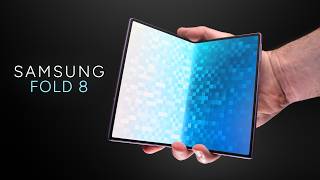

Samsung's New Short Fold: Why Now?
44sControversial shift in Samsung's foldable strategy sparks curiosity and debate among tech fans.
▶ Play Clip"Title accurately promises a first look at the short Samsung Fold 8, and the video delivers exactly that."
Samsung has unveiled its new foldable lineup, including the Z Fold 8, Z Flip 8, and Z Fold 8 Ultra, with the short, book-shaped Z Fold 8 as the standout. This marks a significant design shift after seven years of tall foldables, raising questions about why Samsung chose this form factor now despite past failures by competitors like Google and Oppo.
Samsung announced three new foldables: Z Fold 8 Ultra, Z Flip 8, and the short foldable Z Fold 8. The naming is confusing: the short king is now the Z Fold, while the taller classic is the Z Fold Ultra.
Samsung has avoided the book-shaped foldable for 7 years. Other companies like Google and Oppo tried this shape and failed, yet Samsung is now betting its flagship name on it.
One theory is that Apple is rumored to release a short, wide foldable this fall. Samsung wants to be first to market with a similar form factor.
The Z Fold 8 is 4.5 mm open and weighs barely 200 g, lighter than most slab flagships. A new hinge mechanism across all three devices contributes to its thinness.
The crease is reduced compared to previous Galaxy Folds, though not as creaseless as the Oppo Find N6. It's only visible when tilting the screen.
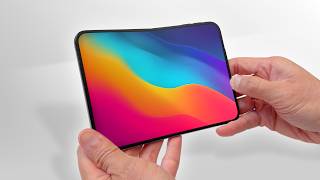
The short, wide shape feels like a stout normal phone. Reachability across the front screen is easier than on tall foldables, though some may struggle with full width.
16:9 videos are 30-40% larger than on a large slab phone, even bigger than the Fold 8 Ultra. Cinematic 21:9 content shows no gain. Vertical shorts don't benefit when closed.
Speakers are on top and bottom. When closed and rotated in landscape, stereo works. But when open in the biggest view (unrotated), sound only comes from the left side.
Historically, foldable buyers use the larger screen for work multitasking. The taller Ultra is better for that. Samsung may be betting on a shift toward media consumption without bulk.
The Fold 8 has a dual camera (50MP main + 50MP ultrawide), no telephoto. Battery is bigger than expected despite being thinner, and they don't use silicon carbon tech yet.
Pricing remains high, frustrating after 7 years. Samsung is betting that short foldables are what the market actually wants.
Samsung's Z Fold 8 represents a bold pivot to a short, book-shaped foldable, betting on improved thinness and weight to attract users who prioritize media consumption over multitasking. Whether this form factor will succeed where others failed remains to be seen.
What are the three new foldable devices Samsung announced?
Z Fold 8 Ultra, Z Flip 8, and Z Fold 8.
00:01
How thick is the Z Fold 8 when open?
4.5 mm.
01:40
What is the weight of the Z Fold 8?
Barely 200 g.
01:40
Which company's foldable is mentioned as having a more creaseless screen than the Z Fold 8?
Oppo Find N6.
02:07
What is one theory for why Samsung released a short foldable now?
Apple is rumored to release a short, wide foldable this fall, and Samsung wants to be first.
01:12
How much larger are 16:9 videos on the Z Fold 8 compared to a large slab phone?
30 to 40% larger.
02:46
What is the camera configuration on the Z Fold 8?
50MP main and 50MP ultrawide; no telephoto.
05:01
What is a quirk of the speaker setup on the Z Fold 8 when open and unrotated?
Sound only comes from the left side.
03:26
Samsung's Design Pivot
After 7 years of tall foldables, Samsung switches to a short book shape despite competitors' failures.
00:17Apple Influence Theory
Samsung may be preempting Apple's rumored short foldable, showing competitive strategy.
01:12Thinness and Weight Achievement
The Z Fold 8 is lighter than most slab flagships at 200g and 4.5mm open, a notable engineering feat.
01:40Shift in User Priorities
Samsung bets on media consumption over multitasking, a potential market shift.
04:08[00:01] their new phones. They have the Z Fold 8 Ultra, the Z Flip 8, and then the star of the show is the new short foldable, the Z Fold 8. Now, the naming is weird because for 7 years the term Z Fold meant the classic tall shape, but now
[00:17] this short king is the new Z Fold and the taller classic style is the Z Fold Ultra. And as I held the book-shaped Z Fold 8 in my hand, the burning question that I had was, why now? Because Samsung has made the same shape in foldable
[00:31] phones for the past like 7 years, the tall classic style fold, and they've seemingly avoided like purposefully avoided making a book-shaped device this whole time. This shorter book shape has been tried by other companies many times
[00:44] and it keeps failing. So, Google's first Pixel Fold was like this, short and they abandoned that shape and they went for like the taller style. And Oppo also built their earlier foldables like this, like the Find N1, the Find N2, and they
[00:59] Basically, every company that has shipped a short foldable phone has factor. And so, if all of these companies are failing at doing it, why companies are failing at doing it, why would Samsung bet their flagship name on
[01:12] The first has to do with Apple. So, the this fall and it's rumored to be the same kind of shape, like short and wide, anytime there's rumors of Apple moving into a space, Samsung likes to come in
[01:26] first and just be standing there. And I just don't think it's coincidence that same time. Now, the other theory is that this has to do with the technology. pull something like this off, a short and wide foldable that's still very
[01:40] thin. Like, look at this thing. It's 4.5 mm open and it's light. It's barely 200 g. It's lighter than most slab flagships and it just feels really nice in hand because of its weight and its shape. The hinge mechanism is very smooth. It's
[01:54] nice and thin and Samsung uses the same new hinge across all three devices, which is a big reason as to how they've made it this thin. It's IP48 water it up is definitely reduced when compared to the crease we saw on the
[02:07] previous generation of Galaxy Folds. It's not as creaseless as the ones we see on the recent Oppo Find N6, but it's close. You have to tilt the screen imperfections. So, when this phone is
[02:19] position, it feels like a stout normal struggle a little bit when I'm trying to reach across the full width of that front screen, but I don't mind it and I take this reachability over that of like
[02:31] the tall foldable phone. I really like this size. Now, videos on the front screen are okay when they're rotated in hand, like it's a comfortable position, right? Cuz the phone is compact. When you open it up, regular 16x9 videos are
[02:46] like 30 to maybe 40% bigger than a large slab phone. It's even a little bit bigger than the viewports of the Fold 8 Ultra for 16x9 videos. Now, how much you gain on the aspect ratio though, right? Really wide cinematic content will have
[03:00] you don't gain anything there. But, if like that classic TV look, that stuff will look awesome cuz it fills up the entire screen. And same with photos, cameras will shoot in 4x3 by default and
[03:14] screen. Now, vertical videos are different. If you're someone who watches a lot of shorts, when this thing is closed, short videos do not benefit at all because that content is taller than it is wide. It's totally usable, it's
[03:26] rotate it if you want the biggest vertical canvas. A quick note on the decently loud, but the way that the stereo works on it is a little different than the typical classic fold. So, the speakers are on the top and bottom of
[03:40] Samsung foldables always are. When it's closed and rotated in landscape, you get stereo sound. On the tall fold, like the classic shape, you would rotate it when it's open to go landscape for that big view, right? This will be stereo. But on
[03:54] this phone, the new short fold eight, the biggest view is in the unrotated that, the sound only comes out from the left side, if that's something important to you. So, this is obviously a very great media consumption phone, but
[04:08] typically, historically, people don't buy phones like this to watch shows, larger screen for multitasking and doing multiple things, work-related things on their phone. And the taller screen of the fold Ultra is better at that. Like
[04:21] if you're a highly regarded Wall Street Bets user, a foldable is better for screen lets you see more. And same with multitasking. Like if you have two apps, spreadsheet on the other side, the bigger screen will always feel more
[04:35] and do stuff. Typing on it is fine. You'll likely need to use the split of the device doesn't make it bad or anything like that. Now, I've always had this theory that people who are willing to spend like $2,000 US on a foldable
[04:48] phone were people who want to use that bigger screen for work, not for just like watching shows and stuff. But maybe Samsung's betting on a shift in the want to watch stuff on a bigger phone screen, but don't want the bulk and the
[05:01] size of the taller Ultra. Now, the cameras. The fold eight has a two-camera system. It's got a 50-megapixel main and a 50-megapixel ultrawide. There is no telephoto on this. You got to go to the fold Ultra for a triple camera system.
[05:15] The battery on the fold eight devices are bigger than expected. Like the fold thinner than the previous generation, but still has a bigger battery. And this big, despite them not using silicon carbon tech yet. Now, pricing, as you'd
[05:29] frustrating that 7 years later, these things are still as expensive as they short foldables are what the market actually wants. Okay, hope you guys enjoyed this video. That's the fold eight.
⚡ Saved you 0h 05m reading this? Transcribe any YouTube video for free — no signup needed.