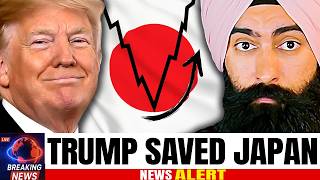

US Bails Out Japan: Shocking Move
45sThe opening hook reveals a surprising geopolitical event that immediately captures attention and promises implications for viewers' finances.
▶ Play Clip"The title promises a breakdown of the US bailout of the yen, which is delivered, but the video is padded with a lengthy sponsor segment and repeated explanations, making it longer than necessary."
In July 2026, the United States bailed out the Japanese yen, a rare move with significant implications for the global economy. This video explains why the US intervened, how Japan's economic struggles and potential interest rate hikes affect US stock markets, the dollar, and mortgage rates, and what it means for individual investors.
President Trump bailed out the Japanese yen in July 2026, a move not seen in decades, because Japan is the largest foreign owner of US debt and its currency collapse impacts US mortgage rates, stock market, and dollar value.
The US economy relies on a strong yen; a weak yen directly impacts the US economy, stock market, and dollar. The US bailed out Japan not out of friendship but to protect its own financial stability.
Japan's GDP barely grew from 505 trillion yen in 1995 to 560 trillion yen in 2026, while national debt exploded from 470 trillion to 1,320 trillion yen, pushing debt-to-GDP ratio from 93% to 235%.
The US economy grew from $7.6 trillion to $32 trillion, but national debt rose from $4.9 trillion to $40 trillion, increasing debt-to-GDP ratio from 65% to 125%, making the US also underwater.
Japan cut interest rates to negative levels to stimulate the economy, leading to free borrowing for the government, but this eventually caused inflation and a falling yen, prompting the central bank to consider raising rates.
Japan is the largest foreign lender to the US. If Japan's currency collapses, it cannot lend to the US, reducing lenders and threatening the dollar's value, which relies on trust and demand.
Wall Street borrowed yen at 0% interest, converted to dollars, and invested in US assets, inflating stock and real estate prices. As Japanese rates rise, this trade unwinds, reducing asset demand and prices.
The dollar is a fiat currency backed by trust, not gold. If Japan stops buying US debt, demand for dollars falls, reducing its value and increasing prices for goods and services.
Fewer lenders to the US government raise treasury rates, which in turn increase mortgage, car loan, and credit card rates. This slows spending and hurts the economy, affecting jobs and wages.
The US bailout of the yen aims to stabilize Japan's economy to maintain its role as a lender. The yen carry trade, dollar value, and interest rates are all affected, impacting investors and consumers.
The video concludes that Japan's economic troubles and potential rate hikes have direct consequences for US asset prices, dollar value, and borrowing costs. Understanding these global interconnections is crucial for investors to navigate the current economic landscape.
US Bailout of Yen
Highlights a rare and significant financial intervention with global implications.
Japan's Debt Crisis
Illustrates the severity of Japan's debt problem with concrete numbers.
03:46Yen Carry Trade
Explains a complex financial mechanism that affects US asset prices.
10:00Interest Rate Transmission
Shows how global events directly impact consumer borrowing costs.
14:20Global Interconnectedness
Emphasizes the importance of understanding international economic links.
21:24[00:00] In July of 2026, President Trump did something that we haven't seen happen in decades here in the United States. America bailed out the Japanese currency, the yen. And the reason why you want to pay attention to this today is because the Japanese central bank is expected to raise interest rates again.
[00:19] And this has a direct impact on your economy, on your stock market, and your dollar. Let me break it all down, but first, you have to understand, why did President Trump actually bail out the Japanese currency? Take a listen.
[00:31] Because we have a good relationship with Japan. We're very strong, very, very strong financially. And they are, they were never weakening yet, and they wanted a little bit of help. And we're always there for Japan.
[00:44] Japan has been very good to us. But the exception, of course, was the oil. But that's not the full story. Japan is the largest foreign owner of United States debt. So when their currency starts to collapse, that impacts your mortgage rate, that impacts the United States stock market, and that impacts the value of your United States dollar.
[01:04] So in this video, I want to break down what's going on and what it means for your money. That way, you can be a smarter investor. And again, this is why on September 29th, I'm hosting a live, free, and virtual investor workshop where I'm going to be showing you how you can profit from the dollar losing value.
[01:20] It's a free workshop. I'm doing it twice on September 29th, once in the morning at 10.30 in Eastern Time, and again in the evening at 8 p.m. Eastern Time. It's live, so there's a limited number of people that can actually join me live.
[01:32] So if you're interested, please register soon. That way you can secure your spot. I have that link for you down in the description below. And when you sign up, you're also going to get access to MarketPrice, which is my newsletter for investors, completely for free. The United States made an effort to bail out the Japanese yen,
[01:46] not because the United States wants to be friendly with Japan, not because the United States has a lot of extra money, I mean, with $40 trillion in debt. We actually don't have the money to bail out another country. But the reason why is because the United States economy relies on the Japanese yen to be strong,
[02:05] and it's not been strong. And so that weakening of the Japanese yen has been having a direct impact on the United States economy, the United States stock market, and the United States dollar. But to really understand why that's happening,
[02:17] we have to start by understanding how did Japan get into the financial situation that it's in right now and is the United States on the same course and then we're going to go a little bit deeper to understand why the United States is actually bailing them out
[02:30] and why the United States needs the Japanese yen to be strong. So let's jump in. Let's go back in time to the year 1995, back when both the United States and Japanese economy were considered healthy. Back in 1995, the Japanese economy measured through a number called GDP
[02:46] was about 505 trillion yen large. Back then, the Japanese government was also carrying a national debt of about 470 trillion yen, which means the debt-to-GDP ratio, or the debt-to-economy ratio for Japan,
[03:00] back in the year 1995 was around 93%. Now, let's take a look at the United States back in 1995 as well. The United States economy was about 7.6 trillion dollars large, and our national debt was about 4.9 trillion dollars large,
[03:14] which means our debt-to-GDP ratio was something like 65%, which meant our economy was a lot larger than our national debt. Both economies had an economy larger than the national debt in 1995.
[03:29] Now take a look at where we are today in 2026, about 30 years later. The Japanese economy barely grew from 505 trillion yen to about 560 trillion yen, while the national debt exploded from about 470 trillion yen to about 1,320 trillion yen,
[03:46] which means today the national debt-to-GDP ratio for Japan is something like 235%, which means it has a lot more debt than it does economy.
[03:58] The Japanese economy is, in essence, underwater. Let's compare that to the United States, where our economy grew significantly from 7.6 trillion to 32 trillion dollars, but our national debt also exploded from $4.9 trillion to about $40 trillion,
[04:13] which means our debt-to-GDP ratio in the United States is now at right around 125%, which means now the United States is also underwater on our national debt. Now, at this point, you're probably wondering, well, what happened to Japan over these decades
[04:27] to cause its economy to barely grow while the national debt skyrocketed? And this has to do with what the Japanese government did to try to stimulate its economy. Like most central banks around the world, the Japanese central bank cut interest rates to stimulate spending and to stimulate borrowing.
[04:43] The idea being that if interest rates are lower, more people will borrow money, more people will invest money, more people will buy houses, more people will buy cars, and that's going to stimulate the economy. And that's exactly what the Japanese central bank did, except they didn't just cut interest rates, they had something called negative interest rates.
[05:01] because they were so desperate to grow the economy that they really cut interest rates so aggressively that they went into negative numbers. Now, negative interest rates are kind of a weird thing to think about because you're not actually getting paid to borrow money.
[05:14] Instead, what that means is if I borrow $1,000 from you, instead of paying you back $1,000 plus $100 in interest, I'm only going to pay you back $900. Now, in this negative interest rate environment, the only entity that was truly borrowing money at negative interest rates
[05:29] was the Japanese government. Who were they borrowing money from? Well, they were borrowing money from the Central Bank of Japan, and they didn't care if they lost money because they just wanted to help stimulate the economy. So the Japanese government was borrowing money for free,
[05:43] and then injecting it into the economy, trying to stimulate the economy, and interest rates were extremely low because they were not worried about inflation. In fact, they were worried about deflation. Deflation is this idea that the prices of things are falling,
[05:55] which sounds great at first glance because that means your stealth is getting cheaper. The $100 that you have in your pocket buys you more stuff today than before, but there are consequences to deflation, which is, number one, asset prices fall, like stock prices and housing prices,
[06:09] and your wages also fall along with it. So there's consequences with deflation, and that's why the Japanese government were so gung-ho on cutting interest rates to negative levels, that way they could stimulate the economy
[06:21] and try to move inflation to try to get the economy moving, and everybody thought that Japan wouldn't have an inflation problem, and then came the inflation problem. All those negative interest rates for so many years
[06:34] are now catching up to Japan, where now the Japanese government is facing inflation And now as the Japanese government is facing inflation people are concerned about the value of the yen
[06:46] And as people get concerned about the value of the yen, the Japanese central bank has been working to raise interest rates to try to protect the yen. But as the value of the yen has been falling,
[06:58] that's what concerns on the United States and the United States government. Which brings us to the topic of this video. Why would the United States care if a country in the middle of the ocean is seeing their currency collapsing?
[07:12] Well, this is where things really get interesting. The United States government is deep in debt. Today at the Tamim Record in Israel, the United States government has about $40 trillion worth of national debt. And there are a few main places where the United States government goes out to borrow this money.
[07:28] They can borrow this money from people like you and me. They can borrow this money from the Federal Reserve Bank, which is a central bank in the United States. And they can also borrow this money from foreign governments and foreign entities. Well, the largest foreign lender to the United States government is none other than Japan.
[07:45] And now, the United States government has been facing a big problem in 2026, and the problem that they've been facing is they've been struggling to find lenders. Because the United States national debt has been exploding,
[07:57] it's been creating chaos in the bond market because the government has been struggling to find lenders. Well, one of those lenders that was one of the biggest lenders for the United States was none other than the Japanese government and the Japanese investors.
[08:10] Well, think of the situation. Now the Japanese economy has its own problems. They're worried about their currency falling. When they're worried about their currency falling, they cannot take their money and lend it to the United States government because they need to keep their money safe here.
[08:28] Because if their currency collapses, they don't have any money to lend to the United States. And this is where now the United States wanted to protect their ability to continue borrowing money from Japan.
[08:40] Because if Japan can't lend money to the United States, the United States just lost another lender. And the United States doesn't want that to happen because our dollars rely on people having faith and trust in the dollar.
[08:52] And if the Japanese government, if the Japanese economy cannot continue supporting the dollar, Well, now all of a sudden, there's a lot more consequences to you and your money, which I'm going to talk about in just a minute, that the government wants to avoid.
[09:05] So the government didn't have this extra money laying around. In fact, with $40 trillion in debt, we're spending trillions of dollars every year that we don't have. But in order to protect our ability to keep lending money, that was replaced.
[09:17] And Trump said, we're going to be generous. And we're going to lend a huge sum of money to Japan to help stabilize their currency. Now, unfortunately, it didn't create a huge stabilization. There's still a lot of uncertainty and instability with the yen and things going on in the Japanese economy,
[09:34] which is why they're again thinking about raising interest rates to help protect their currency. But all of this has a direct impact here on your dollar and your stock market. Now, let me start with the stock market because I think this is one of the most interesting things,
[09:48] especially for those of you that are investors, because there was this concept called the yen carry trade. which was extremely profitable for Wall Street.
[10:00] And the way the yen carry trade worked is Wall Street realized that you could borrow money from Japan for essentially 0% interest rates. Because remember, Japan had negative interest rates. So if you wanted to go there and borrow huge sums of money,
[10:13] it was essentially free because the banks wanted to stimulate the economy. But Wall Street heard that and said, Huh, you're telling me that I can come here and borrow huge sums of yen at 0% interest rates.
[10:27] Then I can take that yen and I can convert it to the United States dollar. And then I can take those dollars, which I essentially not borrowed for 0%, and I can turn them into assets in the United States.
[10:40] Like I can just use this money to buy stocks in the United States. I can buy real estate in the United States. I can buy United States treasuries. Sign me up. So huge sums of money were now entering the United States economy through this yen-carried trade.
[10:54] Somewhere between billions and trillions of dollars. The exact number is really hard to calculate. But huge sums of money were coming into the United States every single year. It was flowing into the stock market. It was flowing into the treasury market, which helped our asset prices grow even more.
[11:09] Because if you have a 401k, you know that when the stock market goes up, you feel richer. If you have IRA, if you have stocks, you know when the stock market goes up, you'll feel happy. But what causes stocks to go up?
[11:22] And now you could say, well, profits and earnings and this and that. Well, sure. But at the end of the day, the price of any asset depends on supply and demand. When you have buyers and sellers, the price of an asset goes up. And so now all of a sudden we had a whole new thing of buyers
[11:37] because Wall Street was going over to Japan, borrowing huge sums of money for free, and then injecting it into the economy, and then they would make all the profits because if you could take a billion dollars, get it at 0% interest, invest it into the stock market,
[11:51] grow your money by 10%, that 10% interest is yours, you just pay back the loan, the principal to the Japanese bank, and well, now all that money is in your pocket. So that was the first thing and the first impact of this on the United States economy,
[12:05] which is as the Japanese interest rates go up, the yen carry trade goes away. The second thing has to do with the United States dollar. It turns. The United States dollar runs on trust and faith.
[12:17] And if you've been watching my videos and you're subscribed to my channel, you've probably heard me talk about this before. This is, again, why I'm talking about how you can profit from the falling dollar on my live workshop on September 29th. If you haven't registered for that workshop yet,
[12:29] again, I have that link for you down in the description. The United States dollar is not backed by any precious metal like physical gold. So, the value of the dollar depends on supply and demand. When you have more uses of the dollar, when you have more demand for the dollar,
[12:41] the value of the dollar goes up, and now your dollars can buy you more groceries. They can buy you more house. They can buy you more car. But if people don't trust the dollar as much, or there's just a lot of dollars out there, there's more supply of dollars than demand, well, now that dollar loses value,
[12:54] and now you need more dollars to buy a house, you need more dollars to buy a car, you need more dollars to buy groceries, you need more dollars to go on a vacation. You get the idea. That's what inflation is. Between 2020 and now, we've printed so much money that now we increase the supply of dollars
[13:08] more than the demand, and that increase in supply of dollars then causes the value of each dollar to go down, causing the price of the things to go up. So when we are in what called fiat currency based economy which is our money is not really backed by a precious metal it backed by a promise It just a piece of paper When you have that type of fiat currency the value of your currency depends on people
[13:28] using it, wanting it, and having faith and trust in it. Well, we have some of the largest lenders in the world now turning away. The previous foreign largest lender to the United States was China.
[13:41] China today is no longer a lender to the United States, they're not a buyer of United States dollars in debt. they're a seller of that debt. That hurts the value of the dollar. Well, today the largest foreign owner of our United States debt is Japan.
[13:55] And they were facing these currency problems with their own currency. And if they turn into a net seller and they start selling off the dollar, well, now all of a sudden that hurts the value of the dollar, causing the value of your dollar to go down,
[14:08] causing the prices of things that you have to buy to go up. That's not all. It not only affects the stock market, It not only affects the value of the dollar, it also affects interest rates.
[14:20] So we talked about how it affects asset prices, because the yen-carried trade brings less dollars into these assets. We talked about how this impacts the value of the dollar, because if the Japanese government and investors are not buying United States debt,
[14:35] then we have less lenders to the United States, less users of the dollar, the value of the dollar goes down, causing the price of things to go up. But how does it affect your mortgage rate? And this has to do with something called the treasury rate.
[14:49] And if you've been watching our videos, you've also heard me talk about something going on in the bond market. And what that means is the United States government has $40 trillion worth of national debt, which means the government keeps spending trillions of dollars that it doesn't have.
[15:02] But that we decided to break in 2026 because the government went out to go borrow more money and they couldn't find lenders. Now, the interest rate that the government pays out to its lenders also varies based on supply and demand.
[15:17] If everybody and their moms is lending money to the United States government, if the government has more lenders than they need, well, the government doesn't have to pay as high of an interest rate, because they're going to say, well, if everybody wants to lend us money, why should we pay 5%?
[15:31] We can just pay 3% in interest because everybody wants to lend us money. But it was the opposite situation in 2026. The government said, we need to borrow a trillion dollars. and there was not enough people out there lending money to the United States government.
[15:44] So the government instead had to say, okay, instead of us paying 4% in interest, how about 5% in interest? How about 5.2% in interest? So interest rates had to go up. These are called treasury rates.
[15:56] Treasury rates are the interest rate that the United States government pays on its debt. Now, one of the reasons for that is because the Japanese economy, which was the largest and is the largest foreign lender to the United States, couldn't keep lending money to the United States government
[16:09] because they're facing struggles in their own economy. And because the Japanese government couldn't lend money to the United States, well, that's one of the reasons, not the only reason, but one of the reasons why now the bond market in the United States started to break
[16:21] because the United States government couldn't find lenders, so interest rates went up. We saw the highest interest rates in the bond market that we have seen in decades, which is a problem. Now, that's a problem for the United States government
[16:33] because that makes our national debt more expensive, but I don't want to talk about that right now. What that also means now is your mortgage rate gets more expensive. And the reason why your mortgage rate gets more expensive is because now,
[16:45] if I'm J.P. Morgan Chase Bank, if I'm Bank of America or I'm Wells Fargo, I'm saying, I could give you a mortgage for 5%, but you might default. You might lose your job. You might forget to pay me. But the United States government, they're not going to forget.
[16:59] The United States government will always pay their bills. Why? Because they can just print that money with the Federal Reserve Bank. They can raise taxes. So the government is less risky than you are. The government today is paying you 5% in interest. Why should I charge you 5% on a mortgage?
[17:12] If I'm going to lend money to you because you are more risky, I have to charge you a higher rate of interest on your mortgage. That's why we've seen mortgage rates go up so high in 2026. It's not because the Federal Reserve Bank raised interest rates.
[17:26] It's not because we've seen a change in what realtors are doing. It's because we've seen less lenders to the United States government. And because we've seen less lenders in the United States government, United States treasury rates have gone up.
[17:39] And as United States treasury rates have gone up, their mortgage rates have gone up. Car loan rates have gone up. Credit card rates have gone up. Business loan rates have gone up. And this is now causing a separate set of pain in the economy,
[17:51] which is businesses and consumers are saying, we have to spend less money because borrowing money is more expensive, which causes pain in our United States GDP.
[18:04] Why? Because our GDP is a measure of our economy. And our GDP is a measure of all spending that happens in our economy. Let's think about that for a second. The United States is a credit-based economy, which means people don't spend money based
[18:17] off of how much cash they have in their wallet. They spend money based off of how much credit they can qualify for. The more credit that somebody can qualify for, the more money they're going to spend. That's how our economy works.
[18:30] Hate it or love it, that's the way it works. So as interest rates go up, people now can borrow less money. Which means less people buy houses, less people buy cars, less businesses are doing more business investment.
[18:44] If there's less people spending money, less businesses spending money because interest rates are more expensive, that means our economy now gets hurt. As our economy gets hurt, you can start to see the implications of that.
[18:56] That means people lose jobs, unemployment gets hurt. And that now has other problems in the economic system. So these interest rates, well, yes, they affect people who are buying a house. They affect people buying a car.
[19:08] They affect businesses trying to grow and trying to raise money. It impacts everybody, even if you don't have debt. Because these higher interest rates, meaning treasury yields, have an impact on the broader economy.
[19:22] Because higher interest rates slow the economy down. Which means that also impacts the job market. That also impacts wage growth. That's why you want to pay attention to this. Now, not all of it is attributed to the Japanese economy and the Japanese yen falling,
[19:38] but some of it is. Which is why you want to pay attention to this as an investor, because a lot of people say, oh, this is Japan, it's on the other side of the world, why does it impact us? But we live in a globalized economy now,
[19:50] especially during the day and age where the United States national debt is so large, and we continue to need so many borrowers, that why you want to pay attention to this because these changes in the economy have a direct impact on your wallet One of the things that I learned in life is that oftentimes the things you don pay attention to end up mattering the most
[20:08] And that's why I want to talk to you about life insurance with a sponsor policy genius. Because if you don't have the assets to live off of yet, if something tragically happened to you, the last thing you want is now your spouse and your family trying to struggle to survive financially.
[20:24] And that's where term life insurance can come into play. Now I'm talking about term life insurance here, not whole life insurance. The whole idea with term life insurance is it's life insurance for a period of time. 10 years, 20 years, 30 years.
[20:36] That way you can work to build your asset. It is a lot cheaper than whole life insurance because the whole idea is you're not here trying to get rich off your life insurance. It's just there as a bridge until you can build your asset.
[20:50] This is one of the things where the earlier you start, the cheaper it is. Because if you're a healthy 30-year-old guy, you could potentially get a half a million dollar term life insurance policy for less than a dollar a day. So if you have any questions, you want to learn more about term life insurance, or you want to see how much a term life insurance policy would actually cost you,
[21:07] I'll put a link to Policy Genius' form down in the description. It only takes a few minutes to complete, and it'll give you an actual quote on how much term life insurance will actually cost you, and I have that link for you down in the description. So what we talked about in this video is that the United States government is bearing out the Japanese yen.
[21:24] And the reason why that matters today is because all the United States government sent a lot of money to help stabilize the yen. It didn't fully stabilize it, which is why the Central Bank of Japan could be raising interest rates again. And that has a direct impact on you.
[21:37] And the reason why it has a direct impact on you and the reason why you want to pay attention is because what we saw in the Japanese economy is that over the last 30 or so years, the Japanese economy barely grew while the national debt exploded, which is why the debt-to-GDP ratio went from around 93%, like in 1995, up to around 235% in 2026.
[21:56] Their government is underwater under debt. Well, we saw something similar, not that extreme, but something similar in the United States, where our economy grew quite significantly, but our national debt grew even faster over those same 31 years,
[22:10] which is why our debt-to-GDP ratio went from around 65% back in the year 1995 up to about 125% today. Now, the reason why that matters is we already don't have extra money as it is.
[22:24] We're underwater. But despite that, we then decided to then send money to Japan to help stabilize their currency, which seems weird. Why are we not trying to stabilize our dollars? Why are we not trying to stabilize our economy and our citizens?
[22:39] And the reason why is because the Trump administration believes that this indirect investment is going to help the United States economy, our investments, and its citizens. Why? Because the Japanese yen has a direct impact on our economy.
[22:53] The first thing that we talked about is our asset prices. The yen-carry trade has been a popular thing for the last number of decades, and the idea is investors on Wall Street were going to Japan,
[23:05] borrowing huge sums of yen at 0% interest, because remember, during this time when the Japanese economy was not growing, but the debt was exploding, the Bank of Japan held negative interest rates,
[23:18] which meant if you borrowed money in Japan, it was essentially free money. So Wall Street was going and borrowing huge sums of yen at 0% interest rates, and then they were taking that money, converting it to United States dollars, and then converting those new dollars to assets in the United States.
[23:33] Stocks, real estate, bonds. And now Wall Street would pocket the difference and then pay back that debt. Well now, as the Bank of Japan has been looking to raise interest rates, the Yen-Terry trade is not as popular as it was before
[23:47] because you cannot borrow money at the same 0% interest rate as you could before. The second thing that this impacts besides asset prices is the value of the dollar. And the reason why it impacts the value of the dollar
[24:00] is because the United States dollar is a fiat currency, which means it runs on supply and demand. And the largest foreign owner and lender of United States debt is Japan.
[24:12] And if the Japanese government is more concerned about their currency collapsing, they don't want to continue holding on to United States debt. They don't want to sell off their assets. That way they can help stabilize their economy. And that was where President Trump was concerned,
[24:25] that if the Japanese economy starts to sell off our United States debt, the value of our dollar now goes at risk. Because the value of the dollar depends on supply and demand. And if we start to flood the global markets with more dollars,
[24:40] so now all of a sudden these dollars have less buying power, which means your groceries become more expensive, your house becomes more expensive, your cars become more expensive, your vacations become more expensive. And so to help protect that and prevent that,
[24:53] that was where President Trump in the White House said, how about we try to now support the yen, that way the Japanese economy may continue being a lender to the United States, because again, the largest foreign lender to the United States is Japan.
[25:06] And then the third thing that gets impacted is your mortgage rate, your interest rate, which has a direct impact on the economy, because what we saw happen in 2026 is our national debt exploded to more than $40 trillion,
[25:18] but the government couldn't find enough lenders for our national debt, which created chaos in the bond market, And bond yields went up, which means that treasure rates, the interest rates that the United States government has to pay, went through the roof.
[25:33] The reason why that matters is now your bank, Chase Bank, Wells Fargo, Bank of America are saying, we need to charge you a higher rate of interest on your mortgage or car loan or business loan because the government is paying that higher rate of interest and you are more risky than the government.
[25:45] This caused all loan rates to go up in 2026. You might be seeing it now. and now its interest rates go up, that has a direct impact on our economy, because our economy runs on spending.
[25:57] And if people can borrow less money, people spend less money, and if people spend less money, that hurts the economy. That's why what's happening in Japan has a direct impact on what's happening in the United States,
[26:09] which is why you want to pay attention. If you got value out of this video, the best thing for you is a referral. If you could, please share this video with a friend, family member, colleague, or fellow investor. that way we can continue to spread this type of financial education.
[26:22] Thank you. For most of the last 15 years, it was cheaper for you to buy a house than it was to actually rent a house. But now that has frisked. It has become so expensive to buy a house that we're now turning into a buyer's market
[26:34] because sellers can't sell their houses because they're cutting prices and giving concessions because buyers are saying, it's cheaper for me to rent. This is the thing that's getting weird.


⚡ Saved you 0h 26m reading this? Transcribe any YouTube video for free — no signup needed.