
The YouTube Strategy Most Creators Miss
44sThis segment reveals a hidden growth trend that small creators haven't noticed yet, sparking curiosity and FOMO.
▶ Play Clip"Delivers on the core promise with actionable examples, but padded with repetitive explanations and a lengthy tool demo."
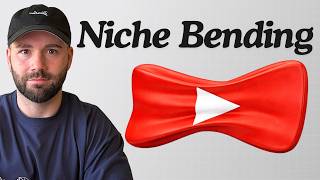
This video introduces 'niche bending,' a strategy where creators take a proven video format from one niche and adapt it to their own, gaining views with low competition. The creator explains the difference between niches and formats, provides examples like 'The Truth About' and tier lists, and demonstrates a workflow using AI tools to find and adapt viral formats.
The video claims a new strategy is 'blowing up' small channels and promises to show how to use it before it becomes saturated.
A niche is a defined audience/topic (e.g., fitness, gaming) that is stable and saturated. A format is how a video is packaged (title style, storytelling, visuals).
Niche bending is taking a video format that works in one niche and using it in your own niche where it's not yet common, creating a 'bending effect' that drives growth.
This format originated in journalism/documentaries (e.g., BBC's 'The Truth About Sugar') and has moved to YouTube. It works on curiosity and controversy, e.g., 'The Truth About the Titanic'.
Riley Reid used the format for 'The Truth About Healthy Eating' and 'The Truth About Being Single in Your 20s'. Shorts like 'The Truth About Bell Peppers' got 17M views.
Search 'The Truth About' + your niche on YouTube. If few videos appear, it's a low-competition opportunity to jump on.
Viewers are bored of the same formats in the same niches. Niche bending brings novelty and freshness, creating a 'blue ocean effect'—proven idea with low competition.
Tier lists originated in gaming (ranking characters/weapons). They're simple, easy to consume, and opinion-based. Examples include 'Door Tier List' (8.8M views) and 'Rubik's Cube Tier List' (3.2M views).
This format originated in education and was popularized by TED Talks. It makes a clear promise, is low commitment, and signals authority. Examples: 'Greek Gods Explained in 12 Minutes'.
Use the tool '1of10' to find outliers in other niches. Set filters for outlier score (e.g., 3x), minimum views (10k), and recency (6 months). Then feed the video into ChatGPT to bend it to your niche.
Found a video 'Never Eat These Seven Foods if You Have Arthritis' with 1M views (outlier score 1500x). Copy title and transcript, paste into a ChatGPT prompt that asks to explain the format, break down structure, and create 3 new ideas for your niche.
Use AI tools like Nexus Clips to clip long-form videos into shorts for maximum reach.
Never copy a video directly—adapt the format. Don't choose formats from niches you don't understand. Don't chase every trend; niche bending should be max 20% of your content.
Niche bending is a powerful strategy for small creators to stand out by adapting proven formats to their niche, but it requires careful adaptation and should be used sparingly to avoid confusing your audience.
What is the difference between a niche and a video format?
A niche is a defined audience/topic (stable, saturated). A format is how a video is packaged (title, storytelling, visuals).
00:30
What is niche bending?
Taking a video format that works in one niche and using it in your own niche where it's not yet common.
01:40
What is the 'blue ocean effect'?
Being the first to do something in your niche with a proven idea, resulting in low competition and almost guaranteed views.
05:20
What are the three red lines to avoid in niche bending?
1) Never copy a video directly. 2) Don't choose formats from niches you don't understand. 3) Don't chase every trend; limit to 20% of content.
15:10
What filters does the creator recommend for finding outliers in 1of10?
Outlier score of at least 3x, at least 10,000 views, and within the last 6 months.
10:41
Niche Bending Definition
Core concept of the video, clearly defined with a memorable 'bending' metaphor.
01:40Viewer Boredom as Driver
Explains the underlying reason why niche bending works—viewer fatigue with repetitive formats.
04:42Blue Ocean Effect
Introduces a strategic principle for low-competition growth.
05:20Outlier Example: 1M Views
Concrete example of a video with 1M views vs. channel average of 791, demonstrating the outlier concept.
11:22Red Lines to Avoid
Crucial guardrails to prevent misuse of the strategy, showing practical wisdom.
15:10[00:01] YouTube right now, and most small creators haven't even realized it's happening yet. So, in this video, I'll show you exactly what this trend is, and then I'll show you how to use it on your own channel. Because if you wait too
[00:14] there first, and we don't want that. So, let's get into it. Now, before I explain exactly what this new strategy actually is, it's first really important that you understand the difference between a niche and a video format. Because both
[00:30] of these two things are super important to this new strategy, and you're going to need to know the difference between both of them. So, let me explain. Now, a niche, as I'm sure you're probably aware, is a specific audience or topic
[00:43] space. For example, you have things like fitness, gaming, uh finance, self-improvement, that kind of stuff. The main thing here is niches are already clearly defined, and they don't change much. They're usually very stable
[00:57] and pretty much very saturated. Now, the niche I'm in on this channel is the YouTube growth niche. The niche my old channel was in was travel. Your niche might be gaming, or it might be cooking. You get the idea. And formats, however,
[01:11] well, this is totally different. Because a format is simply just the way a video is packaged and delivered. Now, this includes things like your title style, storytelling, visuals, all that kind of stuff. But putting it simply, it's like
[01:27] the foundational design of the video. So, really, you could have one niche, let's say fitness for example, but you can then have like a hundred different video formats that all work in that one niche. But this is where it gets really
[01:40] interesting, because niche bending basically means taking a specific video format that already works in one niche and using it in your own niche where nobody else is doing it yet. And this kind of gives like a bending effect,
[01:55] because traditionally, some video formats only really appeared in specific niches, but lately a lot of creators have successfully been bending those formats into new niches, and they've been getting a ton of growth by doing
[02:09] so. So, let me show you an example to help you understand it all a bit better. Now, this video format here, titled The Truth About, now this format actually originated from journalism and documentaries many years ago. For
[02:24] example, things you'd typically see back in the day on like the BBC, like The Truth About Sugar, The Truth About Carbs, and The Truth About Cancer, that kind of stuff. Now, the purpose of these documentaries was to reveal what's
[02:38] really going on behind the scenes, like the stuff most people don't see or don't really know about. But lately, this format has actually slowly been making its way over to YouTube, niche by niche, and it's now become a really strong
[02:51] video format. Now, it works really well because it's built on curiosity and controversy. Like this example here, The Truth About the Titanic. When you see these videos, you know there's going to be things like hidden information or
[03:06] insider like knowledge, and you know that that creator who made that video is probably going to expose some really interesting lies. So, it's almost like guaranteed to get views. People want to know what's going on there. And just a
[03:19] couple of days ago, a creator called Riley Reid, I think her name is pronounced, she bended this format in her own niche and made this video here, The Truth About Healthy Eating. But 5 months before that, she also used this
[03:32] format and posted a completely different video titled The Truth About Being Single in Your 20s. Same format, two completely different topics, but tons of views on both of them. And this can be applied to a ton of different niches.
[03:47] Here we have a short titled The Truth About Bell Peppers with over 17 million views. Another short on the truth about pretty hair, with over 3.6 million views. And even a video in my own YouTube growth niche, titled The Truth
[04:02] About Being a YouTuber, with 41,000 views. So, if you're posting long-form content or just shorts, you can see its potential. So, what I would suggest you do straight after this video is go on to YouTube on a new tab, type in The Truth
[04:16] About into the search bar, and then add your own niche at the end of it. Like The Truth About Gold Mining, for example, or what whatever your niche is. And then look at the results that come up. If there aren't many videos that
[04:28] come up with your niche and that title, you might want to jump on this format as version of video before everyone else does. Now, why does this new strategy work so well? And why am I telling you to do this yourself? Well, look, niche
[04:42] bending is picking up some serious traction lately, because everyone just seems to be copying each other now. And gone are the days where you can keep finding outliers in your own niche and then making your own version of them for
[04:54] your own channel. Like way too many small creators are using that as their only growth tactic now. And simply, look, viewers are just getting so bored of seeing the same video formats posted in the same niche over and over again.
[05:08] Like everyone's just copying each other making the same videos. Whereas niche bending, on the other hand, actually brings a bit of novelty and freshness into your niche. Now, if you do this, you'll be creating videos that the
[05:20] viewers in your space haven't yet seen before. And being the first person to do something like this in your niche is what we call the blue ocean effect, proven idea that's definitely going to work, but you've got really low
[05:34] competition. So, you're almost guaranteed to get views. So, now I'm both of which you can actually use yourself. And then after that, I'll show you exactly how to go and find your own
[05:47] to use these two. All right, so the first example we have is tier lists. Now, tier lists actually originated in the gaming communities back in like the early 2000s to 2010s. And it was basically where people would rank things
[06:03] like characters, weapons, and strategies from a game. S tier being the best and F being the worst. But again, this format has slowly made its way over to YouTube. I see these kind of videos pop up everywhere now, and many creators who
[06:17] use this format are getting tons of views doing so. Now, this format works really well because it's essentially a really simple video structure. Like, all it is is a list ranking from best to worst. And it's also really easy to
[06:31] consume for the viewer. Like, it doesn't really require much brain power or concentration at all. And finally, it's literally opinion-based. So, you as a don't have to put a ton of like effort or research into it. Literally just list
[06:46] of things that you think. It's that easy. So, here are a few examples of this so it helps you understand a bit better. Now, you've literally got a door tier list where the creator ranks different types of doors. And this got
[06:58] different types of doors. And this got over 8.8 million views, which is insane. But you've also got the game console tier list, candy tier list, best Rubik's Cube tier list with 3.2 million views, and also even a tier list in my own
[07:12] YouTube growth niche. And his video got over 160,000 views, which is just nuts. But you could literally bend this into any niche. For example, in the fitness niche, you could have ranking the best exercises. In the
[07:25] the best side hustles. In the cooking space, you could have ranking the best cakes. And even in the fashion space, you could have ranking the best dresses. So, yeah, it can be adapted to pretty much any niche. So, give it a go. Then,
[07:40] example number two, we have this format here, explained in X number of minutes. Now, this is one many of you might actually be quite familiar with. Now, this format actually originated in the education space, and you probably also
[07:53] saw it when it was first popularized on YouTube by TED Talks. Now, it's basically where you create a video that covers and explains just one topic in a certain number of minutes. Like this one here for example, Greek gods explained
[08:06] in 12 minutes. You know exactly what you're going to get in an exact amount well on YouTube because it makes one clear promise. Viewers will understand something quickly without wasting any time. This is effective because it's
[08:21] simple, it's low commitment, and it signals authority by showing that you can break down interesting and complex topics easily. And it's optimized for clarity and speed, which is exactly what viewers love. Now, here are some example
[08:36] bends. We've got life explained in 15 minutes, every drug and its effect explained in 17 minutes, and even the YouTube playbook in 37 minutes. But niche. In the finance niche, you could have things like investing explained in
[08:52] 10 minutes. In the house space, you could have testosterone explained in 8 minutes. In the fitness space, you could have fat loss explained in 5 minutes. And then even in I don't know, like the tech space, you could have AI explained
[09:05] in 8 minutes. Like that kind of stuff. So, hopefully now you get the idea of what niche bending is and how it actually works. Now, if you do have any leave them down below and I'll try my best to get back to you. But, as
[09:18] promised, I'll now go through and show you exactly how you can find unique yourself. Now, many of you could obviously just start by creating your examples I've already showed you in this video. But, if you do that, you're
[09:33] probably going to be competing with everyone else here watching this video right now. So, on the other hand, if you want to find some unique examples that nobody else is doing yet, this is how you're going to do it. So, you're going
[09:46] Now, if you don't know what 1 of 10 is, it originally actually started out as like an outlier tool that would find outliers in any niche all of YouTube like literally viral ideas and give them to you. And it's like an AI tool that
[10:00] always picked out the best performing videos on YouTube. Um it's it's it's since actually grown into much more than that. You've got a thumbnail generator, uh title generator, and all that stuff. But, we are using the outlier finder.
[10:13] brought to this screen here. Now, typically, what people would do with this use 1 of 10 for to find outliers in their own niche. But, today, what we're going to do is select this button up here, which is the random button. So, we
[10:28] don't want to find outliers in our own niche, we want to find outliers in other niche so that we're kind of like the first people to do it. Now, what I'm going to do is click off all of these cuz these are pre like preset filters.
[10:41] own filters. So, I want an outlier score of at least like three times. So, three times the amount of views the video gets compared to its channel average, which means it performed three times better than average. And then, I want at least
[10:55] 10,000 views cuz I want a video that's actually done really well. So, at least 10,000 views um within the last 6 months so it's a hot topic video. And I'll I'll leave the rest as it is. So, all I'm going to do now is look through all of
[11:08] these are all like randomly generated. So, it's just literally a case of looking through all of these and finding one that's either A performed well or B definitely niche bend. So,
[11:22] this one here has got a 1,000 nearly 1,500 times outlier score, which means this video got 1 million views compared to the channel's average of just 791,
[11:34] which is that's incredible. Like a million views. So, this title is never eat these seven foods if you have arthritis. So, what I'm going to do is click on this video. It's going to take you to the actual YouTube page. I'm not
[11:46] going to watch the video itself. All I'm going to do is I've got actually a template in word that I use for my Chat GPT prompt because we're going to feed this video into Chat GPT and ask it to actually bend it for us. So, what you
[11:59] want to do is copy this title, which is quite a good title. Never eat these that's going to actually be really easy to bend into the YouTube growth niche. Um copy in here. So,
[12:12] the video title is paste that in there. And then we're also going to want to get the actual transcript, too. Now, we're just need to know what's happening inside of the video. Now, you can
[12:24] want to make notes, but that takes 17 minutes. Whereas what I do is show transcript, toggle off timestamps, and then copy all of this, paste it into transcript bit here, which is fine. It It looks That looks weird because it's
[12:40] but it's fine. And then what we're going to want to do is up at the top of this document, literally just change in my niche here is YouTube growth niche. I niche here is YouTube growth niche. I teach people different methods
[12:55] on how to grow on YouTube. Whereas yours could be travel, uh or you could be gaming, or it could be cooking, or it could be tarot reading cards. Whatever your niche is and whatever videos you make, put that here so that Chat GPT
[13:10] knows exactly what you do, so it knows how to bend this video to your niche. And then here you say, "Your job is to explain the format of the video, break the video down into a simple structure I can follow, explain why this format
[13:22] works, create three new video ideas using my niche, and then write a strong clickable title for each idea. Important, do not copy the original video topic, adapt the format creatively to my niche, and keep ideas simple,
[13:35] clear, and viral focused. So, all I have to do now, go on to chat GPT and literally just paste that in here, click enter. So, this now explains it, the simple structure you can follow,
[13:47] and the shift, and the ending. And then it's going to explain why it works so well, curiosity gap, fear loss aversion, scannable and addictive, authority without boredom. And then it's going to show you three new core ideas. So, mine
[13:59] could be, "Never do these seven things if you want to views on YouTube." "Seven killing your channel." And stop doing this if you want to grow on YouTube. really good title ideas. And it gives us example talking points in each of these.
[14:14] own knowledge, and I'll create a brand new video that's been bent from that niche, and I'm pretty much recreating a video that's got a million views into my viewers in my niche haven't yet seen before, and it's a brilliant way to do
[14:29] it. Now, the link for one of 10 is down below. I suggest you use it if you want outliers or thumbnail generators or even title generators, too. And look, as I showed you with the truth about format, these videos almost always usually work
[14:43] on shorts, too. So, once you've created your own long-form version of one of clip up and post out with shorts, as well. This gives you maximum reach and exposure with each bit of content you
[14:56] post. And then the AI tool that makes clipping up long-form videos into shorts easily is Nexus Clips. So, if that's something that interests you, I'd give them a go. But of course, guys, look, you must also consider what not to do
[15:10] when you do this, because there are a few red lines you don't want to cross. Now, firstly, never copy a video directly. You have to take a format and adapt it into your own niche with your own content and your own style. If you
[15:25] simply just copy a video directly, it's never going to work and you're probably going to get banned for doing so. So, I recommend that you just look at things like the video layout, the title, the sentiment, and the thumbnail. Then adapt
[15:39] your own content to fit all of that stuff. Just never copy that video whole. Secondly, don't choose videos from a niche you don't fully understand. And formats require a different level of expertise. Don't go and pick a super
[15:55] complex finance and investment format and then try and adapt it to your cooking channel, for example. You need to be careful and you need to be selective to ensure that you have enough knowledge to fully deliver on the format
[16:07] you're going to select and bend. Just bear that in mind. And thirdly, look, don't chase every trend. Whilst it can be tempting to jump on every viral format you see, I'd recommend you don't do that. Now, niche spending videos
[16:21] should never make up more than 20% of your overall videos on your channel. If you try to niche bend every video, you're going to end up confusing your going to be good. Now, last week I actually created another video covering
[16:36] three other great formats that you can bend into your own niche. We do a deep dive into each format and I'll teach you exactly how to make them for your own channel. So, click on this video here that pops up and give it a watch. I
[16:50] that pops up and give it a watch. I promise you, you'll love it. See you



⚡ Saved you 0h 16m reading this? Transcribe any YouTube video for free — no signup needed.