
First AI Company to $1B by One Person
44sBold prediction about a solo-founder AI company reaching billion-dollar valuation sparks curiosity and debate.
▶ Play Clip"Title promises top AI projects for profit in 2026, and the video delivers three concrete, actionable ideas with a clear methodology."
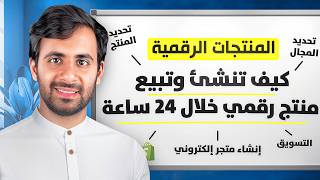
This video presents three AI-driven business projects that require no coding or hiring, emphasizing a four-step validation-to-scale methodology. The speaker shares personal experience generating $4,000 in six months from an AI project and outlines a ladder for success: validate the problem, pre-sell an MVP, implement, then systematize for scalability.
Many people are building AI tools and becoming millionaires; predictions say the first billion-dollar company run by one person will be an AI company.
The speaker worked with a major Arab tech company using AI, integrated AI into all projects, and created a 90% AI-based project that earned $4,000 in six months.
Step 1: Validate the problem has demand. Step 2: Pre-sell an MVP before building fully. Step 3: Implement after payment. Step 4: Systematize to scale.
Build an AI system that responds to messages and books appointments automatically, targeting clinics or salons. Use tools like Ura Atlas, Google Calendar, and Zapier.
Take long videos (10-20 min) and split them into shorts using AI tool OpsClip. Target content creators, pre-sell the service, then deliver using AI.
Help content creators build and sell digital products (courses, ebooks) in exchange for a commission. Use Jasper and CopyDot for content, Sindian for websites.
Everyone must leverage AI to avoid falling behind. Recommends a video summarizing 40 books on money and wealth.
The video provides a practical framework for launching AI projects without technical skills, focusing on validation, pre-selling, and systematization. The three projects—appointment booking, content recycling, and digital product creation—offer clear entry points for entrepreneurs.
What are the four steps of the 'ladder to success' for AI projects?
1. Validation (verify demand), 2. Pre-sell MVP, 3. Implementation after payment, 4. Systematize for scale.
01:16
How much did the speaker earn from a 90% AI-based project in six months?
$4,000.
00:47
What tool is recommended for cutting long videos into shorts using AI?
OpsClip.
08:04
What is the first step before building an AI project according to the speaker?
Validate that the problem has demand and people are willing to pay.
01:28
Which AI tools are suggested for creating digital product content?
Jasper and CopyDot.
11:47
What platform is recommended for building a professional website quickly?
Sindian.
12:18
What is the target audience for the content recycling project?
Content creators (individuals or companies) who produce long videos.
06:39
What is the pre-selling step in the ladder?
Sell a simplified version (MVP) of the product before building it fully.
01:57
What is the key advice about building for multiple clients?
Don't repeat the same work from scratch; systematize and create templates.
02:39
What is the first project idea mentioned?
An AI-powered appointment booking system for clinics or salons.
03:18
AI Opportunity
Highlights the massive potential of AI for solo entrepreneurs, including predictions of billion-dollar one-person companies.
00:03Four-Step Ladder
Provides a structured, repeatable methodology for launching AI projects without coding.
01:16AI Appointment Booking
Concrete example of a low-code AI project that solves a real problem for businesses.
03:18Content Recycling with AI
Demonstrates how AI can automate a time-consuming task (video editing) for content creators.
06:24Digital Product Creation
Shows a commission-based business model leveraging AI to help creators monetize their audience.
09:22[00:03] AI project without coding or hiring anyone, I'm happy to tell you that you're not alone. Let's be or hiring anyone, I'm happy to tell you that you're not alone. Let's be many people are building AI tools, solutions, and projects, becoming
[00:18] millionaires. There are even predictions that the first company in the world to reach a billion-dollar market value, run by just one person—the founder—will be an AI company. We have a once-in-a-lifetime opportunity. That's why
[00:32] in this video, I'll share with you the three best AI projects you can start without hiring anyone or coding, using smart tools, ready-made systems, and using smart tools, ready-made systems, and direct implementation. I'm speaking from personal experience.
[00:47] I worked with one of the largest tech companies in the Arab world whose systems and products are based on AI. I've incorporated AI into almost all my projects, and recently I even AI into almost all my projects, and recently I even created a project that's 90%
[01:00] AI-based and generated $4,000 in the first six months. I won't go into detail about the ideas and fields. You can rely on God alone, but I'll guide you through four simple steps to ensure that each of these projects we implement has the greatest potential for
[01:16] success, God willing. I call these four steps the ladder to success for AI projects. They're like a curriculum or the main steps that will help you start an AI project. The first stage of this
[01:28] model is the validation stage. Here, we'll verify and confirm that the problem we're and confirm that the problem we're solving actually has a need. Are there people who would like solving actually has a need. Are there people who would like this solution and want to overcome
[01:41] this problem through your product? Because the idea alone isn't enough; we need to know and confirm that there are people willing to pay for this solution. The second step, after confirming the need and verifying this area, is to move on to the pre-sales part. We won't build a complete system
[01:57] or product to enter the market. We'll create something called an MVP, or a small part of the solution I'm offering. If the customer is convinced, we can be sure they'll pay even before...
[02:09] We start, and I know that there is a challenge in selling a product that is not 100% ready, and you have many ideas that you can apply to this product in order to sell it to your customers tomorrow, but we must sell with a simplified version of the product that we are offering. If we find a need and desire for
[02:24] people to pay, and they pay, then things are good, and the third stage in the model is the implementation stage. Now that the client has paid, we begin implementing the service or product directly. The last part of the main model we'll be working on, God willing, is the
[02:39] building process. The same solution you created for this one client will be integrated so we can copy and paste it for all other clients. This means I don't need to start from scratch every time someone contacts me.
[02:51] I've laid the foundations correctly, and I can customize them for each client quickly and easily. I start by organizing the system, building the files, creating templates, and thinking about scaling up significantly to
[03:04] different client segments. In short, before we delve into the projects, here are three pieces of advice: don't build anything before you sell it, don't sell something no one wants to buy, and don't repeat the same work from scratch every time you have multiple clients from your target audience. Now let's start with the projects
[03:18] to make things clearer for you. The first project is an AI-powered appointment booking system. The idea is to build a system that integrates customer service with artificial intelligence. integrates customer service with artificial intelligence.
[03:34] For example, the AI can automatically respond to messages like text messages and WhatsApp messages, and it also has the capability to... He books appointments for them, so he knows what appointments are currently available. If someone books today at 4 pm, then that appointment will be closed for other clients, and so on. After he finishes, he may go through a stage where he sends
[03:48] him an automatic message on the email that his registration has been confirmed for such and such date and time, and he his registration has been confirmed for such and such date and time, and he hears at the clinic, for example, or at the sports club, for example, that he has received a new booking. This is the system that we will
[04:02] present, for example, to specific target groups, such as salons, as we said, or for example, medical clinics. Now, to talk practically, we take into consideration the four steps or ladder that we talked about in this project. First, determine the group that you want to focus on. For example, I might
[04:17] focus on medical clinics or dental clinics as a start, and I start by going to Google Maps and contacting these dental clinics. I ask them about the problem we talked about, or I ask them what challenges they face and what I can offer them to solve them? Of course, you might
[04:33] contact a customer service representative who isn't directly involved and isn't even enthusiastic about discussing the matter. You'll need to approach them directly, perhaps by contacting the directly, perhaps by contacting the owner, the COO,
[04:48] or someone on LinkedIn or another platform. decisions and a genuine interest in the field. Once you understand their problem, the
[05:00] understand their problem, the system's components, permissions, features, and the ultimate value proposition for your
[05:12] medical clinic. The crucial question then becomes: how do we implement this? How do we create the system so we can effectively sell it to them? We don't need to use code or hire a programmer;
[05:27] code or hire a programmer; we'll utilize artificial intelligence through a specialized website. With reservations mainly through artificial intelligence, I can create a main account, for example, and then sell it to the client completely. We have this
[05:43] main dashboard, and as we said, we have communications. It responds to calls from here, interacts with them, and directly increases the conversion rate to clinics. The most important thing is also the topic of what is the booking or reservations topic, which is the booking approval. What does it do for you
[05:58] ? Bookings related to your field. Of course, there are many other tools you can use, like Google Calendar for bookings, for example, Zapier for linking. But to start, you should start with Ura Atlas. It will be more than enough
[06:10] for you to build this system basically. After you build the system, you will test it yourself. You will make sure that you, as a customer, can book, enter all these appointments, and you will get an automatic response from the artificial intelligence. God willing, then it will be ready, and you can give them the
[06:24] first version of your product. Now, the second project, which I personally work on with some freelancers and some people who work in this field, is a content recycling project. content recycling project. The idea is simply that you take long videos, 10-20
[06:39] The idea is simply that you take long videos, 10-20 minutes, and start dividing them into chilli or shorts of 60 seconds or even less, and you use artificial intelligence and tools for them. Artificial intelligence doesn't handle the entire process using editing software. In this case,
[06:52] you'll likely target content creators, whether individuals or companies, for example, those who create content for individuals or companies, for example, those who create content for social media, podcasts, sports news, whatever. I personally remember the first email I received from someone who said, "I offer you this service. I'll
[07:06] take your long YouTube videos and start splitting them myself." At first, I didn't expect him to be using artificial intelligence, but in the end, I realized he was indeed using AI and could generate multiple cuts in the
[07:21] same video very quickly. Even if you notice, in some TikTok broadcasts, for example, a one- or two-hour broadcast, people take the entire broadcast and start splitting it into multiple sections. To get started practically, as we mentioned, in the four main steps, the first thing is to verify
[07:36] this idea. We start by going to content creators, contacting them, and asking them, "What do you think? I'll give you, for example, shorts on..." Each long video has three or four short segments, so he might say, "I wish I had time for editing and all that. I need someone to help me." Okay, we've considered this
[07:49] idea. Secondly, before we build the project, we want to pre-sell it to him. So, I'll start by agreeing with him, for example, by showing him my previous work or something like that. I'll tell him, "Ten videos will cost me this much using this method. I'll put this in a great offer," and he'll start paying me. That's how I get the money
[08:04] upfront. Then, in the execution phase, we'll use a really amazing tool called OpsClip. This amazing tool called OpsClip. This tool will help us cut long videos using AI or artificial intelligence. It won't be a lot of effort to take the
[08:18] video, put it in the editing room, and watch it to understand the whole thing. Instead, you'll get ten parts. Not all ten might be good or logical; maybe three, four, or even four will be good. Then you'll repeat the same process. So, one video
[08:34] will give you ten clips directly. So, the process is that the video will be uploaded to 10, whether it's in the game, podcast, or video clips. The tool is amazing, and what I learned later is that people working in the field
[08:48] often use this tool or similar ones. We can use artificial intelligence to make the process very easy for us. Then you start building this system completely. You create a concise website where you can offer this service professionally, for example, so that if
[09:03] someone wants to showcase your work, you can do so in a very professional way, and you can use that tool directly. The third project—and I'm personally working with someone in the same field—was a
[09:22] these operations managers collaborate with content creators to increase their sales. More accurately, they focus on both the product and business aspects. For example, as a content creator, I might be busy with content,
[09:35] videos, filming, monitoring, and analysis. So, if you say... For example, if I create a course, a series, or a product like an ebook to sell, sometimes I'm not free and don't have the
[09:47] time. Okay, let me continue with this same routine. If I add more depth to the process, it will be a huge challenge. These people help content creators build products to earn money from, and they receive a commission on sales. So, someone might approach a
[10:03] content creator and say, "Listen, I'll help you create a course. I'll handle the content, editing, structure, everything. You'll be responsible for the final filming, or maybe it will be a digital book without filming. Give me an idea you have." I might say, "I have a really
[10:17] great idea, and I've done something similar before." They giving you the finished digital file. Then, the content creator, having an audience, starts selling the product. God willing,
[10:32] sales will be made, and the other person will also receive a commission on the work they did. In other words, it's like someone working behind the scenes, taking a share of the profits or a percentage of the sales commissions from the content creator. The first step to ensure this field is truly
[10:49] successful and profitable is to contact content creators with 50,000 or 100,000 followers. It's preferable to have over 50,000 followers so you can get something that will sell. You can't get something for someone with, say, 10,000 or 5,000 followers who can't sell quickly. So, send a message or email like the one
[11:04] I received, saying, "I'll help you increase your numbers to cover your costs on YouTube, for example, or in content creation. You can use them to create digital products, courses, or anything else, or even a website. I'll set it up for you start selling to them, showing them your previous work and experiences. The previous one was convinced that
[11:20] things were going well, whether you agreed on an advance payment or even a sales percentage. After that, you'll start creating the digital book or the entire template for them. You'll have a clear template that's okay. If I work with another content creator tomorrow, what steps will I follow
[11:33] another content creator tomorrow, what steps will I follow to create a successful digital product or e-book for them? And of course, to create content with AI and not just GPT chat content that takes input and lacks creativity, we'll use the Jasper tool. It's
[11:47] amazing, especially for marketers, as even FourMarketers mentioned. It will greatly help us create content, tables of content, main points, storylines, and all that stuff through this tool. There's another excellent tool, CopyDot, which will
[12:02] also help us create digital content and the entire book content, and it will also make the process easier. We'll prepare one program, for example, a program specifically for content creation or creating a digital product. We'll follow this approach in the rest of our work with other projects. The main thing we'll need
[12:18] is a website. We'll create one using, for example, the Sindian platform. It's very simple; in less than 10 minutes, we can create a professional website with ready-made templates. I can do drag-and-drop, drag and drop, change colors and images, and my website is ready. In
[12:34] conclusion, these are very important ideas to broaden your understanding of artificial intelligence. We all, regardless of our field, must try to benefit from the advancements in AI. I'm convinced
[12:46] that those who don't utilize AI will fall far behind, and those who do will surpass them. Finally, to develop a mindset for profiting from the internet and investing in yourself, I recommend watching this video. I've included a summary of 40 books on money, wealth, and
[13:02] all related topics, and how we can become more self-aware and expand our horizons. If you have any questions or inquiries, please write them in the comments section below. I appreciate your support with likes and subscriptions to the channel. Thank you. Thank you so much for watching, and I
[13:16] hope to see you in the next video. Yeah.


⚡ Saved you 0h 13m reading this? Transcribe any YouTube video for free — no signup needed.