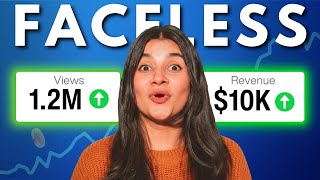

Faceless Channels Raking in Thousands
43sThe claim that faceless, automated channels earn tens of thousands per month is a shocking hook that triggers curiosity and FOMO.
▶ Play Clip"The title promises a free course on faceless YouTube channels making money, and the transcript delivers exactly that with step-by-step instructions and a specific AI tool."
This video is a comprehensive free course on building a faceless YouTube channel in 2026, optimized to make money from day one. The creator explains how to set up a channel, understand the algorithm, pick a profitable niche, generate viral video ideas, and use AI tools like Invido AI to automate video creation. It covers everything from thumbnails and uploading to growth strategies and monetization methods.
Faceless YouTube channels with no filming or editing team are making tens of thousands monthly. The opportunity is huge because YouTube paid over $70 billion to creators and there are 2.5 billion hours watched daily.
Set up a Google account specifically for your channel, then create a channel with a short, simple name and handle. Verify your phone number to unlock custom thumbnails and longer videos.
The algorithm aims to keep viewers on YouTube as long as possible. It tests your video on a small sample; if CTR and watch time are good, it pushes it further. Key metrics: CTR over 6%, average view duration over 50%.
Use the three P framework: Passion, Proficiency, Profit. Finance and AI have high RPMs ($15-$30 and $10-$25 respectively). Validate niche by searching YouTube for top videos and using tools like VidIQ.
Viral videos have three ingredients: emotional hook, payoff, and pattern of familiarity. Study top videos in your niche and use AI to generate and validate ideas. Test with shorts before committing to long-form.
Invido AI combines DO3.1, Sora 2, and Nano Banana to create full videos from a text prompt. It handles scripting, visuals, voice, music, and transitions. You can edit via commands or the edit interface.
Use the 3-second rule: one clear subject, one clear emotion, high contrast. Use color psychology (e.g., earthy tones for history). Track CTR to optimize.
Upload with a title under 60 characters, a three-part description (hook, timestamps, links), 5-10 tags, and captions. Add an end screen and pin a comment. Publish and share on social media.
Shorts build reach faster. Use Invido AI to create 45-second shorts from your long-form content. Upload 1-2 shorts per long-form video. Track view-to-subscriber ratio and CTR on full video links.
First month: publish 4 long-form and 8-12 shorts. Find your winning format by testing styles. Use the 48-hour feedback loop to adjust thumbnails/titles. Engage with comments in the first hour. Stay consistent.
Monetize via ad revenue (1k subs + 4k hours), affiliate links (e.g., Invido AI), digital products, and brand partnerships. Create videos 8+ minutes long, target high-RPM countries, and build a monetization funnel.
What are the two main numbers that determine a YouTube channel's growth according to the video?
Click-through rate (CTR) and average view duration (AVD).
05:11
What are the three P's of the framework for picking a winning niche?
Passion, Proficiency, and Profit.
07:24
What is the name of the AI platform that combines DO3.1, Sora 2, and Nano Banana?
Invido AI.
13:03
What CTR should you aim for according to the video?
Over 6%.
06:34
What average view duration percentage indicates an excellent video?
Over 50%.
06:34
What are the typical RPM ranges for finance, AI, and history niches?
Finance and investing ($15-$30), AI and tech tools ($10-$25), history and documentaries ($3-$7).
08:07
What are the requirements to qualify for the YouTube Partner Program?
1,000 subscribers and 4,000 hours of watch time.
20:50
Name three story structures mentioned for retention-driven topics.
Discovery to revelation, then versus now, and mistake to mastery.
12:37
What are the three ingredients of a viral video according to the video?
A clear emotional hook, a payoff (story twist or emotional closure), and a pattern of familiarity.
10:23
What is the recommended maximum length for a YouTube video title?
Under 60 characters.
15:42
Faceless channels making money
Highlights the opportunity of faceless YouTube channels earning thousands without filming or editing teams.
00:02YouTube's $70 billion payouts
Provides a concrete number showing the massive revenue YouTube distributes to creators.
00:40Two key growth metrics
Simplifies the algorithm into two actionable numbers: CTR and average view duration.
05:11Three P framework for niches
Offers a structured method to choose a profitable niche based on passion, proficiency, and profit.
07:24Three ingredients of viral videos
Breaks down viral success into clear, replicable components: hook, payoff, and familiarity.
10:23Invido AI as all-in-one tool
Introduces a single AI platform that automates scripting, visuals, voice, and editing, eliminating the need for a team.
13:033-second rule for thumbnails
Provides a simple heuristic for designing thumbnails that stop scrolling within three seconds.
14:50Momentum over perfection
Advises publishing frequently in the first month to teach the algorithm, rather than waiting for perfect content.
18:46Monetization without millions of subscribers
Emphasizes that a clear strategy and setup matter more than subscriber count for earning money.
20:50[00:02] are YouTube channels with no filming, no camera setup, and no editing team making tens of thousands of dollars every single month. They're completely faceless, fully automated, and quietly [music] dominating entire niches. In
[00:14] this free course, I'll show you exactly how they do it and how you can start your own faceless YouTube channel in 2026 that is optimized to make money [music] from day one. I've been creating videos for over 5 years now and I've
[00:26] built and scaled multiple channels in that time. And I can tell you firsthand this is [music] the biggest opportunity YouTube has had in years because right now [music] YouTube is paying creators more than ever before. Over 70 billion
[00:40] in payouts to creators and media companies. And there [music] are now 2.5 hundreds of millions of hours every [music] single day. The opportunity to build a business here has never been bigger. And what's different this time
[00:53] is that you don't need a team or a [music] studio. We now have a single AI world's most advanced [music] creative models, DO 3.1, Sora 2, and Nano Banana, all inside one [music] powerful tool that lets you write, generate, and edit
[01:08] single dashboard. [music] And in this video, I'll show you exactly which tool it is, how to access it, and how to automate your entire video creation you're serious about building a faceless YouTube channel that earns real money,
[01:23] not someday, but now, stay with me. [music] Let's begin. your YouTube empire starts with one small but important step, setting up you've never touched YouTube before, don't worry. I'll walk you through
[01:39] explain why each step matters so that your channel is optimized from the very by creating your Google account. Head over to youtube.com and click sign in at have a Google account, you can skip ahead. If not, click create account for
[01:56] want to treat your YouTube channel like a business separate from your personal better security, and flexibility to bring on team members later on. Fill in your details, choose your Gmail address, create a secure password, use a password
[02:10] manager like Bit Warden. It's free. And verify your phone number. And that phone YouTube features like custom thumbnails and longer videos. Once done, created your Google account. Now, let's turn it into your YouTube channel. For
[02:25] this video, let's assume I want to start a history human evolution channel. But stay the same independent of the niche you choose. Click your profile icon in the top right. Select create a channel. Now, you'll see two important fields.
[02:38] One, your channel name and your handle. Channel name. This is what [music] appears under your videos and on your channel page. Handle is your unique identity on YouTube. It's also what people type into the URL.
[02:50] YouTube.com/you handle. Keep both short and simple and your name after seeing it once. And pro tip, if you are not sure what to name your channel, hop into Chad GB and ask, "Give me 30 YouTube channel name ideas
[03:03] just check that your favorite pick is available on YouTube. Once done, click on create channel. You now officially own your YouTube home base. The next Now, let's make it look professional. You're going to hover over your profile
[03:18] icon and click on YouTube studio, then customization, and then branding. profile picture in the 1 is:1 ratio, ideally 1080x 1080 pixels. If you are faceless, you can create an AI generated
[03:30] logo or avatar. Next, upload a banner image. This is what people see when they keep it centered, and keep it mobile friendly. The dimensions are 2560 into
[03:42] 1440 pixels. Your banner should instantly communicate this channel was made for me. Now, the next step after this is to verify and unlock advanced features. Go to settings and then go to channel and then feature eligibility.
[03:54] stuff. Custom thumbnails, videos longer affiliate or brand deals, monetization setups. Click on verify phone number, enter your number, and input the code that YouTube sends you. And boom, you
[04:07] are verified. The next step is to secure and polish your profile. For this, you're going to head to customization. And then here you will write a short, powerful channel description focused on the viewer and not you. Then add your
[04:19] your website. And that is it. Your YouTube channel is live, verified, and business ready. Now, step two is understanding the YouTube algorithm 2026 edition. Once your channel is set up and looks professional, let's talk about how
[04:33] YouTube actually decides who sees your videos because this is where most beginners get stuck. The algorithm is not some mysterious black box. It is a recommendation system designed around one simple goal. Keep viewers on YouTube
[04:45] for as long as possible. If you understand that, everything else starts to make sense. The algorithm has one mission, viewer satisfaction. Forget feed it. Every time someone clicks on your video and keeps watching, YouTube
[04:58] the viewer happy. Show it to more small sample of viewers. If they click, watch, and stay on the platform, boom, your video gets pushed out to thousands, sometimes even millions. If not, YouTube
[05:11] stops recommending it. That is why your job as a creator is to maximize duration. Two numbers that literally determine your channel's growth. After decides what to recommend. Here's a simplified breakdown of what happens
[05:26] title and your thumbnail with a small group of viewers, essentially click data. It measures how long those people stay, that is watch time, and it checks afterwards. Session time. It checks engagement signals, comments, likes,
[05:40] shares. All of these tell YouTube the video created emotion. And finally, it checks viewer history. YouTube looks for similar audience behavior and recommends your content to users who watched related videos. So your main objective
[05:52] is to hook attention early and maintain curiosity throughout. In 2026, YouTube's recommendation system is more intent aware than ever before. Instead of just users actually want to learn, what they want to feel, what they want to achieve.
[06:06] matters so much more than surface level virality. For a faceless history narrative arcs like how the human mind evolved in 1 million years using data backed curiosity like archaeologists just found proof of ent. and tie your
[06:20] videos to search intent like why ancient humans left [music] Africa. Combine will have the perfect blend for long-term growth. Next, you need to Here are the four numbers that you should track from [music] day one. First
[06:34] is CTR, which is the click-through rate. You want to aim for a CTR of over 6%. The next is average view duration. The higher the better. Over 50% means the video is excellent. Then you have the retention curve where you basically want
[06:47] to avoid early drop offs in the first 30 seconds. And then watch time per impression, a hidden gold metric. It multiplies CTR and AVD which tell you how valuable your video is to YouTube. If your watch time per impression beats
[07:00] competing videos, the algorithm will push yours automatically. After this, step three is to pick a profitable niche. All right. Now that you videos to promote, it is time to decide
[07:12] make. Because your niche determines everything, your audience, your potential income, even how easy it is to grow. Pick the right one and YouTube will reward you with organic traffic and loyal subscribers. Pick the wrong one
[07:24] your content is. Here's the framework that I use to find winning niches. It is called the three P framework. Passion. What topics can you talk about endlessly faceless channel, passion matters because you'll spend hours researching
[07:39] the burnout will show. Second is proficiency. What are you good at understanding and explaining? You don't have to be an expert. Just one step learning history, AI, or finance, document your journey. Be the guide, not
[07:53] the guru. And three is profit. Which niches actually make money? Some niches pay more because advertisers compete for those audiences. For example, finance and investing have very high RPMs of $15 to $30 on average. AI and tech tools
[08:07] have high RPMs in the $10 to $25 range and history and documentaries are mid-range RPMs of $3 to $7 and education or motivation RPMs depend on topic [music] depth. The best niche sits where all three intersect. What you enjoy,
[08:21] monetizable. But you don't want to pick your niche by gut feeling. Instead, you want to use data. And here's how. Go to YouTube search and type your topic idea like ancient civilizations. Then look at the top five to 10 videos that appear.
[08:35] months? Are they getting views fast? Hundreds of thousands of millions. Are there faceless creators in the mix? If yes, you found a scalable niche. Next, use tools like Vid IQ or Tube Buddy to see average views per video or channel
[08:49] in that niche, keyword competition, and estimated CPM. Combine that with Chad GBT to brainstorm angles like, "Give me 20 unique YouTube video ideas about history to modern human behavior." You'll get ideas that mix curiosity,
[09:02] education, and emotional payoff. Perfect for algorithm friendly storytelling. After that, you actually want to find the evergreen plus trending balance. Here's the secret that most creators miss. You want a mix of content types.
[09:14] Evergreen topics are videos that never age. Example, how humans evolve from apes. These keep bringing in viewers for years. Trending topics are videos tied to current discoveries or headlines, like scientists just found a lost city
[09:27] bursts of traffic and help your channel grow faster. When you combine both, you traffic from evergreen videos, and viral spikes from trending ones. But even want to go too broad. Science, technology, stories, all of these are
[09:43] to recommend your videos to. Instead, start specific. You can expand later once you've built authority. Don't chase niches you don't understand. [music] It's easy to copy finance or AI, but without context, your videos will not
[09:56] creators, copy patterns. [music] Study what works, pacing, titles, thumbnails, which make your storytelling and your voice unique. This brings me to step number four, getting outlier video ideas. Once you have picked your niche,
[10:10] it is time to find [music] out ideas. Videos that don't just get a few hundred recommended to millions. Because here's the truth. You do not need hundreds of uploads to grow a channel. You just need a few outlier videos that hit the
[10:23] by step. Every viral video has three ingredients. A clear emotional hook, something that makes people feel instant curiosity or fear, nostalgia, or inspiration, a payoff, a story inside a twist that gives emotional closure, or a
[10:36] pattern of familiarity. Viewers need to feel like they've seen something similar before, but presented in a fresh way. That last part is what separates viral videos from random uploads. You want your video to feel safe to click, but
[10:48] starting from scratch, study what is already working. Go to YouTube and type your niche keyword. For example, human evolution documentary or AI history explained. Filter by last year and sort by view count. Then analyze the top 10
[11:02] videos. What is the title format? What is the thumbnail emotion? Whether it's angle? Timeline, discovery, or unanswered question. You will quickly see patterns. Now, most outliers combine a timeless curiosity gap. For example,
[11:15] we thought we knew with a payoff that challenges what people believe. Like, but scientists just found proof we were wrong. Document these in a notion or a becomes your outlier idea map, your personal library of viral structures.
[11:30] The next step after this is to use AI to generate and validate ideas. Here is where tools like Charg come in again. You can use prompts like generate 20 human evolution that use mystery, discovery, and conflict. Then take the
[11:43] top three ideas and refine them. Rewrite this title to maximize curiosity, but keep it under 60 characters. Turn this idea into a 60-second teaser that can be used for shorts. Once you've shortlisted five to 10 promising ideas, validate
[11:56] directly on YouTube. If you see similar videos with millions of views in the last 12 months, that's a green light. If nothing similar exists, it's either a it with a short before making a long form version. And then you want to
[12:10] Every top creator follows this principle, even if they don't realize it. Generate 10 to 20 raw ideas per week. Pick three to five that you'd short or a trailer. If it gets above average watch time and engagement, that
[12:24] is your signal to expand it into a full-fledged 8 to 12 minute video. But want to study retention-driven topics. YouTube doesn't just care what you say. It cares how long people stay. That's why you should pick story structures
[12:37] proven examples are discovery to revelation. This builds mystery and then payoff. Then there's another one called then versus now. This contrasts past and present. Perfect for history or tech. Mistake to mastery. This is emotional
[12:50] progression. Ideal for self-improvement or business channels. If your story arc has curiosity at the start and resolution at the end, retention almost takes care of itself. This brings me to step number five, creating good videos.
[13:03] ready, it is time to turn them into actual videos. And this is where the real magic happens. Remember that single AI platform I mentioned earlier? The one that brings together VO3, Sora 2, and Nano Banana. Three of the most powerful
[13:16] creative models in the world. That is Invido AI. And it is the tool that now lets you create fulllength highquality YouTube videos from a single text prompt. No camera, no editing team, just your idea. So go ahead, click the link
[13:29] in the description to go to invido.io and then click on try invido AI. Once you're in, you'll see one simple prompt box. This is where your entire video your video to be about and don't hold back on detail. Then click on generate
[13:44] video. And here is where Invido AI does something incredible. It instantly handles over 300 plus creative decisions that a human editor would normally make like scripting, pacing, visuals, voice, music, transitions, all perfectly
[13:57] aligned to your prompt. In seconds, you'll see a complete video draft. If the edit command box below the video that is generated and type in what you'd example, make the story line more intense or change the first scene. Use
[14:11] my voice instead of an AI voice or translate the video to Spanish. Apart control, you can just click on the edit option below the canvas. And here you can make specific changes to the script or the media. In edit media, you can
[14:24] media, or generate new clips. Once is ready for YouTube, polished and professional. You can also create 9 to 16 videos for YouTube shorts using Nvidia AI. This brings me to step number
[14:37] six. Making your thumbnails that get clicked. You can have the best video in it doesn't really matter. Your thumbnail and your title are the first impression ignored or whether it goes viral. Think
[14:50] highway. You have 1 second to make someone stop scrolling. So, when designing thumbnails, I want you to use what I call the 3-second rule. If is about within the first 3 seconds of looking at the thumbnail, it is too
[15:04] complicated. Keep it simple, keep it bold, keep it emotional. Use these three elements. One clear subject, usually a face or an object or a symbol. One clear emotion, curiosity or shock or awe and high contrast so that it pops on both
[15:17] light and dark mode. Then you're going to use color psychology. Color drives a history or evolution channel. Earthy tones like brown, gold, and blue work absolutely wonderfully. You want to track your CTR across a blo so that you
[15:30] can see which thumbnails perform best and which ones don't. So you can keep step number seven, uploading and you've got your video and your thumbnail, now is the time to upload it
[15:42] the right way so that YouTube actually recommends it. For this, go to YouTube uploading your thumbnail and setting your video title. Keep it [music] under 60 characters and make it instantly clear why somebody should click on this.
[15:55] searchable description. Your description basically helps [music] YouTube can use this three-part format. Two-line hook. We uncover the forgotten civilizations that built the first cities and reveal how their rise still
[16:07] include timestamps based on your video section. Also link related videos and out. After this you want to add your tags in your caption. Add five to 10 simple tags that is your main keyword and related ones like ancient
[16:21] civilizations, human origins, lost cities, all of that. And then upload higher and reach global [music] audiences. After this, you want to add one end screen linking to another video or playlist [music] and then pin a top
[16:34] surprised you the most. Watch the next episode here. Once [music] everything is perfect, you are going to go ahead and publish your video. Share the link to one or two key platforms like X or Instagram and then watch your CTR and
[16:47] watch time. Those two numbers will tell you exactly [music] how the algorithm form videos build your brand, shorts are what build your reach. Right now, shorts discovered on YouTube, [music] even if your channel is brand new. YouTube is
[17:00] currently pushing shorts harder than ever. They're reaching billions of views seeing explosive growth by repurposing content that already works. [music] turning them into full videos. They help you build consistent viewer touch points
[17:13] between uploads. They help you grow your subscriber [music] base 5x faster when paired with long- form content. And that is why they are absolutely, absolutely Now, here's the best part. You don't need to make separate edits for shorts.
[17:25] Inside Invidia AI, you can simply type a prompt saying, "Create a 45se secondond discovery points from my documentary. Insert your long form script here and keep it punchy and curiositydriven." In video AI will instantly generate your
[17:38] creative choices for you [music] automatically, and you will have a full-fledged short ready to test out on your channel. But when you are publishing short, here are a few best practices to keep in mind. Firstly, you
[17:50] fast-paced [music] and storydriven. Use this simple format. Pose a question or drop a shocking fact as a part of your hook. Then deliver a quick, satisfying finally, invite viewers to watch the full video on your channel. Here's an
[18:04] discovered that ancient city is hidden [music] beneath the Amazon. But what they found next changes everything. Now, it's not just enough to create your [music] strategy. So ideally you want to upload one to two shots for every long-
[18:18] shorts as your trailers. They bring new viewers to your main content where you time. So you want to keep an eye on two metrics. View to subscriber ratio which are converting and CTR on your full video links which is proof that your
[18:33] is set up, your content looks professional and your workflow is automated, it is time to grow. Here's what I would do if I was starting a YouTube channel in 2026 and wanted to grow fast. For the first month, focus on
[18:46] momentum, not perfection. Interpublish four long- form videos and 8 to 12 shorts in 30 days. Each upload teaches YouTube who your audience is. The faster you publish, the faster the algorithm learns. Use Invido AI to generate, edit,
[18:58] production load so that you can focus on ideas and analysis. Then you want to focus on finding your winning format. Treat your first 10 to 12 videos as a styles within your niche, timeline, stories, what if scenarios, discovery
[19:12] [music] When you notice one style getting higher click-through rates, and longer view duration, lock that in. Make it your signature format and build categorize your content and recommend it to similar viewers. Next, you want to
[19:26] use the 48 hour feedback loop. The first 2 days after upload are critical. If your CTR is under 5% in the first few hours, update the thumbnail or the title [music] clicks. If your average view duration is low, tighten the intro or
[19:40] for the next video. Then watch how your next upload performs. Over time, these tiny improvements compound into massive growth. Next, you want to turn your shorts should feed your long- form videos. Every time you release a new
[19:55] shots from its most curious or emotional moments. Add a call to action at the full story on our channel." This creates a loop where shorts bring in new viewers and your main videos convert them to subscribers. You also simultaneously
[20:09] you engage with every comment in the first hour. Ask a simple question in discovery surprised you the most. The more you interact early, the stronger the engagement signal YouTube receives. That signal translates into reach. And
[20:23] of course, you want to stay consistent first and then scale. Focus on one upload rhythm and stick to it. When you find a video that outperforms your average, make a follow-up or a minieries around it. That is how you turn a single
[20:35] idea into a franchisee and a steady flow of views. This brings me to step number from day [music] one. Now that your channel is growing and getting those views into income. You don't need millions of subscribers to make money.
[20:50] You just need a clear strategy and the right setup from the start. There are faceless YouTube channel. First is ad revenue. So once you hit 1,000 subscribers and 4,000 hours of watch time, you'll qualify for the YouTube
[21:02] shares a portion of the ad revenue your videos generate. The exact amount called RPM depends on your niche. Finance and AI tend to pay the most, while education mid-range. Second is affiliate links. This is the fastest way to start earning
[21:16] promote tools, books, or software related to your content. For example, Nvidia AI. The link is below. Every time somebody signs up or buys through your link, you earn a commission. The next way to monetize is using digital
[21:30] trust, you can create a simple digital product like a PDF guide or a course or a toolkit related to your niche. Another way to monetize is brand partnerships. consistent views, brands in your niche will want to sponsor your videos. These
[21:43] deals can pay anywhere from $100 to $10,000 plus dollars depending on your channels can land sponsorships if the audience is loyal and well- definfined. without doubling your views. And here is how. Create videos that are at least 8
[21:57] minutes long so that YouTube can show more ads. Focus on highv value topics, technology, education, science, history, and AI. Target viewers in countries with higher ad rates like the US, UK, Canada, Australia. Add a clear call to action in
[22:09] your description and pinned comments. Tell viewers exactly where to click. monetization funnel. So, think of your channel as a system, not just a collection of videos. Shorts bring in new people. Long form videos build trust
[22:21] and authority. links in your description convert that trust into income. Whether that's affiliate links, digital downloads, or email signups. It's a loop that runs on autopilot. Views come in, value goes out, and revenue flows back.
[22:33] have to remember to keep it sustainable. Monetization is not about chasing quick wins. Focus on creating videos that provide real value, stories, insights, discoveries that your viewers will genuinely enjoy. When people trust your
[22:47] content, [music] monetization happens naturally. And that is the playbook. But the next question is which ones will actually make you money? Go ahead and watch this video next where I break down the only eight faceless niches that will
[22:59] make you rich in 2026. And I'm going to see you soon in another one. Bye.
⚡ Saved you 0h 23m reading this? Transcribe any YouTube video for free — no signup needed.