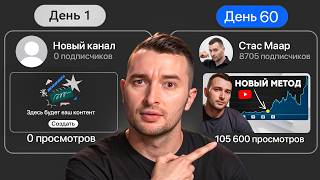

Why Your First Video Should Be Bad
45sChallenges the perfectionism mindset and offers a counterintuitive tip that new creators find liberating.
▶ Play Clip"The title promises a guide for 2026, and the content delivers actionable advice, though it's based on current strategies."
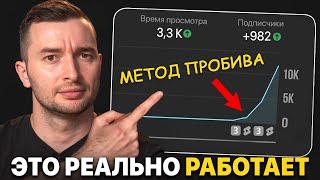
The speaker shares nine key lessons learned from growing a YouTube channel to 8,000 subscribers in 10 months, emphasizing the importance of posting early, consistency, sound quality, audience focus, competitor analysis, and monetization.
Don't wait for perfection; post quickly to feed the algorithm and start gathering audience data.
Many successful creators have buried channels; persistence and proper audit are key.
Sound is more important than picture; good sound with bad picture can still get views, but bad sound kills success.
Create a viewer profile and address their pain points; consistency over hype.
Check most-liked comments and discussions on competitors' videos to find content ideas.
Get inspiration from successful competitors, but present information in your own way.
Content packaging (thumbnails, titles) is crucial; analyze competitors' packaging and adapt triggers from other niches.
Avoid broad niches with high competition; find a sub-niche with fewer creators to differentiate.
Treat YouTube as a business; integrate sales funnels and monetization early to sustain growth.
To succeed on YouTube, post early, persist through failures, prioritize sound quality, understand your audience, analyze competitors, and monetize from the start.
What is the first thing the speaker would do differently when starting a YouTube channel?
Post the first video as soon as possible without waiting for perfection.
00:27
How many YouTube channels did the speaker bury over 4 years?
Four channels.
03:04
What is more important for viewer retention: picture quality or sound quality?
Sound quality is more important than picture quality.
04:53
What should you do with background music and sound effects in editing?
Set them to minimum volume so they don't interrupt the presenter or cause irritation.
06:28
How can you find content ideas from competitors' videos?
Check the most liked comments and discussions on competitors' videos to identify catchy questions.
09:36
What is the recommended approach to packaging content on YouTube?
Analyze competitors' packaging and adapt triggers from other niches to create fresh, engaging thumbnails and titles.
11:23
Why should you avoid broad niches with huge reach?
Because they have equally huge competition, making it hard to grow; instead, find a sub-niche with fewer creators.
14:42
What mistake did the speaker make regarding monetization on his old channel?
He didn't integrate sales into his content early, treating it as a hobby rather than a business.
16:03
How much money did the speaker make from selling an Excel calculator in a video?
49,000 rubles (approximately $500).
16:42
What should you do if a video unexpectedly gains a lot of views but is not in your main niche?
Close that topic and continue with your planned niche to avoid confusing the audience.
07:22
Post First Video ASAP
Emphasizes the critical mistake of waiting for perfection and the importance of feeding the algorithm early.
00:27Sound Over Picture
Challenges common belief that video quality is paramount; sound is the key factor for viewer retention.
04:40Audience Profile
Introduces a systematic approach to understanding target audience pain points for consistent content creation.
07:07Packaging as Marketing
Frames thumbnails and titles as marketing packaging, with a strategy to adapt triggers from other niches.
11:23Monetize Early
Stresses treating YouTube as a business from day one, with real examples of early monetization success.
16:03[00:01] YouTube, I made all sorts of mistakes, making random videos, frequently changing topics and even niches. And it was all wrong. However, less than a year ago I started the channel you are watching now and gained 8,000 subscribers in 10
[00:14] months. And this is only for horizontal videos. Well, if I had to start a channel from scratch today, I'm sure I would arrive at these figures five times faster and would do these nine things completely differently. My name is
[00:27] Stas Maar, and every 3 days I launch a new YouTube channel. And believe me, I have definitely developed a clear mechanism for what needs to be done to promote it. And today I will share it. I would try to post my first video
[00:39] as soon as possible. The problem here is that many aspiring creators take too long to gather their thoughts in order to release their first perfect video and not make a fool of themselves. This is exactly what prevented me from launching the channel,
[00:51] otherwise you would have already had it 3-4 years ago. But I waited too long to release this first video and put it off until later. As a result, the channel appeared only 10 months ago. It was a shame I didn't listen to the advice of many
[01:04] say you shouldn't make something, because few people will see your first video anyway. I had to release a good video first. In the end, practically no one
[01:17] watched it, and after its release it had just over 100 views, and each subsequent video got even fewer views. And I understand what this is connected with. YouTube is just selecting an audience, and even in the first 2-3 months the
[01:29] you expect. But most newbie creators think that their first one was a flop, and, well, the video turned out bad. They try to improve something, to outdo themselves, but in the end, due to a lack of experience, their second
[01:44] next video is also not much better than the first, and they see a lack of views and give up. But we can't give up. You need to release a video and feed the algorithm and make it clear that this is the first step on the topic.
[01:58] Remember who watches me, and I will release more similar videos so that you give me the right audience. This means that you should view your first videos only as food for the algorithms, and not as the final tool for achieving results and
[02:11] video on your channel simple. Let this food for the algorithms come out. The most important condition is that this video is on the topic of your channel, so that in the future you do not deviate too far from this topic
[02:26] . If you've covered how to promote YouTube channels in your first video, then let all subsequent videos help you promote YouTube channels. In other words, if you are consistent and release similar
[02:38] videos to your first one, you are guaranteed to get views. But the volume of these views depends on how well videos. Second, I wouldn't quit YouTube after the first failure, or even a
[02:51] series of failures. It would seem that this does not concern you. Yes, you haven't started your YouTube channel yet, but believe me, many successful creators are those creators who have many buried channels behind them. They didn't
[03:04] become successful the first time. Over the past 4 years, I have buried four of my own YouTube channels. And one of them was precisely about how to run YouTube channels. And that was 4 years ago. And there was just a series of unsuccessful
[03:16] episodes, after which I realized: "Well, there's probably something wrong. I'm quit immediately. Yeah, I'll come back to this later, when I'm ready." And it just needed to conduct a proper audit and see what works in my niche
[03:31] now. And perhaps now I would be a big blogger. Well, here are all these guesses. And, of course, in my experience there were YouTube channels that were designed for American YouTube and which I created for monetization. That's a whole
[03:43] videos, uploaded them, and there were zeros everywhere. Or some minimal number of views, and I immediately abandoned it. And the main thing that I didn’t understand back then 4 years ago is that YouTube collects data about viewers, and it might not have
[03:58] enough of this data, and therefore there will be few views. But when I realized this, I started releasing one video after another, calmly and with a calm soul. And my videos started gaining popularity after five or seven videos. I
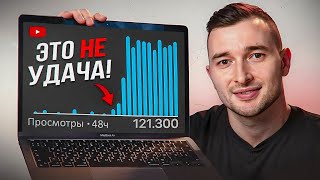
[04:12] understood how the YouTube algorithm works. That's why I want to convey to you that the failure is video. It may just be a lack of information for YouTube. That's why new channels often have poor viewing figures. Once YouTube collects
[04:26] will start to gain views rapidly. You will see this not by some smooth development, but by a sharp leap. And this leap will need to be supported. while you're actively developing, and release new videos faster.
[04:40] While you're at your peak, you need to keep getting more views by inertia. The third thing I realized, unfortunately, not right away, is that the quality of your picture, that is, the video, does not play any key role. You can film with just your
[04:53] views than if you spend money on an expensive studio and get a measly 300-200 views there. I think this isn't the first time you've heard me say this, but I also believe that sound is much more important than a picture, so it's better to spend money on a
[05:07] high-quality microphone than to shoot with an expensive camera with mediocre comfortable to watch a bad video with good sound than a good video with video on YouTube could have been released 6 years ago, but I only did it 4 years
[05:23] ago, when I bought myself a high-quality, albeit not quite professional, Sony camera. And the weather wouldn't have done that either. You have also seen the results of this channel this simple diagram in mind. If
[05:35] you have a good picture, good sound, you have a high chance of success. If you have a still have a high chance of success. But if you have a good picture but bad sound, you have little chance of success. And when you have bad picture and bad
[05:48] sound, your chances of success are slim. Friends, I wouldn't have included the point about the picture and sound in my video today, but this problem overtook me when I had both good sound and a good picture. I still had a
[06:01] sound defect. That is, your good sound is not only about good have attached to yourself or that you speak into or even process through neural networks. It is very important that you do not ruin everything during the installation stage. Many people, including myself, have made this mistake
[06:15] many times when I made sounds or accompanying music louder than they should be. And these sounds can literally interrupt the presenter, interfere with the perception of speech and cause irritation. Before creating and starting to
[06:28] manage a channel, we need to decide on a niche or topic, as I will help you now Because you simply did the wrong editing of the additional voice-over. Therefore, whenever you have some kind of musical accompaniment,
[06:40] set some minimum volume, or the sounds and effects that appear in the zhukh- vkh that you insert there, also at a minimum volume. In no case much attention, even if it does not interrupt the overly bright
[06:54] sound accents with all the transitions and effects, this is excessive. This shouldn't be in your videos. Videos that have some atmospheric quality from these sounds look much better, but the sounds are not distracting. Therefore, good sound
[07:07] and good picture are even more about perception than just about equipment. Fourth, I would be more proactive and start thinking about my viewers even when you release a series of videos and one of them gets a lot of
[07:22] views, and then you're forced to move in the direction of the because the topic could be an unexpected success for you, but you are not strong enough in this topic to develop it further. Yes, if you're
[07:35] and about promoting expert YouTube channels, and you've raised both the bait, you don't yet understand which way to go, but you prefer worked for you. Videos created for experts don't work. But a video about
[07:51] promoting American YouTube suddenly gained a lot of views, and you continue moving in that direction, your channel will simply die, because the first audience has already come from there. Yes, when the channel is new, you can level
[08:04] the playing field, release a whole series of the right videos , and everything will be great. But the video that has gained views and you don’t need it needs to be closed immediately. And so when you think about your audience even before the first video is released, you sit down and
[08:16] think about how I can help my target audience, who they are in general, what they look like, what their interests and pain points are. What questions do you think worry them most? You record videos that help answer their questions.
[08:30] Once you have such a profile of the viewer, you understand which area of topics is choose the topics that you like more, which you like less, and raise more often those that work well. And you can delve deeper and deeper into this niche
[08:43] , yes, develop your own creative potential and, moreover, constantly delight your audience with suitable formats, because consistency is more important than hype. But thinking about the viewer doesn’t
[08:56] just mean choosing topics that are suitable for them . It also adds value when you record any explanatory, expert, or even entertaining video for him. Try to make sure that he gets pleasure, yes, satisfaction
[09:09] from the fact that you have closed one of his questions. It is considered unique and extremely in demand when complex instruments and difficult topics are raised and explained in very simple language. That's why, in principle,
[09:21] reels and shorts are so popular there now; in essence, they talk about complex things in an entertaining format, literally in 10 seconds, in 15 seconds. And in essence they convey the idea correctly. But it takes a lot of effort. I know from personal experience
[09:36] that creating simple, clear content is very difficult. Not the kind of content that is expert and very deep, but rather simple and understandable for everyone. just look at the most successful videos from my competitors, but I would look a little
[09:49] deeper. I would start checking the comments, the most liked ones, the questions that generate the most discussion on my competitors' videos Because if these questions have caused
[10:02] some kind of stir or controversy within this topic, it means that these questions are catchy. That fill or even to formulate themes. Moreover, I would perceive this process as a Kazdef within its niche. The questions that people have already asked
[10:16] very valuable information for me. I would collect them all somewhere in notes, yes, I could highlight them in color according to their level of relevance. Yes, if it’s the most common question and there’s a lot of reaction to it, I would mark it in red. If it's a less
[10:29] pressing issue and within the context of a single video it has fewer comments and likes, then, well, I'd mark it yellow. Well, and so on, yes, green, those that simply have practically no reactions. This is how I would scatter them and
[10:41] in demand. Sixth. I wouldn't original ideas for future videos. Believe me, I burned out on this more than once when I tried to create content 4 years ago . That's why it's
[10:54] so chaotic and senseless, because there was no clear system for analyzing competitors. It's much better to get inspiration from your direct competitors, look at their successful cases and, I emphasize again, take inspiration from their
[11:08] work and present the information in your own way . Use only your experience, but follow the structure of the most successful works within your topic. This was the then. Seventh. I didn't fully understand what content promotion on
[11:23] YouTube meant. For me, promotion has always been associated with something like you need to views, and the channel should continue to grow on its own. But paid promotion is precisely what kills channels; we never use it. But the word promotion
[11:36] means something different. Packaging your content. in such a way that YouTube would need to think of packaging as marketing. Imagine you're not alone in the market, right? And in order for a buyer to choose you, you must have a more
[11:51] interesting offer packaged in a more attractive way. And your packaging is, in essence, what screams: “Look how beautiful my product is, come to me and take it.” And what is the price? Yes. And in order to attract viewers to your
[12:03] channel, you must have advantages in your packaging. Therefore, it is very important to look at the packaging of your competitors. If you understand that they package such topics in a certain way, their covers
[12:15] look so colorful, there are only three objects, and many of them, yes, such videos get views, then this is not a coincidence. So, this is the kind of packaging that attracts viewers in the best way . And simply licking the packaging of
[12:27] your competitors is also not a working idea. Well, first of all, many people have already done this for you and it didn’t work for them. Secondly, to make your packaging work in a new way and be perceived in an interesting way, it needs to be refined. And to refine it,
[12:40] you need to understand which packaging elements, not specifically in this topic, but in the niche in general, precisely why this entire audit analysis is carried out, which, by the way, I talked about in this video. Be sure to watch it in its entirety to understand
[12:54] . Once you've figured out what other elements you can combine on engaging than the original content you were originally targeting, your video has a chance of not only achieving
[13:07] similar results but also outperforming your competitor. That's why it's so important to create competitor. That's why it's so important to create that haven't appeared on YouTube yet, because the novelty factor, at the very least, hasn't been
[13:21] cancelled. But, unfortunately, even 2 years ago I didn’t really understand what it meant to find triggers. And I tried to do this among my competitors, them, but they did not confirm their effectiveness, or they were already
[13:34] hackneyed. And so I realized that there are some elements of your packaging that can be used, and they will work perfectly. Moreover, if you will always prove their effectiveness. But they will be effective only
[13:48] when they are not overused. But finding an unused trigger at first glance. Everyone and their dog within your niche will copy the same thing to make their packaging look like their best
[14:02] the method is simple: watch your competitors' best videos and package them the same way they did. It will not work well. It will work better when you start niches, looking at the packaging of the
[14:15] largest creators and taking certain elements and objects from them. Then, by adapting these triggers from other niches to your own, you will be surprised at how much of a fresh perspective you bring to your niche. Then everyone will repeat you,
[14:30] then they will copy and do as you do. And it won't work for them as well as it worked for you. But if you continue to test the confirmed new trigger many times on your channel, you will be surprised how many
[14:42] subscribers you can gather just by finding one working trigger. Eight is essentially a mistake I've made many times on my own and my clients' channels when I tried to take on the broadest possible niches for rapid
[14:55] growth. And it turns out that any niche with huge reach has equally huge competition. Because huge reach is usually an easy process to get subscribers and views. But the easier it is to get
[15:09] views, the faster the number of people willing to do the try to create a channel in what seems like a basic niche, you'll have little chance of growing, because that niche has already been filled by more
[15:23] successful creators. And the way out of this situation is simple. Try to find a sub-niche within this broad niche where there are fewer authors represented, or perhaps no one at all. But this niche will clearly reveal your expertise, or
[15:37] show some kind of entertainment format specifically aimed within this large niche. This way, you can clearly differentiate yourself from your competitors and get your I don't currently have a YouTube channel where I cover all the news topics; I
[15:50] talk about how to promote American YouTube and monetization on YouTube in general. I focused on helping entrepreneurs and businessmen, on promoting small YouTube channels, and on expert channels. And in this
[16:03] sub-niche I have practically no competitors. And I understand that I occupy my position here and am developing very quickly . And finally, ninth, without new YouTube channel, if I hadn’t planned to
[16:16] integrate sales into it in advance. If I don't plan to treat my YouTube channel as a business, but just a hobby and pleasure, this is clearly a losing proposition. This is why I abandoned my old YouTube channel because it wasn't
[16:28] making any money. There, in literally a year that I was releasing content, I released almost 15 long videos, and they didn’t bring me a single ruble, except for one. I literally just made a video on the fly where I put together a financial calculator for
[16:42] calculate compound interest simply in an Excel spreadsheet. I presented this video within the video and posted a link to purchase this Excel spreadsheet in my description and in the comments. sold this calculator for 50, well, 49,000 rubles. And this
[16:57] great psychological boost for me. Not because I saw value in my channel, that it turns out that something can be sold through videos. It was a revelation for me . And after that, I still continued
[17:11] the experiments, which didn’t bring in any money, but the last three or four videos on the old channel had already been purchased by the customer. In fact, I was paid another 50,000 rubles. Then they paid some more, you 10-15. It didn't
[17:23] matter, but the fact that they bought the integration for my money, told me to mention the book in the plot, and now my money was transferred to my account. It was a huge revelation for me that they were willing to pay me 50,000 rubles for such a small channel, where the target audience
[17:36] was less than 3,000 subscribers. for the mention. And oddly enough, that's exactly why I quit running that YouTube channel. Why? Yes, it's all simple. I realized that there was a female audience there
[17:49] who had subscribed to the neurographics that I drew for fun. doesn't my wife was practicing drawing negative experience in making money on YouTube, because too much effort was
[18:01] put in and so little money was earned. But this experience became the foundation for my ability to make money from content for my clients. And so, when we started taking over Channel One, we had n't yet integrated any sales. I have
[18:14] n't bothered with this yet. But once we realized why we were doing all this, every video our clients made started bringing in big money. Take, for example, the Souvenir Technologies channel, which we released a video for more than three years ago and
[18:26] old video. We had just mastered this system of sales through content back then. And to this day it works equally well. Friends, it's very or a business project for you, but a hobby or entertainment, please monetize
[18:41] your entertainment here and now. There is no need to put this off until later and extract some imaginary pleasure from something that does not bring you joy in life. You will have much more pleasure if the same content starts to
[18:53] bring you additional pleasant bonuses in the form of money. Now, as I do, I will continue to create mandatory funnels special advertising integrations that increase conversion to the target
[19:06] action. I'll be specifically filling out the description and comments so that, well, just in case, a casual viewer doesn't miss my offer, so that they Telegram channel, so that they can enter my funnel and learn the details of the
[19:19] training programs I offer. And by the way, I'd love to watch this video, which really breaks down the four main rules for working and growing views and monetize effectively. But if you want to
[19:31] figure out how to get beyond low views and avoid the nuances that will later prevent you from growing on YouTube and making money, then I invite you to my live YouTube group. You'll stop struggling with your videos and
[19:43] finally start getting regular views. You can easily collect requests for your products and services from YouTube. Below the video I will leave a link where all set up a tip recommendation system here . YouTube will suggest the video
[19:56] that is most suitable for you. See you there. Not.
⚡ Saved you 0h 19m reading this? Transcribe any YouTube video for free — no signup needed.