Hormozi's Brick Tower Advice is Wrong
59sA direct challenge to Alex Hormozi's popular analogy sparks debate and curiosity about why the advice fails in real life.
▶ Play Clip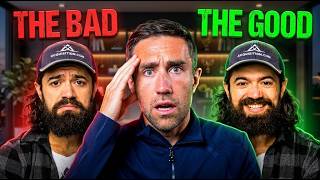
"The title promises an analysis of Hormozi's advice, and the video delivers a genuine debate, but it's padded with tangents and personal stories."
In this video, Meet Kevin and Alex Hormozi engage in a candid discussion, analyzing and debating various business and life advice. They cover topics ranging from building a business on failures versus a solid foundation, to sales psychology, customer retention, and practical money-making strategies. The conversation highlights both agreement and disagreement, offering a balanced perspective on what works and what doesn't in entrepreneurship.
Alex Hormozi argues that the fastest way to build a successful business is to start from zero and build it right, while Meet Kevin disagrees, stating that humans learn and grow through failures, which become part of their foundation.
Meet Kevin points out that with AI, you can get a much better legal, employment contract, vendor contract, and insurability foundation for a business than ever before, without needing to hire expensive professionals.
Meet Kevin shares his experience starting a construction business in 2017, which taught him about low margins and led him to prefer contracting out services rather than having employees, reducing liability and increasing flexibility.
Alex Hormozi discusses his strategy of eating at Chipotle over 500 times, ordering double meat and extra portions to maximize calorie and protein intake, which was cheaper than buying groceries.
Meet Kevin shares a story about a gas station encounter where he offered $20 for a perfume sample, emphasizing the importance of always having a way to process payments and closing the deal without overcomplicating.
Alex Hormozi stresses that once a customer agrees to a deal, you should stop talking and let them sign, as any additional words can jeopardize the sale.
Alex Hormozi mentions he has eaten 200 grams of protein daily for 20 years, to which Meet Kevin jokingly attributes to steroid use.
A discussion on a business selling performance upgrades to German car owners, with $5 million in revenue, highlighting typical margins and the importance of understanding product and employee costs.
Meet Kevin and Alex discuss the common desire to sell a business and retire, but point out that many people end up starting new ventures because they miss the purpose and structure.
Alex Hormozi uses the analogy of sharpening an axe for 7 hours to illustrate that people fill the time allocated to a task, so it's important to allocate time for vacations and personal life.
Alex Hormozi outlines four simple steps to start a business: form an LLC online, open a bank account, set up a payment processor, and provide a service. Meet Kevin adds that you can skip the formalities and just start providing value.
Alex Hormozi explains the psychology of asking 'Would you be opposed to...?' instead of 'Do you want to...?' to make it easier for people to say yes, but Meet Kevin warns it can come across as manipulative.
The discussion highlights that 10-20% of gift cards go unused, making them a profitable strategy for businesses, especially during holidays, as it's essentially free money.
Alex Hormozi advises that while online service businesses are easy to start, they face global competition, whereas belly-to-belly businesses (like real estate, CPA, attorney) have less competition and higher success rates.
Meet Kevin shares a story about giving specific, actionable feedback to an employee who was acting like a 'dick', emphasizing the importance of telling people exactly what to do instead of vague advice.
A restaurant experiment shows that giving a mint with the bill increased tips by 3%, two mints by 14%, and when the server walked away and came back with an extra mint, tips increased by 23%, demonstrating the power of reciprocity.
Alex Hormozi suggests creating multiple career tiers (6-12) with small pay bumps to retain employees, while Meet Kevin argues that providing a steady flow of customers and a strong reputation is more effective.
A company converting 55% of leads by having an employee call immediately when a lead comes in, highlighting the importance of speed in sales.
A tip to ask for ID before a credit card to prevent fraud, but Meet Kevin criticizes this as a trick, saying people come for value, not to be tricked.
Alex Hormozi outlines a simple path: find a service people buy, make it twice as easy, remove all risk, ask everyone you know, charge more, and don't stop when you get bored.
Meet Kevin warns against getting distracted by new opportunities, using the analogy of a squirrel that gets distracted and loses focus on what's making money.
Alex Hormozi shares how seeing Kylie Jenner on Forbes motivated him to study successful people, but Meet Kevin cautions against comparing yourself to those too close to your level, as it can be demotivating.
Alex Hormozi suggests making your office boring to focus on work, using grayscale on your phone to reduce usage, and controlling noise to avoid distractions.
Alex Hormozi explains the 'buy one get two free' strategy, but Meet Kevin notes that modern subscription models like Google One and Apple One bundle services, making this advice dated.
The video provides a rich exchange of business and sales advice, with both agreeing on the importance of providing value and learning from failures, while disagreeing on specific tactics like the 'no-based' question and employee retention strategies. The key takeaway is that success comes from a combination of practical steps, continuous learning, and adapting to modern trends.
AI improves business foundation
Highlights how AI can replace expensive professional services for business setup, making it more accessible.
01:08Learning from failure in construction
Personal example of how a business failure led to a better business model, emphasizing the value of failure.
02:47Shut up after closing the deal
A crucial sales principle that prevents losing deals by over-talking.
09:16Reciprocity in tipping
Demonstrates the psychological power of giving personalized gifts to increase customer generosity.
26:24Immediate lead response
Shows the importance of speed in sales, with a concrete example of high conversion rates.
33:27[00:02] We're going to go through them and update them in the day of AI and from my perspective. I'm Meet Kevin. I run an over 9 figure business. No bank debt, Jet Pilot, and Data 7. Let's get right
[00:16] tower you possibly could in 10 seconds. Here's how you might do.
[00:28] tallest building you possibly could in 10 [music] days. You would probably say, more boxes and I probably wouldn't build that cuz how flimsy [music] is this?" So, I might build it piece by piece from the ground up with more stable bricks
[00:42] from day one. And I'd keep adding and keep adding and keep adding. And then when 10 days came, [music] I might be five stories high. The fastest way to get to this tall is to build it the exact way I did earlier. But if I then
[00:55] that's 10 stories tall," you would never get there. And what happens is people [music] one on top. And it's because you built it wrong to begin with. Sometimes the fastest way to get to 10 million is to start back at zero and build it right
[01:08] >> Yeah, I disagree with this because humans don't operate like this. Look, I'm not here to just disagree, but I want to be clear. Humans don't function like this. First of all, with artificial intelligence today, you could probably
[01:20] get a much better foundation legally, employment contractwise, vendor contractwise, insurabilitywise for any business you create. You could probably artificial intelligence than you could have ever gotten in the past before. You
[01:35] would have had to have hired a lot of CPAs, attorneys, insurance experts to do what AI can get you to in a base level today, which is fantastic. But here's the reality. Humans don't operate in this idea of all right, let's go super
[01:50] slow and build everything methodically and perfectly at first because usually then what happens is people mle over their ideas for years and they never end up building anything. Humans operate differently than Lego bricks. Humans
[02:07] differently than Lego bricks. Humans operate by doing, making mistakes and yeah, sometimes failing. But as long as you don't die, that brick tower doesn't actually fall over because every failure is just a slightly different color of a
[02:21] Lego brick. It is part of your foundation. I've failed many times before and I don't regret a single failure. In fact, I would argue that the vast majority of people who stand where they stand today look back at their
[02:35] failures and say, "The failure is the reason why I am here. the failure was meant to be because it guided me not only with don't do that, you know, do do
[02:47] less of that and do more of something else, right? A, but B, it teaches you, hey, let's not make those mistakes in the future on other opportunities. I'll give you an example. I started this construction business in 2017
[03:03] as an enhancer to what was already a successful real estate salesperson business that had grown over the seven years before that. And I thought, "Oh, okay. Well, if I oops, playing hormos again here. If I include construction
[03:18] contractor, which we became a licensed contractor as a company, if I include property, I could make it really easy for customers. I could just sit down and fix up the house a little bit before we sell it? Oh, by the way, uh, we happen
[03:33] to be a contractor, too. Don't have the money? No problem. We also happen to be a lender and we'll put a loan on the property." And while that was great, we also realized that when you're working construction for other people, you're
[03:47] working a whole different kind of margin than when you're working a real estate agent world on their behalf, which is a very high margin. Let me clarify that. Real estate agent service business, extremely high margin. You're talking
[04:01] like 90% margins. Licensed contracting on behalf of somebody else, you're really low margins. you're 30% if you're lucky. That's really good. That's a great contractor who's built a great business. But most contractors, their
[04:15] margins are closer to zero. When you're breaking even, just paying payroll, that's you at the end of the period. I stopped doing that. And so that taught stopped doing that. And so that taught me, wow, I really like contracting out
[04:28] that HVAC tech or that electrician or when I need them. And if I don't want to use them anymore, no problem. They're not on payroll. I'm not funding their pension. I don't have to call them
[04:41] anymore, I call somebody else. And now, instead of just having one electrician on payroll that I'm responsible for and I have to train and if they make a mistake, it's on my margins, now I have a choice of electricians to call when I
[04:55] need them. I don't have to pay them to sit around and wait for a job. And they pick up all the liability. If they make a mistake, they carry the liability. I don't carry the liability. And see, that was a lesson to me that
[05:11] said, "Wow, I can now build this real estate business on the back of that failure, of that lesson that I learned." And so, it removes that temptation from ever wanting to do that again, which in my opinion is just an example of how you
[05:26] actually want to build on the back of failures. I would never want to go back and remove all of my failures because my failures made me the conservative person I am today when it comes to finance. Not talking politically here. Uh and when it
[05:42] comes to new ideas, I can use my failures and my prior experience to say, direction. We'll go down this direction instead. So, I kind of disagree with this Hormosi idea. I think this hormosi idea is a little bit more of a pitch of
[05:56] idea is a little bit more of a pitch of hey um come join us and we'll fix you which maybe they can maybe I'm broken too but let's go on to the next one. >> When I was single I actually ended up eating at Chipotle over 500 times and I
[06:10] he looked at my financials and he was like is this mistake mistake? You ate well it's lunch and dinner 10 times a week. Yeah, that makes sense. And I like protein each sitting. When I was trying to get as many calories in as possible,
[06:24] free. Each of those were 400 calories a pop. I would get a bag of chips, which was 700 calories. And then I would have a bowl that had double rice, double pause double. So I'd go half and half chicken and steak cuz you get like one
[06:37] like, "Actually, you know what? Let's make it a double." And then they would 3/4 3/4. So it ended up being like a triple meat. And then I would have pico, every day. And it was just because it was cheaper for me than buying
[06:50] >> So that's actually a brilliant psychology. I I do this as well. Even if you get single meat, make the decision, oh yeah, and actually I'll add this on. You always end up getting more. He's 100% right about this. Great strategy.
[07:06] Works on anything. You want to make a sub at a at Publix, have them make it second thought, I actually really want to add extra meat. you're willing to pay for it, but net net, you end up uh you end up up a little bit. You say double
[07:20] almost like, "All right, well, my first scoop better be a little light cuz I got to fit a whole another double meat on here." They think you're just getting a scoop. And then you're like, "Oh crap, you want another one?" All right, this
[07:33] is going to be a big boy. This I agree with. Big fan of Chipotle. Uh, not margins are like three times what cheesecakes are, but I have to say cheesecakes are, but I have to say burritos, chicken, getting your calories
[07:48] Absolutely. I actually think a hack is you get a burrito bowl and then you get as many extra chickens as they'll sell you after that because each one of those you after that because each one of those like $545 little chicken bowls is
[08:00] somewhere around 40 g of protein. It is remarkable. Extra chicken chipotle protein. That's the chicken one. And the chicken one, ah, correction, 32 g of
[08:12] protein for 180 calories. That's pretty remarkable for a little bowl like this. A while back, I rolled up to a gas station in a super car and start pumping like, "Hey, do you want a free sample of perfume?" I was like, "Yeah, sure." He
[08:25] to buy the bottle. I said, "No, but you know what? I'll give you 20 bucks just Do you have 20 bucks in cash?" And I said, "No, I have a card, though." And the card processor." So, I'm standing there, my gas is pumping, and I see him
[08:37] pitching some group. Doesn't say anything for minutes. My thing clicks. it back. Step in the car." He sees me and he's like, "Whoa, whoa, whoa, bro. like, "Hey, man. I'm about to get the thing." And so, I said, "Listen, man.
[08:49] I'm driving this car because I sold the way you're selling. I get it. So, let me you want to take them. One, as soon as the customer says they'll give you soon as someone offers you money, always have a way to process the money. Third,
[09:02] else walks in, you tell the person who is about to walk in to wait you have the mistakes. This will teach you far more than my 20 bucks would ever give me. [laughter] >> Yes. Absolutely agree. This is a a
[09:16] fantastic tip, by the way. Once you have succeeded and closed the deal, shut up and let the other person sign. I can't tell you how many times, and I've seen
[09:28] this on both ends, where I'll see salespeople, even in real estate, they'll be presenting a listing contract, and the seller is like, "All right, I'm in. Sign me up." At that point, they're done with the meeting.
[09:41] They've made the commitment. They've made the decision. The next answer out of your mouth is, "That's it. Nothing else." People regularly make the mistake of okay. Okay. Yeah, that's great. That's great.
[09:56] Here, let me get the paperwork ready for you. What do you mean you don't have the paperwork ready already? You should already have it ready if you're coming to close the deal. Or here's another one. Okay. Okay. Yeah. Yeah. I taking
[10:08] know, and next week I was thinking about doing our first open house and then what happens? Wait, wait, wait, wait, wait. I don't want to do an open house. You think my house needs strangers walking through it? Is that your strategy? Ah,
[10:23] maybe I need to think about this and talk to my wife. A great way to throw away the sale. When somebody says, "Take my money and shut up." You follow the instructions. The instructions are really clear in sales. You stop talking.
[10:37] You stop selling because any other words out of your mouth only potentially taking payment has gotten a little easier since now it's pretty easy to just take payment on your phone in fairness. Uh and the third idea of
[10:53] telling the other customer to wait, yeah, that actually creates this element of exclusivity. Your demand is valuable. You are working on closing a deal. The new person walking in respects I was second. This
[11:07] is a respectable business professional. They are going to honor the person that was first. they are going to finish that transaction because that is what I would expect if I was the first customer. So, by going to your next bird in the bush,
[11:23] so to speak, rather than closing the one you've got in the hand, you end up showing the first person that the first person doesn't matter. In this case, person doesn't matter. In this case, Alex. And in the second person's mind,
[11:36] you say, "Wow, you just kicked a closed deal to the curb to talk to this new potential me. Why aren't you respecting them?" You end up losing respect both ways. right here. Excellent advice by Alex.
[11:50] >> People think it's crazy that I've eaten 200 grams of protein for almost 20 straight years every single day. And I do that because it's >> because you're on steroids. Okay. Next. >> I sell performance upgrades to German
[12:03] car owners. Doing about 5 million in revenue last year. I do like it. >> But I'm working a lot. A question that's >> performance upgrades. $5 million a year in revenue. You're going to have a lot of employees doing that. So, this is a
[12:17] very margin intensive business. Usually, when you're selling upgrades like this, you're probably getting the product for about 40% of your entire bill. So, you sell something for $10,000. You're usually looking product costs $4,000.
[12:30] Employee costs are probably about another $4,000 on top of that, maybe closer to three. You're probably working on 20 to 30% margins here. That said, that's still not bad because a 30% margin of $5 million is still $1.5
[12:45] margin of $5 million is still $1.5 million in this dude's pocket. And damn, this guy's got time to go to the gym. >> Kind of come up a few times, which is offer. >> Okay. Is that appealing to you?
[12:58] >> Um, well, it's it's definitely enough to not have to work. I think I figured it >> Yeah. Yeah. >> I'm just like, let me just save you this part. You're going to work again. Yeah, >> true, true.
[13:11] >> Like you can get drunk for like a week and then you're like, I can't do this alcoholic. Do you have kids? >> No. >> Nope. >> What are you going to do?
[13:23] >> You're just going to wake up and be like [laughter] like you going to golf, you know? Like what? Like I'm being so real with you, though. Like what would you do? Um well to be honest you know like a lot of
[13:36] people in here you know had my head down in a warehouse in my house for the last go out and see stuff. >> Yeah. >> so this is an entirely >> keep in mind you can go out and see
[13:49] stuff while having a job or a career or a business you're running. You've got to surround yourself with the systems to enable you to do that. But even when I was a solo entrepreneur, I would tell my clients, look, I'm going to be gone for
[14:03] these five days on a vacation to a different area or whatever. And I mean, work remotely, but we get to work remotely, right? Or you have somebody cover you for a while. I don't think you should forego on going on vacations or
[14:17] should forego on going on vacations or trips because you have a business. Your business should enable you to go on trips. And then you could have the best of both. you could have fun and enjoy your career
[14:31] how to think through it. One of the things that I've like I know absolutely for certain is that we always want what we don't have. And so like single people dream about the time they were single. People who have kids wish they could not
[14:43] don't have kids want to have kids. Employees want to be entrepreneurs. stable paycheck. Like it's it's endless. Like we always want we can't have. And you'll wish you had the business. >> Yeah. If all of that's gone, you get rid
[14:56] >> And people forget about getting rid of the good. And so now you've got to you're going to start a business again. And then you're going be like, "Fuck, I wish I had my whole team. I only say this having done this before."
[15:10] all my people, but I can't cuz I just sold the company and I have a non-compete and I can't take them." Are you good at other stuff? >> Okay. I would encourage you before selling to see like is there a way that
[15:23] I can get the business to continue to make money and go out and see stuff maybe that's traveling once a quarter. >> Yes. Bingo. That's exactly exactly what
[15:35] I was thinking. Gosh. Have the you know what happens? Here's the thing. There's what happens? Here's the thing. There's an old saying. You give a man 8 hours to sharpen an axe or to cut down a tree rather, he will spend 7 hours sharpening
[15:49] the axe. So in other words, whatever time you allocate to a task, the human time you allocate to a task, the human will fill up and take all of it. So, why don't you allocate in that vacation, that trip, that dinner date, whatever,
[16:05] and then surprise surprise, you'll tend to get all of your work done anyway. So, college seniors and they're all talking about how they want to get into entrepreneurs, they're starting their business, and I was like, "Hey, man. I
[16:19] talked to you 6 months ago, so where you at with that business?" He's like, "Ah, set up." >> Yeah. Yeah. Yeah. See, see this is exactly what I was saying in the other clip where you regularly have these
[16:31] people, oh yeah, yeah, I'm working on building the foundations. Yeah. Well, Alex, why do you think the schmuck's still working on building his LLC? Because your most viral short is you telling people, you know, you got to
[16:45] have a really good foundation. No, no, no, no, no, no, no, no. You got to build on the bricks of failure, not on the bricks of perfection. So, I want some says. >> Dude, that's not starting a business.
[16:59] business. There are four steps to start a business that anyone can do. Step one, online. Step two, take those art of incorporation to go to a bank and open a payment processor to said bank account to collect money. Step four, provide
[17:13] money. That's it. And they could have done all of [music] those things in the time that they were taught. >> You know, honestly, you don't even need all of that crap. You could literally just start providing value to a
[17:26] especially when you're broke, you know, people are so worried about liability. I I see all these 18, 20, 25 year olds or even 35 year olds are whatever age. business. Great. What's your net worth? Negative or zero. And I'm like, great,
[17:42] perfect. You're starting at ground zero. What are you going to do? Oh, I'm going to get an LLC to protect myself from liability for what? you have nothing to lose. [laughter] It is like people will literally look at
[17:56] you, think about suing you, and go this isn't even worth it. It's not even worth suing you because we can't collect from you. So that is actually the greatest motivator to just get out there and provide value. You provide value first.
[18:13] It goes on your tax return on your 1040 as a sole proprietor's income. Then you get insurance, make money over time. You can worry
[18:25] about an escorp or an LLC or all the entity crap and all that stuff. Why over complicate the business? Skip all the bull crap Alex Hormosi just told you. bull crap Alex Hormosi just told you. Skip to go, which is provide value to
[18:40] somebody. That's it right now. Provide value to somebody. Forget about all the other crap. You can worry about that later. I'm trying to get my wife to go want to go to Cheesecake Factory, the finest establishment in the land. If I
[18:53] Cheesecake Factory?" She might be like, "Well, no, I don't want to go to really sure." Now, if I switch that and I said, "Babe, would you be against Cheesecake Factory." And I'm like, "Great, let's go." That's the beauty of
[19:05] a no-based question. See how different it's phrased? And if I say, "Hey, you to say, "Yes, I'm excited to move forward today." Would you be opposed to conversation? No, I'm not opposed to moving forward. Great. and we get the
[19:18] sale. The psychology behind this is that people feel safer saying people, >> you have to be careful with this. This gets very salesy. When somebody comes to me and let's say they're selling me, oh, I don't know, a contract for as a data
[19:32] phone, they're like, "Hey, we're going to help you do some AB testing. We're going to help you, you know, provide this new data or whatever that you could resell to other people via API. Who knows? Whatever, right?" and I'm on the
[19:45] phone and somebody says, "So, you know, in this case, would you be opposed to in this case, would you be opposed to working together?" When I hear that, I personally start recoiling and feeling like, "Okay, I know what's going on
[19:58] like, "Okay, I know what's going on here. I'm in sales, too. I get it. I don't like to be closed like this. Now, I'm definitely going to think about it." So, I think you have to be careful who you use this strategy on. This is not
[20:12] going to work for everybody. A lot of people don't want to be backed into something. This is kind of like doing the, "Oh, hey, would you mind passing me phone or they're busy or something like that. And it's like, "No, no, no. I'm on
[20:25] the phone. I'm on the phone." "Oh, so you wouldn't mind." It's like, "Bro, come on." Like, you you're just trying to verbal judo me here and I don't like it. So, you got to be careful with whom you do this with. You do this to people
[20:40] who are sensitive to sales, you could come across as a pressure technique and you end up accomplishing the opposite. Some people just don't want to be tricked. They want to do a deal with you because you're providing value that they
[20:56] want, not because you're a verbal judo master. It's the closest thing to free money. Every year, $3 billion of gift cards are unused. That's 10 to 20% of all gift cards sold. And so if you're a business owner, you can sell gift cards
[21:10] during the holidays knowing [music] that 20% of that is just money that you get your life. Yeah, this is entirely true. California actually passed a law that makes it a requirement that businesses give you cash back if a gift card is in
[21:27] give you cash back if a gift card is in value under $10. because so many people have all these gift cards lying around that are worth $3, $9, $5, $4, whatever. It all collectively works up to this 10 to 20% churn. Basically, it's all extra
[21:41] profit for the business. But functionally, how am I going to go spend $3 at that store? Well, I'd have to spend 10 just to use that $3 gift card you got to go to the store and then you end up getting suckered into buying
[21:53] end up getting suckered into buying something else. 100%. As a consumer, gift cards suck. As a business owner, gift cards are brilliant. different businesses that you can potentially start. For beginners,
[22:08] starting an online service business is the easiest one to start because it costs the least amount of money and it has a lot of good economics around it. It costs almost nothing to deliver. There's low recurring overhead. You can
[22:21] you're watching. >> Yeah. then your competition is also every single schmuck around the world. Whereas, for example, if you do a ballsy move, like actually getting a license or a professional designation that puts you
[22:37] bellyto belly with people, now your competition just went from every schmuck going, "Yeah, that's I'm just going to start an online business." to ah my competition is only this small network of people in this zip code for example
[22:55] real estate agent, real estate lender, market sucks right now. Guess what that means? Great time to get in. CPA, attorney, these are all belly-to-belly attorney, these are all belly-to-belly skills. pilot, get some kind of license
[23:10] skills. pilot, get some kind of license that you can weaponize AI with in your area and provide value to people bellyto belly. Okay? People are not trying to replace their CPA or their attorney with AI. You know what they want to do is
[23:23] they want to hire the best attorney, the best CPA, the best financial adviser who is weaponizing AI to do the boring crap. And now that CPA or attorney doesn't have to bill you as much because you're still getting the value of that CPA or
[23:40] that attorney or that real estate agent for the same price, but they are able to do it more efficiently for you because they're utilizing AI. You should be that service provider, not another internet schmuck.
[23:53] technology required. Basically everything is there for you to start mistakes. >> And that's exactly why everybody tries to do it and the success rate is next to zero whereas the success rate of an
[24:06] actual bellyto belly business is probably 100x this recommend. getting complaints that he was acting like a dick. He had talked to three of one-on- ones within him and said, "Hey man, stop being a dick." He continued to
[24:19] talk to him?" And I said, "Sure." And so when I sat down with him, I said, "Hey, I don't really care what you do. My goal here is to decrease the likelihood that saying that you're acting like a dick." He's like, "Yeah, I know. I'm working."
[24:33] care. What are the actions that you take that increase the likelihood they call interrupt them on meetings. Number two is that you say that you know their list of things. I like, so don't do those four things and do this instead.
[24:48] So when this circumstance occurs, do this action instead of this action. And my god, it was like night and day." And someone and say, "Don't be a dick. Be charismatic. Don't how do I do that?"
[25:01] You have to tell them granularly what to do instead. There was a >> Yeah, that's fair. There's essentially an argument here that sometimes people don't know what they're doing wrong. And that's not a bad thing. That's human
[25:14] nature. This is why common sections exist on YouTube. So people, well, I don't like it when you do this or, you know, YouTube is just one of those examples where if you want to test your
[25:26] opinions, post videos on YouTube or on X or Instagram or wherever because people will give you this unfiltered, unvarnished opinion and some of the opinions are worth what you paid for them. Nothing. But some of the other
[25:39] opinions are like, yeah, I I never realized I said XYZ or this word. I mispronounced this word. Maybe if I clean that up, next time I use that otherwise have lost because I didn't know how to pronounce a word, which
[25:54] sometimes turns people off. So getting feedback from somebody who's not in the feedback from somebody who's not in the party totally useful. The tough thing is for the feedback giver is actually letting that feedback be heard by the
[26:09] receiver. So, in other words, Alex coming in giving the feedback, often you don't know what you're talking about. You don't know what it's like, but sometimes you just got to listen to that feedback and take it because it's
[26:24] probably the right thing." Here's how a restaurant use mints to make more money. a restaurant, here's what that restaurant's doing wrong, and what you business to help all of your employees make more money. So when they took the
[26:36] them to the waitresses to give out when they gave the bill, they all got them out actually changed how much they got as the increase. So when they handed the bill with a mint, they got a 3% boost in tips. When they handed the bill
[26:50] And the third version of how they tried it was the best one. They handed the to walk away and then they turned around and came back and put another mint on the platter. And people gave a 23% boost in tips. And the reason this works is
[27:04] something called reciprocity. People feel obligated to give back to people When someone gives them a gift, when it's personalized to them, and when it's those three things into the gifts that you give, you'll have people feel far
[27:16] that you make. And so, if you have a business and you have a way of giving before they're about to absolutely brilliant. I love this. This is a great piece of advice. Totally agree. From a sales point of view, you want to give
[27:30] value. If you give value, I used to hang signs from my real estate for sale signs. I would hang meet Kevin, the no pressure agent, providing more because value. Well, how do you do that as a real estate agent? Well, if you know
[27:45] do you think they need? They need a title report and they want to know what the latest comps are. So, you track them. A seller is a hot lead every month. Hey, slip under their doorstep. Here's a little handwritten note. Here
[27:59] are the comparable sales. Here's what just happened in your neighborhood. Oh, about this offmarket one. Slip it in there. And you're not asking for them to keep giving and giving and giving. And what happens is by constantly giving,
[28:13] what happens is by constantly giving, you actually build up this reciprocity guilt. And then the other people feel like, well, I kind of feel like I I owe the guy at least an interview because, you know, they've been providing so much
[28:26] value. That's human nature. and weaponizing that as a business owner is actually brilliant. It is one of the reasons why I actually hate receiving gifts because I don't want to owe other people anything. Anytime, and I am
[28:42] really brutal about this, anytime somebody gives me something, I'm immediately thinking I got to get even with them quickly because I do not want [laughter] But that's extreme. This is a great
[28:57] blueprint. Number one, give them something. Number two, personalize it. Cuz if it's just a generic, you know, it it should at least if you're a realtor, it could apply to the customer, like, hey, I know you're looking for, you
[29:10] about the Toyota Sienna or whatever. I children or the six seat Tesla or whatever and you're selling cars. Go check it out or whatever. Even if you're sending somebody off to a competitor
[29:23] there's a greater chance they're going to refer business to you or they'll come back to you and close a deal with you. So, I love that. Give people something that is personalized, excellent, unexpected, even better, because the bar
[29:36] is so low for salespeople. >> I have a hair extension salon in LA. >> Perfect. >> We do about 1.2 million revenue. What's stylist stop >> and then they take the book of business
[29:50] >> Yeah. Super normal. >> So what do I [laughter] do? >> So what do I [laughter] do? >> Um super common for call like medium skill laborer. This really common in like med spas for the injectors. It's
[30:03] really common in massage parlors for the massuses because it's one-on-one. They develop their relationship and then they go. How many tiers of career do you have go. How many tiers of career do you have in your salon? probably two, three,
[30:15] >> right? So, you want to make that like 6 to 12. So, I put an offer on a chain of buy it is cuz they had completely cracked this. She had five locations. like four-year retention, which is insane for that industry. And so, the
[30:29] was able to get somebody who had didn't have a high school diploma to make $70,000 a year. You have to scale it based on the skill to be clear, but that's a huge amount more than that we'd make at another place. But the key was
[30:41] if you think about it like this where you have you've got your roll and perks other side. I mean they're both compensation at all levels you have three that you can split. So we have a junior hair extender lady [panting]
[30:58] junior hair extender lady [panting] and then after 30 days determined not to be somebody who's going to steal and can show up on time. Fantastic. After 30 days, we then go boop. You're now at let's say 60 days
[31:12] You now drop the junior and you don't have to do graveyard shift. You can now just do normal calendar rotation. Maybe this is 120 days after that. She now gets another pay bump. But if you have, let's say, three or four pay bumps they
[31:27] have six to 12 of them and make them smaller. It's tiny little wins like that. And on average, when you have a service business like you do, and I'll based businesses that win the long run are the ones that pay the best. Like if
[31:42] fitness. People in hair like being in makeup, right? The people want to be there. And so if you can always pay 20 to 25% above, then you'll suck up all the best talent.
[31:54] in a service-based business like this is a either have one of the most bang up locations where people go to for these services or you've got one of the best facilities and reputations to where customers are actually walking in the
[32:09] door. In my opinion, this isn't about playing a game with the people being like, "Oh, okay. Well, you actually want to make $100,000. Well, we're going to start you at 50 and then we're going to go 55 and then we're going to go 60."
[32:21] through that. I don't like this one. Hormosi, I'm sorry. I'm blunt. There are a lot of things I like this one. No go. I think the business has to provide so I think the business has to provide so much value to its existing employees or
[32:35] are actually technically contractors, not employees. They just set up their desk in an area. They rent the space there and they pay maybe a commission. I would argue that the best way to retain is keep a steady flow of customers
[32:49] reputation. and you've got the best search engine optimization or these days AI engine optimization and you're providing value to these individuals to that stream of customers isn't coming in
[33:02] their own book of business, but they're not growing because people aren't coming in the door. And that as a business owner is the most important thing is providing value to that contract employee to make sure they see, wow, the
[33:15] employee to make sure they see, wow, the hurdle for me to leave is massive. that helps build retention. Now, are you still going to lose people in this sort of business? Of course. But that's how you lower the loss.
[33:27] company and he told me he was converting 55% of his leads, not calls, leads. And do you get?" He said, "Two or three." "Okay, so what's the process?" He's like, "Oh, it's really simple." [music] My aunt, I pay her $60,000 a year and
[33:41] responsibility in the company. decides the moment a lead comes in, you stop cooking, you stop loving your child, and you immediately call the lead. That's make [music] three calls a day at the moment the leads come in. He pays her
[33:55] $60,000 and that brings in millions of dollars of revenue. Now, I recently talked to a restoration company and he told me he was converting 55%. When people in the trades reach out for a service call, they don't want it
[34:09] tomorrow. They want the issue dealt with yesterday and today you could probably yesterday and today you could probably have an AI agent text them immediately. Hey, it's so and so with this company.
[34:24] It's Heather with this company. Saw your inquiry. Hey, how can we help you out? we send somebody out? What should we do? Whatever. You go through your flow. If you can call somebody right away, great. I don't think I would call with an AI
[34:39] bot yet at this point, but we're getting to that point. This is good advice. If home, here's the easiest way to avoid than asking someone for their credit card, ask them for their ID first. So,
[34:52] actual cards. You take their ID and then you say, "Hey, let me trade you for can flick it like this back towards them. And at that point, they'll trade they then say, "I don't have the card I
[35:04] open up your banking app real quick." So then click see statements and on the top number. And you can actually do a direct a to the account without even needing the credit card. Problem solved. This is that classic like used car dealer
[35:18] strategy where I got to do everything to try to keep you here. You know, people they go to like the car dealership now and they already bring a copy of their driver's license to prevent this. People come for value and they come to get
[35:32] taken care of. They don't come to get tricked. I don't like this. >> The simplest path to making money. One, find a service people already buy. Two, twice as easy. Four, remove all the risk. Three, ask everyone you [music]
[35:45] know if they know anybody who wants it. Four, charge more than everyone else. bored. The simplest path to making money. >> Yeah. Yeah. All right. >> Anybody who wants it. Four, charge more
[35:57] five, don't stop when you get bored. The simple advice. Big fan of this. So, [clears throat] first of all, watch what successful people do and copy them. Great advice. That's essentially his
[36:09] number one. People try to reinvent the wheel all all of the time. All of the time. I don't think it's that hard. Look at what the most successful people in your industry are doing and copy them. Real estate agents, loan brokers,
[36:22] accountants, financial adviserss, attorneys, nurses. Which what is the field in nursing? For example, I don't know. Was it anesthesiology? Who knows? Whatever you figure that out. Piloting, doesn't matter. Pick a field you like.
[36:36] Find out who's making the most money. Figure out what they're doing and copy it as best as you can. Then because you're newer in that business, you actually have the luxury of being fast and people love that. Once you get busy,
[36:53] you kind of become that used product on the shelf where it's like, ah, you know, it takes me three days to hear back from this guy. You that's once somebody's But when you're newer, you have the luxury of, "Oh, no, I'm ready. I'll
[37:06] message, every call. I will go drive out there and I will go do whatever I need to do immediately." That is actually a selling point that yes does enable you to charge more than the person that's going to take 3 days to respond because
[37:20] people pay for money. As they say in World of Warcraft, time is money, World of Warcraft, time is money, friend. It's very true. Ask who needs here's the great line for you. Write it
[37:32] down. The perfect line is who do you know who needs whatever it question. You're simply asking, "Hey, agent? Who do you know who needs a lender? Oh, I don't know anyone." All
[37:46] lender? Oh, I don't know anyone." All right, but at least you get the the the at least you get the gears grinding a little bit more than do you know anyone think a little bit harder. And that's okay. Don't stop when you get bored.
[38:02] This is the squirrel thesis. Usually people get successful at something and get distracted doing something else that's less successful, makes them less circle back and go, "Wow, why did I get distracted by all that other stuff
[38:16] dumb. I should have focused on making more money all along." And that's what I was doing from day one. Stay focused, don't get distracted. Good advice. I >> Kylie Jenner changed my life. I saw her on the cover of Forbes and I was like,
[38:30] billionaire and I feel like I know more about business. I have a fundamental me in some way and I need to learn from that. I will study everyone. Anyone study. When I saw that, it was such a paradigm shift for me. I was like, how
[38:43] between 13 and 17 million a year. Personally, I thought I was doing pretty well. Then I saw that and I just felt horrible about myself. It like Yeah. And yourself if you start saying, "Okay, yeah, we're taking in 13 million a year,
[38:55] but how much are we spending on ads? What's our actual net?" Ah, crap. Then taking in 13, but you're really taking home two, and you're like, h, now I feel certainly motivating. Uh now there is a toxicity of that if you're constantly
[39:09] comparing yourself to other people. Ideally people who are way out of your league are good to compare yourself to because they're not so close that you make yourself feel bad about them. They should be an inspiration. That's
[39:21] comparing yourself to people who are in your circle or near you or relatively could be surpassed by you, you'll just be miserable every time they do a deal. Always always aim really high. So I actually like this Kylie example. ruined
[39:35] that, Conor McGregor, boom, he was at 600 with Proper 12. And then the Rock billion, depending on who you're looking at. And it just happened again and again thing that you would need to grow a business was paid ads and out. For me to
[39:49] be a billionaire, I didn't understand brand. And it was my big deficiency. And "Oh, I have to get into this." And I started making YouTube videos shortly beginning of me starting to put >> Yeah, that's great. I'm a big fan of
[40:03] organic and free marketing. I'm not a big fan of the paid ads strategy. So, pluses and minuses here. >> Three hacks to make life suck less. Hack one, make it hard to do anything but work. So, if you look at my office, I
[40:17] have no windows anywhere and it's really plain. And so, the only thing I really have to do is work. Hack number two, a lot of people spend way too much time on cut down on my phone time, I put this little setting on there. Boom. Makes it
[40:31] gray. And so it's supposed to decrease how much you use your phone by 30%. At much more. Hack number three. Hear all that. I don't. It's easier to do more hacks to make life suck. >> Okay. Totally true, by the way, on noise
[40:47] control. Noise control is by far one of the most important things when you're impossible to concentrate. You're going to get distracted. You need a either a better door or a noiseancelling
[41:00] co-workers who are making noise, chewing gum, chewing their food, dropping things, racking guns. I don't know. People do crazy stuff in offices. That pencil. Oh, here. Let me get that for you. Every one of those little
[41:14] distractions often takes you about 15 minutes to get back into concentration mode. That is exactly how you end up wasting a lot of time getting absolutely nothing done. And it's bad and toxic. Right on. I agree with that. As far as
[41:29] making your office boring, me there's a balance there. I agree to some extent. And as far as grayscale, I've used grayscale for about a year. Recently, I've really stopped using grayscale because lately, you got to run those AI
[41:45] agents, and I need those color codes to see what the heck is going on. So, I have gotten rid of grayscale myself. It is useful for not constantly getting stuck in the vertical scroll, but there are other ways to trick yourself. not to
[41:59] Sometimes you can learn a thing or two. Here's how you can sell one thing for the price of three. Instead of saying, "Buy three things for $5 each," say, "Buy three things for $5 each," say, "Buy one thing for $15 and get two for
[42:13] people to purchase despite the overall economics being the thing for $15 and get two for free. The free will far more people to purchase despite the overall
[42:25] economics being the same. Sorry, Alex. That is dated advice. These days, everybody is going for one. I kid you not. You want a Google subscription? You are not buying one and getting two for free. You instead are now getting Google
[42:42] 1. Everything Google has to offer for you in one plan. Okay. It's not just Google, though. What about Apple? The best of Apple. All in one. Apple bundles
[42:54] up to six Apple subscriptions for one lower price. Two terabytes of cloud blah. All these other services you can get. How about Meta? Oh, more with Meta get. How about Meta? Oh, more with Meta 1. Explore personal business and creator
[43:09] 1. Explore personal business and creator plans all in one subscription. That is plans all in one subscription. That is the meta for 2026 and maybe even 2027. If you like that video, check this one out. I think you're going to love it.
[43:21] that you told us here? I feel like nobody else knows about this. see how it goes. >> Congratulations, man. You have done so you. Kevin Praath there, financial analyst and YouTuber. Meet Kevin. Always
[43:34] analyst and YouTuber. Meet Kevin. Always great to get your take.
The video opens with a promise to analyze Alex Hormozi's advice, immediately piquing curiosity about what will be revealed. The mention of 'best and worst' creates a sense of anticipation and a desire to see the analysis.
I analyzed [EXPERT]'s advice on [TOPIC]. Here's what's actually good and what's overrated.
AI-generated clip ideas for Shorts based on the transcript
A direct challenge to Alex Hormozi's popular analogy sparks debate and curiosity about why the advice fails in real life.
▶ Play ClipA real-world sales story with actionable tips that viewers can immediately apply, making it highly shareable.
▶ Play ClipContrarian advice that dismisses common startup steps, resonating with aspiring entrepreneurs frustrated by bureaucracy.
▶ Play ClipA fascinating psychological experiment with a simple, unexpected tip that viewers will want to test themselves.
▶ Play ClipEmpowering advice that reframes being new as a competitive edge, motivating viewers to take action.
▶ Play ClipSnapshot 2026-11-18
Every observation TubeSum recorded, plotted as measured.
Based on 13 observations · last observed Nov 18, 2026 · solid lines connect consecutive measurements (≤2 days apart); dashed lines span days TubeSum did not measure. · vertical axis from zero
Exact daily observations; gaps mean no observation was taken that day.
| Date | Views | Avg views / hour | Channel median |
|---|---|---|---|
| 2026-11-18 | 38,095 | 119.4 | 47,319 |
| 2026-11-17 | 38,044 | 130.7 | 47,319 |
| 2026-11-16 | 38,014 | 134.8 | 47,319 |
| 2026-11-15 | 37,945 | 150.0 | 47,319 |
| 2026-11-14 | 37,891 | 169.9 | 47,319 |
| 2026-11-13 | 37,774 | 190.8 | 46,328 |
| 2026-11-12 | 37,528 | 214.4 | 46,328 |
| 2026-11-10 | 36,731 | 289.2 | 45,841 |
| 2026-11-09 | 36,302 | 352.4 | 43,320 |
| 2026-11-08 | 35,432 | 416.8 | 43,320 |
| 2026-11-07 | 33,639 | 542.6 | 43,320 |
| 2026-11-06 | 30,714 | 1,023.8 | 43,320 |
| 2026-11-05 | 15,729 | 2,621.5 | — |
Audience reaction — separate from the performance metrics above.