
Bizarre Collaborations That Changed Science
45sSurprising real-world examples of unlikely teamwork capture curiosity and challenge assumptions.
▶ Play Clip"Delivers exactly what the title promises with concrete examples and supporting data, though some sections feel slightly padded."
This video explores the power of interdisciplinary collaboration, highlighting historical and modern examples where experts from vastly different fields teamed up to solve complex problems. From NASA's collaboration with weavers to create the Apollo guidance computer memory, to partnerships between linguists and geneticists, it demonstrates that unusual combinations of expertise often yield impactful breakthroughs.
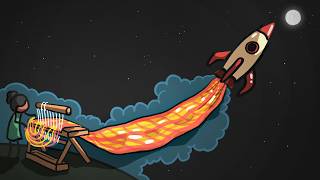
In the 1960s, NASA engineers worked with expert weavers to shrink the Apollo Guidance Computer's memory by hand-weaving core memory modules. This allowed the computer to fit in the spacecraft.
Linguists teamed up with geneticists to study language and genes across populations, helping trace the origins of Homo sapiens in Africa.
Fluid dynamics experts collaborated with world-class surfers to determine that offshore wind produces the best barrel waves.
Epidemiologists worked with sewage management experts to test wastewater for viruses, creating an early warning system for COVID-19 spread.
A study of nearly 18 million scientific papers found that research involving unusual combinations of fields tends to be more impactful, as measured by citation rates.
Major scientific breakthroughs, such as those winning Nobel Prizes, are particularly likely to bring together different fields and research methods.
The weavers who created the core memory for Apollo were largely ignored by NASA and the press at the time, only recently receiving recognition for their critical role.
Dr. Han and Dr. Kramer's work on predicting disease emergence exemplifies modern transdisciplinary research, combining virology, animal behavior, AI modeling, and predictive simulations.
Interdisciplinary collaboration, while challenging due to differing cultures and credit issues, is a powerful tool for solving complex problems. When diverse expertise is combined, it can lead to groundbreaking innovations and solutions, as seen from the moon landings to modern disease prediction.
What problem did NASA face with the Apollo guidance computer?
It needed to be smaller to be launched into space.
How did expert weavers help NASA?
They hand-wove the core memory modules by passing a needle through or around tiny rings.
02:08
What did the study of 18 million scientific papers find?
Research involving unusual combinations of fields tends to be more impactful, as measured by citation rates.
01:09
Why were the weavers initially ignored?
They were not given credit by NASA or the press despite their critical role.
02:25
What is transdisciplinary research?
Collaboration across very different fields to solve complex problems, such as combining virology, animal behavior, and AI.
03:37
Name one example of interdisciplinary collaboration for COVID-19.
Epidemiologists teamed up with sewage management experts to test wastewater for viruses as an early warning system.
00:57
NASA and Weavers
Shows how an unexpected collaboration solved a critical engineering problem for the Apollo missions.
18 Million Papers Study
Provides quantitative evidence that interdisciplinary research leads to higher impact.
01:09Weavers' Uncredited Contribution
Highlights the importance of giving proper credit in collaborative work, especially to overlooked contributors.
01:54Modern Transdisciplinary Research
Demonstrates how cutting-edge science today relies on cross-field teamwork for predicting diseases.
02:56[00:00] In the 1960s, NASA’s engineers were building the Apollo spacecraft. But To solve it, they brought in some unexpected help: expert weavers.
[00:12] Engineers and weavers sound like an odd collab – and we'll get back to it in more detail soon! - but it turns out that lots of perplexing problems can Like, linguists teamed up with geneticists to study the relationship between language
[00:31] and genes in various groups of people to help figure out where in Africa homo sapiens arose, Experts in fluid dynamics teamed up with world class surfers to figure out that
[00:43] you need wind blowing in from offshore to produce the very best barrel waves. Experts in epidemiology teamed up with experts in sewage management to test lots and lots of poop for viruses all at once in order to create an early warning system for the spread of COVID.
[00:57] expert in partying to study his DNA in order to learn that some people have genetic mutations that allow them to detoxify alcohol much faster than others.
[01:09] And the value of teamwork isn't just anecdotal: one study of nearly 18 million scientific papers found that when researchers from unusual combinations of fields work together, their research tends to be more impactful, at least in terms of how often it's cited.
[01:24] And big scientific breakthroughs, like the ones that are awarded Nobel Prizes, are particularly likely to bring together different fields and research methods. But getting experts from very different fields to work together to solve problems isn’t always easy;
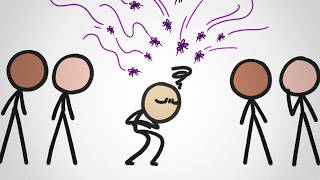
[01:38] we don't necessarily know what expertise might be needed for a given problem. often have very different cultures and methodologies – and even vocabularies! And then there's the issue of not always giving all contributors the respect and credit they
[01:54] deserve: for example, the weaving experts helped get us to the moon by enabling NASA to shrink the size of the Apollo Guidance computer so that it could actually be launched into space. They did this by meticulously weaving the hardwired binary computer memory
[02:08] by hand by passing a needle attached to a wire back and forth either through or around the tiny rings in the core memory module; when they went through the ring, And despite their ingenious deployment of skill and their critical role in the
[02:25] success of the moon landings, they were almost completely ignored by NASA and the press as Americans celebrated the successful mission. It wasn’t until very recently that at least some of the weavers were appropriately honored.
[02:39] So it’s not a given that we can always get the right experts to But when we do manage to bring strong threads of knowledge together, we can weave solutions to some of the biggest problems on Earth. Or even the moon.
[02:56] for Ecosystem Studies and the Kramer lab at the University of South Florida. For them, partnerships like I just described are an absolute must in order to get anything done.
[03:09] focuses on predicting when and where new diseases are likely to appear. But doing that requires working with not only virologists who have expertise in how viruses
[03:22] animals behave, computer scientists who can design AI models to better understand like Dr. Kramer who can take all the data and build predictive simulations with it.
[03:37] It's called transdisciplinary research, and it is a huge part of how important modern, cutting-edge science like their work gets done. Thanks Dr. Han and Dr. Kramer!

⚡ Saved you 0h 03m reading this? Transcribe any YouTube video for free — no signup needed.