
AI Summary
This video reveals eight lessons learned from meeting over 20 YouTube millionaires, challenging conventional advice and emphasizing business-building, volume, and monetization strategies over mere view counts.
Chapters
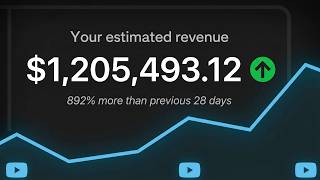
95% of YouTube millionaires don't rely solely on ad revenue; they have attached businesses (merch, products, services) to convert views into customers.
Posting high volume (multiple times per week on long-form, daily on Shorts) helps YouTube learn your audience and increases chances of a video popping off.
Relying on one income source (e.g., ad revenue) is risky; top creators diversify with sponsors, affiliates, and other channels to mitigate risk.
Successful creators outsource editing and use AI tools/systems to speed up production; some even build software companies around their channel.
High-paying niches are less important than audience demographics (age, location, device) which affect ad rates and sponsor value.
Placing mid-roll ads every 0.2 seconds of video length increases RPM without adding more ads to the viewer experience.
Most videos will fail; treat failures as learning opportunities and use feedback to improve future content.
Demonetization, strikes, or channel deletion can happen for TOS/copyright violations; top creators carefully vet all content before posting.
The key to YouTube success is building a business around your channel, posting consistently, diversifying income, and treating failure as a learning tool.
Mentioned in this Video
Study Flashcards (5)
What percentage of YouTube millionaires have a business attached to their channel?
easy
Click to reveal answer
What percentage of YouTube millionaires have a business attached to their channel?
95%
00:28
How many views per month are needed to make $1M/year with a $5 RPM?
medium
Click to reveal answer
How many views per month are needed to make $1M/year with a $5 RPM?
17.2 million views per month
00:42
What is the recommended frequency for posting long-form and Shorts to eliminate luck?
medium
Click to reveal answer
What is the recommended frequency for posting long-form and Shorts to eliminate luck?
Multiple times per week on long-form, multiple times per day on Shorts
01:35
What is the recommended interval for placing mid-roll ads in videos over 8 minutes?
hard
Click to reveal answer
What is the recommended interval for placing mid-roll ads in videos over 8 minutes?
Every 0.2 seconds of video length
05:33
What are the three audience factors that affect ad rates?
medium
Click to reveal answer
What are the three audience factors that affect ad rates?
Age, location, and device (e.g., TV viewers)
04:56
💡 Key Takeaways
Business over views
Challenges the common belief that ad revenue alone can make you a millionaire.
00:16Volume beats luck
Provides a concrete strategy to increase the odds of virality.
01:20Systems and teams
Highlights the importance of scaling operations for growth.
03:12Monetization control
Offers a specific, actionable tip to increase RPM without harming viewer experience.
05:33Risk of one mistake
Warns about the fragility of a YouTube career due to policy violations.
07:04Full Transcript
[00:01] you've been told about what success looks like on YouTube is wrong. See, definitely not doing what beginners are told to do. In fact, the gap between actually works is the reason most people never become big creators. So, today I'm
[00:16] lessons that they taught me so that you can use them to blow up your own channel as well. Let's start with lesson number one. You don't need views, you need a business. I would say like 95% of the YouTube millionaires that I know are not
[00:28] just making YouTube videos and bringing in ad revenue. Pretty much all of them service or have some kind of business. To make $1 million per year, you need to be making around $85,000 per month. And [music] let's say you're making a $5 RPM
[00:42] on your channel, that would mean you would need to bring in 17.2 million views every single month, which is actually so hard to do. There are also pay you that much ad revenue. Like some months are higher than others, some are
[00:54] lower, so it's kind of inconsistent. And YouTube can always just demonetize or in a huge wave of YouTube channels that are getting demonetized. So, the way to foolproof this is instead to start some kind of business and convert your views
[01:07] into customers. And this business can be almost anything. It can be merch, a physical product like food, Mr. Beast has Feastables, Ryan Trahan has his For example, Leila and Alex Hormozi have a company that literally buys and
[01:20] is you need to start a business to attach to your channel if you want to All right, moving on to lesson number two. Volume eliminates luck. All the have multiple channels where they're posting often or they only have a few
[01:35] amount on those few channels. Right, this could be maybe multiple times a five to six times a day on YouTube shorts. This is especially important on YouTube doesn't know who to recommend your videos to. So, it's highly
[01:49] necessary for you to post a large volume of content in order to give YouTube the your videos to. Posting often also just mitigates any sort of [music] luck involved in the equation because usually the YouTube algorithm will get it right
[02:02] if they're good, but YouTube might mess up. Maybe you didn't do a good job in the idea. If you're posting with a high volume, say multiple times per week on YouTube long form [music] and multiple times per day on YouTube shorts, then
[02:16] many times, at least one of them is going to pop off and when one pops off, makes your channel incredibly bingeable and creates a ton of trust with your back to point one, create a successful business attached to your channel. This
[02:31] I know does. And you don't even need to create new content for this to work. What you can also do is simply clip or repurpose existing content that you have in order to still post at a high frequency without sacrificing your time
[02:44] start getting traction on your channels, the next thing that I've learned from met, multiple income streams are absolutely mandatory. However, even to their channel also rely [music] on sponsors, affiliate deals, some ad
[02:58] different channels. There's a lot of ways that an income source on YouTube demonetized, maybe there's some seasonal changes where you get paid less from ad maybe your brand isn't doing well, who knows? If you have multiple income
[03:12] sources, you basically mitigate the risk of having one income source shut down Lesson number four is that you must build systems and teams. Every dollars a year is not editing their videos by themselves. In fact, they
[03:26] that's already built for them. They have AI systems to make their videos faster. you're first starting out, you'll do everything yourself. Like I remember videos, coming up with the ideas randomly, making the thumbnails, posting
[03:40] the videos, analyzing them, changing the thumbnail later. But at a certain point, doing things manually just slows you down so much and it decreases the amount of videos that you can post. Not only do top YouTube millionaires have teams to
[03:52] create their own in-house systems [music] and tools to make things faster. I have friends that literally have built whole software companies just dedicated maybe they also sell the software later. So, what I would do if I were you is I
[04:04] would first outsource editing and then try and find what else is taking up a that as your channel gets bigger. And at 10 of 10, we have a whole suite of tools Chrome extension that makes it easy to bookmark ideas for your channel to a
[04:17] literal AI idea generator that's based off the top videos on your niche and your channel, and a title generator, and probably the best thumbnail generator in and get 20% off with the first link in [music] the description. And once your
[04:29] understand what's actually driving revenue behind the scenes. So, a lot of important to pick a profitable or a high-paying niche. But all the richest YouTubers that I know don't really care about a high-paying niche. Instead, they
[04:43] making videos for if they want to make a lot of money. See, YouTube doesn't they're figuring out how much to pay you in terms of ad revenue. And sponsors either. Instead, the audience matters way more. You need to look at things
[04:56] younger audience is going to have way less ability to buy stuff that's advertised to them than an older audience. Or viewers watching on TVs are more trust, watch a lot more ads. People
[05:08] like India and Pakistan are going to have way lower incomes than people in the US and the UK, for example. So, obviously you should be making videos in so they're more optimized for TV viewers. And you should be making your
[05:21] everything in 4K when you can. Pay attention to the little details cuz experience. And once you understand your small tweaks you can make to make even more money off of YouTube. So, lesson
[05:33] number six is that monetization is a lever that you can control. Super easy thing to do is simply just place a ton of ads in your YouTube videos, right? 0.2 seconds there should be a mid-roll ad placement if your video is over eight
[05:46] every time you add an ad placement on YouTube, it's not literally adding an So, if you put like a million different ad placements, a viewer might only see like three. However, in turn, this is going to increase your RPM because over
[06:00] viewers. I've done this with every single channel that I've either owned or millionaire friends do this with their channels, too. And across the board, watch time. Simply just more money on
[06:13] script that does this for you and I'll leave a link to it in the description if you execute all of this perfectly, there's still one unavoidable problem that you are going to run into and that is failure. Lesson number seven is that
[06:25] failure is unavoidable and it is simply a feedback loop. I have a lot of YouTube different channels at once and most of them will honestly just go to and getting all sad, they simply just learn from what didn't work well and then
[06:39] better. And the reality is not every single video you make can be a breakout video. So, by nature, most videos you make will simply just be failures or to avoid failure, you need to confront failure head-on. Use things like your
[06:52] feedback from your other friends that are running channels, [music] whether they're successful or not. Everybody's input, I think, is still valuable and you can fix it for the future. And finally, there is one risk that YouTube
[07:04] millionaires know can knock out literally everything in your favor overnight. Lesson number eight is that one mistake can ruin everything. As I right now of demonetization where YouTube is demonetizing channels, giving
[07:16] channel strikes, and even deleting entire channels that do not follow YouTube TOS or copyright rules. All the top YouTubers that I know carefully about to post a video using things like AI and peer feedback. if you're going to
[07:29] be making videos, you need to make sure all music, visuals, and content of the YouTube platform guidelines. I'll leave out. And those are the eight biggest lessons that I've learned from meeting
[07:41] over 20 YouTube millionaires. Let me know which one you found the most useful know which one you found the most useful and check out this video next.