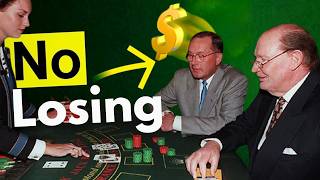

The $10 Shilling That Built an Empire
45sThe rags-to-riches story of a family fortune starting from a single lucky bet is an inspiring and shareable narrative.
▶ Play Clip"Title is somewhat vague but the content delivers a detailed account of Packer's gambling, though it's more biography than a strategy guide."
This video recounts the legendary gambling exploits of Australian media mogul Kerry Packer, detailing his high-stakes sessions in Las Vegas and London, his unique approach to betting, and the impact he had on casinos. It highlights both his massive wins and losses, and reflects on his legacy as a player who altered the dynamics of casino gambling.
Kerry Packer's grandfather found 10 shillings at a racetrack, bet on a 10-to-1 outsider, and won, using the winnings to enter the newspaper business.
As a young man, Kerry ran up $10,000 in gambling debts; his father made him sell his car to pay it off, but the lesson didn't stick.
By 1974, Kerry controlled Consolidated Press Holdings and was among Australia's richest, but Australian casinos had limits too low for him, so he'd fly over Darwin and only land if the casino had enough cash.
Vegas had the limits and financial capacity to absorb his play. He started at $500 bets and accelerated to $300,000 per hand at baccarat when winning.
Packer was a hit-and-run player, leaving when ahead, which kept casino executives alert to the possibility he'd walk out with millions.
At the Mirage in 1989, a pit boss couldn't find the key to the baccarat setup, so he broke the lock; Packer appreciated the nerve and later made a $100,000 bet for the dealers.
On a New Year's Eve at the Las Vegas Hilton, he won $9 million, tipped $1.3 million to dealers, gave $100,000 to a lounge singer, and once placed $20,000 on every spot for a dealer.
In one trip, he won $20 million across four casinos and $13 million at a fifth, totaling $33 million, which gaming companies reported to analysts.
He lost $28.2 million playing blackjack in London in 2000 (largest loss in British history at the time), $33.3 million at the Bellagio, and $7 million at Crockfords on the first day of new ownership.
On 9/11, he was ahead by millions in Vegas but couldn't leave due to airport closures; his wins evaporated and he left with a loss of over $6 million.
Casino veterans estimated his net loss on the strip over 15 years was around $20 million, reflecting how close his overall record was despite eight-figure wins.
Kerry Packer died on December 26, 2005, at 68. Casinos noticed because he was a player who genuinely altered the dynamic, making them feel their certainty slip.
He never counted cards or used a system; his edge was an extraordinary tolerance for risk, financial resources to sustain swings, and the nerve to walk away when ahead.
Kerry Packer's gambling career was a study in extremes, with massive wins and losses, but over 15 years the house edged him by about $20 million on the strip alone—a cost he considered less than what he gave away.
How did Kerry Packer's grandfather start the family fortune?
He found 10 shillings at a racetrack, bet on a 10-to-1 outsider, and won, using the winnings to buy into the newspaper business.
00:01
What was Kerry Packer's approach to deciding whether to land at a casino in Darwin?
He would radio ahead to ask how much money they had in the cage; if it was $800,000 or more, he would land.
00:54
What were Kerry Packer's two non-negotiables when choosing a casino?
The highest limits the casino could offer and a vacant table.
02:16
What was Kerry Packer's net gambling loss on the Las Vegas strip over 15 years?
Around $20 million.
06:01
What was the largest gambling loss in British history at the time, incurred by Kerry Packer?
$28.2 million playing blackjack in London in 2000.
05:01
How did Kerry Packer typically start his betting sessions?
He started in the $500 range and then accelerated if he was winning.
01:37
What happened on September 11, 2001, that caused Kerry Packer to lose over $6 million?
He was ahead by several million in Vegas but couldn't leave due to airport closures; his wins evaporated.
05:47
What was Kerry Packer's playing style described as by casino veterans?
A hit-and-run player, leaving when ahead.
02:32
Fortune from a bet
Shows how a single lucky bet founded a media empire, setting the stage for Packer's gambling legacy.
00:01Strategic casino selection
Illustrates Packer's calculated approach to gambling, only playing where the stakes justified his time.
00:54$33 million winning trip
Demonstrates the extraordinary scale of his wins, making casinos report to analysts.
04:19Net loss of $20 million
Reveals that despite massive wins, he still lost overall, highlighting the house edge.
06:01No edge, just nerve
Emphasizes that his success came from risk tolerance and discipline, not skill.
07:10[00:01] gambling table by accident. His family's fortune began with a bet. His grandfather, Robert Clyde Packer, found 10 shillings on the ground at a racetrack in the Tasmanian city of Hobart, placed it on a 10 to 1 outsider,
[00:15] and the horse won. He took the winnings to Sydney, bought into the newspaper business, and built the foundation of what would eventually empires. Kerry Packer inherited both the empire
[00:28] >> [music] >> When he was a young man, he ran up $10,000 in gambling debts. His father, a multimillionaire, made him sell his car multimillionaire, made him sell his car to pay it off. The lesson did not take.
[00:41] By 1974, Kerry had taken control of Consolidated Press Holdings, the family's print and broadcast media company, and was already one of the richest men in Australia. The problem, from a gambling
[00:54] perspective, was that Australian casinos in the 1970s and 1980s operated at limits far below what interested him. So, he developed a different approach. While flying over Darwin, he would radio ahead to the local casino and ask how
[01:08] much money they had in the cage. If the answer was $300,000, he would keep flying. If it was $800,000 or more, he would land. enough cash on hand before you bother touching down, you are operating at a
[01:23] different level. Vegas was the answer. Vegas had the limits, the tables, and crucially, the financial capacity to absorb what Kerry Packer wanted to do on any given night. How he played, Packer did not arrive at the table already
[01:37] betting at maximum. He would typically start in the $500 range, almost modest given who he was, and then accelerate. If he was winning, bets at the baccarat table could climb to $300,000 per hand. At blackjack, where casino executives
[01:52] felt slightly more confident managing the risk, they tried to hold him to $50,000 per spot. He played basic strategy well enough that at least one casino executive later admitted there was a [music] genuine
[02:04] fear he was getting better over time. His requests were minimal for someone of his standing. Good rooms for his entourage, which typically included golf coach Butch Harmon, the actor Anthony Perkins, and
[02:16] an assortment of polo players and cricketers, an on-call masseuse, and two non-negotiables: the highest limits the casino could offer, and a vacant table Casinos that could provide those things got his business. Casinos that made him
[02:32] He was described consistently by casino veterans as a hit-and-run player. When he was ahead and had decided the session was done, he left. This was the quality that kept casino
[02:45] executives most alert. The possibility that he would walk out with eight done about it. The sessions. In the fall of 1989, Packer arrived at the newly opened Mirage in Las Vegas and
[02:59] made his way to the baccarat area, which had been reserved for him. The pit boss on duty could not find the key to unlock the setup. Rather than call ahead for a replacement and keep Kerry Packer waiting, he picked up a
[03:11] open. Packer, who respected nerve, appreciated After getting ahead by a couple of million dollars that session, he made a $100,000 bet on behalf of the dealers.
[03:25] That kind of gesture was not unusual. On a New Year's Eve in the mid-1990s at the Las Vegas Hilton, Packer was betting $150,000 per hand. He won $9 million across the session.
[03:39] Before leaving, he tipped $1.3 million to be split among the dealers and handed the lounge singer performing nearby $100,000. On a separate occasion, he noticed that a blackjack dealer he liked had been
[03:52] pit. He walked over, placed $20,000 on every available betting spot at that table, and told the dealer he could keep every dollar he won from that hand. Casino management watched in silence.
[04:06] >> Another time, a cocktail waitress mentioned that she was struggling with her mortgage. Packer wrote a check on the spot. Staff calling in sick when he was in town. The possibility of being in the room when
[04:19] Kerry Packer was on a winning run was worth rearranging a schedule for. One trip in particular has passed into Vegas legend. Over the course of a single visit, he won $20 million across four casino properties and $13
[04:32] million at a fifth. Five separate casinos, one trip, $33 million. Following sessions like that, the gaming company responsible for those properties would report the numbers to analysts,
[04:45] >> [music] >> This was the scale at which he operated. Not a player the casino was watching, a player the stock market was watching. The losses. The Kerry Packer story is not only about
[05:01] wins. He lost at the same scale that he won, and he did not pretend otherwise. In 2000, across a stretch of sessions at London casinos, he lost [music] $28.2 million playing blackjack. Reported at the time as the largest gambling loss in
[05:17] British history. The Bellagio in Las Vegas absorbed $33.3 million of his money over the course of his visits there. In 1994, on the very first day that a new owner took control of Crockfords
[05:32] Casino in London, Packer sat down and lost $7 He had not known there was a change of ownership. He simply arrived to play, and the session went badly. On September 11th, 2001, he was in Las
[05:47] Vegas, ahead by several million dollars, and ready to leave. Then the airports closed. He stayed in the city for the days that followed, the wins evaporated, and he left with a loss of over $6 million instead.
[06:01] Over approximately 15 years of regular Las Vegas play, casino veterans estimated his net position on the strip was a loss of around $20 million. For a man who had won eight-figure amounts on individual trips, a $20
[06:15] million net loss across 15 years reflects not just the scale of the wins, but how close the overall record actually was. He was not a man the casinos routinely crushed. They managed to come out
[06:27] slightly ahead over a decade and a half of some of the largest private gambling sessions in the city's history, and considered it a difficult result. considered it a difficult result. Kerry Packer died on December 26th, 2005
[06:40] at 68 years old in Australia. The casino industry noticed. Not because he had been a good customer in the ordinary sense, but because he had been something rarer, a player who genuinely altered the dynamic. Casinos
[06:54] are designed around certainty. The mathematics favor the house, the environment favors the house, the entire physical and psychological architecture of a casino is built to ensure that the money flows in one direction over time.
[07:10] number of people in the history of Las Vegas who made casino executives feel that certainty slip. He never counted cards. He never used the system. He had no particular edge other than an extraordinary tolerance for risk, the
[07:26] financial resources to sustain swings that would have ended any other player's session, and the nerve to walk away when he was ahead, regardless of what the table wanted him to do next. He played the game the casinos offered
[07:39] at the limits the casinos set, and still made them build protocols specifically around managing his presence. In the [music] end, over 15 years, the house edged him by about $20 million on the strip alone.
[07:52] For a casino, that is the expected outcome. For any other player in history, it would be a catastrophe. For Kerry Packer, it was the cost of the entertainment, and rather less, he was quick to point out, than what he gave
[08:06] quick to point out, than what he gave away.



⚡ Saved you 0h 08m reading this? Transcribe any YouTube video for free — no signup needed.