
No XP for You! Zones Level Up Instead
44sThe unique XP system flips RPG conventions, sparking curiosity and debate among gamers.
▶ Play Clip"Title accurately highlights the unique zone-based XP system, but the content is more of a preview than a deep dive, so it slightly oversells the 'rewriting the rule book' angle."
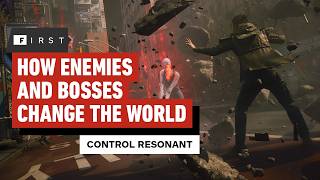
The video explores how Remedy Entertainment's upcoming game, Control Resonant, is redefining the action RPG genre by shifting progression from character XP to zone-based leveling. It details the evolution of enemy factions like the Hiss and Mold, introduces a new threat called Resonance, and highlights the game's unique boss design and world-reactive difficulty system.
Instead of earning XP for missions and kills, the player's actions level up the zones of corrupted Manhattan. Each zone has its own XP meter, and leveling a zone grants improvements like increased health drops, better loot, and access to arcade cabinets, plus talent points for the player.
The Hiss, a paranormal parasite from the original Control, has evolved in the outside world. It is more violent and can corrupt larger entities, such as a Nocturne bus that spawns enemies from its possessed passengers.
The Mold is a separate faction with unique properties. They are resistant to blunt damage due to their spongy material, but some have calcified armor that can be broken with blunt weapons. They are slower and more strategic, using damage zones, spore clouds, mines, and alarms.
Each zone levels up independently, providing improvements such as increased health drops or revealing rare loot. Leveling zones also grants talent points, which are used for classic RPG-style character progression.
Defeating a Resonant (a big boss) grants an ability but also increases the difficulty of encounters across the entire world, not just the zone. New enemies appear and existing encounters level up, requiring strategic timing for boss fights.
Bosses are intentionally designed to be very different from each other, testing different skills and builds. Examples include a magma beast that turns the floor into lava and a giant face with kaleidoscopic imagery, both tied to the new Resonance threat.
Resonance is a new paranormal threat that creates algorithmic patterns, amalgamating people into focal points. After defeating the first boss, players can tackle other Resonants in any order, but not all are required to finish the story.
What is the core progression mechanic in Control Resonant?
Zones level up instead of the player character. Each zone has an XP meter, and leveling it grants zone improvements and talent points.
05:36
How do Mold enemies differ from Hiss enemies in terms of combat?
Mold enemies are resistant to blunt damage, but some have calcified armor that can be broken with blunt attacks. They use damage zones, spore clouds, mines, and alarms.
03:13
What happens when you defeat a Resonant boss?
You gain an ability, but the world becomes harder: new enemies appear and existing encounters level up across the entire world.
07:29
What is the new paranormal threat in Control Resonant?
Resonance, which creates patterned anomalies and amalgamates people into focal points.
10:08
Are all Resonant bosses required to complete the story?
No, not all Resonants must be defeated to see the story's end.
10:37
Zone XP system
This is the core innovation that sets the game apart from traditional RPGs, shifting progression to the world.
05:36World reacts to boss kills
This creates a strategic layer where players must weigh the benefits of power against increased difficulty.
07:29Boss design philosophy
Emphasizes variety and skill checks, encouraging players to adapt builds and strategies.
08:32Resonance threat
Introduces a new antagonist faction that adds narrative and gameplay depth.
10:08[00:02] Entertainment take one step further into the world of RPGs following its first experiments with the original Control. But, this isn't a studio that likes to follow conventions. Rather than rewarding you with XP for finishing
[00:14] missions, taking down bosses, and completing side activities as most games in the genre would, Resonance hands upgrades to the world around you. The open zones of this corrupted Manhattan react to you defeating the big threats
[00:27] infecting it, growing much more dangerous with each new zone conquered. sequel's combat has evolved, but now it's time to see how the threats you'll it's time to see how the threats you'll be taking down have changed in turn.
[00:49] shifting walls of the oldest house, so too have the otherworldly entities that once called it home. Much like how the Bureau's headquarters was made up of a series unique areas infested by the Hiss and the Mold, each
[01:03] of Manhattan's zones finds itself swarmed with these familiar forces, swarmed with these familiar forces, albeit not quite how you remember them. Chief among them are the eerie red-hued Hiss, the paranormal parasite that
[01:15] corrupted Resonance's protagonist Dylan in the original Control. in the original Control. >> You see Hiss in this kind of a war, let's say, simpler form in the first game, but as it's getting out into the
[01:30] uh kind of outside world, it's almost as if it's like evolution in process, like that kind of a turbulence and corruption goes to the next level, and it gets way more violent and uncomplicated and so on. It starts having effect the kind of
[01:44] human beings. >> I can attest to this. Having played a few hours of Resonance now, I've been forced to fight all manner of possessed entities, ranging from gangly Eldridge monsters,
[02:01] red goofer heads, with which they attempt to flatten you like a mallet, to a Nocturne bus emanating haunting passenger groans as it spun above me.
[02:18] >> from the world-building point of view. Hiss has been cooking and getting stronger as a resonance, and it can corrupt more things and bigger things. house, we might actually have more opportunities to play around with things
[02:32] much like this paper design for a [music] large enemy that is this sort of spawner type. So, we were thinking that how can we actually do something like this in in the world of Red Control? So, the hissified bus made most sense, and
[02:46] then the fact that the poor passengers inside then became these hissified like inside then became these hissified like spawned enemies.
[02:59] the oldest house in the original Control. These fuzzy fungal fiends have carved out their own pocket of New York, caking subway walls in blue and yellow mycelium, and armoring themselves in layers designed to challenge Dylan's
[03:13] layers designed to challenge Dylan's melee-centered skill set. to fight them is because of the hiss is your like the it's the majority of enemies are hiss in in Manhattan, but mold are kind of more isolated faction
[03:29] there. There's still quite a lot of mold enemies, but what we were able to do is we were able to give them some special properties as a faction. And they are gameplay-wise. They're not just a different color of hiss enemy.
[03:43] One way in which they're different is that they are soft, and they look soft, and they're made out of this like kind of like spongy um, material. And because of that they are naturally resistant to blunt damage.
[04:05] On the other hand, some of that material has calcified on them and uh you can break it with blunt damage. So, you need to then try to pay attention of like, "Okay, this enemy has armor from the front. Maybe I go behind and I hit it."
[04:19] Or maybe I you know, pull out my big hammer and break smash its armor and hammer and break smash its armor and then I can attack it afterwards.
[04:31] dances performed to a different beat than those with the hiss. They're often more considered encounters framed around knowing which enemies to target first not to get caught up in the traps they've set.
[04:43] >> They're also much slower and they don't necessarily attack you until you actually engage them or until you get really close to them. So, there's a to say stealth, but there's more of like they're not actually necessarily
[04:57] actively caring about attacking Dylan. They just kind of there and their job is to just, you know, infect everything with mold, including you. So, there's going to be damage zones and they're covering the encounter area with the
[05:10] mold damage zones that create these spore clouds that inflict status effects. Uh there are mines in the air and on the ground that you [music] have to avoid and there is also these uh mold alarms which uh trigger nearby
[05:23] encounters if you if you get too close to one. And burning all of that stuff is really fun uh because mold is afraid of fire.
[05:36] progress through Control Resonance story. Progression doesn't quite work how you might expect for an action RPG though. With traditional character leveling systems discarded in favor of one that connects you in the world in a
[05:49] uniquely Remedy way. >> Every zone has XP meters, so Dylan doesn't have doesn't get XP, but zones do. And every time you do an activity in a zone, you get some XP for that zone. And every time the zone
[06:03] levels up, you get the zone improvement. So, zone zone improvements are things that increase for instance health drops while you're doing activities in that zone further. Or for instance, they can reveal loot
[06:17] you're in that zone is going to be easier easier to find like rare loot. Or arcade cabinets which are these challenge missions that you can do later in the game once you're more powerful. And and
[06:31] so on and so forth. But also every time you level up a zone, you get a talent point. And that's more kind of classic you know, action RPG / RPG progression where you know, you you leveled up and
[06:44] you get a next ability point. Well, talent points are that, but you do get >> There's only one set difficulty level in Control Resonant as the team believes that they are making a well-balanced yet challenging experience. Though assist
[06:58] those struggling, Remedy encourages everyone to try to play Resonant how it has been intentionally designed before tweaking it for themselves. And even if you do ultimately dial in some assists, it's worth experiencing one of Remedy's
[07:12] methods for that fine-tuned balancing act. An enemy scaling system that sees the whole of Manhattan react when you take down one of its big bosses, the take down one of its big bosses, the Resonants.
[07:29] they do get harder as you get into further zones. That doesn't have really anything to do with directly with the zone improvement system, but every time you kill a Resonant, which is one of these big bosses that they're really
[07:42] kind of like tentpole fights that once you kill resident you get an ability but it also it fights back and it fights back by creating more threats for you in the world. So once you defeat the resident
[07:55] combat encounters throughout the world not just in the zone where you fought the boss will respond. New enemies are going to appear that weren't there before and a lot of the encounters are going to level up. So you need to be
[08:07] strategic about like when do you want to do that? Like because you are going to go grow in power a lot when once you kill a resident but also the world is going to get quite a lot of new threats and there's going to be new challenges
[08:20] and there's going to be new challenges for you to overcome. resident boss fights during my hands-on time but from these brief encounters it's clear to see that Remedy has placed a lot more thought into boss design this
[08:32] time around. Not only that but they feel better woven into the central set of missions than they did in the original Control where they were frequently positioned as optional adversaries. >> I think you will have a really hard time
[08:45] finding two bosses that are anything like each other in this game. They're actually a quite different from each other and that is intentional because we again want you to have that like amusement park ride experience in
[08:59] it. We want you to come in there and get this sense of all and wonder and also they test very different skills. Every boss by definition is a skill check and some bosses you're going to have a harder time with some builds than others
[09:14] so you will want to think a little bit about like okay what what artifact do I want to equip in this one? What are the damage types that I'm dealing with here? You know like is it better to attack it from range or is it better to stay up
[09:27] from range or is it better to stay up close? we showed off a full fight against the central resident a mammoth magma splurging beast that certainly poses a challenge. It tests your grasp of
[09:40] Dylan's floating ability as the floor literally becomes lava. Visually, its stumbling off-kilterness is in stark contrast to the game's first boss, a giant yet deadly face which dazzles in its hypnotically kaleidoscopic imagery.
[09:55] This is due to patterning, a brand new paranormal threat that is rivaling the Hiss and Mold for ownership of Manhattan.
[10:08] weird algorithmic pattern. And often case, you find these resonance former persons of power at some sort of a focal point or a anchor point of this localized patterning. So, this poor person somehow becomes amalgamated into
[10:25] just a person, but becomes part of the >> After defeating this first boss, you're left to tackle the other resonance in any order of your choosing. Although, not all of them must be taken down in
[10:37] order to see the story's end. It's a further example of choice making its way into each aspect of Control resonant, whether that be when build crafting in its menus, the moment-to-moment beats of battle, or deciding whether taking down
[10:50] all of its bosses is worth the payoff of angering the paranormal New York that angering the paranormal New York that birthed them. That's for you to decide.
[11:02] first, check out our feature all about how combat has evolved and the how combat has evolved and the everything else, stick with IGN.
⚡ Saved you 0h 11m reading this? Transcribe any YouTube video for free — no signup needed.