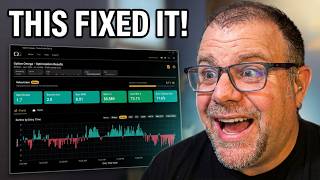

Your Options Strategy Stopped Working?
46sDirectly addresses a common pain point for options traders, promising a solution.
▶ Play Clip"Delivers on the promise with concrete examples, but includes promotional segments and some fluff."
Option Omega has launched a major upgrade to its backtesting platform, introducing an optimizer that allows traders to run up to 500 backtests simultaneously. This tool helps traders identify robust strategies by sweeping across multiple parameters, such as entry times and deltas, to find configurations that work in current market conditions. The video demonstrates two examples: a credit spread strategy and a double calendar, showing how the optimizer can revive strategies that have stopped performing.
Option Omega's new optimizer allows running 500 backtests simultaneously, enabling traders to test multiple parameter combinations quickly and understand if a strategy is robust or just curve-fitted.
Running many backtests helps distinguish a good strategy from a single good backtest. A robust strategy holds up across parameter changes, while a curve-fitted one falls apart with tiny tweaks.
The optimizer allows sweeping across multiple dimensions (e.g., entry time, delta, premium) and provides a clean visual indicator (green/red) to quickly identify good vs. bad strategies.
Many strategies that worked for years have stopped performing in the last 9-12 months. The optimizer helps traders find updated versions that work in today's market.
Another new feature is credit spread targeting, allowing traders to target a specific premium for both debit and credit trades, combined with UI improvements.
Matt demonstrates an iron condor strategy that has fallen off. By optimizing entry times (every minute from open to power hour), he finds a better entry time (11:23) that improves capture rate to ~10%.
After finding a better entry time, he optimizes the premium amounts (selling $1-$5 in 25-cent increments) and discovers that selling higher premium on the third leg consistently captures more premium all year.
A user's double calendar strategy has been flat for a year. By running a delta sweep (10-25 delta in 1-step increments), he finds lower deltas (15/17) perform better, improving the strategy significantly.
Adding a max intraday VIX move filter (e.g., 0.7) further improves the double calendar strategy, showing the optimizer can test multiple conditions quickly.
The optimized double calendar has a much higher capture rate (from 5.4% to ~10%) and has outperformed the original version every year since 2022.
Matt used the optimizer on a trade from a 2-year-old video, found a more robust version, and it was up 30% pre-market. He emphasizes the tool helps adapt strategies to changing market conditions.
The premium tier allows 500 backtests at once; a lower tier allows 50 at once with 10 runs per day. A 50% discount for the first year is available via the link.
The optimizer is a powerful tool for options traders to adapt their strategies to changing market conditions, ensuring they remain profitable. By running hundreds of backtests quickly, traders can identify robust strategies and avoid curve-fitting, ultimately improving their trading edge.
What is the main benefit of running 500 backtests simultaneously?
It allows traders to understand if a strategy is robust or just curve-fitted, by testing many parameter combinations quickly.
01:14
What is a curve-fitted strategy?
A strategy that works well with a specific set of parameters but falls apart when any parameter is changed slightly.
02:10
What is the 'robustness' metric in the optimizer?
It is a scoring system that indicates how curve-fitted a strategy is, based on retention, plateau, and smoothness of results.
10:32
What is credit spread targeting?
A new feature that allows traders to target a specific premium for both debit and credit trades.
06:25
In the iron condor example, what parameter was optimized first?
Entry time, testing every minute from market open to power hour (3-4 PM).
08:27
What was the capture rate improvement in the iron condor example after optimizing entry time?
It improved from a losing strategy to almost 10% capture rate year-to-date.
11:57
What is a delta sweep?
Testing all combinations of put and call deltas within a specified range (e.g., 10-25) to find the optimal delta placement.
20:32
In the double calendar example, what delta combination performed best?
Lower deltas around 15/17 performed better than the original 20 delta.
22:49
What additional filter improved the double calendar strategy?
A max intraday VIX move filter, with a value of 0.7 being optimal.
24:21
What is the difference between the premium and lower subscription tiers?
Premium allows 500 backtests at once; lower tier allows 50 at once with 10 runs per day.
29:52
Robustness vs. Curve Fitting
Explains the core problem with backtesting and how the optimizer solves it.
01:14Strategy Decay in 0 DTE Market
Highlights the real issue many traders face: strategies that worked for years are now failing.
04:21Entry Time Impact
Demonstrates that a simple parameter change can turn a losing strategy into a profitable one.
11:57Optimized Double Calendar Results
Shows significant improvement in capture rate and consistency over multiple years.
25:30Personal Success Story
Matt shares a real trade that was optimized and is performing well, proving the tool's value.
27:33[00:02] months, last 9 months, year-to-date, they have completely fallen off. And that is a problem that the optimizer can address directly. >> I saw some very clear differences there doing today, huh?
[00:15] >> You can immediately see, just looking at this, wow, there are sometimes that really hold up a lot better than others. I'm trying to contain my excitement. I'm I'm I'm pretty hyped up about it. This has been a game-changer for me. And I'm
[00:31] excited to see how people use it. >> Option Omega launches a major upgrade to their backtesting platform. And the big news is that you now can do 500 backtests at the same time. 500 backtests?
[00:46] What's that good for? Turns out it can gives us as option Turns out it can gives us as option traders a very useful edge. Let's explain. Here is Matt Simon from Option Omega.
[00:58] >> There's a couple reasons. The main reason is running so many backtests at the same time allows you to understand if you have a good strategy, a good concept, a good whole approach to the trade, rather than simply having a
[01:14] single configuration or a single backtest that's a good backtest. And that's that's the whole thing. Our users and most options traders are trying to and most options traders are trying to take a data-driven approach. And so, the
[01:28] more data they can get to formulate their strategies, the more benefit it's edge. >> So, if I understand it correctly, if I for instance want to test a number of different stop loss levels, now I don't
[01:42] need to do one it one by one. I can do 10 different stop loss levels at the >> That's right. And as we're going to we're going to look at some examples here, but I'm going to show you exactly That's exactly the concept. And so,
[01:56] there are times when people will find a back test that works, and it usually works in you know, like it's a very curve fit thing where if you change a minute or you change the stop loss or you change
[02:10] the delta, you change a VIX entry, you just change these parameters a tiny little bit, the whole back test falls apart. And that is not a robust strategy. And so, what we've done is we released an optimizer.
[02:24] And this optimizer allows you to do multiple dimensions to sweep across them and test different iterations of the back test. It gives you a very clean visual indicator saying, "Hey, this strategy is a good strategy. This
[02:39] strategy is not a good strategy." It allows you to do it quickly. >> Who will this be most beneficial for? >> Anybody who back tests there's a lot of people that have never
[02:52] even understand that like options back testing is a huge tool. It's a It's a solved problem, right? Like people know now but not everybody that you can build robust back tests for options, and it's
[03:09] been happening for years at scale. This is kind of the next phase of that. When we launched in 2022, there wasn't a good way for retail traders to back test
[03:21] their SPX trades, their options trades on intraday data. on intraday data. And at the time, SPX was just launching expirations every day, and options trading has exploded since then. And now
[03:34] people run very complex, very detailed zero DT strategies every day. This tool will allow them to refine their strategies faster, more accurately than going to be able to get the data back quickly. They're going to be able to get
[03:50] going to be able to really All we're trying to do is answer the question, "Hey, does this strategy have edge? Does it work in today's market? When did it working?" This helps with all of those things.
[04:04] >> And we will walk through two examples so that we really get a feeling of how this work. But before that, I'm curious, what has been your biggest challenges in getting this in place? >> We actually started this process
[04:21] kind of last year because there's there's been a problem that we've seen and it it really kind of came to our attention in October. There was a big It's called we call it stop again. And I know a lot of your listeners
[04:35] experienced in October, there were some really extreme stop losses. And "Huh, something's kind of maybe different about this 0 DTE market." And
[04:47] since then, we've had a lot of people tell us, "Hey, my strategy that used to doesn't work anymore." And people were trading these strategies for several years, John, since dailies in 2022. A lot of strategies in the last
[05:04] 12 months, last 9 months, year-to-date, they have completely fallen off. And that is a problem that the optimizer can address directly. And that's one of the things we're excited about. We were talking
[05:17] before this about about our own trades and I was telling you, "Yeah, I found this new trade that I had a couple years ago and I optimized it and I realized, much better version than the one I had a couple years ago." And I'm watching it
[05:31] trade in the pre-market right now. Like, this is a really useful tool and it again, it directly addresses the question that people have, which is, right now. My strategy that used to work doesn't
[05:46] work anymore, what can I do? That's the problem that lot of people that used to have a strategies that worked for two, three, four years, the market is changing and it's changing
[05:59] dynamically. And what this optimizer tool allows you to is to look very quickly on a variety of time frames and say, "Hey, this is something that I may want to take a look at. Here's the same concept, but these variables are doing
[06:12] better in today's market." >> And we will get our hands dirty and show this very quickly, but just one very quick question first. Are there are there changes you're introducing in this this upgrade of your
[06:25] software? >> Yes, the another big change we have is credit spread targeting now, which is for folks who are doing actually works for both debit and credit trades, but folks who are wanting to get a certain
[06:39] spread with combined with a certain premium target. So, that also is out. We've got a bunch of UI improvements. And we have more coming. This This is probably the biggest chapter, but it's kind of the middle chapter of what we
[06:53] have going on. The first was kind of rebuilding the engine. This is the second. And then we have some other some other big things coming that will help people again address the question of what's working right now and my back
[07:07] You know, can is there a way that I can easily find out when it stopped working, find a better version of it, that kind >> So, we will be back with with information about that in due time, I
[07:19] information about that in due time, I guess. But let's now get our hands dirty and dig into how we can do 500 back tests. Show us an example, Matt. >> Okay. [clears throat]
[07:31] So, I just picked an example of something that is what we're talking something that is what we're talking about. And it worked This is just a single time of an iron condor. And I I tried to make just a really standard
[07:44] tried to make just a really standard one. People enter around 9:30. I always, you know, vary the time a minute because news comes out at 9:30. The market gets crazy, so I just did a 9:31 entry. I didn't filter out any days.
[07:57] didn't filter out any days. And it's selling a $3 put and a $3 call. the stops. And it's checking their stop loss, and it lets the put run more than the call. And that's it. And as you can see, it
[08:14] the last year and this year it's just fallen off completely. So, what we're test. We're going to click this optimize button here. And then year-to-date, all we're going to do is we're going to go
[08:27] in and look at entry times. And we're going to run this This is like a during the day backtest. So, I'm going to run this every minute. cuz power hour kind of does a little different. This is going to be 329
[08:40] backtests. I'm going to run this year-to-date. >> So, you are changing the entry times. So, you're testing all entry times. >> Uh yeah, I'm testing every entry time from the beginning of the day until
[08:53] power hour. >> And power hour is at noon? >> Power hour 3:00 to 4:00. So, I'm I I kind of segment it out power hour just they run during power hour, and I didn't want to conflate them. We We can run
[09:07] power hour if you want, but the point is this is going to answer the question of, this is going to answer the question of, "Hey, this time, how sensitive is the strategy to the time? Is there still a good strategy that's working? Is there a
[09:20] version of this that's still working in today's market?" And again, we're running 329 backtests at the same time. It's going to probably take with this many tests maybe like a minute um to do. And then
[09:36] you're going to see here it's almost done. It's going to give us a a really clean example. Yeah, so that was, you know, I don't know, maybe 50 seconds or >> And some very clear differences they are doing today, yeah?
[09:48] >> You can immediately see, just looking at this, while there are sometimes that really hold up a lot better than others. I think our original time was 10:30. You I think our original time was 10:30. You can see up until 11:00 here, it's really
[10:03] choppy. There's a couple hours in the middle of the day where it works pretty well. And we've got a lot of data built in to this optimizer here. So, if we click the table, we can sort it.
[10:18] We can sort it by a couple different factors. We can sort it by robustness. We can sort it by any of these different capture rate. We can sort it by win rate. We can sort it by sharp sortino, the robustness.
[10:32] I want to talk just for a second about this, because we have some scoring here that allows you to kind of look at the how curve fit this is, and then how much these different elements, the retention,
[10:47] the plateau, and the smoothness impact the trade results. And calculated. It's not meant to be a mystery. But the idea is that you can take this and look at this and instantly say,
[11:02] "Okay, like if I was looking at this, I would say, 'Okay, this time period right would say, 'Okay, this time period right here is pretty healthy. Like this 11:20 11:20 to 11:00 25, that's pretty
[11:15] healthy.' If we go back to the table and we look at it, we sort it by robustness. And yeah, like look, you can see that area that I was looking, there the that area that I was looking, there the three kind of these three high tests all
[11:29] came back right in their time frame. So, uh And this is a great example. This 1123 one actually has a high capture rate. So, if we look at that, click that button, I'm going to run that back test year-to-date.
[11:43] And we're going to see this strategy that was kind of a mess in recent times actually just tweaking the time had a massive impact on the strategy. And we went from a strategy that was
[11:57] pretty ugly year-to-date to something that was um you know, make making money. So, uh almost 10% capture rate uh is pretty decent. So, what I'm going to do, I'm
[12:10] and I'm going to call it um year-to-date. And so, now I've got this version saved. If I want to run further optimizations, I can do that on this. So, let me just give you one example. We'll run Here's
[12:25] We're going to run selling puts and calls in 25-cent increments, and that's customizable. I just picked 25-cent customizable. I just picked 25-cent increments between $1 and $5. And what
[12:39] I'm interested in, this is another way John of kind of looking at this strategy and seeing, "Okay, is this just a certain minute? Is this just a certain premium amount? Will this strategy fall apart if I change the premium amounts?"
[12:55] So, like, first we we we looked at, "Okay, is there a better time to enter?" And found, "Well, it's not just that there's a better minute or a a a a a little group." We were able to easily see, "Okay, there's long blocks of time
[13:08] when this premium selling has held up year-to-date." Now, may not be forever, but what we found, this is this is important. We have heard back from our users that a lot of people
[13:21] who are having success with zero-day premium selling, this is actually what they're doing. They're looking back on a very short time frame, a short feedback loop. Is what I'm doing
[13:33] working now? Is it continuing to hold up? You can see if you look at this chart, this is a this is a great example. That minute, it almost doesn't matter what you sell. Look at all of this green,
[13:48] right? There are so many examples of that time frame, that group we picked a kind of a minute kind of in the middle. And if you sell premium, like we were doing three and three, which is right here. But, if you look, if you sell more
[14:06] premium on this third leg, this actually has a rate, it's probably Yeah, it's going to show the same thing. So, we started out kind of in the middle here, 9.8% capture rate, again, far better than what we had
[14:21] originally. But, look down here. If you bump this up, we can get even higher capture rates by bumping up the legs. And what we'll see is that trend has continued all year because look, all of these when you have the leg three price
[14:36] at a little bit higher premium, you're consistently capturing more premium. And that's that trend has taken place all year. And so, again, variations. You can run in a back test based on
[14:52] those. Once you've done that, it's very straightforward. And you can see now just in in the last uh year-to-date. Now, again, this is a short feedback loop by design, but this is this methodology is
[15:09] what people are doing who are having success. They're running back tests now longer, see when it starts working, when it stops working, but you can see
[15:22] go back to that. Look at these optimizations. We save the optimizer runs for a week. You can look back at that and say, okay, this screen right here, John. Green means good. Like you don't have to
[15:37] be an expert at backtesting to understand that hey, there's value here understand that hey, there's value here and it's very easy to identify just on a quick glance how powerful this is helping you create a strategy.
[15:51] >> And and Matt, before before this up upgrade, you would essentially spend at least a day doing the same with your backtesting >> Oh. I mean
[16:05] again, that backtest ran that optimizer ran, you know, 3-400 backtests in less than a minute. So, I I mean, it's again, we're using 1-second stop data in this backtest.
[16:19] Um, that's year-to-date each of these backtests has, a couple hundred trades in it. So, when you look at the amount of data that we're generating here, it's really significant. So, that's one example.
[16:32] >> I know it can be a bit hard to read all the numbers and the words on the screen when when Matt is running through this, but we you will find these backtests that we use in this video in the links to those in the article that accompany
[16:47] this this video. You'll find the link to that article in the description here on on YouTube. So, you have a chance to just study these you have a chance to just study these backtests in detail yourself. But Matt,
[17:00] you have another example. >> Yeah, and so I chose kind of two different examples. The first one with credit selling, what we've consistently heard from people is how seasonal it is. So, I intentionally did something that
[17:13] had again a very short feedback loop because the folks that are really loving the credit selling these days on zero DT, that's what they're doing. This one, I will be honest with you, John. I literally just asked our community. I
[17:27] said, "Hey, can somebody send me a back test they've had for a couple years that last year." And so, I a user sent this to me. And I asked him for permission, "Hey, can we put this on a video?" He's like, "Sure." So, this is a back test
[17:41] that has a couple good years. It's doing okay year-to-date, but it really he was concerned because if you run it in the >> What strategy is this? >> Yep, I'm going to talk exactly about it.
[17:54] It this Here's what this is, John. In the last year, this is a strategy a broker loves is what it is because it's basically flat. What this is is this is a double calendar. So, this is Wednesday
[18:10] and I kept his allocation and portfolio and all that the same. and all that the same. On Wednesday morning, he is entering a back test in the mid-morning and entering a a double calendar. So,
[18:24] he's selling 9 DTE on a Wednesday, which would be Friday, and then he's buying 16 DTE, which is a week after, so the following Friday. And so, it's a 20 delta. So, the width of
[18:38] you know, contingent on what vol, what the VIX is, and how that is. You can see over the last year, it's been basically completely flat. And that is why he sent it to me because
[18:53] he said, you know, I had this and it's just been up and down since the last year. And um I am going to take it and show you kind of a different way to optimize. So, what we're going to do now is we're going to
[19:06] click and my goal for this one's a little bit different because zero DTE is what again, what we've heard for years now. It's very seasonal. People are continuously running their back tests to try to find edge.
[19:20] Time spreads, double calendars, kind of are a little bit They're a what we're going to try to do is find Can we find maybe a version of this that's done maybe a little bit better over the past year? Doesn't fall off
[19:34] completely before that. This baseline right here, we're looking at 1.2 8 Sortino and a 5 and 1/2 capture rate. So, if I go to optimizer here, we're approach. We're going to run an optimization, and we're going to do it
[19:50] in Let's do it in the last year. And what we're going to do is we're going to do two parameters again. And we're going to look at the puts and the calls. And what we're going to do is let's run
[20:03] let's run a delta sweep. And I'm going to look at a delta sweep. And I'm going to look at all the delta combinations between 10 and 25. And I'm going to do those in a single step increment, okay? So, I'm I'm
[20:18] running the last year, and we're going to step every combination. And we're going to run that right now. >> While while we wait, explain a little bit again what the delta sweep is. >> Yes. So, this back test is going to take
[20:32] every combination between 10 delta and 25 delta and match it up between the puts and the calls. And it's going to do it again. It's probably going to take And so, we're going to go from having like
[20:45] delta. We're going to have 10 delta and 20 delta, 11 delta and 10 delta, 12 delta and 20 delta, and the opposite as well. 20 delta and 10 delta, 20 delta and 11 delta, 19 delta and 11 delta, 17 delta and 12 delta. Every combination up
[21:01] to do is we're going to be able to look at is we're going to be able to look at this and say, "Hey, in general, at a high level, were we in a good delta spot?
[21:13] In the last year, are there better deltas where the maybe the market needs a little bit the market has been rewarding a little bit tighter placement on the strategy or maybe the opposite?
[21:26] Maybe a a little bit uh more loose with double calendars. It's I tell people that works. There's always a double calendar works. You just have to find the right deltas, right? Because they're tricky beasts. You've got to You've got
[21:39] to uh really watch the balls and you can win or lose a couple different ways. So, again, what this is going to do took us, I don't know, a minute and a half maybe.
[21:53] It ran all of these different parameters and you can immediately see, "Okay, yeah, there's kind of some helpful information here." I look at this and think this area right here in the middle is kind of where their sweet spot has
[22:08] been in the last year. You can see exactly and we're sort This is defaulted by Sortino. You can sort it by any of these metrics, okay? So, your CAGR, your win percentage, drawdown, Sortino, Sharpe.
[22:22] I gravitate personally towards usually Sortino, MAR, capture rate, kind of that area. If we sort this by capture rate here, you can see,
[22:34] "Okay, there's like there's this clump in here is has been pretty good." You sort sort it by Sortino here, this clump in here tell you? In the last year, these lower deltas
[22:49] here have done well. So, like like uh here, we'll pick this one which isn't the most optimized, but it's 15 and 17. Let's run this backtest by itself in the last year. And what a difference.
[23:05] Like what a difference. It went from being a that's really done well. And all we really did is back off the deltas. So, I'll save this version here. Here, one thing also, I I do want to do
[23:21] just cuz this is an example with double calendars, it's kind of a best practice to have some sort of early exit because John, believe it or not, strategies and trade them without knowing what they're doing and they'll
[23:36] put them on an automation platform and have no idea what they're doing. And so, they're going to exit the trade and not end up holding a strangle. So, we've got the only change we really made was we lowered the deltas, we saved this, I'll
[23:51] share this one with you. And then this is this is kind of a different way to do it. I I trade a lot of double calendars. you're entering a little bit more double calendars
[24:05] look at the VIX. And the VIX can be a useful guide. And so, I'm going to just put a value here of a max intraday VIX move up. Okay, I'm And it Actually, that made it dramatically
[24:21] better. I'm going to save this this as well. Okay, I'll save this version over going to do. We're going to run the optimizer. We're going to take that value and say, "Okay,
[24:34] between zero and two we'll do zero and two we'll do zero and two in 0.1 increments. Okay? Is it is it beneficial
[24:47] to look at how the And you see how quick that was. I was only running 20 tests. So, it was it was nearly instant. And here's what's interesting. It is that looks like yeah, it is beneficial
[25:01] to look at the VIX when this is moving up. And you can see that a lot of these a lot of these are going to be the same just cuz we had one value. If I pick point seven here in the middle, okay, we'll run this.
[25:15] Um this is even better, right? This is even better. So we've taken a back test a strategy that's been totally flat uh year to date even in the last year, last 12 months. Just for fun, let's run this
[25:30] since daily's. I think our original one had a 5.4% I think our original one had a 5.4% capture rate. that's a huge improvement. Now 2022 wasn't as good, but look at every year
[25:43] wasn't as good, but look at every year since then, it has absolutely crushed the original version of the back test. And I don't I don't know that took what what like three five minutes. And so we have a back test now that's done much
[25:57] better overall and is trending in a much much more held up very well year to date. >> But if someone wants to just copy this >> I I don't think people should copy trade. There's There's This is all
[26:12] That's another video, but if you don't understand what you're trading, what your strategies are, and how they're going to perform, you know, you're really setting yourself up for uh a sub-optimal experience because
[26:27] You're going to There's There's two big problems. Number one is your strategy is either going to get better or decay. And going to understand why. And number two, when something does
[26:41] don't know if you've heard this, John, but there's a president who likes to tweet things out or have press conferences and the market has sharp If these things happen and you don't have an understanding of what you're
[26:54] doing, it's not going to end well for your It's not going to end well for your strategy. And you have to really have a good understanding of what you're doing. And that's why I would give your channel a shout-out, John. If you're not
[27:07] watching this channel, you should because you have people on every week that go into detail about their strategies and try to explain and educate people how to think about how to understand their own trades.
[27:20] >> You have, of course, been able to test this tool for a while, I guess. >> Yes. Yes. >> How And you are a very avid trader yourself. How How How are you using this in your own trading, you know?
[27:33] What are the your personal benefit and how how has it worked for you? >> Well, it's Again, I have a trade that we're filming this pre-market. It's going to come off in about 40 minutes. And when I checked, it was up 30% and I
[27:46] literally took this trade from a video that I had made 2 years ago. It had not done very well. I put it in the optimizer and I did almost identical to what we just did on this 916. I did with this trade.
[28:01] And it's it's been absolutely crushing it. I found a much more robust version, and it's trending in the right direction. So, what Here's If I can encapsulate this, John, here's what we've seen. The 0 DTE SPX market
[28:17] is, you know, since 2022 every day was a was a big change. And there's enough data there. There are starting to be trends that have not held up that whole time because we're starting to get more data.
[28:32] In 2023, it was easy to run a backtest since dailies and say, "This has always worked. It will probably always keep working in a dailies environment." That's not what's happening now. People are struggling with trades that that had
[28:45] worked for 3, 4 years since Daily's. And what this optimizer has unlocked for me personally is looking at some of those concepts that were decent concepts, but the back the back test needed a tweak. And with the optimizer, I'm able to very
[28:59] quickly look and say, "Hey, here's the kind of tweak that made the strategy more robust right now." Or hey, here's the kind of tweaks that made the the strategy more robust right
[29:11] now and has worked better over the long term as well. It would take a long time to run all those back tests and put your own heat map together on own heat map together on uh a 916 double calendar, right? Like
[29:25] that would take a while. So, um the the the optimizer is very powerful in that way. And I would just encourage people, again, I always encourage people do your own back testing, do your own research, understand what you're doing
[29:39] cuz nobody can trade nobody can trade your account like you're going to trade your account. And it's for uh the the tools for retail trader traders have just gotten so much better. And
[29:52] we're thinking this is going to help people take a big step forward. So, subscription tiers. This version I showed is the premium tier that allows you to do 500 uh at once. There's a lower tier if people are interested,
[30:06] allows you to to still do 50 at once. It gets you 10 10 runs a day. This one I showed, like I said, you can do 500 at once. So, uh very powerful.
[30:18] >> And uh you do get a 50% off the first year if you use the link that you see here on the screen now. So, that's a very good offer if you want to try it out.
[30:30] >> And also Option Alpha has a trade automation. So, if you have found your strategy through back testing, you can very easily turn it into an automated broker. >> That's right.
[30:45] you. >> I'm trying to contain my excitement. I'm I'm I'm pretty hyped up about it because we drink our own milkshake at Option Omega and these tools that we build we're trading all day. So this has been
[31:00] a game-changer for me and I'm excited to see how people use it. you very much. >> Thanks, John.

⚡ Saved you 0h 31m reading this? Transcribe any YouTube video for free — no signup needed.