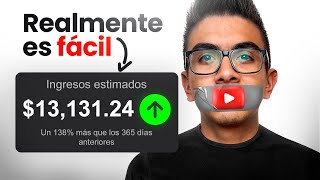

Gurus Are Lying to You About YouTube Automation
43sChallenges common guru advice, creating curiosity and potential controversy among viewers seeking real tips.
▶ Play Clip"Title promises exclusive tips and delivers actionable, contrarian advice backed by personal success."
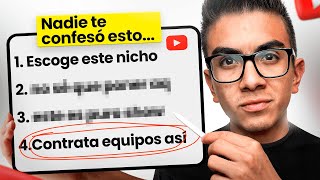
The video reveals insider tips for YouTube automation, emphasizing that niche selection is more critical than production quality. The creator, with over 220K subscribers and 20 profitable automated channels, argues that most gurus teach the wrong approach. Key strategies include prioritizing quantity over quality, using data to select viral niches, and diversifying income beyond ad revenue.
Even the best thumbnail, script, or editing is useless if applied to the wrong niche. 80% of results depend on correct niche selection.
Numbers and statistics are objective. Analyzing data reveals niches with low competition and high demand, avoiding guesswork.
Quote from Picasso: 'Great artists copy.' Replicate what has already worked in reference channels, adapting to your style. Don't reinvent the wheel.
In the beginning, volume is key. Each video is a lottery ticket; more uploads increase chances of a viral hit. Example: 30 videos/month vs 8.
Choose niches with large existing audiences to increase chances of rapid growth.
Don't rely solely on ad revenue. Monetize through merchandise, sponsorships, info products, etc. Example: 1% conversion on 1M views = $10,000 additional income.
Open multiple channels in the same niche once you hit 10K subscribers. Repurpose content with AI modifications to dominate the niche.
A mentor accelerates results, helping monetize in 30-90 days instead of 9-10 months, and avoids costly mistakes.
Success in YouTube automation hinges on strategic niche selection, data-driven decisions, and high content volume. Diversifying income and learning from a mentor can dramatically accelerate growth and profitability.
What percentage of results depends on niche selection according to the 80/20 principle?
80% of results depend on the correct niche selection.
03:09
What does 'steal like an artist' mean in the context of YouTube automation?
It means taking inspiration from what has already worked for others and adapting it to your style, not plagiarizing.
05:28
Why is quantity more important than quality in the beginning?
Because each video is like a lottery ticket; more uploads increase the chance of a viral hit.
06:54
At what subscriber count does the creator recommend opening a second channel in the same niche?
10,000 subscribers.
11:06
What is the estimated additional monthly income from selling a $10 product to 1% of 1 million monthly viewers?
$100,000.
10:40
What are the two types of channels used in niche analysis?
Reference channels (to emulate) and competitor channels (to gauge performance).
04:32
How can you repurpose content for a competitor channel?
Modify existing videos using AI tools like ChatGPT for scripts and AI voiceovers, with similar editing.
12:14
What is the main benefit of having a mentor?
It accelerates results, helping monetize in 30-90 days instead of 9-10 months.
12:56
Niche Over Everything
Challenges the common focus on production quality, asserting that niche selection is the primary driver of success.
01:08Data-Driven Niche Selection
Emphasizes objective data over intuition to find low-competition, high-demand niches.
03:38Steal Like an Artist
Quotes Picasso to justify replicating proven formats, a counterintuitive but effective strategy.
05:28Volume Over Quality
Argues that early focus on quantity increases statistical chances of virality, opposing common advice.
06:54Diversify Income Streams
Highlights the risk of relying solely on ad revenue and provides concrete diversification examples.
09:11[00:01] think. The problem is that these so-called gurus who are so prevalent on Instagram and YouTube have been teaching you the wrong thing. That's why in this video I'm going to share and break down a series of tips that will definitely
[00:14] help you not only maximize your results but also your views and automated channels you manage. And you'll literally see the numbers improve considerably with everything I'm going to
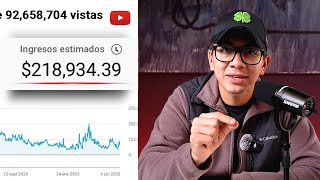
[00:28] Now you're probably wondering who I am to give you this advice. personal brand with over 220,000 YouTube subscribers, in addition to nearly 20 profitable automated channels that are generating hundreds of
[00:43] believe me, I know what I'm talking about because I've been in this business for over four years. monetize your automated channels, what I'm going to share in the next few minutes will definitely be a game-changer. Listening to these
[00:56] tips, but above all, putting them into practice, will save you a lot of time and money that you could easily waste making mistakes. Tip number one: it's useless to have the best thumbnail, the best script, or for your editor or your
[01:08] channel editing to be the best on the planet if you apply all of this, done well, to a niche that isn't worthwhile, to the wrong niche, or if you did a poor job finding and choosing the niche. All these efforts will be for nothing, and that's
[01:22] tells you in the end. I always use this analogy: imagine you want to write a book and you invest hours and hours and hours for years, years researching the topic, years writing, improving the editing. All
[01:35] your time, effort, and money are focused on writing that book, but you didn't focused on writing that book, but you didn't bother to research whether the topic you're writing about is of interest to people. You didn't care about
[01:48] that; you just wrote and wrote, and for 10 years you invested in producing the best book in the world. The time comes to sell it, and maybe three or four clueless people buy it, but what good was having the best cover?
[02:00] invest thousands of hours in research? What good was it to have the best writers and proofreaders to make that book the best thing on the planet if, in the end, all that effort was focused on a topic
[02:14] that no one cared about? The same thing happens with most people who automate YouTube. They hire the best editors, spend thousands and thousands of dollars on equipment, scriptwriters, and
[02:27] writers. You, perhaps, have even invested countless hours of work, effort, sweat, and tears, and in the end, you end up with a channel that, yes, maybe if your videos are only getting two, three, four, or twenty views?
[02:42] If you don't do a good job analyzing and selecting your niche, there won't be an audience willing to watch you. I see this with my many of the channels, especially the first ones I opened, didn't have the best
[02:56] editing quality, the scripts weren't the best, and they weren't even good thumbnails. I have channels with really bad thumbnails, but in the The right niche, and a niche that easily goes viral—please, I beg you,
[03:09] dedicate 100% of your initial focus to selecting your channel's theme. For me, the 80/20 principle is reflected here again: 80% of your results will depend on 20%. And that 20% is the correct
[03:24] selection of your automated channel's theme. Esteban, but how do I understand what's most important. Well, here's where the next piece of advice comes in: numbers, statistics, and data never lie. The reality is that
[03:38] people make mistakes—I make mistakes, my partner Alex makes mistakes, you make mistakes; human beings easily make mistakes. But in the end, numbers are objective, and if we learn to analyze the right numbers and the
[03:52] niches we would never have reached otherwise. And these aren't the typical story niches or the typical stoicism niches; that's nonsense. All the ninjas who follow the Ninja methodology find niches
[04:05] where they become the... Number ones find niches where there's no competition thanks to focusing on data. You can't afford to simply on a hunch or because you think it's a good niche.
[04:18] This isn't a matter of chance. This is a matter of selecting like a sniper, ensuring that the first niche you enter is a viral one. Now, in parts: supply and demand. In this case, we'll
[04:32] consider it as two parts: reference channels and competitor channels. Reference channels are those channels you want to emulate, those channels from which you, as an artist, will borrow a concept that I
[04:45] 'll explain shortly, and which you'll constantly use as a guiding star for where you want to direct your automated channel. On the other Competitor channels are basically channels that are in the same niche as
[04:58] same type of videos, and they'll essentially serve how the niche is performing, whether it's still working, whether it's still getting the same number of views. So, in summary, your
[05:13] reference channels will be where you draw or extract content inspiration, and barometer to see how that market is doing in your language. Now, Esteban, I do reference channels where you say we should steal or replicate as artists.
[05:28] This idea comes from one of the most influential artists of the 20th century, Pablo Picasso, and he said something like, " Great artists copy." This phrase doesn't refer to plagiarizing or copying exactly without changing anything. Rather, it refers
[05:41] to taking inspiration from what has already worked for someone and adapting it to your style, trying to reinterpret, so to speak, the original work and taking it to the next level of creativity. With this, I
[05:53] basically want to tell you that you don't have to reinvent the wheel. You don't have to reinvent the wheel. Being innovative, creating a channel with a theme and a type of thumbnail that has never been seen before, isn't stealing as an artist. You replicate
[06:06] what has already worked. If a certain type of title with a certain word format has already worked for a certain channel, then replicate what has already worked for a reference channel. The already worked for a reference channel. The type of thumbnails used to
[06:26] can see this in large tech companies. Yes, Uber exists, but so does same thing. Yes, in the United States there's DoorDash, a food delivery service; in Latin America we have Rappi. It's exactly the same.
[06:41] Even in the biggest companies, artists steal because it's common and completely normal. Another great piece of advice that literally no one will give you on any other YouTube channel or Instagram account that teaches you how to
[06:54] automate is that in the beginning, the most important thing is quantity; don't focus on quality. Quantity is the most important thing in YouTube automation: the number of videos, the volume of content. For me, this is
[07:09] 100% about math, probability, and statistics. Who has a better chance of winning the lottery: someone who bought two lottery tickets or someone who bought 30? Statistically speaking, the one who
[07:21] bought 30 tickets has a higher same thing happens on YouTube. Every video you upload to this platform, consider it like a lottery ticket. Whoever uploads more content has a higher chance of
[07:35] means finding a viral video with hundreds of thousands or millions of views. Just ask yourself this: Who is more likely to win? some guru on Instagram who recommends uploading two
[07:49] quality videos a week translates to eight videos a month. On the other hand, we have a ninja who follows my methodology, who understands that content volume matters, and is uploading a video every single day
[08:03] uploading 30 videos a month. Who is more likely to find a video with a million views? Someone who is uploading eight videos a month or month? I think it's pretty obvious. For that
[08:16] all my students, all my success stories you're seeing right now, win and end up being number one in their sector, number wildfire. We have Barush, who monetized his channel in less than 17 days, and in less
[08:31] than 13 days alone, he scaled a genius, it's not because he has the best thumbnails and the best editing style, it's not because he understood the concept of volume. Please, I beg you,
[08:44] if you're watching this video, upload lots of videos. Next piece of advice: create a channel with established or very large audiences. Because in the end, it's the success. As I explained before, if you launch a channel on a topic that
[08:58] reach hundreds of thousands or millions of views per month? But if you create a channel on a topic where there's a lot of demand, content, then the chances of exploding are extremely high. Another
[09:11] fundamental piece of advice that I want you to remember, please, if you're already doing only focus on the income you earn from views. Yes, it's incredible, I make dozens. I earn hundreds
[09:23] the revenue generated by views on my channels, but don't rely solely on that. One of the biggest pieces of advice I always give my students is to diversify. Look at other ways you could
[09:36] monetize the audience you already have on your channel and not just depend on what YouTube pays you. There are multiple ways to monetize: through information products, physical products, you can also monetize through campaigns,
[09:48] sponsorships, collaborations. There are more ways you can make money, and ways you can make money, and the more you automated channel for a very famous series, and you 're making good money from
[10:01] view revenue, that's perfect. But what if you started making t-shirts? Sprint on demand, these personalized t-shirts with, well, maybe phrases from the series, or maybe some images of the
[10:14] an online store. Let's say we have a channel with a million views a month, and you sell a product for $, assuming that's only 1% of that million. If 1% of the people who watch you every month buy something, that's roughly
[10:27] equivalent to about 10,000 people. You'd be generating an earning from channel views. And let's be even more conservative, Esteban, a 1% conversion rate is a lot. Okay, let's consider a
[10:40] 1% conversion rate. If only 1% of those million people who watch you every month buy a product that earns them $, then we're talking about an additional $00,000, which isn't bad at all. Another great piece of advice:
[10:54] if you're already involved with automated channels, create your own competition. It's not a bad idea to have multiple channels within the same niche that compete with each other, as long as you're the owner. One of the things I always do is,
[11:06] when I reach a certain number of subscribers on a certain channel— subscribers—every time I reach 10,000 subscribers on a channel, that's my green light to open a second channel within that same niche. That way,
[11:20] like I own Coca-Cola, Pepsi, and all the other soda brands. In the eyes of most, there's a lot of competition, but really, there's only one easily and
[11:34] particular case, you know I always try to lead by example. There are certain niches where I have up to four automated channels that just slightly modified with GPT chat, which is very easy to do, but it's the
[11:48] more channels there are, the fewer views there will be." No, if you're in the right niche, there will always be a lot of demand. Now, one of the great subscribers on a channel to open your own competitor is that
[12:01] you can transfer some of your audience from that initial channel to the new one. So you grow several channels within the same niche at the same to create a competitor channel is quite simple: you basically take your
[12:14] already uploaded to your original channel, and modify them with chat. GPT is a small, seconds. You run them through AI for voice, edit them with similar material—maybe not exactly the same, but
[12:28] relatively similar—and that's it. Plus, it leverages the fact that you already have a successful channel in that niche to redirect traffic to this new channel. much faster and scale the channel to the first 100,000, 200,000, half a million
[12:42] monthly views, much faster than your competition. The last piece of advice, and I life the most and has changed the lives of many of my students, is to find a mentor who has the results you want to achieve as soon as possible. Having a
[12:56] mentor will save you a lot of money and a lot of time. Obviously, you can achieve quite decent results with free content that automation, and there's a lot of good content on the internet that can
[13:10] help you get started. But I'm telling you the truth, and again, I don't like to be the one saying this: ask any of my successful students. The big because you accelerate your results. Instead of monetizing a channel in 9 or 10
[13:24] months, you'll monetize it in less than 30, 60, or 90 days, much faster. mentor helps you avoid pitfalls and setbacks, and you'll monetize much more intelligently. This
[13:40] implement, and put everything I've shared into action to the letter, you'll see immediate results. Now, if you want to accelerate your process and have me mentor you to help you grow and scale your automated channels, I
[13:53] description. See you in the next video!

⚡ Saved you 0h 13m reading this? Transcribe any YouTube video for free — no signup needed.