

Why Rich People Buy Boring Businesses
60sChallenges the common belief that wealth comes from exciting startups, revealing a counterintuitive strategy that sparks curiosity.
▶ Play Clip"Delivers on the promise of 10 business ideas, but the content is generic and lacks deep, actionable detail."
This video presents ten business strategies commonly used by wealthy individuals to generate recurring monthly income, ranging from acquiring stable cash-flow businesses to building owner-independent operations. Each idea is explained with practical examples and key considerations for potential investors.
Rich people diversify income through businesses and assets that produce recurring cash flow, appreciate, or operate with professional management. The video will share 10 such business ideas.
Invest in businesses solving everyday problems (cleaning, HVAC, plumbing, bookkeeping, pest control) for predictable revenue. Example: acquiring a commercial cleaning company with recurring contracts.
Generate income by renting commercial spaces (offices, retail, medical) to businesses. Goal: rental income covers expenses and financing. Example: a building with six units diversifies tenant risk.
A holding company owns multiple businesses (e.g., landscaping, cleaning, logistics) to diversify income and reinvest profits. If one business struggles, others can still generate income.
Wealthy investors lend capital to businesses or real estate investors for interest. Example: financing a renovation project. Must evaluate borrower quality, collateral, and default risk.
Acquire struggling businesses, fix specific problems (marketing, pricing, tech), and increase profits. Example: modernizing a service company's manual processes to boost valuation.
Rent assets (construction equipment, trailers, tools) repeatedly instead of selling once. Requires tracking utilization, maintenance, and depreciation to remain profitable.
Buy franchise locations with established brands and systems. Expand by acquiring multiple territories. Success depends on management, fees, and location performance.
Invest in warehouses, storage, and industrial spaces. Self-storage is a smaller-scale example. High occupancy and controlled costs are critical for recurring revenue.
Buy businesses with seller financing to reduce upfront cash. Example: a $1M business acquired with a mix of capital and seller notes. Avoid over-leveraging.
Build systems, management teams, and documented processes so the business runs without the owner. Such businesses are more valuable to buyers.
The video emphasizes that wealthy individuals focus on creating diversified, recurring income streams through strategic acquisitions and operational improvements. Building businesses that can operate independently is a key differentiator between owning a business and owning a job.
Boring Businesses = Steady Cash Flow
Highlights a counterintuitive strategy: unglamorous businesses can be the most reliable income generators.
00:13Holding Companies Diversify Risk
Explains a structural approach to income stability across multiple operations.
02:14Owner Independence Increases Value
Key principle: a business that runs without the owner is more valuable and less like a job.
08:50[00:00] Rich people rarely depend on one paycheck or one business for all their income. They often put money into businesses and assets that can produce recurring cash flow, increase in value, or operate
[00:13] with professional management. In this video, we are sharing 10 business ideas that rich people use to make money every month. Number one, buy boring businesses with steady cash flow. Wealthy investors
[00:28] often prefer businesses that solve ordinary problems every day. Think cleaning companies, HVAC services, plumbing businesses, bookkeeping firms, pest control companies, or commercial
[00:40] maintenance services. These businesses may not look exciting, but customers need them repeatedly, which can create predictable revenue and dependable monthly cash flow. For example,
[00:52] an investor might buy a local commercial cleaning company with hundreds of recurring contracts. Instead of building everything from zero, they acquire existing customers, employees, equipment, and operating systems.
[01:07] They can then improve pricing, reduce unnecessary expenses, add customers, and potentially increase both monthly profit and the company's value.
[01:19] Number two, commercial real estate and rental properties. Commercial real estate can generate income by renting space to businesses rather than relying only on property appreciation.
[01:32] Investors may own office buildings, retail locations, medical offices, apartment properties, or small commercial centers. The goal is usually to acquire property where rental income can comfortably support operating expenses and financing costs.
[01:49] Imagine buying a small building containing six business units. Instead of depending on one tenant, rent comes from several businesses each month. If rents increase over time while the mortgage balance declines,
[02:02] the investor can potentially benefit from cash flow, growing equity, and appreciation, although vacancies and maintenance still create financial risk.
[02:14] 3. Holding companies that own multiple businesses A holding company can own interests in several separate businesses instead of generating revenue from one operation Wealthy entrepreneurs sometimes use this structure to organize multiple companies investments or assets under broader ownership
[02:35] Each operating business can have its own customers, employees, finances, liabilities, and management while ownership remains connected. For example, one holding company might own a landscaping company, cleaning business,
[02:50] equipment rental operations, and logistics company. If one business experiences a difficult year, the entire portfolio does not necessarily stop producing income. This approach also allows owners to reinvest profits from successful operations
[03:06] into acquisitions or expansion opportunities. Number four, private lending to businesses and investors. Some wealthy investors make money by becoming lenders instead of borrowers.
[03:20] They provide capital to qualified businesses or real estate investors and receive interest in return. Private loans may be structured around specific projects, properties, equipment, or business needs,
[03:34] with repayment terms established before the money is provided. Suppose an experienced property investor needs short-term financing to renovate a building. A private lender might provide the required capital under a legally documented agreement and earn interest in fees.
[03:52] The potential return can be attractive, but borrower quality, collateral, loan structure, documentation, and default risk must be carefully evaluated before lending money.
[04:05] 5. Buy, Improve, and Resell Small Businesses Buying and improving businesses work somewhat like renovating property. Instead of purchasing a struggling company and simply hoping it improves, experienced
[04:19] buyers look for specific problems they know how to fix. These could include weak marketing, poor pricing, unnecessary expenses, outdated technology, inefficient operations, or an owner doing too much personally.
[04:35] Imagine acquiring a profitable service company where scheduling, billing, and customer follow-up are still handled manually. The buyer introduces better software, improves marketing, hires management, and increases
[04:49] recurring revenue. If profits grow substantially another buyer may eventually be willing to purchase the improved company at a significantly higher valuation Number 6
[05:02] Equipment and Asset Rental Businesses Instead of selling an expensive asset once, rental businesses can earn money from the same asset repeatedly. Common examples include construction equipment, trailers, generators, tools, event equipment,
[05:20] storage containers, and specialized machinery. The economics become attractive when rental demand remains strong and the asset generates enough revenue relative to its purchase and maintenance costs.
[05:33] For example, a company buys several pieces of construction equipment and rents them to contractors by the day, week, or month. Each machine can generate multiple payments throughout its useful life.
[05:46] Successful operators carefully track utilization, maintenance, insurance, financing, transportation, depreciation, and resale value because owning unused equipment can quickly become expensive.
[06:00] 7. Franchise Portfolio Ownership Some wealthy entrepreneurs do not build every business concept themselves. Instead, they purchase franchise locations with an established brand,
[06:14] operating system, supplier network, training process, and business model. Once they understand how one location operates successfully, they may expand by opening or acquiring additional locations within the same franchise system.
[06:32] Imagine an owner successfully operating one service franchise. Instead of personally working there every day, they build a management team and eventually acquire several additional territories. Multiple locations can create larger revenue and operational efficiencies, but franchise fees, royalties, payroll, lease costs, local competition, and location performance still determine whether the portfolio actually makes money.
[07:01] 8. Warehouses, Storage, and Industrial Property Businesses Industrial properties can be less glamorous than luxury apartments or office towers, but they serve essential business needs.
[07:14] Companies require warehouses distribution facilities workshops manufacturing space and storage Investors can purchase these properties and generate rental income from businesses that need physical space to store products equipment vehicles or inventory
[07:34] Self-storage follows a similar principle on a smaller scale. Instead of renting an entire building to one tenant, an operator rents individual units to many customers. When occupancy remains high and operating expenses
[07:49] stay controlled, the property can produce recurring revenue. Location, acquisition price, financing, competition, security, and occupancy remain critical factors.
[08:01] Number nine, acquire businesses with seller financing. Wealthy buyers do not always pay the entire purchase price for a business in cash. Sometimes the seller agrees to receive part of the
[08:14] price over time. This is called seller financing. It can reduce the amount of cash the buyer needs up front while giving the seller scheduled payments after ownership transfers. For example,
[08:28] imagine a business is valued at $1 million. Instead of paying the full amount immediately, a buyer might combine personal capital, outside financing, and a seller finance portion. The acquired company's future cash flow can help support repayment, but buyers must avoid taking on more debt than the business can realistically handle.
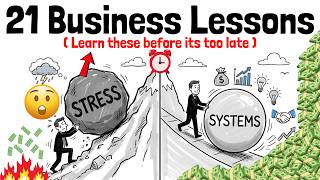
[08:50] 10. Build businesses that run without the owner One major difference between owning a business and owning a demanding job is whether the company can function without the owner handling every decision.
[09:04] Wealthy entrepreneurs often focus on building systems, management teams, documented processes, financial controls, and clear employee responsibilities that reduce the company's dependence on
[09:18] one individual. Consider two companies producing similar profits. The first requires its owner to work 60 hours every week. The second has trained managers, documented procedures, automated reporting, and employees
[09:33] to handle daily operations. Buyers may value the second business more highly because its earnings are less dependent on the current owner remaining involved every day. If you found this video helpful,
[09:46] then like, share, and subscribe this channel to get future videos. Thank you for watching this video.


⚡ Saved you 0h 09m reading this? Transcribe any YouTube video for free — no signup needed.