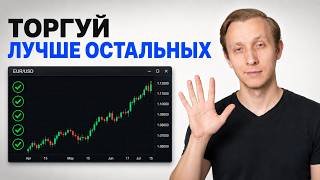

Why 90% of Traders Lose Their Deposit
38sPersonal story and immediate problem hook create curiosity and relatability for struggling traders.
▶ Play Clip"Delivers exactly what the title promises: five actionable checks for Smart Money trading, with clear explanations and examples."
This video presents a five-point checklist for traders using Smart Money Concepts before entering a trade: context, liquidity, confirmation, entry zone, and risk. The presenter explains each point with practical examples, emphasizing the importance of higher time frame analysis, liquidity grabs, structure breaks, valid entry zones, and proper risk management.
The five essential points to check before every trade are: context, liquidity, confirmation, entry zone, and risk.
Always look at larger time frames (hourly or 4-hour) to determine market direction. Trading against the trend on lower time frames is like going against the tide.
Ask yourself: Where is price in the range (top/bottom)? Where did it come from? Where is it likely to go? Answering these helps define direction and entry points.
The market often gathers stops before the main move. Check if the previous high or low has been taken, or if there was a sharp jump in price near the entry area. If not, it could be a false entry.
BOS occurs when price breaks and closes below a previous major high or low. This often signals the beginning of a new movement in that direction. Ensure the candle closes beyond the level (not a false breakout).
CHoCH is when market behavior changes, e.g., after a series of declines, the first noticeable rising candle or new local maximum appears. It indicates shifting forces in the market.
A liquidity takeover occurs when the market makes a sharp move toward previous extremes to take stops, then reverses with a strong impulse in the desired direction. Wait for the real impulse after manipulation.
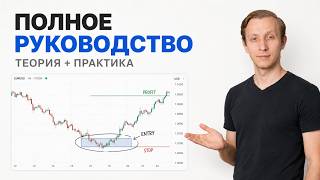
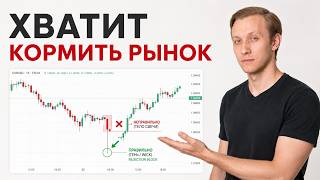
Valid entry zones include order blocks (last major candle before a strong opposite move), fair value gaps (empty areas after sharp impulses), and discount/premium zones. Enter only from these areas.
Discount is price below the recent range or accumulation zone (cheap, better for buys). Premium is price above the range (expensive, better for sells). Always assess price relative to recent structure.
Calculate risk individually for each trade. A base of 1% of deposit is common, but adapt based on the setup. Set a logical stop loss that matches your risk profile. Ask: How much can I lose? Where do I exit? Is it comfortable?
Following this five-step checklist before every trade helps remove emotional decisions and increases consistency. The presenter emphasizes disciplined execution and risk management as the foundation for long-term trading success.
What is Break of Structure (BOS)?
When price breaks and closes below a previous major high or low, often signaling the start of a new movement.
03:01
What is Change of Character (CHoCH)?
A change in market behavior, such as the first opposite movement after a series of moves in one direction.
03:25
What is a liquidity takeover?
When the market makes a sharp move to previous extremes to take stops, then reverses with a strong impulse in the opposite direction.
03:39
What are the three context questions to ask before a trade?
Where is price in the range? Where did it come from? Where is it likely to go next?
01:30
What is a fair value gap?
An empty area on the chart after a sharp impulse; the market often returns to this gap to fill it.
04:55
What is a discount zone in trading?
A price below the recent range or accumulation zone, indicating a relatively cheap price for buying.
05:09
What is the base risk per trade recommended in the video?
1% of the deposit, but it can be adapted based on the specific setup.
06:14
Higher Time Frame Context
Emphasizes that trading against the higher time frame trend is a common mistake; understanding context reduces counter-trend losses.
01:17Break of Structure Definition
Provides a clear, actionable definition of BOS with the condition that the candle must close beyond the level (not just wick).
03:01Order Blocks as Entry Zones
Explains how to identify an order block (last candle before a strong opposite move) as a precise entry area.
04:42Flexible Risk Management
Advocates adapting risk percentage per trade rather than a rigid 1%, aligning risk with setup quality.
06:14Checklist Recap
Summarizes the entire framework into a memorable checklist: context, liquidity, confirmation, entry zone, risk.
07:09[00:01] people lose their deposits, and not due to a lack of knowledge or the chaotic nature of the market. Because of one simple thing: they don't check these points before entering a trade. Hi all. My name is Kirill. A few years ago I moved to Dubai. It was here that I
[00:14] began to seriously delve into financial markets and trading. This area has completely changed my lifestyle and given me results that many people only dream of. But this result certainly would not have happened if I had not
[00:26] adhered to the basic rules of trading from the very beginning. Today we will talk about exactly this. We'll cover five essential points to check before every trade when trading smartmoney: context,
[00:39] liquidity, confirmation, entry zone, and risk. If you check yourself against each of these rules before entering a trade, you will definitely start making money in trading. And by the way, I show real deals in my Telegram channel
[00:51] . If you want to jump straight from theory to practice and join a strong trading community in the CIS, where I personally help everyone with their first steps, the link is in the description. Come and trade with
[01:03] me. [music] I always look at the larger time frames before entering a trade. Hourly
[01:17] time frame or four-hour time frame. Why is this important? Market context shows where the price is heading. If the hourly chart shows a downward trend, then looking for longs on the fifteen-minute timeframe is going against the tide. Context is your foundation.
[01:30] It sets the direction and helps to find the right entry points. Also, before every transaction, ask yourself three simple questions. First, where is the price at the top or bottom of the range now? Second, where did she come from, what level
[01:44] or zone has she already worked through. And thirdly, where it will most likely go further, where the next zone of attraction is. Can you answer all three of these questions? You have plans of understanding, but you can’t miss even one deal. And always look at
[01:57] where the higher time frame is moving. Don't guess, determine the direction through these three questions. The second point of our checklist is liquidity. The market often experiences so-called liquidity gathering. This is when the price takes out
[02:10] other traders' stops before making the main move. Before previous high or low has been captured, whether there is a sharp jump in price in the entry area. If there was no such impulse , this could be a signal for a false
[02:23] entry. To put it simply, the market sometimes collects In this way, he takes the money and liquidates the traders. Accordingly, look to see if the price has taken the previous high or low, or if there has been a
[02:37] sharp breakout before the point where you are about to enter. If not, then the price may initially follow this money and you will fall into a trap. Be careful. Third. Now we move on to confirming the structure. These are real
[02:49] filters that help separate random movement from the beginning of a real trend. Never enter a trade without confirmation of the structure. We recently discussed this topic in detail in my Telegram channel. I explained about
[03:01] this. Now let's go over the terms I use in a little more detail. A Boss Break of Structure is when the price breaks through and closes below the previous major high or low. To put it simply,
[03:13] the market has crossed the old boundary. This often means the beginning of a new movement in that direction. Check that the candle actually closes beyond the level and that it is not a false breakout. Chock. Change of character is when market behavior
[03:25] changes. After a series of movements in one direction, the price shows a movement in the opposite direction for the first time. That is, previously there was, for example, only a decline, but now the first noticeable ascending candle or a new local maximum has appeared. This is an
[03:39] early signal that forces in the market are shifting. A liquidity takeover is when the market first makes a sharp move toward previous extremes and takes stops, then sharply reverses and moves with a strong impulse
[03:51] in the desired direction. It is important not to enter during the manipulation, but to wait until it ends and the real impulse in the right direction begins. Accordingly, a short checklist before entering. Is there a closure after the boss level
[04:03] or a noticeable change in behavior? Chock. Was there a liquidity rally and did the momentum begin after that? If at least one of these points is confirmed, the signal is stronger. If not, it's better to wait. As simple as possible for beginners. Don't press a button just
[04:16] Wait for confirmation. Either a breakdown of the structure, or a change in the nature of the movement, or a strong impulse after manipulation. It's like a green light. You can't cross without it. This is precisely what shows that the price has accumulated
[04:29] a certain amount of strength to move in one direction. The fourth item on our checklist is the entry area. Entry must occur from a valid zone of interest. These could be order blocks, gapups, or discount and premium zones with a
[04:42] confirmed retest. Order blocks are the last major candle before a strong move in the opposite direction. Fairwap is an empty area on the chart after a sharp impulse. The market often returns to this gap to
[04:55] the price slows down upon return, this is confirmation. Premium or discount is simply an assessment of whether the price is currently expensive or cheap relative to the recent norm. Discount is a price below the range or last accumulation zone. This is a more
[05:09] verified. Premium - the price below the range or the last accumulation zone is the place where it is more logical to sell pre-confirmations. Always check if the price has returned to the credblock or
[05:21] fervuluga, if a clear reaction is visible. Shadow, absorption, reversal. Is there is the price at a discount or premium relative to the recent structure? If even one of these is missing, it
[05:33] even [music] if everything looks very correct, enter only from a specific area. Look for a section on the chart from which it makes sense to open a trade. This is the stops or reverses. Entering outside such an area increases the risk. This
[05:49] could be an order block, the last candle before the move. A void on the chart, the so -called gap or discount and premium zone, where the price looks cheap for buying or expensive for selling. And entering in the middle of the chart is like playing in a
[06:02] casino. Wait for the price to react in the desired zone and start trading only from that. And our fifth and final point is risk and position size. Before each transaction, I calculate the risk individually. A fixed 1%, as we
[06:14] know, for each transaction is the basic rule. But in reality, it is better to adhere to the following rule. I personally determine the percentage of the deposit that I am willing to lose in this particular transaction. I set a logical level for canceling
[06:26] it corresponds to my risk profile. Flexibility is our everything. When you percentage of your deposit you'll be entering with . But in any case, before entering into a trade, ask yourself three simple questions. How much can I
[06:42] lose? Where do I admit my mistake and exit? Is this more than I am comfortable with? If the answers to these questions are not clear, the deal will not be considered. tool for survival in the market and capital preservation. If you can't
[06:56] answer, don't trade. This is a simple defense against panic and rash decisions. If you watched this video to the end, then you are already one step ahead of most. I have n't outlined a set of rules for the sake of rules; this is a basic filter that actually
[07:09] preserves your deposit and removes chaos from your decisions. Context, liquidity, confirmation, entry zone and risk. Run them through your head before every deal. Where is the higher time frame? Was there a liquidity drain? Is there a breakdown of the structure? Are
[07:23] risk clear? If even one point is not confirmed, the deal is not considered, and after a while you will begin to trade more consciously, rather than based on emotions. In my Telegram channel, I break this all down using
[07:35] details, teach how to manage risks correctly, answer everyone's questions, and also conduct daily trading. If you want to move from theory to practice, the link is in the description. Join us. One more important thing. If you want to see even
[07:49] subscribe to my YouTube channel, ring the bell, and let me know what topic you'd like to see covered next. Trade with discipline and trade with your head. See you soon with discipline and trade with your head. See you soon .

⚡ Saved you 0h 08m reading this? Transcribe any YouTube video for free — no signup needed.