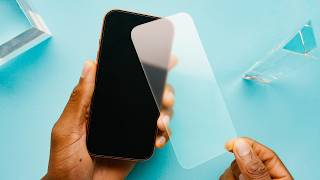

Smartphone Glass Lies Exposed
45sReveals the hidden trade-off between shatter and scratch resistance, debunking common marketing claims.
▶ Play Clip"Title accurately reflects the content: the video delivers exactly what it promises—explaining the misleading nature of smartphone glass claims."
Smartphone companies often claim dramatic improvements in screen durability, but shatter resistance and scratch resistance are inversely related. This video explains how manufacturers like Apple and Corning alternate between optimizing one over the other, making claims misleading without context.
Smartphone keynotes often claim screens are multiple times more shatter resistant each year, but these claims are misleading.
Shatter resistance and scratch resistance are inversely related: harder materials scratch less but shatter more, softer materials resist shattering but scratch easily.
Gorilla Glass has alternated between improving shatter resistance and scratch resistance across generations, not improving both simultaneously.
Despite improvements, glass still scratches at level 6 on Mohs scale because sand (quartz) is harder than glass.
Apple's Ceramic Shield first improved shatter resistance, then later improved scratch resistance, following the same pattern.
Independent drop tests often confirm shatter resistance claims, but other factors like phone shape and bezels also contribute.
Oleophobic coatings and anti-reflective layers are notable improvements that don't make headlines.
Next time you see a durability claim, remember that glass is still glass—improvements often come at the cost of another property, and marketing can be misleading.
What is the relationship between shatter resistance and scratch resistance in glass?
They are inversely related: improving one typically worsens the other.
00:18
Which company produces Gorilla Glass?
Corning.
01:40
How has Corning improved Gorilla Glass over generations?
By alternating between big improvements in shatter resistance and big improvements in scratch resistance.
01:53
Why does glass still scratch at level 6 on the Mohs scale?
Because sand (quartz) is harder than glass and cuts scratches.
02:20
What other factors affect whether a phone screen shatters on a drop?
Shape of the display, thickness and material of bezels, and whether edges are flat or curved.
03:44
What is the oleophobic coating on glass used for?
It rejects fingerprints and helps the finger glide better.
04:11
Inverse relationship revealed
The core insight that shatter and scratch resistance are opposites is a surprising fact that changes how you view durability claims.
00:18Corning's alternating pattern
The discovery that Gorilla Glass improvements have alternated for years is a clever marketing strategy that many miss.
01:53Drop tests confirm but misattribute
Independent tests verify shatter resistance claims, but the credit often goes to glass when other design factors play a big role.
03:15[00:04] resistant than its predecessor. And then the next year, the phone is three times before. And then the next year, this phone is three times more shatter resistant again. Every year there's some line like this in a smartphone keynote.
[00:18] And like many things smartphone companies say on stage, this isn't a companies say on stage, this isn't a lie, but it is misleading at best because shatter resistance and scratch resistance are inversely related.
[00:32] other. So to put it simply, it's like a slider or two sliders, I guess. If you want a material to be more scratch resistant, you can make it harder, but susceptible to shattering. So, if you want it to be less brittle and
[00:45] susceptible to shattering, you make it softer, which means it's more susceptible to scratches. So, you can pick one that you want to optimize for, but it's essentially impossible to dramatically improve both at the same
[00:58] slide or some ad or web page or something that says this new phone is three to four times more shatter resistant than before, it sounds really resistant than before, it sounds really dramatic and they're probably not lying,
[01:10] but one, they're never really required to explain what three to four times more shatter resistant actually means. But then two, the subtext is that it's most likely also quite a bit softer to make that happen and therefore less scratch
[01:26] resistant or vice versa. But it's no accident that they're able to stack resistant, more drop resistant, more scratch resistant, more drop resistant high-end smartphone these days don't make their own glass. They use a product
[01:40] called Corning. So Gorilla Glass 1 was first used in the original iPhone back in 2007, and now it's on its ninth generation. So, I went back and looked Glass has been making for the improvements year-over-year. It's been
[01:53] info sheets. And surprise, surprise, it's been essentially alternating between big improvements in shatter resistance and big improvements in scratch resistance the entire time. So, while we just read headlines over and
[02:06] over that would have us believing the improvement is trending like this, the There's the scratch resistance and the shatter resistance. And they're alternating improving like this. It is very clever. And yes, they're doing a
[02:20] lots of other factors, but that's why it's still scratches at a level six with deeper grooves at a level seven because it's still glass. The dust and sand in your pocket is often sand, which is still quartz, which is harder than
[02:34] glass, and so it still cuts scratches in the glass on the phone every time. And isn't just Gorilla Glass, by the way. I can already hear some of the comments down below already were typing about how ceramic shield on the iPhone is on some
[02:49] other level that got introduced in its first generation with the iPhone 12. And ceramic shield is good, but it's also not invincible. And there's also no coincidence that the first generation of ceramic shield was four times more
[03:03] then ceramic shield 2, which came with the iPhone 17, is, you guessed it, three times more scratch resistant. I wonder why. And it's funny, there are even
[03:15] people go out and drop iPhones in a scientific way as they possibly can to try to verify Apple's claim of it being four times more shatter resistant with the iPhone 12. And believe it or not, the tests actually often do verify this.
[03:29] They'll find that the iPhone does break less often in a fall. But attributing this all to the glass would be silly. There's lots of other factors that make difference to whether or not your phone screen will shatter on a drop. Things
[03:44] like the shape of the display and the thickness and material of the bezels and whether the edges are flat or curved. The iPhone 12, you might remember, famously returned back to the square sides, where the iPhone 11 was much more
[03:58] rounded. And there's no question this had a huge impact on how likely it was to shatter or not. But Apple gets to loop all of that into their four times better shatter resistance claim. No asterisks, no explanation, no nothing.
[04:11] little interesting things about the glass that don't make the headlines, like the coating on the glass that's olophobic and rejects fingerprints and glides a little bit better, which is super interesting, or even reflects
[04:23] So, next time you see a claim or some keynote slide that this new phone glass is three times as scratch resistant or twice as shatterproof on a drop, just twice as shatterproof on a drop, just remember that glass is still glass.
[04:37] Thanks for watching. Catch you in the next one. Peace.

⚡ Saved you 0h 04m reading this? Transcribe any YouTube video for free — no signup needed.