
AI Summary
This video explains the two most intimidating concepts in Chan Theory (禅论): 'bi' (笔, strokes) and 'xian duan' (线段, segments). The creator simplifies these terms into everyday language, showing how they transform chaotic K-line charts into readable structures, and highlights common mistakes retail traders make when applying them.
Chapters
Full-screen K-lines look like a pile of rubble, overwhelming with noise. Chan Theory's solution is to connect turning points into a polyline, ignoring individual stones.
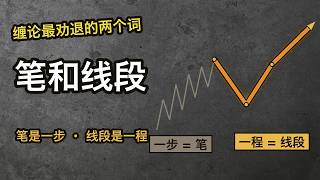
The smallest unit of the polyline is called a 'bi'. It is formed by connecting a bottom fractal to a top fractal, provided there is enough distance (several K-lines) between them. Adjacent turning points without distance do not count.
A 'xian duan' is formed by at least three 'bi'. The rule of three ensures a back-and-forth movement: two steps forward, half a step back. If the retracement does not break a key level, the segment continues.
Retail traders often mistake a small pullback (a 'bi') for a full trend reversal. They get shaken out by minor fluctuations while the larger segment direction remains intact.
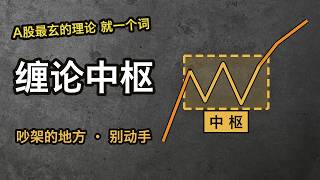
Bi and xian duan are raw materials for drawing the 'zhong shu' (central hub), which represents a consolidation zone where price moves back and forth without clear direction.
A segment ends only when a reverse 'bi' breaks the previous key low/high. Small retracements that do not break key levels are not considered reversals. Mnemonic: 'Small pullbacks don't count; breaking key levels means reversal.'
Even within the Chan Theory community, precise definitions of bi and xian duan are debated. The author himself revised the definition of bi. The video advises focusing on the spirit: turning points plus distance = bi; three bi = xian duan.
Pitfall 1: Using bi as a buy/sell signal—too sensitive, causes premature exits. Pitfall 2: Treating software-drawn lines as gospel—different software uses different rules, so lines are reference, structure is key.
Step 1: Mark turning points (top/bottom fractals). Step 2: Connect into bi (with distance). Step 3: Assemble into xian duan (three bi). Then follow the segment direction, don't get shaken out by a single bi.
Bi and xian duan are a noise-reduction grammar that translates messy K-lines into understandable structure. They don't predict price, but they help traders see the road instead of the stones, and avoid being shaken out by minor pullbacks.
Mentioned in this Video
Tutorial Checklist
💡 Key Takeaways
Bi as the smallest unit
Provides a clear, actionable definition of 'bi' that filters out noise, which is foundational for understanding Chan Theory.
00:38Three-bi rule for segments
Explains the logic behind the 'at least three bi' rule, making the concept intuitive rather than arbitrary.
01:27Key-level break as reversal signal
Offers a concrete criterion for when a segment truly ends, helping traders avoid false signals.
03:12Community controversy acknowledged
Honest admission that even experts disagree on precise definitions, encouraging focus on the core idea rather than dogma.
03:36Three-step practical method
Condenses the entire theory into a simple, executable process that traders can apply immediately.
04:41Full Transcript
[00:00] 同一段山路 有人看见的是一地碎石 有人看见的是三段路 禅论里最劝退的两个词 笔和线段 多少人卡在这儿
[00:12] 书翻到第三页就合上了 其实说破了很简单 笔是一步 线段是一成 今天五分钟 把这两个词讲成人话 顺便告诉你 散户最容易在哪用错 先说禅论干的第一件事
[00:25] 把K线变成折线 满屏K线就像一地碎石 看久了眼花 长长叠叠 全是毛刺 禅论的办法 不钉每一块石头 只把路的拐弯处连起来
[00:38] 铺成一条折线 这条折线的最小单位叫笔 几笔连成的一成 叫线段 往下拆 铺路 先找拐弯 K线图上的拐弯 禅论叫分形
[00:50] 三根K线 中间那根最高 两边都比它矮 顶分形 坡顶到了 反过来 中间那根最低 两边都比它高 底分形 坡底到了
[01:02] 记住 分形只是候选拐点 路会不会真的拐 还得看后面走不走得出去 从一个坡底 走到一个坡顶 中间不回头 这一截 就是一笔
[01:14] 但有讲究 顶和底之间得走出距离隔上几根K线贴脸的两个拐点不算一笔这样一上一下一下一下满屏碎石就变成了一笔一笔的折线 笔是最小的路段
[01:27] 它滤掉了石头缝里的小毛刺 但它本身还是很碎 把笔再往上拼 就是线段至少三笔 才连得成一成 为什么是三笔 一成路总有来有回
[01:40] 前进两步 退半步 还在往前走 这才叫一成 只要回头的笔不吃掉关键位置 这一程就还在 真吃掉了 这一程才算走完 线段笔比迟钝 但迟钝换来的是稳
[01:52] 大方向 写在线段里 现在把两个词放一起 笔是一步 线段是一程 看笔 像盯着脚下 灵敏 但坑坑洼洼全是信号 一惊一乍 看线段
[02:04] 像看下一个村子 迟钝 但方向不会骗你 散户最常见的错 就是拿脚下的一个小坎 当成整条路要掉头 讲到这儿 可能有人想问 折线好画
[02:16] 那K线和指标平时拿什么钉 我自己搭了一套量化系统 K线 技术指标 行情数据 一个界面全摆开 趋势往哪走 一眼扫到位 还有资金流向
[02:28] 龙虎榜 回测引擎 策略库 一个想法靠不靠谱 拿历史数据跑一遍 胜率直接摆给你看 想自己上手完整量化回测系统下载和安装请看置顶顶视频。好,回正题,铺好的路,到底拿来干什么用?笔和线段,不是拿来炫技的,它们是原材料。
[02:48] 用笔轻轻折线之后,你才看得清,哪里在赶路,哪里在原地打转。 三段路来回重叠,炒不出方向的那块区间,禅论叫中枢,好比赶路的标队,进客栈歇脚。
[03:00] 先有笔和线段才画得出中枢 地基的地基就是这两个词 按照判断一程走完了 看破坏 向上的一程里 回头的笔一次次出现
[03:12] 只要不吃掉前一个坡底 路还在往前 改天一笔反向 直接砸穿了前面的关键低点 这一程才算被破坏 口诀 小回头不算数
[03:24] 吃掉关键位置才算掉头 说个大实话 笔和线段的精确定义 缠圈自己都炒不清 作者本人改过笔的定义 老笔新笔 各有一帮人站队
[03:36] 线段的划分 更是千人千笔 考据党能为一根K线算不算数 炒一整层楼 行情早走完了 所以抓精神就够 拐点加距离 是笔
[03:48] 三笔成城 是线段 条文之争 让他们炒去 讲两个最常见的坑 第一个拿笔当买卖信号笔太灵敏一笔向下就下跑大路还在往前你被一块石头绊下了车第二个坑把软件自动化的线当圣旨
[04:05] 不同软件规则不一样 画出来的笔和线段也不一样 线是参考 结构才是重点 说到本质 笔和线段是一套降噪的语法 它不预测明天涨跌
[04:17] 只把乱糟糟的K线 翻译成看得懂的结构 把石头看成路 你就比大多数人多看清了一层 那怎么用 记住三看 一看线段 这一程朝哪走
[04:29] 定大方向 二看笔的节奏 顺路的笔长 回头的笔短 路就健康 三看破坏 关键位置被吃掉没有 没被吃掉 再多小回头 都不算掉头
[04:41] 总结正确姿势 记住三步 第一步 标拐点 找出顶分形和底分形 第二步 连成笔 拐点之间走出距离 才算一笔 第三步
[04:53] 拼线段 三笔成城 跟着一城的方向走 别被一笔 下下车 这就是笔和线段 笔是一步 线段是一城 记住 别数石头 要看路 别被一步下到
[05:05] 要看一城 一看线段定方向 二看笔的节奏 三看关键位置破没破 想跑你自己的回测 完整量化回测系统 下载和安装 置顶视频里有 点赞 收藏
[05:17] 关注小宇量化 全网同名