[00:00]
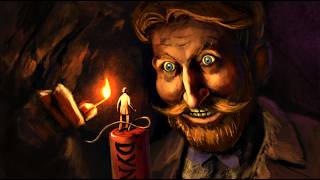
(dramatic music) Alfred Nobel sat down to read the newspaper He scanned the pages casually,
[00:12]
The Merchant of Death is dead. to kill more people faster than ever before, died yesterday.
[00:25]
The newspaper had made a mistake. and the journalists had confused the two. But in that moment, he saw exactly
[00:39]
how the world would remember him, not as an inventor, Now, the wording in the obituary, the Merchant of Death over the years.
[00:52]
who can hardly be passed off as a benefactor of humanity. what others truly thought of him, and it wasn't good.
[01:05]
on one substance. It's one of the most powerful explosives in the world. Its blast pressure is over 100 times greater than gunpowder.
[01:19]
Woo! But that power comes at a price. Nitroglycerin is so sensitive that if it's dropped, shaken,
[01:31]
And as a result, hundreds So Alfred made it his mission to tame this beast. in everything from blasting tunnels to making bombs,
[01:49]
but also contributed to deaths of tens of thousands that would come to define him. (ground rumbles)
[02:05]
He opened the first ever rubber factory in Sweden which made modern plywood possible. He went bankrupt shortly after Alfred was born.
[02:21]
leaving his family behind. were of watching his brothers sell matches on the street corners of Stockholm just to afford food.
[02:35]
and bouts of depression. He would later say, "Mine was a pitiful half-life, as I yelled my way into the world."
[02:50]
a letter arrived from his father asking the family In the early 1850s, the great powers And Immanuel spotted an opportunity.
[03:04]
to attack from the sea. for a new kind of explosive device, and detonate on contact with enemy ships.
[03:17]
Within months of his proposal in the Black Sea just off Sinope, the Russian Navy sank an ottoman fleet, Immanuel's invention was suddenly in high demand,
[03:30]
quickly grew from a few dozen employees to over 1,000, producing mines, torpedoes With money now pouring in, Immanuel decided
[03:46]
At the age of 17, studying under the world's greatest chemists. named Ascanio Sobrero who had a peculiar demonstration.
[04:02]
and lay it on an anvil. (mysterious music)
[04:14]
It's like a bird ran into a window. - Yeah, that was a great one. was a new explosive material, nitroglycerin,
[04:28]
had ever seen before. was gunpowder. It's fast, but it's not that fast.
[04:40]
than the speed of sound. - That's because all the ingredients you need, and the sulfur to speed up the reaction,
[04:53]
And if they're spread far apart, Come on, you can do it. that forces these reactants closer together.
[05:06]
And it also traps in heat, which accelerates the reaction. to build up until. - You see the explosion
[05:18]
- Yeah. - You can see All these particles have to be in close proximity, and they have to be mixed well enough
[05:31]
So it kinda feels a little bit clunky. where it's like all the molecules - That's a great instinct.
[05:43]
to react as quickly as possible. And that is, can you put everything you need - No way. - Yeah. Yeah.
[05:55]
And because of that, it's way more powerful. and 15 grams of nitroglycerin into test tubes,
[06:07]
so we can compare their destructive power. - This is a bikini gauge for measuring blast over pressure. because a analog blast over pressure measurement device
[06:23]
was used in the nuclear tests in the bikini atoll. and a film inside. and so under the same pressure,
[06:36]
The smaller circles take more pressure to break - The smaller the circle that gets punctured means the higher the blast over pressure.
[06:51]
- Fire in the hole! Three, two, one. Yeah, it launched the block a bit.
[07:05]
- Let's look at the bikini gauge, - Yeah. - So, we'll see if we'll leave that for the nitro.
[07:19]
it's gonna be like someone shooting a 50 cal. (mysterious music)
[07:36]
Five, four, three, two, one. Oh my God. (explosion booms)
[07:51]
I got bits of blue all over me. That's crazy, right there. - Yeah, there is a bunch of clay on this window,
[08:07]
- It's like a Jackson Pollock painting. (mysterious music) There's no way we've got a frame there.
[08:21]
Joosh then it's fast. - (laughs) Right. and it gets this power from its molecular structure.
[08:37]
It consists of a chain of three carbon atoms which are just nitrogen atoms bonded to two oxygen atoms. These nitro groups are what makes nitroglycerin so unstable.
[08:52]
So these two oxygen atoms pull on the electrons from this third oxygen. between these two atoms, which results in a much weaker bond
[09:05]
So you get these weak spots, like from the shock created by hammer strike that are swapping partners,
[09:17]
carbon dioxide, and water vapor. and it shoots off the products at high velocities. which causes their bonds to break.
[09:31]
well, it sets off a chain reaction. And as it propagates through, it's gonna break bonds - [Henry] Its blast pressure is over 100 times greater than
[09:45]
- Lots of things will explode But the specific kind of explosion we're interested in And the detonation is that chemical decomposition
[10:00]
- What we see in our experiments with nitroglycerin is all these things happen really fast. - I don't operate in femtosecond seconds very frequently.
[10:15]
- That's crazy. 3 trillion times faster than the blink of an eye.
[10:27]
of the defining characteristics of high explosives. - Yet, Sobrero never set out to discover an explosive. He was searching for a medicine to improve blood flow.
[10:40]
and sulfuric acid, when suddenly, it exploded. left permanent scars on his face. nitroglycerin, was just too dangerous.
[10:57]
to be its discoverer." To him, the hammer strike was like a pistol shot. It was like somebody had kicked open the door to his mind.
[11:12]
'cause he is been this frail, sickly boy, And then he discovers explosives and chemistry he finally isn't depressed.
[11:24]
- And you know, at that age, you're probably not thinking You're just sort of excited about what it can do. he believed he'd be the one to unlock it
[11:40]
- If I had a jar sitting - Need a long fuse. is that a regular flame won't cause it to ignite.
[11:55]
it's not gonna explode. which makes its molecules vibrate faster, it usually doesn't break enough of them at the same time
[12:08]
However, if you drop it. (explosion booms) But even that effect isn't consistent.
[12:22]
expecting the bumpy ride to trigger it. (playful music) - Whoa! - Ah!
[12:36]
and you can't really get it to blow up when you want it to. (explosion booms) used to look like a blast site too.
[12:50]
I had YouTube, Wikipedia, random research articles. Some things that I swear I never opened. With its free built-in AI tool, Aria,
[13:05]
I can say close all my YouTube tabs and it's done. I can even hover one tab over another tab.
[13:17]
space and stay organized. like, what year did Alfred Nobel patent dynamite in England? It's really helpful when Derek is patiently waiting
[13:32]
for the next version of my script. (laughs) I can just drag one tab down, And if I feel like listening to some music
[13:45]
It makes controlling my music easy. even while leaving the browser. try opera for free by clicking the link in our description,
[13:58]
And now, back to some explosions. (mimics explosion) he moved into a cramped apartment with his brother Robert, and he turned their kitchen into a makeshift lab.
[14:12]
dreaming it could one day power his father's sea mines. the Russian government refused So the Nobel factory was forced to shut down,
[14:29]
and Immanuel went bankrupt for the second time. "A man of genius, but a failure all the same." and he decides, he's like,
[14:42]
Where does his mind go? I'll be successful on my own terms."
[14:54]
a 28-year-old Alfred thought he was onto something. by the banks of Lake Malaren and he pulled out a metal tube
[15:07]
He ignited it and tossed it into the water. (Henry laughs)
[15:19]
to reliably detonate nitroglycerin, Alfred took a container of nitroglycerin Then when the fuse was lit, the gunpowder
[15:34]
And it was that sudden impact It was just like the hammer striking the anvil.
[15:46]
All right, so now Jesse's gonna add a blasting cap. (excited music) And I know that it's safe, but yeah,
[15:59]
- Fire in the hole! Fire in the hole! Five, four, three, two, one.
[16:12]
(explosion booms) - Oh, yeah, yeah. - Oh my God.
[16:25]
(explosion booms) - [Jesse] Is that what you came for? - Look at how it carved out the exact imprint of the bottle
[16:42]
Okay, look, we even have puncture - [Henry] Yeah. Wow. of our measurement capability.
[16:54]
I'm gonna get you through through. (laughs) His invention, the blasting cap, was refined to use an even more consistent explosive than gunpowder,
[17:07]
to detonate nitroglycerin on command. it remained virtually unchanged for decades. doesn't find its place into every other
[17:21]
- Probably the most significant development to trigger a much larger one would later be used in atomic bombs to set off nuclear chain reactions.
[17:36]
of nitroglycerin finally became practical. - It can break rock and make tunnels much more effectively. In one mind, the rate of tunneling almost doubled
[17:52]
And in Mexico, crews reported of 25 with gunpowder. engineers, and railway builders from around the world.
[18:08]
Alfred began producing nitroglycerin in Sweden, enlisting the help of his younger brother, Emil. But on the 3rd of September, 1864, an intern asked Emil
[18:20]
The two began to lift when suddenly, the factory was ripped apart. A witness wrote this of the explosion.
[18:36]
of the mutilated corpses strewn on the ground. but on some, the head was missing These formless masses of flesh and bone bore little
[18:50]
or no resemblance to a human body." the intern, a janitor, a young laborer, and a passing carpenter all died in the explosion.
[19:05]
and he swore, "I will never let this happen again. (dramatic music) and banned its production within city limits.
[19:22]
So this is a moment where he's actually a pretty He says, "Okay, if I'm not gonna do it on land, on a floating barge on Lake Malaren.
[19:35]
of his factories in Germany exploded. With every day that passed, Workers were terrified.
[19:48]
A mining publication reported we confidently expect within 30 days to announce another serious accident. but not nitroglycerin's fundamental sensitivity.
[20:04]
and water vapor easily get trapped inside. These gases are a problem. compressing the gas and heating it up.
[20:19]
And so the temperature inside can increase It creates a hotspot. that they break the weak N-O bonds
[20:34]
And so these molecules then decompose, But nitroglycerin doesn't just have one of these bubbles. So that's what makes it so sensitive to shock.
[20:46]
which releases enough energy to trigger the chain reaction (explosion booms) Alfred just has to get rid of those bubbles, right?
[21:01]
- You have an air bubble trap, without like starting to, you know, bang on it. because you don't want it to go off.
[21:14]
you would still have a problem. in this beer bottle. But if I give it a smack.
[21:27]
The impact drives the bottom which creates this sudden pressure drop. and creates bubbles.
[21:41]
And those implosions sometimes Now, a similar thing can happen in nitroglycerin. inside the liquid in a process called cavitation.
[21:56]
And their collapse again triggers the same chain reaction. around the bubble problem was to change the state of nitroglycerin from a liquid to a solid.
[22:10]
he tried mixing in powdered charcoal, sand, wood shavings, but nothing really worked. Dejected, he looked down and noticed something strange,
[22:26]
So he looked up over the banks of the Elbe. that dust had actually been living organisms, diatoms.
[22:42]
Single-celled algae that once floated in ancient seas. all that remained were their fossilized exoskeletons. That made for a fine silica powder that carried on the wind.
[22:56]
This material, diatomaceous earth or kieselguhr, He wrote, "Few objects are more beautiful than the minute siliceous cases of the diatomaceae."
[23:11]
to the microscopic holes in their exoskeletons. it's got lots of little pores - We're looking for what kind of consistency.
[23:25]
It will make the nitroglycerin less sensitive. So the same hammer impact that you would try because that absorbent material will take some of
[23:39]
- That kind of feels like we're baking. its weight in liquid nitroglycerin. can kind of go into the pores.
[23:55]
the nitroglycerin molecules from each other. to propagate the detonation. the mixture won't detonate.
[24:09]
Drop. - So this new material won't explode when you drop it. Well, if you combine it with Alfred's other invention,
[24:24]
to compress many pockets of nitroglycerin at the same time, (explosion booms) to now is 100 grams of nitroglycerin.
[24:39]
- [Henry] Yeah, it'll be the biggest one we've done so far. (explosion booms) (Henry laughs)
[24:51]
- "To all whom it may concern, be it known and useful composition of matter, (dramatic music)
[25:04]
To name it, he took the Greek word dynamis meaning power, (explosion booms) and he believed that he could make
[25:20]
England is a jewel worth the rest of the world, he said. would have the entire empire as its market. he set foot on British soil
[25:34]
carrying with him a suitcase overflowing with dynamite. to come to these demonstrations where he would bring sticks He would set up these huge boulders, basically,
[25:46]
and watch as they like cleft in two. So when Alfred created dynamite, And so his initial thought was to name it,
[26:01]
- Oh. - Come on down, get you a Nobel Safety powder. You know?
[26:13]
Around when Alfred introduced dynamite, the pneumatic drill to bore holes in solid rock.
[26:27]
(explosion booms) Many of the iconic engineering feats to the Panama Canal depended on dynamite.
[26:42]
isn't the Russia that we think of now. 'Cause they had this vast wealth of resources, you actually wouldn't have the Russia we have today
[26:57]
the Trans Siberian Railroad. It's worth saying that dynamite is different than TNT. - Trinitrotolu, toluene.
[27:13]
- Yup. Trinitrotoluene. and so that makes it much more stable Because of that, it is much, much, much less sensitive
[27:31]
for another couple decades after dynamite, in the Looney Tunes cartoons never bothered me But now I'm just like, "Wait, that's not right.
[27:44]
- But the main point is that dynamite happened first. And no matter what ACDC says, it is not TNT. - Yeah, I mean, it's a good track too.
[27:56]
but the old dangers of nitroglycerin were hard to escape. In 1869, near Brentford, England, killing three people and damaging buildings
[28:10]
Investigators traced the cause to dynamite that had been sweating beads of nitroglycerin. to remove moisture.
[28:23]
And that leaves empty pores ready to absorb nitroglycerin. So if your dynamite is later exposed to moisture, but water seeps back into those pores,
[28:37]
then encounter nitroglycerin, which gets pushed outwards. Time and temperature could also cause this separation. though it actually wasn't Alfred's only concern.
[28:52]
and since dynamite was about 25% kieselguhr, of the explosive energy, and that power was wasted. and ultimately, it hurt his bottom line.
[29:07]
and new absorbents. But he was undeterred saying, and only one turns out to be good, I am satisfied."
[29:21]
he cut his hand. So he grabbed a bandage, pressed it to the wound, and watched it soak up the mess.
[29:36]
But as he was lying there in the dark, to the bandage, how clean it was, He bolted upright and rushed down to the lab.
[29:52]
maybe it'll be just as good at absorbing nitroglycerin." but you'll see it's not when I light it up.
[30:06]
- Yeah, I remember, yeah, and the whole thing's just gone. and so just crazy to see.
[30:21]
I'm sure it's used in like magic shows too. It's called gun cotton or nitrocellulose. say from cotton or wood pulp.
[30:34]
bonded to nitro groups, which are the same unstable groups these groups rapidly break down into products like nitrogen,
[30:47]
so there's no particulate to scatter light. seems to just disappear into thin air. was what happened when you combined it with nitroglycerin?
[31:01]
to nitroglycerin chemically because of the nitro groups. - Now you have two things that are soluble. kieselguhr, water and nitroglycerin.
[31:16]
the smaller nitroglycerin molecules slip trapping the nitroglycerin molecules and keeping them apart. If you mix in just a small amount of nitrocellulose,
[31:30]
We're take a little bit of the nitrocellulose, We're gonna drop it in there. - Keep on adding bits until it soaks all up
[31:45]
there's no dry spots. This mixture also solves Alfred's problem of yield. that it's being held in is itself explosive.
[31:58]
So now you get perfect yield, no sweating, ding, bang, boom. it can be molded into different shapes, - [Jesse] While it's soft like this,
[32:11]
and then when it sets, it'll stay that shape. Let's make a VE. (mysterious music)
[32:27]
The world's first moldable explosive. With gelignite, dynamite, and the blasting cap in hand, He had made explosives safer everyone.
[32:40]
France, the United States and beyond. he was running more than 90 sites in 20 countries. His father never recovered from Emil's death and just weeks
[32:57]
Immanuel suffered a stroke. Immanuel became obsessed with death, often rambling to Alfred about strange inventions, including a scheme
[33:11]
that would carry corpses directly from people's homes - His dad never had the success that Alfred's having, His dad, I think, is just jealous essentially.
[33:28]
for dynamite from him. - So he says to his dad, "Rather than regarding this idea Your fatherly love
[33:40]
seems to run aground on complacency or vanity. will not allow myself to be treated as a schoolboy. I've adopted the rule of acting seriously.
[33:56]
the truth was that his wealth hadn't made him any happier. but the accumulation of money My home is where I work, and I work everywhere.
[34:13]
I am a nomadic atom with no attachments, no roots, By 1876, he couldn't take it anymore. Wealthy, highly educated, elderly gentleman seeks lady
[34:29]
of mature age, versed in languages as secretary And into his life, entered Bertha Kinsky. part of the Budding Peace Movement.
[34:44]
where they discussed the role of science and society and whether it could serve a purpose greater than war. Hopeful, he asked if her heart was free.
[34:58]
she left to be with another man in Austria. Alfred was heartbroken. He responded by throwing himself even deeper into his work.
[35:13]
to the French military, but they weren't interested. and Prussia, German troops hurled dynamite Now, Alfred received a message.
[35:27]
- One thing that I think is important is that people have been stabbed, bruised, shot with gunpowder it would've been totally foreign to see that level
[35:44]
- Yeah, it would've been unmatched in kind of human history. the German military, the Italian military. for hundreds of years since the invention of gunpowder,
[35:59]
which is that on a battlefield with black powder. so you don't really know how to shoot again. is that every time it explodes, there's just this huge plume
[36:13]
would be able to see your location. Alfred starts contemplating that problem. You know, it doesn't create smoke.
[36:27]
Can I use gun cotton to replace powder? or any high explosive mass in small arms releasing its energy in a split second,
[36:40]
than the bullet can accelerate. Instead of propelling the projectile, What Alfred wanted was a propellant
[36:52]
as the bullet traveled down the barrel. with a new nitroglycerin nitrocellulose mixture. than a gelignite, he transformed it
[37:07]
one that could be rolled into pasta thin sheets in Italy. These sheets were then stamped When these grains were packed into a cartridge,
[37:20]
but that was actually a good thing. couldn't just race through the entire charge at once. And the one beside it, and the next one in sequence.
[37:36]
So they were able to replicate the effect of gunpowder. and nitrocellulose, both of which broke down into clear, stable gases, it burned with little smoke.
[37:51]
that had plagued armies for centuries, of the world's ammunition is still a combination Just like Alfred's invention, he called it ballistite,
[38:05]
the world's first smokeless high energy propellant. Alfred quickly received an order for 300,000 kilograms So he opened a massive armaments factory in Italy
[38:19]
and began to fall deeper into the world of warfare. and even experimented with one It flew over four kilometers down range,
[38:32]
and allegedly captured this image. like the woman who kind of jilted him, and she's become pretty important in the peace movement
[38:45]
That became kind of a sensation To her, he insisted, "My rockets are meant not only for war, but also for the rescue of shipwrecked persons."
[39:00]
"Perhaps my factories will put an end On the day that two army corps All civilized nations will surely recoil with horror
[39:13]
This is a concept that we see a lot of. with the modern weapons that I've given them, It's also the same thing that we think about in Oppenheimer.
[39:27]
that you just can't believe it ever. of all these guys who are selling weapons. "I'm gonna make something that'll help you kill
[39:39]
I mean, that's kind of the truth of it, It feels like a tremendous misjudgment of human nature. - This is not gonna be used for to stop war.
[39:53]
(jazz music) Between the 1890s and the 1920s, over 7,000 bombings Imagine waking up, opening the paper
[40:05]
every other day for decades. as the Dynamite Club. on the rise in America.
[40:19]
and longed for a simpler world. But at the time, it was more literal. This was anarchy.
[40:33]
They were so crazy and so effective using dynamite and he said, "The largest threat facing the US - Were they intentionally just killing people?
[40:46]
if if one person dies at the hands of an anarchist, 100 people have died in the industrial machine. In fact, the entire modern practice
[41:01]
to advance a political agenda, often targeting civilians, Dynamite unlocked a new scale With only a few sticks in a coat pocket,
[41:17]
one person could walk into a crowded street and wreak havoc. had become a weapon of mass murder. a man spent months wiring
[41:31]
He hid the charges in the basement and behind walls, all while serving Then on the morning of May 18th, just after classes began,
[41:47]
As parents and rescuers rushed to the scene, and shrapnel and detonated. In all, 38 children, six adults, and the attacker died.
[42:03]
The deadliest school massacre in American history It was a dynamite attack. in which his inventions would be abused,
[42:18]
but he had seen the destruction in his own life, So in 1888, when he read that paper, (somber music)
[42:33]
Just a few years later, as his health began to fail, to ease the pain in his chest, So he called his lawyer and wrote a new will.
[42:48]
31.2 million Swedish kronor or about $340 million today, during the preceding year, shall have conferred
[43:02]
the greatest benefit on mankind, the Nobel Prize. For chemistry, physics, medicine, literature, and finally, peace.
[43:16]
On December 10th, 1896, Just as he had always feared, he died alone. and ran an empire of 90 factories that produced explosives
[43:33]
And yet, in his final act, he gave his fortune away Did it redeem him in the eyes of everyone today?
[43:47]
- Oh yeah. - Nobel Prize. - Nobel Prize. - Nobel Prize. - Nobel Prize.
[43:59]
- Anything else? - Is that it? Don't think about that at all?
[44:12]
- Did not know that. - I think the attempt has been to have him portrayed as somebody who tried to promote
[44:25]
new understanding and advances in science. - Yeah. - Yeah. - I mean, if you're cynical, you say it's a PR move.
[44:38]
- I think it must be at least somewhat a PR move. If anyone wins the Nobel Prizes, like, yeah, you're done.
[44:50]
I mean, in some ways, like maybe he was in control - Yes, and he took control of his legacy. There's a twisted irony to the story.
[45:03]
to make explosive safer to prevent But by making nitroglycerin easier to handle, and that made it more deadly.
[45:17]
Was it out of the goodness of his heart? Or a desire to redeem himself in the eyes of everyone who would come after? the idea that anyone anywhere can be recognised
[45:31]
is beautiful. an award that you would keep in your room but, this is really an encouragement for me to go forward and
[45:44]
in this campaign.' only that he did.