
Soft 18 vs Dealer 10: The Surprising Basic Strategy Move
45sChallenges common blackjack intuition with a clear, counterintuitive decision that viewers will want to test themselves.
▶ Play Clip"The title teases a 'more important' reveal, but the video is just a basic strategy demo with a brief nod to counting—more fluff than payoff."
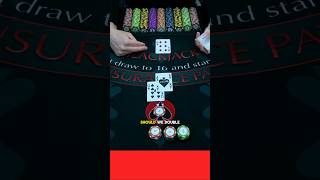
This video demonstrates correct basic strategy decisions for soft hands in blackjack, specifically focusing on soft 18 vs. dealer 10, soft 20 vs. dealer 6, and soft 15 vs. dealer 3. The presenter plays through three hands, showing when to hit, stand, or double, and emphasizes that the running count is more important than individual hand outcomes.
Basic strategy says to hit on soft 18 against a dealer's 10, not stand. The player hits to 15, then 16, and finally stands on 17, but the dealer ends with 20.
With a soft 20 (e.g., Ace-9) against a dealer's 6, the correct move is to stand, not double. The dealer busts (16 then too many), and the player wins $10.
Against a dealer's 3, a soft 15 is a hit, not a double. The player hits to a soft 16, then a hard 16, and stands. The dealer busts (5, 14, too many), and the player wins $10.
The presenter stresses that winning or losing individual hands is less important than tracking the running count, which is a key part of card counting strategy.
The video reinforces that following basic strategy for soft hands is crucial, but for serious players, the running count is the ultimate priority. It's a quick, practical demonstration of three common soft-hand scenarios.
What is the basic strategy for soft 18 vs. dealer 10?
Hit.
00:01
Should you double on soft 20 vs. dealer 6?
No, stand.
00:27
What is the correct action for soft 15 vs. dealer 3?
Hit, not double.
00:42
What does the presenter say is more important than winning or losing?
The running count.
00:56
Soft 18 vs. 10 is a hit
Clarifies a common basic strategy mistake for a frequent soft hand scenario.
00:01Soft 20 vs. 6 is a stand
Shows that even a strong soft hand should not be doubled against a weak dealer upcard.
00:27Count over individual hands
Emphasizes the core principle of card counting: long-term edge over short-term results.
00:56[00:01] make all the correct decisions using perfect basic strategy. This is going to be my soft holes edition starting with a soft 18 versus a dealer's 10. Is this answer is no. This is going to be a hit according to basic strategy. All right.
[00:15] Now we have 15, still a hit. 16, still a hit. And finally finally stand on 17 there. Ah, dealer had 20 though. Okay. Next hand. Get those over there.
[00:27] Another $10 out is going to be a soft 20 versus dealer's six. Should we double on this? No, we're just going to stand. All right, 20's good enough there. Dealer has 16 and too many. So you end up winning $10. Congratulations.
[00:42] Last hand. Another 10 out there is going to be a soft 15 versus a dealer's three. What about this one? Is this a double? No, again, this is just a hit. All right. Now we have a soft 16, still a hit. And a hard 16 can now stand. Dealer
[00:56] hit. And a hard 16 can now stand. Dealer has five, 14, and too many. So you end up winning $10 there at the end. But more important than winning or losing, more important than winning or losing, what's the count?
⚡ Saved you 0h 01m reading this? Transcribe any YouTube video for free — no signup needed.