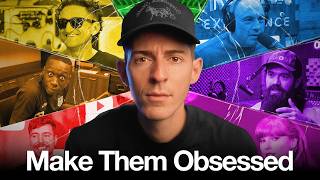

The Secret Power Behind Top Personal Brands
42sReveals the core concept of super fans and hooks viewers with the promise of a formula.
▶ Play Clip"Delivers a solid, actionable framework with clear tactics, though the 'smartest way' claim is somewhat oversold."
This video presents a comprehensive framework for building a personal brand by cultivating 'super fans'—highly engaged advocates who actively promote your content. The creator outlines a seven-stage 'fandom funnel' from unaware viewer to super fan, explains the psychology behind fan conversion, and provides seven tactical content tweaks to accelerate this process.
Super fans are the secret weapon of top personal brands; they are proactive advocates who share your message without being asked.
The journey from unaware to super fan involves seven stages: unaware, first-time viewer, casual watcher, follower, casual fan, active supporter, and super fan. Each stage requires specific content consumption.
The most important line in the funnel is the decision to follow, typically occurring after 5-10 content minutes. A follow signals 'that content was so good, I can't afford to miss the next one.'
Active supporters proactively seek out your content, engage in DMs, and root for you behind the scenes. This transition requires 30-60 content minutes consumed.
Super fans are the top 3-5 people you watch on the internet. They fight for you in comments, buy early, and require hundreds of content minutes to develop. Only 5-10 out of 1,000 first-time viewers become super fans.
When discovering a new creator, viewers subconsciously judge based on follower count (over 50k triggers reflex follow), then watch pinned videos, and decide to follow or not within 3-7 days.
The conversion to super fan depends on four forces: relatability (feeling seen), parasocial transformation (changing lives), deep trust (sherpa-like expertise), and being a vibe magnet (personality + information).
Create content for a specific person with a specific problem to achieve bull's-eye relatability. This narrow focus builds a core group that later expands.
Use data from top-performing videos (your own or competitors) to identify topics that resonate. Feed transcripts into Claude with the Sandcastles MCP to analyze topic distribution.
Share contrarian takes that most people would think are not true. This drives the 3-2-1 transformation (3 thoughts, 2 actions, 1 result) and differentiates your content.
You need a substantial back catalog (binge bank) so viewers can consume enough content to become super fans. Push quantity while maintaining minimum viable quality.
Guide viewers to the next video using in-video cards, end screens, verbal suggestions, numbered series, or playlists to force binge sessions.
Inject proof of your expertise (case studies, hours spent, results) early in the video as a 'trust anchor' to credentialize your points.
Authenticity means genuine interest in the topic, energetic delivery, and visual packaging you're proud of. Only make content you're truly interested in; people can tell when you're not.
Building super fans is a long-term game that requires consistent, high-volume content that is specific, data-driven, and authentic. By understanding the fandom funnel and applying these seven tactical shifts, you can accelerate the journey from stranger to super fan.
What are the seven stages of the fandom funnel?
Unaware, first-time viewer, casual watcher, follower, casual fan, active supporter, and super fan.
01:26
How many content minutes typically trigger the decision to follow?
5 to 10 content minutes.
02:21
What is the conversion rate from first-time viewer to super fan?
Only 5 to 10 out of 1,000 first-time viewers become super fans.
05:12
What are the four forces that drive super fandom?
Relatability, parasocial transformation, deep trust, and being a vibe magnet.
10:12
What is the 'audience of one' concept?
Creating content for a specific person with a specific problem to achieve bull's-eye relatability.
12:54
How can you use data to select topics?
Pull top 30-50 videos from your channel or competitors, feed transcripts into Claude with Sandcastles MCP, and analyze topic distribution.
14:19
What is a 'binge bank'?
A substantial back catalog of content that allows viewers to consume enough minutes to become super fans.
18:04
What is 'connective tissue' in content?
Mechanics like in-video cards, end screens, or playlists that guide viewers to the next video, forcing binge sessions.
19:32
What is a 'trust anchor'?
A reference to proof (case study, hours spent) early in a video to credentialize your points.
20:37
What does authentic delivery mean?
Genuine interest in the topic, energetic delivery, and visual packaging you're proud of.
21:40
Seven-stage fandom funnel
Provides a clear, actionable framework for understanding fan progression.
01:26Low conversion rate to super fan
Highlights the rarity of super fans, setting realistic expectations.
05:12Four forces of super fandom
Distills the psychology of fandom into four actionable forces.
10:12Non-obvious insights as differentiator
Emphasizes the importance of contrarian takes for standing out.
17:12Authenticity defined
Provides a concrete definition of an often vague term.
21:40[00:01] personal brand, there's only one thing you have to unlock, super fans. Whether it's the Swifties for Taylor Swift or Mosey Nation for Hormozi, super fans are the secret weapon powering all the top personal brands in the world. These are
[00:15] the people that don't just watch your content, they become proactive advocates sharing your message without you even asking. Now, if you're trying to own a brand, the only question that really matters is this, how do I get more super
[00:29] fans? And is there a formula for making content in a specific way that drives super fandom? Well, it turns out there is. I've studied literally thousands of the top personal brands in the world. I've also built two separate personal
[00:42] [music] spaces. I have a million followers, I've done billions of views, psychology of fandom and how to make content that doesn't just get views, but >> And so, in this video, I'm going to break down the psychology of super fans.
[00:58] understanding how super fandom works, why people become super fans, and most importantly, how you can tweak your content to make it happen more often. tactics for how to tweak your content to drive more super fans, there's one
[01:12] really important framework that powers this whole thing. I call it the fandom stranger goes through to eventually become a super fan. And understanding this is super critical in figuring out how to approach your content strategy.
[01:26] Now, there are seven core stages between unaware and super fan. Each one requires consumed in order to advance to the next stage. Now, all the people on the internet, no matter who you follow, all start at the top of this funnel as
[01:41] unaware. Then, somehow, they get exposed to your content for the very first time. comes up on the For You page, or some other means. And this is when they graduate from unaware to first-time viewer. And of Of all it takes to make
[01:55] this jump is a single content minute consumed. But obviously, 1 minute isn't enough to make things actually stick. And so, some of those people will phase, the casual watcher. This is
[02:07] videos pop up on the feed, but still isn't sure they want to opt into your world. They're starting to recognize your name, your face, your style, and in to decide if you're worth following or not. This usually happens somewhere
[02:21] between two to five content minutes. So, a handful of short-form videos or a really good intro section for one long-form video. Now, somewhere in the 5 to 10 content minutes-ish, some of those people will cross the most important
[02:33] line in the entire fandom funnel. They follow you. This is where they move into important moment because it's the first time they choose to opt in. Now, a lot of people say followers no longer matter on social media. And it is true that
[02:47] having a following doesn't guarantee you get views. But the act of following someone is still an incredibly valuable signal. Because a follow is them quietly saying, "That content was so good, I can't afford to miss the next one." And
[02:59] that decision tends to happen around 5 to 10 content minutes into the fandom funnel. Now, from there, some of those followers will continue watching consistently and shift into casual fans. This is someone who's gone through a
[03:11] bunch of your videos, maybe dropped a few comments, maybe even shared one, or sent you a message over time. And here's how you'll know this casual fan stage is starting to kick in. You'll start to notice the same names and faces pop up
[03:24] over and over. The first feeling when your channel really feels like it has momentum is when a good batch of these first people shift from new followers into casual fans. And typically, that transition from follower to casual fan
[03:38] happens around the 20 to 30 content minutes consumed mark. Now, beyond this, the casual fan level, there are only two more stages to the fandom funnel. The next one is where a casual fan becomes an active supporter. And really, the
[03:50] difference between these two is the proactive effort from the viewer. A casual fan typically just watches what the algorithm hands them. They're very reactive. They don't seek you out. But an active supporter goes looking for
[04:02] may even slide into your DMs. They're rooting for you behind the scenes. They this point, when you have an active supporter, you're not just someone they follow, you're one of their favorite follows in the category. I call this
[04:15] category fandom. You might not be their number one creator overall, but in this they love to watch. And getting someone to this stage from stranger to active supporter takes a lot of work. 30 to 60 content minutes usually. That's like 40
[04:29] to 50 short-form videos or three to six full long-form videos watched. And then the bottom of the funnel, the hallowed ground. This is the super fan. These are you ever asking. They fight for you in the comments. They have your post
[04:45] through the door. Typically, they'll even buy the first version of your Kevin Kelly framework of the 1,000 true fans, these are those people. And for true super fans, you're not just in the rotation for the category, you're one of
[04:59] the top three to five people they watch on the internet, period. This is what I call peak fandom. And it almost never happens quickly. To get to this level of super fan, it takes hours and hours of content consumed. Literally hundreds of
[05:12] of long-form YouTubes. For every [music] 1,000 people that start at the top of the funnel as first-time viewers, maybe only five to 10 end fans at the bottom. entire thing, this funnel and how it works on the internet. Think of the game
[05:27] Pac-Man. Every viewer is like the Pac-Man, and every video you post are the little dots. Every video they watch is one dot eaten. [music] The more they eat, the bigger they get, and the deeper their fandom goes. A super fan is just a
[05:41] Pac-Man who has eaten every single dot in the maze, which is exactly why building super fans as a beginner is so frustrating and takes so long. There's just no way to mint super fans on day one because even if you make the best
[05:54] have enough dots for that Pac-Man to consume. So, I like to think of the fandom funnel as the overall framework that you're trying to work a casual fan down in order to build a super fan. But, frameworks can be a little abstract. So,
[06:08] let me give you a more tactical, clear example of what actually happens. This like in the wild. Because every single time you or I come across a new person on the feed, we are silently running this [music] audition-like process. And
[06:21] it, but this is kind of how the psychology works when you discover a new person and decide to be a fan. Picture this. You're scrolling the feed and all and it stops you. For whatever reason, that video hooked you and you watch it
[06:36] first-time viewer. Now, the first thing you do isn't follow, almost always. Typically, you tap the profile and you look. Now, in about half a second after that profile loads, you've already judged them on one thing, the size of
[06:49] especially if you're watching this and you're small, but this is how the human psychology works. Typically, if you like that first video and they have over 50,000 followers, most of us will follow almost on reflex because essentially
[07:03] we're outsourcing our trust verification to the crowd. Now, if the person's between 10,000 and 50,000 followers, we may want to follow them. Some people see more videos before they make the
[07:16] choice. If you hit the profile and the following is below 10,000 followers, as unfair as it is, people typically pass and keep it moving. They won't follow at that point. Now, let's say the person does pass that check of 50,000 followers
[07:28] probably going to look to their pinned videos, typically the one that has the it. And then maybe, if you like that one, you watch a third and a fourth, depending on the thumbnail or whatever the video signals it'll be about. And
[07:41] and fourth videos, a decision happens. don't. And like I said before, when you follow, it's you saying, "Those few videos I saw were so good, I can't afford to miss the next ones." And if
[07:54] saying, "I'm good if I don't see the next ones. It was fun, but I'm not going them, you just don't convert into the follower status and drop back into the person shows up on your feed, and they will, in 3 to 7 days, this whole
[08:08] audition process starts over if you haven't followed them yet. Except now, you have those few content minutes in the bank, and so you're that much closer described is what I call the fan attribution pathway. Most marketers talk
[08:22] someone discovers their product and then purchase, but this is the fan attribution pathway, how a fan discovers you cold and then converts down the described is an example on social media. The YouTube flow works a similar way,
[08:36] just slower. You see a video on your home feed or suggested, you click it, leash. If you like what you hear, maybe you expand that to 3 to 5 minutes. If click to the profile and then make the judgment. If it's over 25,000 subs, you
[08:51] for you. If it's under, you probably won't subscribe until you have a few might be sitting there watching me say this and think, "That's not how I do happens for almost every person subconsciously without us clocking that
[09:07] to others, then others are doing it to you. So, if you don't believe me, the next time you're scrolling and you start to discover someone new, catch yourself, freeze, zoom out, and then retrace your steps to think, "How did I get here, and
[09:20] how did my judgment form on this person?" I guarantee you it will be a similar track to what I just walked through. It's video, it's profile, it's judgment on following size, it's pinned videos, it's follower judgment, and then
[09:32] yes or no. That is the top of the fandom funnel happening to you in real time. because I wanted to set context for how someone actually gets exposed to your world in the social universe. So, now you're pretty clear on the fandom funnel
[09:46] and the fan attribution pathways at the top from stranger to follower. But, here's the most valuable part of this entire video. How should you tweak the content you make so that you can get more of those new followers and casual
[09:59] watchers all the way down to active supporters and super fans. What do you have to do to get someone to go from "Hmm, that was a good video." to "I'd the comments at 2:00 a.m." The truth is that conversion always seems to come
[10:12] down to the same four forces. If you can get a viewer to consistently feel these four things in your content, then you will convert a lot of them into super And I'm going to go through all four of those forces right now, and then I'm
[10:26] going to show you the seven tactical tweaks you can make to your content to often. The first force that you want them to feel when they're watching your relatability. And this is when your content feels like you're legit reading
[10:40] their head and pulled out a problem that they're personally wrestling with and then talked about it in your video. Most generic content makes people agree, but this type of bull's-eye relatable content makes them feel like they were
[10:53] seen. And feeling seen is the first step to get someone to stop scrolling on and really start caring about you as the creator. Now, the second force for driving the super fandom is called parasocial transformation. A parasocial
[11:05] when you know someone exists, but they don't know you. It's kind of a one-way door. Parasocial transformation is the same way. This is when you make content that actually changes someone's life, but you never knew that it did it. The
[11:18] best version of this parasocial transformation is what I call a 3-2-1 your content to make them think differently, two things you said to make them act differently, and one thing that they actually applied to get a real
[11:31] change in their life. If you can stack all that up in your content and it has like they like you, it'll feel like they owe you. And this is a magnet for content over and over. Now, the third force for creating super fans is deep
[11:46] believe you actually know what you're talking about more than almost anyone another voice in the feed, you're the one they trust to actually get them past something they're stuck on. Less influencer, more sherpa. People just
[12:01] they don't trust, no matter how entertaining you are. Now, the fourth and final force for this superfandom is called being a vibe magnet. And this one is the difference between growing a huge audience versus a cult-like one. The
[12:14] truth is, people will watch you for just information, but they'll only really love you for information plus personality. It's not just that they like what you say, it's that they like who the person is that's saying it. And
[12:26] as much as I try to dismiss this one and stay fully value robotic, personality super fans. Now, those really are the four forces: relatability, transformation, trust, and authentic vibes all need to be on level 10. If you
[12:40] those things in your content consistently, then they will become a of this video, I want to get super tactical on what you can actually change in your content today to help make those four things happen more often. All
[12:54] right, let's do it. The first shift is to start getting extremely specific in creates that "Are you reading my mind?" bulls-eye relatability that's the first making content for everyone in your niche, you make it for a specific person
[13:09] with a specific problem. I call this an audience of one. Literally one person I already know what you're thinking. Won't that shrink my audience if I narrow it down too narrow? Yes, it will, but you're doing that on purpose in the
[13:22] difference between shouting in a stadium versus leaning across a six-person table to have a conversation. When you get extremely specific in the scenarios you you use, it feels like you're speaking to a specific person. And you need that
[13:38] that I talked about. Now, here's the part that scares people. Going this narrow feels like you're shrinking your potential audience size way too much. And it will feel like that, but it's only temporary. You go narrow to get a
[13:51] core group of people that really love you, and then over time you expand from you. When you go to post your next piece of content, ask yourself, "Is this valuable for the one person that is in my audience of one?" Use that as the
[14:05] filter. Not every single video you make has to be razor narrow sharp, but you piece of content you make in the beginning so that you can build this right, the second shift I would make to your content immediately is to become
[14:19] data-driven in your topic selection. The first point I just made is that you get more specific. Now, this talks about what be getting specific about. Here's they're starting out. They talk about whatever topic they think people will
[14:32] is, from what I've seen, your gut is typically wrong when it comes to topic selection. In every niche, there are a handful of topics that quietly outperform everything else. These are essentially the problems that your
[14:45] audience feels they're struggling the most with. And it sounds obvious, but if you talk about those topics more often, your content will feel more valuable and about the random things in your head that you think they'll want, you're just
[14:57] rolling the dice and you'll miss more often. So, the move is to stop guessing and just let the data tell you what topics the audience wants to hear about. Here's exactly how I do this. I'll take the top 50 best-performing videos from a
[15:10] competitors, or I'll do it from my own channel, which is best if you've posted I'll just feed them all into Claude, and distribution. Essentially, this is like a heat map of what my audience wants to
[15:24] hear more about, signaling that they're voting what they care more about. Now, Claude can't pull that social data on its own. It can't get the transcripts. It can't get the stats on its own by default. So, the easiest way to give
[15:36] Claude these social media powers is to install the sandcastles.ai MCP into Claude. Sandcastles is like the data engine on top of social media, and the MCP is like a pipe that connects that data right into Claude for you. So, when
[15:50] I type in my Claude, analyze the top 50 videos from this channel and run the topic distribution, it can actually do it automatically because of that MCP. Claude. If you want to hook up the Sandcastles MCP plugin into Claude like
[16:03] I have, so you can run this exact flow, I've linked the video below teaching you very easy. And I already know what you might be thinking here. Won't leaning on kind of like make my content more generic? Won't that reduce the ability
[16:18] >> [music] >> Topic categories are not something that can be invented. There's only so many to cover within every niche. So, the data in. You're still going to bring your own take and your own story and your own
[16:31] angle and all that creative juice. So, you're just using data to clear the way and aim your creative energy. So, here's the actual tactic. Before you run your next batch of content, do the exercise to pull the top 30 or 50 videos from
[16:43] your channel or one competitor or a couple competitors so that you can make Like for me in my niche, it's storytelling content strategy and showing I should make more of. And you don't need to do this exercise every
[16:57] every four weeks is what I typically run. Just enough so that whenever I make have updated or not. All right, here's content shift number three. And I'll be important one on the list. If you want to convert more super fans from your
[17:12] content, you have to share non-obvious insights. There's just no way around the perfect person, but if you just regurgitate what has already been said, you will not have super fandom happening in the fan funnel. Now, there's one
[17:26] takes are not about being contrarian just to be edgy. [music] It's actually saying something that you believe that you think most people are getting wrong. And I talk about this idea of contrarian insights and non-obvious takes on almost
[17:39] every video because it really is the number one differentiation in content. So, to do that, just take any topic and ask yourself, what is something I believe that most people would think is not true? That's your non-obvious
[17:51] And if you do that 100 times, you will train your brain on how to get better at this contrarian tilt. This tactic is the number one thing that will drive that 3-2-1 transformation that I talked about earlier. All right, shift number four is
[18:04] term came from the Clipped Boys. I just term for this. This is the least sexy one on the list, but it might be the most non-negotiable. Cuz here's what happens. If you do share a really good
[18:16] non-obvious insight, the viewer's brain lights up and they're like, I got to get so, they tap your profile ready to binge, and then they just see there's they're like, "Oh, I'm out." And then they leave. [music] In that case, the
[18:29] desire was there, you just didn't have enough surface area, you never enough catalog for them to consume. That binge bank is the back catalog that you're using to allow that binge session to happen and get more content minutes in
[18:41] one shot. And remember the Pac-Man metaphor I used before? Super fandom is just Pac-Man eating all the dots in the maze. You have to have the binge bank so thing about getting super fans that it really does take hours and hours
[18:55] hundreds of dots. Mathematically, this is impossible if you don't have enough supply. Now, I know the typical content advice is quality over quantity, and minimum viable quality is critical, but you need to push quantity to get that
[19:08] catalog built up so that someone even has a chance to binge. So, that's the actual tactic, sustained high volume over time. And it's not a genius beginning, you need to be patient and
[19:20] push volume so you can build this catalog up to give yourself a chance on five that you're going to make to your content to get more super fans down the funnel is called connective tissue. And this is the one that almost nobody does,
[19:32] binging almost immediately. This is probably the most tactical suggestion of solves. If you have the binge bank, there's no guarantee that someone watches the first video and then finds their way to the next one. So, can you
[19:45] build a path or connective tissue that literally points them where to go next? And here's how you do it. On YouTube videos, you can use the in-video cards or literally speak at the end, if you like this video, I recommend watching
[19:58] this one next, and use the suggestion to ramp people from one to the next. On short form, this would be doing things like running a numbered series, using the link video button when you upload to connect it, or turning your story
[20:10] playlist. And the reason this works is super simple. At the end of one video, pointed to another one similar to it. them. If you lay this connective tissue, it will force more of the binge sessions
[20:24] to happen. To be clear, on YouTube videos, long form, literally say what to literally say it, but use these mechanics that I mentioned to drive connective tissue. All right, shift number six is to infuse more one-of-one
[20:37] expertise mentions in your content. Everything up to now, the first five, was all about getting more watches and more binges. But watching isn't a proxy super fan, not only do they need to consume, but they have to deeply trust
[20:50] you're talking about. Remember the Sherpa reference from earlier? Nobody's going to follow a Sherpa up the mountain until they're sure they've gone up the in your video is essentially you signaling that you've been up the
[21:02] mountain. Now, on short form, here's the tip. Don't wait till the end of your video to inject your proof. You can use what's called a trust anchor where in the second or third line after the first line in your hook, you reference some
[21:14] proof to validate what you're saying next is true. And that proof can be that you ran, some case study you're referencing, or some hours you spent learning something, something to credentialize the point. So, the actual
[21:28] tactic is very simple. When you make a hook or you make a piece of content, ask this to be true?" And if you don't have an answer, you should inject that one of one proof into the video. All right,
[21:40] authentic delivery. And of course, this is the difference between an expert that you respect versus a creator that you actually love. Now, authentic is the most overused word in content. It's probably the most overused word in
[21:53] got to be authentic, but nobody actually defines what that means. So, let's make it more concrete. Here's what authentic in content actually means to me and how that manifests for you. When I say authentic delivery, I mean three
[22:06] specific things. Number one, you're actually interested in the topic you're covering. Number two, you deliver with energy that would suggest you like doing it. And number three, you build a visual packaging that you're proud of, that you
[22:18] feel like encapsulates your brand. [music] Now, each of those three things is subjective relative to where you are in the topic. And that's the point. Authenticity is more subjective. It's the most mushy of the pieces. But, if
[22:30] you don't have authentic interest coming through, that last mile of really liking the vibes piece will never happen. The truth is, the real tactical suggestion is to only make content you actually are genuinely interested in. You'll never
[22:42] make enough minutes to get someone to a super fan level if you don't want to be there in the first place. People can tell when you want to be there. That's what authenticity really is. If you get there, that will help close the last
[22:54] for you and not just the message. All right, guys. That is all I've got for this video. I know it was a long one. I'm trying my absolute best to just give you non-obvious takes that you don't hear everywhere else. I am here, of
[23:06] personal brand and actually monetize your following, turning views into dollars. I tried to make this one as valuable as possible about super fans. continue to reference. If you think you're a super fan of me and you like my
[23:18] content, drop the chef emoji with the mustache in the comments. That will you're one of the homies and you are a super fan. Now, if you're a business valuable channels for you when it comes to content, storytelling, content
[23:32] strategy, and really monetizing your business, turning views into sales for your product. As always, I say my number one goal is to help 1 million business owners generate over 1 million dollars from content. That's 1 trillion dollars
[23:45] in market impact. In order to do that, I got to keep hammering these videos with on that mission and you want to be one of those million, make sure to like, comment, and definitely check all the free stuff out in the description. My
[23:59] short-form system. It's at shortformsytem.co. It's completely free. It's a 7-day sequence that takes you through how I come up with ideas, how I monetization. The actual monetization funnels and systems that I'm running to
[24:12] that, you can grab that below for free or at shortformsytem.co. All right, guys, we will see you on the next one. Peace.


⚡ Saved you 0h 24m reading this? Transcribe any YouTube video for free — no signup needed.