

Hidden Crypto Fees Exposed!
50sReveals shocking hidden fees (up to 6%) that exchanges don't disclose, sparking curiosity and concern among crypto buyers.
▶ Play Clip"Delivers a thorough, data-driven comparison that matches the title's promise, though some sections are padded with sponsor content."
This video provides a comprehensive comparison of four major cryptocurrency exchanges—Binance, Coinbase, OKX, and Bybit—focusing on availability, payment methods, fees, security, and withdrawal options. The creator shares personal experience and transparent collaboration details to help viewers choose the best platform based on their country and usage.
The creator compares Binance, Coinbase, OKX, and Bybit over a week, emphasizing actual costs versus advertised fees. He discloses collaborations with Binance, OKX, and Bybit, and his personal history with these platforms.
Binance is available in LATAM and Spain but not the US. Coinbase operates in Spain and the US but not LATAM. OKX is available in all three regions. Bybit is in LATAM and Spain but not the US.
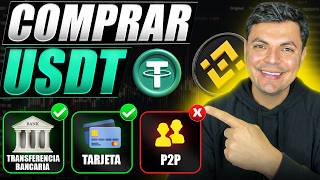
Binance offers card (2% fee + ~4% spread), P2P (~1% for >$500), and bank transfer (free in Mexico). Coinbase card purchases cost ~4.5% total. OKX card fees are 1.99% (EUR) and 2.99% (USD), with P2P and bank transfers available. Bybit card purchases cost ~6.3% total, P2P ~1%, and bank transfer 0.5%.
Conversion spreads: Binance 0.68%, Bybit 1.28%, OKX 1.55%, Coinbase 1.88%. Spot trading fees: Binance 0.1%, OKX 0.08% maker/0.1% taker, Bybit 0.1%, Coinbase 0.4-0.6%. Futures: Binance and OKX 0.02% maker/0.05% taker, Bybit 0.02% maker/0.055% taker.
Coinbase is the most regulated, listed on NASDAQ and registered with the Bank of Spain. Binance has over 20 global registrations. OKX has licenses in the US and EU. Bybit is regulated in the EU. All have proof-of-reserves except Coinbase, which offers on-chain verification.
Bybit suffered the largest crypto theft ($1.5B) in Feb 2025 but covered all losses. Binance had a $40M hack in 2019, covered by SAFU. Coinbase had a social engineering attack, refunded users. OKX has had no incidents.
Binance's SAFU fund has $1B in assets. OKX and Bybit have funds for futures losses, not hacks. Coinbase has insurance but excludes user credential loss.
In LATAM, Binance offers free bank transfers in Mexico, Colombia, Argentina. Bybit has wider coverage with 0.5% fee. P2P withdrawals cost ~1%. In Spain and US, ACH and SEPA transfers are free or low-cost.
For LATAM, Binance is best overall. For Spain, all four work, but Binance and OKX have lowest fees. For the US, Coinbase for regulation, OKX for lower fees. For active trading, Binance with referral and BNB discounts offers lowest fees.
The best exchange depends on your location and usage. Binance is recommended for LATAM and low fees, Coinbase for regulation, and OKX for US users seeking lower fees. Always verify security and consider using cold wallets for long-term storage.
Which exchange is available in the United States, Spain, and Latin America?
OKX
02:25
What is the total cost of buying crypto with a card on Binance?
Approximately 6% (2% fee + 4% spread)
04:48
What is the spread on Binance's convert function?
0.68%
16:28
Which platform has the lowest spot trading fee for makers?
OKX with 0.08%
18:50
What is the SAFU fund?
Binance's emergency fund created in 2018 to protect users in case of hacks or serious incidents.
30:46
Which exchange suffered the largest theft in crypto history?
Bybit, losing around $1.5 billion in February 2025.
28:45
What does 'not your keys, not your coins' mean?
If you don't control the private keys, you don't truly control your cryptocurrencies.
32:55
Which platform is the most regulated globally?
Coinbase, listed on NASDAQ and registered with the Bank of Spain.
22:47
What is the fee for bank transfers on Binance in Mexico?
Free (SPEI transfer)
06:35
What is the commission for P2P trading on most platforms?
Around 1% for amounts over $500.
06:08
Hidden costs of card purchases
Reveals that card purchases include a 2% fee plus a 4% spread, totaling ~6%, which is often overlooked.
04:48Binance lowest spread
Binance offers the lowest conversion spread at 0.68%, making it the most cost-effective for simple conversions.
16:28Bybit's largest theft
Bybit lost $1.5 billion but covered all losses, demonstrating resilience and user protection.
28:45Not your keys, not your coins
Emphasizes the importance of self-custody, a fundamental principle in crypto.
32:55Final recommendations
Provides clear, actionable advice based on region and usage, summarizing the entire comparison.
38:52[00:02] buy cryptocurrencies, you've come to the right video. For more than a week I was comparing the four main platforms: Binance, Coinbase, OKX and BBI. Not only by looking at their official pages, but also by checking the
[00:17] costs, because what they tell you they are going to charge is one thing, and what you end up paying when you actually carry out the transaction is quite another. We've gathered a lot of information to help you make the best decision
[00:30] depending on the country you live in and how you plan to use it. Before we begin, I want to be completely transparent with you. I collaborate with most of these platforms—Binance, OKX, and BBI—but I don't work with them
[00:43] because they came to offer me a good deal. I work with them because they are platforms that I myself have used throughout my career. I started with Coinbase in 2016, when I lived in the United States, and when I came to Mexico
[00:56] in 2019 I started using pods and later also Bbit and OKX. I receive several very lucrative offers to promote other platforms, but I prefer to tell you about the ones I personally use and consider to be
[01:10] the best. That said, if this video provides you with value and you decide to start with one of these platforms, all I would ask is that you use the link in the description to create your account. This way you would be supporting
[01:22] the channel. This is at no cost to you. In return, you'll get commission discounts, which aren't available if you register directly. Finally, in the description you will also find an
[01:34] index with the specific times of each chapter in case you want to look at something specific. Even so, I recommend that you watch the entire video because many chapters complement each other. So without further ado,
[01:46] let's begin. The first thing we will look at are the countries and regions in which these platforms are available. To make this simpler, I'm going to group the Latin American countries into a single region, LATAM, since
[01:58] most platforms that operate in one country operate in all of them. So, we will focus on three areas: the United States, Latin America, and Spain. Starting with the largest, Binance, it is available in all
[02:11] Latin American countries and also in Spain, but it does not operate in the United States. On the other hand, Coinbase, which is the second largest. This company operates also in Spain, but it is not available in Latin America. As for
[02:25] OK, it's the only one on this list that's available in the United States, Spain, and also Latin America. On the other hand, BB also operates in Latin America and Spain, but it is not available in the United States. With this list you
[02:38] already have at least two solid options for your region. Keep these in mind which one suits you best depending on your needs. Before continuing, I think it's options. First of all, Binance also operates in the United States with a
[02:54] very limited version called Binance US. On the other hand, Coinbase is also beginning to expand into Latin America and is in fact starting in Argentina. So they can also be an option, but they will have quite a few
[03:06] limitations. Now let's get into the payment methods. Let's look at the methods they have available for depositing fiat money and what costs I'm going to mention below are only for
[03:19] depositing money on the platform. Later in the chapter on fees, you'll see how much you pay to exchange cryptocurrencies, that is, to move from one crypto to another. Starting with Binance, this platform offers you
[03:31] three options to deposit money. I'm going to list them from least recommended to most recommended. The first option is a plastic card, including Apple Pay and Google Pay. With this option you can buy Bitcoin or
[03:44] any other cryptocurrency, basically anywhere in the world where this platform is available. To buy with this option, Binance uses an external payment processor and that will charge you a 2% commission. In this
[03:57] example, for buying $1,000 they are charging us 20es, which is that 2% and they are charging us 20es, which is that 2% and they are taking each Mexican peso at 0.055 USDT. USDT is basically the representation of the US dollar,
[04:10] but there's a hidden charge that happens when you buy with cards that you should also pay attention to, and that's the spread. The spread is basically the difference between the exchange rate you see on Google and the
[04:22] example, right now the exchange rate they're giving us here on the platform is this. But if we look at what the Mexican peso is worth today, it's 0.058. Doing the math, which I already
[04:35] did, that's a difference of approximately 4%. So, if we do the math and add the 2% of the fi that we are going to pay, plus that 4% for the price difference, at the end of the day buying cryptocurrencies with a card
[04:48] ends up costing us around 6%. The second way to fund your Binance account is through this feature called P2P trading. With this feature you will be able to buy cryptocurrencies directly from a person
[05:01] in your country using a local payment method . The best part is that this is available to all Latin American countries, including Spain. Here you simply enter the amount you wish to purchase. I recommend that you
[05:14] always buy their ST, as it offers the best exchange rate. For this service, Vinas will charge a commission of 0.2%, which is quite low. After continuing, you will see all the payment methods available for your
[05:27] country. This will vary a little depending on where you live. These are the ones available for Mexico. You select the one that suits you best and here it will match you with an advertiser, with a person who will
[05:39] sell you USDT. In this example, each USD is being sold to us at 17.49. exchange rate on Google as a reference, it's currently at 17.19. After conversion, this is a commission of approximately a little
[05:54] less than 2%. That difference between one exchange rate and another is the advertiser's profit , the person who is going to sell us the USDT. In my experience, and I use P2P quite a lot, if you buy more than $500, the commissions or
[06:08] what you end up paying will usually be less than 1%. There is a third method, which fees, which is to make a bank transfer. Instead of buying directly from a stranger, Binance gives you the option to deposit
[06:22] your local currency directly. In my case, it's the weight at no cost. This service allows you to deposit dollars and euros, and is available for Latin American countries, including Mexico, Colombia, and Argentina. In the case of
[06:35] Mexico, this is a Spay bank transfer, it does not generate any cost and usually the transfer is instant. Vinas will assign you an all you need for the transfer. The minimum amount is 50 pesos
[06:51] and the maximum is up to 1,000 pesos. Once you make the deposit, you can then exchange that money for Bitcoin or any cryptocurrency you want. Now let's talk about Coinbase. As I already mentioned, this platform is for the
[07:03] Spain. Since I currently live in Mexico, I don't have any options to buy cryptocurrencies, but if you live in Spain or the United States, you have plenty of options. You can also make instant purchases using your
[07:16] debit card, credit card, Apple Pay, Google Pay, and even PayPal. For using these services, Vainas has a commission of 3.99% and adding the spread of the price difference, which on Coinbase is much
[07:28] lower, it is around 5%, at the end of the day you end up buying cryptocurrencies with one of these methods for 4.5%. When it comes to the options for funding your account via bank transfer, there are also several. You can make an
[07:42] A transfer, which is more convenient for the United States and is free of charge. With this option you can also buy cryptocurrencies instantly. The only thing is that in order to withdraw money from the platform
[07:54] you have to wait approximately one to three business days. Wire transfer is also an option for the United States. This is when you want to trade with fairly large amounts and they charge $10 for deposits and $25 for withdrawals,
[08:07] which I don't think is bad at all. The CPA is for Europe and Spain, which has a deposit fee of €15 and withdrawals are free, which I also think is good. international transfers in dollars and it has a fee of
[08:22] $25 for deposits and withdrawals. Now let's move on to OKX. This also offers three main ways to deposit your money. The first option is a Visa or Mastercard card. This option is available for all countries where the
[08:37] platform operates. At the moment, for some strange reason, it doesn't give me the option to buy with a plastic card, so I won't be able to show you the actual costs. What I did find on the official site are the costs for buying with other currencies,
[08:50] and buying with a card in euros has a commission of 1.99% and in dollars of Unfortunately, it doesn't appear to be any Latin American currency here, but based on what other platforms charge, it must be between 4
[09:04] and 6%. The second option is also P2P trading so you can buy from other users in your country. The advantage here, as I already mentioned, is that it's also Latin American countries, and just like on Binance, you'll also find a wide variety of
[09:18] payment methods, and I'm sure you'll find the one that best suits your needs. And here the commission, or in this case the spread between the difference between what's the advertiser ends up giving you here on the platform, will also be
[09:31] around 1%. Of course, if you buy a small amount like the minimum, such as $ 50 or $100, the commission can go up to 3%. And for large amounts, as P2P trading platform, commissions can be less than 1%. The third option to
[09:46] fund your OKX account is with a direct bank transfer. This option is available for the United States, Spain, and Latin American countries. It only works in Mexico and Colombia. For the
[09:58] United States, you can make a transfer A and this does not generate any cost or commission. You deposit the dollars directly into your OKX account and then exchange them for any cryptocurrency you want. The
[10:10] same applies to Spain. You can make a CPA transfer and that won't generate any costs or fees either. This transfer works differently in Mexico and Colombia . To begin, you can only do it from the
[10:22] shows me the option to make a Space bank transfer, but here you can't deposit the peso directly, instead at the moment of making the transfer you are already buying the cryptocurrency directly,
[10:35] whether it's Bitcoin, USDT or any cryptocurrency you want. OK, exactly this, but if there is a difference between the exchange rate and that difference between the exchange rate and that difference is around 0.3%, 3%.
[10:49] But if instead of buying UST you buy some cryptocurrency, such as bank transfer, the costs are different because what OKX does is first buy USDT and then automatically use that USDT
[11:04] to acquire Bitcoin. With that conversion you end up paying around 1.4%, or at least that's what I ended up paying when I did this process. OKX currently does not have a license to directly deposit
[11:17] Mexican pesos. That's why, when you make a deposit, they convert it to any cryptocurrency you like. Now let's move on to BBIT. B also offers three ways in which you can fund your account. The first option is to
[11:30] credit card. This feature is also available in all countries where the platform operates. Like other platforms, it also uses a payment processor to provide that service. But here the commission is a
[11:43] little higher. As you can see, for buying 1,000 pesos they are charging me 50 pesos. That's 5%. And the spray, which is the difference between the exchange rate I'm getting from Bybit and the exchange rate that appears on Google, is
[11:56] around 1.3%. Adding both costs together, you end up paying Adding both costs together, you end up paying buy cryptocurrencies, which is through P2P trading, buying from
[12:11] other people, the fees are much more favorable. To begin with, this P2P trading is also available to all Latin American countries, including Spain. As for payment methods, they also offer a wide
[12:23] variety. These will vary slightly from country to country, and the fees purchase. As I said, in my experience it's around 1%. At this moment I shows me the person's information. If I wanted to buy those 1,000 UST, I would
[12:39] bank transfer, but in this case I'm going to cancel it. And the third option to fund your account is by also making a bank transfer. The advantage of this platform, over the others we have mentioned, is that it offers
[12:52] greater coverage in other Latin American countries. Here you will find Chilean pesos, Colombian pesos, Peruvian sol, in short, almost all of the currencies of Unlike Binance and OKX, which
[13:05] three main countries of Mexico, Colombia, and Argentina, this platform offers more variety for other countries. Of course, it's also available in Spain. The only catch is that you end up paying a fixed commission,
[13:18] and this is 0.5%, which I don't think is bad either, 0.5% or a minimum of 8 Mexican pesos. If you live in a country like Peru, Chile, Bolivia, or Uruguay, this could be a very good option to fund your account. That concludes our discussion of
[13:33] the payment methods for these platforms. Comparing buy cryptocurrencies with a plastic card, the best option is OKX, since you will pay between 3 and 4%. Note that this assumes
[13:47] fees charged for Latin America are the same as those charged for the United States and Europe. The second best option would be Coinbase with an average of 4.5%, Binance in third place with 6% and
[14:01] Bybit in last place with 6.3%. Regarding P2P trading, on all three same, which is the profit that the person selling to you will keep. As I said, the commission you pay will depend on the amount you buy, but
[14:16] this can range from 5% to 3%. In my experience, most of the time it's around 1%. It's worth mentioning that P2P trading is not available on Coinbase. Regarding bank transfers, if you live in the
[14:30] United States, both Coinbase and OKX are free. If you are in Latin America and live in a country like Mexico, Colombia, or Argentina, the best option would be Binance. The second best option if you live in Mexico or Colombia
[14:43] would be OKX, because there you only end up sacrificing 3% for the conversion to USDT. And if you live in the rest of Latin America, your best option would be VP. In Spain, basically, all four platforms are available and none of them
[14:57] charge commissions. I'd like to take this opportunity to ask if you've a like, as that helps me a lot in getting this content to more continue learning, I invite you to join the Seven
[15:11] Instagram for short educational content, join our Telegram channel, or become part of our new WhatsApp group where you can interact with other links in the description. Now let's get into the topic of commissions.
[15:25] As throughout the video, I'm going to show you the cold, hard facts, what you actually pay for, and at the end of the day, you decide. Previously we looked at what it costs you to deposit your money. Now let's look at what it costs you to operate within
[15:38] the platform, whether it's exchanging your money for a cryptocurrency or exchanging one cryptocurrency for another. Let's start with the when exchanging cryptocurrencies. On all platforms,
[15:51] this function does not generate any commission according to them, but you do have to pay attention to the price difference, that is, what the asset is worth and what you are actually buying it for. For example, starting with
[16:03] Binance, if I want to exchange UST for Bitcoin, let's say, I want to exchange about $10, it won't charge me commissions, but it will sell me the Bitcoin at 63,800. If I look at how much Bitcoin costs on
[16:16] the same platform, but in a , Bitcoin is cheaper, it 's at $63,700. In other words, they won't charge me commissions,
[16:28] but they'll sell it to me slightly more expensive than it actually costs. This difference is called spread and pods is the one with the lowest spread of all. This is around 0.68%. If we look at the
[16:41] Bybit platform, Bybit is selling me each Bitcoin for 64,554, Bitcoin for 64,554, but on its spot market it's at 63,700. It's much cheaper. This is a difference of approximately 1.28%. I'm telling you
[16:55] these numbers because I've already done them . Moving on to the OKX conversion function , here they don't show us how much they are selling us Bitcoin for, they simply show us that it doesn't generate commissions, but in their spot market each bitcoin
[17:07] costs $63,783. On OKX that's a difference of 1.55%. At Coinbase, if I use the conversion function and exchange the Ethereum I
[17:19] have for the Bitcoin I have, they are charging me a commission of 1.88%. Of these four platforms, Pods has the lowest spray at approximately 0.68%,
[17:31] followed by BBIT at 1.28% and OKX at 1.55%, and then Coinbase at 1.88%. It should be noted that this conversion function is the easiest when exchanging cryptocurrencies, but it is not
[17:46] the cheapest. The most economical one is the one I'm going to show you next. If, for example, on a platform like Binance, you go to Trading, you will find this feature called Spot. You'll find this feature on Binance,
[17:58] OKX, and Bybit. At Coinbase this function is a you will find what is called Advance, which is the advanced version of Coinbase. And this is spot trading, which is where
[18:11] you will trade or exchange cryptocurrencies in the cheapest way possible. Getting into spot commissions, I'm going to show you platform by platform. Starting with Binance, here you will find the fees for what is
[18:23] a maker and a taker. A maker is a person who provides liquidity, who puts liquidity into the market, and sometimes the fees are lower. On the other hand, a taker is someone who usually takes liquidity from the market, and
[18:36] sometimes the commissions are a bit higher. If you're a who doesn't move millions in trading volume, the base commission in pods is 0.1%. At OKX, if you are a maker, a creator,
[18:50] the commission is a little lower, it is 0.08%, and if you are a taker, it is also 0.1%. At Bybit, whether you are a maker or a taker, you pay the same commission, which is 0.1%, just like at Binance. At
[19:04] Coinbase Advance, fees can range from 0.4% to 0.6%. I do n't like that they put such a wide range here because they usually end up charging you the highest one. By
[19:17] comparison, if you are a maker, OKX offers the lowest commission at 0.08%, while Binance and Bid are tied for second place with a commission of 0.1%, and of the four platforms, Coinbase
[19:31] charges the highest commissions. Now let's get into perpetual futures commissions . Starting with Binance, if you are a market maker, it charges a commission of 0.02%, and if you are a taker, it charges a commission
[19:44] of 0.05%. OKx also has the same commission of OKx also has the same commission of 0.02% for a creator and 0.05% for a taker. BBID charges a commission of 0.055%
[19:58] if you are a taker and 0.02% if you are a maker. Binance and OKX are tied for first place with a Maker fee of 0.02% and a taker fee of 0.05%.
[20:11] By is similar, although it charges a slightly higher commission if you are a taker. I should clarify that Coinbase does not have this product, or if it is available it is very limited, which is why we did not include it in this list. However, there are ways
[20:24] commissions even further. One of them is by using our referral code when you create your account. If you create your account on Podas using our link, you get a 20% discount on spot fees for life. And
[20:37] we also have a link on OKX that will give you a 10% discount. The second way to reduce fees on these platforms is by paying them with their native token. Binance, for its part, offers a 25% discount on
[20:51] spot fees if you pay them with its BNB token. While BBIT also offers that 25% if you pay those fees with the MNT token. Binance and Bbid
[21:03] share first place in this category, while the other two platforms do not offer any discounts. And if you combine the referral discount plus the discount for paying commissions in the native touch, this is what
[21:16] spot. With all discounts applied, Binance takes first place with a commission of just 0.06%. 06%. Second place, Bybit with 0.075%. Third place we have OKX with 0.9%.
[21:33] And in last place we have Coinbase. If you are a VIP user, meaning someone who trades a lot of money , I recommend you take a close look at this commission table, as the three
[21:45] main platforms, Binance, OKX, and Bybit Cobra, have slightly different commission structures for VIP traders. Someone who moves a large volume of money, well obviously each platform will ask for different
[21:58] requirements, among them will be completing a certain trading volume and in some cases platform. And those are the fees you can pay, for example, on Bybit. And here we have the commissions for
[22:10] VIP traders at OKX. And finally, I'll also show you what the VIP programs for stuff are like. As I said, these vary quite a bit depending on the platform. Now let's look at which of the four platforms is the most
[22:23] secure. Let's start with their licenses and regulations. When a platform is regulated or licensed in a country, it means that a government entity can sanction it and it complies with certain rules. On the
[22:35] other hand, when a platform is not licensed in your country, it does not mean that it is illegal. In most Latin American countries, regulation is only just beginning to take shape. Starting with Coinbase, which is
[22:47] by far the most regulated platform in very strict countries such as the United States and Spain. This platform is basically licensed to operate in most states of the United States . They are basically licensed in every state
[23:00] states like four times, but hey, that's how it works. But what sets it apart from the other three platforms is that it is listed on the NASAQ, the US stock exchange. This means that it is subject to the
[23:13] strictest financial standards in the world. Additionally, this platform is also registered with the Bank of Spain, which means it can operate throughout Europe. Entering Binance, it also has a solid track record and
[23:26] is growing. It is registered as a is also registered with the BAS directory in Argentina. It is currently the first fully licensed exchange in El Salvador. In Mexico,
[23:41] Binance operates through Meda, which is an IFPE that is supervised by the Mexican financial authorities and globally has more than 20 registrations in different countries. Moving on to OKX, it also has licenses
[23:56] in most states in the United States . It is registered with FINC, the . It is registered with FINC, the MICA license which allows it to operate legally in all countries of the
[24:10] European Union, including Spain. Regarding Latin America, OKX does not have specific licenses, but it can legally operate in all countries as we already saw, does not operate in the United States, but it does operate
[24:26] legally in the European Union. As for Latin America, like OKX, it does not can operate in the countries where it is available. In summary, all four platforms are reputable, with
[24:38] regulatory backing in very demanding markets. Coinbase is the most regulated globally, although it is also making progress in Latin America. As for OKX and Bid, these have solid regulations in Europe. Now let's move on to another
[24:51] quite interesting topic, which is the proof of reservations. Proof-of-reserves arose in the wake of the collapse of FTX, which was one of the world's largest cryptocurrency exchanges. What this exchange did was use
[25:05] user funds to fund other projects. When users wanted to withdraw their money, the money was no longer there. As a result of this collapse, the industry changed. From there, the exchanges began publishing their
[25:18] proof of bookings. This is a public verification that the money they claimed to have is actually there. Starting with pods, you can look at the ratio of each cryptocurrency. A 100% ratio means that the exchange has
[25:32] exactly the same amount of cryptocurrency as users stored in a wallet. For example, these are the bitcoins that users hold on Binance. And these are the bitcoins that Binance has stored in wallets. And
[25:46] here it shows you different cryptocurrencies. You can even want to trust the platform, you can simply download this report, which I've already done and here it is downloaded. Here you'll simply see
[26:01] addresses where they are stored. For example, let's choose one from Bitcoin. Let's select this one, which should have 885 bitcoins. So, we're going to copy it. And on Google you can simply type
[26:16] Bitcoin Explorer. You select the first link and here you will simply paste the address you copied from that document, which is exactly the one we copied here. And you simply press enter and it tells us that this address
[26:28] has a balance of 993 bitcoins, which is even a little more than the bitcoins that this report has recorded. And you can addresses listed here. With this
[26:42] you no longer have to like or trust any exchange. You, as a user, can verify this yourself. You can do the same with a platform like OKX, which has also been publishing its booking proofs for some time. Here it tells us the
[26:57] assets of the users that are in the OKX account and here it also shows us the assets that are in the wallets and of course it shows us the ratio of each cryptocurrency. The idea is that this percentage should always be above 100%.
[27:10] Just like with Binance, with just a few clicks you can verify if they actually have what they claim to have. For its part, VBIT is a platform that also publishes its booking tests on a monthly basis. As of May 2026, the
[27:24] ratio that Bitcoin, for example, has is at 108%. Those are the user assets and the platform assets. And so on, you can verify it with basically any cryptocurrency. Coinbase, on the other hand, does
[27:38] not publish its proof of reserves like the other three platforms do, but for example, you can do the same thing for its Bitcoin. Here they tell you how many bitcoins they claim to have. You can take this
[27:50] address and paste it here into the browser and it will show you exactly how many bitcoins this address has, which is 3060, which if we go back to Coinbase is exactly the amount shown here. In conclusion, all four platforms
[28:03] have verification mechanisms so you can verify for yourself that they actually have the assets they claim to have. Both pods and OKX are published monthly, and you can see the percentage for
[28:17] Coinbase also allows you to perform partial verification on-chain, and being a public company, it is subject to slightly stricter verification. Now I want to talk to you about security incidents, because
[28:31] no platform is perfect and some of these have made serious mistakes. Starting with the biggest one. In February 2025, Bybit suffered the biggest theft in cryptocurrency history. This platform lost
[28:45] around $1.5 billion. Despite this theft, Bbe did not block user withdrawals and people were able to withdraw money normally. In fact, I did it. Baby resolved this issue in a good way and took 100%
[28:59] responsibility for the losses, and no user suffered any harm, which is the most important thing. On the other hand, Binance also had a difficult time. In 2019, hackers stole around 7,000 bitcoins that at the time
[29:13] were valued at around $40 million. This robbery was carried out using fishing and other attack techniques. When this happened, Vaina temporarily suspended withdrawals and covered the losses with its
[29:26] Safu emergency fund, which I'll tell you about a little later. The important thing here is that at the end of the day, no user lost their money. Another platform that has also suffered a hack was Coinbase, although this was not a
[29:39] technological hack, it was a human hack. What happened here is that the hackers bribed contractors and employees to give them information, the scammers tried to impersonate
[29:53] Coinbase staff in order to steal from people. The attackers also tried to bribe Coinbase by demanding $20 million to keep quiet, but Coinbase refused. In return, Coinbase
[30:05] refunded the money to every affected user and invested around $400 million to resolve the situation. For its part, OKX is the only platform of these four that has not had any such incidents,
[30:19] compromised funds, and no compromised information, this is to date. That said, no platform is perfect. The good thing is that when these other three had those problems, they took responsibility and at the end of the
[30:32] stopped recording for a few hours to catch my breath. My throat was already bothering me, so I think I 'm ready to continue with protection funds. Let's start with Binance's protection fund, which
[30:46] is the most solid and transparent of the four. Binance has a fund called SAFU. This fund was created in 2018 to protect users in case the platform experiences a hack or other serious incident. As of
[30:59] February 2026, this fund already had one billion or 1000 million. A large part of this fund is in Bitcoin, which you can also audit. Here 's the bottom line. Here are the 15,000 bitcoins and this is their value
[31:12] today. In fact, this fund was already used in the Binance hack in 2019. All the losses suffered by those users were compensated with money from this fund. On the other hand, OKX also has
[31:25] a safety fund for its users, but I want to clarify that this fund is not insurance and does not guarantee any individual benefit. In fact, it is primarily designed to absorb losses from futures trading and not to
[31:39] protect users from a potential hack. For its part, VBIT also has a fund focused on derivatives and futures. As of June 2026, this futures. As of June 2026, this fund already has a total of 376,000,000.
[31:52] Even you can see in this graph that this fund is growing steadily day by day, but just like the OKX fund, this fund is not designed to cover platform hacks. In fact, it is designed
[32:05] to cover losses when trading futures. Coinbase, for its part, also does not have public insurance or a fund equivalent to SAFU. What they do have is an insurance policy that protects them against theft and cyberattacks. Something
[32:18] important to highlight, and they even mention it very clearly here, is that this fund does not cover you if you lose your credentials or if you fall for scams. In platforms, protecting your credentials such as email and
[32:31] passwords is 100% your responsibility. We've already seen that these platforms are the largest in the industry, they have backup proofs, they also have protection funds, and they respond and take responsibility when something goes wrong.
[32:43] But we also saw that none of them are perfect; Vinance, Coinbase, and drawbacks. That's why there's a well-known phrase in the crypto world that goes something like this: "Nys, not your
[32:55] coins." In Spanish it would be something like if they're not your keys, they're not your cryptocurrencies. This means that when your money is on an exchange on a cryptocurrency platform, technically you don't control it,
[33:07] the platform does. If something happens to that platform, you depend on them to resolve it. In contrast, when you send your money to a wallet, especially a cold wallet, you have 100% control of your
[33:21] funds. The recommendation is simple. Only leave money at currency exchange offices that you are actively using for your business. Everything else should be sent to a wallet. There are mainly two
[33:33] cold wallets and hot wallets. By the way , if you want to learn about this world of wallets, I'll leave a video up here. But of the most secure wallets, or the ones I personally like the most, I have this one, which is the
[33:45] . I also have this one, which is the Tangem. This is more for beginners; it's quite easy to use. And I have other wallets, such as the Leder, among others. These wallets are simply
[33:58] physical devices like the ones you see in my hands, and this gives your cryptocurrencies more security. Another thing you can do with your cryptocurrencies generate passive income. And this is
[34:10] to tell you about our sponsor for this video, Dud Holder. This is a crypto platform with a global presence and regulation in Switzerland, Argentina, and the European Union. This platform is not an exchange like what we've seen in this
[34:24] video. In fact, it's a platform specializing in generating returns with your cryptocurrencies. In fact, it has been operating since 2018 and we have been working with them for a couple of years now. If you don't want to send your funds to a
[34:37] on a platform like this and they pay depends on the cryptocurrency you put here, but returns can reach up to 30% annually. And as you can see in my account, right now
[34:51] I have some cryptocurrencies generating returns here. these are the cryptocurrencies I have here and this is the return I'm generating. The way it works is simple: just send the funds to
[35:04] this platform and you will start generating returns in 7- day periods. Once those 7 days have passed, for example, in my period I have one day and have achieved to this day, well when this time passes, I simply
[35:18] come here, claim the rewards and then make the decision if I want to start a new period. If you're interested, I've included a video above where you can the description I'll also leave you the official link with a code to
[35:31] enter before creating your account. By entering that code you will receive 50 additional sparks, which to activate these blocks in this section called Cloud Miner. Then you press them and that way you can accumulate a
[35:45] little satuchi. Returning to the four main platforms in this video, I now want to talk to you about another very important topic: how to withdraw money when you want to send your cryptocurrencies to your bank account.
[35:57] to focus on regions. Let's start with Latin America and we'll begin with the bank transfer option. As for withdrawals via economical option for Latin America. For example, if I wanted to withdraw the peso I
[36:11] have here, I would be paying a fixed commission of 23es. I would be paying that commission if I withdraw the minimum, which is 50 pesos, and the maximum, which is take up to one business day to arrive, although the transfer is usually
[36:27] bank transfer, as I already mentioned, is also available for Colombia and Argentina. BBIT also allows withdrawals via bank transfer, but BBIT has an advantage over Vainance: it
[36:40] has the widest coverage in Latin America. Here you can withdraw if you live in Peru, Uruguay, or even some other countries. It is not Colombia and Argentina, but
[36:52] the commission here is a little higher, 0.5% or a minimum of 8 pesos. Yes, it's a bit more expensive than on Binance, but the coverage is much broader. The
[37:05] second method to send money to your bank from Latin America is through P2P trading, that is, selling your cryptocurrencies to a person in your country. And here, all three platforms offer that service. You can do it
[37:17] with Bybit, Binance also offers it, and you can also do it with OKX. Here's the only thing, because it's that commission or spread that you're going to pay to the person who's buying from you. I repeat, this is their business. In my experience
[37:30] with P2P trading on those three platforms, at the end of the day you end up losing about 1%. And for Spain, Basically, you can make CPA transfers with all four of them, for example, with
[37:44] OKX, with Coinbase, and you can basically do the same with Binance and also with BBE. One great thing about these transfers is that they are within one to three business days. And for the United States, remember that only
[37:59] OKX and Coinbase operate in this country. Here on both platforms you can make an AH transfer. For example, at Coinbase that transfer has no cost, although the money may take from one to five business days to
[38:12] arrive. If you need the money faster, both platforms offer a service called wire transfer. For example, Coinbase For example, Coinbase costs $25 and OKX costs
[38:24] $30 for this service, but with this service, transfers are basically between one and three business days, which is faster than the money to your bank, if you are in Latin America, your best option for
[38:37] Argentina would be Binance. If you're in another country and want to make a bank transfer, BBIT is also a very good option. And finally, you which is available throughout Latin America and also in Spain. Alright
[38:52] , we've finally reached the moment we've all been waiting for. We already saw its availability by country, payment methods, fees and what they will charge you with the final comparison. I just want to clarify something for you. There is no single
[39:06] platform that is best for everyone. It all depends on the country you live in and how you plan to use it. So let's go by categories. Regarding Latin American country, your best option is Vainas, and as a second alternative
[39:20] you have OKX and Bybit. If you live in Spain, all four platforms are very available. And if you live in the United States, your best options would be OKX buy cryptocurrencies with a plastic card, the winner would be OKX
[39:37] with a cost of between 3 and 4%. And I want to clarify that for this information I am basing my data on their rates in euros and dollars, since it was not available for Latin America video. In second place we have Coinbase with an approximate cost of
[39:51] 4.5%, followed by Binance and finally Bybit. Moving on to bank transfers, there's no clear winner here, in. If you live in Mexico, Colombia, or Argentina,
[40:04] Binance is the best option here, as it doesn't charge commissions. OKX also operates in Mexico and Colombia with bank transfer, but here you will pay 0.3% for the conversion to UST. And if you're in any other Latin American country,
[40:17] Bybit is basically your best option, and here you'll pay a 0.5% deposit fee. As for Spain and the United States, available options are free of charge. Entering deposits with P2P trading, this
[40:32] is basically the same on the three main platforms, in pods, OKX and PBIT, you will end up paying around 1%, here remind you that Coinbase does not offer this service. Now let's look at the best option in terms of fees, that is,
[40:45] for exchanging cryptocurrencies. If you use the convert option , which is basically the simplest function of all, the winner here is Binance with the lowest spread at 0.68%.
[40:57] Now, moving on to commissions for spot trading without any discount, the best option here is OKX, which offers a commission for makers of 0.08%. Binance and OKX come in second place with a commission of 0.1%, and Coinbase
[41:13] lags far behind with a commission ranging from 0.4% to 0.6%. discounted fees, when you use our referral code and also pay the fees with native tokens, Binance takes first place with a
[41:27] base fee of 0.06%. Second place goes to BBID with 0.075% and third to OKX with 0.09%, while Coinbase remains unchanged. And if
[41:39] you trade futures, Binance and OKX are tied for first place, followed very closely by Bid. Regarding security, I want to emphasize that OKX is the only one of the four that has not had any serious incidents to date. And for
[41:53] withdrawals, just like for deposits, it will depend on where you are located. be the cheapest option, since you will only pay a slightly higher commission. This applies if you withdraw the
[42:05] minimum, which is 50 pesos, up to the maximum, which is 1 million. BB, on the other hand, has more coverage for the rest of Latin American countries, and here you will pay a commission of 0.5%. 5% and all three platforms offer withdrawals through
[42:18] P2P trading and you end up paying a commission of around 1%. At the end of the depend on the country you are in. Regarding withdrawals to the United States and Spain, the truth is that this is where you have the most options and
[42:32] charge you withdrawal fees. If you're in Latin America and want the most complete platform with the best fees and banking coverage, Binance is the best option here . Another solid option with low fees would be OKX or BBIT. If
[42:47] you're in the United States, both Coinbase and OKX are your options. Coinbase is the most regulated, but if you're going to trade frequently, OKX offers lower fees. If you're in Spain, all four work well, but Binance and
[43:01] OKX offer the lowest trading fees . And if you want to actively trade with the lowest possible fees, Binance would be your best option, as it's the most economical choice, combining the
[43:13] referral code discount with paying fees using the links to these platforms in the description of this video. If you have comments. I always do my best to answer. And up here I'm
[43:27] going to leave you this video tutorial about. There you will learn how to use this platform from beginning to end. I'll say goodbye here for today.

⚡ Saved you 0h 43m reading this? Transcribe any YouTube video for free — no signup needed.