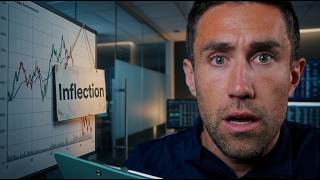

Nvidia's CDS Spike: A 50% Warning
60sThe surprising 50% jump in Nvidia's credit default swap price in just two weeks is a shocking, counterintuitive signal that sparks curiosity and debate.
▶ Play Clip"The title promises a 'warning' but the video is mostly a promotional pitch for a paid service, with the actual analysis buried under self-promotion."
The video analyzes signals from credit markets, specifically credit default swaps (CDS) and credit spreads, to forecast potential stock market movements. The host, Kevin, interprets a recent spike in CDS prices for major tech companies like Nvidia as a warning, but suggests that the peaking of these indicators could signal an upcoming market rally, similar to patterns observed in previous market cycles.
Kevin highlights his pre-market calls on AMD and Bloom Energy, which saw gains of 4.5% and 8% respectively, attributing this to his analysis and promoting his Reinvest terminal service.
The video's core premise is that credit markets, specifically credit spreads and credit default swaps (CDS), are sending a warning signal to the broader stock market.
The price to insure against an Nvidia default rose by 50% in the second half of October, despite Nvidia's 'fortress balance sheet', indicating significant market concern.
During the Iran war, credit spreads skyrocketed, and the stock market sold off. The credit spread peaked around the end of March, and the stock market began to rally about two weeks later.
Kevin identifies a pattern where the market sold off 15 days after a peak and rallied to all-time highs 15 days after a trough, suggesting a potential similar move if the current credit spread peak is confirmed.
The video discusses massive fundraising efforts by tech companies: Elon Musk's $40 billion lease with Apollo, Meta's $96 billion plan, and Anthropic's expected $100 billion IPO, all of which need to be priced into the insurance (CDS) market.
Nvidia, Coreweave, Meta, and Oracle have all seen their CDS prices hit peaks, which Kevin interprets as a potential sign that the worst of the fear is over.
Kevin believes the market is entering a 'second phase of peak fear', similar to September when the QQQ was at 700 and then rallied to all-time highs. He suggests credit markets are now pricing in a lot of the fundraising, and credit spreads are no longer skyrocketing.
Meta's $25 billion share sale was 5x oversubscribed, which Kevin views as a bullish signal, indicating that credit fears may be overblown and that investors are confident in the company's future.
Kevin explains the mechanics of mandatory preferred convertibles, using Google as an example. These instruments pay a ~6% yield for three years before converting to common equity, and are tax-advantaged, making them attractive to investors like Warren Buffett.
Nvidia CDS Spike
Illustrates a concrete example of credit market stress for a supposedly safe company.
01:11The 15-Day Pattern
Provides a specific, testable pattern for market timing based on credit spread peaks.
06:19Meta's Oversubscribed Sale
Shows how a successful capital raise can contradict bearish credit market signals.
13:47Mandatory Preferred Convertibles
Explains a complex financial instrument that is becoming increasingly popular for tech companies.
16:05[00:02] Take a look at this. This is what we wrote about AMD and Bloom Energy before wrote about AMD and Bloom Energy before the market. Our exact text of how we called and then talked about a rally coming for AMD and Bloom Energy before
[00:15] you're not part of it yet, go to reinvest one.com. We've got a coupon reinvest one.com. We've got a coupon expiring Friday. Bloom's now up 8%, AMD expiring Friday. Bloom's now up 8%, AMD up 4 and a half% and almost all of it
[00:29] done during the market. We sent this alert out probably somewhere over here alert out probably somewhere over here in this mess. Come join us at reinvest of this. The credit markets are sending us a signal and we've got to break down
[00:44] exactly what's going on because it makes a big difference to really the entire we're going to do is we're going to look at credit spreads. Uh, and then we're
[00:56] going to go look at what's going on with credit default swaps. So, to explain the difference between these two, credit default swaps are basically our little insurance policy against companies going bankrupt. For example, when we look at a
[01:11] bankrupt. For example, when we look at a company like Nvidia, which is deemed to have this fortress balance sheet, just in really the last two weeks, the second half of October, we've seen this skyrocketing of a price, a 50% rise in
[01:26] the price to ensure against an Nvidia default. So, think about it. If you got like what people think is a risk-free asset almost a company as strong as Nvidia and all of a sudden the price to insure against its default goes up by
[01:40] 50%. The credit markets are screaming something at you. Now we've got to pay attention to something very particular and what's going on with these charts. We'll do that in just a moment. But that's the credit default swap side.
[01:55] Let's look at credit spreads for a moment and what they've done over the moment and what they've done over the last month compared to the stock market specifically. We'll look at the NASDAQ 100. Although, if you're a member of the
[02:07] newsletter, you don't have to pay anything for this. You can meet Kevin.com/digest. Yesterday I pitched an ETF in it, not sponsored or anything, but basically uh I have this thesis that AI companies are
[02:23] people kind of get left behind. So you kind of have to get exposed to stocks they're going to get all the benefits like Microsoft with their 60,000 buyout already know this thesis just to catch you up on that. Uh but I almost think
[02:37] 100, you know, how about like a new Nifty50? reference, but uh but there are a bunch of ETFs that that get you down to the largest 50. Uh and it's kind of cool. Uh and I talked about that yesterday on a
[02:52] Uh again, it's a it's a free email you could join or you could get in the Meet Kevin app as well. Okay, so these are credit spreads. Now, this looks a little complicated, but basically, let's just
[03:06] look at one of these. Here's how this works. So if I go over here to this purple section, this is when the uh Iran war started. So the last time, oops, the last time we had the Iran war and a crisis in the Iran war, which started
[03:20] right here, we could see that credit spread skyrocketed, the stock market spread skyrocketed, the stock market also sold off substantially between this window over here. Now you can see, you know, the stock market really kind of
[03:35] know, the stock market really kind of bottomed uh probably around April 12th, April 7th, somewhere in that range over here. Uh CDS's had already started coming down uh credit spreads. Don't let me confuse these. This is a credit
[03:48] spread which compares basically uh different forms of bonds to risk-free premium is the market demanding for those?" I'm oversimplifying here, but as basically says, "Well, I'm going to need more compensation to touch that hot pile
[04:05] of trash, especially during a war." What I think is very interesting here is this peaked around the end of March. It took about another two weeks for the stock market to to uh start rallying. So the stock market didn't start recovering
[04:21] meaningfully until way after that credit spread peak was behind us about 2 weeks. Now why does that matter that twoe time frame? Because look what's happening frame? Because look what's happening over here. We don't know if this is
[04:35] going to be durable. It could end up being a random peak like this. All being a random peak like this. All right. But this right here is getting is knocking on the door over here of this upper range
[04:48] upper range and it is at least as of today peaking. Now could the Iran war expand? Could the situation get worse with Iran to where these credit spreads widen? Of course. But if this meaningfully comes down, we
[05:05] can watch this on sort of a daily. Then the suggestion is the stock market might actually be setting up for a big old rally. Take a look at this. The last time credit spreads expanded right here was September 21st. Look at what stocks
[05:21] did on September 21st to about October 6th. During this rising time, which was our warning sign, the stock market actually went to all-time highs. The stock market ended up peaking around October 6th. when you look at the NASDAQ
[05:37] 100 which was right here which is right after uh it started coming down a bit but we went to new highs. Point of this is that once this starts
[05:50] coming down meaningfully to where it's not just going to go bounce to a new high once we officially peak we could have about a 2 week delay and then the market can react. So let's simplify that because I know that could get a little
[06:05] complicated because well it's a lot it's a chart I'm zoomed in the presentation might be not perfect. Let's put it this way. Okay. So last time, last peak uh
[06:19] during the uh you know uh March and April Iran situation uh market rallied about uh 15 days post peak
[06:33] and it took the last time the market sold off last selloff sold off last selloff came 15 days after it started going up.
[06:46] So this year we have this tendency where 15 is this magic number where the market sold off 15 days after we started skyrocketing and the market rallied and skyrocketing and the market rallied and went to all-time highs 15 days after we
[07:01] went to all-time highs 15 days after we peaked. And right now we are potentially in a peaking environment. I don't think we're at this new catalyst where we're going to, you know, crazy all-time highs because we've kind of already priced in
[07:14] because we've kind of already priced in a lot of this this movement up here and now we're sort of in this range. Again, is it possible things get worse? Yes. But what is this potentially align with? Because this is just looking at the
[07:27] chart. Can we align this with what's actually happening in the market and then confirm it with credit default swaps, for example? Maybe. Watch this. So, to coordinate with those credit spreads, look at the suck that's
[07:42] spreads, look at the suck that's cooking, we just have a $40 billion cooking, we just have a $40 billion lease that Elon's signing up for and tranches. Elon's basically like, give it to us. We will take all the compute we
[07:54] can get our hands on right now. We will not only raise $40 billion of debt, which apparently is still in pricing. So, Elon Musk says they've secured it, TBD on this actually closing, but there
[08:06] is no SEC filing on this 40 billion yet. It just coincidentally happens to be the same amount as the $40 billion lease they're doing with Apollo. These are suck. That's just getting started though. That's out of what I I think
[08:19] they need 400. So, I think they've got like 10 ships they got to get to and we just tallied up two of them. Okay. Meta's now doing $96 billion. Anthropic's expected to raise hund00 billion on their IPO and Broadcom just
[08:35] finalized their $63 billion with Anthropic and sort of a custom chip Anthropic and sort of a custom chip deal. So what that means is all of that deal. So what that means is all of that crap just had had to somehow get priced
[08:47] into the insurance market. And the insurance market for these companies is the credit default swap area. And that's where maybe we're really early on
[08:59] this. So, this is why we're gonna want to watch this. But take a look at this. Nvidia's skyrocketed in insurance premiums, but it just hit its peak. Will that continue? To be determined.
[09:13] Let's look at the other ones. Coreweave is now topping out over here. This is Coreaves. The last spike on coreweave this high was around the leopold this high was around the leopold liquidation when the QQQ fell to 655.
[09:27] Then right here we've got uh that's Nvidia. This is the 5year break even. Here's Meta. Meta also just hit a peak on the announcement of these deals and Oracle just hit its peak. So what's my point of this? Like what's the like how
[09:42] do we tie this together? What's the bottom line for this? Well, obviously the bottom line is that there's the coupon code expiring on Friday for the reinvest terminal. So, if you want all the data I use on a regular basis, the
[09:55] what we're talking about in the stock market, our trade alerts, what our expectations are for the day, you won't believe our pitch this morning in the alpha report. This morning's alpha report, we're like, boys and girls, two
[10:08] report, we're like, boys and girls, two stocks today, Bloom and AMD, that's the stocks today, Bloom and AMD, that's the play today. And I mean, Bloom is up 8.8% most of it from the morning on. And look at AMD. Okay, we made our pitch over
[10:21] here in the pre-market. This stuff's straight freaking up today. Can't be perfect every day. But I'm just saying, we called out two names today. That's called out 20 names. We called out those two names. Both of them are skyrocketing
[10:35] continues. But if you want to be part of those alpha reports every single day, Reinvest terminal. You have three days left before this coupon expires. The alerts, you get you get the reinvest terminal, you get the reinvest homes,
[10:51] you get reinvest research, you get all the nine courses, the course member live streams, and then the agentic blueprint modules which are coming as well, which quality stuff. So, make sure you join us over at reinvest one.com. Now, what does
[11:05] all of this bottom line mean for the market? Well, my take is I think we are hitting that second phase of peak fear. The last
[11:17] time we called peak fear, the cues were at about 700 and then we rallied to at about 700 and then we rallied to all-time highs. I think we are just going through that process again given all of the catalysts that we have. And
[11:32] look at this. This was the last time we called peak fear was over in September. and and we rallied to all-time highs, which is great. Now, I think it's happening again. We held 700 again. I think credit default
[11:49] swaps have now priced in an insane amount of fundraising. A lot. And there's more to come, but we've already priced in a lot. Credit spreads aren't skyrocketing anymore, which is good. could be a leading tell. Peak fear is
[12:06] behind us in the credit markets now. And as these catalysts fade, I did this member live stream. I thought it was good. But these catalysts in my opinion are kind of like a handyman selling their vendor service, you know, and
[12:19] you've got a lot of different catalysts. You've got uh the election, Microsoft earnings, Amazon earnings, the Israeli election, Iran, the Fed this week, credit default swaps themselves, all this uh and I think all these catalysts
[12:36] as they sort of get removed, you know, by the end of uh well, by next Wednesday, frankly, all these catalysts are basically going to be gone. We're not going to have a lot of fear possible because you'll be past
[12:50] the Israeli election, the US election, you'll be past these major earnings, you'll be past the big suck in the fundraising. I mean, look at what's fundraising. I mean, look at what's cooking with Meta here. If I go to Meta,
[13:03] we could see it right here. Meta's actually increasing their equity actually increasing their equity fundraising plan to 97.5 billion. fundraising plan to 97.5 billion. Nvidia just invested $3 billion to
[13:15] partner with Nvidia to make sure that Nvidia gets the GPU sales and AMD doesn't. Still went bullish AMD this morning. Uh actually went bullish on them. I think I said cover your sold calls on AMD Thursday or Friday, but
[13:32] this morning was intraday. We were very bullish in our alpha report. Uh this right here is the increase to $97.5 billion. And so what they're doing, we have some more color on this. Here it is. Meta's
[13:47] upsized $25 billion share sale which is a part of this 96 to98 billion depending on you know roughly whose estimate you want to use. Part of that was a $25 billion share sale and it attracted interest at five times the available
[14:02] sales which basically means they offered a slight discount for the shares and five times as many people wanted those shares as were available. times as much capital was demanded. That's really bullish for Meta. But it
[14:17] That's really bullish for Meta. But it is also a sign that some of these credit fears are overblown because if it were true that the CDS doom loop was a signal of bad and credit spreads were a signal of bad rather than now they've peaked
[14:30] and it's a signal of good then we would not be getting a $25 billion share sale at Meta that's 5x over subscribed because people be like this this puppy's going to go down even more. You know they've already basically given up all
[14:42] of their muse rally which I think creates an opportunity in the stock. I think it's bullish. I mean, really, worst case scenario, you back up the truck at like 544, which is a really big support line uh for Meta. But, uh, let's
[14:55] take a look at this. But them absorbing this right here, this $100 move right here, that's the financing priced in. Now, it's at the 100 day moving average. it, is over here at the 540 line. This big orange support line. I don't know
[15:10] especially with this oversubscribed info. But forget about the idiosyncratic play of Meta for a moment. Just think about the impact to the broader market. The broader market is saying for forget these fears. We'll keep buying this. We
[15:24] will keep buying this data center debt. So Elon's yoloing in even more than we expected. Although in fairness, we expect him to get all the way up to $400 billion within the next year. Now he's literally talking about trying to get to
[15:38] 20 gawatt next year as opposed to 10. So he's getting even more aggressive. Uh the offering was priced at $625 per share, a 2.7% discount to Friday's closing price, and therefore it was 5x oversub subscribed. That shows you this
[15:51] is this is sort of bottom forming over here. Uh their sale also includes a $12.5 billion offering of mandatory conferred uh preferred convertibles. Now, these are really interesting. Uh and I just want want to take a moment to
[16:05] explain what Google did and Meta is basically doing the same thing. This is really popular right now. Basically what they're doing and I'll use Google as an example. Google said, "Hey, instead of just buying our stock, why don't you buy
[16:19] just buying our stock, why don't you buy this mandatory preferred convertible and we'll pay you I it was 6 or 6 and a quarter% I can't or 6 and a half% or somewhere around there. We'll pay you about 6%. And we're going to pay you
[16:32] about 6%. And we're going to pay you that 6% for 3 years. After that, we're that 6% for 3 years. After that, we're going to convert you to common equity." So in other words to regular stock. So why just go buy the stock if we can pay
[16:47] you some interest uh and then you could get converted to stock. These are really get converted to stock. These are really desirable because these preferreds are also tax preferred. They're not taxed like interest. They're taxed like
[17:00] capital gains. So really valuable here. That basically makes that 6% yield depending on what your tax bracket is more like 7 or 8%. Right now, the terms of that preferred for Meta aren't out yet. So, we don't know what share price
[17:15] the the conversion is or or what interest rate they're offering, but the point is they're they're doing these as well. And this apparently was also oversubscribed. And this is what Barons thought. Yeah.
[17:28] Here, multiple times overs subscribed. This is what Barren thought Bergkshire Hathaway would end up buying. And it makes sense because that's exactly Warren Buffett's playbook. I want the equity, but I want you to pay me a fat
[17:41] dividend while I wait. Kind of cool. So, so far, as crazy as it is how much sucking is going on out there, it's actually working out. Uh, you know, the market has priced in some pain over here on
[17:57] Meta. But the point is, broadly, the market's okay with this. And it seems like now we've priced in some of this peak pain. Now some of that's behind us.
[18:09] peak pain. Now some of that's behind us. Uh now is an opportunity to recover. Now we get a deal with Iran. Does the Iran situation get worse? It's really a topic for a different video. But go check out reinvest.com. If you have any questions,
[18:22] email us at staffreinvest.com. We'll uh reinvest one.com. We'll take great care of you. But otherwise, yeah, look forward to seeing you in the terminal. comes out later this year. We'll have a duo module as well, which
[18:34] I'm very excited about. Uh, you know, I'm playing around with exactly what we that's going to be very cool. The terminal is going to going to be sick on terminal is going to going to be sick on the Duo or or on web uh or on desktop.
[18:48] We'll have uh we'll have an app for everything in the uh in the terminal is really exciting. If you like that video, check this one out. I think advertise these things that you told us here? I feel like nobody else knows
[19:02] see how it goes. >> Congratulations, man. You have done so you. >> Kevin Pra there, financial analyst and YouTuber. Meet Kevin. Always great to get your take.
⚡ Saved you 0h 19m reading this? Transcribe any YouTube video for free — no signup needed.