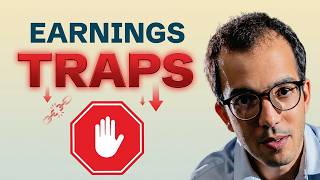

Why IV Crush is a Trap for Earnings Traders
56sExplains a critical, often underestimated concept with a concrete example, making it highly educational and shareable.
▶ Play Clip"Delivers on the promise of revealing four common mistakes, with concrete examples and actionable advice, though it includes promotional content."
This video features an interview with Amin Gharibi, founder of Earnings Watcher, discussing the four most common mistakes new earnings traders make and how to avoid them. The conversation focuses on the dynamics of implied volatility, IV crush, and the importance of statistical analysis in earnings trading.
An earnings trade involves entering a position before or after a company's earnings release, capitalizing on the market dynamics and volatility around the event.
Implied volatility (IV) rises before earnings as the market prices in expected moves, creating opportunities but also pitfalls for traders.
IV crush is the sharp drop in implied volatility after earnings. For example, Micron's IV drops from 116% to 90% after release, causing option values to plummet if the stock doesn't move.
Ignoring IV crush can lead to significant losses. For an at-the-money call on Micron, a 9% move is needed to be profitable, and if the stock doesn't move, options can lose 70% of their value overnight.
Directional plays are risky because you need both the direction and the magnitude of the move to be correct to overcome IV crush. This is described as 'double trouble'.
Selling naked options (e.g., strangles) for premium can be tempting due to high IV, but it carries unlimited risk. An example with McDonald's shows a $9,600 strangle becoming a $120,000 loss.
Applying the same strategy (e.g., buying straddles) to every stock is a mistake. For example, straddles work on Oracle but not on Nvidia, so traders must adapt to each stock's historical earnings behavior.
The real edge in earnings trading comes from statistical analysis, comparing the market's implied move with actual historical moves, and playing long or short volatility based on the stock's profile.
Earnings can be played before, during, and after the event: playing the IV expansion before, long/short volatility during, and momentum plays after the release.
Earnings trading is a statistical game with repeatable edges. The best edge is math, and earnings provide a great playground for applying it.
Successful earnings trading requires understanding and respecting IV crush, avoiding directional gambles, not selling naked options, and adapting strategies to each stock's historical data. The key is to treat earnings as a statistical game with a repeatable edge.
What is IV crush?
IV crush is the sharp drop in implied volatility after an earnings release, causing option prices to fall if the stock doesn't move as expected.
03:21
What is the first common mistake in earnings trading?
Ignoring the IV crush effect.
02:21
Why is picking a direction a mistake in earnings trading?
Because you need both the direction and the magnitude of the move to be correct to overcome IV crush, making it a 'double trouble' scenario.
07:24
What is the risk of selling naked options before earnings?
Unlimited risk; a small premium can lead to massive losses if the stock moves beyond the break-even points, as shown with a $9,600 strangle becoming a $120,000 loss.
11:16
What is the fourth mistake mentioned?
Approaching earnings with the same setup every time, without adapting to each stock's historical earnings behavior.
12:34
What is the core edge in earnings trading according to the video?
The statistical part: comparing the market's implied move with actual historical moves and playing long or short volatility based on the stock's profile.
16:35
What are the two advantages of earnings trading mentioned?
Repeatability (many stocks report regularly) and the statistical/mathematical edge.
18:33
IV Crush Explained
Clearly defines the phenomenon that is central to earnings trading risks.
03:2170% Loss Example
Concrete example of how IV crush can cause a 70% loss overnight if the stock doesn't move.
05:49Steamroller Example
Illustrates the danger of selling naked options with a real-world loss scenario.
11:16Statistical Edge
Highlights the core principle that earnings trading is a statistical game, not a gamble.
16:35[00:02] traders and we learned about uh what they are the common mistakes that pe- trade earnings. And so, we're really happy here to detail some of these uh
[00:14] traps and actually how uh they can be transformed from losses to nice profits on these great volatility events. >> In this video we we will tell you four of the most common mistakes that new earnings traders do and how you can
[00:29] earnings traders do and how you can avoid them. I am joined by Amin Gharibi, founder of Earnings Watcher. But, let's first go to the very basic. Uh Amin, what do we mean with an earnings trade? >> It's really about actually playing the
[00:44] earnings event. So, whether you will enter a position before earnings uh go through the release or just afterwards, a lot of dynamic actually happens in the markets and on stocks when they release their earnings reports. And actually
[00:57] opportunities for traders. So, this is what we mean by these earnings trades reports. >> What in particular creates the opportunities for the traders? >> It's really the dynamic of implied
[01:11] volatility at the end of the day. A lot of stuff happens with implied volatility before the release and especially through the release. This is some of the big mistakes that we'll review together, but keep in mind the market is aware, if
[01:25] you like, of these reports happening and of the excitement, the moves that you mentioned. And so, it's the way markets try to price in or sort of affect these events through really the dynamic of implied volatility. And this is really
[01:39] what creates pitfalls, but also when played properly, really opportunities for uh retail traders on these events. >> And you have talked to hundreds of traders over the year about how they trade earnings, how they should trade
[01:52] earnings. And of course, one One is how what is the best strategy, but it's also a question of avoiding the mistakes. And I ask you to list what are the most common mistakes that you see trade
[02:07] traders do. So, let's start with the first one. What is that? >> You're absolutely right. So, before learning how to properly play them, let's learn how to what to avoid and really the important things to know. And
[02:21] so, the first mistake we can look at together is actually one of the most important things on earnings is that is ignoring the IV crush effect, actually happens on earnings. So, we look at a quick example of some upcoming
[02:38] earnings next week with Micron. Really here just to show you we're looking at some at the money call. So, you see the 970 call with the closest expiration so of next week. Now, the the very important thing is that when you enter
[02:51] a put or anything actually before earnings, notice here this central number of the current IV sitting at 116%. Now, that value by itself does not tell us much about okay, is it too high? Is
[03:06] thing to know about earnings is that that value is actually too high compared to what usually the value is. And what will happen after earnings so right on the first trading day after release is that this IV will crash. This is the
[03:21] famous or infamous phenomenon of IV crush. So, as you see, this value will crush. So, as you see, this value will drop to 90%. Now, that by itself makes big barrier basically or when you're entering these plays to keep in mind
[03:34] that not only do you have to face classic market conditions so your theta decay and etc. But here you're also having this IV crush which is as we said the way the market tries to price in basically this upcoming volatility. So,
[03:50] also to look at sort of how fundamentally this happens, you can here see in some of our tools where we track this rise in implied volatility. And this is a full trap people can fall into by entering positions and not realizing
[04:04] that IV is, as you're seeing here in this curve, has been rising steadily. And so here we're following it for the next for the previous 5 days. That itself makes the any position or any option position you
[04:16] enter actually more expensive. And so that's very important to keep in mind that you're not playing any regular movement. It can be tempting to believe that ah sure, I can I think this stock or that stock will go up or down or move
[04:28] a lot or not. But actually keep in mind that the market is also pushing back and trying to price in. And so this is the first mistake. And again, you also see up opportunities. >> So what happens if you ignore this?
[04:43] >> Very important and great question, John. Actually, let's continue with the example we were looking at. Let's take it again, our simple example of this at the money call for Micron. Now, we can believe that sure, this is a stock that
[04:56] can go up or down or believe in certain movement. But then concretely, what it means is that you're setting up these high expectations. And the second mistake that I'd like to show here is that when you pick a direction, like for
[05:10] example going with these calls, is that you end up facing two things. Not only your is the direction has to be right for you to be profitable, but especially especially and that's the most important relates to the first mistake of the IV
[05:22] crush. Now you need a bigger threshold of move. So you see here as we're the money call, classic at the money call for Micron, well actually to be call for Micron, well actually to be profitable on it, you need 9% of a move.
[05:35] So not just any stock move, not just a direction to be right, but also to beat that really 9% amplitude going up. And the very important thing that comes with it, John, that many people don't realize is that the IV crush effect that you see
[05:49] here will basically happen next Thursday as we're looking for Micron. You see this value of 73% drop in the P&L. This really means that right from before earning, so before close the day before to the next morning, your options, if
[06:05] the stock does not move, so one of the scenarios, you will directly lose 70% of that value and there's no way to put, you know, an early exit or to try to cut it at 50 or 40 or so. No, the options
[06:18] movement are not really continuous and IV crush is one of those big dynamic that directly could imply the 70% loss. So, here it's very, very important to know, first of all, be aware of this IV crush and its effect and also really
[06:33] look at what you're going into and the risk that comes with it. Again, as we said, the market is pushing back on you, if you like, and so this is what creates these pitfalls, if you like. >> And the second mistake, you mentioned
[06:45] it. That is picking a direction. Why is that a mistake in earnings trade? I thought the biggest opportunities were in exactly move. >> It it could and one can intuitively
[06:59] think that, you know, because some uh news or some context or, you know, some positioning of the stock could be seen as really a smart gamble, for example, and at the end of the day you can be thinking it's 50/50,
[07:11] basically, up or down and it's more like a gamble. For the fun of it, sure, let's go with that. The problem is that there's actually a double trouble side of things where not only do you have the direction to be right, but even if the
[07:24] direction is right, because of that IV crush that we looked at, well, you still can be not profitable because you need the direction to be right, but also how high or how down, how low the move will be to be correct. And so, you see why
[07:38] entering these types of directional plays, you oh, you oh, really going against not just the you know, classic directional bias, but also inflicting you know, a big challenge from the markets. There are other ways and of
[07:50] course, if you go out of the money, this effect of IV crush is even higher than options would become very, very profitable comes with the risk of really getting destroyed completely from this IV crush.
[08:03] So, it's really again this double trouble of amplitude plus the direction to be right to counter that IV crush effect. >> What is the third mistake you would like to mention?
[08:16] perhaps where people who are already familiar with these strategies and you or these concepts of IV crush etc. already have in mind and so many people approach earnings in some with some strategies and some ways of
[08:31] trading options. One of them I'd like to hear discuss together is sort of the appeal of selling naked and cheap also seen tempting for that reason. Naked shame premium so premium option so
[08:44] straddles or strangles that come with as they say pennies in front of steamrollers. Some people would think that okay, because and pricing in through this IV crush so
[08:59] making options premium more expensive, right? There can be an appeal there to say, oh, well let me just sell those options. Especially if for example, I don't pick a direction. Let's go I I do you know, strangles or straddles so I do
[09:12] both directions. You can find strangles or straddles that have you know, a break even or an implied move that is quite high, you know, 20% 30% so you can think, oh, the chances of these positions going against
[09:26] the the move actually surpassing that are very low, you know, example to to some people. And so and so here platform, so with earnings watch, there's plenty of things we can do. One
[09:41] of them is a paper trade position, and so, we actually kept track of this specific strategy among others as well, but specifically this strategy of the temptation, I'd like to say it of, "Oh, let me sell cheap options, okay?" So,
[09:55] you see how the performance of the strategy goes. So, for example, last week for CRM, again, one can be tempted by this expensive and, you know, juicy premium from this IV being very inflated as we
[10:07] saw at. And so, you go ahead and sell this strangle in order to close the next day with profiting from that IV crush. So, let's browse onto how usually this The temptation is that it can seem safe, okay, because, again, those break evens
[10:23] are very high, and so, you're thinking, "Okay, really very low chances that I them." And so, most of the cases, as you see, you can still lose. You know, there are heavy losses here, 100%. But most of the time you also make, you know,
[10:36] respectable amounts. But what I would like to say you is that as you go down in time and you scroll down and you actually play this, you know, more and more in the in the markets, well, John, you end up ending up with a trade like
[10:51] this one, where same temptation, those options for a stock like think, "McDonald's, you know, is an established company, etc., would not move a lot in its earnings release." Well, still that
[11:03] can happen. And this is the meaning of pennies in front of steamrollers. So, all of the gains that you have made from selling cheap options again really like a Russian roulette sort of thing, well, now this position
[11:16] actually destroyed all your account. So, you basically sold this strangle for $9,600. Well, the next day, because of that huge move, now it's worth $120,000.
[11:29] So, you actually owe $100,000 for that mere merely 9,000 dollar position. Really this goes to show how a lot of people end up putting themselves into positions that can literally destroy or wipe out their accounts, right? Because
[11:43] of the temptation of the cheap regular wins, but really again here the big wins, but really again here the big mistake that we'd like to focus on is keep in mind the risk reward. Keep in mind your exposure and really develop a
[11:56] strategy where you take this into account. The temptation of cheap things or selling premium because of the inflation can come with really big risk and this actually is applied for earnings or outside of earnings genre
[12:08] where a lot of people will relate to this other position. So, really third attention and don't fall into the temptations of these cheap naked positions. >> And what is mistake number four?
[12:21] perhaps something for people who are already a bit more familiar with these so earnings earnings approaches and this IV crush etc. And that you know,
[12:34] tend to here and there perhaps play earnings with more sophisticated way. So, the next mistake is actually approaching earnings with the same setup every time. What do we mean
[12:47] Perhaps a person can have some idea or some analysis of a stock and whatever you'd like to play earnings, you end up always basically applying the same setup. For example, betting on big movements of
[13:03] a stock on the upcoming earnings and so always going with for example straddles or strangles. So, here just one example of this of how actually you should adapt your setup to what really happens in the market and
[13:16] actually do the study and research. So, for example this week we had a big earnings very highlighted of Oracle, right? Now, you're seeing here we're looking at the past moves of Oracle through earnings.
[13:29] stock, okay? Now, even if you didn't know this data, you're following the news of all the AI and the stuff happening there. Oracle can be imagined as you know, a good stock to
[13:42] place straddles on strangle or because they can move a lot, right? So, sure there's IV crush, but see they move a lot. They beat that IV crush. So, this mistake that we're detailing is for example, always playing straddles on
[13:55] names you think would move a lot, okay? So, on Oracle, this can make sense where sure, it is you know, a very volatile stock and it's beating a lot and perhaps there. But then, I'd like to show you John another example of it where
[14:09] actually the same approach will not work at all. So, let's look at Nvidia. Now, very popular stock, very famous also. Really, the same reasoning of AI and the And so, if you're
[14:23] setup, always straddles, always strangle. Well, you see here that actually, you need the layer of studying the numbers, studying the market conditions. And so, you see here that actually for Nvidia, even though it is
[14:36] very popular, is very you know, sensitive to the AI news and all the macro elements etc. Well, actually, buying straddles on it was not at all favorable at least not since 2023 or 2024 and so. So, this this mistake
[14:52] John is really about actually not adapting your play to the stock or to your analysis and always going with sort of the same setup that can be misleading. As here you see with Nvidia, can be good stock to imagine have this
[15:06] What you're missing there is really be guided by the data and actually look at study the different profiles. >> Those were some of the mistakes. What >> Those were some of the mistakes. What then really creates an edge for options
[15:20] >> Well, I think by now, John, most people I think by now, John, most people will see where we're going with this. Through this through all of these mistakes, we actually see the pattern
[15:33] that emerge of how earnings can be played properly. And actually, John, this is not something we invented or that's really new. These volatility strategies or these smart, let's say, strategies around earnings existed for
[15:46] decades and a lot of professionals, a lot of veteran retail, etc., play them. As you see, they necessitate necessitate or perhaps the difficulty there is really to have all the data in one place and to be able to do this
[15:58] thorough research through not just the market expectations and so IV crush, as we said, but also the past moves, including so the risk reward and the likelihood of every play. And so, the idea actually of these earning
[16:11] strategies, JOHN, IS NOT to be tempted by a specific direction, not to sell blindly options on names that seem okay or not to buy straddles on names that
[16:23] seem also, you know, very sensitive. But actually, the fundamental and the core of the earning strategies is really the statistical part of things, where at the end of the day, John, you see how it's basically a
[16:35] battle between what the market is pricing in, this implied move that we saw through IV crush, etc., and also what actually happens in the market. So, the essence of the edge is actually to play the names depending on their
[16:49] profiles. And so, some names like Nvidia that we've seen, actually, when you when you use the data and you study the profile, you see that it's more tempting for what we call selling options or short volatility. Other names like
[17:01] Oracle, where the name the volatility has been really hitting up and you do go ahead and study the different positions and the risk reward, more tempting for long volatility. But then also, outside from just the earnings event
[17:14] itself, John, uh tend to forget that actually earnings can be played really all around the event. All this dynamic of implied volatility that we talked this is the essence of these strategies. So, we've been
[17:28] telling you about the long and short volatility, buying and selling options, going basically for or against IV crush. But then, keep in mind there's also this very smart strategy, John, where you will play the expansion before the
[17:40] release. So, you don't need to actually go through earnings and go through the this calibration, etc. Here you can really play the expansion of how, you know, that implied volatility steadily rises, as we saw in the beginning with
[17:54] Oracle or Adobe, I think. So, that's another strategy that people dismiss earnings in a conservative way, not going through the release. And actually here, this is what our data and tools do. They allow you to really find the
[18:07] And then also, John, to wrap it up, big group of strategies that happens afterwards, the momentum plays, what happens after the release, how stocks can keep their momentum short or long
[18:20] term. All of this to go to say how earnings actually can be played when you follow the data. The advantage of earnings is, one, the repeatability, that, you know, in or out of earning season where Apple and Amazon report,
[18:33] stocks reporting earnings, and that's makes it the advantage actually of being able to repeat and apply the strategies with discipline. And the second factor is the statistics
[18:45] John of it, the really the mathematical part where you can really rely on actually data and guide your positions and how you position yourself for each strategy, whether it's IV rush, momentum before, long and short volatility. Each
[18:57] week, the data will tell you basically what are the best odds. And so, really approach earnings as a statistical game and repeatable edge. That's really the idea, John, there. >> So, to sum up
[19:10] in 30 seconds, what would be your two most important takeaways that you want >> Remember that earnings can be frightening, can seem, you know, frightening or tempting in another way. Keep in mind that you can go beyond that
[19:24] advantage. And as we said, these strategies have existed for a long time. day, one of the best edges in the market is math, okay? earnings are a great playground for applying this math, basically. Thanks to
[19:39] all the data available, etc. And then, so yes, go beyond sort of the temptation of the fun place of earnings to really adapting these more sophisticated strategies. >> And I will give you 20 seconds to tell
[19:53] us what Earnings Watcher is doing. >> Well, John, obviously, you see, Earnings Watcher aims at making all of this very accessible and friendly and easy to use for all types of retail traders. So, whether you're very
[20:07] beginners and the advantage of these strategies is that they can be easily taken by even once you're comfortable with the fundamentals, to also people strategies, Earnings Watcher really helps you take on this earnings edge and
[20:20] about. >> Um, if you want to explore Earnings Watcher, you'll find a link on the screen and in the description to this screen and in the description to this video. You get 33% off the yearly plan
[20:35] video. You get 33% off the yearly plan or the lifetime plan and 60% off the first month if you do choose the monthly plan, if you use the link that you find here on Zeta Profits. Thank you, Amin, for sharing the most
[20:47] earnings trades. >> Thank you, John. Glad to be here.



⚡ Saved you 0h 20m reading this? Transcribe any YouTube video for free — no signup needed.