
SpaceX's Flight 13: A New Record?
45sHigh anticipation and record-setting claims grab attention immediately.
▶ Play Clip"Delivers a detailed breakdown of the mission timeline and upgrades, but the title's 'Elon Musk directly inspected' is not substantiated in the transcript."
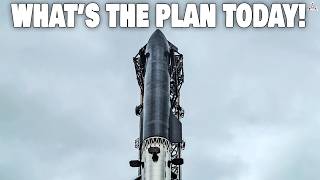
SpaceX is preparing for Starship Flight 13, the second launch of the world's largest rocket in 2026, just two months after the previous flight. This mission is packed with upgrades and critical tests, including deploying 20 real Starlink V3 satellites, a Raptor engine relight in space, and a high-risk reentry with new heat shield tiles. The flight aims to prove SpaceX has fixed the issues from Flight 12 and can move toward the rapid cadence required for Starlink, the Moon, and Mars.
SpaceX will launch Starship Flight 13, the second launch of the world's largest rocket in 2026, just two months after the last one. The FAA closed the investigation into the Flight 12 anomaly on July 13th, three days before the net launch date of July 16th, with no injuries or property damage. SpaceX submitted four corrective actions covering hardware and software fixes across Booster 20 and Ship 40.
About 50 minutes before liftoff, the flight director clears propellant loading. Liquid oxygen and liquid methane flow into both stages, causing white clouds from atmospheric moisture condensing on super-cold surfaces. Liquid oxygen sits at -183°C, and liquid methane is similarly cold to shrink to manageable volume.
At T-21:30, super-cold propellant circulates through the plumbing and turbo pumps of each Raptor to bring them to operating temperature before ignition. Skipping this step could cause serious stress on engine hardware due to thermal shock from cryogenic propellant slamming through the system.
At T-30 seconds, the flight director gives the go for launch. 13 seconds later, the flame deflector activates, flooding water to absorb heat and knock down acoustic energy from 33 Raptor 3 engines. At T0, all 33 Raptors light up, and the vehicle climbs on 9,240 tons of thrust, roughly three times Saturn V's thrust.
At T+58 seconds, the vehicle hits max Q, peak aerodynamic pressure. Max Q is dangerous because the rocket is going very fast while still in thick atmosphere, creating vibration and bending loads. Flight 13 is designed to take on higher aero loads, trading structural margin for payload capacity, with some heat shield tiles carrying embedded load sensors.
At T+2:18, most Super Heavy engines shut down, and three seconds later, Starship's engines light while still connected (hot staging). This is where Flight 12 went wrong: small differences in ignition timing caused asymmetric flipping, rotating Super Heavy nearly 90° off axis. SpaceX revised the ignition sequence to be less sensitive to timing variations.
Right after separation, Super Heavy lights the boost backburn to kill downrange velocity and bend trajectory back. This is the most important test for the booster because Flight 12 came apart here when five engines failed to relight. Booster 20 carries hardware changes and updated engine alarm thresholds to improve relight reliability.
Starship continues burning all six engines until T+38:05. Around T+16:40, it opens its payload bay and releases 20 real Starlink V3 satellites, the first time this generation flies on Starship. This is a full system integration test, checking the payload door, dispenser hardware, and vehicle handling as mass bleeds out.
After the last satellite clears the bay, Starship goes quiet until T+38:58 when one Raptor fires in space. This tests engine relight in microgravity, a prerequisite for orbit raising, precise payload delivery, longer missions, and eventually coming home. Flight 12 never got to attempt this.
At T+47:30, Starship pitches belly first into the airstream, experiencing plasma wrap and intense heat. The heat shield is thousands of individual tiles, and one lost tile in a high-heating zone can cause structural damage. Flight 13 tests new tile types and attachment methods across the aft flaps and skirt.
At T+1:05:01, the landing burn ignites, the ship flips vertical, and three engines dial in final precision. Flight 13 ends around T+1:05:21 with a controlled splashdown in the Indian Ocean. Success is defined by the booster flip, boost back burn, satellite deployment, Raptor relight, and heat shield performance.
Flight 13 is a critical test for SpaceX to prove they understood Flight 12's failures and can achieve the rapid cadence needed for Starlink, the Moon, and Mars. The mission's success hinges on the booster flip, boost back burn, satellite deployment, Raptor relight, and heat shield performance.
What is the purpose of the flame deflector at launch?
It floods water to absorb heat and knock down acoustic energy from 33 Raptor 3 engines firing simultaneously.
02:38
Why is max Q dangerous?
Because the rocket is going very fast while still inside atmosphere thick enough to fight back, creating vibration and bending loads.
04:03
What was the cause of the Flight 12 anomaly during hot staging?
Small differences in ignition timing created an asymmetric flip, rotating Super Heavy nearly 90° off axis.
05:11
How many Starlink V3 satellites will be deployed on Flight 13?
20 real Starlink V3 satellites.
07:56
What is the purpose of the Raptor relight in space?
It tests engine relight in microgravity, a prerequisite for orbit raising, precise payload delivery, longer missions, and eventually coming home.
09:20
What is the significance of the boost back burn for Flight 13?
It is where Flight 12 came apart when five engines failed to relight, so it tests hardware changes and updated engine alarm thresholds.
05:52
Thrust Comparison to Saturn V
Provides a concrete comparison: 9,240 tons of thrust is roughly three times Saturn V's thrust, emphasizing the scale of Starship.
03:33Load-Sensing Heat Shield Tiles
Innovative use of embedded sensors to report forces during flight, enabling data-driven heat shield improvements.
04:28Software Timing Fix for Hot Staging
Highlights that a few milliseconds of software timing can be the difference between a clean flip and a tumble, showing the precision required.
05:39Satellites as Inspection Cameras
Six Starlink satellites carry cameras to inspect the heat shield, a clever reuse of hardware for testing.
08:52Survival Condition for Rapid Cadence
Emphasizes that Starship must survive reentry without needing weeks of work to achieve the required launch cadence.
11:14[00:01] witness a new record being set. SpaceX will launch the world's largest rocket for the second time in 2026. This launch comes just 2 months after the last one. That's why Starship flight 13 isn't just an ordinary launch. It's
[00:16] truly different, packed with upgrades and changes, and it will be decisive for the success of the newest, most advanced generation of Starship ever built. So, what exactly is SpaceX going to do on this decisive flight? It's honestly
[00:30] going to blow your mind. Let's break it all down. For weeks, one single agency held SpaceX's entire timeline hostage, the FAA. And on July 13th, it finally happened. The investigation into the flight 12 anomaly was officially closed
[00:46] just 3 days before the net launch date of July 16th. No injuries, no property damage. SpaceX submitted four corrective actions, hardware and software fixes actions, hardware and software fixes across both booster 20 and ship 40. The
[01:01] FAA signed off, and just like that, green light. So, right now, nothing standing in the way anymore. The only question left is what actually happens the moment that countdown hits zero. And what really
[01:14] sets flight 13 apart from every launch before it. Well, you won't have to wait long to find out. SpaceX just dropped its full mission timeline for this flight, and honestly, they move fast, almost as fast as it'll take you to hit
[01:27] that subscribe button. So, don't miss it. About 50 minutes before liftoff, the flight director clears propellant loading. Liquid oxygen and liquid methane start flowing into both stages, and this is when Starship seems to wake
[01:41] up. White clouds billow around the vehicle, the plumbing, the base of the launch tower. That's not smoke. Most of it is atmospheric moisture condensing against metal surfaces so cold they're below freezing. Liquid oxygen sits at
[01:55] C. Liquid methane isn't far behind. They have to be that cold to shrink down to a manageable volume. In gas form, the tanks would need to be absurdly large. At T minus 21 minutes and 30 seconds,
[02:11] something important happens that most livestream hosts barely mention, engine Super cold propellant circulates through the plumbing and turbo pumps of each Raptor, gradually bringing them down to operating temperature before ignition.
[02:25] Skip this step and the sudden thermal shock of hundreds of kilograms of cryogenic propellant slamming through the system every second could cause serious stress on the engine hardware. At T minus 30 seconds, the flight
[02:38] director gives the go for launch call. 13 seconds later, the flame deflector activates. A massive flood of water through the deluge system under the pads. Not to put out fire, but to absorb heat and knock down the acoustic energy
[02:52] from 33 Raptor 3 engines firing simultaneously. That exhaust isn't just hot, it's a pressure wall strong enough to damage hardware and send debris flying. Flight 12 showed the new pad holds up reasonably well, but the shock
[03:06] waves still knocked over part of a blast wall and stripped most of the lettering off the Gateway to Mars sign. The Starship community has been joking ever since that SpaceX built the road to Mars, they just can't keep the sign
[03:18] standing long enough to point the way. At T0, all 33 Raptors light up under Super Heavy. Sensors check thrust, pressure, and the health of every engine in real time. If everything is within limits, the hold down clamps release and
[03:33] 120 plus meters of stainless steel starts climbing on 9,240 tons of thrust. For context, that's roughly three times what the Saturn V produced, the rocket that sent humans to the moon. With the more powerful Raptor
[03:48] 3 and a pad designed to hold the vehicle until engines reach full thrust, Starship V3 doesn't slowly lift off like a reluctant skyscraper anymore. It snaps off the pad. Less than a minute later, at T plus your 58 seconds, the vehicle
[04:03] hits max Q, peak aerodynamic pressure. And this is one people get wrong. Max Q isn't dangerous because the rocket is going fastest. It's dangerous because the rocket is going very fast while
[04:15] still inside atmosphere thick enough to fight back. Air hammers the vehicle at maximum force, creating vibration and bending loads across the entire structure. Flight 13 is actually designed to take on higher aero loads
[04:28] than some previous flights. SpaceX is trading structural margin for payload capacity. That's part of why some heat shield tiles carry embedded load sensors. They're not just surviving the flight, they're reporting back exactly
[04:41] how hard they got pushed, pulled, and shaken. At T plus 2 minutes 18 seconds, most of Super Heavy's engines shut down. Three seconds later, Starship's engines start lighting while the two vehicles are still connected. That's hot staging.
[04:57] Starship's engines are already burning before separation. So, there's almost no coast phase between the two stages. Every second without thrust is velocity lost to gravity. And hot staging is how SpaceX cuts those losses. But, for
[05:11] flight 13, hot staging matters for another reason. This is exactly where flight 12 went wrong. Small differences in ignition timing created an asymmetric flipping the way it was supposed to,
[05:25] Super Heavy rotated nearly 90° off axis. SpaceX has since revised Starship's ignition sequence to be less sensitive to timing variations between engines. No to timing variations between engines. No new hardware, no extra engines, just
[05:39] changes to how the firing commands are sent. But, a few milliseconds of software timing could be the difference between a clean flip and a 70-m vehicle starting to tumble. Right after separation, around T plus a 2 minutes 25
[05:52] seconds, Super Heavy lights the boost backburn. The burn that kills downrange velocity and bends the trajectory back toward the offshore splashdown zone. This might be the single most important test for the booster in flight 13
[06:06] because it's where flight 12 came apart at the seams. Five engines failed to relight, cutting the burn short. You might think there are still 28 engines. Why abort? But this isn't like a string of light bulbs where a few missing ones
[06:20] just dim the room. Each engine fires from a specific position on the booster. Lose thrust asymmetrically and the vehicle doesn't just slow down less. It starts to rotate or worse, develops loads the structure was never designed
[06:34] to handle. To fix this, Booster 20 carries hardware changes aimed at improving relight reliability. SpaceX also updated engine alarm thresholds and abort logic to better handle the noisy environments of a boost backburn. Each
[06:48] Raptor is constantly streaming pressure, temperature, turbo pump speed, and flow data. And the software has to distinguish between a real engine failure and transient noise from 32 other engines firing right next to it.
[07:02] Set the threshold too loose and you miss an engine that's self-destructing. Too tight and you shut down an engine that was working fine. Flight 13 will tell us whether SpaceX found the right balance. The boost backburn wraps up around T
[07:15] plus 3 minutes 3 seconds. After that, the booster coasts on its grid fins, three big panels that work like the feathers on an arrow using airflow to guide a massive object falling at speed. Landing burn starts at T plus T6 minutes
[07:29] 27 seconds and around T plus 6 minutes 53 seconds, Booster 20 is scheduled to end with a controlled splashdown offshore. No Mechazilla, no tower catch.
[07:41] Meanwhile, Starship has kept burning. All six engines run through T plus 38 minutes 5 seconds, pushing the vehicle into its planned suborbital trajectory. And from here, the flight shifts from rocket test to Starlink rehearsal.
[07:56] Around T plus 16 minutes 40 seconds, Starship opens its payload bay and begins releasing 20 real Starlink V3 satellites. The first time this generation of satellites has flown on Starship. All of
[08:10] atmosphere about 20 minutes after deployment. Wait. Why real satellites? Why not just dummy ones like before? This isn't a failed commercial launch. It's a full system integration test. Over roughly 11 minutes, SpaceX is
[08:25] checking the payload door, the dispenser hardware, and how the vehicle handles as mass bleeds out of it. Each satellite is simultaneously trying to unfurl solar arrays, deploy antennas, and link into the Starlink network via laser
[08:39] crosslinks. They won't stay alive long. But that window is enough to verify the most critical steps in bringing a V3 online. SpaceX would rather burn 20 satellites here than find out the dispenser jams on a real commercial
[08:52] mission. Six of those satellites have one more job. They're carrying cameras pointed back at Starship's heat shield. Six independent eyes floating away from the vehicle, catching angles the ship's own cameras can never see. Same
[09:06] satellite, same flight. Testing deployment, power, laser comms, while also acting as a flying inspection camera for the vehicle that launched it. Very SpaceX. After the last satellite clears the bay,
[09:20] After the last satellite clears the bay, Starship goes quiet until T plus 38 minutes 58 seconds, when one Raptor fires in space. This is one of the most important tests of the entire mission. And it's the one flight 12 never got to
[09:34] attempt. An engine that runs clean during ascent isn't guaranteed to microgravity. Propellant doesn't pool at the bottom anymore. Temperatures drift. Pressures shift. Everything has to be perfectly
[09:48] settled before the turbo pump spins up. This relight is the prerequisite for everything that comes after. Orbit raising, precise payload delivery, longer missions, and eventually coming home. If you see a bright flash reappear
[10:02] home. If you see a bright flash reappear behind Starship around minute 39, SpaceX just closed the book on the test they've been waiting since flight 12 to run. But, the most dangerous part is still ahead. T plus 47 minutes, 30 seconds.
[10:17] Reentry. Starship pitches belly first into the airstream, using its own body as a brake. The air ahead compresses and heats violently. Plasma wraps around the ship like a second skin. And that heat isn't targeting one spot. It's hunting.
[10:31] Every exposed edge, every missing tile, every patch of bare metal is a way in. The heat shield isn't a single blanket. It's thousands of individual armor pieces. And the whole system is only as strong as each tile staying exactly
[10:46] where it belongs. One tile lost in a cool zone, survivable. One tile lost where heating peaks, the steel underneath heats fast. The breach grows, and structural damage can follow in seconds. Flight 13 is testing new tile
[11:01] types and new attachment methods across the aft flaps and skirt. The load-sensing tiles captured forces during ascent. The Starlink cameras inspected the shield before the plasma hit. All of it feeds into the real
[11:14] question. Not just whether Starship survives, but whether it survives in a condition that doesn't need weeks of work before the next flight. Because if every landing means a full teardown, Starship never reaches the cadence that
[11:27] Starlink, the moon, or Mars actually demands. Around T plus 1 hour, 2 minutes, speed drops below transonic. Plasma fades, but Starship is still falling horizontal, working its flaps to manage descent. Landing burn ignites at
[11:42] manage descent. Landing burn ignites at T+1 hour 5 minutes 1 second. The ship flips vertical. Three engines, then two, then one, dialing in final precision as the ocean rises fast. If everything holds, flight 13 ends around T+1 hour 5
[11:57] minutes 21 seconds with a control cold splashdown in the Indian Ocean. But success won't be defined by that final splash. Watch the booster flip at minute two. Count whether the boost back burn holds. See if 20 satellites clear the
[12:12] bay clean. Wait for the Raptor flash at minute 39. And when Starship hits the plasma, watch the flaps. Watch the tiles. Flight 13 isn't just a flight from Texas to the Indian Ocean. It's 65 minutes for SpaceX to prove they
[12:27] understood what flight 12 was trying to tell them.


⚡ Saved you 0h 12m reading this? Transcribe any YouTube video for free — no signup needed.