
How WoW Hooked Millions
45sExplains the addictive core loop that made WoW a cultural phenomenon.
▶ Play Clip"The video thoroughly covers every expansion in detail, delivering exactly what the title promises."
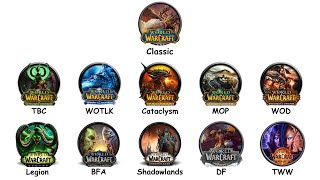
This video provides a comprehensive overview of every World of Warcraft expansion from its launch in 2004 through The War Within in 2024. It explains the key features, innovations, and controversies of each expansion, highlighting how the game evolved over 20 years. The video concludes with lessons learned about MMO design and the game's enduring legacy.
World of Warcraft launched in November 2004, creating a massive online world where players could be anyone and play with thousands of others. The core gameplay loop involved questing, leveling, and gear progression.
Vanilla had nine classes, each with three talent trees, offering distinct playstyles. Warriors could tank or DPS, mages were glass cannons, and priests were often forced to heal.
Dungeons like Blackrock Depths could take 6 hours. Raids required 40 players coordinating via voice chat, with bosses having simple mechanics but being learned through trial and error.
Flying mounts revolutionized travel, making the world three-dimensional. This forced Blizzard to redesign zones to look good from above and allowed players to bypass content.
Heroic dungeons introduced scalable difficulty, offering harder versions of existing dungeons with better rewards. This concept became a cornerstone of WoW design.
Arena PvP turned competitive play into an esport with structured 2v2, 3v3, and 5v5 matches, ranking systems, and tournaments with prize money.
The Dungeon Finder allowed players to queue for dungeons from anywhere, automatically matching them with players from other servers. This increased accessibility but reduced social interaction.
The Achievement system turned every action into a trackable accomplishment with points, unlocking mounts, titles, and other rewards, giving completionists long-term goals.
Dual Specialization allowed players to switch between two talent builds with a click, solving the problem of being locked into a single role and making hybrid classes more flexible.
Cataclysm shattered and rebuilt all vanilla zones with new quests and storylines, creating a coherent leveling experience from 1 to 60. This was a massive redesign of the old world.
LFR applied the Dungeon Finder concept to raids, allowing players to queue for raid content without a guild. It made raids accessible but created a very easy difficulty tier.
Archaeology was a divisive profession involving digging up artifacts. Some found it relaxing, others considered it boring and RNG-dependent.
Transmog allowed players to change their character's appearance independently of stats, creating a new type of content where players ran old content for cosmetic items.
Scenarios were short, story-driven instances for three players that didn't require a tank-healer-DPS setup, offering bite-sized group content.
The pet battle system was a Pokémon-like feature with type advantages, leveling, and competitive battles, becoming a legitimate endgame activity for some players.
Challenge modes were timed dungeon runs with normalized stats, so success depended on skill and coordination rather than gear. Cosmetic rewards were offered.
Garrisons were personal bases with followers and missions. They provided everything players needed without social interaction, turning WoW into a single-player game and harming the MMO experience.
Mythic difficulty established fixed 20-player groups for the highest raid tier, creating consistent encounter design but forcing guilds to adjust their rosters.
Artifact weapons were legendary weapons with skill trees and infinite progression, creating attachment and endless goals. They replaced regular weapon upgrades for the expansion.
Mythic+ introduced infinitely scaling dungeons with weekly time limits and rotating modifiers, turning 5-player dungeons into competitive endgame content.
World quests replaced daily quests with dynamic objectives that spawned across zones, offering variety and rewards. They provided meaningful activities without repetitive checklists.
Legendary items dropped randomly from any content and dramatically changed gameplay. The randomness created power disparities based on luck, making it controversial.
The Azerite system replaced artifact weapons with a necklace powering armor traits. It felt like a chore compared to Legion's artifact weapons, with mostly passive effects.
Island expeditions were procedurally generated 3-player content against AI. Despite promises of variety, they became repetitive grinding as players found optimal routes.
Warfronts were 20-player PvE experiences inspired by Warcraft RTS games. They felt epic but were too easy, removing challenge and accomplishment.
The covenant system forced a choice between four factions with unique abilities. For most players, one covenant was optimal, making the choice feel meaningless.
Torghast was a roguelike dungeon with procedural layouts and power-ups. It became a mandatory weekly chore for legendary materials, with inconsistent difficulty scaling.
Dragon riding turned flying into an engaging system with momentum, physics, and skill expression, making traditional flying mounts feel boring by comparison.
Dragonflight brought back branching talent trees with meaningful choices, modernized with better visuals and build variety, replacing the simplified rows from previous expansions.
Professions were overhauled with specialization trees, quality ratings, and custom orders, creating player-driven economies where skilled crafters could build reputations.
Cross-faction play allowed Horde and Alliance players to group, join guilds, and do content together, solving population balance issues while preserving faction identity.
Delves are scalable solo/small group dungeon content that adjusts difficulty and rewards based on group size, solving the problem of what to do without a full group.
Hero talents are specialized branches unlocked at level 71, providing class-defining abilities and distinct playstyle variations, adding depth to character customization.
The Warband system makes reputation, achievements, and some progression account-wide, reducing repetitive grind on alts while preserving individual character identity.
After 20 years, WoW has tried many approaches. Key lessons: borrowed power annoys players, flying changes world design, cross-realm tech hurts communities, and players want understandable progression.
World of Warcraft's 20-year journey shows that the best MMO design focuses on a few well-integrated systems rather than reinventing everything every expansion. The game's legacy is undeniable, as it set the template for modern MMOs with quest hubs, instanced dungeons, and scalable difficulty.
When did World of Warcraft launch?
November 2004
How many classes were in vanilla WoW?
Nine classes
01:11
What was the maximum raid size in vanilla WoW?
40 players
01:50
What feature in The Burning Crusade fundamentally changed world design?
Flying mounts
03:47
What system introduced scalable difficulty for dungeons in The Burning Crusade?
Heroic dungeons
04:41
What feature in Wrath of the Lich King allowed players to queue for dungeons from anywhere?
Dungeon Finder
06:49
What system turned every action into a trackable accomplishment with points?
Achievement system
07:47
What feature allowed players to switch between two talent builds?
Dual Specialization
08:10
What expansion completely redesigned all vanilla zones?
Cataclysm
10:41
What system allowed players to queue for raids without a guild?
Looking for Raid (LFR)
11:26
What feature let players change their character's appearance independently of stats?
Transmogrification (Transmog)
13:55
What system in Mists of Pandaria was a Pokémon-like feature?
Pet battle system
15:22
What expansion introduced personal bases that isolated players?
Warlords of Draenor (garrisons)
18:00
What system in Legion created infinitely scaling dungeons?
Mythic+
22:03
What system in Shadowlands forced a choice between four factions?
Covenant system
28:21
What feature in Dragonflight turned flying into a skill-based system?
Dragon Riding
32:03
What system in The War Within provides scalable solo/small group dungeon content?
Delves
35:16
What system makes reputation and achievements account-wide?
Warband system
36:25
WoW's Launch and Core Loop
Establishes the foundation of the entire MMO genre with questing and progression.
Flying Mounts Revolution
Flying mounts fundamentally changed world design and player travel, a pivotal design shift.
03:47Dungeon Finder's Social Impact
The Dungeon Finder increased accessibility but reduced server community interaction, a key trade-off.
06:49Garrisons' Isolation Problem
Garrisons were too efficient, turning an MMO into a single-player game, highlighting the importance of social design.
18:00Legion's Artifact Weapons
Artifact weapons created deep attachment and infinite progression, a successful borrowed power system.
21:13Dragon Riding as Skill Expression
Dragon riding turned a passive travel mechanic into an engaging skill-based system, a design innovation.
32:03Lessons Learned from 20 Years
Summarizes key design principles: avoid borrowed power, balance accessibility with community, and focus on understandable progression.
38:22[00:00] World of Warcraft launched in [music]
[00:01] November 2004 and basically said, "Hey,
[00:03] what if we made a massive online world
[00:05] where you can be whoever [music] you
[00:06] want and play with thousands of other
[00:08] people?" And honestly, nobody was ready
[00:10] for what Blizzard was about to unleash.
[00:11] This wasn't just another video game.
[00:13] This was a living, [music] breathing
[00:15] virtual universe that demanded your
[00:16] time, your attention, and probably your
[00:18] social life. The core gameplay loop was
[00:21] brilliant in its addictive simplicity.
[00:23] You created your character, picked a
[00:24] starting zone, and immediately got
[00:26] thrown into this world where every NPC
[00:28] had something for you to do. Kill 10
[00:30] wolves, collect 15 bare asses, deliver
[00:32] this package to the [music] next town
[00:33] over. It sounds mind-numbing when you
[00:35] describe it like that, but somehow
[00:36] Blizzard made this repetitive cycle feel
[00:39] like an epic adventure. Every quest
[00:41] completion gave you experience points,
[00:43] gold, and usually some piece of gear
[00:45] that was slightly better than what you
[00:46] had before. The genius was in the pacing
[00:48] and the progression. [music] There was
[00:49] always something just around the corner,
[00:51] always another level to reach, always
[00:53] better gear to obtain. The world felt
[00:55] massive because it actually [music] was
[00:56] massive. Traveling from one continent to
[00:58] another took real time, and there were
[01:00] no shortcuts. If you [music] wanted to
[01:02] get somewhere, you walked, you took a
[01:03] flight path, or you begged a mage for a
[01:05] portal. This created a sense of place
[01:07] and [music] distance that made the world
[01:08] feel genuine and alive. The class system
[01:11] was simple. Nine classes, [music]
[01:12] each with three talent trees, and every
[01:14] single one played completely
[01:15] differently. Warriors were tanks who
[01:17] could either protect their allies or
[01:18] become unstoppable damage dealers. Mages
[01:21] were glass cannons who could teleport
[01:22] around [music] the battlefield and turn
[01:24] enemies into sheep. Priests could choose
[01:26] if they wanted to be a healer or a DPS.
[01:28] Although, let's be honest, they [music]
[01:29] were all forced to heal. Every level
[01:31] gave you a talent point to spend. And
[01:33] these weren't just boring stat [music]
[01:34] increases. Well, okay, some of them were
[01:36] boring stat increases. A druid could
[01:38] specialize in balance and pretend to be
[01:40] useful [music] or go restoration like
[01:42] his raid leader told him to do 50 times
[01:44] already. The choice mattered because
[01:45] respecting [music] cost gold, and at
[01:47] higher levels, that cost became
[01:48] seriously expensive. Dungeons were where
[01:50] the game really showed its [music]
[01:52] teeth. These weren't casual 15-minute
[01:54] affairs where you could just run in and
[01:55] face roll everything. Black Rockck
[01:57] Depths could take 6 hours to complete,
[01:59] [music] and that was if everyone knew
[02:00] what they were doing, which they usually
[02:02] didn't. The coordination required was
[02:03] insane. Someone had to [music] explain
[02:05] every pull, every boss mechanic, every
[02:07] shortcut through the dungeon. Players
[02:09] actually read quest text because they
[02:11] needed to understand what they [music]
[02:12] were supposed to do. Getting lost in
[02:14] Black Rockck Depths wasn't a joke. It
[02:16] was a genuine possibility that could add
[02:17] hours to your run. Raids. Crank this
[02:19] complexity up to 11. 40 players trying
[02:22] to coordinate in the same virtual space
[02:24] while someone shouted instructions over
[02:25] voice chat. Now looking back, Molten
[02:27] Core was mechanically simple [music]
[02:29] compared to modern raid design. Most
[02:31] bosses had maybe one or two abilities,
[02:32] and the actual strategy usually boiled
[02:34] down to [music] tank here, everyone else
[02:36] stand there, don't stand in fire. But
[02:38] here's the thing, nobody knew that at
[02:39] the time. Players were figuring out
[02:41] every single mechanic from scratch.
[02:43] [music] There were no comprehensive
[02:44] guides, no video tutorials, no detailed
[02:46] explanations of optimal strategies. When
[02:48] [music] your guild first walked into
[02:50] Molten Core, you had no idea what
[02:51] Ragnaros was going to do until he did
[02:53] it. Learning boss fights meant wiping
[02:55] repeatedly while 40 people tried to
[02:57] piece together the mechanics through
[02:59] trial and error and a lot of frustrated
[03:00] shouting. The technical challenges were
[03:02] [music] absolutely brutal. Many players
[03:04] were running the game on computers that
[03:06] could barely handle 40 character models.
[03:08] Frame rates would drop to single [music]
[03:10] digits during big fights, making it
[03:12] nearly impossible to react to mechanics,
[03:14] even if you understood them. Internet
[03:15] connections were unreliable, and losing
[03:17] half your raid to [music] disconnections
[03:19] midfight was a regular occurrence. Voice
[03:21] chat quality was terrible, so hearing
[03:23] raid instructions over the static, and
[03:25] chaos was its own miniame. The PvP
[03:26] [music] honor system was gloriously
[03:28] brutal. Reaching the highest ranks
[03:30] required playing for months, grinding
[03:32] honor points through endless
[03:33] battlegrounds and world PvP. Alterak
[03:35] [music] Valley matches could last for
[03:36] days with players logging off and coming
[03:38] back to find the same battle still
[03:40] raging. The time investment was
[03:41] absolutely ridiculous, but the rewards
[03:43] felt meaningful because of how hard they
[03:45] were to obtain. The Burning Crusade
[03:47] launched in January [music] 2007 and
[03:49] immediately changed everything about how
[03:51] World of Warcraft worked. And honestly,
[03:53] the biggest revolution wasn't the new
[03:55] continent or the demon fighting
[03:57] storyline. [music] It was the moment you
[03:58] got your first flying mount and realized
[04:00] that the entire game world had just
[04:02] become three-dimensional. Flying mounts
[04:04] weren't just a cool new feature. They
[04:05] fundamentally [music] broke the rules of
[04:07] MMO design that everyone had accepted as
[04:09] gospel. See, in vanilla, getting from
[04:11] point A to point B required actually
[04:13] traveling through the world. [music] You
[04:15] had to run past monsters, navigate
[04:16] around obstacles, and deal with the
[04:18] terrain. Flying Mount said, "Forget all
[04:20] of that and let players just soar over
[04:22] everything like they own the place."
[04:23] This was amazing for players who were
[04:25] tired of corpse running through [music]
[04:26] hostile territory. But it also meant
[04:28] that Blizzard had to completely rethink
[04:30] how they designed zones. Suddenly, every
[04:32] piece of terrain needed [music] to look
[04:34] good from above, and players could
[04:35] bypass entire sections of content just
[04:37] by flying over them. The real game
[04:39] changer, though, was heroic dungeons.
[04:41] This was Blizzard's first experiment
[04:43] with scalable difficulty, and it was
[04:45] brilliant in [music] its simplicity.
[04:46] Take the same fiveplayer dungeon that
[04:48] players had been running, crank up the
[04:50] damage numbers, add a few extra
[04:51] mechanics, and boom, you had a whole new
[04:53] tier of content. [music] Heroic dungeons
[04:55] required better gear, better
[04:57] coordination, and better execution than
[04:59] their normal versions. More importantly,
[05:01] they introduced the concept that [music]
[05:02] the same content could serve multiple
[05:04] difficulty levels, which became a
[05:06] cornerstone of modern WoW design. Arena
[05:08] PvP turned competitive play into an
[05:10] actual esport. Instead of the honor
[05:12] grind chaos of vanilla battlegrounds,
[05:14] Arena gave players structured two
[05:16] [music] versus two, three versus three,
[05:18] and five versus 5 matches with serious
[05:20] ranking systems. This wasn't just about
[05:22] who could play the most hours anymore.
[05:24] It was about actual [music] skill, team
[05:25] composition, and strategy. Professional
[05:27] gaming teams started forming around
[05:29] arena play. Tournaments offered real
[05:31] prize [music] money and suddenly WoW PvP
[05:33] had legitimacy as a competitive scene.
[05:36] But here's where Burning [music] Crusade
[05:37] showed its more hardcore side,
[05:39] attunement chains. If you wanted to
[05:40] raid, you had to prove you deserve to be
[05:42] there by completing complex quest lines
[05:44] that involve [music] multiple dungeons,
[05:46] reputation grinds, and specific
[05:48] achievements. Want to get into Carajan?
[05:50] Better complete the Master's Key quest
[05:51] line, hoping to see Black Temple. You'd
[05:53] better have cleared [music] Mount Hyel
[05:55] first. These attunement requirements
[05:56] created a structured progression path,
[05:58] but they also meant that catching up
[05:59] with friends [music] or joining new
[06:01] guilds became increasingly difficult as
[06:03] the expansion aged. Blood elves and
[06:05] draani didn't just add new character
[06:07] options. They fundamentally shifted
[06:08] faction balance. Blood elves gave the
[06:10] horde their first pretty race, which
[06:12] attracted tons of players who had been
[06:14] alliance purely for aesthetics. Drraani
[06:16] gave the alliance their first shamans,
[06:18] breaking the class exclusivity that had
[06:20] defined faction [music] identity since
[06:21] launch. Dual crafting introduced
[06:23] socketed gear and gem optimization.
[06:25] Turning every piece of equipment into a
[06:27] puzzle with multiple solutions.
[06:29] Suddenly, getting a gear upgrade wasn't
[06:31] just about higher item level. It was
[06:32] about [music] socket colors, gem
[06:34] bonuses, and stat optimization. This
[06:36] created an entire [music] economy around
[06:38] gems and added layers of complexity to
[06:40] character progression. The Burning
[06:42] Crusade essentially took vanilla's
[06:44] foundation and built a more structured,
[06:46] more competitive, [music] and more
[06:47] accessible game on top of it. Wrath of
[06:49] the Lich King launched in November 2008
[06:51] and was considered by many E [music]
[06:52] players to be the best expansion ever
[06:54] made. And honestly, this expansion might
[06:56] have pulled off the [music] impossible
[06:57] by making the game easier to get into
[06:59] while simultaneously creating some of
[07:01] the most memorable content [music] in
[07:03] WoW history. But the real revolution
[07:05] wasn't in the snowy zones or the iconic
[07:07] villain. It was in a little button that
[07:09] [music] appeared in your interface
[07:10] called the dungeon finder. The dungeon
[07:12] finder was the nuclear bomb that
[07:13] Blizzard dropped on traditional MMO
[07:15] social structures. Before this system,
[07:17] if you wanted to run a dungeon, you had
[07:19] to manually find [music] four other
[07:20] people on your server, travel to the
[07:22] dungeon entrance, and hope nobody quit
[07:24] halfway through. The dungeon finder
[07:26] said, "Forget all of that." and let you
[07:28] queue [music] up from anywhere in the
[07:29] world, get automatically matched with
[07:31] players from other servers and
[07:32] teleported directly into the dungeon.
[07:34] This was amazing for players who just
[07:36] wanted [music] to run content without
[07:37] spending an hour in trade chat begging
[07:39] for a tank. But it also meant that you
[07:41] might never see the same players again,
[07:43] [music] turning dungeon runs from social
[07:44] experiences into anonymous matchmaking.
[07:47] The achievement system turned every
[07:48] possible action in the game into a
[07:50] trackable accomplishment with points and
[07:52] fancy [music] icons. Suddenly, players
[07:54] had hundreds of goals to pursue beyond
[07:56] just getting better gear, get a haircut,
[07:58] explore every zone, [music] complete
[07:59] dungeons in specific ways, collect pets,
[08:02] earn titles. This wasn't just about
[08:03] bragging [music] rights, either.
[08:04] achievements unlock mounts, titles, and
[08:07] other rewards that gave completionist
[08:08] players something to chase for years.
[08:10] Dual specialization finally solved the
[08:12] problem of players feeling locked into a
[08:14] single role. Want to tank dungeons but
[08:16] DPS in raids? No problem. Just switch
[08:18] specs. This simple feature
[08:20] revolutionized how players approach
[08:21] their characters [music] and made hybrid
[08:23] classes infinitely more flexible.
[08:25] Instead of paying expensive respspec
[08:26] costs every time you wanted to change
[08:28] roles, [music] you could swap between
[08:30] two different talent builds with the
[08:31] click of a button. 10 and 25 player
[08:33] raids. Offering the same content with
[08:35] [music] different difficulty levels was
[08:37] Blizzard's solution to the social
[08:38] coordination problem. Smaller guilds
[08:40] could experience [music] all the same
[08:41] raid encounters as the hardcore 25
[08:44] player groups, just with slightly lower
[08:45] item levels on the rewards. Vehicle
[08:47] combat showed up everywhere and
[08:49] completely changed how encounters
[08:50] [music] could work. Instead of just
[08:52] standing there casting spells or
[08:53] swinging weapons, players found
[08:55] themselves flying on dragon mounts,
[08:56] driving [music] siege engines, and
[08:58] controlling massive mechanical
[08:59] constructs. Some players loved the
[09:01] variety and cinematic feel of vehicle
[09:03] encounters. [music] Others absolutely
[09:05] hated feeling disconnected from their
[09:06] carefully optimized character builds.
[09:08] Either way, it showed that WoW combat
[09:10] didn't have to be limited to traditional
[09:12] class mechanics. Winterasp created the
[09:14] first successful [music]
[09:16] openw world PvP objective that actually
[09:18] mattered for PvE players. This massive
[09:20] zonewide battle determined which faction
[09:23] controlled access to a raid vault,
[09:24] meaning even players who normally
[09:25] avoided PvP had reasons to participate.
[09:28] The siege warfare with destructible
[09:29] [music] walls and massive vehicles felt
[09:32] like a medieval battle simulator inside
[09:34] an MMO. Inscription added [music] glyph
[09:36] customization that let players modify
[09:38] their spells and abilities in meaningful
[09:40] ways. This wasn't just about stat
[09:42] optimization. Glyphs could change
[09:43] [music] how abilities functioned, add
[09:45] new effects, or alter visual
[09:47] appearances. It gave players another
[09:48] layer of character customization and
[09:50] created a new profession centered around
[09:52] spell modification. Hard modes
[09:54] introduced player [music] activated
[09:56] difficulty increases that rewarded
[09:57] skilled players with better loot for
[09:59] completing encounters [music] in more
[10:01] challenging ways. Instead of having
[10:02] separate difficulty tiers, players could
[10:04] choose to [music] make fights harder by
[10:06] leaving specific NPCs alive, activating
[10:09] optional mechanics, or meeting certain
[10:11] criteria [music]
[10:11] during the encounter. Death Knights as
[10:13] the first hero class created a
[10:15] completely new type of starting [music]
[10:16] experience. Instead of beginning at
[10:18] level one, Death Knights started at
[10:20] level 55 with a full set of abilities
[10:22] [music] and their own unique storyline.
[10:23] This let players jump directly into
[10:25] higher level content while experiencing
[10:27] a completely different narrative
[10:29] structure. The expansion reached 12
[10:30] [music] million subscribers at its peak,
[10:32] which meant Blizzard had to design
[10:33] systems that could handle unprecedented
[10:35] player populations while maintaining
[10:37] server stability and social [music]
[10:38] cohesion. Cataclysm launched in December
[10:41] 2010 and literally broke the world. And
[10:43] I'm not being dramatic here. Blizzard
[10:45] actually shattered every single [music]
[10:46] vanilla zone and rebuilt them from
[10:48] scratch with completely new quests,
[10:50] storylines, and level flows. This wasn't
[10:52] just an expansion that added new
[10:54] content. This was Blizzard saying,
[10:55] "We're going to fix 6 years of
[10:57] accumulated design problems by
[10:58] destroying everything you remember and
[11:00] starting over." [music] The world revamp
[11:02] was absolutely massive in scope. Every
[11:05] zone from Elwin Forest to [music] Angoro
[11:07] Crater got completely redesigned with
[11:09] new quest hubs, streamlined storylines,
[11:11] [music] and modern design philosophy.
[11:13] Leveling from 1 to 60 became a coherent
[11:15] narrative experience instead of the
[11:17] random collection of Kill 10 Rats quests
[11:19] that had defined vanilla. Zones now had
[11:21] clear beginning, middle, and end points
[11:23] with actual story arcs [music] that made
[11:25] players care about what was happening.
[11:26] Looking for Raid took the dungeon finder
[11:29] concept [music] and applied it to
[11:30] endgame raiding. Suddenly, players could
[11:32] queue up for raids just like dungeons.
[11:34] get matched with 24 other [music] random
[11:36] people and experience raid content
[11:38] without needing a guild or coordinated
[11:40] schedule. This was simultaneously the
[11:42] best and worst thing that ever happened
[11:43] to WoW raiding. Best because it let
[11:45] millions of players see content [music]
[11:46] they never would have experienced
[11:48] otherwise. Worst because it created a
[11:50] difficulty tier so easy that it barely
[11:52] resembled actual raiding. Reforging
[11:54] turned [music] stat optimization into a
[11:56] mathematical puzzle that required
[11:58] spreadsheets and calculators to solve
[11:59] properly. Players could take a
[12:01] percentage of [music] one stat on their
[12:02] gear and convert it into a different
[12:04] stat, which sounds simple until you
[12:06] realize that optimal reforging required
[12:08] calculating hit caps, [music] expertise
[12:10] break points, and secondary stat weights
[12:12] for every single piece of equipment.
[12:13] This system was beloved by players who
[12:15] enjoyed theory [music] crafting and
[12:17] absolutely hated by everyone else.
[12:19] Archaeology became the most divisive
[12:21] profession in WoW history. Some players
[12:23] found the random dig sites, an artifact
[12:26] discovery process, relaxing and
[12:27] rewarding. Others considered it the most
[12:29] [music] boring, repetitive, RNG
[12:31] dependent waste of time ever
[12:33] implemented. There was no middle ground.
[12:34] You either spent hundreds of hours
[12:36] flying [music] around digging up
[12:37] fragments or you pretended the
[12:38] profession didn't exist. The guild
[12:40] system overhaul [music] turned guilds
[12:42] into actual mechanical entities with
[12:44] their own progression systems. Guilds
[12:46] could level up, unlock perks that
[12:47] benefited all members, earn
[12:49] achievements, and accumulate guild
[12:51] currency. This created real mechanical
[12:53] incentives [music] for staying in guilds
[12:55] long term and gave guild leaders tools
[12:57] for rewarding active members. Guild
[12:59] perks like increased experience [music]
[13:00] gain, faster movement speed, and cheaper
[13:02] repairs made being in an active guild
[13:04] genuinely beneficial beyond just social
[13:06] aspects. Rated battlegrounds finally
[13:08] gave organized PvP [music] players an
[13:10] alternative to arena competition.
[13:12] Instead of small-cale skirmishes, teams
[13:14] [music] could compete in large-scale
[13:16] objective-based battles with proper
[13:18] ranking systems and seasonal rewards.
[13:20] This opened up competitive PvP [music]
[13:22] to players who preferred strategic team
[13:24] fights over individual skill matchups.
[13:26] Heroic dungeons made a dramatic
[13:28] difficulty spike [music] that caught
[13:29] everyone off guard. After Wrath's
[13:31] relatively easy heroics, Cataclysm
[13:33] dungeons required crowd control, careful
[13:35] pulls, [music] and coordinated execution
[13:37] that many players had forgotten how to
[13:38] do. Tanks actually had to use defensive
[13:41] cooldowns. [music]
[13:41] DPS players had to interrupt enemy
[13:44] casts, and healers had to manage mana
[13:46] carefully. The community reaction was
[13:47] intense with some players loving the
[13:49] return to challenging content and others
[13:51] quitting rather than [music] relearn
[13:53] proper dungeon mechanics. Transmog
[13:55] revolutionized the endgame by making
[13:56] character [music] appearance just as
[13:58] important as stats. Players could
[14:00] finally make their characters look
[14:01] however they wanted while wearing
[14:02] [music] the best available gear. This
[14:04] created an entirely new type of content
[14:06] consumption where players would run old
[14:08] dungeons and raids specifically for
[14:10] cosmetic appearances [music] rather than
[14:12] character upgrades. Flying mounts in the
[14:14] old world removed the final barrier to
[14:16] accessibility. Every zone became fully
[14:18] three-dimensional, and players could
[14:20] bypass groundbased obstacles that had
[14:22] defined the original leveling
[14:23] experience. This made getting around
[14:25] much more convenient, but also
[14:27] eliminated many of the navigation
[14:28] challenges that had made the world feel
[14:30] larger and more dangerous. Myths of
[14:32] Pandaria launched in September 2012 and
[14:35] basically said, "What if [music] we
[14:36] experimented with every single system in
[14:38] World of Warcraft simultaneously and see
[14:41] what happens?" And honestly, this
[14:42] expansion was like Blizzard's mad
[14:44] science laboratory where they threw
[14:45] innovative ideas at the wall to see what
[14:47] would stick. Some of these experiments
[14:48] [music] became foundational features
[14:50] that are still used today. Others were
[14:52] quietly removed and never spoken [music]
[14:53] of again. Scenarios were Blizzard's
[14:55] attempt to create structured threeplayer
[14:57] content that wasn't quite a dungeon, but
[14:59] was more involved than regular questing.
[15:01] These short story-driven instances could
[15:03] be completed by any combination of roles
[15:05] without needing the traditional tank
[15:07] healer DPS setup. The idea was to give
[15:09] players bite-sized group content that
[15:11] could be completed in 15 to 20 minutes
[15:13] without the social [music] coordination
[15:15] overhead of full dungeons. Some
[15:17] scenarios were genuinely engaging.
[15:18] [music] Others felt like elaborate
[15:20] cutscenes with minimal gameplay. The pet
[15:22] battle system turned out to be way more
[15:24] addictive than anyone expected. Blizzard
[15:26] essentially built Pokémon inside World
[15:28] of Warcraft, complete with type
[15:29] advantages, [music] breeding mechanics,
[15:31] and competitive battles. Players could
[15:33] capture wild pets, level them up through
[15:35] battles, and compete against other
[15:37] players in structured [music] pet
[15:38] tournaments. What started as a silly
[15:40] side feature became a legitimate endgame
[15:42] activity that some players pursued more
[15:44] seriously than traditional raiding or
[15:46] PvP. Challenge modes introduced the
[15:49] concept of timed dungeon runs with
[15:51] cosmetic rewards that couldn't be
[15:52] outgeared. Every player got normalized
[15:54] stats regardless of their actual
[15:56] equipment, so success depended entirely
[15:58] on execution, [music] strategy, and
[16:00] coordination rather than gear quality.
[16:02] The time limits force groups to [music]
[16:03] optimize routes, perfect their
[16:05] rotations, and coordinate cooldowns
[16:07] precisely. Crossrealm zones use new
[16:09] technology to merge [music] low
[16:10] population servers together, ensuring
[16:12] that players always encountered other
[16:14] people while questing instead of empty
[16:16] zones feeling like singleplayer games.
[16:18] Crossrem technology [music] dynamically
[16:20] populated areas with players from
[16:22] multiple servers. This solved the
[16:23] population problem that had plagued
[16:25] older servers, [music] but also
[16:27] eliminated some of the tight-knit server
[16:28] community, feeling that many players
[16:30] valued. Monk class [music] design
[16:32] introduced resource systems that hadn't
[16:34] been seen before in WoW. Instead of
[16:36] mana, energy, or rage, monks used CH
[16:38] points generated through specific
[16:40] abilities and spent on finishing moves.
[16:42] The positional gameplay requirements
[16:44] where [music] monks perform better when
[16:46] attacking from behind or to the side of
[16:47] enemies added spatial awareness elements
[16:49] that other classes didn't require. Daily
[16:51] quest design reached peak complexity
[16:54] with reputation [music] vendors, valor
[16:55] point systems, and faction specific
[16:57] storylines that required weeks [music]
[16:59] of consistent completion to unlock. The
[17:01] sheer number of available dailies meant
[17:03] that dedicated players could spend hours
[17:04] every day just completing repeatable
[17:06] content. Some players loved having
[17:08] consistent objectives to pursue, while
[17:10] others felt overwhelmed by the daily
[17:12] obligation pressure. Tiller's [music]
[17:14] farm functioned as a player housing
[17:15] prototype where players could grow
[17:17] crops, befriend NPCs, and customize
[17:19] their own personal farmstead. This
[17:21] feature let players engage with
[17:23] completely [music]
[17:24] non-combat gameplay systems while
[17:26] building relationships with individual
[17:27] NPCs through giftgiving and
[17:29] conversation. It was a surprisingly
[17:31] peaceful and engaging system that many
[17:33] players used as a break from [music] the
[17:34] usual combat focused content. Raidfinder
[17:37] evolved to support multiple difficulty
[17:39] [music] tiers for the same content,
[17:40] establishing the normal, heroic, and
[17:42] raidfinder structure that became
[17:44] standard. Flexible raid technology
[17:46] allowed groups to scale [music] from 10
[17:47] to 30 players, dynamically,
[17:49] automatically adjusting encounter
[17:51] difficulty based on group size. PvP
[17:53] Power attempted to create separate stat
[17:55] priorities for PvE and PvP gear, but
[17:57] mostly confused everyone and got removed
[17:59] pretty quickly. Warlords of Drainer
[18:00] [music] launched in November 2014 and
[18:03] immediately broke every single server in
[18:04] the game because 10 million players
[18:06] tried [music] to log in simultaneously
[18:08] to experience what Blizzard promised
[18:09] would be the greatest expansion ever
[18:11] made. And honestly, for about 3 days, it
[18:13] actually felt like it might be. Then
[18:15] players discovered their garrisons, and
[18:16] everything [music] went sideways in ways
[18:18] that nobody saw coming. The garrison
[18:20] system was Blizzard's attempt to give
[18:21] every player their own personal base
[18:23] that would serve as a hub for crafting,
[18:25] followers, and daily activities. On
[18:27] paper, this sounded amazing. You got to
[18:29] build and customize your own little
[18:30] kingdom, recruit [music] followers who
[18:32] would go on missions for you, and manage
[18:34] resources like you were playing a
[18:36] medieval citybuilder inside World of
[18:38] Warcraft. In practice, garrisons [music]
[18:40] turned into mobile game mechanics that
[18:41] kept players isolated from each other,
[18:43] while they clicked buttons to send NPCs
[18:45] on time missions. The problem [music]
[18:47] wasn't that garrisons were badly
[18:48] designed, it's that they were too
[18:50] well-designed. They provided everything
[18:51] players needed without requiring [music]
[18:53] any social interaction. crafting
[18:55] materials, gold income, gear upgrades,
[18:57] and even [music] raid consumables could
[18:59] all be obtained without leaving your
[19:00] garrison or interacting with other
[19:02] players. This turned World [music] of
[19:03] Warcraft into a singleplayer game with a
[19:06] chat channel, which completely missed
[19:07] the point of what made MMO RPGs
[19:10] engaging. Mythic Raid difficulty [music]
[19:11] established 20 player groups as the
[19:13] fixed size for the highest tier of
[19:15] raiding content. [music] This was
[19:16] Blizzard's attempt to create consistent
[19:18] encounter design without having to
[19:20] balance mechanics for different group
[19:21] sizes. [music]
[19:22] 20 players became the magic number for
[19:24] serious raiding guilds, which meant that
[19:26] larger guilds had to cut members and
[19:28] smaller guilds had to recruit more
[19:29] people to participate in cuttingedge
[19:31] content. The item level squish tackled
[19:33] the growing problem of damage numbers
[19:35] becoming absurdly large. Instead of
[19:37] players dealing millions of damage per
[19:38] hit, Blizzard mathematically reduced
[19:40] [music] all the numbers in the game
[19:41] while maintaining the same relative
[19:43] power relationships. This was invisible
[19:45] to most players, but prevented the game
[19:47] from reaching a point where damage
[19:48] [music] calculations would break due to
[19:50] programming limitations. Ability pruning
[19:52] removed dozens of spells and abilities
[19:54] from every class in an attempt [music]
[19:56] to reduce button bloat and streamline
[19:58] rotations. Some classes lost situational
[20:00] utility spells that have been part of
[20:02] their toolkit [music] since vanilla,
[20:03] while others had redundant abilities
[20:05] combined or removed entirely. The goal
[20:07] was to make classes more focused and
[20:08] easier to play. But many players felt
[20:10] like their characters had been
[20:12] simplified to the point of being boring.
[20:14] Groupfinder [music] introduced the
[20:15] pre-made group system that let players
[20:17] create and join custom groups for any
[20:19] type of content. Instead of relying on
[20:21] guild members or random matchmaking,
[20:23] players could [music] advertise specific
[20:24] objectives, requirements, and group
[20:26] compositions. This system became
[20:28] essential for organizing mythic
[20:30] dungeons, achievement runs, and other
[20:32] specialized content. [music] Ashan
[20:33] attempted to create large-scale PvP
[20:35] battles that felt like epic warfare
[20:37] rather than small skirmishes. The zone
[20:39] featured ongoing battles between massive
[20:41] groups [music] of players with
[20:42] objectives, vehicles, and environmental
[20:44] mechanics. Some players loved the
[20:46] chaotic large-scale combat, while others
[20:48] found it too [music] unstructured and
[20:50] Zerg focused to be engaging. The
[20:51] treasure hunting system scattered
[20:53] valuable rewards throughout every
[20:54] [music] zone, encouraging exploration
[20:56] and providing incentives to thoroughly
[20:58] explore areas rather than just
[21:00] completing quest objectives and moving
[21:02] on. The content drought problem [music]
[21:03] became apparent when players realized
[21:05] that the expansion launched with
[21:06] relatively little endgame content, and
[21:08] [music] the patches between major
[21:10] updates stretched for months longer than
[21:12] anyone expected. Legion launched in
[21:13] August 2016 [music]
[21:15] and said, "We heard you loud and clear
[21:16] about Warlords of Drraanor, so we're
[21:18] going to fix every single thing you
[21:20] hated while simultaneously creating the
[21:22] most addictive progression systems in
[21:24] WoW history." And honestly, this
[21:25] expansion might have been Blizzard's
[21:27] masterclass in learning [music] from
[21:28] their mistakes because they took every
[21:30] failed system from the previous
[21:32] expansion and turned it into something
[21:33] that actually [music] worked. Artifact
[21:35] weapons gave every single player a
[21:37] legendary weapon with its own skill
[21:39] tree, appearance customization, and
[21:41] infinite progression system. Instead of
[21:43] replacing your weapon every few levels,
[21:45] you got one iconic weapon at the [music]
[21:46] start of the expansion and spent the
[21:48] entire 2 years making it more powerful.
[21:50] Each weapon had dozens of traits that
[21:52] could be unlocked, upgraded, and
[21:54] customized [music] to change how your
[21:55] abilities functioned. This created a
[21:57] genuine sense of attachment to your
[21:59] character's primary tool while providing
[22:01] endless progression goals. The Mythic
[22:03] Plus system revolutionized dungeon
[22:05] [music] content by creating infinitely
[22:07] scaling difficulty with weekly time
[22:09] limits and rotating [music] modifiers.
[22:11] Every week, mythic dungeons got harder
[22:13] but offered better rewards, and players
[22:15] could push as high as [music] their
[22:16] skill and coordination would allow. The
[22:18] keystone system meant that completing
[22:20] dungeons unlocked higher difficulty
[22:22] versions, creating a competitive ladder
[22:24] that never had a ceiling. This turned
[22:25] five player dungeons into legitimate
[22:27] endgame [music] content that remained
[22:29] challenging and rewarding throughout the
[22:31] entire expansion. World quests
[22:33] completely transformed [music]
[22:34] daily content from repetitive checkbox
[22:36] activities into engaging objectives
[22:38] scattered across every zone. Instead of
[22:40] picking up the same quests from the same
[22:42] NPCs every day, world quests spawned
[22:44] [music] dynamically with varying
[22:46] objectives, rewards, and time limits.
[22:48] Some required group [music]
[22:49] coordination, others offered rare
[22:50] transmog appearances, and the best ones
[22:52] provided genuine character upgrades. The
[22:55] variety meant [music] that players never
[22:56] knew exactly what would be available
[22:57] when they logged in. Class order halls
[22:59] took the garrison [music] concept and
[23:01] fixed everything that was wrong with it.
[23:02] Instead of isolated personal bases,
[23:04] order [music] halls were shared spaces
[23:06] where all players of the same class
[23:07] could interact while pursuing class
[23:09] specific storylines and abilities. Each
[23:11] class got unique [music] followers,
[23:13] missions, and narrative content that
[23:14] made playing different characters feel
[23:16] genuinely different rather than just
[23:18] cosmetically varied. [music] The
[23:20] legendary system became the most
[23:21] controversial and addictive progression
[23:23] mechanic in WoW history. Random
[23:25] legendary items could drop from any
[23:27] content, and each one [music]
[23:28] dramatically changed how your character
[23:30] played. Some legendaries were incredibly
[23:32] powerful and essential for optimal
[23:33] performance, while others were
[23:35] situational or underwhelming. The
[23:37] [music] randomness meant that two
[23:38] players of the same class could have
[23:40] completely different capabilities
[23:41] depending on which legendaries they had
[23:43] been lucky enough to obtain. Artifact
[23:45] Power provided infinite character
[23:47] progression through a resource that
[23:48] could be earned from virtually any
[23:49] [music] activity in the game. Every
[23:51] world quest, dungeon run, raid boss
[23:53] kill, and PvP match awarded artifact
[23:56] power that could be spent on weapon
[23:58] improvements. This system meant that
[23:59] there was always something meaningful to
[24:01] gain from playing. Whether you had 15
[24:03] minutes or 5 hours available, demon
[24:05] hunter design as the second hero class
[24:07] created a completely different gameplay
[24:09] experience focused on mobility, resource
[24:11] management, and high-speed combat. Demon
[24:13] hunters could double jump, glide across
[24:15] zones, and [music] had rotation
[24:16] mechanics built around momentum and fury
[24:19] generation that felt distinctly
[24:20] different from any existing class.
[24:22] Suramar integrated storytelling directly
[24:24] into progression mechanics where players
[24:26] had to earn the trust of resistance
[24:28] fighters through weeks of content to
[24:29] [music] unlock new areas and abilities.
[24:31] The zone changed dynamically as players
[24:33] completed storylines with new NPCs
[24:36] appearing and areas becoming accessible
[24:38] based on narrative progress. [music] The
[24:39] Broken Isles featured zone scaling
[24:41] technology that let players tackle
[24:43] content in any order while maintaining
[24:45] appropriate challenge levels. This
[24:47] flexibility eliminated the rigid
[24:49] progression paths that [music] had
[24:50] defined previous expansions. Legion
[24:52] worked because every system reinforced
[24:54] the others, [music] creating engagement
[24:55] loops that kept players invested across
[24:57] multiple types of content
[24:59] simultaneously. Battle for Azeroth
[25:00] launched in [music] August 2018 and
[25:02] basically said, "Hey, remember all those
[25:04] amazing systems from Legion that
[25:06] everyone loved? We're [music] going to
[25:07] replace them with completely different
[25:09] systems that sort of work the same way,
[25:10] but not really. And honestly, this
[25:12] expansion became a masterclass in how
[25:14] replacing successful [music] systems
[25:16] with inferior alternatives can make
[25:18] players appreciate what they had before.
[25:20] The Azerite system was Blizzard's
[25:21] attempt to replace artifact weapons
[25:23] [music] with something that felt fresh
[25:24] and exciting. Instead of one legendary
[25:26] weapon that grew stronger over time,
[25:28] players got a necklace called the Heart
[25:30] of Azeroth that powered special traits
[25:32] on armor pieces. The problem was that
[25:34] Azerite traits were mostly passive
[25:35] effects that you barely noticed, and
[25:37] unlocking them required grinding Azerite
[25:39] power through repetitive activities.
[25:41] Unlike artifact weapons, which felt like
[25:43] meaningful character progression, the
[25:45] Heart of Azeroth felt like a chore
[25:46] [music] that you had to maintain to keep
[25:48] your gear functioning properly. Island
[25:50] expeditions promised procedural content
[25:52] that would be different every time you
[25:53] played. Teams of three. Players would
[25:55] race against AI opponents to collect
[25:57] Azerite on [music] randomly generated
[25:59] islands with varying objectives, enemy
[26:01] types, and environmental hazards. The
[26:03] concept sounded innovative, but in
[26:05] practice, most expeditions played out
[26:07] the same way regardless of the
[26:08] theoretical [music] variety. Players
[26:10] quickly figured out optimal routes and
[26:12] strategies that worked for every island,
[26:14] turning dynamic content [music] into
[26:15] repetitive grinding. Warfronts attempted
[26:17] to recreate the large-scale strategic
[26:19] battles from Warcraft RTS games as 20
[26:22] player PVE experiences. [music]
[26:23] Players would gather resources,
[26:25] construct buildings, and launch
[26:26] coordinated attacks against AI opponents
[26:29] in elaborate scenarios that could take
[26:30] 30 to 40 minutes to complete. These felt
[26:32] [music] epic and visually impressive,
[26:34] but the difficulty was so low that
[26:36] success was essentially guaranteed,
[26:38] removing any [music] sense of challenge
[26:39] or accomplishment. Allied races
[26:41] introduced recruitment quest lines that
[26:43] unlocked new character [music]
[26:44] customization options through reputation
[26:46] grinding and story completion. This
[26:48] created clear [music] goals for players
[26:50] who wanted to experience different
[26:51] racial abilities and appearances. But it
[26:54] also meant that [music] new character
[26:55] options were locked behind weeks or
[26:57] months of content rather than being
[26:58] immediately accessible. [music] The
[27:00] community system enhanced social
[27:01] features by letting players join
[27:03] crossrem groups organized around
[27:05] specific interests or activities. This
[27:07] helped players find like-minded [music]
[27:09] people for mythic dungeons, achievement
[27:11] hunting, or casual conversation without
[27:13] being limited to [music] their home
[27:14] server population. War mode solved the
[27:17] PvP server problem by letting individual
[27:19] players opt into PvP combat anywhere in
[27:21] [music] the world while providing bonus
[27:23] experience and rewards for the increased
[27:25] risk. This eliminated the need for
[27:26] separate [music] server types while
[27:28] giving PvP enthusiasts the open world
[27:30] combat they wanted. Personal loot became
[27:32] the default distribution method for all
[27:34] group content, automatically assigning
[27:36] items to players based on their
[27:37] specialization and current gear. This
[27:39] eliminated loot [music] drama and ninja
[27:41] looting, but also reduced the social
[27:43] coordination aspects of distributing
[27:45] rewards. The corruption system added
[27:47] powerful but random effects to highle
[27:48] [music] gear that could dramatically
[27:50] alter character performance. Corrupted
[27:52] items provided significant benefits, but
[27:54] also applied negative effects that
[27:56] became worse as players equipped more
[27:58] corrupted gear. The randomness [music]
[27:59] of corruption effects created massive
[28:01] power disparities between players based
[28:03] purely on luck. The great unpruning
[28:05] began returning abilities and [music]
[28:06] spells that had been removed in previous
[28:08] expansions, acknowledging that class
[28:10] simplification had gone too far. Mythic
[28:12] plus seasonal affixes introduced [music]
[28:14] rotating modifiers that changed how
[28:16] dungeons played every few months,
[28:18] keeping the content fresh for dedicated
[28:20] players. Shadowlands [music] launched in
[28:21] November 2020 and said, "What if we took
[28:24] all the lessons learned from Legion and
[28:26] Battle for Azeroth and then completely
[28:28] ignored them while creating the most
[28:29] complicated system of interconnected
[28:31] borrowed power mechanics in WoW
[28:33] history?" To be honest, this expansion
[28:35] became [music] a perfect example of how
[28:37] having too many systems can be worse
[28:38] than having too few systems, especially
[28:40] when those [music] systems actively
[28:42] fight against each other for player
[28:43] attention. The covenant system forced
[28:45] players to make a supposedly meaningful
[28:47] choice between four different factions
[28:49] [music] that would affect their
[28:50] abilities, storylines, and progression
[28:51] paths for the entire expansion. Each
[28:53] covenant provided unique class
[28:55] abilities, signature [music] spells, and
[28:57] cosmetic rewards that were locked behind
[28:58] the choice. The problem was that for
[29:00] most players, there was clearly one
[29:02] optimal covenant for their class and
[29:04] specialization, which meant the choice
[29:05] wasn't meaningful at all. It was either
[29:07] pick the best one for performance or
[29:09] deliberately handicap yourself for
[29:11] aesthetic preferences. Toggus promised
[29:13] to be World of Warcraft's version of
[29:14] roglike dungeons with procedural
[29:17] layouts, scaling difficulty, and unique
[29:19] [music] power-ups that changed how your
[29:20] character played during each run. The
[29:22] concept sounded innovative with flaws
[29:24] that adapted to your progress [music]
[29:26] powers that could create completely
[29:27] broken ability combinations. In
[29:29] practice, toast became a mandatory
[29:32] weekly chore that most players dreaded
[29:34] because it was required for legendary
[29:35] crafting materials, [music] and the
[29:37] difficulty scaling was wildly
[29:38] inconsistent. The Great Vault
[29:40] consolidated weekly reward systems from
[29:42] previous expansions into a single
[29:44] interface where players could earn
[29:46] rewards through raiding, mythic
[29:48] dungeons, or PvP activities. This was
[29:50] actually one of the better innovations
[29:52] because it gave players multiple [music]
[29:53] paths to earn highquality gear while
[29:55] providing clear weekly objectives that
[29:58] could be completed through preferred
[29:59] content types. The conduit [music]
[30:01] system functioned as artifact power in
[30:03] disguise, requiring players to collect
[30:05] specific items that [music] enhanced
[30:06] their covenant abilities and soulbind
[30:08] traits. Conduits had item levels, could
[30:11] be upgraded through repeated
[30:12] acquisition, and were locked into
[30:13] soulbind trees until weekly resets. This
[30:16] created yet another layer of character
[30:18] optimization that required constant
[30:19] [music] attention, and provided marginal
[30:21] improvements that were difficult to
[30:22] evaluate. Soul ash and soul cinders
[30:25] became the legendary crafting currencies
[30:27] that required extensive toast runs to
[30:29] accumulate. Players had to farm these
[30:31] resources [music] weekly to craft and
[30:32] upgrade legendary items that were
[30:34] essential for optimal performance. The
[30:36] time investment required was enormous,
[30:38] and falling behind on weekly collection
[30:40] meant permanent disadvantage until you
[30:42] could catch [music] up. Anima served as
[30:43] the primary progression currency for
[30:45] covenant advancement, cosmetic unlocks,
[30:47] and quality of life improvements.
[30:49] [music] Everything from mounting speed
[30:50] increases to additional soulbind conduit
[30:53] slots required expenditure, creating
[30:55] constant resource [music] management
[30:56] decisions about which upgrades to
[30:58] prioritize. The level squish reduced the
[31:00] maximum level from 120 to 60 while
[31:03] completely [music] redesigning the new
[31:04] player leveling experience. This
[31:06] mathematical adjustment meant that
[31:08] character progression felt more
[31:09] meaningful per level while making the
[31:11] numbers [music] more manageable for new
[31:12] players. The leveling changes were
[31:14] generally wellreceived because they made
[31:16] each level feel significant [music]
[31:17] again. Chromy time let players choose
[31:19] which expansion they wanted to
[31:21] experience while leveling from 10 to 50,
[31:23] creating multiple valid progression
[31:25] paths instead of forcing everyone
[31:27] through the same content. This gave
[31:29] returning players options to revisit
[31:30] favorite expansions while providing new
[31:32] players with curated experiences.
[31:34] Covenant abilities tied class
[31:36] performance directly to story choices,
[31:38] [music] which created the fundamental
[31:39] tension that defined the entire
[31:41] expansion. Players who wanted to
[31:43] experience specific storylines or
[31:44] cosmetic rewards were often forced to
[31:46] choose suboptimal abilities. While
[31:48] players [music] focused on performance
[31:50] had to ignore narrative preferences. The
[31:52] expansion's core problem was that every
[31:54] system required constant attention and
[31:56] maintenance while providing relatively
[31:58] small individual benefits that only
[32:00] mattered when combined with all the
[32:01] other systems. Dragonfly launched in
[32:03] November 2022 [music]
[32:05] and Blizzard thought, "Okay, we hear you
[32:07] screaming about borrowed power systems
[32:08] and over complicated progression
[32:10] mechanics, so let's go back to basics
[32:12] [music] and focus on making the core
[32:13] gameplay feel good again." And honestly,
[32:15] this expansion felt like Blizzard
[32:17] finally remembered that sometimes the
[32:19] best innovation is knowing when to stop
[32:21] innovating and just polish the systems
[32:22] that already work. Dragon Riding
[32:24] completely revolutionized how flying
[32:26] worked in World of Warcraft by turning
[32:28] it from a passive [music] transportation
[32:30] method into an engaging gameplay system
[32:32] with momentum, physics, and skill
[32:34] expression. Instead of just pointing at
[32:35] your [music] destination and going AFK,
[32:37] dragon riding required players to manage
[32:39] speed, altitude, and vigor while using
[32:42] environmental thermals and dive bombing
[32:44] techniques to maintain flight. The
[32:46] system felt so good that it made
[32:47] traditional flying [music] mounts feel
[32:48] broken and boring by comparison. The
[32:50] talent tree return brought back the
[32:52] classic branching progression system,
[32:54] but modernized it with better visual
[32:56] design and more meaningful [music]
[32:57] choices at each tier. Instead of the
[32:59] simplified talent rows from previous
[33:01] expansions, players got substantial
[33:03] trees [music] with multiple paths,
[33:04] prerequisite connections, and genuine
[33:06] build variety. Professions Overhaul
[33:08] turned [music] crafting from a checkbox
[33:10] activity into a genuine progression
[33:12] system with specialization [music]
[33:13] trees, quality ratings, and meaningful
[33:16] player interaction. Crafters could focus
[33:18] on specific aspects of their profession,
[33:20] create items with variable quality
[33:22] levels, and take custom orders [music]
[33:23] from other players. This created actual
[33:25] playerdriven economies where skilled
[33:27] crafters could build reputations and
[33:29] provide services that mattered. Mythic
[33:31] Plus changes introduced [music] the
[33:33] rating system that gave players
[33:34] permanent scores reflecting their
[33:36] seasonal performance while implementing
[33:38] dungeon rotation schedules [music] that
[33:40] kept content fresh. The rating system
[33:42] provided clear progression goals and let
[33:44] players demonstrate their skill level
[33:45] across different seasons. UI
[33:47] modernization finally [music] brought
[33:48] the default interface into the 21st
[33:51] century with movable elements, improved
[33:53] scaling options, and built-in
[33:54] functionality that had previously
[33:56] required add-ons. Players could
[33:58] customize their interface [music]
[33:59] without downloading third-party
[34:01] modifications while maintaining the
[34:02] visual consistency of the default
[34:04] experience. Cross-faction [music] play
[34:06] eliminated the artificial barriers that
[34:08] had kept horde and alliance players
[34:10] separated for 18 years. Players could
[34:12] finally group with friends regardless
[34:13] [music] of faction choice. Join cross
[34:15] faction guilds and participate in all
[34:17] content together. This solved population
[34:19] balance issues while [music] preserving
[34:21] faction identity for players who cared
[34:23] about it. World events created dynamic
[34:25] content that spawned throughout [music]
[34:26] the Dragon Isles with varying
[34:28] objectives, rewards, and participation
[34:30] requirements. These weren't just rare
[34:32] spawn camping. They were genuine group
[34:34] activities that brought players together
[34:35] for spontaneous [music] cooperation.
[34:37] Dragon Ale's zone design embraced
[34:39] vertical exploration with multiple
[34:41] elevation levels, flying friendly
[34:43] architecture, and hidden areas that
[34:45] rewarded thorough exploration. The zones
[34:47] felt designed [music] specifically for
[34:48] dragon riding rather than being
[34:50] retrofitted for flying mounts. A Voca
[34:52] class design created a malewearing
[34:54] ranged [music] DPS and healer hybrid
[34:56] with unique mechanics built around
[34:57] empowered spells and medium-range
[34:59] positioning requirements. The class felt
[35:01] genuinely different from existing
[35:03] options. System simplification removed
[35:05] most of the borrowed power mechanics
[35:07] from Shadowlands while focusing on
[35:08] permanent character progression through
[35:10] traditional leveling, gear acquisition,
[35:12] and talent [music] choices. The War
[35:14] Within launched in August 2024 and
[35:16] basically said, "Now that we've figured
[35:18] out how to make World of Warcraft fun
[35:20] again, let's double down on everything
[35:21] that's working while solving the
[35:23] problems that have been annoying players
[35:24] for 20 years." And honestly, this
[35:26] [music] expansion felt like Blizzard
[35:28] finally hit the sweet spot between
[35:29] accessibility and depth that they'd been
[35:31] chasing [music] since Wrath of the Lich
[35:33] King. The Delve system created scalable
[35:35] solo and small groupoup dungeon content
[35:37] [music] that could be completed with
[35:38] anywhere from one to five players while
[35:40] automatically adjusting difficulty and
[35:42] rewards based [music] on group size.
[35:44] These weren't just scaled down versions
[35:45] of regular dungeons. They were
[35:47] specifically designed for [music]
[35:48] flexible group sizes with mechanics that
[35:50] worked equally well for solo players
[35:52] using NPC companions or small [music]
[35:54] groups of friends. The system finally
[35:56] solved the problem of what to do when
[35:57] you wanted dungeon style content but
[35:59] couldn't assemble a full five player
[36:01] group. Hero talents expanded the talent
[36:03] tree system by adding specialized
[36:04] branches that [music] unlocked at level
[36:06] 71 and provided powerful class defining
[36:08] abilities. Instead of just adding more
[36:10] levels to existing trees, hero talents
[36:12] [music] created distinct play style
[36:14] variations that could dramatically
[36:15] change how classes functioned at maximum
[36:18] level. Each [music] class got multiple
[36:19] hero talent paths that offered genuinely
[36:21] different approaches to their role while
[36:23] maintaining mechanical complexity. The
[36:25] Warban system revolutionized alt
[36:27] character management by making
[36:28] reputation, achievements, and certain
[36:30] types of progression accountwide rather
[36:32] than character [music] specific. This
[36:34] eliminated the repetitive grind of
[36:35] unlocking the same content on multiple
[36:37] characters while preserving individual
[36:39] character identity for things that
[36:41] mattered. [music] Players could finally
[36:42] experiment with different classes
[36:44] without feeling like they were starting
[36:45] from zero every time.
[36:46] >> [music]
[36:46] >> Dynamic flying became available in every
[36:48] zone across all expansions, letting
[36:51] players use dragon riding mechanics
[36:52] everywhere from the original Eastern
[36:54] Kingdoms to the newest content. This
[36:56] retroactive improvement [music] made
[36:58] revisiting old content feel fresh and
[37:00] engaging while eliminating the arbitrary
[37:02] restrictions that had kept traditional
[37:04] flying separate from the superior dragon
[37:06] riding system. Mythic plus overhaul made
[37:08] seasonal dungeon rotation a permanent
[37:10] feature while refining the reward
[37:12] structure and difficulty scaling. The
[37:14] key system became [music] more
[37:15] intuitive. Group formation tools
[37:17] improved significantly. And the seasonal
[37:19] affixes were rebalanced to create
[37:20] interesting challenges [music] without
[37:22] frustrating mechanics that made certain
[37:24] weeks unplayable. Profession
[37:25] specialization deepened the crafting
[37:27] [music] system with branching skill
[37:28] trees, quality variations, and
[37:30] crossplayer collaboration requirements.
[37:32] Master crafters could specialize in
[37:34] specific aspects of their profession
[37:36] [music] while relying on other players
[37:37] for materials and services they couldn't
[37:39] provide themselves. The Great Vault
[37:41] Evolution refined weekly [music] reward
[37:43] systems by providing better
[37:44] deterministic paths to specific upgrades
[37:47] while maintaining [music] the excitement
[37:48] of random rewards. Players gained more
[37:51] control over what types of items they
[37:52] could earn while preserving the
[37:54] anticipation that made weekly vault
[37:56] openings feel special. Crossrealm
[37:57] Everything eliminated virtually all
[37:59] server restrictions, letting players
[38:01] interact freely regardless of their
[38:03] original [music] server choice, while
[38:04] preserving guild and community identity
[38:06] through improved social tools. Modern
[38:08] accessibility features included
[38:10] comprehensive catch-up mechanics,
[38:12] improved new player [music] guidance,
[38:13] and flexible difficulty options that let
[38:16] players engage with content at their
[38:17] preferred challenge level without
[38:19] feeling excluded [music] from higher
[38:20] tier rewards. So, here we are 20 years
[38:22] later, and World of Warcraft has
[38:24] basically tried every possible approach
[38:26] to MMO design at least twice. We started
[38:28] with hardcore 40player raids that
[38:30] [music] required military level
[38:32] coordination, swung all the way to LFR,
[38:34] where you could literally go AFK and
[38:36] still get rewards, and somehow ended up
[38:38] back in a place where challenging
[38:39] content exists alongside [music]
[38:41] accessible alternatives without
[38:42] destroying each other. The lessons
[38:44] learned are pretty clear. Borrowed power
[38:46] systems [music] sound innovative, but
[38:47] mostly just annoy players who want
[38:49] permanent character progression. Flying
[38:51] mounts fundamentally [music] change
[38:52] world design, whether you plan for it or
[38:54] not. Crossrem technology [music] solves
[38:57] population problems but can hurt server
[38:59] communities. And no matter how many
[39:00] systems you pile on top of each other,
[39:02] players ultimately just want their
[39:04] characters to get stronger [music] in
[39:05] ways they can understand and control.
[39:07] Looking ahead to Midnight and whatever
[39:08] comes after, Blizzard seems to have
[39:10] figured out that the best approach is
[39:12] focusing on a few systems that work well
[39:14] together rather than trying to [music]
[39:15] reinvent everything every 2 years. The
[39:17] gameplay legacy is undeniable, though.
[39:19] Every modern MMO uses quest hubs,
[39:21] instance dungeons, and scalable
[39:23] difficulty because World of Warcraft
[39:25] proved these systems work. 20 years
[39:27] later, WoW is still the template that
[39:28] everyone else copies, even when they're
[39:30] trying to do something completely
⚡ Saved you 0h 39m reading this? Transcribe any YouTube video for free — no signup needed.