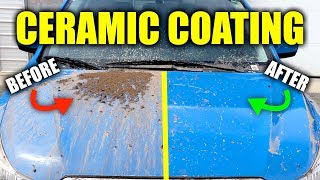

Ceramic Coating Myths Debunked
45sDirectly addresses common exaggerated claims about ceramic coatings, sparking curiosity and debate among car enthusiasts.
▶ Play Clip"The title is accurate; the video thoroughly covers what ceramic coatings are, how they work, their benefits, and limitations, delivering exactly what it promises."
This video explains the real benefits and limitations of ceramic coatings, focusing on XPEL's Fusion Plus product. It covers how ceramic coatings work, their application process, and common misconceptions, emphasizing that they are like a semi-permanent wax that makes cleaning easier but does not prevent scratches or eliminate the need to wash your car.
The video introduces ceramic coatings, partnering with XPEL to discuss their new Fusion Plus product, and emphasizes realistic expectations about what coatings can and cannot do.
Claims that ceramic coatings prevent scratches, rock chips, or eliminate car washing are inaccurate. Real benefits include easier paint maintenance, protection from tree sap and bird droppings, deep gloss, and hydrophobic properties.
XPEL Fusion Plus is a silicon-based product with nanoparticles that create an inseparable bond with the paint, lasting several years (4-year warranty based on third-party testing). It is like a semi-permanent wax or sealant.
Paint must be perfectly clean and corrected if applied directly. If applied over paint protection film (PPF), paint correction is not needed. Ceramic coatings seal swirls and scratches permanently, so paint should be as perfect as possible.
The process involves using a dropper to apply the coating to a microfiber towel, applying in small sections, wiping off excess when streaky, and a final wipe. Safety gear (gloves, eye protection, respirator) is required. Professional installation is recommended due to the need for precise conditions and surface preparation.
After application, the coating cures for 24 hours without water exposure, and fully cures in about 4 days. Gloss increases during this period.
A demonstration shows that the coated side of a hood repels mud and water more effectively. The coating has self-cleaning properties: dirt sticks to water droplets and is blown off while driving.
Ceramic coatings do not eliminate the need to wash the car; they make washing easier and remove the need for waxing. A two-bucket method wash and drying with clean towels is recommended weekly. XPEL suggests using Ceramic Boost every 4-6 washes to maintain hydrophobic properties.
Ceramic coating can be applied over PPF without affecting the film's self-healing properties or rock chip protection. The coating is extremely thin, allowing the film to still heal scratches when heated. This combination provides the best of both worlds.
Ceramic coatings provide gloss, hydrophobic, and self-cleaning properties, but not heavy protection. PPF offers real protection against rock chips and scratches. Coating can go on top of PPF, but not vice versa.
Ceramic coatings are a valuable addition for easier maintenance and enhanced appearance, but they are not a substitute for paint protection film or regular washing. Combining both products offers optimal protection and convenience.
What is a ceramic coating best compared to?
A semi-permanent wax or sealant.
1:16
How long does XPEL Fusion Plus ceramic coating last according to its warranty?
4 years.
1:24
What should be done to the paint before applying a ceramic coating directly?
The paint must be perfectly clean and any paint correction should be done beforehand.
1:47
Can a ceramic coating hide swirls or scratches?
No, it seals them permanently, so the paint should be as perfect as possible before application.
1:54
What safety equipment is recommended when applying a ceramic coating?
Skin and eye protection, and a NIOSH-approved respirator if not in a well-ventilated area.
2:34
How is XPEL Fusion Plus applied?
Using a dropper to apply a few drops to a microfiber towel, then applied to the vehicle in small sections.
2:52
What should you do when the product starts to develop a streaky appearance?
Wipe off the excess with a microfiber towel, then do a final wipe with a separate towel.
3:01
How long should you avoid getting water on the coating after application?
For the first 24 hours.
4:53
How long does it take for the coating to fully cure?
About 4 days.
5:03
Does a ceramic coating eliminate the need to wash your car?
No, it makes washing easier but you still need to wash the car regularly.
6:05
What is recommended to maintain the hydrophobic qualities of the coating?
Apply Ceramic Boost every 4 to 6 washes.
6:57
Can a ceramic coating be applied on top of paint protection film?
Yes, and it does not negate the film's protective or self-healing properties.
7:03
What is the pencil hardness rating of a good ceramic coating?
9H, the highest rating on the pencil hardness test.
8:18
Can a paint protection film be applied over a ceramic coating?
No, it is very difficult for the film to bond to the coating, so the coating must be removed first.
10:04
Realistic Expectations
Clarifies common misconceptions that ceramic coatings prevent scratches or eliminate washing, setting accurate expectations.
0:22Semi-Permanent Wax Analogy
Provides a simple, relatable way to understand ceramic coatings as a long-lasting wax or sealant.
1:16Hydrophobic and Self-Cleaning Demo
Visual demonstration shows how the coating repels mud and water, and explains the self-cleaning mechanism.
5:12Compatibility with PPF
Reveals that ceramic coating can be applied over PPF without affecting self-healing, offering combined benefits.
7:03Summary of Coating vs. Film
Clearly distinguishes the roles of ceramic coatings (gloss, hydrophobicity) and PPF (rock chip protection).
9:23[00:00] hello everyone and welcome in this video
[00:02] we are learning all about ceramic
[00:05] coatings this is all things to expell
[00:07] who I've partnered with on the video to
[00:09] learn about the ever-popular world of
[00:11] coatings they've recently launched their
[00:13] new product fusion plus and what I
[00:15] appreciate about expell is that they're
[00:18] very realistic about what ceramic
[00:19] coatings can and cannot do if you
[00:22] followed the ceramic coating craze
[00:24] lately you may hear claims like these
[00:26] coatings completely preventing scratches
[00:29] and Rock chips or that you'll never need
[00:30] to wash your car again not exactly
[00:33] accurate but that's not to take away
[00:35] from the very real benefits that these
[00:37] coatings provide like the ease of
[00:39] maintaining your paints cleanliness
[00:41] protection from things like tree sap bug
[00:43] guts and bird droppings the deep glossy
[00:46] appearance and of course they're very
[00:48] popular hydrophobic or water repelling
[00:50] qualities so let's start with how it
[00:53] works why it's useful and then get into
[00:55] some of the more common misconceptions
[00:57] expell ceramic coating fusion plus is a
[01:00] silicon based product so you have a
[01:03] carrier fluid containing nanoparticles
[01:04] and these tiny particles create an
[01:07] inseparable bond with your paint work
[01:09] that can't easily be washed off like a
[01:12] wax or sealant really one of the easiest
[01:15] ways to think about a ceramic coating is
[01:16] like a semi-permanent wax or sealant
[01:19] semi-permanent in that it lasts for
[01:21] several years in this case expels
[01:24] coating comes with a four year warranty
[01:25] the duration for the four year warranty
[01:27] was set based on third-party accelerated
[01:30] wear testing applying the product starts
[01:33] with the condition of your car's paint
[01:35] and whether it's being applied to the
[01:36] paint directly or on top of a paint
[01:39] protective film in this video the
[01:41] ceramic coating is being applied on top
[01:43] of the expelled paint protection film on
[01:45] my Tesla Model 3 if it's applied
[01:47] directly to your paint you'll want the
[01:49] paint to be perfectly clean and any
[01:51] paint correction to be done beforehand
[01:54] ceramic coatings will not hide swirls or
[01:56] scratches instead they'll seal them and
[01:59] permanently so it's important that you
[02:01] have your paint as perfect as possible
[02:02] before applying the coating if the
[02:05] ceramic coating is being applied on top
[02:07] of a paint protection film then paint
[02:09] correction is not required
[02:10] and unlike ceramic coatings protective
[02:13] films can
[02:13] cover up and hide light swirls and
[02:16] scratches on a clear coat as the
[02:18] adhesives of the film fill in the gaps
[02:20] on the paint surface we'll get more into
[02:22] the differences between protective films
[02:24] and ceramic coatings later in the video
[02:27] the application process itself is pretty
[02:29] straightforward similar to painting a
[02:31] car proper protection is required this
[02:34] includes skin and eye protection as well
[02:36] as a knee OSHA approved ventilator if
[02:38] you're not working in a well-ventilated
[02:40] area the risk of inhaling fumes with
[02:42] liquid based products that are applied
[02:44] directly is decreased versus spray-on
[02:47] coatings however a proper respirator is
[02:49] never a bad idea fusion plus is applied
[02:52] with a dropper to a micro suede towel
[02:54] and then applied to the vehicle in small
[02:56] sections after applying to a small area
[02:59] once the product starts to develop a
[03:01] streaky appearance and is beginning to
[03:03] flash off you wipe off the excess with a
[03:06] microfiber towel and then a final wipe
[03:08] down with an additional separate
[03:10] microfiber towel if applying the ceramic
[03:12] coating to glass it may require a third
[03:15] wipe down with a slightly water damped
[03:17] microfiber towel to remove any haziness
[03:20] that may appear the coating will be
[03:22] perfectly clear on glass when applied
[03:24] correctly the process is repeated for
[03:26] the entire car and you can slightly
[03:28] overlap sections which won't leave any
[03:30] visual indication to ensure the complete
[03:33] car is covered some ceramic coatings are
[03:35] sold as DIY kits some are professional
[03:38] install only expel fusion Plus only
[03:41] allows for professional installation
[03:43] there are several reasons for this first
[03:46] taking proper safety precautions is
[03:48] certainly easier to control in a
[03:50] professional environment glasses gloves
[03:53] and respirator and while the application
[03:55] process is fairly straightforward it's
[03:57] also just as easy to mess up the biggest
[04:00] thing is preparing the paint surface
[04:01] making sure proper correction is done
[04:04] before applying the product and that the
[04:06] surface is perfectly clean when applying
[04:09] the product things like humidity
[04:10] temperature and how much you apply can
[04:13] all change how quickly the product
[04:15] starts to flash off which alters the
[04:16] exact time you should wipe the surface
[04:18] down if you apply too much product or to
[04:21] a dirty surface you can leave behind a
[04:23] streaky appearance drips or sealed dirt
[04:26] to the surface
[04:27] once the product has cured it's
[04:28] difficult to remove and also difficult
[04:31] to tell if you fully removed it to
[04:33] remove it requires polishing aggressive
[04:35] compound or worst case wet sanding I've
[04:38] shown some panels here with what it can
[04:40] look like when the product has not been
[04:42] properly applied versus when it has been
[04:44] installed correctly with the paint in
[04:46] good shape a full installation can
[04:48] happen in a few hours then the coating
[04:51] needs time to cure for the first 24
[04:53] hours you shouldn't get any water on the
[04:55] surface the coating cures with exposure
[04:58] to sunlight or even just air while it
[05:00] can happen sooner the surface will be
[05:03] cured after four days during this curing
[05:05] process the gloss of the finish will
[05:08] actually increase peaking and glossy
[05:10] appearance days after the installation
[05:12] here's where it gets fun while the
[05:14] entire surface including all of the
[05:16] glass on my Tesla Model 3 was coated we
[05:19] coated just half of the hood on my crust
[05:21] wreck as an experiment commence throwing
[05:23] buckets of mud on top of the hood the
[05:26] left side of the hood does not have a
[05:27] ceramic coating though it is covered in
[05:29] expel paint protection film no worries
[05:32] no paint was harmed in the making of
[05:34] this video as you can see the ceramic
[05:36] coating on the right side of the hood
[05:38] has significantly less friction and is
[05:40] more hydrophobic the mud wants to drain
[05:43] right off whereas the non coated side
[05:45] keeps the dirt on top this also
[05:47] illustrates another fascinating property
[05:50] of the ceramic coating and that it has a
[05:51] self-cleaning characteristic dirt on the
[05:54] surface of the car would rather stick to
[05:56] water droplets than the paint surface so
[05:58] when it rains dirt traps in the water
[06:01] droplets and is blown off the car as you
[06:03] drive so does all of this mean you never
[06:05] have to wash your car again no
[06:08] absolutely not
[06:09] you still have to maintain the surface
[06:11] of a coated car it simply makes washing
[06:14] your car significantly easier and it
[06:16] eliminates the need to apply a wax or
[06:18] sealant afterwards no more waxing in
[06:21] fact waxes and sealants often have
[06:24] solvents within them which should not be
[06:26] used on a ceramic coating you don't want
[06:28] to use acetone or lacquer thinners
[06:30] either as these can degrade the surface
[06:32] isopropyl alcohol can be used to remove
[06:34] stains for water spots which yes you can
[06:38] still get with the ceramic coating you
[06:40] can remove the
[06:41] with a water vinegar mix again think of
[06:43] coatings like a permanent wax or sealant
[06:45] you still need to wash your car it's
[06:47] just easier and you won't have to wax at
[06:50] the end a simple 2 bucket method wash
[06:52] and then drying the surface with clean
[06:54] towels is recommended weekly expel also
[06:57] recommends applying ceramic boost every
[06:59] 4 to 6 washes to help maintain the
[07:01] hydrophobic qualities of the coating
[07:03] another fascinating thing about this
[07:05] coating is its compatibility with paint
[07:07] protection films this is something I
[07:09] didn't quite understand before seeing
[07:11] the install process if a ceramic coating
[07:14] a hard glass like surface is applied on
[07:17] top of a urethane paint protective film
[07:19] like expel wouldn't that negate the
[07:22] protective properties of the film
[07:24] allowing for cracks and rock chips and
[07:26] also remove the self-healing properties
[07:28] of expels paint protection films and yet
[07:30] it does not much of this is a result of
[07:33] how incredibly thin the ceramic coating
[07:35] layer is the flexible protective film
[07:39] helps prevent rock chips by spreading
[07:41] out the stresses of a rock on impact and
[07:43] because the ceramic coating is so thin
[07:45] the self-healing properties of that film
[07:47] still work here's a quick little test to
[07:50] demonstrate this we have a sheet of
[07:52] painted metal then covered an expell
[07:54] ultimate plus paint protection film and
[07:56] then covered in fusion plus ceramic
[07:59] coating first I'm spraying water on the
[08:01] surface to show the hydrophobic
[08:03] properties of the ceramic coating next I
[08:06] take a brass brush and create surface
[08:08] scratches on the film and coating as you
[08:11] can see you can still scratch a ceramic
[08:13] coating even when this has a scratch
[08:15] resistance of 9h the highest rating on
[08:18] the pencil hardness test and the
[08:20] standard for a good ceramic coating next
[08:23] a heat gun is used to heat up the
[08:24] surface and as you can see just like a
[08:27] non coated expelled paint protection
[08:29] film the surface heals just fine again
[08:31] it comes down to just how thin the
[08:34] ceramic coating is so is the coating
[08:36] still there a few sprays of water and
[08:39] you can see the hydrophobic qualities of
[08:40] the ceramic coating remain so with a
[08:43] paint protective film and a coating you
[08:45] get the best of both worlds this was
[08:48] pretty mind-blowing for me to watch and
[08:50] to be honest I still don't fully
[08:52] understand what's happening at the
[08:53] molecular level
[08:54] essentially the brass brush is
[08:57] rearranging the protective film
[08:58] structure and with some heat it's back
[09:01] to a lower energy state that's smooth
[09:03] and flat the ceramic coating is bonded
[09:05] to that topmost surface and rearranged
[09:08] with the film as it's heated leaving
[09:10] behind no noticeable scratches and a
[09:12] smooth surface again after allowing the
[09:15] coating some time to cool and then
[09:16] spraying again with water you can see it
[09:18] still maintains the hydrophobic
[09:20] properties of the ceramic coating so as
[09:23] a brief summary of the to a ceramic
[09:25] coating we'll provide some basic
[09:27] protection but it is more so about the
[09:29] depth and glossy appearance as well as
[09:31] hydrophobic and self-cleaning properties
[09:33] again think relatively permanent wax
[09:37] paint protective films on the other hand
[09:39] will offer real protection against rock
[09:41] chips and scratches ceramic coatings can
[09:44] also be applied to matte surfaces like
[09:46] on the trim of my Tesla or the carbon
[09:48] fiber spoiler without significantly
[09:50] altering the matte appearance while you
[09:53] could get either product individually
[09:55] and both have their advantages it is
[09:57] important to note that a ceramic coating
[09:59] can go on top of a paint protective film
[10:01] but not the other way around if a car
[10:04] has a ceramic coating it makes it very
[10:06] difficult for a paint protective film to
[10:08] bond to the surface so the coating has
[10:10] to be removed before installing the film
[10:13] and obviously since the paint protective
[10:15] film is a much thicker layer by covering
[10:17] up the ceramic coating you will lose the
[10:19] purpose and benefits of that coating
[10:21] putting the coating on top of the film
[10:23] gives you the best of both worlds
[10:25] so a huge thank you to expell for
[10:27] partnering on the video and of course
[10:29] for sharing so much information about
[10:31] ceramic coatings if you're interested in
[10:33] having expell ceramic coating installed
[10:35] on your vehicle i've included a link to
[10:38] their dealer locator in the video
[10:39] description I'll also include additional
[10:42] information in the video description
[10:43] about pricing as this will be dependent
[10:46] on how much paint correction is required
[10:47] paint protective film coverage and
[10:49] installer labor rates based on location
[10:52] thank you all so much for watching if
[10:54] you have any questions or comments feel
[10:56] free to leave them below

⚡ Saved you 0h 10m reading this? Transcribe any YouTube video for free — no signup needed.