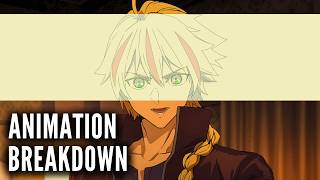

The Rare Dual-Director Setup Explained
60sAnime fans love behind-the-scenes insights, and the explanation of how two directors can work together without friction is intriguing and rare.
▶ Play Clip"The title promises a visual breakdown and delivers it, though the 'But...' hints at criticism which is present but not the main focus."
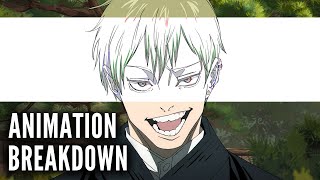
This video provides a detailed visual breakdown of the anime Fate/Strange Fake, analyzing its aesthetic strengths and production issues. The creator praises the show's bold visual identity, character designs, and background art, while also critiquing the inconsistent animation quality across episodes.
Fate/Strange Fake is described as a visual powerhouse with impressive 2D animation, modern sensibilities, and a bold aesthetic, though not without flaws.
The show is directed by Shun Enokido and Takahito Sakazume, a rare dual-series-director arrangement that works due to their long partnership and creative alignment.
The fictional city of Snowfield is modeled after Las Vegas (outskirts) and Los Angeles (interior), with the team scouting both locations to capture atmosphere, not just architecture.
Character designer UK Yamada uses bold lines and sharp edges, processed to pop, with compositing by Yohei Miyahara letting the 2D drawings do the heavy lifting.
Episode 1, directed by Enokido, is an introduction with less animation but strong aesthetic, featuring 15 animation/assistant animation animators, indicating a rushed production.
Episode 2, directed by Sakazume, is more ambitious but inconsistent, with a rough first half and an excellent second half featuring strong action storyboarding and background animation.
Episode 3, storyboarded by Sakazume, features fantastic action and animation, including a reused sequence from a commercial with new frames, and highlights like Yuka Toyama's hand-to-hand combat.
Episode 4, storyboarded by Enokido, has solid action animation from various animators, though not flawless.
Episode 5 is more laid-back, with nifty acting and effects, serving as a breather between action-heavy episodes.
Episode 6 is the standout, outsourced to a studio with more time and resources, featuring top-tier animation from names like Shu Sugita, Chris, and Road Sign, with high polish.
Episode 7 is the weakest, with visible issues and corner-cutting, highlighting the quality gap between high and low priority episodes.
Episodes 9 and 10 are expected to be big, suggesting episode 7 was sacrificed, and episode 8 may also look rough.
Fate/Strange Fake is a visually impressive but flawed production, with a strong aesthetic and standout episodes undermined by inconsistent quality. The creator hopes future episodes will maintain higher standards.
Shun Enokido
person
Takahito Sakazume
person
UK Yamada
person
Yohei Miyahara
person
Yuka Toyama
person
Kazuki Kawagoe
person
Shun Miyakawa
person
Hirotaka Mori
person
Shu Sugita
person
Chris
person
Road Sign
person
Kaito Tomioka
person
Takahiro Ukawa
person
Masayuki Sakoi
person
Kazu Takasugi Yama
person
Honehone
person
Harumi Yamazaki
person
Toranosuke Hori
person
Atsushi Yonezawa
person
Akito Takahashi
person
Ryota Saito
person
Kazuma Yuki Nakosaka
person
Yuto Uchida
person
Shoya Sakaguchi
person
Weilin Zhang
person
Kazutaka Sugiyama
person
Shun Shibata
person
Who are the two series directors of Fate/Strange Fake?
Shun Enokido and Takahito Sakazume.
01:09
What real cities is Snowfield modeled after?
Las Vegas for the outskirts and Los Angeles for the interior.
04:12
Who is the character designer for Fate/Strange Fake?
UK Yamada.
05:03
What is the role of director of photography Yohei Miyahara?
He handles compositing, letting the raw 2D drawings do the heavy lifting.
05:15
Which episode is considered the standout in terms of animation quality?
Episode 6, which was outsourced and given more time and resources.
12:01
Which episode is considered the weakest?
Episode 7, which had visible issues and corner-cutting.
13:33
How many animation and assistant animation animators worked on Episode 1?
15.
07:02
What is the unique aspect of the dual directorial arrangement in Fate/Strange Fake?
It's rare for a seasonal anime to have two series directors, but they work as 'sworn partners' with minimal creative friction.
02:53
Realistic City Design
The team scouted Las Vegas and LA to capture atmosphere, not just architecture, making Snowfield feel more real than typical anime locations.
04:12Bold Character Design
UK Yamada's use of thick, sharp lines and the compositing approach make the 2D art pop, setting a strong visual identity.
05:03Episode 6 as a Benchmark
The outsourced episode with extra resources demonstrates what the show can achieve, setting a high bar for quality.
12:01Quality Gap Problem
The contrast between episodes 6 and 7 highlights the industry's challenge of balancing ambition with production constraints.
13:33[00:02] anime. It's the textbook definition of a visual powerhouse, the kind that makes spontaneously combust and need a change of pants afterwards. It looks very good, to put it in normal terms. From the
[00:15] designs and the overall aesthetic to the amount of high-level 2D animation, from to the all-around modern sensibilities of the visuals, Fate/strange Fake is an incredible work of art. It's a show made by some of the most creative people in
[00:29] the industry, and it looks like it. Sure, it's not exactly perfect. There are issues, there are visual cracks, quite a few of them, but overall, it's an incredibly cool, memorable work, and as such, let's break down the visuals. I
[00:42] impressive shot. seven episodes in, it's a bit too late for that, but I'll try to cover as much as I can. Let's jump right into it. Make sure to subscribe. Don't be a strange Fake fan. Press the subscribe button. Does that work,
[00:56] can also become a member of this exclusive videos per month, custom badges and emojis, shout-outs, and more. button. So, as some of you may know,
[01:09] Fate/strange Fake is directed by the dynamic duo of Shun Enokido and Takahito interesting. This will get a bit long-winded, but stay with me. You see, usually shows tend to have one series director, not two. The idea is to have
[01:24] one creative lead, one guy who lays down the law, artistically speaking, one guy who has the final say when it comes to, well, everything. Now, yes, some projects do have multiple directorial credits, but rarely in the manner in
[01:36] which strange Fake does. I'll explain. Some shows might have an action director. Chainsaw Man season 1 was directed by Ryouno Kayama, but Tatsuya Yoshihara was the action director. Yoru no Yatterman was directed by Tatsuya
[01:49] Yoshihara, but Ryouno Kayama was the action director, just the other way around. More recently, Free! and season 1 was directed by Keichiro Saito, Toru he was our was the action director because Saito wasn't confident in his
[02:01] action direction abilities. Stuff like that isn't uncommon but there's a clear director handles the action and the series director handles everything else nice and well defined. Some directorial
[02:13] credits aren't that well differentiated. A chief and series director arrangement usually supervises stuff on a broad scale while the series director does hands-on work so the two directors don't have equal billing and there's very
[02:27] little overlap between their roles. Similarly, some shows have assistant directors fairly self-explanatory or unorthodox directorial credits like those older ufotable shows while other shows may have multiple series director
[02:39] credits but that's usually because either the show is a long-running anime supervise a project for years and years or because the director for whatever else had to fill in. Basically, the point I'm trying to make
[02:53] with that long-winded yap session about unrelated shows is that it's extremely rare for a traditional seasonal anime to have multiple series directors since an arrangement like that would undoubtedly lead to a lot of creative friction but
[03:05] Strange Fake is an exception to that rule. Why, you may ask? Because the two Sakazume are according to their own words sworn partners. They have worked together for years and years. They are from the same generation of artists.
[03:19] sensibilities. Even their birthdays are a day apart because of course they are. creatively speaking. I'm sure they there but broadly speaking they are creatively in tune enough to lead this
[03:33] project together to direct it back and forth and I'm sure having two incredible directors leading a project with very little creative friction was a lifesaver exactly the most healthy thing in the world. More about that stuff later.
[03:47] impressive scene given the confines of time, let's instead focus on the overall aesthetic because for a project like this, that's half the battle. If it wasn't obvious already, a lot of thought and effort has gone into the all around
[04:00] visual look of this show. From the style of background art to the character designs and even the line processing, Strange Fake has a bold visual identity that makes every shot, every frame look appealing. Let's start with the
[04:12] backgrounds and work our way up. The show takes place in the fictional city of Snowfield, but the references used to model the city are far from a technical POV, Snowfield is modeled after both Las Vegas and Los Angeles.
[04:26] The outskirts are based on Vegas and the interior is based on LA. The team went to both cities for location scouting. Also, just so you know, when I say referring to recreating the buildings and the architecture. You can use Google
[04:38] Maps for that. I'm talking about recreating the overall atmosphere, something you can only feel when you're physically present. It's not just the amount of clouds in the sky, the mannerisms of the people, how friendly
[04:51] they are, the clothes they wear. All of that stuff was taken into account while creating the fictional city of Snowfield. In a way, it's more real than many of the real-life locations you see in anime. Really cool stuff.
[05:03] Besides that, we have the actual art style, the characters and whatnot, and it too looks incredible. Character designer UK Yamada did a fantastic job making liberal use of bold lines and sharp edges. These lines were then
[05:15] processed in a manner that made them pop out in the best possible way. As you can is very thick. It's pronounced, it's eye-catching. Plus, the style of compositing utilized by director of photography Yohei Miyahara he makes the
[05:29] actual raw 2D drawing do most of the heavy lifting, which in turn makes line placement crucial. Here's the thing, it's not as simple as, "Oh, let's make cool." There's a lot of thought and effort that goes into a decision like
[05:42] that. We'll make the lines thick. Cool, how will we add additional line work? lines are evenly thick? Will the contours translate well? How will the shadows work? Will the shadows work with the line work? It's not simple.
[05:55] Basically, executing a style like this in such a competent manner requires a lot of coordination between the design, color, and compositing teams. Because of this quite frankly gorgeous aesthetic, Fate/Strange Fake just looks good, you
[06:08] know? It's just good even when there's not much happening animation-wise or when the visuals are falling apart. When I said that nailing the overall like this, I meant it. The all-around aesthetic is genuinely one of the best
[06:20] things about this show. With all that being said, let's finally gloss over them for the most part. It's not possible for me to talk about every scene in detail. Also, I'll ignore the Whispers of Dawn Special because it's
[06:34] been like 77 years since it aired, and I don't really remember most of it. Ready? The first episode, directed and storyboarded by series director Shun Enokido, was more of an introduction, visually speaking. It wasn't as
[06:47] bombastic or animation-heavy as some of the future episodes, but it didn't need overall aesthetic breathe, and that's exactly what it did. Also worth nightmare behind the scenes. It was screened months in advance, meaning the
[07:02] team probably had to wrap it up as soon as possible. A fact corroborated by the staff list, which features a whopping 15 animation and assistant animation animators. Doesn't exactly scream healthy, does it? The episode itself was
[07:17] over-the-top thing in the world, plus a bit of jank here and there, but the amazing storyboards and aesthetic more than made up for that. Also, just because it was a bit tame compared to its future self doesn't mean it didn't
[07:29] have highlights. It very much did. B H Imbada's bouncy, energetic, and surprisingly consistent character acting animation and the short burst of action Yuka Toyama and director Enokido
[07:41] tremendously consistent volumetric shots and a bunch of cool effects. The episode had its moments, it most definitely did. The second episode, directed and storyboarded by the other series director Takahito Sakazume, was a lot
[07:55] more ambitious and as a result, it was a lot more inconsistent. The first half of it was rough, tons of melt, tons of jank, wonky drawings, it was the know what? Buckle up because it's the mandatory whining about the state of the
[08:09] modern anime industry portion of this video, might as well get it out of the way. Fate/Strange Fake, much like any other ambitious modern anime, is a flawed production. It has many, many issues. As is customary, it's punching
[08:22] way above its weight because it knows it has a safety net known as cartoonishly large AD and second key accounts to fall back on. It's basically brute forcing its way through the episodes. Now, do I expect an ambitious anime to look
[08:34] flawless from front to back? Not really, it's TV anime, it's an inherently economical format, it's built around compromise. Of course, it's not going to be an unrestrained sakuga fest from front to back, but it doesn't need to
[08:46] look this broken either. When I say compromise, I mean maybe some episodes layouts are less complex, maybe the animators take the easy way out every once in a while. That's compromise, the good kind of compromise. All of the
[09:00] above and the final product is still falling apart is the bad kind of I'm not exactly surprised by the state of this production. In fact, I predicted it a while back, but it is quite sad, the fact that it's getting increasingly
[09:13] difficult for an ambitious anime to exist without glaring issues. Strange Fake, Jujutsu Kaisen, Sentence to be a Hero, you name it, all of them have visual issues. The anime industry of doom spares no one except for Kyoto
[09:25] Animation. Anyway, that's enough pessimism. Let's get back to the breakdown, the good kind of breakdown. The second half of episode two was really good. Sakazume is fantastic at action storyboarding and
[09:37] unsurprisingly the fight was insane. The compositions, the tempo/pacing, the sense of rhythm, it was amazing. Plus, while it did have issues, the animation largely kept up. You had tons of smooth movement, beautiful effects, and a
[09:50] metric ton of background animation. Like seriously, Honehone, Harumi Yamazaki, Yuka Toyama, Toranosuke Hori, artist unknown, all of them got in their background animation bags. Amazing stuff.
[10:03] Episode 3 was also story boarded by Takahito Sakazume with A-1 Pictures in-house Kazuki Kawagoe taking over episode direction duties and it was more of the same. Fantastic action storyboards, fantastic animation, and
[10:15] quite a few visual issues. Fun fact, this episode actually reused a sequence original sequence was animated entirely featured additional frames drawn by Sakazume and Ismogo. Also, really cool
[10:30] end. The background was a static illustration in the commercial, so it's a new addition. Besides that, we had amazing action drawn by the likes of KDA artist and Sakazume himself, some cool fabric animation, and a fair bit of
[10:44] solid acting. Although the highlight was main animator Yuka Toyama's buttery smooth loose hand-to-hand combat, which looked insanely good. Also, quick designer Kazu Takasugi Yama, who showed up just to animate a chainsaw coming out
[10:58] of someone's body. A bit of an inside joke for nerds like us. Episode 4 was story boarded by Shun Enokido with A-1 Pictures in-house Kazuki Kawagoe on episode direction duties and while not flawless, it
[11:10] featured tons of solid action animation. You had the likes of Atsushi Yonezawa, Akito Takahashi, Ryota Saito, Kazuma Yuki Nakosaka, and more animating a particularly nice to see Kosaka after
[11:23] cool stuff. Episode 5 was more laid-back by because it followed back-to-back-to-back action episodes and two more action episodes followed it. The episode was
[11:36] directed by Takahiro Ukawa and storyboarded by Masayuki Sakoi with Ukawa also handling the storyboards and it was cool. Some nifty acting animated by Yuto Uchida, some cool effects and background animation added in there, not
[11:49] bad whatsoever. Episode six was the big one. It was the [music] episode if you know what I mean, the episode so far that is and it had a bunch of interesting stuff going on. Firstly, it was a with studio outsource
[12:01] and it was clearly given a lot more time and resources than the rest of the show at least so far. Secondly, the episode marked the debut of Shun Miyakawa as storyboard artist although it is worth mentioning that the episode director
[12:15] credit was divided between him and Hirotaka Mori and thirdly, the staff stacked with names like Road Sign, Honehone, Kaito Tomioka, Shu Sugita, Chris and more. Even the usually overlooked second key animator list
[12:29] featured major names like Weilin Zhang, Kazutaka Sugiyama and Shun Shibata. Basically, this episode was different. Be it the ambition, be it the amount of polish, be it the quantity of animation, it was clearly a few notches above this
[12:42] already good looking anime. Now of course, I can't exactly break this episode down given the confines of time but here's a quick recap. Shu Sugita animated the big climax understandable because that's kind of what he does.
[12:54] Chris animated a ton of weighty meticulous shots with lots of moving parts. Kaito Tomioka animated some buttery smooth action and effects. Road Sign flexed his trademark highly three-dimensional animation. Shoya
[13:06] Sakaguchi channeled his inner crackhead and animated the camera moving through his thing. Again, the episode was incredible. You could find a few very subtle issues if you went around looking for it and had a sharp eye but overall,
[13:20] this episode was insanely polished. Also, quick shout out to the Fate/Hollow Ataraxia reference in the second half made me jump out of my feet. Episode 7, the most recent episode as of this recording, was unfortunately the
[13:33] exact opposite of episode 6. It looked rough, it lacked polish, there were visible issues and instances of corner-cutting. It was easily the weakest episode from this show and that's precisely why I went on that
[13:45] bad a few minutes back because producing episodes like episode 6 are also forced to produce episodes like episode 7. Look, it wasn't awful. There were a few
[13:58] solid shots. People hated the CGI, but I thought it was fine. It wasn't horrendous. I've seen far worse, but it wasn't something a production of this caliber should be putting out and that's the point. There's nothing wrong with
[14:10] dividing episodes into low and high priority, but there shouldn't be such a big quality gap between the two. Again, that's the bad kind of compromise. Based on what I've heard, episodes 9, 10, and so on should be big episodes.
[14:23] So, I guess they just fed episode 7 to the lions. In fact, I wouldn't be surprised if episode 8 also looks rough. I hope it doesn't, but it's entirely within the realm of possibility. Like I said, the quality gap is simply too high
[14:35] and it's unfortunate. And that's the show, not without its amount of corner-cutting, but ultimately a very powerful, memorable watch. Also, on the way, so I'm really looking forward to watching them and maybe even
[14:51] breaking them down if time allows. That's about it. A special thanks to Noot 03, Amir, The Gallus 90, and Sheik Hassan for becoming tier three members. Hassan for becoming tier three members. And until next time.
⚡ Saved you 0h 15m reading this? Transcribe any YouTube video for free — no signup needed.