
Why 95% of Traders Lose Money
44sHigh relatability and shock value about failure rates hook viewers who want to avoid losses.
▶ Play Clip"Delivers solid risk management advice but padded with sponsor read and basic explanations; title promises 'no liquidation' which is achievable with the rules given."
This video explains how to trade futures without liquidation, focusing on risk management, leverage, and position sizing. The presenter emphasizes that most beginners lose money due to misunderstanding key concepts like stop-loss, margin types, and over-leveraging. The goal is to provide a safe approach to futures trading.
The primary reason people lose money is a lack of understanding of how trading works, including basic concepts like stop-loss, take-profit, and risk management.
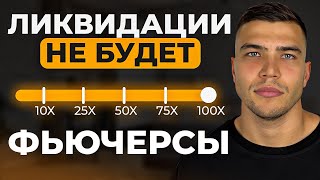
Leverage allows borrowing up to 100x funds, increasing risk. Isolated margin limits loss to a specified amount, while cross margin uses the entire deposit to avoid liquidation.
Limit orders allow entry at a desired price with lower fees, while market orders execute immediately at current price with higher fees.
High leverage leads to quick liquidation. Beginners should avoid leverage entirely and trade with position size equal to their deposit.
Using leverage, never open a position larger than your deposit. For a $1,000 deposit, trade with $1,000 or less to avoid liquidation.
Stop-loss limits losses and protects against liquidation. Even with cross margin, a stop-loss is essential.
Never risk more than 10% of your deposit on a single trade. Divide deposit into 10 parts and trade with one part at a time.
Divide your trade into multiple smaller entries (e.g., 4 entries of $25) to average in and avoid stop-loss hits.
Shorting low-volume, volatile coins can lead to infinite losses. Stick to major assets like Bitcoin, Ethereum, and Litecoin.
By following strict risk management rules—never over-leveraging, always using stop-loss, and entering in parts—beginners can trade futures without liquidation and protect their deposits.
What is the main reason beginners lose money in futures trading?
Lack of understanding of basic concepts like stop-loss, take-profit, and risk management.
00:43
What is the difference between isolated margin and cross margin?
Isolated margin limits loss to a specified amount; cross margin uses the entire deposit to avoid liquidation.
03:15
What is the recommended maximum risk per trade as a percentage of deposit?
No more than 10% of your deposit.
08:05
Why is leverage considered evil for beginners?
High leverage leads to quick liquidation; beginners should avoid leverage and trade with position size equal to deposit.
05:04
How can you avoid liquidation when trading with leverage?
Never open a position larger than your deposit. For a $1,000 deposit, trade with $1,000 or less.
06:53
What is the benefit of entering a trade in parts?
It allows averaging in and reduces the chance of hitting a stop-loss.
09:09
Which assets are safer for shorting?
Major assets with high trading volume like Bitcoin, Ethereum, and Litecoin.
09:38
Ignorance is the Main Cause of Loss
Highlights that most traders lose money not because of market conditions but because they don't understand basic trading concepts.
00:43Leverage is Evil for Beginners
A strong warning that high leverage is dangerous for inexperienced traders and should be avoided.
05:04Trade Within Your Deposit
A concrete rule: never open a position larger than your deposit, which eliminates liquidation risk.
06:53Risk Management: Max 10% per Trade
Provides a clear, actionable risk management guideline that protects the deposit.
08:05Enter in Parts to Avoid Stop-Loss
A practical technique to reduce the impact of market noise and avoid premature stop-outs.
09:09[00:01] impossible if you follow these crucial rules, which are so easy and yet so difficult that 95% of traders are a great tool for making money,
[00:14] absolutely any market. This could be Forex, the cryptocurrency market, the market goes, you can make money on both the fall and the rise. But there are some nuances. And the first nuance is that behind the beautiful pictures of money, yachts, and
[00:29] islands, there is a real side to it, where people are wasting money, sometimes ever happening to you, just watch this video to the end, and you will change your attitude towards trading and futures odds. Let's start with owls and figure out
[00:43] why people lose. The first and most important reason for losing any funds on the exchange is simply a stupid misunderstanding of how everything works. Imagine coming to work for the first time and immediately taking on the most challenging task there
[00:57] is. Click on all the buttons that you have there on the terminal, on the computer, or do those things that you don’t understand at all. After all, this is what my channel's existence, I've received messages from completely different people with completely
[01:11] different deposits, who were ready to enter with 10, 20, 30 thousand dollars. At the same time, they didn’t even understand what a stop-loss was, what a take-profit was, or what risk management was. They were simply ready to hand over money simply because they were
[01:25] presented with a pretty picture. Therefore, we will now look at the most important terminal. This will be useful for both beginners and those who have been in the tab, because I already have plenty of videos on YouTube about
[01:38] about the most important things that are here graph. Here, accordingly, we will carry out the analysis. To the right we have a trading terminal. Here is everything related to your positions. So, you
[01:50] then futures, and this beautiful terminal opens in front of you . do so under the best possible conditions, with the best possible exchange has to offer. Follow the link in our description. Go ahead and register. The two most
[02:05] important buttons are located at the very top of the trading terminal. This is leverage, that is, funds borrowed from the exchange that you can take in order to trade futures. And the second is the types of margin. That is, essentially, the types of your trading.
[02:20] Bibit leverage allows you to borrow up to 100 times more funds than currently have about $1,000 in my account . 964 to be exact. Well,
[02:32] Thanks to the borrowed funds, I can enter into a position 100 times larger than my deposit. Naturally, this is not just like that . If you exceed your deposit 100 times, your transaction is 100 times riskier. Now, those who have been trading for a long time
[02:47] throw stones at me in the comments, saying that the leverage doesn’t matter, what matters is the volume of the transaction. I'm explaining this for beginners. Naturally, the shoulder is important. And the more funds you take from the exchange, the more logically you will quickly lose your
[03:01] later. It is only important for us to understand what it is . Well, let's move on to the types of walruses. The walrus type is isolated and cross walrus or margin trading. With isolated margin, only the amount of USD
[03:15] you specify is involved in the transaction. So, let's say I want to enter into a trade for $100. Taking into write $1,000 here, because I take the tenth leverage, respectively, 10 times more. And only these 100 USDT are involved in the transaction. If
[03:29] Bitcoin drops by 10%, I will be liquidated. Well, actually, if it drops by 9 liquidated, because liquidation is not mandatory, it is 100% of your deposit. And we also have a crosswalrus. This is the margin at which
[03:44] your entire deposit is involved in the transaction. That is, thanks to cross margin, we can ensure that you never experience liquidation if you approach the transaction with the have several options to enter into a trade.
[03:56] enter at the price you want. So, let's say Bitcoin is currently trading at So, let's say Bitcoin is currently trading at $110,492, and I want to go short at $111,000. Here I indicate it. I indicate the position size with
[04:08] which I will enter. taking into account the credit advantage and, accordingly, opening a short position. Or I can enter at the market, that is, I just immediately enter accordingly, my position will open. The difference between these two
[04:22] pay less commission for a limit order. If you enter with a limit order, the exchange commission will be significantly lower. Before this, I said that in my particular case, the position is You can change this here using this triangle, click the button
[04:36] will automatically calculate all opening and closing fees and will not take enter the price and the exchange opens the transaction for you. You can also fill in the amount of bitcoins, but this is inconvenient. We all trade USDT. That's why I
[04:50] chose the fill by cost mode for myself . I press the OK button. Well, and second reason people lose is that they want to get rich here by using leverage, by using all the
[05:04] exchange's capabilities, right now, in this particular transaction, with leverage and with their entire deposit, they will take, well, all the exchange's liquidity. Why are shoulders evil? Shoulders for beginners are absolute evil in my opinion. Why do
[05:18] I specify that it is for beginners? Because those who know how to use them make money with it. And many, as I already said, will say that the shoulders are not important. The size of your position is important. If it is the same at the hundredth leverage and the
[05:31] same at the first leverage, then in fact the transaction is no different. The nochki, not understanding all the intricacies of trading, take and enter with their entire deposit with a hundredth leverage. 1% movement on any coin and they get liquidated. Now I'm going to show you
[05:46] something very interesting, and you'll understand why position size is important and leverage is not . For beginners, the shoulder is also important. I don't recommend using leverage for beginners at all to trade without leverage at all. So, let's take a look. We are moving to the trading
[05:59] position for $100, no matter in which direction, with a tenth leverage. That is, I take, write 1,000 dollars and take the tenth liquidation. That is, now we can look at how the
[06:12] liquidation is calculated and where it will be. Only at $5,000 in Bitcoin will I get liquidated on a $100 long trade with my $ 1,000 deposit. That is, roughly speaking, when Bitcoin falls
[06:25] to 4,000, I will have liquidation. This is at the tenth shoulder. Now I take the same position, only with the first leverage, that is, without using borrowed funds. I'll 2,000 here, and it takes a long time to transfer. And let's click the
[06:38] "Calculate" button. We see that there is no liquidation price for a long position. That is, even if I enter my entire deposit with the first leverage, I will not have a if Bitcoin goes to zero. This is where our first and most
[06:53] important rule comes from. Never open trades larger than your deposit volume. If you have a deposit of $1,000, taking into account leverage, do not open transactions above $1,000. Then you will not have liquidation under any circumstances
[07:08] . I have already shown this to you clearly . The less you take from the exchange, the less likely you are to be liquidated. If you are a beginner, use small you will never have liquidation . You can average
[07:22] any position infinitely. Our next rule is simply: always set a stop-loss. Stop loss is a limitation of your loss. Even if you use cross-mortgage, and even if you trade with your entire deposit, you
[07:37] should still have a stop-loss. This protects you from both liquidation and simply. If you trade without a stop loss, again, even with averaging, this is incorrect trading. In any case, you will eventually run into some
[07:52] coin that will either fly in the wrong direction or fall in the wrong direction and simply wash away your deposit if you have a stop-loss. In any case, this is it. The larger your deposit, the greater the desire to increase it several times.
[08:05] You want to make money right now, as I explained in the very first rule. This should never be done. Risk management must always be observed. Everyone has their own, but it should not exceed 10% of your deposit.
[08:18] $1,000 lying here right now. If I enter into a trade, the maximum I can lose from this deposit, from one trade, is 50 bucks, or even better, 20 bucks. What do I usually do and how do I advise the guys who trade with me on
[08:32] my Telegram to do it for free? You take your deposit, divide it, if it's small, if it's up to $1,000, into 10 parts or five parts, preferably 10. The more you divide it, the less you 'll lose from a losing trade. Divide
[08:45] $1,000 by 10, you get $100. And we are already trading with these 100 bucks . We can distribute these 100 bucks across several trade entries. Let's say that Bitcoin is currently trading at $109,900 on the chart. I
[08:57] have two options for entry. Or enter the market here with one order, that is, for 100 dollars, and set a stop-loss. Then, if Bitcoin collapses now, my stop will be hit and, accordingly, I will lose my funds. Or
[09:09] divide these 100 dollars, say, into three entries or four entries. That is, here I go and enter at 25 dollars. Here, here and here. And I already have four limit orders, but the position is the same. At the same time, I
[09:23] can move the stop even further than I would have done simply by entering with one transaction. If you enter in parts, especially in long, this is correct. This makes it easier to maintain your position and avoid getting hit by a stop loss. With short trading, the principles are a little different , because depending on
[09:38] your coin choice, you can easily and simply liquidate. If you trade popular assets with a high trading volume that have been on the market for a long time , such as Bitcoin, Ethereum, Sala, LTC, and many others, then the likelihood of
[09:52] small; whether you go short or long, these assets don't really fly away right now. But if you trade all sorts of junk, mimcoins, or only pawned coins, if you open a short trade and try to average a million times, the coin can
[10:07] fly away by 1,000%, by 10,000%, you simply won’t have enough deposit. But if you follow all the rules I've talked about, about risk management, about working with leverage, about the size of your position, you will never lose.
[10:20] Even if you enter a gap, but at the same time set stop-losses, enter in parts and do not enter with your entire deposit, you will not have a liption. especially at the beginning, when
[10:35] trading. But if there is some community in which there are experienced traders who have been trading in the market for a long time , then it is much easier to do this. Therefore, be sure to go to the description of this video; there is a
[10:48] trading community, which is free for now, and you can trade with me for several years. But in general, if this video was useful, be sure to Well, have you been to Denisov Trade's channel? I wish everyone profit. Bye everyone.



⚡ Saved you 0h 11m reading this? Transcribe any YouTube video for free — no signup needed.