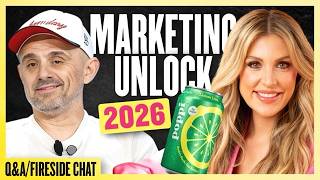

We Spent 9 Months Building Our Brand
57sReveals the extensive behind-the-scenes work in brand building, inspiring entrepreneurs to invest in brand identity.
▶ Play Clip"Delivers valuable marketing insights from two experts, though the title's absolutism is a stretch."
Gary Vaynerchuk and Poppi co-founder Allison Ellsworth discuss the critical differences between potential and actualized reach, the importance of brand-building over sales, and the need for scrappy, attention-driven marketing. They emphasize that big brands often fail by relying on outdated strategies, while entrepreneurs can win by taking risks and engaging authentically on social media.
Big brands run marketing based on the 1991 book 'How Brands Grow', confusing potential reach with actualized reach. They claim to reach millions but often reach none.
Gary cares about attention, which is currently at scale on social media. He urges entrepreneurs to focus on where attention actually is, not where they assume it is.
Allison explains that branding is harder than sales because it's art, not science, and requires trust. Sales are important, but branding makes people come to you.
After Shark Tank, Poppi spent nine months on a brand exercise, creating a 180-page brand book. They positioned themselves as 'soda for the next generation' with colorful, juicy cans.
Gary warns if your product sucks, good marketing only speeds up everyone knowing. Product and brand must both be excellent.
Gary advises making unlimited social media content for free. One post can change everything, but it requires mastering thumbnails, hooks, and platform specifics.
Allison says brands take too little risk. Poppi used an 80/20 rule: 80% planned, 20% for cultural moments (e.g., Love Island, Lakers partnerships).
Gary reiterates that big brands still use the 1991 playbook, ignoring fragmented media. They confuse potential reach with actualized reach, especially with TV and billboards.
Fortune 500 marketing suffers from subjective opinions making billion-dollar decisions. There's a lack of humility and an over-reliance on politics.
Gary argues we've moved past social media into an interest media era where algorithms find audiences for content, not followers.
Gary advises small businesses to learn from scrappy operators, not Fortune 500 companies. He never invests in startups founded by ex-corporate executives because they think big company instead of startup.
After Shark Tank aired during COVID, Poppi became digital-first, leaned into TikTok, and built a community. Allison became the face of the brand.
Gary quotes 'Never get high on your own supply' and stresses replying to every comment and DM. He built his career by replying to every tweet from 2007 to 2011.
Allison advises not letting ego get in the way. Find your superpower, build a team, and stay humble yet confident.
The core takeaway is that modern marketing requires actualized attention, authentic community engagement, and a willingness to take risks. Big brand playbooks are outdated; entrepreneurs must be scrappy, digital-first, and humble to build brands that bite.
What is the 80/20 rule mentioned by Allison Ellsworth?
80% of budget for planned campaigns, 20% for opportunistic cultural moments.
11:56
What book did Gary Vaynerchuk write about attention?
Day Trading Attention.
07:04
How long did Poppi spend on brand building after Shark Tank?
Nine months, creating a 180-page brand book.
03:21
What does Gary say happens when you market a bad product?
Good marketing speeds up everyone knowing your product sucks.
05:58
Why does Gary never invest in startups founded by ex-corporate executives?
Because they bring corporation thinking to a startup game and fail.
29:40
What is the 'interest media era' according to Gary?
Algorithms find audiences for content based on interest, not followers.
23:53
How many comments does Gary say you should reply to?
Every DM and every comment on your brand.
35:36
Potential vs. Actualized Reach
Critiques an industry-wide misconception that reach equals impact.
00:02Poppi's Brand Book
Demonstrates the depth of strategic brand work behind a successful startup.
03:2180/20 Risk Allocation
Provides a concrete budgeting rule for balancing planned and opportunistic marketing.
11:56Subjectivity in Big Brands
Explains how political decisions waste billions in marketing.
18:45Learn from Scrappy Operators
Advises entrepreneurs to ignore big brand tactics and emulate agile, resourceful players.
29:40[00:02] departments based on a book that was written in 1991 called How Brands Grow. They will run banner ads on websites, television commercials, billboards in places where everyone's on their phone and they'll say we reached this many
[00:15] people. The reality is you could potentially reach this many people and you reached none of them. So I think the disease that's destroying Fortune 5000 land is potential reach versus actualized reach. It's why I'm so
[00:27] obsessed with social. I care about attention and attention happens to be at scale in social right now. >> When you hear the phrase branding that bites, what does that mean to you? >> When I hear that, it it sounds like
[00:41] someone wanted to use the word bites to mean, you know, works or hits or whatever word you want to put in there. But at the end of the day, what I think, you know, Allison so masterfully did and other companies that have done it,
[00:57] there's so many people in the business world that are so obsessed with understanding how every single penny returns a dollar, right? Or a nickel or
[01:09] a dime. And for me, when I hear that sentence, I'm so passionate about branding and marketing because I know it's more effective than sales. And sales is so important. So many of you, I myself am a proud
[01:26] salesman. I love selling things. In fact, probably the thing I'm most passionate about right now is live social sh selling, right? The QVCification of social media with whatnot and Tik Tok shop. But when I
[01:40] hear that, it sounds to be like someone understood the assignment. You know, at the end of the day, we all want people to come to us and buy what we want to sell. We don't want to go to them and knock on the door and ask them to buy
[01:55] knock on the door and ask them to buy it. And I think that sales and marketing branding are the two functions. And I think that the marketing branding is think that the marketing branding is harder because it's gray. It's art. um
[02:08] you don't see it show up right away. There's a level of trust that has to come along with it. And look, I'm sure all three of us can attest to this. There's to the credit of people that struggle with loving branding and
[02:22] marketing, they sit on validity. You know, I I spent a lot of my time in Madison Avenue and 95% of marketing campaigns are very expensive failures. And that's a very And by the way, I'm
[02:37] being kind this morning. You know, I I truly believe that 95% is You know, I I truly believe that 95% is being kind. Um, and so there's a reason people struggle with it. As private equity starts to buy up a lot of things,
[02:52] you know, those are finance guys and gals. They struggle with it. They view gals. They struggle with it. They view it as a cost, you know, not uh a value prop. But for me, you know, branding that bites excites me. Awesome. Awesome.
[03:05] that bites excites me. Awesome. Awesome. And Allison, you started your brand And Allison, you started your brand literally in your kitchen sink and now you have national distribution and you have billions of dollars. Yes. Yes. Um,
[03:21] when did you first realize that Poppy's brand was just as important as the >> So, we're lucky that we were mother beverage before because let me just tell you that brand was [ __ ] you guys. And I know that I can say that our shark told
[03:36] us that. But we did have a great product. So it does start with the product, but you have to have both. You have to have product and brand. And I'm so blessed that we realized that really early on. So after getting a deal on
[03:51] Shark Tank, we took nine months off and did a brand exercise. And yes, I said nine months because a lot of people think building a brand is just something that you're like, "Okay, I know my mission. I know my values. I know my
[04:05] consumer. Let's go." There's so much more that goes into that from brand guidelines to understanding what where you show up, how you show up. I mean, we have a brand book that's like 180 pages long. It's it's kind of crazy. So for
[04:20] long. It's it's kind of crazy. So for us, we went through a big exercise of what you know what is Poppy? We're soda for the next generation. What do we do? We give people the freedom to love soda again at its best. I love saying as an
[04:33] adult, I've given you the freedom to enjoy grape soda, right? And like that's just really powerful. It's nostalgic. So you want to move really the thinking of head to the heart. You want to emotionally connect with your consumer.
[04:47] And so a lot of the work that we did is we want to call oursel a soda. So it's obvious we're in a 12 oz can, not a bottle, right? Where mother beverage was in a bottle before. We want to scream soda. Soda tastes good. At the end of
[05:00] the day, people drink soda because it tastes good. What looks juicier than color colorful bright cans with like glistening um in ice, right? That's juicy. That's like soda, not a white can with clean girl aesthetic.
[05:15] um you want to like like we knew all this going into it. So when we launched Poppy in March in 2020, literally the first week of COVID, we knew we were soda. Now, nobody else believed we were soda, right? That was a big thing. And
[05:29] put us. They thought we were sparkling water, a sister to kombucha. They didn't have anywhere that they knew kind of where to put us. So, but we knew. And I your values, right? Think of Nike just do it. They don't talk about their
[05:44] they connect with the consumer. And so we just led with the brand first. Take the time, invest in it, build the brand, but you also have to have a fantastic >> Amazing. That's amazing. >> I'm sorry to interrupt, but it's such an
[05:58] important point. Probably my favorite thing to do at Vayner Media, our marketing, branding agency, is when we actually tell clients that we would like to not work with them, which is very unusual in the agency landscape. And it
[06:12] always comes from a good place of really talking about product. I think, you know, we're very proud of what we do. If you feel good about your marketing skills, I think one of the great
[06:25] mistakes that small businesses make is there is they may be so good at marketing. Um, they have that salesmanship, they have that marketing, but their product sucks, you know. And I think you know all that
[06:39] good marketing does against a bad product is speeding up everyone knowing product is speeding up everyone knowing that your product sucks. >> Yeah. >> Don't fire me.
[06:53] Um branding is one piece of the equation and marketing is the other piece. And I remember you may not remember about a year ago was it a year ago you sent me your new
[07:05] book. We were on all the marketers were on our way to con the creativity festival and I read it on the plane front to back and when I got back home I asked my entire team to have that as a part of their book club reading because
[07:19] part of their book club reading because marketing has changed so much over the marketing has changed so much over the last 10 years, five years, one year. >> And you often talk about attention being the number one currency.
[07:31] >> 100%. How do small business owners decide when to show up and how do they break through the noise break through that noise in order to to really plant the seed of a of attention? >> I think you know when to show up is as
[07:48] often as you possibly can afford like why would you not right? I think where to show up >> is what I think a lot about. Um, you know, to me, that book was called Day Trading Attention. And it was important
[08:04] that I called it Day Trading Attention because I had finally understood what I've been doing for my whole career. You know, to remind some of you or if you know, to remind some of you or if you don't know, really, I learned my craft
[08:19] working in my dad's liquor store. It was a local onetore liquor store in Springfield, New Jersey. And I built that business from a $3.8 million to a that business from a $3.8 million to a $60 million business in a very short
[08:33] window, which is nice and a nice number and a big accomplishment. But as I've gotten older, it's even more profound to me because I did that without raising any capital. And my father was so immigrant, we didn't even have a credit
[08:47] line. And the business did 3.8 million on 10% gross profit. $380,000 before expenses. And in a six, sevenyear window, I built that business so quickly. And I was able to ask myself,
[09:04] what from that point in 1998 to today was I doing? And it was I was day trading attention at the time. There's a lot of youngsters in here. Having a "What are you talking about?" It'd be like if I showed up on stage right now
[09:18] chilling up here. like it was very advanced and then email marketing was advanced and then the big one at the time was Google. I bought Google Adwords when nobody else was doing that and then it was YouTube and then it was social
[09:33] media and right now it's live shopping or it's working content to show up on LLMs to be the first results when you're in chat GPT for what wine should I buy or who's a good entrepreneur or whatever it might be.
[09:46] Everybody here needs to do underpriced things. I learned how to market with no money, which is the greatest way to learn, right? As we know, big budgets,
[09:58] you know, you you didn't have as many dollars, things were scrappier. Now, in a PepsiCo world, they'll spend more money on a production day, you know, to promote this than you did in your whole year. So, for everyone here, this is why
[10:13] I'm completely obsessed. How many people here bit? Just give me your hands. Thank you. So, the people that raise their hands, So, the people that raise their hands, you know, I'm screaming on a daily basis
[10:28] in a 100 different ways saying the same [ __ ] which is make unlimited social [ __ ] which is make unlimited social media content organic. It's free. It's free. the the fact that every person in this room is literally one post away
[10:44] from things being different. Now, one post away sounds nice on paper. It's hard. How do you break through? That's why I wrote a 300 page book on it. It's details today. This second, the thumbnail, the first 3 seconds, how you
[11:00] keep people's attention at the 10 second mark on a 40 second video, the copy you support it with. Do you do a real or a carousel? Are you on Instagram, Tik Tok, Snapchat, Spotlight? Because no one's going there, YouTube Shorts, Facebook,
[11:16] you know, Twitter. It's a complicated framework, but for every face that I'm looking at right now, it is worth the 25 hours of deep education to get good at
[11:28] it because it is the lowest cost, highest upside to build your business. highest upside to build your business. >> Amazing. Amazing.
[11:43] Allison, you started on Shark Tank as someone seeking on Shark Tank as someone seeking funding and then you came back as a shark. >> And through that journey, you've seen a
[11:56] lot of brands, people, I'm sure, come to you for mentorship and advice every single day. What are what's the single biggest What are what's the single biggest mistake you see entrepreneurs making in
[12:09] their branding that you want this room to avoid? >> Yeah, I think you know just to comment on you, I was one post away from going viral and I did go viral and it changed my life. So that video now has 250
[12:23] million views and I have three billion views on my face on Tik Tok. So don't give up. Like that is such good advice. Um, and I really feel like it was such a important part of our journey. Um, you know, when it comes to brands making
[12:37] mistakes, that's almost like a loaded question because you can't you don't know what you don't know and if you don't take risks, you don't know what's don't take risks, you don't know what's next. So, for us, yes, we knew what we
[12:49] kind of like I was saying earlier. But what I love what we did at Poppy is we what I love what we did at Poppy is we had like the 8020 role. 80% of our had like the 8020 role. 80% of our budgets, our AOP calendars were planned
[13:03] to cultural moments or big moments in retail. They were very structured, planning, years of planning ahead of time, projections, and then we left 20% for cultural relevant moments. So, for example, um Love Island was going really
[13:20] example, um Love Island was going really viral this summer. Um, we did an Amaya Papaya meme and we were like, "Let's make this flavor." It got picked up by people. It went viral. It got hundreds of thousands of views and likes. So much
[13:32] so, we had a DM waiting for her when she got out and we were able to do that within 3 months. And we're a huge company now. There's so many instances that we did that back in the day. So, we
[13:45] took risks. We spent money not knowing the ROI or the KPI or anything behind that because it was culturally a moment that we needed to be a part of. And another example that I love is we're the official soda of the Lakers. We actually
[13:59] can't sell there because of contracts. I think it's a Coke stadium, but the Lakers are part of culture, right? Celebrities go there. We we have our logo with Kim Kardashian sitting on the sidelines, right? That's a cultural
[14:13] can't sell there. can't do it. So, I think a really big mistake that brands do is not taking enough risk and not testing enough things and not doing things that make VCs and probably the money very uncomfortable. And um if
[14:29] that's one thing I would say is like take way more risk at least 20% more. >> Yeah. And so, you know, as we think about entrepreneurial brands and the big guys that do the same exact thing, the playbook is exactly the same. You have a
[14:44] budget plan a certain amount against things that you know will happen that things that you know will happen that are static that hit retail windows. The other 20% opportunistic to really take advantage
[14:58] of what's happening in culture. And so Gary, as you have seen so many brands, work with all different types with your agency, what do you think the big brands
[15:11] >> Everything. >> Okay. Okay. All right. Tell us. >> Big brands are still running marketing departments based on a book that was
[15:23] departments based on a book that was written in 1991 called How Brands Grow. That book was written in 1991. Now, a lot of CMOs and big brands don't realize they're running it. They just have bought into the philosophy.
[15:37] Ironically, or maybe not ironically, the philosophy is incredibly sound, right? philosophy is incredibly sound, right? Um the problem is it was written in 1991 and so couldn't factor in the fragmentation of the media landscape. It
[15:51] fragmentation of the media landscape. It was written based on the principles of having television be the disproportionate most important medium. and still living in a world where television commercials could penetrate
[16:04] culture. They, you know, we're now in a world where the only television commercials that have a prayer of being ROI positive are Super Bowl commercials. The problem there is it's such a financial risk. You know, it's
[16:19] incredibly high risk, high reward, but still worth it. All of us when I said that the f everyone's like yeah I mean we literally watch for the commercials not even the game sometimes depending on your fandom. I definitely don't watch
[16:33] the game anymore. I'm a Jets fan. I'm super pissed this morning. super pissed this morning. Um uh so big brands also make a very critical mistake right now that I think entrepreneurs we rely
[16:49] now that I think entrepreneurs we rely on common sense a lot more cuz we have on common sense a lot more cuz we have to. So for example in big brand land one is reach and frequency. We got to reach you all a lot of times. The problem is
[17:04] they assume the reach was garnered. So they will run banner ads on websites, television commercials, billboards in places where everyone's on their phone and they'll say we reached this many people. The reality is you could
[17:20] potentially reach this many people and you reached none of them. So, I think the disease that's destroying Fortune 5000 land is potential reach versus actualized reach. It's why I'm so obsessed with social. And let me let me
[17:35] be very clear here with a lot of you. I could give a [ __ ] about social media. I care about attention. And attention happens to be at scale in social right happens to be at scale in social right now. But when Z is done with his master
[17:49] plan with the glasses and the phone that this gentleman just dropped and I watched him pick it up, That is our remote. This is the remote control of our lives right now. We all know it. We're all trying to figure out
[18:02] how to be on it less. It's that powerful. This is about to go away. This, you know, for the OG's in the room, this is about to be the beeper. >> Like, you're going to buy this thing in 20 years on eBay as like a nostalgic
[18:17] reminder. And for the parents in the room that are so scared about their kids being on the iPad or the phone too much, this is going to be child's play to the this is going to be child's play to the world we're about to go into. AI, AR,
[18:31] VR, robots, like we're what do you think? Technology just stops because you're living right now. So, I think the big mistake we're making is not taking advantage of where the attention actually is. And then finally, and I'm
[18:45] this is something that you spent a lot of time thinking about. This is her now. There's going to be custodians of this brand and they're going to make subjective calls on what's on brand.
[19:00] What does it mean? And they're going to be subjective calls of one or two or three people. The other biggest issue in Fortune 500 land is subjective opinions make drillion dollar decisions. There is an incredible lack of humility in big
[19:17] brand marketing. It is based on politics and audacity and subjective opinions. It is wild. And then we guess and spend all our money amplifying it from the top.
[19:30] When we have this new world where you can do social at scale, do you know how many different ideas all of us have of what this brand could talk about? Now, that's tough because to, you know, Allison's point earlier, when you want
[19:43] to be on brand, when you're trying to do relevant thing for everybody in in the audience, there's a lot of different people here, you could start to be off-brand by people's opinions. My issue is that I'd rather be relevant to as
[19:56] because relevance leads to consideration, and consideration leads to buying stuff. So, I'd rather in this room, if I was selling this, really know you one by one and get you to buy this based on what you [ __ ] with,
[20:13] >> which is going to be different for everybody in this room. And so, I think they're losing on relevance at scale. And I think they're getting destroyed on potential reach versus actualized reach. And that's where our work has been in
[20:26] trying to change that playbook. >> That's amazing. So, Alison compete in. How do you get the balance right of reaching and scaling to new
[20:44] right of reaching and scaling to new audiences and staying true to who people have known this brand to be and maintaining the core of your relevance? How do you get that balance right? How do you think about that as you are now
[20:58] entering a whole new frontier of growth? >> You know, to his point, Poppy is me and going into the Pepsi system. To your point, they're like, can you just write everything down and and we'll follow a book? To your point, it's it is a little
[21:14] bit hard, but you know, I did sell my company, so I do have to do that. Um, and they, you know, good luck. But I I will say um for me it's interesting uh with with just the way that you that you kind of like look at that. But um
[21:31] look, I struggle with men and gaming and sports with Poppy. We are a female company. It's core to who our audiences. We do know that once you get to a scale, get more people in the fold. It's the only way that you can scale a business
[21:46] and and be successful. So that was a topic of conversation that we had for almost three years. Um Poppy girlies, right? The college girlies, the moms, the genzenials is what we call it. Um was just the core of our community. So
[22:00] we were like, "Okay, how do we get men into the fold?" So, we did the Lakers partnership, we did Inner Miami, we started working with Fortnite streamers, all that, but probably you guys maybe know about the Lakers and Inner Miami,
[22:15] but we don't put any of those things on our social feed. So we are working with gamers, we're working with YouTubers, we are working with sports athletes, we're actually never come into our social ecosystem because then the people that
[22:30] are our core community, they still know us as the poppy girlies and and the core the cultural things, but we are talking to the men, right? And so I think a lot of people get confused and it's it's almost very jarring to all of a sudden
[22:45] see men just showing up on our feed. Um, and I think that I don't I know I'd be about that, but it's something that's just worked really well for us. Um, we also know that within the Pepsi portfolio, they have 20 brands that are
[23:00] for men and Poppy's really the only one for women and like that's okay too, right? To capture the women do all the shopping for the household. Uh, the to me and be like, "My daughter introduced me to it." That's a man. So,
[23:13] like that is an avenue to to gain new um men into the fold. You know, one of my favorite stories was we were trying to get into Publix. It's a grocery store in Florida. And um we the buyer kept telling us no. And then finally he
[23:27] "What happened?" He's like, "My 17-year-old daughter came home and said, 17-year-old daughter came home and said, "Dad, why do you not have Poppy?" And and so like so I think that people you just kind of have to like think of
[23:39] have to do it necessarily in the traditional way of like all of a sudden changing the core of who you are. >> To build on that, what's happening is we're living in a fractioned media landscape. Let me just go very deep. We
[23:53] are probably within the next two or three years where the content you put out on social, the algorithm is going to find the audience that is interested in find the audience that is interested in the content itself. Right? So, we are
[24:07] I'm sure everyone is aware of this. The social media I grew up with was more many followers as you could and then every time you posted a certain percentage of those followers would see every post. I would actually argue we
[24:20] are past the social media era and I think we're in something I call the interest media era. So, I think we're seeing the things we're interested in, not the content from people that we follow. And so what would happen in that
[24:35] sense, Alison, is that you would have a lot of control of what people can see. To your point, the way you broke that down, you're talking about people coming down, you're talking about people coming to your Instagram and seeing that grid.
[24:48] That's less than 3% of the consumption of Instagram content because everyone's consuming in feed. You'd still be able to control that. In fact, if you look carefully, the platforms are always addressing what people want on both the
[25:02] rolling out on Instagram the ability for you to control the grid completely, not just the top three pins, but the whole grid because they know so many brands care about that. At the same token, I
[25:16] think at the end of the day, you want to get as many people to be interested in what you do. And so there's platform four years ago and you're like, "What do I do with this?" I would say, "Where are
[25:29] you at with YouTube Shorts? Where you at with Snapchat? Where you at with Instagram reels only posting?" So you'd be able to post only reels only. So it doesn't show up in the grid, but it can still hit that male audience. So this is
[25:43] why it gets into the details. Like once you really know your This is why the point I made earlier. If I can just get all of you into that 25 to 50 hours just on social just in the six platforms and how they work, you can start getting
[25:57] into your optionality which helps you execute your strategy. >> Amazing. So Gary, I asked you earlier, what are the big guys doing wrong? Now I'm going to flip the question. Is there anything that the big guys are
[26:13] doing that's right that this audience should adapt?
[26:25] And and I'll I'll tell you what I mean by that. Like the things they do well come along with scale. What do they do well? They got [ __ ] money. >> That's good for y'all. Like you should do that. But the but the execution
[26:42] do that. But the but the execution we all in here 0 to 100 looks nothing like the big guys. Looks nothing like it. You can't afford to be that stupid. You you know you just you know it it's just different you know. And by the way
[26:57] this is important because of the way I'm talking. So many of the people in these big companies are smart. They're stuck by the system. you know, they're checking like I'm in me. That was the most shocking to me when I got into that
[27:10] game. I'm like, wait, but you know, but then I was like, oh, your bonus is tied into getting that many views on television. So, how could I possibly ask you to do the right thing when you've got a mortgage to pay,
[27:25] got a mortgage to pay, >> you know? So, you know, I think that I think that no, I do not believe that anyone in this room that's on their quest from zero to 100 million should spend much if any time figuring out what
[27:41] the big guys are doing. I think you can you can learn about, you know, let's use this brilliant woman. You could learn about what the big guys want to buy.
[27:53] You know, my favorite part of watching Allison, her husband, the team build Allison, her husband, the team build their company was it never felt to me their company was it never felt to me like they were guessing or it was random
[28:05] or they got lucky. Like every move I was watching from afar, I'm like, they have an agenda to sell this company to Coke or Pepsi. That's literally what I felt within the first glances of what was going on there. And so I would say
[28:21] that's it's you you don't need to look at the big companies to decide what to do because they're different than you. They have scaled retail distribution. They have unlimited funds compared to you. You've got to play a different
[28:34] game. It's David and Goliath type stuff, right? But but there is a lot to learn about how they think or what they need because that may lead to you expanding into a product category with your brand that may lead to the exit that you want.
[28:50] So reverse engineering them and understanding them. By the way, that's why I started my company. Vayner Media was started because all I knew was small business and Silicon Valley startups. I knew nothing about Fortune 500 and I
[29:03] knew nothing about Fortune 500 and I wanted to know it because I whether I wanted to disrupt it or buy it to it or sell to it, I wanted to know it. So, you should know it. But your actions in building your business, there isn't a
[29:17] lot of great things to get out of there. I think those things, you know, I'd rather you pay attention to a drug dealer. dealer. You know, it's scrappier.
[29:40] don't say it for shock value. I say it so you hear me, >> right? Like there's a level of scrainess like startups. I mean, look, people are leaving. I'm sorry. I apologize. But like, you know, but but I I do think
[29:54] there's a there's much scrappier things to learn from. It's a different game. And I do and I do see a lot of people, in fact, Alison, this might be on your radar given how your track has gone. A lot of people that are in big companies
[30:09] try to do this and fail horribly often all the time. I never invest in startups started by people who just left full career at Proctor and Gamble or PepsiCo.
[30:21] Not because they're not smart or good. It's that they're bringing It's that they're bringing corporation thinking to a startup game. >> And that'd be like being a great like LeBron's the [ __ ] LeBron. He's a
[30:33] GOAT. But if he was like, "Yo, Gary, I'm about to get into hockey and I'm me." I'll be like, "Get the [ __ ] out of my face, LeBron." And that's how different it really is from corporate to, you know, this early
[30:47] way I answer. >> Awesome. Awesome. And and so Allison, as >> Awesome. Awesome. And and so Allison, as you have now pivoted your company you have now pivoted your company from Shark Tank exposure to now being a
[31:01] from Shark Tank exposure to now being a part of a huge Fortune 500 enterprise of Pepsi, what have you done to really take that what have you done to really take that momentum that you started with at Shark
[31:13] momentum that you started with at Shark Tank and ride that to really get you to the big payday at Pepsi? How did you take that momentum? early days because I think it's more contextual to the audience of look, we
[31:29] did an update on Shark Tank and it aired April the second month of lockdown and how many people are sitting at home in front of the TV April of 2020. >> Um it really early on look that was the second month of business for Poppy. We
[31:45] launched the first week of COVID. Um, we had to throw the traditional marketing playbook out the window because it was such a crazy time. But what it did at that moment is overnight we hit number one on new Amazon's top product list. I
[32:01] think we were trending higher than Kim Kardashian and Donald Trump. But it opened our eyes to being digital first. It opened our eyes to quote unquote a national commercial month too. We went from doing like $5,000 on Amazon to
[32:15] from doing like $5,000 on Amazon to $250,000. So we're like, "Oh, h we can reach a lot of people if we figure out a way to do stuff not in person." And so we at that moment the cameras go off. Shark King's done. I became completely
[32:31] obsessed with Tik Tok. We were one of the first brands to get on and really talk to our community and and put myself out there. And I have a lot of founders do it myself or I don't want to be the face of like that's a you problem
[32:45] because then you don't want to be successful." It's like, let that go. And think they're like, well, I don't want someone else to be the face of my company. The internet moves on after 3 days. Who cares if they leave? Hire
[32:58] people are making excuses. And and to Gary's point, like social media is the community on. And I don't say customers, I say community. And I know people was like, "Ugh, authentic community. I'm so
[33:12] true. They're [ __ ] true. >> It's true." And so, like, do it. Feel cringe. Get online. Do these things. So, for us, even with the cameras going off, um, we found a way to just keep the conversation going. And then we did
[33:28] invest in a Super Bowl ad year, I think, three at Poppy, which is kind of wild. Um, if you really think about it and how that came about, uh, saying moving at the speed of culture, we created a beautiful piece of content that was
[33:43] to show people that we were soda for the next generation. I think we said soda in the commercial 17 times because at the time people were like, "This functional drink, this better for you soda." And we're like, "No, we are soda and we're
[33:57] going to tell everybody about it." So, we saw the creative. It was incredible. Super Bowl. We could not find a Super Bowl ad. We wanted to buy one. We couldn't do it. I ended up um I'm part of like this Tik Tok collective. I was
[34:10] at dinner and I this guy worked at um a media company and I was like, "Hey, do like, "I do." And we bought that Super Bowl 4 days before the Super Bowl. And that's how much we believed in what we were doing and we were just moving at
[34:24] awareness overnight. We had never even done like a little test in the November before. we just were like, "Nope, we know this is going to work." And after that, the doors that opened for us were
[34:38] driver knew what Poppy was on the on the before that just like had never really happened before. And then, you know, we like, "Okay, this whole new line is working. Let's keep the social engine
[34:53] momentum. It's it's the right time, right? You don't want to start doing distribution because we had the distribution. We had the creative, we had the momentum, and we just stayed at the top of our game. Like, we just moved
[35:07] quick. And so, I think that's big companies can't do that. But, um, still in the the Poppy system within Pepsi, they're still allowing us to really move >> Awesome. Yesterday, you said the word community. Yesterday, we had a lot of
[35:20] conversation about community um, and what that means to business building. Gary, you're known for saying that community is the future of marketing. How can small businesses really build their brand and build their business
[35:36] model if that is what you believe? What tips >> I'm going to quote the great poet. I think when I think about community, this is the best thing I think about. The great poet says, "Never get high on your
[35:52] great poet says, "Never get high on your own supply." Let me let me tell you why I just quoted that.
[36:07] good at getting high on their own supply. You start thinking you're someone and you start to take your community for granted. I am blown away when I leave a conference like this. I see some people
[36:20] say good talk or they tag me. I do a lot of listening. It's funny. I do so much speaking. It it seems because of the way I do content, but 95% of my life is listening. I would say that that's what I actually am a a human anthropologist.
[36:37] I'm curious about everything that all of you are interested in and everything is why so that I can figure out what I want to do with it. I am blown away by how many of you posted something for your business yesterday. got seven comments
[36:52] business yesterday. got seven comments and you replied to none of them. and you replied to none of them. I do not understand. Community is like working out. Meaning, you can't talk about it. You can't read about it. You
[37:07] can't pontificate about it. Y'all either went to the gym this morning or you did not. And knowing how early this session was, you probably didn't, you know, um but if you did, you got those results. And so for me, community is imperative.
[37:24] I do not actually back to Alison's world. Do you know that new Coke back in this is like a very incredible alltime Fortune 500 brand story, Coca-Cola for studied it or you lived through it like I did as a kid. Coke changed its
[37:40] formula. The reason we have Coke Classic is because they had to change it back real quick. If you remember, it's a very famous story. It's worth reading about this story from the 80s. The reason they had to change it back and I don't want
[37:55] to get the number wrong, but it's some This is CocaCola in the mid80s at the where like we brushed our teeth with that [ __ ] right? like it was at the height of the height of the height and they had to change back to their formula
[38:10] they had to change back to their formula because something like 20,000 customers who were super heavy users who were drinking like four cases a day and they didn't like the new formula the collective and they had to switch it
[38:25] collective and they had to switch it back. I do not think that realize how big of a business you can build with just 20,000 crazy people and and the
[38:37] best and easiest way to get 20,000 crazy people is to actually go all in on community and engage with them at scale. I I'm again I your your isn't happen to
[38:51] gets rewritten with success. It gets blurry. You you yourself forget every detail. I am sitting on this stage because one I am sitting on this stage because one trans one tactic from 2007 to 2011.
[39:07] trans one tactic from 2007 to 2011. Me Gary be e on Twitter replied to every single person that tweeted at me for four years. You can go see the tweets right now and go on X and really go look at them. All of them. And it was in that
[39:23] depth. I would go do a talk like this back in '09. I'd be heading to the airport. Back then it was a heavy tech community. I was speaking to heavy on Twitter. Every person that made any com pro and con of anything I said on the
[39:36] stage got replied to by the time I was on the airplane. So I think the number one thing that everybody in this room tactically should everybody in this room tactically should do is reply to every DM and every
[39:48] do is reply to every DM and every comment they get on their brand. as we prepare to close, if you had to give one piece of advice
[40:05] to this room, to push them to push them and encourage them and inspire them to create branding that bites. What would that one piece of advice be?
[40:21] >> Oh my goodness. One piece of advice. That's always like a loaded question. It's like, what is the one thing that I can tell you to be successful? Look, I think that I get that question a lot and it's different for every single person.
[40:36] you're like figuring out what are your non-negotiables, is it do I lean into brand? Do I want to put my face out there? I think understanding the core values of you as an entrepreneur because you are the culture of your company,
[40:51] you can go with that, but if I had had to kind of give one piece of advice is do not let your ego get in the way of growth. growth. >> Never get high on your own.
[41:09] of the successful. >> It's not seen often. you can't really >> It's not seen often. you can't really see it. You know, people struggle with understanding that humility is easily balanced with confidence. It's not a
[41:22] >> You never want to be a CEO of a company, and I'm okay with that. Like, you don't have to be a CEO of your company. You can allow people to come in and help you. You don't have to be the CMO. Find
[41:34] out what your superpower is and build a team around you to allow you to get to your best. And don't let your ego get in the way of growth. the way of growth. So
[41:47] playbook. They just g literally gave us the playbook for how to build a brand that bites. And remember, it's not about budgets. It's about being bold. It's about knowing where your audience is, showing up where they are, and creating
[42:02] showing up where they are, and creating something that they can't forget. And with that, please round of applause. Allison and Gary.
⚡ Saved you 0h 42m reading this? Transcribe any YouTube video for free — no signup needed.