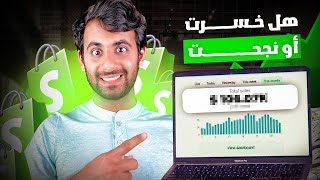

Turning $100 into a Dropshipping Empire
45sThe high-stakes challenge of turning $100 into a successful store in 30 days immediately hooks viewers interested in entrepreneurship and side hustles.
▶ Play Clip"The title promises a 30-day challenge with a $100 budget, and the video delivers exactly that, with honest results and lessons, though some might find the outcome underwhelming."
The video documents a 30-day challenge to build a successful dropshipping store from a $100 budget. The creator details the entire process, from product research and store setup to marketing and results analysis, concluding with a net loss but valuable lessons learned.
The creator has over 2 million sales in e-commerce but starts from scratch with a $100 budget to build a successful dropshipping store in 30 days, testing if it's possible for anyone with a small budget.
The challenge involves starting from zero with no prior products or niches, using only learned strategies and techniques. The creator will share the full experience and results.
Dropshipping is a business model where the store acts as a middleman between supplier and customer. The store lists products, and when a customer buys, the store orders from the supplier who ships directly. This allows testing products without buying inventory.
The creator emphasizes three main pillars for success: product selection, store setup, and marketing. If any of these fail, the business will face problems. The video will cover each pillar and how to overcome challenges.
A successful dropshipping store requires a winning product. The rule: you'll struggle in marketing if the product isn't good, and you'll struggle in sales if marketing isn't good. There are free and paid methods to find winning products.
The recommended paid tool is Niche Scraper, which provides trending products, best sellers in the US market, and data on AliExpress. It shows product prices, costs, and links to AliExpress, helping make informed decisions.
Due to the limited budget, the creator used a free method: searching TikTok and Facebook for hashtags like #TikTokMadeMeBuyIt and #AmazonFind. They looked for videos with high views and likes, less than 6 months old, and products that are not fragile or electronics.
After two days of research, the creator found a product that solves a real problem, has a good price, and is not electronics or fragile. The product link is in the description.
The store must be specialized in one niche, not sell everything. A specialized store builds trust and credibility, like a pizza restaurant that only sells pizza vs. one that sells everything. The first impression is crucial.
The creator chose a general brand name that doesn't limit to a specific niche, allowing flexibility to pivot later without buying a new domain. They used Namelix for name ideas and bought a domain from Namecheap for $9, but it was already used and frozen on Shopify, so they returned it and bought a domain directly from Shopify for $15.
The creator set up the store on Shopify: added main image, shipping details (free shipping worldwide), payment gateways (Wise and PayPal), and essential pages (about, returns, privacy, contact). They also installed apps: Loox for product reviews, Hotjar for consumer behavior, and TikTok/Facebook pixels.
Instead of AliExpress, the creator used Zendrop, which has faster US shipping, better customer service, and a $100 free credit. This allowed them to order products without upfront cost, using the credit instead.
The creator spent 3-4 days designing the store with a free theme. They added products from Zendrop, edited descriptions and images using AI and Canva, and added trust elements like a 30-day warranty and comparison table to boost conversion.
With a limited budget, the creator focused on organic content marketing: posting 3 Reels daily on Instagram, TikTok, and Facebook. They used trending music and AI voiceovers from ElevenLabs. They also ordered the product from Amazon to create their own videos.
After 20 days of consistent posting, the store made only 2 sales totaling $68. The product cost $19 on Zendrop, but the creator used the free credit, so the $68 was pure profit.
At the end of the challenge, the creator received an email from TikTok Ads offering $500 in free ad credit, which they plan to use to scale the project with paid ads.
Total expenses: $15 domain, $1 Shopify first month, $79 Zendrop subscription (but product costs were covered by credit). Total expenses were $95. Revenue was $68. Net loss: $27.
Key lessons: organic reach was weak due to new account and low followers; posting 3 videos daily is unsustainable; if you have capital, invest in paid ads for faster results; product research is crucial; and time is a major factor.
Dropshipping is not easy; it requires effort, time, and learning. However, with the right skills, you can start with less than $100. The creator will continue the project and share updates.
The 30-day challenge resulted in a net loss of $27, but the creator gained valuable experience and insights. The main takeaway is that dropshipping requires significant effort and time, and while organic marketing is slow, paid ads can accelerate growth if you have capital.
What is the dropshipping business model?
A store acts as a middleman between supplier and customer; the store lists products, and when a customer buys, the store orders from the supplier who ships directly.
00:52
What are the three key pillars for a successful dropshipping store?
Product selection, store setup, and marketing.
01:42
What is the rule about product selection?
You'll struggle in marketing if the product isn't good, and you'll struggle in sales if marketing isn't good.
02:11
What is the recommended paid tool for product research?
Niche Scraper.
02:35
What free method did the creator use to find products?
Searching TikTok and Facebook for hashtags like #TikTokMadeMeBuyIt and #AmazonFind.
04:00
Why should a store be specialized in one niche?
To build trust and credibility, like a pizza restaurant that only sells pizza vs. one that sells everything.
05:20
What is the advantage of choosing a general brand name?
It allows flexibility to pivot to a different niche without buying a new domain.
06:30
What apps did the creator install on Shopify?
Loox for product reviews, Hotjar for consumer behavior, and TikTok/Facebook pixels.
09:21
Why did the creator choose Zendrop over AliExpress?
Faster US shipping, better customer service, and a $100 free credit.
10:36
What was the total revenue and net loss after 30 days?
Revenue was $68, and the net loss was $27.
16:45
Dropshipping model explained
Provides a clear, concise definition of the dropshipping business model, essential for beginners.
00:52Product selection rule
Highlights the critical importance of product selection in dropshipping success.
02:11Niche specialization
Emphasizes the need for a specialized store to build trust, a key factor often overlooked.
05:20Zendrop benefits
Introduces a supplier with faster shipping and free credit, a practical tip for dropshippers.
10:36Lessons learned
Provides honest, actionable lessons from a real experiment, valuable for anyone starting dropshipping.
16:57[00:02] million sales from dropshipping and e-commerce. But what would happen if I decided to start from scratch, building a successful dropshipping store in 30 days with just $100? This is pretty much the situation for have a large capital or extensive experience, so let's test and see if
[00:17] anyone with a small budget can truly start dropshipping and succeed. What challenges can I expect? What are the expectations and strategies I can use to succeed, God willing? The rules of this challenge are very simple: in 30 days, I turn $100 into a dropshipping store. I have to start
[00:31] from scratch and can't use any product I know has worked well for me before, or any specific category I already know is doing well. Everything has to be new. Of course, I can use some strategies and techniques I've learned previously, and I'll share them with you. I'll start with my experience, and
[00:44] God willing, I'll provide you with all of it so you can follow the same path. Okay, so let's begin. I'll explain the plan after I implemented it and what I gained from the $100. Did I lose money or make a profit? First, in short, dropshipping is a business model where you act as an intermediary
[00:58] between the supplier and the end customer. You display the supplier's products in your store and invite people to buy from you. If a customer buys a product, you then inform the supplier to ship it directly. This model is fantastic because you can test the product before creating
[01:12] your own online store. Before ordering large quantities from China or a wholesale supplier, you never buy inventory unless someone buys a single item. In that case, you ask the supplier to ship it to them and pay them for that single item. You then display the supplier's products without buying
[01:26] inventory. The plan I implemented involved building a dropshipping store on Shopify, targeting the West, primarily America, Canada, and Europe in general. The most important thing to know about dropshipping is the success triangle, which consists of three main elements. If you work on all of them,
[01:40] you will, God willing, be 100% successful. The product needs, then the store, then marketing. If any of these three are not working properly, you will face challenges. I will explain the plan I created based on these three main points so we can understand what problems I
[01:54] might encounter and how to overcome them. Finally, I will give you an analysis of the results, showing whether I gained or lost. The first main point is finding a successful product. Any successful dropshipping store must have a successful product because if you don't choose a successful product, you will struggle a
[02:08] lot later with marketing and all these other aspects. The rule is: you will struggle with sales if you don't succeed in marketing, and you will struggle with marketing if you don't succeed in choosing a successful product. So, to choose a successful product, you have two methods: a free method and a paid method.
[02:23] Naturally, if I had capital without the challenge, I would go for the paid method because it would save you a lot of time in choosing a successful product and give you many options to test the first, second, and third, see how your budget works, and so on. The best tool for choosing
[02:36] successful products in dropshipping is [tool name/tool name]. This niche scraper tool is specifically designed for dropshipping projects. It provides you with trending products and the best-selling products in the US market and on AliExpress. It gives you data based on these figures, allowing you to choose a product confident that you'll
[02:49] generate sales. I'll put the link to this niche scraper tool below in the description. You can see successful products here; these are all successful products that provide you with figures. You can click on "View," for example, " Product Details," here, and it will show you the product's price, how much it has sold for
[03:01] in dropshipping in general, its cost on AliExpress, and your expected profit of $14. Here, it gives you the product's link on AliExpress. Opening it will take you directly to AliExpress. This is the same product we're talking about; it costs 8 Saudi Riyals, which is almost the same price in dollars, or even less—less
[03:15] than $5. You can also look at some products they sell. This store is good, its ranking is 4400, for example. This one is also good. This site is good. You can get an idea about the competitors in general. You can look at the niches or the
[03:30] most popular or successful dropshipping areas during this period, whether it's this year or even just this week. They might tell you, for example, "Phone cases are good here," or " Makeup is good here," or "These gaming glasses are good too." They'll
[03:42] give you these areas and tell you there's a high growth rate in them, so you might be more successful. You can also spy on the competitors' successful ads, the ones on TikTok and Facebook. ads are successful, and they're mostly dropshipping ads. All the products are
[03:54] dropshipping-related. You see which ones have high ratings or high likes, so you know there's or high likes, so you know there's high demand for that product. So,
[04:31] likes, and secondly, the video shouldn't be more than six months old. It's preferable to be less than three months or six months old. It takes at least a few months, more than six, before you feel that this trend has ended. Thirdly, the product must be suitable, whether in terms of price, size, or type in
[04:44] general. For example, I mean, it shouldn't be glass or electronic; you'll face a lot of returns, complaints, maintenance issues, warranty problems, broken glass, and all that. After about two days of searching, I found a successful product with a good price—it's neither electronics nor glass—and a
[04:59] good profit margin. Its price on AliExpress is also very good. Best of all, the product solves a health problem, so you're buying your health with this product. If you're interested in learning more about the product, you'll find the link below in the description. Enter your email, and I'll send you an email with the product directly. After choosing it, I selected five or
[05:13] six other products from the same category to test it further. This product might not suit me; a similar product might be more suitable, one that sells well. I might also create a buy-one-get-one-free offer or a three-piece bundle at a
[05:27] specific price. After we finalized the product... The successful approach now comes to the second point, which is building the store. In dropshipping, you must focus on building a store in one specialized niche. It's not feasible to sell everything and sell in multiple categories. This is the biggest problem I notice with people working in dropshipping.
[05:41] Because they don't need to buy inventory, they don't need to buy merchandise. They say, "Okay, bring me books, bring me clothes, bring me accessories. I'm not losing anything; I'll stock them. If the customer buys, they'll buy." This is a huge mistake. You lose credibility and trust in your store. Imagine you want to have pizza for dinner,
[05:53] for example, and there are two restaurants in front of you. The first one sells only pizza, and the second one sells pizza, burgers, rice, and chicken. Which restaurant would you choose? Almost 100% you would go to the one specializing in pizza because you know it's specialized, reliable, and more focused on its field than the one that
[06:07] sells everything—rice, pizza, etc. Where are we? So, a positive first impression of the store is very important. I want people to see your store and not realize it's a dropshipping business. It's obvious it's a company and a professional store, and everything is in order. Okay, but if you want everything, people will know it's
[06:19] dropshipping and will focus on going to the main supplier instead of you. So, it's essential that our store specializes in one field with a unified identity. We're focusing on building a brand, not just creating a store to buy and sell. We want to build a brand, a name, a reputation, and
[06:36] thing I did was choose a very general store name that doesn't indicate anything specific, not a particular field or product. This way, if I buy the domain with the same name and, God forbid, the field doesn't work for me, I can change it to a different field. For example, if the domain
[06:50] focuses on Beauty MMK, which specializes in skincare, it would be difficult to use the same domain for a different field like books. So, I don't want to buy a second domain. I want to buy one domain and experiment with different fields to ensure its success, God willing. Thank God, I managed to get
[07:05] buy a new domain every time and change the store design, etc. So I made a generic store name and created a simple logo using Canva. Then I bought the domain from Namecheap for $9, thinking I'd save money, but unfortunately, I messed up. After trying to link this Namecheap domain to the
[07:19] Shopify website I created, it told me that the domain was already in use by someone else. It belonged to someone who had been using it for a long time, and it was currently frozen on Shopify. I spent maybe three or four days contacting Shopify and Namecheap, completely confused. They were
[07:33] telling me one thing, and I wasn't paying attention to either. Before five days had passed, I returned the domain to Namecheap. I requested a refund because they have a five-day free return policy, so I didn't have any problems. I asked for a refund, and thankfully, they refunded me the full $9.
[07:46] Then I went and bought another domain directly from Shopify to be safe. God willing, it will be linked to Shopify. The domain cost me $15, but I advise you, if you're a beginner, to buy from the same platform you'll be working on. This way, you won't face problems between hosting companies and Shopify,
[07:59] and you won't be caught in the middle, with one company throwing you a problem and another throwing you a different one. Everything is handled by Shopify directly because they have the hosting and are the original owner. I used a tool called NameLeaks to choose the store name and domain. It gives me
[08:11] artificial intelligence. As we said, the domain was a generic name, so don't worry that it has no meaning. You'll think it has no meaning at all. The meaning will come with marketing later. You have the brand "Apple." What is the brand "Apple"? Apple has no connection. If you tell me "Apple," I might be surprised. So what is
[08:25] Apple? After marketing, people understand what "Apple" means. It's the same if I tell you the brand "Windows." For example, what is "windows"? You might be surprised; it could be "Windows, Windows, windows," so the name doesn't really mean much. But after marketing, people understood its meaning, so don't worry about that. As
[08:38] we said, the domain cost me $15, and the Shopify subscription cost me $1 for the first month, so that's $16. After that, I started designing the store in Shopify through four main steps. First, I set up the main settings. I added shipping information; we ship to all countries worldwide, and shipping was free for me.
[08:52] I created the bank account through the Wise website. If you want to create an account through Wise, I've put a video here that explains the whole process. I also added PayPal and the information pages, like the exchange and return policy, the privacy policy, and the "Contact Us" page. These are very important to do; you can find them all
[09:08] ready-made menus and templates in Shopify. You just need to change the store name, change the contact information, and so on. Then I added the store name and logo. The second thing is that I created the theme and the applications I'll download. The theme, of course, was free. See? The theme was suitable for Shopify applications, so I downloaded and installed it directly. There are some very
[09:22] important applications that we need to install before we begin. We have the Lux tool to collect product reviews or customer ratings for your product. When you first add a product to your online store, no one will tell you if it has been purchased before and has no reviews. If it doesn't have reviews, that's a
[09:36] negative point. So what do you do? You take the supplier's reviews because the product you're selling is originally from the supplier. People who bought from the supplier and gave it a positive review will add it to your store. So you'll get reviews for your product, not the store, but the product itself. This review is
[09:49] already available from the supplier. We also have the HotJar tool to see consumer behavior in your online store. We see how they browse
[10:09] to Shopify, even if we're not running advertising campaigns right now. We'll connect it because it gathers data that you'll benefit from later. There's also the Google app, which covers all Google tools like Mission Center, Google Search Console, Antenna, and all that. We also have MeltChamp
[10:21] for email marketing, which will be very useful, so we'll install it. And the last app, which is a paid app, is Zeno. When you work with dropshipping and Shopify, you 'll always need an intermediary between you and the final supplier. For example, if I'm working with AliExpress, there needs to
[10:34] be a middleman. I won't contact AliExpress directly, so there will be an intermediary between me and AliExpress. I'll tell them I want this product, and they'll get it directly to the customer. There are many tools; I prefer CG Dropshipping if you want something free, but
[10:47] if you want something good, Zen Drop is a very good tool. This tool has almost all products. The successful company on AliExpress, whose website is in the US, offers much faster shipping to the US than other sites. As we know, extremely slow shipping is a critical issue in
[11:01] dropshipping. This company also operates professionally, providing a clear dashboard showing the current order location, how to purchase the product, and how to contact technical support. Their Chinese sellers simply buy and sell, while these companies have a brand and a reputation, prioritizing
[11:15] customer satisfaction. You want to build your business with a strong, trustworthy partner who will provide what you need and avoid any issues your business with a strong, trustworthy partner who will provide what you need and avoid any issues they give you $100 in free credit stored in your Xander account. So, if you receive an order
[11:29] from Xander, you won't pay for it; the cost will be deducted from your credit, effectively making it a free purchase. I paid $79, but I'm going to buy five products from them for free, without any cost to me. One product cost me
[11:43] $19, so I'll buy five products and have some credit left for the sixth. So, I basically earned $21. Then I finished designing the store with the theme I chose, and it took me about three or four days. The third point in the store design is the
[11:56] store theme. As I said, I chose a free theme, and the entire store design took me about three to four days. If I were outside the challenge and had a budget, I would entrust it to a specialized and professional freelancer to design a professional theme for me without bothering myself with
[12:09] all these design matters. This way, I would come up with something professional and very beautiful because a in the online store. I always advise you to three or four competitors and take an idea from each one that they have implemented in their store and apply it to yours.
[12:24] the stores... The competition can be found on the NicheScribe website, and the fourth and final step in the design is adding products, images, and product descriptions. Adding the product is all done with a single click on the Xender website; it connects directly to your online store with images, descriptions, titles, and
[12:39] everything else. However, you must modify it because it often has a very professional description. I modified the description and title using artificial intelligence, and I modified the images using Canva, giving them a unified identity. All the images were given a single identity specific to the
[12:51] some key points, such as the 30-day gold guarantee, which I placed on the product page, which is now the landing page. I also added a specific section for questions also created another section comparing products from
[13:06] my brand to those from other competitors' brands, highlighting the differences. For example, my products last a long time, while theirs last a shorter time. It's short, and this is the material it's made from, and theirs is made from this. All of this is to increase the conversion rate for my website and focus on the
[13:18] landing page because it's the most important page; people will almost always visit it. After we finished building the marketing. First, I created social media accounts on Instagram, TikTok, and Facebook, and even added a username, logo, bio, and thumbnail.
[13:31] Since our current budget for the challenge is $100, I can't run paid advertising campaigns, so I'll focus on content marketing, or in other words, creating Reels videos. Reels are the most popular format on social media.
[13:44] Reels are the most popular format on social media. We saw many videos, some of which were hit and some of which yielded very good results. We'll work on content marketing. Of course, because I need I filmed the product while I had it
[13:57] with me. I ordered this product from Amazon and thankfully it arrived the very next day. I started filming videos similar to those my competitors had made, whether for my product or others. I could take ideas from them and apply those ideas to my product. In some videos, I added
[14:10] trending music, and in others, I used English voiceovers from a website called 11Labs. This website is amazing; it converts written text into spoken English by a native American speaker. You don't even feel like it's AI; it feels like a
[14:24] real person speaking. I uploaded three videos daily, editing them directly on Instagram. Over time, I noticed that some types of videos yielded videos that demonstrated the results of using this product performed
[14:38] better than others. Based on this data, I focused on creating more successful videos and reduced the number of videos that weren't getting much attention. I continued posting this way every day for 20 consecutive days. With continuous improvement, I started reading the numbers and seeing what
[14:51] worked best for me, whether it was music, voice-over, this type of content, or others, and I did this across all three platforms. In the end, guess how many orders I sold to the online store orders I sold to the online store within those 20 days? I sold two orders and two items,
[15:04] within those 20 days? I sold two orders and two items, totaling $68. The product cost me $19 on ZenDrop, and I was selling it for $ 34. But of course, I didn't pay ZenDrop we discussed earlier, so I used that credit to buy the product for free from ZenDrop. That
[15:19] $68 was all profit; there was no cost to the product. At the end of the 30-day challenge period, after all the hard work and the results I saw (which were less than what I'm used to), I received an email from the TikTok Ads Manager. They gave me
[15:33] $500 in credit and free credit to use for ads if I spent another $500. If I spend $500, I'll earn $1000 in advertising revenue. This is an opportunity I absolutely cannot miss, so I consider the challenge over for now and must continue without being bound by its terms. Before
[15:48] we discuss the results analysis I'm going to do, I'll use from the store's design and images to the content and everything else. If there are additional costs, I'll cover them myself to achieve these results and profits
[16:02] faster. If you start with a small capital, the results will often be a bit slow, but with faster. I might even hire a freelancer work on advertising campaigns, thus managing both aspects. Now, let's get to the most important point, the
[16:15] crucial one: did I profit or lose in the results analysis? As you know, my expenses included the domain at $15, the Shopify project, and the initial Shopify subscription. The monthly subscription was $1, and we have a Zen Drop subscription for $79. As we mentioned, I didn't pay anything for the products
[16:29] because I had a Zen balance that I used, and I still have some left. I didn't buy any paid products, nor did I hire a programmer or designer to design the store for me; I did it myself. Thank God, I got my money back from the first domain that I used from Num Chip, so my situation is very good. The
[16:42] total costs are $95, and the total net revenue is $68, as we discussed, from selling two units of my product. So, the final result after a very tiring month where I did
[16:54] everything is a loss of $27. It's true that I lost in the first month, but I'm very happy with what I've built from the results I've achieved. Let me give you the most important tips and lessons we can learn from this experience. First, sales were very weak compared to the effort and time I was working on this project. I was
[17:08] working about four to five hours a day on this project. Then, in the last 20 days, when I started content marketing and made these videos, the reach was very weak for several [people/entities]. The first and most important reason is that the account is still new and needs continuity. You need to build a following; it's
[17:21] difficult for someone to buy from your account when you only have 60 or 70 followers. It doesn't look good to have a business account, an online store, with fewer than 100 followers. This won't motivate people to visit your store and buy from you. But gradually, with consistency, you'll solve these two
[17:35] problems, and your growth will be exponential. For example, if you post 60 videos in four, then eight, and then 16. This is because you have both old and new content, so your growth will be exponential. E- commerce operates on the principle of
[17:50] compound effect; you're building today, and what you're building today will benefit you for years to come. Another important point is that I used to create three videos a day on the topic of "Sadd" (a term referring to a specific topic or concept). Believe me, it's not easy, whether in terms of filming or even the idea itself. Even voice-over, editing,
[18:03] and other things are one of two things: if you have capital, you'll save time and effort, but if you don't, you'll have to invest more time and effort. If I had capital, I'd start with advertising campaigns and maybe achieve sales within the first day or two. But if I don't, I'll proceed
[18:16] this way and start collecting revenue. God willing, after a month, two months, or three months, there will be profits. Then I'll continue with these profits and reinvest them product I chose, thank God, is successful. Thank God, I haven't encountered any problems with it or any
[18:30] customer complaints. But from a second experience, you might start and encounter a problem with the product, and it might not be successful on your first try. So, it's normal that once you notice it hasn't generated good sales but has immediately. That's why, if you don't have experience, I advise you to check out sites like NashScribeer; they even
[18:44] have a free trial. It might take about a week. You can use this whole process to get fine. If you'd like to see the product I worked on, you'll find the link below in the description. May God grant us and you success. And my fourth piece of very important advice: when I was making videos, I used to
[18:57] watch the videos that were going viral. Competition, even in a different field or with a different product, can take the same idea and apply it to your product, resulting in very high performance. Number five, to transform this store from $100-200 per month to
[19:11] $10,000-20,000 per month, you must invest and have cash flow. This cash flow will be covered by paid campaigns, which you can do in content marketing. You can also find freelancers to help you with your project. It's a gradual process; the profits you receive from the project are reinvested immediately, and little by little, the
[19:23] project will grow. Finally, time is extremely important, especially if you don't have a designer. Unfortunately, I didn't have much free time, and I tried my best to dedicate myself to this project, but I still fell short significantly, both in the videos
[19:36] and the store design. I could have achieved much more creativity, and this is a negative point. If you don't have free time, you must find someone to help you with this so you don't fall short in the project and potentially fail to achieve the desired results. I finished the first month of the challenge. I'll
[19:48] continue the project, separate from the challenge and the conditions we agreed upon. God willing, after a while, I'll post a video on this store about what's happening with the project. Ultimately, this experience is based on years of expertise, so I didn't start from scratch. Many people say dropshipping is very easy, that it doesn't require much effort, and so
[20:00] from scratch. Many people say dropshipping is very easy, that it doesn't require much effort, and so
[20:13] revenue, you'll start to expand the project.
[20:30] succeed. Write to me in the comments section below, and I'll answer any questions, provide advice, or answer inquiries for free. So, you just need to strive, and success comes from God. No one who says "O Lord" is ever disappointed. Finally, if you want to learn dropshipping practically, step by step, separate from this
[20:44] theoretical experience, I'll post the video here. This will help you build a successful foundation, and God willing, like and subscribe to the channel; I'd be very happy. Please, if you have any questions, write them everyone. Thank you, thank you, thank you for watching, and I'll see you in the next video, God willing.




⚡ Saved you 0h 20m reading this? Transcribe any YouTube video for free — no signup needed.