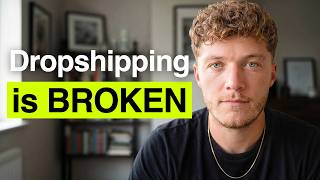

Quit My Job in 9 Months with High-Ticket Dropshipping
44sStrong personal success story with specific numbers (70k pounds in bank) creates aspiration and credibility.
▶ Play Clip"Title accurately reflects the content: explains why cheap dropshipping fails and presents a high-ticket alternative."
This podcast episode features Jaden, a successful high-ticket dropshipper who shares his journey from quitting his job to building a multi-seven-figure business. He explains why traditional cheap dropshipping fails and outlines a new approach focused on domestic suppliers, high-value products, and customer service.
Jaden explains that he can achieve a $10k profit month with only 50-70 sales by selling high-ticket products without holding inventory.
Jaden was hesitant to invest money upfront in inventory due to fear of not selling products and the shame of failure.
Despite having e-commerce experience at a large company, Jaden found it hindered him because doing it solo with limited resources is very different.
Cheap dropshipping from AliExpress feels like a scam due to poor quality and returns. High-ticket dropshipping uses domestic suppliers with proper warranties and quality control.
Jaden chose the outdoor living niche not because of personal passion, but because he could identify a passionate buyer (e.g., a 50-70 year old male wanting an impressive backyard).
Start with broad brainstorming using AI tools like ChatGPT, then narrow down based on number of products per avatar, personal interest, and data analysis using tools like DataForSEO.
Focus on long-tail, high-intent keywords (e.g., 'two-post hydraulic car lift') rather than generic terms. Check domain ratings of competitors; if top results are low DR niche sites, it's a green flag.
Call suppliers asking for 'commercial sales' department. Build rapport by showing genuine interest in their products. Avoid the word 'dropshipping'; position yourself as a retailer.
Focus Google Ads budget on high-intent keywords (specific product dimensions) rather than generic terms. High-intent keywords convert at 1% vs 0.1% for generic, making them more cost-effective.
First sale came after 1.5 weeks, but the real milestone was month five when profit reached $7k (his 'nut'). That's when he felt the business could replace his job.
Jaden quit in month nine after accumulating $90k in the bank (one year's income) to feel secure. He wanted to avoid financial stress affecting business decisions.
Jaden sold his first business for high six figures after burning out from poor delegation. He used a broker and stayed on for 3 months to transition.
Now runs two high-ticket dropshipping sites (one mid-seven figures, one six months old) and a community called 1% eCom Club.
High-ticket dropshipping is a viable business model that requires focus on customer service, domestic suppliers, and strategic ad spend. Success comes from serving a specific passionate avatar and building a sustainable operation rather than seeking passive income.
What is the key difference between cheap dropshipping and high-ticket dropshipping?
Cheap dropshipping uses overseas suppliers with poor quality; high-ticket uses domestic suppliers with warranties and quality control.
04:00
How many sales does Jaden need for a $10k profit month?
50-70 sales.
00:02
What was Jaden's 'nut' (monthly income goal) to replace his job?
About £7,000-8,000 (approx $10k USD).
01:26
Why did Jaden's previous e-commerce experience hinder him?
Because doing it solo with limited resources is very different from having a team and billions behind you.
03:05
What is the 'passion avatar' concept?
Identifying a buyer persona with strong emotional motivation and purchasing power, rather than focusing on a product.
06:34
What tool does Jaden use to get keyword data via API?
DataForSEO.
11:54
What is the ideal number of retailers per brand in a niche?
5 to 20.
22:20
What phrase does Jaden use when calling suppliers to get past gatekeepers?
He asks to speak to someone who deals with 'commercial sales' or 'partners who place bulk orders'.
28:59
What is the typical trade margin in high-ticket dropshipping?
20-40%.
47:15
What ROAS (return on ad spend) is achievable in high-ticket dropshipping?
8-15x ROAS.
48:12
Why did Jaden wait 9 months to quit his job?
He wanted $90k in the bank (one year's income) to feel secure and avoid financial stress affecting business decisions.
45:37
What was the main reason Jaden sold his first business?
Burnout from poor delegation and operational issues as the business grew.
52:25
High-Ticket vs Cheap Dropshipping
Clearly distinguishes the legitimate model from the scammy reputation.
04:00Sell to a Person, Not a Product
Key principle for niche selection: focus on a passionate buyer avatar.
06:34DataForSEO + Custom GPT Hack
Cost-effective alternative to expensive keyword tools for niche validation.
11:54Supplier Outreach Script
Practical cold-calling strategy that reframes the conversation from 'dropshipper' to 'commercial partner'.
28:59High-Intent Keyword Focus
Explains why generic keywords waste ad spend and how to target buyers ready to purchase.
37:19[00:02] day-job salary in just 5 months using a strategy known as high-ticket drop products that customers really want without having to buy your inventory up front. >> I can do a 10k profit month off 50 sales
[00:16] off 70 sales, which is only 50 or 70 customers, and I don't have to put the >> The business is a balance between researching the right niche for you, connecting with suppliers, and then marketing the products profitably.
[00:28] stream. >> So, I quit in month nine, and the business had 70,000 pounds, so that's probably about 90,000 US dollars literally sat in the bank account before
[00:41] I was comfortable going full-time. >> Jaden eventually sold that first site Not bad for a 2-year-old business that started as a side project. Here's how to >> So, I was happy to work. I was happy to put the hours in, the sweat in, but I
[00:57] was pretty hesitant to put the money down. And then also, it was kind of like desperate to get out of the job as things. The first was the idea of putting two, five, 10,000 dollars down
[01:12] to buy a product, and then potentially not sell it. Inventory, exactly. And embarrassment of that, the shame, like letting my wife down, etc. That really scared me. Then also, thinking, okay, how many of these am I going to have to
[01:26] realistically sell to replace my income? I kind of knew my my like nut, so to speak, was I wanted to try and get to about about seven or 8,000 in income that I could take out of the business and have that consistently for in in
[01:40] pounds, yeah. So, about 10k USD um was what I kind of wanted to get to. So, like a a reasonable size and some consistency as well. So, um I was thinking I did the math in my head thinking, okay, how many of those, you
[01:54] to sell? And then um I'm also thinking jeez and then 1,000 customers that I got to deal with alongside my job which was demanding. And then I'm also thinking well, even if it all goes well and I do
[02:08] well, even if it all goes well and I do sell those first whatever 1,000 units, order. I need to pump all that profit back in. So how's that going to start coming to me to start living off so I can get out this job? And it just felt a
[02:21] bit impossible. And then as you quite rightly said, the idea of that work. I just have to obsess over like learn paid ads, learn conversion rate optimization, learn how to do SEO, basically get traffic, convert traffic.
[02:35] But I can do, you know, I can do a 10K profit month off 50 sales off 70 sales which is only 50 or 70 customers. And I don't have to put the inventory down. okay, I'm unleashed. Like that is the thing and I'm going all in there.
[02:50] >> Did you have any experience in that digital marketing world before? >> I thought I did. So I used to work in in e-commerce for like really big business one of the probably 50 big biggest businesses in in
[03:05] the UK. And I I basically ran e-commerce for that company. And I was like, yeah, I'll pick this stuff up really easily. And then I realized that the difference of doing something with like billions of
[03:18] pounds and dollars behind you and a team of, you know, 10, 15, 20 people is very different to doing it on your own in a completely new market. So yeah, actually I think it it helped me in almost no ways. I think the only
[03:32] thing I will give myself credit for is I think I got my preconceptions out the way. Ironically with the students I work with, often those who have a background, they struggle the most for some reason because they almost come in with these
[03:45] shake that for the formula of what's been proven in this particular kind of size that are new. So, luckily I think I I I came in thinking cool, my experience is going to help me. If anything, it hindered me,
[04:00] fast, I think. >> Give us the, you know, 30-second elevator pitch for drop shipping cuz it has a mixed reputation online where some people will say, "Look, this is a total scam." And other people are like, like
[04:12] proof that it works." So, and and maybe the truth is somewhere in the middle. Why do you think it has that reputation? >> Drop shipping has a really bad name because it can feel like a scam. And if you are selling cheap products off
[04:24] Alibaba, AliExpress, basically Chinese factories, then it feels like a scam to the customer and to the business owner. The customer gets something that you It can't be returned. The quality control is like less than zero. So, the
[04:39] dealing with really unhappy customers, bad reviews, etc. The customer is unhappy and so, yeah, in my opinion, whilst you can make money there, it's not really a long-term kind of viable business. Whereas, the style of drop
[04:52] shipping I did, in my opinion, the drop shipping piece is only the fulfillment model. Like Wayfair, for example, like are the biggest drop shipper that pretty much everyone will have heard of. So much of their stuff is drop shipped. And
[05:04] you know, no one thinks of Wayfair as a scam, right? Wayfair is an e-commerce business principally. What they are great at is acquiring customers, getting them products that they want to buy, you know, getting them on product pages and
[05:16] products and helping them buy them, right? It doesn't matter to the customer that they come direct from somewhere else's warehouse in the US because And on a minor scale, that's basically what you're doing in high ticket drop
[05:29] shipping, but it's that domestic supplier. So, if you're selling in the US from brands in the US, proper brands with, you know, reputable ways of doing business, warranties, return windows, quality control, that's the real
[05:43] distinguishing piece. >> Yeah. And there's some pieces of the you got to find your niche, then you got to find the suppliers, and you got to then you got to fill you figure out the marketing piece of it. So, there's a
[05:56] together. And were you Were you targeting in my understanding is the first site was kind of in the outdoor, you know, home patio garden type of you know, home patio garden type of space? And was this
[06:08] yours? Like what led you to What led you to that niche? >> Yeah, yeah, no, that's all actually. Um, I I don't think I'd ever spent more than I I don't think I'd ever spent more than 100 pounds, dollars on my own garden in
[06:21] my life. Um, so I was a complete fraud in that regard. Um, the person who might spend 10, 15, 20,000 dollars on their garden. So, they buy, you know, the fancy fire pit or the
[06:34] all that sort of thing, the outdoor kitchen, right? And so that's the the passion avatar that we were selling to. And I did I didn't choose that because about it. Nor do I think you need to be,
[06:49] could see what the emotion was behind it. I could see the, you know, 50, 60, 70-year-old male or with a lot of purchasing power who wanted to have the or his neighbor that he feels like really great. Or I could see the the mom
[07:04] who wants to have the great space so that her kids and the grandkids come could see who I could sell to and I could see they had money. So, I was >> And were you targeting a US audience or UK audience?
[07:17] >> My first store was with the UK audience and now I've got stores in both. figure out, like you said, those local manufacturer supplier relationships to, uh, just just for the shipping logistics
[07:31] and to be able to target that audience. >> Yeah, definitely. And the nice thing about high-ticket is actually drop shipping is probably more prevalent there because if you've got a massive gazebo and it's,
[07:44] you know, 3, 4 m or I don't know, I don't speak Imperial, but whatever that don't speak Imperial, but whatever that is, you know, this stuff in from China, right? But they are a UK or a US based business and
[08:01] therefore they have a warehouse or multiple warehouses in with that Chinese factory. They're sending over designs, quality control, etc. So right now a lot of those suppliers, they'll send like one gazebo
[08:14] out to a nursery or to Home Depot or you know, and it'll be shown as one example is actually just drop shipped in the background cuz a customer might come in to, you know, wherever and say, "Oh, I really like this wooden gazebo. I'd like
[08:29] different size or a different color." And often it's very, very expensive to huge. There's loads of different variants. So it's very common for even
[08:42] physical retail spaces to be drop shipping a lot of their orders. So it means that you fit into their existing business practices really nicely. >> Yeah, that makes sense. The fewer times you have to move this huge bulky item
[08:55] damaged, the less expensive it's going to be for the end customer. I can be on board with that. But tell me about the product research process. Like are there different metrics or tools or rules of thumb for like, you know, price
[09:09] volume? Like what are you looking at to arrive at, "Okay, I'm going to sell pergolas and outdoor kitchens and gazebos and stuff?" >> It always starts with like a a brainstorm ideation and I always say to
[09:24] people, like try and cast the net as wide as possible because I've seen people who drop ship like toilet supplies, like public toilet sinks and really well. So like it doesn't have to be sexy, and
[09:37] it isn't always going to be the the drones, the e-bikes, the things that immediately spring to your mind. There are so many high-ticket products, i.e., products over a thousand US dollars out there, and some of the like small B2B
[09:51] niches and stuff can be absolutely amazing. So, I would say like the first having a really good ideation session with something like ChatGPT, Claude, just prompting it and saying like, "Talk to me about some of the small businesses
[10:05] that we could target here. Talk to me about some of the really, really intense passion and hobbies. What about sports?" Like all these different areas where there's high-ticket products. And get a big list, and then I would try and get
[10:17] that big list down to a short list that you can interrogate. And that's when I start getting into the actual the metrics, the search volume, etc. And I generally just do that kind of, let's say, down from a hundred to five, just
[10:30] purely by eye. And what I'm looking for there is, firstly, how many different product types can I sell to one avatar? So, for example, for me, it was great money on having an ultimate kind of like garden backyard setup, that I could sell
[10:46] them the grill, I could sell them the gazebo, the furniture, the fire pit. Like that helps me keep my cost of acquisition lower, it helps me get my average order value higher. Like that's a great perk. So, if I can
[10:59] see, "Ooh, that person needs to buy" especially if they need it for their setting up a barber shop, and they need three, four, five, six different thing's going to stand out to me. And then the next one is just like, could
[11:13] you see yourself existing in that niche for the next one, two, three, five years, right? If you look at it and think, "I absolutely find that as dull as anything. I can't really imagine writing content, product
[11:27] descriptions, speaking to customers," probably we go near it because like why again the guy who sells public toilet equipment doesn't hate it because it pays the bills. So, maybe that isn't important to you, but it is to me. So,
[11:40] you've got that shorter list. And then that's when I get quite quant of like quantifiable with the data and how we choose. So, like from there I'm completely removing like how I feel in my gut and I'm looking just at the data.
[11:54] And so, I I essentially data for SEO is a tool that kind of the the API the data Semrush, a lot of those big tools. And so, I grab the the API and put it into a
[12:06] a custom GPT so that I can basically prompt and call that custom GPT and have source. It's incredibly cheap. Like you could do this for less than for less >> Wait, wait, wait, wait, wait, wait, what what's this got So, instead of an Ahrefs
[12:20] subscription, you can you kind of backdoor it? of just getting access to the raw data feed rather than And obviously you're like filters and everything like that. I I I still I still use Ahrefs for other
[12:34] this works so well because I can actually prompt the custom GPT and tell it what to find and pull for me um rather than having to sift through, you know, ro- rows and rows of of CSVs basically.
[12:48] data feed that you were pulling? >> Data for SEO. nerdy. I love it.
[13:00] this probably every day for something or >> Okay. >> Um so, you then I'm in my custom GPT and like let's say one of the things that stood out to me in my long list of
[13:13] selling to people who work on cars. Like they've got their home workshop or in their garage and they work on classic cars or whatever it might be, right? Um and I like them because I could sell them like the car lift, the thing that
[13:27] them like expensive pumps. Like they probably got workbenches and tool storage that's expensive. And they're also like obsessed as well. And they probably in their head are like, "Well, if I restore this car and I make like 30
[13:39] spend 10 grand setting up the workshop, right?" So, so I'm liking I'm liking the principle there. But from there it becomes all data. So, I'm going to put in, okay, here are the products that I would like to sell to this ideal
[13:52] customer, and then I'll ask it to pull me 50 of the kind of like tier two commercial keywords that are associated with those products. And the reason I'm interested in those is because on a brand new site, I'm not going after like
[14:06] car lift or welding machine or tool storage. I'm going after like X capacity storage. I'm going after like X capacity of car lift or two-post hydraulic car lift. Like they're sort of things that are a bit longer tail. They might be
[14:20] 1,000 monthly searches rather than 50,000 monthly searches. But I know that as a brand new domain, I can compete there from a paid ads perspective and SEO perspective if I go this kind of more moneyball approach of
[14:33] stitching together these higher intent more long-tail keywords rather than the parent keywords. So, what I'm really interested in is finding the sort of top interested in is finding the sort of top roughly 20 to 50 per product category
[14:47] that I want to sell and then basically finding out how difficult are they to A eye on ranking organically for the slightly longer term. And B, what do the CPCs look like? How many people are currently advertising in
[15:01] keywords? And I'm trying to get a picture of through a keyword lens, how easy is it going to be for me to come into this niche and start trying to paid ads cuz that's where my injection
[15:15] of profit comes from. And then in a year or 18 months, also having that SEO piece traffic, putting those two together cuz I kind of know that's the foundation of figures in revenue as quickly as possible. So, that is
[15:30] why I kind of take that niche process through that. And then finally, the final step I do is just like a raw competition >> that tie in and ask if the data for SEO is also giving you that CPC estimate or
[15:43] organic difficulty or is that coming through Google's Keyword Planner or is that coming through Ahrefs? >> Uh no, I use the data for SEO API for that as well. Um I don't find it amazing at CPC estimates, but I don't
[15:57] really find many keyword tools are that strong for it. Um so, what I do as a proxy for like a secondary data source for uh shopping competitiveness is I for uh shopping competitiveness is I also uh I get Gemini in um like deep
[16:10] also uh I get Gemini in um like deep research mode to look at how many other um businesses online retail businesses are advertising the top 20 brands for So, it's kind of like a layer on a layer. So, the the data for SEO API is
[16:24] giving me the keyword competitiveness. It can give me what the average DR is in the top five or 10 for example, so I know what sort of domain rating I'm up What's the keyword difficulty? What's the difficulty to rank? And then also,
[16:38] what is ranking? Is it other e-com sites or is it, you know, sites that are I'm going to struggle to compete with? So, it gives me a good picture there. So, it gives me a good picture there. >> If you If you see, you know, it's all DR
[16:50] 80s and above, are you're like, "Mhm, red flag, full stop, not going to touch it." or what's What What would be like green flags in those CPCs and and some of the difficulty metrics? >> Yeah, I'm happy if I'm If I'm seeing a
[17:03] >> Yeah, I'm happy if I'm If I'm seeing a couple of like DR 20s or 30s and belows in the top five and I'm seeing quite a high population of like niche e-commerce sites in the top five, then I'm kind of getting a feel that this is a this is a
[17:16] niche that I can I can come in and and have a good shot at. If I'm seeing like the top five is dominated by like big box stores that I know are going to have huge domain ratings. It's also dominated by you know, like really
[17:29] high-powered blogs that are like writing listicles based on their experience of going to be able to outrank because it has a level of kind of like first-hand just not going to be able to compete with. I want to see like this is ripe
[17:44] with. I want to see like this is ripe for lower domain rating niche style e-commerce sites essentially. >> Okay. Yeah, and if there are a couple of Google has some track record of ranking sites like what
[17:58] I want to build. So, that's kind of a an open invitation to take a crack at it. right. >> Spring is this natural reset point. And some of the messier parts of your business, now's the time to do a little
[18:13] episode is brought to you by Quo, spelled Q U O. This is the smarter way to upgrade and streamline your business communications. Quo is the number one rated business phone system on G2 with over 3,000 reviews and it's built for
[18:27] how modern teams work. That's why more than 90,000 businesses already trust So, Quo works wherever you do right from lets you keep your existing phone number. Plus, AI is built right in, not
[18:41] something you got to bolt on after the fact with automatic call logging, summaries, and next steps so nothing gets lost. It can even answer the phone and qualify leads for you when nobody can take the call. Let's make this the
[18:53] season where no opportunity and no customer slips away. Try Quo for free, plus get 20% off your first six months when you go to quo.com/sidehustle. when you go to quo.com/sidehustle. That's quo q u o.com/sidehustle.
[19:07] Quo, no missed calls, no missed customers. So, last month it was time to is about the level of vehicle maintenance I'm qualified to do. So, I Google up the part number, I find this random store that's selling it, and then
[19:20] to my absolute delight, I see that they're running on Shopify. How could I tell? That little purple Shop Pay button at checkout was the giveaway. It means account, it means not having to find my wallet. I'm paid and I'm checked out in
[19:33] just a couple clicks. You know that our sponsor Shopify is the commerce platform behind millions of businesses around the world, including that random car parts website and dozens of Side Hustle Show guests. But, what you might not know is
[19:45] your inventory, ship products internationally, and even handle customer returns. On top of that, you've got access to their award-winning 24/7 customer support if you have any trouble. So, I want to invite you to see
[19:58] going with Shopify and their Shop Pay button. Sign up for your $1 per month trial at shopify.com/sidehustle. Go to shopify.com/sidehustle. One more time, it's shopify.com/sidehustle.
[20:15] I just want to see that it's not I want to see there's enough brands working with retailers that it's clear that the model is not too D2C, essentially. it's clearly saturated. So, like, if you go and run this with e-bikes, for
[20:30] example, if you go and ask Gemini right now, um I'm looking to sell e-bikes in the United States. Can you find me the top 20 or 25 brands of e-bike that are and how many different retailers are selling each of those brands online? You
[20:45] will see big, big numbers. I'm talking like 30s, 50s, probably some over 100, because like, it's a hugely competitive market for this sort of thing. I'm I'm
[20:57] looking to see like, in the region of between about 5 to 15 or 20. I kind of know that my approach to paid advertising, to SEO, to conversion rate optimization, etc., is going to fall in sort of the top
[21:10] the same to someone who's going to like diligently work at this. So, like if you've got 20 in the niche, you kind of being in the top one or two. And I know
[21:22] so I know there's a chance for me to land them as a supplier. But I also know a hundred, there going to be some players who've been in the game for such much noise as well. It's going to be hard for me to cut through.
[21:35] the brands that are selling, like the brand recognize or talking about the the drop ship retailers that are selling those >> Yeah, I'm talking about anyone who's actually selling the brands. So, like if
[21:49] we kind of do this for an example of like if it was you wouldn't drop ship um would. It's like how many people are selling Samsung? Is it Is Samsung direct to consumer? Is it five? Is it 15? Is it 20? Um if I'm seeing loads of direct
[22:06] consumer, that's a red flag cuz if like half the market doesn't sell through be half the market when someone's looking to buy something from me that offer them. So, I'm going to lose some there. So, I want to see not too much
[22:20] D2C, i.e. no retailers selling them, just the brand itself. different stores. I want to see that sort of sweet spot of like And it doesn't just have to be drop ship stores, but anyone who's selling online
[22:33] that brand, I want to kind of see that sweet spot of five to five to 20. sweet spot of five to five to 20. >> Okay, got it. So, there's some level of proven validation. Like if other people are doing it, I could do it too, but not
[22:46] I don't want a hundred competitors if I can choose cuz right now um I'm still like very low commitment here and I'm still kind of choosing my lane and all else being equal, I'll choose the lane with seven cars versus a hundred cars.
[23:00] >> Exactly right. Yeah, completely. Okay, what happens next or are we good on kind of the validation stage? Do we now we're looking at kind of the the supplier landscape too to see like well, who's who might be my potential
[23:16] suppliers or partners here? >> No, so at at that point the best thing you can do is is go all in and like that is actually something I see people slip up on a fair amount is they get paralyzed which I can understand. They
[23:29] think oh this niche looks good on paper and everything that I've been told to look for in the data is there, but they get get impact their business essentially? Could there be a better one etc. So now
[23:43] if you've chosen a viable niche, then essentially the worst thing you can do only going to slow you down. So from here it's now like okay, let's get my Shopify store up and running. Let's get a demo store that I can start calling
[23:57] suppliers on board loading their products because now I would say it's like a it's not a race, but it's a momentum game towards being able to take your first sale because that's when things really start to change and you
[24:11] going to drive you more. It's going to feel real. of a niche or an idea and the grass is there's this other thing that I haven't thought of, but if you found something
[24:24] that kind of checks the boxes for you like your line the best thing you can do comes up on all the drop shipping episodes is well, I need suppliers to have a working website and I need almost a working website to have suppliers. You
[24:39] kind of mentioned I need to set up this Shopify demo store to make it look like I already am in business, but I'm not quite yet and it's kind of this chicken address that? >> It's the worst part of the entire
[24:52] frustrating cuz being out the other side, it becomes so easy to get suppliers when you've got skin in the game and you're just desperate for a few get skin in the game without the few giving you a yes? So, the best advice I
[25:07] can give to anyone here is just volume and numbers. Like, you need to get to a stage where you can get enough suppliers to take a sale, to get live, to get skin in the game. And let's say that's five, right?
[25:23] There is no magic number, but five is probably enough to give yourselves a reasonable chance of going live with some ads and making some sales and Now, what happens often is people kind of
[25:36] like, "They're the ones I really want." And they then maybe only land one of them and they get disheartened. Whereas, if you've done your niche niche research right, and let's continue on with the example of like my original site, I can
[25:50] go and contact 20 different brands that manufacture grills and outdoor kitchens. I can contact 20 different brands that manufacture gazebos, 20 different brands that do furniture, 20 different brands that do fire pits. And so, I'm starting
[26:05] to build a list of suppliers that I can contact that even if I have a 10% hit rate, I'm going to have five to 10 suppliers on my site that I can upload is probably the biggest hurdle you've got to get over. So, casting the net
[26:20] wide and becoming a little bit immune to the fear of let's face it doing which is essentially calling someone out of the blue and trying to convince them to give you a chance. But, there will be, if you cast the net wide enough,
[26:33] enough suppliers that either decide to give you a chance or to be completely onboarding retailers. Like, some suppliers, just take the example of like, "Look, doesn't cost us anything to onboard you. If you make some sales,
[26:45] you're going to land some of those and then others you'll convince, but it's a Well, there's a couple things here. The first is probably somewhat important is
[26:57] instead of going for, you know, a site called Verandas direct to you or, you went a little bit broader. You say, "Yeah, we'll sell you the outdoor we'll sell you all this stuff." My kind of gut would be like, "No, I'll be the
[27:13] go-to guy for the the pergolas and I I don't want to mess with anything else." But, it's like, "Ah, if you go a little bit broader, all of a sudden you you open yourself up to being able to have more potential supplier relationships
[27:25] I don't know. That's That was an interesting one. But, what was the outreach like? You've identified this niche, that niche, and now is it you're picking up the phone, trying to find somebody in
[27:40] um business development? Like, who do you look for and and what do you say? >> You're absolutely right, by the way, of of serving a person rather than a product is exactly the right way. Rather than saying, "I've got a store that's
[27:53] I've got a store that's going to serve someone who wants to make an incredible The second one is 100% the best way to go about it. So, that's the first thing, and that did help me. My experience was very much,
[28:08] you know, I had to call a lot. I got a lot of no's, but I got enough yes's. I think I got four to launch my start my site, and that was probably off the back site, and that was probably off the back of calling 50. Now, when I called then,
[28:20] I was very much like classic cold call style, like, "Hi, I'm Jayden, I'm from this, you know, store." And probably speaking like quite quickly and quite thinking, "Ah, jeez, cold call. Like, how do I get this guy off the phone?" I
[28:33] got stopped by a load of gatekeepers, those who didn't like, just just send an email that I'm never going to reply to. Like, how do we just get this guy out gave me the time of day, and some of them I was persistent enough and I
[28:45] like, "Ah, jeez, okay, fine. Come on then." And that And that did the job, but now, the way I do it is I I call up the company. I I always I always phone because I find it much, much easier to The hit rate is much higher that way,
[28:59] first thing I do is I ask them, like, "Can I speak to someone who deals with commercial sales?" Like, essentially deals with partners who place bulk orders or commercial orders, right? Cuz straight away, that gets me in the door.
[29:12] I've not said anything untrue, right? That is the fundamental business model. Over the next year, I plan to place 5, 10, 15, 20, 50 orders with them, right? So, I am a partner who places bulk commercial orders or places multiple
[29:25] commercial orders. But in their mind, that's just gone from a conversation pitch them where they're trying to get me off the phone to potentially Whether this is the company owner of a small brand or the trade sales manager
[29:40] or business development, whoever it is, like, all of those people will have some making business-to-business sales. So, like, straight away, that gets me in the door. >> Yeah, it's almost a mindset shift from
[29:53] need a supplier so I can launch my site." It was like, "Look, I'm trying to win here." >> Exactly. Exactly. And so And so, that and then the next thing I'll do is just genuinely be really inquisitive about
[30:08] bit of research, I'll find one of their products, and I might say, "I was really about one of the you know, one of the gazebos you've got there. I see that you guys have got this new electric design. That's pretty cool, and it's got the
[30:22] control. That's That's awesome." And I might ask a couple of questions about sense, right? Because I'm I'm a potential buyer of these products. And we build a bit of rapport, and then I might say, "Well,
[30:36] the reason I ask is because we're actually a retailer of these products. um you know, high-end pergola products for people who are kind of building for people who are kind of building these outdoor living spaces. And if I've
[30:48] actually working with brand B, and their product is quite similar to this one. So, we're anticipating we might get some questions from customers of how this one better just, you know, call and make sure I've done my research and
[31:00] completely understand how those two compare." Um, also, if we were able to would be great cuz then, you know, when customers come in for brand A, we can also talk to them about your brand. Um, and you know, might open you up to some
[31:14] incremental customers, that sort of thing cuz we're trying to create, you are coming in to buy these things have got as much choice as possible.
[31:28] say, "Yeah, thanks, but no thanks." So, what what do you think tips the scales uh in your favor to get a yes? >> I think persistence Like, uh, the number of times you call, there is
[31:41] definitely some hazing. Ultimately, if you make it to the point where you make a first sale, it's it's not particularly hard, but it does require most people don't have. So, like, there's definitely a lot of these people
[31:55] have been burned by like the first 10 people they spoke to, they signed up, site live, or never even made a sale, right? So, there's definitely some hazing, and like, if you call enough times and stay persistent enough,
[32:07] what I was looking for. I'll give you a go because you clearly seem to be >> Yeah, and then so, we're kind of avoiding the the D-word. We don't want to say drop shipping. We say, "I'm a retailer of these products, and would
[32:20] our launch." >> Yeah. And also, and also, like, you know, silly things, but if they say, "Oh, well, do you hold stock?" naturally, they they want to know, "Can I sell you 30 units today?"
[32:33] things like, you know, "Look, we we don't hold stock out of the gates because ultimately you've got 30 30 different SKUs. If we take one of each, brilliantly, but then we've ended up tying up our capital. So, we we actually
[32:47] focus more of our investment on, you know, paid advertising, on essentially things that bring the customers in to make more sales from you for you. You SKUs that are selling really well, sure, we'd be open to taking some stock, but
[33:00] we'd start by essentially doing like direct customer delivery just so that we what sells. And that sort of handles that objection quite well. You can also the logistics. Like, we can send a courier to come and pick it up from your
[33:14] customer." That's the easiest thing in the world to organize, right? Like, like, "Okay, you're taking more of the onus off them." Do you ever get the question of, "Well, what kind of sales volume do you
[33:27] expect?" >> Yeah, sometimes. Um and I would actually thing here. Um you know, maybe saying like, "Look, to begin with, we we're just looking to maybe sell one or two units a month.
[33:40] but we're we're really confident the longer we work together, the better we that that we can increase those volumes." But I think almost if you try too lofty there, even if you might achieve it, but I think they start to
[33:55] person?" Whereas I think, you know, most most businesses that you work with would units a month. They'd be delighted if you sold 10 units a month. So, you know, couple a month to begin with, and then maybe in 6 months if we can get it up to
[34:11] They're going to be like, "Yeah, that sounds realistic and we'd love that, And so, they say, "Okay, we're on board. Let's do they have to lose, really? They're giving you access to
[34:25] a product catalog and maybe some images that you plug into your Shopify store, right? It's no skin off their back. Uh and then you now you have you got four or five uh companies to say yes
[34:37] and you got your store built out and you can say coming and I still got to drive some traffic and maybe starting with paid ads in this case. Is this you know, kind of the
[34:51] you kind of organic style, you know, this brand versus I guess even that bottom of the funnel. Um but what kind of ad strategy or marketing strategy comes in out of the gate to try and validate
[35:04] legit. We're going to drive sales." and and to prove to yourself like, "Oh, this >> Running a business is hard. If it were easy, everybody would be doing it, You got a dozen different hats to wear. So, here's a resource to help lighten
[35:19] Gusto for this episode because they've been one of the most recommended services by Side Hustle Show guests over the years. Gusto is the easy, affordable, online payroll, HR, and benefits tool for modern small
[35:32] businesses. In fact, they help over 400,000 businesses like yours take the pain out of tasks like payroll tax filing, direct deposit, health insurance administration, 401k benefits, onboarding tools, and more. Of course, I
[35:45] diligence, check out the reviews online, and I think you'll find some common it is to use, their great customer support, and the great value. And here's make the switch, Side Hustle Show viewers can try Gusto today at
[36:00] gusto.com/sidehustle and get 3 months free when you run your first payroll. That's 3 months of free payroll at gusto.com/sidehustle. gusto.com/sidehustle. Look, I'm not afraid to admit it, when
[36:15] a lot of stuff that either uh I'm not the best at or I really should be handing off to somebody else. If you're in that same boat, think this is a job for Sponsored Jobs. When you sponsor your job on Indeed, you'll quickly get
[36:27] matched with quality candidates who meet your exact criteria and who can drive the results you need. Plus, with Indeed sponsored jobs, you only pay for results. Before this commercial is over, companies like yours will have made 27
[36:39] spend less time searching and more time actually interviewing candidates who check all your boxes. Less stress, less time, more results. When you need the right person to cut through the chaos, this is a job for sponsored jobs. Side
[36:52] also show viewers get a $75 sponsored job credit to get your job the premium status it deserves at indeed.com/podcast. Just go to indeed.com/podcast right now and support our show by saying
[37:05] you heard about Indeed on this podcast. Indeed.com/podcast, terms and conditions apply. Need to hire? This is a job for sponsored jobs. >> Um pa- paid ads is definitely the lifeblood of this business model for the
[37:19] first, probably at least 3 to 6 months. There are some lower competition terms but realistically when it comes to traffic that converts, it it kind of it's going to be important for you, like you say, to get that proof of concept,
[37:33] the initial profit, um and then also for your suppliers. The big thing here is making sure that you are funneling as much of your ad spend behind high possible. Google sets you up a little bit to fail here and also a lot of
[37:49] people kind of, I guess maybe don't completely understand kind of buying intent and how a keyword translate to buying intent because if we use My Store as an example, I might look in an average ads account for that and see a
[38:02] huge amount of clicks and traffic for terms like pergola, gazebo, veranda, you know, wood gazebo, etc. Which to someone who's just started a business what I sell and that's, you know, terms related to it. Or it might be, you know,
[38:16] informational terms. Which one should I buy? How can I and it? You know, can I put it on grass or my patio or whatever, right? And the problem with those is that in this space, the cost per click, so
[38:29] keyword, and essentially the conversion rate, like the the relationship is not linear. And therefore, you might have you might be paying $1 a click for 1,000 clicks on gazebo.
[38:43] And it might take you that to get a conversion because a real top of funnel be lucky to be honest with you that converts at at 0.1%. And so, if that's $1 a click, I've just had to spend $1,000 to get a conversion off that.
[38:58] Whereas I might have a longer tail higher intent keyword like oak oak gazebo 10 ft by 16 ft. Now, you can see the difference there. There's a customer who's browsing who knows roughly what they might be interested in versus a
[39:12] customer who knows exactly the product type they want. Now, the cost per click over here might be $3, but it might convert at 1% because it represents a customer who really knows what they want, has a really clear idea. And so,
[39:24] now you can kind of see how the relationship I have to spend $300 over here to get a conversion whereas $1,000 over here. And the problem is there's a traffic. And so, if you aren't deliberately
[39:37] funneling as much of your spend behind those high intent keywords and as many going to be burning a lot of our budget on a lot of generic traffic. And a lot Because the people aren't converting like a conversion rate problem, it's
[39:50] like a conversion rate problem, it's actually a traffic intent problem. gazebo, they're not they're not ready to buy yet. They're just in research mode. leakage out your funnel. Like that person
[40:04] may well buy, but they might still be 15 touch points away from buying. And so, like for a new business that doesn't have much in the way of retargeting or people to their email list, they're not doing any of that sort of nurture stuff
[40:19] that gets people down the funnel. The amount of leakage, you're paying for the clicks, and then they're all leaking out the funnel, and so you kind of you kind this ad spend, and it's not turning into conversions." And it's because you don't
[40:33] generic traffic, and you're not getting enough high-intent bottom-of-the-funnel traffic that's ready to buy to kind of get that conversion rate, and therefore that return on ad spend that you need. >> Okay, so starting out, we're focusing on
[40:46] those high-intent buyer buyer keywords. They're looking for specific dimensions, specific material types, maybe even specific brand names on their branded terms. And do you have a a first sale moment,
[41:01] like, "Okay, people are buying. Like, somebody bought a thing. This actually works." >> Yeah, so my first sale happened about a week and a half in. Customer called me on the phone.
[41:15] They wanted to buy like a big barbecue outdoor kitchen thing. It was about pounds. It's like genuine high-ticket sale. Um but to be perfectly honest, I'd put so much pressure on myself that it felt
[41:31] more like relief than joy. So, I would actually say, I think it was month five, that was the first time that the profit the business generated got to that that nut of of 7K. And that is actually in my mind, that was a much bigger moment. And
[41:47] you know, maybe that was because that, you know, one sale for me didn't feel like it changed anything. If anything, I was like, "Oh my gosh, now I have to replicate this 5, 10, 15, 20 times." But it was that that first time
[42:00] that I'd done, and I could see the progression towards that happening, and continuing upwards. I was like, "Okay, I've just got to replicate this, or keep and like this could be a reality. I could get out of my job here.
[42:13] >> Yeah, was it fairly common for customers to want to products that are two, three, four thousand dollars? >> Yeah, it's a customer service business model. Like anyone who tells you that
[42:27] high ticket drop shipping is a sit behind computer like four-hour work week style gig is um in my opinion selling you a bit of a dream like it doesn't have to be you forever. Um
[42:40] and it doesn't have to be at the time. Like I had a job that meant I couldn't answer the phone when I was at work, right? So I had to use my lunch break, right? So I had to use my lunch break, use evenings, etc. to call customers
[42:52] back and I had to have like good voicemails and you know, I had to have finished work, I called every customer that called you. I might have it's early might have three customers that called me. I called them back and I try and do
[43:04] the best job from there. And sure I miss some sales early. Um but but now for example, I don't answer the phone at all. I have a team earn your stripes there and that's one of the I guess like balancing acts that
[43:18] you have to to juggle before you kind of go from side hustle to full-time. saying that that look, this is a customer service business. Anybody can
[43:30] go through the leg work of the research and the supplier outreach and build a and the supplier outreach and build a website, but what separates you from everybody else who's working with the same suppliers is that willingness to
[43:42] pick up the phone, have the conversations, to really make it uh a branded customer experience and a positive customer experience to make >> Yeah, and to be honest, you you need the information as well. Um even if someone
[43:57] came to me tomorrow and said, "I'm going to start this business, but I've actually already set aside the money to hire someone right away to do customer you should do it yourself at least for a little while. Even if you want to say,
[44:11] "As soon as I'm profitable, as soon as I make my first, whatever, 1,000, 2,000, someone, even if that's part-time." Fine, but at least answer the calls to understand what excites these customers, what
[44:25] what problems, what information do you need to put on the product page, what do make that product sell better, what these people. What retargeting ads can you create to
[44:38] try and get people over the line? Like, all these things do come from knowing you'll do them at will be that much higher. So, I I think it's also an essential part of of complying your trade with one of these businesses.
[44:52] >> Yeah, you get that first-hand experience of well, what is this customer really think that that does make sense. It's hard to outsource from the very first team or somebody, you know, who just lives and breathes outdoor patio
[45:07] customer's language already. And then maybe they could kind of dictate that strategy going forward. But isn't it such an empowering moment when I mean, side hustle and be still part-time, working lunch breaks, working evenings,
[45:22] to have it replace your salary in just 5 months. I think that's a worth worth noting there. So, what happens next? Do you like very next month you give your notice at work? Like, what what happens after that?
[45:37] nine. Um and the business had 70,000 pounds, so that's probably about 90,000 US dollars, literally sat in the bank account before I was comfortable going full-time. Cuz for me at the time, that
[45:51] was basically I had a year's income. And I I knew that if I went for it right at the beginning, I would just worry the whole time. Like, was I going to be back dip down and, you know, dip below the salary and panic? And I also think
[46:06] financially stressed business owners typically aren't the best business owners cuz you focus on the wrong things. I wanted to keep building so it was sustainable. So, yeah, so I went I went an extra Luckily, the trend kept
[46:19] going up and I started earning profit months that were far above what I needed So, yeah, so it was it was pretty much, you know, coming up for a year just after 9 months where we had about a year's worth of income in the business
[46:33] and it's cash flow positive, right? Because we don't buy inventory. Our you right, our ads cost are covered kind of by the sales we make in months. So, I don't really need to reinvest that profit. So, it could sit there as a nice
[46:45] little sort of buffer and nest egg for me to feel confident to go full-time. >> If you're doing it right, what's the target profitability on on your ad don't I don't have to buy the product until I sell it, but you know, I still I
[47:01] My my main cost is driving that customer or cost of acquisition. >> So, you you need big ROASes to to be profitable in high-ticket drop shipping. Margins vary, but I would say your average trade margin, so
[47:15] gives you, will normally be in the region of 20 to 40%. So, let's say let's say let's And your net profitability will normally be in the region of 15% if you're doing
[47:29] doing things well and that will typically scale up and down with you. So, essentially, you know, let's say we sell a product for you know, 3,000. We might buy it for, you know, two let's say 2,000. We might need to spend 200
[47:46] shipping it. So, we've got $800 worth of customer acquisition cost. You know, and in there needs to be our customer acquisition cost and also whatever it costs in terms of our time or our team's time, etc., to make that sale, which,
[47:58] of, you know, sweat that work a little bit in the in the outset, but that is why getting that cost of acquisition, you know, you kind of want your cost of acquisition to be $300 maybe on a three on a $3,000 purchase. So, you know, you
[48:12] on a $3,000 purchase. So, you know, you we're talking 8 10 15x ROASes, which, you know, that's it's tough in low-ticket markets, but very achievable set up in the right way. And the nice thing about high-ticket is again, the
[48:27] relationship between CPC and cost of product is not linear. Like if I go and look at a product, let me think of something that's quite like a a mushroom tea, for example, that might be $30 a bag, the CPCs for all of the keywords
[48:40] there will still be one two three $3 for a CPC a cost per click, right? And I might also be paying $3 per click for a $3,000 pergola. So, luckily, the greater
[48:52] gross profit in pound or dollar value gives me more customer acquisition cost. >> Got it. Got it. That's helpful to to know. So, yeah, there's where the where the dollars or where the
[49:06] pounds get kind of sliced up on a on a transaction of that size. You've got the cost. Is that so you advertise free shipping for the customer? >> I would just follow whatever's done in your in your niche. Um so, it's
[49:19] important to have a competitive offer. Um there will be places where like it's the done thing to charge for shipping. Um and there will be niches where the done thing is is free shipping. And and you've just got to work out where your
[49:31] things. And and to be perfectly honest, like it's relatively immaterial because shipping will give you a slightly better trade margin, and so the net impact is
[49:43] often very similar because ultimately these suppliers need to make it work for their retail partners because they rely on them as a the to market. And so, niches we go into are pretty well established. They've been there for a
[49:55] while. So, they've kind of found an equilibrium with their retailer program. So, you you don't need to worry about margins as much as you think you might going in, I would say. The real key is managing your costs and your ad spend
[50:08] cuz that's the variable variable bit and the bit you can control. >> Right. And so, ROAS was the acronym, return on ad spend. So, if I spend $100 to make an $800 net profit customer, that was a an 8x ROAS. So, it's
[50:24] something to think about as you're as you're scaling this thing. So, as as time goes on, we're adding more suppliers, we're working on building out you you know, if we can acquire a customer for free through Google, that
[50:36] through through the ad campaign. Is this on Meta or is it still on >> I like to do to do both the retargeting. I find that Meta doesn't work
[50:50] marketing for high ticket because, you know, you're kind of in Meta we're scroll stopping. We don't have a search term to give us an idea of their intent. which gives us a proxy for intent, so we
[51:03] when a customer's already been to my site and I want to, you know, without internet and kind of help them to convert, help them to come back, then I some niches, Pinterest remarketing is great as well if you're in like quite a
[51:17] visual niche. Like if you're selling fireplaces, often be on Pinterest might want to show you're retargeting out there and that sort of thing. So, it's a little bit niche dependent, but for customer acquisition, Google Ads is
[51:31] kind of king and SEO is king. And then but then when it comes to remarketing, multi-channel can become quite effective. reminder. Hey, we noticed you you didn't check out
[51:44] quite yet. You know, something else, maybe a a content piece to help get you over the edge and, uh, kind of be top of mind. Cuz like for a $4,000 purchase, points. It's going to probably get taken that customer or getting that customer
[51:57] um, things are going well. It is scaling, it's growing, it's you've quit your job, you're full-time selling fireplaces. And then you say,
[52:10] don't have to run this thing anymore?" Like, where where is the day-to-day going in the operations and kind of this transition to setting it up for a sale? transition to setting it up for a sale? >> Okay, so unfortunately, I would love to
[52:25] say that I I sold because I was just like riding the wave and I was saw the let's cash in. But actually, my first business transpired to me being very bad at outsourcing and delegating. So, I grew this business fast, I got out
[52:40] of work and that was great, and then I got my wife out of work and that was awesome. And then I essentially just kept focusing on growing the business done that got us there and completely neglected the operational side of the
[52:54] business. And frankly, me kind of doing my best effort operationally as a one-man band was fine when we were doing 50k month, but when we were doing 150, 200k months and, you know, over 100 purchases and big complex items, like
[53:09] the cracks started to show and I was trying to do the sales, the after customer service, everything all together. And so, the fire, you know, money solves all issues kind of thing, let's grow it as
[53:21] big as possible and kind of neglecting that side until I completely burnt out yeah, it's it's funny looking back, but I me and my wife got married, um, we had a massage at like a nice fancy spa afterwards, 90 minutes, and like that 90
[53:37] minutes in silence alone with my thoughts at that time, um, two years roughly into the business was like torture cuz I was so, so stressed and like, "I need to sell. I need I've learned
[53:51] "I need to sell. I need I've learned loads. I've developed loads. And also, loads. I know this is because I always kind of working out based on where we were, how much it was worth. I kind of
[54:03] know it's worth high six high six figures. I want to take the exit." you do it? >> Yeah, we went through a broker, um, US
[54:15] broker, really, really good. And, uh, yeah, found like a small, essentially. They buy e-commerce businesses and kind of uh, group them service team, one ads team, etc. We were their fifth acquisition, I think. But,
[54:30] good to work with and I had to stay on for, uh, three months, which is longer than usual, but because I've kind of made such an operational mess of this, had to stay on for a bit longer. But, that was good cuz I got to see how they
[54:44] took my business and its strengths and then distilled that out to a team. And that was big for my development for future businesses of how like I can do this bit where I grow it, but then I also need to do the team bit and the
[54:56] processes and everything like that to make sure they can support it. >> Yeah, it's tough as a solo founder cuz you're like, "Well, every person that I hire, that I bring on, it takes more time, it eats into my margins." And
[55:09] always feel a little bit thinner than you'd like and it can be tough. But, this is an interesting way to almost get paid to get kind of an entrepreneurial education for the next project, for the next phase. So,
[55:21] uh, congrats on that exit. I think that's really cool to, even though you kind of are self-described as being the bottleneck in this business's operations, it still is an asset that has, you say, huge value, like you said,
[55:34] high six-figure value, uh, to, uh, to the next, uh, acquirer, uh, who can keep it running. >> For sure. >> Are you actively building new sites? I know you got the 1% eCom Club. What's
[55:48] what's the portfolio look like today? >> Yeah, so right now I've got two high ticket drop shipping sites. One that has been going about 18 months. It's on track to do sort of like mid seven figures, which is awesome. And
[56:02] then one that's only six months old. So we're in like the stages. It's really Yeah, so I've got those two and then I'm also kind of like a fractional CMO for a for me. I've got like all ones at different stages, different revenue. And
[56:16] then I've also got the 1% eCom Club which is a school community where essentially we have about 150 high ticket e-commerce business owners from people who haven't even chosen a niche yet to people who are doing seven
[56:28] figures. And essentially we have like a support community in there. We have all more. We have the kind of ins and outs of these are the tools, these are the AI processes, these are how to think about it, how to set it up, all that sort of
[56:41] because I really enjoy working with those people and I also have an immense amount of gratitude for what this business model has done for me. And you know, I see someone I'm only four years back from
[56:54] still remember how much I wanted out of that nine to five. I still remember how things. So seeing other people do that in the community is awesome for me. We have a mission to try and create 30 new like seven figure businesses from zero,
[57:09] haven't picked a niche to like seven figures in the next two years. So that's I also like that I'm still actively in the game. So I kind of get to teach all implemented, but then also implement them in my own businesses and feedback
[57:23] what's working and feels like a nice sort of 360. dollars in uh revenue, you're at at those 15% margins, that's a $150,000 business, probably
[57:35] enough to get you outside of your job and off to the races. Plus, it's an asset that could be worth several hundred thousand dollars to the next like, "Okay, um I'm going to take a load off my shoulders. I'm going to get out
[57:48] baby. I'll I'm going to do it better this time, and I'm still in the game, and learn taking what I learned from the first one to build out these other sites. I can build them better, faster, more operationally efficient, and and
[58:02] help others do the same thing, cuz there's almost uh almost unlimited there's almost uh almost unlimited niches here, which is super exciting. >> Absolutely. Yeah, yeah, for sure. >> Well, you can check out Jaden out at 1%
[58:14] eCom Club. Join the school community over there to take a deeper dive into this uh really unique, life-changing business model. I think that's the power of the side hustle to say like, "Um I was willing to work for it." And you
[58:28] kind of bore the the brunt of it on your shoulders, it sounded like talking about these moments of sprint and rest, where it's like you can't sprint forever, but do nothing and expect something to change. So, it's like I was willing to
[58:41] do the sprint part, and to have uh set yourself up with the kind of nest egg that you did at a young age. Um really, really cool. appreciate you saying, "Look, this is a customer service business. If you are
[58:54] out there for passive income, this might not be it, but it could still work for serve a person instead of a product. research and you know, what are the different things that somebody might
[59:07] higher and thinking about well, who is that buyer persona? And in Jaden's case, it's just like a person trying to set up this epic backyard experience for their whole family, and kind of putting yourself in that mindset of what are
[59:21] day, and what are the other products I could sell? I think that's really interesting versus, you know, I'm going to be you know niche down and I'm only product is. So I think that's really interesting. We've got a handful of
[59:34] other e-commerce related episodes in the archives. I'll link those up for you in the show notes including some other drop shipping examples. So be sure to check out the show notes for that. Big thanks to Jaden for sharing his insight. Thanks
[59:47] content free for everyone. sidehustlenation.com/deals is where to go to find all the latest offers from our sponsors in one place. that support the show. That is it for me. Thank you so much for
[1:00:02] tuning in. If you're finding a value in the show, the greatest compliment is to text message. Somebody in your life I know needs to hear this and can benefit from it. So I appreciate you spreading the word. Until next time, let's go out
[1:00:15] there and make something happen and I'll catch you in the next edition of the catch you in the next edition of the Side Hustle Show. Hustle on.


⚡ Saved you 1h 00m reading this? Transcribe any YouTube video for free — no signup needed.