
How Dictators Get Rich Stealing from Poor Countries
45sThe shocking contrast between a dictator's immense wealth and the $1 daily wage of citizens sparks outrage and curiosity.
▶ Play Clip"Delivers substantive answers to viewer questions, though some tangents and rapid-fire format dilute depth."
This video features a history professor answering viewer questions about political corruption, kleptocracy, and how autocrats amass wealth. It covers historical and modern examples, mechanisms of corruption, and potential remedies.
Mobutu Sese Seko, leader of Congo for three decades, became immensely wealthy while the average daily wage was $1, by taking tax money for pet projects and kickbacks from foreign companies, aided by Cold War alliances.
Corruption is the abuse of power for private gain, and dereliction is when we look the other way at weaponization or give up on the idea of accountability.
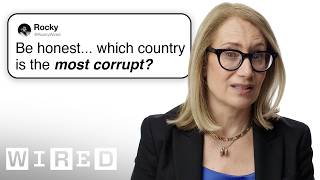
Transparency.org ranks South Sudan as most corrupt, followed by Somalia, Venezuela, Yemen, Libya, Eritrea, Sudan, and Nicaragua. Some use criminal gangs as enforcers to beat state enemies and extract bribes.
Autocrats often place family members in key positions to ensure loyalty and control corruption networks, e.g., Mussolini's son-in-law, Erdogan's son-in-law running a drone company.
Politicians can become rich after office through book deals and speaking gigs, but some amass wealth while in office, like Trump with $5 billion in 18 months from foreign investments and personal products.
Kleptocracy is a system where thievery is institutionalized; elites use political positions to plunder private businesses, subjecting them to legal harassment, tax audits, or forced sales at a loss.
Countries with oil or natural gas tend to have autocrats stay longer, creating extreme wealth centers and endemic corruption, as in Gaddafi's Libya where oil profits were siphoned to Swiss bank accounts.
Dictators historically used Swiss bank accounts; now offshore finance via shell corporations in UK outposts, Delaware, and South Dakota are common hiding places.
Netanyahu faces three corruption cases; wannabe autocrats fix the judiciary to make legal problems go away, as seen with Putin, Berlusconi, and Trump pursuing judicial reform.
Putin's wealth is rumored to be immense, amassed by plundering public agencies like Gazprom and private businesses, seeing them as pots of money.
Trump is considered the most corrupt president, with donors given contracts, personal goods promotion, and pardoning financial criminals.
Authoritarian bargain: elites make money in return for absolute loyalty, leading to a 'mafia state' where competition is gamed and secrets are kept.
Autocrats fear journalists and try to silence them, often labeling critical media as 'fake news' to hide secrets.
Corruption can happen in any government if conditions are right, including democracies like Turkey and Hungary where Orban stopped an EU investigation.
Democracy suffers when institutions are retooled to protect immoral people, but sexual assault scandals can prompt prosecution, as with Berlusconi.
Election denial is a form of corruption; Bolsonaro lost the 2022 election, tried a coup, and now sits convicted with a 27-year sentence.
A country can uncorrupt itself by restoring regulations, professional ethics, and reigning in the leader, as seen in Hungary with Peter Magyar.
Corruption is a systemic abuse of power that can be countered through regulation, ethics, and accountability, but it requires political will and public pressure.
What is the definition of corruption?
The abuse of power for private gain.
01:16
Which country is ranked as the most corrupt by Transparency.org?
South Sudan.
01:47
What is a kleptocracy?
A system where thievery is institutionalized; elites use political positions to plunder private businesses.
05:10
What is the 'resource curse'?
Autocrats with large oil or natural gas supplies tend to stay in power longer, leading to endemic corruption.
05:54
How do modern dictators hide their money?
Through offshore finance, shell corporations in UK outposts, Delaware, and South Dakota.
07:22
What is the 'authoritarian bargain'?
Elites make money in return for absolute loyalty, leading to a mafia state.
10:44
What happened to Jair Bolsonaro after losing the 2022 election?
He tried to stage a coup and was convicted with a 27-year sentence.
14:48
How can a country uncorrupt itself?
By restoring regulations, professional ethics, and reigning in the leader.
15:14
Definition of Corruption
Provides a clear, concise definition that frames the entire discussion.
01:16Kleptocracy Explained
Explains a complex term with concrete examples of institutionalized theft.
05:10Resource Curse
Connects natural resources to prolonged autocratic rule, a key pattern in political science.
05:54Authoritarian Bargain
Reveals the mutual dependency between dictators and elites, explaining regime stability.
10:44Uncorrupting a Country
Offers a hopeful, actionable path forward, contrasting with the grim examples.
15:14[00:00] This is Tech Support Corruption. [upbeat music] AndyDoodle asks, "How do third world rulers get so rich
[00:14] Well, often those countries are broke and get broker because the dictator is stealing public funds. who was the leader of Congo for three decades.
[00:30] He became immensely wealthy, amazing a fortune where the average daily wage was $1. He took tax money and directed it to his pet projects,
[00:46] He took kickbacks from foreign companies Mobutu was an important ally in the Cold War. So the International Monetary Fund
[01:00] that were supposed to be to improve the country. Instead, that money went straight to his bank accounts. Corruption is the abuse of power for private gain.
[01:16] and that's called dereliction When we look the other way at the weaponization or when we simply give up the idea
[01:32] RockyWired asks, "Be honest, Transparency.org tracks corruption and absence of transparency in countries around the world.
[01:47] South Sudan is the most corrupt followed by Somalia, Venezuela, Yemen, Libya, Eritrea, Sudan, Nicaragua, Some of these countries such as Venezuela are corrupt
[02:03] with criminal gangs, which are used as enforcers to beat up state enemies, also to get bribes from people. and civilian criminal actors.
[02:18] and Yemen are countries where authority has become with their own corruption networks. where the military has been allowed
[02:34] to become active players in corruption schemes. And this is how dictators keep people tied to the system. that the number one job of all politicians
[02:51] Well, autocrats are family men in a way. with family members because family members can keep Mussolini appointed his son-in-law, Galeazzo Ciano,
[03:08] and his family had their own corruption network we now know. of autocratic corruption. In Turkey, Erdogan's son-in-law runs the biggest
[03:21] which is drones used all over the world. has been conducting private business on behalf At the same time, he is representing the US government
[03:39] In healthy democracies, this would be called a conflict conflicts of interest. and it's something that's very common
[03:55] Dover299 asks, "Where do politicians get so rich from?" between politicians growing rich after they leave office when they're not bound anymore
[04:10] and this is true all around the world, can become very rich after they leave office from book deals, from speaking gigs, that's gonna use their expertise as a former head of state.
[04:27] who amass wealth while they're still in office, ignoring who has amassed $5 billion in only 18 months in office.
[04:39] There have been deals made that involve profits He also promotes personal products with his name on them, And over $640 million estimated has come in
[04:56] from foreign investments to Trump and his family. Rubyzhuman asks, "WTF is a kleptocracy." Klepto being a thief.
[05:10] and thievery have become so institutionalized, so pervasive It's a system where elites use their political positions
[05:24] where private businesses are plundered by the state If they don't, they're subjected to legal harassment, to tax audits, and sometimes even forced to sell at a loss.
[05:39] Ordinary citizens have to pay bribes This was true often in the former communist countries, who had his country living in poverty
[05:54] Many countries that have a lot of oil And this is known as the "resource curse." The curse being that autocrats who have large supplies
[06:08] of oil or natural gas tend to stay in power longer. but oil profits created centers of extreme wealth around oil distribution and production.
[06:23] and others in the state bureaucracy who had to do On the way, corruption becomes endemic. In Gaddafi's Libya, which was a kleptocracy.
[06:39] whether private or in the government amassed Instead of putting the oil profits for public good,
[06:52] most of them were siphoned off into Swiss bank accounts. Now, sometimes if the dictator falls from power as happened to Gaddafi, this can lead to an instability after
[07:06] And so you have a fragmentation L. Rey asks, "How do corrupt dictators hide their money?" In the olden days, dictators used Swiss bank accounts
[07:22] and there was no transparency regarding these bank accounts. Nowadays, offshore finance is the game.
[07:34] you can create a shell corporation Very convenient for the bad actors in the world. Until the 21st century, United Kingdom outposts such
[07:48] for dictators to put their money. had his money in United Kingdom banks offshore. of the main players in offshore finance.
[08:05] and South Dakota are places where many warlords, arms dealers, dictators reportedly stash their funds. "So what corruption is Benjamin Netanyahu
[08:20] Netanyahu faces three separate cases Regular politicians, if they're facing investigation Journalists could start poking around,
[08:35] If you are a wannabe autocrat, though, like Netanyahu, because the point is to get into power and fix the judiciary so your legal problems can go away.
[08:50] when they ran for office includes Vladimir Putin, Silvio Berlusconi three times, Donald Trump three times, and immediately pursued something he called judicial reform,
[09:07] to make his legal problems go away. "Where did Putin get his wealth?" and President Vladimir Putin is rumored
[09:20] How did he do it? On one hand, he plundered public agencies. and natural gas conglomerate.
[09:33] Basically, kleptocrats see public agencies as pots So that's one way Putin did it, The second is by plundering private businesses.
[09:48] has been seized by the state or threatened by the state or sell at a loss.
[10:00] And so again, it's the private sector and the public sector. you create a formidable income stream for a dictator. "Is Trump the most corrupt president?" Without a doubt.
[10:15] just in the 18 months he has been in office. Donors have been given contracts for businesses, He promotes personal goods, profits
[10:30] to which go toward the companies owned by his family Trump has also pardoned financial criminals as well ThePOORmansTHINKINGMAN on Quora asks,
[10:44] Here we have the concept of authoritarian bargains. Could be media elites, financial elites, business elites. They make money in return for absolute loyalty.
[10:59] Competition is gamed in their favor. Over time, this results in what's called a "mafia state," to the dictator become immensely wealthy
[11:13] In Putin's Russia, for example, there's the dictator, who become immensely wealthy And this is how the dictator keeps them tied to him.
[11:29] even if you're immensely wealthy against a dictator. Corruption isn't only about finances. The dictator knows your secrets.
[11:43] And the dictator, especially if he comes from keeps information on those oligarchs And so this too is part of the authoritarian bargain.
[11:57] It's not just profit, but it's keeping each other's secrets. wya42wallabyway asks, "Hmm, I wonder why corrupt leaders If you wanna know if someone is trying to be an autocrat,
[12:14] Do they derive them as fake news? Do they say they're corrupt, not to be trusted? Usually. or wannabe autocrats usually have secrets to hide
[12:27] Autocrats are afraid And so autocrats try to silence, That is a very dangerous profession.
[12:41] damndirtyape asks, "Why do some governments become corrupt? that make some governments more prone to corruption?" democracies, autocracies.
[12:53] where there's a leader and a political system of self-preservation. This could be in Turkey
[13:08] and judges and watchdogs. where Orban stopped an EU investigation So it's not just in third world countries.
[13:23] Corruption could be anywhere if the conditions are right. PGadapaBooks asks, "Can democracy survive corruption?" in which things that used to be considered illegal
[13:37] stealing from the public, sexual abuse, When that happens and institutions get retooled to protect immoral people, then democracy suffers.
[13:52] Now, sometimes sexual assaults can be a prompt That happened in Italy when Berlusconi, was actually forced to step down.
[14:05] He was investigated and convicted not only for bribery Around the world, foreign governments have been prosecuting and appear in the Epstein files.
[14:19] That has yet to happen in the United States. Ze_Germans31B asks, "Denying elections, hmm. Many autocrats commit electoral fraud.
[14:33] or you refuse to have the votes counted. But election denial is something under the bucket of corruption.
[14:48] conspiring to lie to the public. In Brazil, Jair Bolsonaro lost the 2022 election Later, he tried to stage a coup
[15:02] He now sits convicted with 27 years sentence. Tygor asks, "How does a country uncorrupt itself?"
[15:14] A country can uncorrupt itself by restoring regulations They can restore professional ethics requirements and corporations, and they can reign in the leader
[15:32] We're seeing this in Hungary where Peter Magyar, the successor of Viktor Orban, is restoring regulations that Orban discarded in order to restore transparency
[15:46] So those are all the questions for today. Thanks for watching. I
⚡ Saved you 0h 15m reading this? Transcribe any YouTube video for free — no signup needed.