
Hand-Painted vs Digital Anime Backgrounds
30sNostalgic comparison between classic Dragon Ball Z and modern One Punch Man sparks debate among anime fans.
▶ Play Clip"The title accurately describes the content, which provides a detailed behind-the-scenes look at anime production, mentioning studios like Toei and Madhouse."
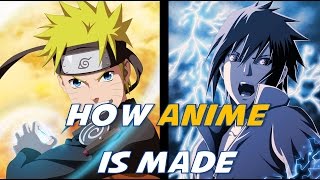
This video provides a behind-the-scenes look at how anime is made, from script to final broadcast. It breaks down each stage of production, including storyboarding, key animation, compositing, and voiceovers. The video also highlights the differences between traditional hand-painted backgrounds and modern digital techniques.
The script is produced by the original manga artist and reviewed by the director before being greenlit.
Storyboards include drawings, movements, camera panning, and shot lengths.
Layouts for scenery and landscapes are drawn on paper and reviewed for placement of elements like trees or buildings.
Backgrounds were traditionally hand-painted (e.g., Dragon Ball Z) but are now mostly digital (e.g., One-Punch Man) for speed and cost.
Key animators draw the first, middle, and last frames of an animation sequence.
Key animators use references like mirrors to draw proportions correctly.
In-between animators fill in the frames between key frames to create fluid motion.
A 30-minute TV episode can have up to 1,500 redrawn pictures.
Compositing includes coloring and shading, with artists given specific color palettes to maintain consistency.
The effects department adds lighting, glows, shading, blurs, and other effects to enhance the animation.
Post-production includes editing for broadcast time and recording voiceovers.
The voice of Goku is voiced by a woman, and the voice of Naruto is also voiced by a woman.
Who produces the script for an anime?
The script is produced by the artist who developed the original manga.
0:20
What do storyboards include?
Storyboards include drawings, movements, camera panning, and the length of each shot.
0:35
What frames do key animators typically draw?
Key animators draw the first, middle, and last frames of an animation sequence.
1:32
What is the role of in-between animators?
In-between animators draw the frames between the key frames to create smooth motion.
2:10
How many redrawn pictures can a 30-minute anime episode have?
A 30-minute TV anime episode can have as many as 1,500 redrawn pictures.
2:51
What does the compositing stage involve?
Compositing includes the coloring studio and shading, where lines are filled with correct colors.
3:03
How do artists maintain color consistency for characters?
Artists are given a correct palette of colors to ensure character color consistency throughout the animation.
3:19
What kind of effects does the effects department add?
The effects department adds lighting, glows, shading, blurs, and other effects.
3:58
What happens during post-production?
Post-production includes editing to fit broadcast time and recording voiceovers.
4:25
Who voices Goku?
The voice of Goku is voiced by a woman.
4:45
Script Origin
Reveals that the anime script is produced by the original manga artist, highlighting the close relationship between manga and anime.
0:20Key Animation Process
Explains the core technique of key animation, where only the most important frames are drawn first, which is fundamental to understanding animation production.
1:32Frame Count in Episodes
Provides a concrete number (1,500 redrawn pictures per 30-minute episode) that illustrates the immense labor involved in anime production.
2:51Voice Acting Gender
Points out that iconic male characters like Goku and Naruto are voiced by women, a surprising fact that adds depth to the voice acting discussion.
4:45[00:00] Have you ever wondered how anime is made well today?
[00:02] We're going to take a behind-the-scenes look at some of your favorite animation studios and see how this whole [process] is done, from scratch
[00:20] It all starts off with a script the script is produced by the artist who developed the original [Manga] himself and after a lengthy review
[00:28] Process by the director it gets greenlit and goes into production next we have a storyboard these storyboards include drawing
[00:35] movements panning of the camera, and the length of each shot next we have layouts for the actual scenery [and]
[00:42] Landscapes that take place first they're drawn on paper
[00:45] And it is reviewed should we have a tree here should we have a building here?
[00:49] And then actually once it is finalized goes to a landscape department where they used to hand paint them
[00:56] They don't do it so much anymore
[00:58] Now it has turned into a lot of digital landscapes, but think old-school dragonball z
[01:03] That's all hand painted landscapes and backgrounds, and thank new age one-punch man. It is all digital
[01:09] backgrounds now however sometimes they still do paint in
[01:13] Regular acrylics, but typically don't they'll only do that in a scenario where it's faster or better for some particular [reason]
[01:20] But primarily now. It's all digitized because you have all your tools right at hand. It's faster cleaner and cheaper
[01:26] Next we have key animation now what key animators do is they draw the first frame the middle frame and the last frame
[01:32] Typically of an animation so basically if one guy of guy a was going to kick guy B
[01:38] He'd have him standing there. He'd have middle the kick and then he have the kick impacting the guy
[01:44] After the key animation is done for every frame. It'll go over to the [in-between] animators here's something you might find interesting
[01:52] When the key animators are drawing they have to use references so that they get everything correct now
[01:57] Here's an example of a key animator using a mirror so that he can look at his hand in order to draw the hand
[02:04] Proportionally and correctly after the key animators are done it goes over to the in-between animators who make sure that that
[02:10] animation is a solid fluid movement by tracking the three pictures that they were given or more and
[02:17] basically drawing the frames in between
[02:20] Those in order to give it that motion key animators usually are more amateur. They're less expensive a lot of times
[02:27] They're brought in from Korea over in Japan and that
[02:29] Is part of the reason that Dragon Ball Super episode 5?
[02:33] Didn't look great in a lot of those scenes is because it was done by less
[02:37] Experienced animators who were brought in to do the heavy [lifting] on those [in-between]?
[02:42] Fluid movement animations now what you have to understand is that in animation?
[02:46] just a TV series a 30-minute episode can have as many as
[02:51] 1,500 Redrawn pictures in that single episode
[02:55] After all the animations are complete it goes over to compositing now compositing is a slew of different departments
[03:02] But primarily it is
[03:03] the coloring studio the shading and this is where they put in and
[03:07] Fill all [of] the lines of the animations that have been created [with] the correct colors now a lot of these companies have entire
[03:15] Departments just for the coloring because it is so time-consuming
[03:19] Each of these artists will be given a correct palette of colors to use to ensure [that] all characters
[03:25] Keep and [Maintain] their level and quality of colors throughout the entire animation now
[03:30] sometimes
[03:30] they'll be in a cave or [in] a building where there's not as much light and they'll be given a different color palette for the
[03:36] Darker Shades
[03:37] And that's why sometimes you'll see characters having different shades of color
[03:41] Whether it's their clothes or their skin the final stage of production is effects the effects department will take the fully drawn animation fully colored
[03:49] With landscapes and everything, but basically the rest of the departments are done at this point
[03:52] And now we'll start adding effects whether it's lightening glows or as shading blurs
[03:58] They'll add various effects to ensure that that animation looks amazing glints on swords more things than you probably even know
[04:06] A lot of blurs for certain scenes so that it gives it more of a speed motion there are so many things that the effects
[04:13] Department does in the end that really add [to] the stellar quality of an animation and add those effects that make you love those key
[04:21] moments in that anime
[04:23] Finally we go to post production
[04:25] which is editing so that the
[04:27] anime the 30 minute cartoon is exactly the amount of broadcast time meaning they may have to cut some pieces out and we do the
[04:35] Voiceovers the voiceovers are probably one of the more on stages in this entire process
[04:40] You guys probably knew that the voice of Goku is voiced by a woman
[04:45] walking [Sudhana], or underneath it feels old ah
[04:53] But did you know that the voice of naruto was - oh see what after dinner?
[04:58] You go get a shell company to understand [company]. Chaos there you [still] gotta I'm the coo you know they're not pan out
[05:05] I'm jake Master master our media. Thanks for joining us today
[05:08] Make sure to hit that subscribe button, and I will talk [to] you guys soon
[05:27] so lucky
⚡ Saved you 0h 05m reading this? Transcribe any YouTube video for free — no signup needed.