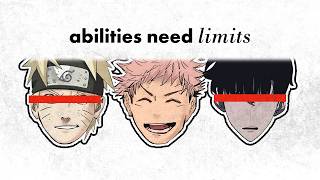

The Secret to Great Power Systems
45sThe bucket and tap analogy is a simple, memorable way to explain energy systems, making it highly shareable.
▶ Play Clip"Title accurately reflects content; video delivers on analyzing power systems in anime."
The video analyzes energy systems in anime, using a bucket-and-tap analogy to explain how they limit abilities and create tension. It examines chakra in Naruto, cursed energy in Jujutsu Kaisen, and mana in Solo Leveling, highlighting successes and failures.
Every power system needs a limiter to maintain tension; energy systems like chakra, mana, and cursed energy serve as invisible batteries.
Characters have a bucket (energy pool) and a tap (release rate); small bucket with large tap allows one big attack, large bucket with narrow tap allows sustained weaker moves.
Replenishment speed, efficiency, and control add depth; these force strategy, conservation, and risk-taking in battles.
Chakra combines physical and spiritual energy; early series uses it well for tension (e.g., Kakashi vs. Zabuza, Naruto vs. Neji), but later suffers from power creep and inconsistencies.
Susanoo and other abilities ignore chakra limits; characters spam mountain-destroying attacks without strain, undermining the system.
Gamer Subs is a zero-sugar energy drink for focus and endurance; free samples available, code 'panis' for 10% off.
Cursed energy from negative emotions is versatile and consistent; expands naturally with positive energy, black flash, heavenly restrictions, and domain expansions.
Domain expansions are instant win conditions but drain cursed energy; Mahito's loss to Yuji is due to reckless energy use, not just strength.
Sung Jin-Woo's mana is a generic video game meter with no clever interactions; mana potions remove tension, making it a weak system.
Best systems create vulnerability and force strategy; they should consistently add stakes, not be background noise.
Energy systems are vital for maintaining tension and strategy in battles; the best ones are integrated into worldbuilding and character decisions, while weak ones become irrelevant.
What is the bucket and tap analogy for energy systems?
The bucket represents the energy pool, and the tap controls how much energy can be released at once.
00:34
What are the three additional variables that can enhance an energy system?
Replenishment speed, efficiency, and control.
01:08
How is chakra defined in Naruto?
A combination of physical energy and spiritual energy that can be refined to produce jutsu.
02:45
What caused chakra to lose its meaning in Naruto's war arc?
Power creep allowed characters to spam mountain-destroying attacks without strain, ignoring chakra limits.
05:28
What is cursed energy in Jujutsu Kaisen?
An internal energy born from negative emotions that sorcerers harness for cursed techniques.
09:20
What is a black flash in Jujutsu Kaisen?
A critical strike achieved by timing cursed energy application just right, with devastating multipliers.
10:24
What is a heavenly restriction in Jujutsu Kaisen?
A trade-off where a character foregoes cursed energy for a massive boost in physicality.
10:35
Why is mana in Solo Leveling considered a weak energy system?
It is a generic meter with no clever interactions, and mana potions remove tension by instantly refilling it.
12:46
Bucket and Tap Analogy
Provides a clear, intuitive framework for understanding energy systems.
00:34Chakra's Early Strengths
Demonstrates how chakra created tension and strategy in early Naruto fights.
02:26Cursed Energy Consistency
Highlights a power system that remains consistent and integrated throughout the series.
08:53Mana's Failure as a Limiter
Shows how a system that fails to limit abilities undermines tension.
12:03Energy Systems as Storytelling Tools
Summarizes the core lesson: energy systems should create vulnerability and force strategy.
14:50[00:00] Every power system needs a leash. No
[00:04] matter how creative or innovative your
[00:06] abilities are, without some kind of
[00:08] limiter, your battles will lose their
[00:10] most essential ingredient. That is their
[00:13] tension. To solve this, almost nearly
[00:16] every shownen relies on the same trope,
[00:19] an energy system. Think of chakra, mana,
[00:23] key, cursed energy. The name changes,
[00:25] but the idea is always the same. an
[00:28] invisible battery that keeps battles in
[00:30] check. I like to use a bucket and tap
[00:34] analogy. Let me cook here. Every
[00:36] character is carrying around an
[00:38] invisible bucket that is filled with
[00:40] their respective energy system. Some
[00:42] characters buckets are huge while some
[00:44] are tiny, which is usually down to
[00:46] genetics, training, or both. Meanwhile,
[00:50] the tap controls how much of that energy
[00:52] a character can release at once. So,
[00:55] someone with a small bucket but large
[00:57] top might be able to unleash one massive
[00:59] attack before being drained dry, while
[01:01] someone with a large bucket but with a
[01:03] narrow top can keep pumping out weaker
[01:05] moves almost endlessly. Of course, many
[01:08] power systems don't stop there,
[01:10] rightfully so. Some go deeper,
[01:13] introducing other variables like
[01:15] replenishment speed, which is how
[01:16] quickly your bucket fills back up.
[01:19] efficiency, how much energy actually
[01:21] translates into power versus how much is
[01:24] wasted, or control, how precisely a
[01:26] character can manage the flow of their
[01:28] energy. These are all ideas that I
[01:30] encourage any writer to blend into their
[01:33] power system. Together, these reveal the
[01:35] true purpose and strength of an energy
[01:38] system. That is to blend fights with an
[01:41] essential element of strategy.
[01:43] Characters can't just recklessly spam
[01:45] their strongest moves forever. They have
[01:47] to conserve, to gamble, and sometimes to
[01:50] risk running out at the worst possible
[01:52] moment. At their best, these systems
[01:55] don't just make fights more intense.
[01:57] They dictate the outcome of the fights
[01:58] themselves. But at their worst, these
[02:02] systems blend into background noise,
[02:04] often revealing plot convenience or
[02:06] outright contradictions. So, how do you
[02:09] make a good energy system? What are some
[02:12] examples of the best energy systems in
[02:14] anime? And where do authors often go
[02:17] wrong? Well, in this video, that's
[02:19] exactly what we're going to find out.
[02:21] So, stick around. You might just learn
[02:24] something important. Chakra is the
[02:26] energy system of Naruto. And in all
[02:29] fairness, one of the most
[02:31] well-thoughtout energy systems in all of
[02:33] shownen. While it does get a bit weird
[02:36] towards the end, what with the aliens
[02:38] and all, Kishimoto still managed to
[02:40] create an energy system that far
[02:42] surpassed its contemporaries. Chakra is
[02:45] defined as a combination of a person's
[02:48] physical energy and spiritual energy
[02:51] which can be refined and molded to
[02:53] produce techniques called jutsu. It is
[02:56] the battery behind every technique in
[02:58] the series from the most basic cloning
[03:00] jutsu to the most destructive forbidden
[03:03] arts. Every ninja has a limited pool and
[03:07] the size of that is massively influenced
[03:09] by genetics and natural talent and maybe
[03:14] a bit of training because Kishimoto
[03:16] couldn't decide if he wanted to make a
[03:18] Nepo baby fanfiction or a hard work
[03:21] beats talents narrative. Regardless of
[03:23] that, in the early series, this system
[03:26] truly shines. Chakra is a lot more
[03:29] involved, actively serving character
[03:31] conflicts and strategy. One of the
[03:33] earliest examples of this happens within
[03:36] the land of the waves arc. Chakra is a
[03:39] very active element of that fight.
[03:41] Without the strain of chakra, Kakashi
[03:43] would easily be able to handle Zabuza
[03:46] and Haku by himself. But due to the
[03:48] massive amount of chakra his shang gun
[03:50] requires and his otherwise average
[03:53] reserves, the longer the fight drags
[03:55] out, the more dangerous it becomes for
[03:57] him due to exhaustion. His chakra
[04:00] limitations are the key reason his
[04:02] students, the protagonists, even matter
[04:05] in this fight. Or take Naruto versus
[04:08] Nei, which happens a couple arcs later.
[04:11] One element of chakra that makes it more
[04:13] interesting is its biological
[04:15] connection. Your chakra flows out of
[04:17] tenetsu points, and someone like Nei
[04:20] gentle fist is capable of closing off
[04:23] those points, which essentially seals
[04:25] away your chakra. So when Nei does this
[04:28] to Naruto, it should essentially finish
[04:30] the fight. But Naruto manages to
[04:33] somewhat plan ahead using his secondary
[04:36] external source of chakra, the
[04:38] Ninetailed fox, to completely catch Nei
[04:41] by surprise, which alongside the smart
[04:43] use of clone jutsu is a turning point
[04:46] that allows him to win the fight. In
[04:48] both of these moments, Chakra works
[04:51] perfectly. It is a clear limiter that
[04:54] separates characters in unique ways and
[04:56] creates tensions whenever those reserves
[04:58] start to run dry. You truly feel the
[05:01] weight of every move because Chakra is a
[05:04] finite meaningful resource. But as the
[05:07] series scales up, Chakra begins to lose
[05:10] that meaning. What started as a clever
[05:12] limiter becomes more of a background
[05:15] detail conveniently mentioned or ignored
[05:18] depending on the moment. The series does
[05:20] all right through Shipuan, but the
[05:23] illusion of Chakra's importance really
[05:26] begins to fall apart completely during
[05:28] the war arc. Take Susano, a literal
[05:32] massive suit of pure chakra that serves
[05:35] as both the perfect offense and the
[05:38] perfect defense. Rightfully, it is an
[05:40] incredibly taxing ability described as
[05:43] your every cell being on fire and
[05:46] requiring an absurd amount of chakra to
[05:49] use. Maybe not. Saskuke used it for
[05:52] hours at a time, but it still has the
[05:55] weakness of slowly blinding the user,
[05:58] returning that essential element of T.
[06:01] No, never mind. He got past that. Well,
[06:04] at the very least, you still need the
[06:05] showering gun to use it, right? It'd be
[06:08] ridiculous if a character who had say
[06:10] lost both of their eyes was still
[06:12] somehow capable of using a technique
[06:15] that literally requires special eyes to
[06:18] be used. Nah, that would never happen.
[06:21] At a point, the war arc essentially
[06:23] becomes a display of long- range nuclear
[06:26] warfare. Because by the end of the
[06:28] series, Chakra is such a non-issue that
[06:31] characters can literally spam mountain
[06:33] range obliterating attacks without so
[06:36] much as breaking a sweat. Their taps
[06:39] become as wide as the Grand Canyon, and
[06:42] their buckets become, well, infinite. At
[06:46] the very least, Kishimoto did seem to
[06:49] remember his energy system at the very
[06:52] final portion of the series at Sasuke
[06:54] and Naruto's final battle. And it's that
[06:58] very last sequence that made me remember
[07:00] what I loved about this series. Not the
[07:03] country shattering explosion that
[07:05] happened an episode prior, but the
[07:07] strategies, desperation, and tactical
[07:10] depth applied by both characters at the
[07:13] very end. And that's the tragedy of
[07:16] Naruto's chakra system. What once began
[07:19] as one of the most balanced and
[07:20] narratively rich limiters in shownen
[07:23] ended up collapsing under the weight of
[07:25] escalating power creep.
[07:28] Of course, we can't forget the most
[07:30] important energy system of all. The one
[07:33] we deal with every single day, stamina.
[07:37] Forget chakra and forget cursed energy.
[07:40] The one thing that actually has an
[07:41] effect on your life is how long you can
[07:44] stay awake and functioning. Like, I've
[07:46] been hitting the gym early and earlier,
[07:48] and by the time I come back home to make
[07:50] these videos, I feel like my stamina bar
[07:52] is flashing red. But luckily, that's
[07:54] where the partner of today's video comes
[07:56] in. Gamer subs. Gamer subs is I I can
[08:01] say whatever I want. Oh, cool. Well
[08:05] then, for a basic explanation, Gamer
[08:09] Subs is a zero sugar, low calorie energy
[08:11] formula designed to give you better
[08:13] focus and endurance without a crash.
[08:16] Imagine popping a stamina potion
[08:19] midfight. Kind of feels like that. So
[08:22] whether I'm editing videos into the late
[08:23] night like right now, or just trying not
[08:26] to collapse after leg day, Gamers is
[08:29] pretty good at keeping me running. If
[08:31] you want to try it out, Gamersops
[08:33] actually offers free, yes, free sample
[08:36] packs so anyone can try them out for
[08:38] themselves. And if you're looking to
[08:40] stock up or just want to support the
[08:42] channel, you can use code panis here at
[08:45] checkout for 10% off any order. Just hit
[08:48] the link in the description and grab
[08:50] yours. Anyway, let's get back to the
[08:53] video. Jiu-Jitsu Kaisen gets a lot of
[08:56] criticism. Some of it is welld deserved,
[08:59] but most of it, the vast majority, is
[09:03] completely baseless given by people who
[09:06] consume the series off of Tik Tok.
[09:08] Because if there's one thing Jiutsu
[09:10] Kaisen absolutely nailed from start to
[09:12] finish, it would be its power system.
[09:15] More specifically, its consistency with
[09:18] the series energy system. In jiu-jitsu
[09:20] kaizen, humans naturally produce cursed
[09:23] energy, which is an internal energy born
[09:25] from negative emotions. Most people just
[09:28] leak it unconsciously, which in turn
[09:30] gives birth to cursed spirits. But
[09:32] sorcerers, the main profession of this
[09:34] verse, are capable of harnessing this
[09:36] energy, using it to fuel their cursed
[09:39] techniques. It's a simple yet effective
[09:42] setup. What makes Cursed Energy stand
[09:44] out is its versatility because in
[09:47] practice it is far more than just an
[09:49] invisible stamina bar. Cursed energy is
[09:52] the very reason a lot of the main
[09:54] antagonist exists. I mean, they're made
[09:56] out of the thing and is capable of being
[09:58] weaponized to such an extent that
[10:00] Yujiadidori for the vast majority of the
[10:03] series was capable of relying purely on
[10:05] raw cris energy to keep up with the
[10:07] scale of the plot. Even beyond that, the
[10:10] system constantly expands in innovative,
[10:13] consistent ways. What happens when you
[10:16] flip cursed energy? Well, you get
[10:18] positive energy, which is capable of
[10:20] being used for healing or reversing the
[10:22] effects of your techniques. If you
[10:24] manage to time your cursed energy
[10:26] application just right, well, you can
[10:28] land a black flash, which is essentially
[10:30] a critical strike with devastating
[10:33] multipliers. Some characters forego
[10:35] cursed energy entirely, gaining heavenly
[10:38] restrictions, which massively boost
[10:40] their physicality instead. Every
[10:43] addition feels like a natural extension
[10:46] of the same core rules, not a
[10:48] contradiction. But what I truly love and
[10:51] appreciate about Chris Energy is how
[10:53] much it actually decides fights. One of
[10:56] the most prevalent cases of this
[10:58] actually comes about from domain
[11:00] expansions. They're almost always
[11:02] instant win conditions, an ability that
[11:05] guarantees your every attack will land.
[11:08] But here's the catch. They massively
[11:10] drain the user of their cursed energy,
[11:12] leaving them vulnerable once they
[11:13] collapse. So look at Mito versus Yugji
[11:17] and Toto. Mahito's final loss to Yugji
[11:20] isn't just because Yugji overpowered
[11:22] him. It's because Mso spent his energy
[11:25] recklessly during the fight, stacking
[11:27] highc cost move after high cost move
[11:30] until he had nothing left. The fight's
[11:32] outcome was dictated as much by resource
[11:35] management as it was by raw strength.
[11:38] So, from output to efficiency to control
[11:41] and reinforcement to reverse techniques
[11:43] and to heavenly restrictions, curse
[11:46] energy is one of the most consistent and
[11:48] well-developed energy systems in modern
[11:50] shownen. It's not just a limiter. It's
[11:53] the foundation of every battle in the
[11:55] story itself. And honestly, I encourage
[11:58] any author to use it as a blueprint when
[12:01] designing their own.
[12:03] So far, we've looked at an energy system
[12:05] with a strong foundation that eventually
[12:08] lost its way, and another that stayed
[12:11] consistent from start to finish. But
[12:13] now, let's look at an energy system that
[12:16] was weak almost from the ground up. mana
[12:19] from solo leveling. And to be clear, I'm
[12:23] not talking about the mana used by other
[12:25] characters in the verse. I mean
[12:27] specifically Sunjing Wu's mana, which is
[12:29] connected to the system. His abilities
[12:32] are modeled after video game mechanics.
[12:35] And so his mana bar functions exactly
[12:38] like you'd expect, a generic stamina bar
[12:41] that drains whenever he casts a skill or
[12:43] summons his army. And that's where the
[12:46] problem begins. In other series like
[12:49] Naruto or Jiu Kaizen, the energy system
[12:52] manages to evolve beyond just being a
[12:55] limiter. They branch into their series
[12:57] respective world building and are
[12:59] capable of being used for countless
[13:01] other forms of utility from sticking to
[13:04] walls or being timed right to land
[13:06] critical hits. These being additional
[13:08] uses that create tension and creativity
[13:11] in battle. Jinmu's mana system is
[13:14] entirely just a number on a stat screen.
[13:17] There are no clever interactions, no
[13:20] secondary uses, nothing. It exists
[13:23] purely as a meter. But the meter at
[13:26] least does its job, right? Like that's
[13:28] the point of the video. Surely, it
[13:31] realistically and fairly limits Jinu's
[13:34] use of his abilities. No, not really.
[13:37] The cycle is the same each time. Jinu
[13:40] fights a boss that conveniently has an
[13:42] army of minions that his shadows can
[13:44] aura farm on. The boss wipes out the
[13:46] rest of the shadows. Jinu's manner runs
[13:49] low and he turns to the camera and says
[13:51] some like, "Guess I'm going solo on
[13:53] this one." And then he solos it. Name of
[13:56] the series appears. Roll credits.
[13:58] Absolute cinema. Just give anime of the
[14:00] year. Just give anime of the year. This
[14:02] gets even worse when you realize this
[14:04] fake tension doesn't even matter half
[14:07] the time. Jin Wu can literally buy an
[14:10] infinite stockpile of mana potions that
[14:13] instantly refill a portion of his mana
[14:16] bar. So, the system fails at its only
[14:18] job of being a limiter. And while that
[14:21] works for hype, it makes for one of the
[14:23] weakest energy systems in modern anime
[14:26] storytelling. It feels much more like an
[14:29] afterthought than a system actually
[14:31] crafted to enhance the story. At the
[14:33] very least, there seems to be another
[14:36] version of Mana present in the story
[14:38] that is much more intertwined with the
[14:40] series lore. But because none of the
[14:42] other characters actually matter, it's
[14:45] not even that relevant in the first
[14:47] place. At the end of the day, energy
[14:50] systems are somehow one of the simplest
[14:52] tropes in battle storytelling, yet also
[14:55] one of the most important. They are the
[14:58] primary leash that keeps abilities
[15:00] grounded, adding an essential element
[15:02] that adds weight to every decision in
[15:04] battle. So, the lesson here is simple.
[15:08] The best energy systems are far more
[15:10] than just fuel tanks. They're
[15:12] storytelling tools. They create
[15:14] vulnerability and force strategy. And
[15:17] sometimes, like Jiu Kaizen's relation to
[15:20] negative emotions, can even reflect the
[15:22] themes of the story itself. So, the next
[15:25] time you're watching an anime with an
[15:27] energy system present, ask yourself, is
[15:30] it actually consistently adding stakes,
[15:33] or is it just background noise? Because
[15:36] that one detail might be the difference
[15:38] between a fight you forget tomorrow and
[15:40] one that actually sticks with you for a
[15:42] while.
[15:44] Thank you for watching. Got any energy
[15:46] systems that you love? Well, leave them
[15:48] in the comment section down below. Don't
[15:51] forget to check out gamers subs and use
[15:53] my code pines here to get 10% off any of
[15:56] your purchases. Anyway, if you like the
[15:58] video, don't forget to drop a like and
[16:01] subscribe. I'll see you in the next one.
[16:03] Peace.
⚡ Saved you 0h 16m reading this? Transcribe any YouTube video for free — no signup needed.