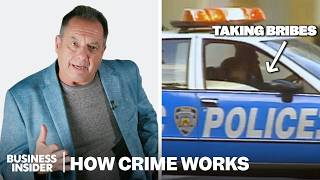

The First Bribe: A Cop's Temptation
60sA raw, personal confession about the first moment of corruption creates immediate shock value and relatability.
▶ Play Clip"Delivers a raw, detailed firsthand account of corruption, though the title oversells 'how it works' with a personal story."
This video features a former NYPD officer, Michael, who recounts his descent into corruption during the 1980s crack epidemic. He details how he and his partners engaged in street-level theft, systematic payoffs, and protection rackets, eventually leading to his arrest and imprisonment. The narrative provides a firsthand account of the systemic failures and personal choices that enabled widespread police corruption.
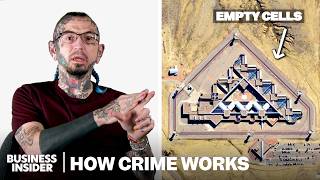
Michael introduces himself as a former NYPD officer in the 75th Precinct in East New York during the 1980s, who served 14 years in federal prison for conspiring to steal drugs and sell protection to drug dealers.
Michael describes his first corrupt act: pulling over a Corvette with no plates, registration, or insurance. Instead of arresting the driver, he accepted a few hundred dollars for a lobster lunch, marking the beginning of his slide into corruption.
He explains that street-level corruption involved either throwing away or keeping drugs and money found at crime scenes. He admits to pocketing unclaimed items and money, which became a regular practice.
Michael notes that systematic payoffs were preferred because they kept officers off the street and reduced exposure. This involved taking money from drug dealers in exchange for protection and information.
He recounts an incident where he found a bag of cash in an apartment during a burglary call. Instead of reporting it, he called his partner to pick it up, and they split $40,000 three ways, which was more than his annual salary.
During the crack epidemic, the police system was overwhelmed. Michael explains that supervisors discouraged crack arrests indirectly by assigning officers to undesirable posts, leading them to take money instead of making arrests.
He contrasts the old top-down corruption (bosses taking bribes) with the new bottom-up corruption where patrolmen had more power and victimized drug dealers, who couldn't report them.
Michael describes how joint task forces with DEA agents conducted deep investigations, allowing them to target high-level distributors and sometimes let them flee with millions in exchange for information.
He discusses the code of silence among officers, where knowing about corruption and not reporting it made one complicit. He explains the survival instinct that prevented cops from turning in their peers.
Michael mentions that he had many complaints submitted to Internal Affairs, but he felt he was a fall guy, as corruption was rampant and not just his alone.
He describes a typical shakedown where he took money from a drug dealer, leaving him with some cash and drugs. The dealer later filed a complaint, but Michael avoided consequences by returning the money and threatening him.
After an argument with an off-duty cop, Michael decided to turn over a new leaf. He reported a fellow officer to Internal Affairs, but was disillusioned when they only wanted to get rid of the officer, not arrest him.
Michael became friends with Baron Perez, an auto installer who dealt with drug dealers. Through Baron, he connected with major drug organizations, leading to lucrative deals for information and protection.
Michael was paid $8,000 to tell a drug dealer that it was safe to sell drugs over the 4th of July weekend, knowing most police were off duty. He split the money with his partner.
He recalls finding a guy with crack vials in his mouth and later discovering a box of them. His partner gave him a couple hundred dollars, and he realized that every corner was like an ATM machine for corrupt cops.
Michael and Kenny Euell became partners, moving from shaking down locals to overseeing drug operations for protection money, which was less exposure.
Michael connected with Adam Diaz, a major drug kingpin moving 1,000 kilos a month, through Baron Perez. They agreed to provide protection for $24,000 each, leading to a long-term arrangement.
Michael warned a bodega owner about an impending bust, saving the organization 20-something kilos and half a million in cash. This earned him street credibility with the Diaz organization.
Even after the Diaz organization fell, Michael continued to have access to other dealers. He started using cocaine, becoming addicted within 90 days, which he saw as a power struggle against the department.
Michael's addiction spiraled out of control, leading him to request cell duty. He eventually asked for rehab, and the union protected him from a drug test, allowing him to enter a two-year rehab program.
After rehab, Michael returned to patrol but relapsed twice. He was given his gun back and put back on patrol, but no one wanted to work with him due to his reputation.
Michael returned to dealing cocaine to make extra money, bringing in four guys selling eight balls. He was making $2,000-3,000 a week, supplementing his $315 weekly salary.
He describes living excessively on a $26,000 salary, buying a condominium on the ocean by age 26, and vacationing in the Bahamas, which raised suspicion among family and neighbors.
Michael describes the day of his arrest: he was paranoid, saw undercover officers everywhere, and was called back to the command. Internal Affairs took him for a drug test, and he was arrested for cocaine possession.
Kenny Euell, his former partner, wore a wire and convinced Michael to participate in a kidnapping plot, which was recorded. Michael disputes the details, but he was arrested by the Feds.
Michael learned of Kenny's betrayal, which was heartbreaking. He pleaded guilty in 1994, taking responsibility for his actions, and testified before the Mollen Commission, helping to change policing.
Michael initially refused to testify, but after being accused of nine murders, he agreed to teach the commission how to catch corrupt cops. He testified, leading to significant reforms.
Michael served 4,500 days in federal prison. He ran a drug program for 5 years and a suicide program for 3 years, saving two lives. He reflects on his redemption arc.
After release, Michael struggled to find a job and rebuild his life. He cried in the shower at his parents' house, finally letting go of the disaster he caused. He spent the next 25 years trying to be a better father.
Michael grew up in Brentwood, Long Island, and never thought about being a cop. He took the NYPD test, passed, and entered the academy in 1982, ending up in the 75th Precinct.
On his first day, he wanted to quit, but within 24-48 hours, he began to change. He learned to maintain emotional stability and the immense responsibility of the power to take a life.
Michael believes his case and the Mollen Commission led to more supervision, cameras, and accountability. He notes that today's NYPD is less corrupt, but corruption has moved back up top.
Michael is now an advocate for police officers, working with the New Solutions Network on a program called MERGE to help officers with addiction and other issues, allowing them to work in non-patrol roles.
Michael's story is a cautionary tale of how systemic failures and personal choices can lead to corruption. He emphasizes that while the NYPD has improved, corruption persists at higher levels, and he advocates for ongoing reforms and support for officers.
What was the first act of corruption Michael described?
He pulled over a Corvette with no plates and accepted money for a lobster lunch instead of arresting the driver.
00:36
Why did Michael prefer systematic payoffs over street-level theft?
Because it kept them off the street and reduced exposure, as the street talks too much.
02:28
How much money did Michael and his partners split from the hefty bag of cash?
$40,000, split three ways.
04:50
What was the difference between top-down and bottom-up corruption?
Top-down involved bosses taking bribes; bottom-up involved patrolmen victimizing drug dealers, who couldn't report them.
06:12
What was the code of silence among corrupt cops?
Knowing about corruption and not reporting it made one complicit, and survival instincts prevented turning in peers.
08:41
How did Michael earn $8,000 from the Diaz organization?
He told a drug dealer it was safe to sell drugs over the 4th of July weekend, knowing most police were off duty.
17:17
What was the MERGE program?
An employee health section where officers with addiction or other issues can contact for help and work in non-patrol roles.
49:03
How many days did Michael serve in prison?
4,500 days.
39:20
What did Michael do in prison to contribute to his redemption?
He ran a drug program for 5 years and a suicide program for 3 years, saving two lives.
40:03
What was the Mollen Commission?
A commission appointed by David Dinkins to investigate police corruption after Michael's case.
35:57
First Corruption
Shows how a minor ethical lapse can escalate into a pattern of corruption.
00:36Crack Epidemic Overwhelmed System
Explains how systemic pressures encouraged corruption.
05:03Code of Silence
Highlights the cultural barrier to reporting corruption.
08:41The $8,000 Tip
Illustrates the ease of monetizing insider knowledge.
17:17Betrayal by Partner
Shows the personal cost of corruption and betrayal.
35:26[00:01] officer in New York City in the 75th Precinct in East New York in the 1980s 14 years in federal prison for conspiring to steal drugs and sell protection to drug dealers. And this is how crime works.
[00:17] arrested. You're talking about a turnaround of about $200,000 in one day. almost asking for it to end. You know, you start flashing a lot. You're asking you start flashing a lot. You're asking for help.
[00:36] 1985. So, the first thing I ever did was I pulled over a Corvette. It had no license plates, no registration, no insurance card. And he had stacks of insurance card. And he had stacks of hundreds in a bag. I had a choice to to
[00:48] to either lock him up and take the car and voucher it, put him in jail for a day or two, whatever, let him figure it all out, or have him buy us a lobster lunch. So, I suggested he give us money for a lobster lunch. He left a couple of
[01:02] hundred bucks under the seat. And I told him, "Let's not see you ever see you stuff, registration." And I felt like I stole something. And I was nervous. So, something like that. And it wasn't like it was followed with many other things.
[01:17] anything. It was just one of those, "Can I try something?" thing. And I did. I was probably between 24 and 25 years old where it got significant, which would have been street corruption. Like street level instead of vouchering drugs, you
[01:31] either threw it out or you kept it. Or when you found some money on a scene, in know, so that's why I was corrupt. Cuz I instead of turning the money in, I put you're exposed to everything in the world, right? You're the first on the
[01:46] burglary, you would show up. And if there was something burglarized or not, there was an open entrance into either a home or a business. So, at a at a point or two in my career, there may have been something that I saw
[02:00] that wasn't claimed and I may have picked it up and put it in my pocket. All right? You're constantly aware of opportunities. So, for example, you're in a busy sector in a busy precinct, you're constantly going from one job to
[02:13] the next. Call for assistance, robbery, a burglary, a murder, a rape, whatever's going on. And along the way, you're looking for these little opportunities, little rubrics of uh either drugs or or cash, usually, you
[02:28] matter. We took mostly money and then we we got into systematic payoffs, which was really where the best thing was because it kept us out of the street. because it kept us out of the street. Because the street talks too much.
[02:48] location. It's like a two-story walk-up. Go inside, past the first level to the second level, and the door handle's broken off. So, we walk inside and there's a young black girl, one or two, I can't remember, sitting there, hanging
[03:00] out. Well, we got a call that you broke in. Well, our friend They seem legit, you know, it's our friend's place. They said she said we So, I happen to look around the apartment and I notice something a
[03:12] little odd. It was sparsely furnished, but it was very clean. what was Where's the groceries?" She says, "Oh, our girlfriend was arrested last night." And I opened up the closet and there's like a black green hefty bag
[03:28] filled with cash. So, I'm like, she said, "Got locked up for drugs. There's cash in here that no one vouchered yesterday. So, someone's got to someone's got to take
[03:42] with that walks in behind me with the cash in my hand. They go, "Well, I said, "Ah, yeah, what it to the city?" So, I says, "Ah, leave it. Put it back in the closet." So, we
[03:59] door. And they take the two girls and arrest them for burglary. So, uh I get on the phone. I call Chicky. bag of money." He goes, "I don't have a car."
[04:12] goes, "It's in the shop being repaired." I said, "Well, rent one, buy one, steal He ends up calling one of our other guys. They pull up. They get out. They're wearing their blazers and big detective shields that on them.
[04:26] They walk in the house and uh within 3 minutes they're in the car ready to leave. So, I pull them over. I go, "How you guys doing?" We got a big bag of cash here. Great. Okay. So, I go to the payphone. I call
[04:38] the desk. I say, "Listen, I I got to go home. My wife needs me for something." I call basically begging for half a day off. We get a limousine. We go to Atlantic City and turn the fives and tens and twenties and hundreds and come
[04:50] back home. What about $40,000 in cash? Now, listen, that's a lot of money. You know, 40,000 in cash. My salary was probably 22,000, 26,000 a year at the time. We put 40,000 in cash in a bag. We split it three ways.
[05:03] City. Back in the '80s, it was a crack epidemic was going on. Initially, when we were making these arrests, we were overwhelming a system that was already overwhelmed. So, we were discouraged
[05:16] when I say discouraged, they didn't say, "Don't make crack arrests." Cuz that wouldn't be proper. But what they did say was, arrests, the overtime mounts up and they put you on a not a good assignment to
[05:31] keep you from making arrests. It's facts. So, we learned that it was easier facts. So, we learned that it was easier just to take
[05:45] corruption, and then investigative corruption. It was It was rampant. It was rampant. The money was just too big. The oversight in the police department going through a learning curve themselves. And what do I mean by that?
[05:59] They had just gotten done with the Knapp Commission. In comes the era of crack on the back of this and they were just not ready for the volume. Years ago, corruption was basically top-down. People in very high positions of power
[06:12] like lieutenants, captains, and chiefs, and inspectors that dealt with the and inspectors that dealt with the community at large as far as be in business and who couldn't. And
[06:24] captain's rules. The patrolman would never have to interact with the bosses so the patrolman can do whatever the hell they wanted as long as no one said anything. Well, the person best person to
[06:39] victimize as a patrolman is a drug dealer in the street. He's not going to call the police and say, "Hi officer, I'm selling a large volume of drugs and your police officer is stealing my money." I mean, it's just
[06:51] done, believe it or not. It is done like that today cuz they give them a pass and they take the corrupt cop, which is fine. That's their choice. But, it was so upside down that the street cops who had more power than the bosses
[07:06] of money. Not every organization, not every system There were pockets that could do that. people for fact, you have New York City Joint Task Force working with a DEA
[07:21] agent. So, you got one or two DEA agents working with 10 cops and they were all under the purview of the federal government. They do long-term deep investigations, which gets them to the
[07:34] level of very high drug distributions and that's where the money is. You'll get a guy on the street selling, a you know, $10,000 a day in crack or or a 50 or a $100,000 a day in crack. But he's getting that from somewhere. He's
[07:48] getting that from two, three levels up as a bricks of cocaine coming in where a guy's buying 1,500 kilos at a time. Okay? And when you get 1,500 kilos at a time, that means you're handling millions of dollars in cash. So if
[08:01] you're an investigator in the DEA/NYPD task force, they were deep into these organizations and they would let the guy "Psst, you need to leave the country and leave 10 million.
[08:15] Otherwise we're we're taking you." And that's how that worked. A lot of guys will say this, "Well, we didn't do that, Mike, and you're disparaging all of us." I know you didn't do this, but many of you knew about it,
[08:28] which in reality makes you guilty. I hate to say it, and I'm not putting that on individuals, but if you know that I've done something corrupt and you don't report me, then you're corrupt. And it allows the
[08:41] system to continue the corruption by not pointing it out. Now, you don't want to be the one that called up on me and they haven't gotten rid of And I'm still there with my gun showing up to protect you or not protect you. So
[08:56] really is a very delicate balance. Just out of survival instincts, why would a cop tell on another cop if he knew? And many times, I'm going to tell you straight up, many times they didn't know, but they sort of maybe knew. Do
[09:09] know, but they sort of maybe knew. Do you Do you see the difference? but not all of them. And we knew each other. It's There was There was just the
[09:21] way we knew. The way you operated at a scene, the way things were sort of handled. The scene was handled, not an arrest. But it What happens very quickly is you know who you can do it around. If they were uncomfortable, you would
[09:35] choose not to put them in that position, so you would ask them to leave or make It's just It's just the way you handle things. It really became an art
[09:47] on not exposing your friends, other police officers, to your acts. It happened a couple of times with me, and I had to apologize to the guys. And And actually it was risky. It was risky
[10:02] responsible for putting them in positions that may have won either way. I ended up with a lot of complaints being um submitted to Internal Affairs to substantiate. There was a very big question that always gets asked to me,
[10:16] kind of thing?" Two, me and one other guy. I mean, come on. Let's be real. So, I'm just a fall guy, okay? And then I don't mean that I'm not responsible for what I did. I I am, you know, I
[10:29] stole money and drugs and and then ended up selling and using drugs. So, I was a victim of my own circumstances for what I did to myself and my family and of because of my actions, but it wasn't just me alone and I'm not taking any
[10:42] shook a guy down for about four or five hundred dollars. Drug dealer. Drugs. He had coke, marijuana, and heroin in a bag. But he wasn't a big-time guy. He had pockets full of cash and I peeled off
[10:57] routine I had. You know, I'd peel off the big bills or take half the stack and put the money back in your pocket. You You're going home. You got your drugs pocket. You're not getting arrested. So, one day the precinct commander the
[11:12] lieutenant on the desk said to 10-1. Means he wanted to talk to me on the phone, lieutenant. So, I called the desk and he says uh complaint you stole money from them. Some young kid. I go, "What? What? Is he
[11:25] Of course Of course I'm going, "This guy is crazy. What am I I wouldn't steal I I says, "You better get here to the station house before he gets in to make to have to open up an investigation." I walk inside the station house and
[11:40] And they look at me. I look at them. I go, "What's going on?" I said I said I didn't lock you up. What the "What are you doing here? I didn't lock you up." "Well, there's $450 whatever missing." I go, "What do you mean
[11:52] I gave you your money back." The kid goes, "Yeah, but there's 400 complaint? Maybe it's in the street. Maybe it's in your car. You know, the "Where's your car?" "I can't find their car. I was trying I
[12:07] was trying to put the money back in the car before I got to the station house." from the station house. I don't know this at the time. So, I go, probably in your car." I open up the back door. I go, "Did you
[12:21] look here?" And I throw the money on the floor. enough." I said, "Don't ever make a complaint me my career. If I ever see you again, you're going to jail." I mean, THEY GOT
[12:35] still with them. So, I mean, this is how [laughter] Could you imagine? Guy coming to the station house to complain that I stole money meanwhile he's got heroin and cocaine and marijuana on him.
[12:48] looked out for me, you see. He had 20 years more 20 years more on the job than me, so he wasn't my buddy, but he was looking out. He was looking out. He didn't want me to get jammed up, you know.
[13:07] I want to straighten my life and my career out. I happen to be in Coney Island and I end up in an argument with an off-duty police officer and it gets nasty and he wants to make a civilian complaint against me, which is unheard
[13:21] complaints against each other. They work it out. So, I happen to be out sick and I was just coming back from the beach. Okay. I was with my wife and as I'm driving down 111 on Long Island, I passed a vehicle of the guy, the cop,
[13:37] that gave me the hard time in the street in Coney Island. He ends up over. I can't see him, but I know the car. And my wife at the time happened to be in the car and I said, "Do me a favor. I
[13:52] obvious. Get a look at the guy." So, she gets a look at the guy and he goes upstairs into this crack house. So, he went into a crack house in Islip and it So, I go home and I speak to my neighbor. My neighbor is my current, at
[14:06] the time, my wife's uncle. He's a detective in the 102 precinct. I said, guy." I said, "So, so there's no question what Affairs." I go, "Billy, I don't want I'm not that guy." He goes, I cuz I I don't
[14:20] shaking people down a little bit and taking money off the street. Not a lot at this time, but don't want some of it. Enough where I had a little bit of heat. I looked at it as let's turn a new leaf and start a new leaf and that was my
[14:33] approach at this time. So, I called up Internal Affairs and they were at my house within 40 minutes. This turned everything for me in my head. to straighten my life out. Deal with, you know, I'm I'm asking God for
[14:45] every I did all you could do to cleansing, trying to straighten my life out. Here I am turning on a guy that's that's selling drugs. We know he's starting with a cop on the street, which is not a good thing, right? So,
[14:59] he ends up telling me the lieutenant, "What we really want is we want to get enough information in case he wins his case and doesn't take termination as the I said, "Wait, so you want to just
[15:14] be a police officer anymore?" They said, "Yes." They said, "And if he wins his case, we You to have a backup to make sure he doesn't get his job back. So, saw him? You willing to say this? Like cuz look, I didn't see him sell
[15:28] spot. Do the investigation yourself. But, they wanted to know that they could at least begin something. So, they left me with the knowledge that what they really want was to get rid of him. I'm sitting here saying I'm swearing my
[15:41] I'm sitting here saying I'm swearing my life off to turn my life around. is get rid of the problem. They don't want to arrest him. They don't want to charge him. They want to just get rid of him.
[15:53] So, that's what that I mean, that was very impactful for me.
[16:07] now probably 3 and 1/2 4 years. So, I mean, you're so exposed to everything. Your your window into the world is beyond what others could imagine. I know the people. I'm one of those guys that is easily liked both in uniform and out
[16:22] because I'm really not looking to hurt you. I'm just looking to see what you're about. If you're dealing drugs, I'm not looking to come down on you hard. I'm just looking to say that don't disrespect me. So, I had that trust very
[16:34] early on and I ended up well, very close friends with Baron Perez, the auto installer. He installed the the music systems back in the '80s. They had those the cars, nice cars, you know, those fancy cars. And the systems would be 20,
[16:49] 30 thousand dollars with the goose neck equalizers. I mean, the stuff that I could throw out there, the Benzi boxes. I mean, all this stuff from the '80s that was chic and and expensive, they would all come through his business. So,
[17:03] every drug dealer in Brooklyn and Queens had to come through Baron's business to get the best systems. And eventually at some point, one of the organizations, La "I I can you get me a little inside information?" So,
[17:17] being a businessman, he knew that if he could get his buddy, me, to sell [snorts] out, which wouldn't have I was capable of being a little bit corrupted cuz I've
[17:29] already brought him drugs in the past. So, now he said to me, "If you could help out this guy for the weekend." It was a 4th of July weekend. So, it was a no-brainer for me. He wants to know if he's safe to full-bore sell his drugs.
[17:43] 80% of the police on 4th of July weekend are either off or at the parades or the the piers and stuff. So, yeah, he's got a free free reign. I I I'm going to make $8,000 to tell a story. So, I did. I
[17:58] told the story and I got paid $8,000. I'm not selling them anything. I'm your drugs today because you're doing it anyway and I'm giving you the okay So, it was like a no-brainer for eight grand. I just made 8,000. We split it
[18:12] between you and my me and my partner. I I remember one of the one of the first acts of corruption, I found a guy with these vials in his mouth. We get a call, crack a guy selling drugs on the corner of Crescent and Fulton, which is a big
[18:25] hub for activity. We get there and there's a guy standing there and he fits questioning him a few things. What are you doing and
[18:39] "Dentist." Oh, he's at the dentist. All right, well, we got a call if he's selling drugs here. Okay. He's got the crack vials lining his bottom and top and bottom lip. All
[18:53] wrapped in here. So, he starts spitting in the sewer. All right, we leave. 10 minutes later, we get called back. Uh the guy's got the sewer plate off. It's 400 lbs. He's going down the sewer
[19:06] I don't know what We don't know what they are. You don't just take a 400-lb sewer plate off, right? So, within the next 24 hours, we see these things popping up all around the street.
[19:21] So, my partner at the time we find a Newport box filled with these plastic things. With caps on them, red caps, yellow the next day, hands me a couple hundred bucks. I go, "What do you What's this
[19:34] "That's cocaine." I go, "What?" out." He goes, "Yeah." Now he's handing me a couple hundred bucks. I'm like >> [laughter] >> I mean I mean, it became like an ATM
[19:49] machine. Like every corner had a crack dealer on And it was just a matter of how much you were going to get them with, either cash or crack. Kenny Euell was a cop in the 7-5 Precinct who had no partner. I had
[20:03] no partner, and we'd be putting the car together just by luck or ad hoc. And uh I approached him and said, "Listen, do you want to make this permanent, getting thrown in with these Internal Affairs woman and oddball guys that no
[20:17] tried to explain to him how I was making you're a corrupt I said, "I said, "Yeah, but this is how you do it." And he goes, became partners. We eventually went from being patrolmen
[20:31] handling jobs, patrolmen shaking down locals, to basically patrolmen doing our job and overseeing drug operations so that they were safe. And that's where we get into the protection market. Because it was less exposure. Adam Diaz was the
[20:48] organization. Kingpin because he was a massive uh dealer. You know, you get a kilos a week, okay? And he was moving about 1,000 kilos a month, you know? So, he was very, very big. A big massive player in the game, and uh very well
[21:03] respected in the game. So, I I connected with Adam Diaz through the relationship with Baron Perez, the owner of AutoSound City, who put me together with him after the failing of La Compania. When La Compania and I broke up, I figured I It
[21:17] was a one-shot deal. We got our money. Let's move on. But Baron, being a he was getting a piece on the side. He said, "Look, I got another guy that's going to want some help." And it turned out to be Adam. I tell Baron, "We'll
[21:30] face-to-face cuz the other thing didn't work out and we ended up almost killing each other. The conversation is going to cost him $24,000 each. And we sit down, we have a discussion,
[21:42] and we decide how we're going to do this operation. involved, you're going to have to listen to everything we say because we're I said to him is,
[21:54] Daily News if this goes wrong." 4 weeks into it, we see a big bus start being set up. We don't know where, but we know this cuz there's 60 places that it. We don't know who they're in.
[22:07] So, to not to take any chance, I get on the phone and I'm supposed to page didn't get back to me within a minute. I couldn't wait. I don't know when this bust is going down. So, I walk into the bodega
[22:20] on Fairmont and New Lots, go to the back, get two Heinekens, open them up by the by the door and I go, "Close down now." I don't even know the guy. I don't even know this guy from Adam. I go, "Close it now."
[22:34] He looks at me and I go, "Close it." I take the two beers and I walk out the door. I get in the car. We drive away. We sip on our Heinekens. About 30 minutes later, the lights, the dogs,
[22:48] helicopters. They hit the store with I want to say a team of 20 guys. They couldn't find salt in the store. That's how cleaned out they made the place. Uh later on, of course, I You laugh about it now, but later on, when I
[23:02] I'm like, "Oh my god, I didn't know. I just guessed. They might be going to this store." I was right. And I was worth my weight in gold to them after that, because they saved them probably 20-something kilos and probably a half a
[23:16] million in cash that was in just on hand that one day at that one time. I could do no wrong from that point on with with the as organization. So, so that's really how I really earned my How do you say? Earned my street credibility with
[23:30] got arrested, some left the country. Even after that, I continued to have access um through other guys that just like they These spots would just get filled in. If someone got taken out that
[23:45] was moving 100 kilos, someone else is coming in to move 100 kilos. life, and then I wasn't big big on it. I never used cocaine. In fact, I was
[24:00] doing a couple of bumps, lines, whatever they called back then. And um I did every day for like 90 days addictive. It was almost like a power struggle. I'm
[24:14] It was almost like a power struggle. I'm not allowed to do this, but I can. So, I ended up just mentally wanting the cocaine as a department because there was a lot of
[24:26] strife between the rank and file and the department itself. bad boy acting out against the department. And eventually,
[24:38] I was so out of control that I am couldn't find my my gun. I could I couldn't find my I my memo book. So, I said, "Put me on cell duty." So, I would didn't have to
[24:52] gun and stuff. So, So, I'm on cell duty and in comes the ICO, integrity control officer. I look at him, he looks at me,
[25:06] and I know he's on me. It was the day after St. Patrick's Day, and I had just been warned, "Better watch yourself." And they had really riding me hard. So, I see this ICO walking. I can't find
[25:20] I walked up to the desk. I said, "I need to go to rehab." The one guy says to They try They want to take me for a piss test, which I'm done if they take me for a piss test, I'm done, right? And the union stepped
[25:33] gun and his badge and he's asking for help. That's not the time to take someone for a piss test to try to fire them." He just goes, "No one will ever walk up and ask for help again." So, they were like,
[25:46] wouldn't It would be precedent-setting." They sent me off to rehab. I did 2 years in what they would call the farm, which is limited duty, restricted duty. I had
[25:58] 8 years invested. I didn't want to walk away with nothing. My life is invested 8 years. So, I did two more rehabs. So, I relapsed twice during the process. hide, to be honest. But still, I was relapsing. And so,
[26:14] by the time I come back, I'm working in the Whitestone pound vouchering cars. I'm working in the motor transport division moving cars around. So, I wasn't in a law enforcement capacity per se. So, someone in their infinite wisdom
[26:28] decided to give me my guns back, put me back on patrol, but I was I was too should quit." I was just, you know, I had a wife and child, another one coming shortly thereafter. I I needed to cover my finances.
[26:42] job. I mean, I was a cop. I mean, and now, "Oh, I quit the police." Who quits the police, you know? You get fired or arrested. Most people just don't quit, you know? So, I go back to patrol and no one work with me.
[26:55] I come with this baggage big heavy baggage behind me. He's corrupt. He's a know. Listen, people talk. It's like one big soap opera. And eventually I end up working with a guy who no one wanted to
[27:09] work with cuz he was hot, right? Damaged goods. At this point it was it was baked in disaster cuz we both felt we were abused by the system or abusing the system. And um so, we just continued the abuse.
[27:22] ended up back in in in the cocaine business because I needed the extra it was greed at that point because I had already cleaned myself out. I wasn't addicted anymore. And I decided that, you know what? I can still make some
[27:37] extra money making dealing with cocaine and that's what I did. I'm bringing four guys that are selling eight balls. the Diaz operation. I mean, I missed 4,000 a week. So, now I had to learn to
[27:50] hustle and I was making maybe two 3,000 a week hustling out the side door with the with the cocaine money. Usually I go to Baron's shop and I'd have someone drop something off there for me and I would pick it up. I'd pay for it.
[28:02] And I'd go over back to my home in Long Island, break it up, and hand it to my Island, break it up, and hand it to my guys. I had two or three guys.
[28:14] be great, okay? The reality was you have to set a standard for yourself to live by. Well, I mean, I had like five six bucks in my pocket and I was a week to So, after paying my bills, whatever the bills happen to be, whether I had if I
[28:27] sometimes I did or didn't, uh a car payment, insurance, gas, meals. Doesn't back then didn't have a lot of money between pay paychecks, but the reality was it was a very stressful way to live. I mean, I was clearing $315 a week.
[28:43] Maybe less at that point. And anytime you can get yourself on a thousand cash, you already made double your salary for the for the week. It became an actual pursuit on a daily basis after a while.
[28:56] it was like a ATM machine on every corner because everybody had money and drugs in their pocket. So, however you wanted to work with it. Brand new Corvettes, things like that, you know, vacationing in the Bahamas, constantly
[29:09] going to you know, Atlantic City or or Vegas on vacations. So, I lived a pretty you know, excessively for for a guy making 26,000 a year. condominium on the ocean. That's By the time I was 26 years old. I was burying
[29:24] that's basically a great way to launder money. At the same time, someone's going to know. Whether it's your mother, whether it's your neighbor, you know, you now have you're making 28,000 a year and I'm just giving and you have a boat,
[29:37] a car, and and a camper. I mean, how did you do this? You're a young guy. Your you do this? You're a young guy. Your family wealthy? No.
[29:51] The following day, I'm at work. Kenny had ordered a a big eight or something. cocaine. Um and I and and it's it's very eerie to I was in the patrol car with my partner at the time, Tom Massiah.
[30:08] And I was seeing things. Like everywhere I went, I saw undercover police officers. And I did And this is how crazy it is. I don't even want to tell my partner. But I see them everywhere.
[30:23] And now, of course, I'm thinking it's the cocaine. I'm paranoid. I'm crazy. And that I'm seeing them everywhere. So, at about 4:30, 5:00 in the evening, we pull up on the bodega. To the right is a church. The priest in there was very
[30:39] well known, likable guy. There's a camera in his window. And I'm looking up at this camera, and the camera's pointing at the bodega I just left. So, I look up, and I got this brick in my hands in the You can't It's It's in a
[30:51] big. So, something says to me, "Don't pass this thing." He hands it to me this way. Instead of handing it to me, he hands it floor of the patrol car. Go on with the day.
[31:06] Kenny goes back to Long Island. I go to the I go to the Italian Social I go to the I go to the Italian Social Club anybody who's listening to this would know what the call box is. It was a bar
[31:20] on Meeker Avenue under the BQE. I go to the call box. I get two tall Absolut and sevens. Take a sip, and we get a call. 10-2 to the command. My partner I I look at each other. We
[31:33] was very eerie. Why Why are they 10-2 on us? Means report back to the command. So, we go back to the command, and we and the look on the sergeant's face was like he's look as white as a piece of
[31:47] paper you got in your hand. And he goes, "The captain wants to speak to you." seen He's doing what he's told to do, this guy. Nice guy. So, I turn, and in
[31:59] comes these two guys with their badges out, Internal Affairs, Lieutenant "We're taking you for a department ordered drug test." So, that's how the arrest goes down. They take me downstairs, me and my partner.
[32:11] We get changed, and I got my clothes, my civilian clothes, and all my stuff. Of course, I have cocaine in the pocket of my civilian clothes. So, I'm going to get rid of the cocaine. I'll throw it out the window when I get
[32:24] in the patrol car. Taking me to the I get There's no There's no handles on So, now I I smoked Marlboro Lights at the time. you You got to open the window to smoke. NAH, THAT'S RIGHT. WHEN we get there,
[32:38] we'll open up. I knew something was up. I couldn't get rid of it. So, I figured when I get out of the car, I'll just go like that. I'm slick. I can do it. Turned around the car. I'm going to get No, I couldn't do it there.
[32:52] Then I hit this phalanx of about 60 cops all all with all with brass on their on their head. They were lining the walkway. So, you could do not I'm like This is all for a department ordered
[33:06] piss test? Something's not right. In comes a guy from Suffolk County PD. This is up in in Leftrick City police psych ward. Left uh Suffolk County PD. Yeah.
[33:20] distribute narcotics. So, of course they search me. They empty my pockets. Out comes the cocaine. I get arrested. I get Get out on bail. Get re-arrested. Spend 20-something days. Get back out on bail.
[33:34] Kenny Rowe, my partner from the 75 Precinct who's now retired him. He's out on bail now. He puts a wire on and he convinces me to do something that is not who I am and they catch it on
[33:49] tape and you don't hear the whole tape. You only hear a clip of the tape. And I'll dispute it to the end that we were supposed to take a woman kidnap her and be killed. Okay. So, that's the that's story.
[34:03] supposed to go to her house, take 10 kilos and a half a million in cash and leave her. But, because that wasn't aggressive and and violent enough, they kept moving the ball in the conversation and eventually it was like, all right,
[34:17] We'll get We'll take her wherever we got to go. I'm done talk In other words, I was done talking about it. In the meantime, I said put the scanner on because I brought a scanner. He puts the scanner on and it says,
[34:30] 107 Precinct, be advised there's a stakeout on Avon Street for burglaries. I said, we can't we can't go to A- I'm going. You what? There's a stakeout for burglaries on He says, "We're not doing
[34:44] >> [gasps] >> OH, GOOD IDEA. LET'S JUST make-believe we're going to kidnap somebody uh while they're looking for burglars on Avon All right, it's about six houses on Avon Street. We're going to go there while
[34:58] they're set up for burglars. So, I went, "Something's wrong here. weren't even going there to do anything except look at the house. So, we're going to case the place out. He turns it into a doing it now, we're
[35:12] What's the rush? What's We're talking about half a million dollars in cash and a 10 kilos. Eventually, they pull into my house and the Feds arrest me. They bring me to the Southern District of New York and I face those charges. Learning
[35:26] that he snitched was heartbreaking. When you find out that you're that you're getting cheated on by the your best guy in your life, your only guy in your life that's got your back, you don't want to believe it.
[35:44] Kimbawood in the Southern District of New York. In '94, I was sentenced after the Mollen Commission hearings. For me, I like the people to understand pleading guilty is part of the redemption of life, right? Because I was
[35:57] taking responsibility for my actions. So, the Mollen Commission was appointed by David Dinkins to discover the depth of the corruption after my case. I wasn't the first one to be taken down. It was the 77 Precinct got hammered
[36:11] several years before me. The 77 Precinct ended up being a prime example and we ended up being a prime example and we all panicked. Six guys from my squad left the job. Like they quit, they went to different police departments, they
[36:24] just resigned, and and I was left standing there cuz I had a wife and kid. a wife and kid and mortgages, four or five of them at this point. So, I ended hanging in there and praying that they would go away. But, what happened was
[36:39] they said, "That's it. It's over. There's no more corruption." So, 5 years later or so, when I get arrested, they were so angry because they had made you got to understand this. They made believe that they cleaned the corruption
[36:53] up by taking out the 77. And then when I got pinched and the set and I went down for the 75, the Mollen Commission came in to investigate the the depth of the corruption and they ended up taking out 30-something men out of the 30 Precinct.
[37:08] The whole midnight shift. They locked the whole shift up and they said, you do you guys this is what you're sitting on?" This the corruption was beyond imaginable.
[37:21] didn't want to talk to them. I I turned them away twice because I didn't want to testify and give them information that would hurt other police So, the third time I was accused of nine murders by Mike McLary, which was all
[37:33] lies. Not only was I a bad cop, now I'm a murdering bad cop, because according to the news, fake news. And um my lawyer had just been on the phone with the Mollen Commission and they were begging me to come back in. So, I invited them
[37:46] "What do you guys want with me? You know, I can't really help you much." I this. I can teach you how to catch me. Would And they said, "Yes. Teach us how to catch you." I basically
[38:02] had become a public spectacle. And now by taking this plea, I was fortunate enough that I had testified before the commission to help change the New York City Police Department forever and to help change policing in America
[38:16] it was a little disparaging way of going about it. When you take a plea of guilty in the federal system, you have to tell them everything you ever did. And you have to say who you did it with, because if you don't, and that person
[38:31] gets charged with the crime, and they can come back and arrest you for that crime. And my agreement was, "I'll tell you what I did. I'll tell you what I did and who I did things with, if I have to, but
[38:45] if I don't have to, as long as you you agree not to charge me, then I it all it all is very delicate balance on how you take that plea. So, it wasn't easy. So, did I give people up? No. Why?
[39:00] Because I wasn't willing to cooperate the evidence against them. They had a list of people that they knew already that had done things, and believe it or not, most of them didn't get charged. And they had a long list of people.
[39:20] and drug distribution. I ended up serving 4,500 and something days. They sent me to Marianna, Florida, which was a very nice federal prison, I You're in prison. Don't ever forget, you're in prison. But, I would say it
[39:35] guy. People didn't know how to take They knew who I was immediately. Wherever I went, I was the cop. So, I was front page. I'm a New York guy. I don't recommend it, okay? It's not the best way to go. I would say I was
[39:49] surprised that it wasn't worse. I never struck a person, and no person ever struck me. Did I meet every challenge? When I was called out, yes. In prison, I I I I I continued my arc of redemption. I
[40:03] ran and the drug program for 5 years. I worked on a suicide program for 3 years. I saved two lives in prison. So, I I was a I was an active participant in the prison community in order to improve my own standing and improve those around
[40:18] my own standing and improve those around me. The line offices were kind not overly, but they would they had an empathy for me. But once you got above the line offices you got into the back rooms where they
[40:30] people with the decision makers, they sort of held it against me that I was a cop and I disparaged the uniform and the badge and any any any benefit that most inmates get which I would have gotten if I wasn't a cop. Like I
[40:44] qualified for the camp treatment. You ever heard of fed camps? Club Fed? I stayed in a medium high my whole my whole time which means basically just under penitentiary level. Well, Club Fed of course people think you're out there
[40:56] playing tennis and swimming and golfing. What they actually are is the back end workers in the military camp camps. So, they'll do services keep the lawns at the camps cut, the military camps, keep the housing cleaned. Inmates will do a
[41:10] lot of that work. So, and it's sort of choice work because you're not stuck choice work because you're not stuck inside of a prison walls all day long.
[41:24] said, "No, Dad. I want to take the bus. I want to just be normal." I remember getting on the bus and looking out the window. I didn't want to be the cop anymore, you
[41:36] know, the ex-cop, the cop in prison, the high-profile. And then I get to the freaking halfway house and I'm all over the front page of the newspaper. And then I took a shower in my parents' house for the first time and I cried so
[41:50] house for the first time and I cried so hard that I didn't feel the shower wetting me. It was the first time I was able to let loose of all the disaster I did to myself and others. I had a wife and two
[42:06] myself and others. I had a wife and two children, two boys, and I was a horrible a horrible of husband. Um not such a great dad, and I basically destroyed their lives and
[42:20] I've spent the next 25 years trying to do the best I can to be a a father and a friend to my boys and their grand my grandchildren. It was very difficult for me to get a job because it's hard to fill out an
[42:33] application when you're 44 years old and the last job you had you were 18 or 19 department and you got this gap of 22 years and they go, "Well, what did you do for 22 years?" Oh, well, let's talk about that on the side, you know, so
[42:48] about that on the side, you know, so it's difficult. I grew up in Brentwood, Long Island. We had a military mother and a father who
[43:02] was a gem. No, I never thought about being a cop when I was growing up. I was in in Suffolk Community College and then in CW Post and my dad had been a firefighter and half
[43:14] service ranks and so I thought it would be an easy transition. Take the test, the test. To get into the NYPD you had to pass a series of tests. So, you had
[43:26] to pass a written test, psychological test, a medical examination, and be overall in in good health and a criminal background check, which I which I passed Academy, they offer you opportunities and examples of how to behave in an in
[43:42] the Bronx would be a different approach if the guys were out playing dominos in the street opposed to Queens where they started out in 1982 in the police academy because it was a large class, a
[43:55] going through with a 6-month training, we ended up in training for a year, ended up getting transferred to the 75th Precinct. By the time you left the nothing. Except get out there and young man and
[44:09] good luck. My first day in police uniform with a gun and a badge walking down 34th Street right outside Madison Square Garden 7th Avenue. Their message Square Garden 7th Avenue. Their message was cover your ass, be on the same page.
[44:24] And you by the way it's not an it's not a corrupt thing to do. It's just the right way to handle business. Be in sync, know what you're doing, go about it in a unified approach so that this way there's no discrepancies. And I end
[44:37] up in the 75 in 1983 driving down the street to Elvis in the ghetto is on my first day. I actually I ended up with tears in my eyes. I wanted to quit. I'm a skinny wiry young guy, you know, I'm like this isn't for me. My
[44:50] mother was right I should have stayed in college. And something in the next let's say the next 24 to 48 hours something changed. At one point there I went like this, I got to synchro swim. And you begin to change. I'm answering
[45:04] And you begin to change. I'm answering calls for for assistance whether it's robberies, rapes, murders, family disputes, aided cases, you know, cats in trees are rare, you know, if they're not eating it. I love being a cop. I love
[45:16] the action. I know the street. I know everybody. And you have to learn very early on how to maintain your emotional um um stability and and not be overwhelmed by
[45:29] And that was one of the early things I learned. And the responsibility as a police officer that you end up having is far beyond what you could imagine. You've been given the power to take someone's life legally.
[45:44] And it's not that the civilian can't do it as well, but you're being entrusted government to kill someone. Once you learned your limitations and and the power that you wielded
[46:00] you felt like you were God. But it was fun. at some point there you you Listen. Listen. America, we want more, more, more.
[46:20] criminal and my corruption shine the light on on the lapses and the lack of supervision. And if you notice today, you have a lot more higher-end supervisors on the street than they did 15-20 years ago. So, I think they
[46:35] changed their model so that they there's more accountability right at the scene today than it used to be years ago because years ago a cop ran the street. A sergeant would show up occasionally just to see if everything was going the
[46:47] right way. But nine times out of 10, the patrolman ran the street because there's be given the trust. But today, they've taken it and put a layer of supervisory officers in the street so the decisions are made at a better at what I would say
[47:02] a higher level early on. You have cameras today. You have internal affairs today. You have outside groups monitoring the police today. It First of all, it's a very difficult job to be a police officer. A robot would even fail
[47:15] clear. Let's be understanding. They are human beings. The fact is that today policing is so hyper-focused and and vigilant on every single thing they do that yes, it's a very trusted
[47:29] position. I think there's no actual latitude like there was when I was a cop, which which was taken advantage of by me, but not by others. So, I mean, people that you hire to be a police officer, I think they should have a
[47:42] little more latitude to to be able to like what we call correct a condition rather than make an arrest all the time and just change someone's whole life forever. I was put in the position by my deeds and then by my actions afterwards.
[47:56] So, I'd like for people to understand that I have tried to do my best. I'm a very highly sought-after advocate when it today's environment is very, very fragile when it comes to policing.
[48:11] fragile when it comes to policing. And I've become quite the advocate for police officers that are going through difficult times and trouble. The NYPD is not nearly as corrupt as it ever was. Okay, that's a fact. The only difference
[48:23] today is the NYPD's corruption is back up top. And it's pretty evident if you read the news in the last two or three years, a lot of big bosses have gotten a lot of trouble. I'm a proponent of anything change is good.
[48:38] anything change is good. But I think there's got to be a safely like so so for example, I was a big proponent of the cameras because I think most police officers will do the right thing, especially if
[48:51] themselves. Because they are professionally trained on how to act. And I think it's been proven now that the cameras have been very helpful on both sides. I'm a proponent of
[49:03] implementing changes ongoingly. I'm working with the new solutions network and we're working on this thing called merge. It's an employee health section where if you have an addiction problem, you contact them, your employer, and
[49:16] people that can help you through whatever it, you know, whether it's alcohol, whether it's family, social problems, whatever the the illness is you're dealing with. And the PD is accommodating because they can keep you
[49:28] working in a non-patrol or non-confrontational position because they have desk jobs all over the place. And you're basically a police officer working in a civilian capacity.
[49:54] If you enjoyed this video, then please subscribe and comment below with more ideas of topics you'd like us to cover in this series.
⚡ Saved you 0h 50m reading this? Transcribe any YouTube video for free — no signup needed.