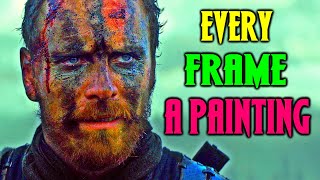

Every Frame a Painting? Not Really
60sChallenges a popular film phrase and sets up a controversial take on a visually stunning but narratively dull movie.
▶ Play Clip"The title accurately reflects the video's content: a detailed analysis of how the 2015 film 'Macbeth' achieves visual perfection through three specific techniques."
This video analyzes the 2015 film 'Macbeth' to uncover why it is considered one of the most visually striking movies ever made. The presenter, Phil Mento, argues that despite its difficult Shakespearean dialogue, the film achieves visual perfection through three universal techniques: color contrast, environmental motion, and strategic use of foreground and background. These techniques can be applied to any film, regardless of budget or genre.
The phrase 'every frame a painting' is an exaggeration, but Macbeth comes close to achieving it.
Macbeth uses multiple shades of color in every scene, especially in light, and contrasts them to avoid visual fatigue.
Solo: A Star Wars Story fails because it uses a single heavy color without contrast, making it tiring to watch.
Motion implies action and intent, making frames more interesting. Macbeth creates motion through the environment when characters are still.
Environmental motion includes wind, candles, smoke, rain, waves, fire, and flickering light, present in almost every shot.
Foreground and background can be used aesthetically, but the masterful use is to boost the emotional impact of the foreground with the background.
Example from 'Seven' (1995): background of Somerset hanging his head multiplies the defeat emotion of Mills in the foreground.
Macbeth uses background chaos to amplify Macbeth's hopelessness, and emptiness to show his isolation.
Three key takeaways: build shots on color with contrast, fill with motion (character or environment), and use foreground/background together to boost impact.
What are the three core visual factors behind the 2015 film 'Macbeth'?
Color contrast, environmental motion, and layered foreground/background.
03:08
Why is it important to contrast a dominant color with another color in a shot?
To keep the frame visually striking without becoming tiring or unpleasant to the eye.
05:41
How does 'Macbeth' create motion when characters are standing still?
The environment moves around the characters (e.g., smoke, dust, wind, candles, rain, waves, fire).
09:36
What is the advanced use of foreground and background that separates visual masterpieces from good films?
To boost the emotional impact that the foreground is meant to evoke.
12:23
Which movie is used as a negative example of using a single heavy color without contrast?
The film 'Solo: A Star Wars Story'.
05:03
Which actor is cited as a physical manifestation of intent, action, and motion?
Tom Cruise as Ethan Hunt in 'Mission: Impossible'.
07:50
Which film is used as an example of using background to boost the emotional impact of the foreground?
The 1995 film 'Seven' directed by David Fincher.
12:28
What emotion does the foreground shot of Mills in 'Seven' evoke?
Defeat and disappointment.
13:02
What emotion does the foreground of Macbeth evoke in the battle scene with the witches?
Hopelessness and misery.
14:31
Why does the shot of Macbeth with emptiness in the background work effectively?
To visually hammer in the fact that Macbeth is now completely alone and has nobody in his life.
16:14
Color Contrast Principle
Explains why Macbeth's strong colors work while Solo's fail: contrast against another color prevents visual fatigue.
05:41Environmental Motion
Reveals how to create motion without moving characters by making the environment move around them.
09:36Emotional Amplification via Background
Shows how using background to boost the foreground's emotional impact elevates a good shot to amazing.
12:23Three Universal Visual Factors
Identifies the three core techniques that can be applied to any film regardless of budget.
03:08Tom Cruise as Motion Personified
Uses Tom Cruise's constant action as an example of how motion creates visual interest.
07:50[00:00] [Music]
[00:09] [Music]
[00:25] [Music]
[00:29] hi
[00:29] my name is phil mento and this is phil
[00:32] mento
[00:33] if you've been following the film side
[00:34] of youtube for a while you've probably
[00:36] heard the phrase
[00:37] every frame a painting if not in essence
[00:40] this phrase could be seen to mean that
[00:42] whenever you pause a movie that
[00:44] paused frame should be visually
[00:46] impressive enough to be hung up on a
[00:48] wall
[00:48] as a painting obviously in reality the
[00:51] phrase is exaggeration and
[00:53] unreal not every frame of a movie ever
[00:55] is or should be worthy of being a
[00:57] painting
[00:58] because of basic filmmaking things like
[01:00] motion blur but still on a more of a
[01:01] shot level
[01:02] it is an interesting topic how can a
[01:04] movie actually make it so that
[01:06] many if not all of its shots are
[01:08] visually impressive enough to be
[01:10] paintings and what better way to study
[01:12] this topic further than with 2015's
[01:15] macbeth if it so happens that you've
[01:17] never seen 2015's macbeth
[01:19] i don't blame you it's not really a
[01:21] thrilling film that would have much to
[01:23] offer narratively
[01:24] most of it is just people monologuing
[01:26] about their inner feelings which at
[01:28] least to me
[01:29] is a big big no-no and it doesn't help
[01:31] that to a more average modern audience
[01:34] most of that monologuing sounds like
[01:36] pure nonsense
[01:37] first desire ms kinsman and his subject
[01:40] strong
[01:40] both against the deed the earth earth
[01:42] bubbles as the water has and these are
[01:44] of them
[01:45] come to my woman's breasts and take my
[01:47] milk for all
[01:49] you murdering ministers confusion i hath
[01:54] made his masterpiece most sacrilegious
[01:57] mother have broke
[01:58] open the lord's anointed temple and
[02:00] stole vents
[02:02] the life of the building what
[02:06] uh the king has been murdered
[02:09] well why did you just say that
[02:12] despite all the shakespeare stuff this
[02:14] movie still is a remarkable cinematic
[02:17] experience
[02:18] because of two reasons the first reason
[02:20] is the simply
[02:21] incredible music the second reason and
[02:23] the reason we will be focusing on today
[02:26] is the visual side to put it shortly
[02:28] 2015's macbeth is without a doubt
[02:30] one of the most visually striking and
[02:33] impressive films
[02:34] ever made if any movie truly is worthy
[02:37] of the phrase every frame a painting
[02:39] there's a good chance that it's
[02:40] this one and that's why we are here
[02:42] today to find out
[02:43] why that is of course there are
[02:45] countless different visual factors at
[02:47] play in macbeth
[02:48] some of them are more common factors
[02:50] we've examined before like the dynamic
[02:52] use of slow motion
[02:53] other factors are directly tied to the
[02:55] story like the breathtaking landscape
[02:57] and the epic war battles
[02:59] sadly not every movie can be filmed in
[03:01] scotland not every movie has huge crowds
[03:03] of people it can use
[03:05] to me however there are just three core
[03:08] visual factors behind macbeth that made
[03:10] this movie the visual masterpiece that
[03:12] it is
[03:13] three universally compatible visual
[03:15] filmmaking factors that
[03:17] can and should be used by every film
[03:19] regardless of whether it's a massive
[03:21] blockbuster or a tiny indie project
[03:24] and so let's take a closer look at
[03:26] 2015's macbeth and try to find out what
[03:29] those three key visual factors are let's
[03:31] try to find out what you can actually do
[03:34] to make your movie worthy of the phrase
[03:36] every frame
[03:37] a painting
[03:44] the very first thing you will probably
[03:46] notice when watching through macbeth
[03:48] is the color whether a scene takes place
[03:50] outside or inside
[03:51] the movie always retains a consistent
[03:54] ability of featuring
[03:56] multiple different shades of color
[03:58] especially in its light
[04:00] we have white we have blue we have
[04:02] yellow red
[04:03] gray green black take a color wheel and
[04:05] pick any of the slices
[04:06] odds are you will find that color in the
[04:09] movie if not as light then
[04:10] at least as an object or a piece of
[04:13] clothing what this constant use of
[04:14] various colors does
[04:16] it not only gives the movie a visually
[04:18] striking appearance
[04:19] it also separates all the scenes from
[04:22] each other and keeps
[04:23] everything fresh and what makes the
[04:25] whole thing even more impressive
[04:26] is the way the movie manages to
[04:28] incorporate color into the theme
[04:30] and purpose of a scene if we have a
[04:32] scene where a big bunch of nameless
[04:34] scottish and irish soldiers are killing
[04:36] each other
[04:37] then everything is depressingly gray if
[04:39] we have a scene of two sworn enemies
[04:41] finally
[04:42] clashing together in one last battle to
[04:44] the death the world is red
[04:46] out of anger if we have a small child in
[04:48] a forest being hunted by murderers
[04:50] the forest has a scary murky look
[04:53] however
[04:54] there is one big downside to using
[04:56] strong heavy colors
[04:57] and that's the fact that those strong
[04:59] heavy colors can become repulsive for
[05:01] the audience to watch
[05:03] take the recent han solo movie for
[05:04] example while this film does have some
[05:06] impressive colorful cinematography
[05:08] there are many scenes and sequences
[05:10] where the color simply put
[05:12] becomes too heavy in some scenes the
[05:15] screen is entirely blue
[05:17] in other scenes it's entirely brown to
[05:19] the point where it all becomes
[05:20] tiring and unpleasant for the human eye
[05:24] a big criticism many moviegoers had
[05:26] against solo was that it just felt too
[05:28] boring and although there can be many
[05:30] reasons for this i would argue that one
[05:32] of the more notable reasons
[05:34] is the color but even though macbeth
[05:36] uses very strong colors just like solo
[05:39] does
[05:39] it never suffers from the same problem
[05:41] and the reason why
[05:42] is something that every movie needs to
[05:44] keep in mind when using color
[05:46] you cannot pick just one color and put
[05:48] it on screen and be done with it
[05:50] you always have to contrast that color
[05:53] against
[05:53] another color take a look at these two
[05:55] shots from macbeth and solo
[05:57] in essence they are very similar both
[05:59] use very heavy strong colors
[06:01] both have their own narrative reasons
[06:03] for doing so yet for some reason
[06:05] it only works in macbeth why do you
[06:07] think that is
[06:08] what's the difference between these two
[06:09] shots well it's the factor of
[06:12] contrast in solo the screen uses blue
[06:15] and that's it in macbeth the screen uses
[06:18] red
[06:18] but also contrasts that red against
[06:21] yellow
[06:21] and white and that right there is the
[06:24] difference between
[06:25] unpleasant and impressive if you want to
[06:28] make your shot look like a painting
[06:30] then build it out of color it doesn't
[06:32] have to be colorful
[06:33] but it should have a color in form of
[06:36] light or
[06:36] character or nature or object or
[06:39] whatever and in order to keep the shell
[06:40] from becoming unpleasant to the eye
[06:42] make sure to contrast that color against
[06:45] another
[06:46] if the sky is pale then maybe wrap your
[06:48] character in black
[06:49] if the inside of a house is candlelit
[06:51] yellow then maybe mix
[06:53] in blue light of nature if the knight is
[06:55] dark then maybe light it up with flames
[06:58] anything to keep the frame refreshingly
[07:01] colored
[07:08] the second key visual strength of
[07:09] macbeth comes from its ability to
[07:11] utilize
[07:12] motion to bring its imagery to life even
[07:15] if we weren't talking about film but
[07:17] instead just still images
[07:18] i would still argue that motion and
[07:20] movement are crucial
[07:22] in creating a rich compelling frame that
[07:25] feels alive the frame might not be
[07:27] moving but it still requires
[07:29] motion because of what motion means
[07:31] motion
[07:32] implies action action implies intent
[07:35] and intent implies that things are
[07:38] happening
[07:39] and no matter what form of art we are
[07:40] talking about moving pictures or
[07:42] unmoving paintings those forms of art
[07:45] will
[07:45] always be more interesting to look at
[07:47] when things are happening
[07:49] a good example of this is tom cruise who
[07:51] has arguably become the greatest
[07:53] hollywood action movie star of
[07:55] all time maybe you don't agree maybe you
[07:57] don't like tom cruise that's fine but
[07:59] regardless of any personal opinions the
[08:01] fact
[08:02] is that especially as ethan hunt in
[08:04] mission impossible
[08:05] tom cruise is always very intriguing to
[08:08] watch
[08:09] and that's because he is the physical
[08:11] manifestation of
[08:12] intent and action and motion he's always
[08:14] running he's always
[08:16] jumping he's always driving motorcycles
[08:18] and hanging from planes and helicopters
[08:20] and as a result his movies are filled
[08:22] with visuals that hold
[08:24] massive interest
[08:25] [Music]
[08:35] [Music]
[08:47] even without factors like action and
[08:50] intent
[08:50] motion just by itself is a great way to
[08:53] create interest in a frame
[08:54] which can be done with moving characters
[08:57] and to be honest that's not really any
[08:59] astonishing secret information creating
[09:01] motion through characters
[09:02] that's pretty obvious that's done by
[09:04] pretty much every movie ever the real
[09:06] dilemma is
[09:07] how do you create motion when your
[09:09] characters aren't actually
[09:11] moving in macbeth there's a big bunch of
[09:13] slower scenes where characters are just
[09:15] standing still
[09:16] talking or looking or whatever yet
[09:18] despite this
[09:19] the movie still somehow manages to
[09:22] incorporate
[09:22] more movement and motion than most big
[09:25] action heavy blockbusters
[09:27] and the way it accomplishes this is what
[09:29] visually sets it apart
[09:30] from nearly all other movies since
[09:33] macbeth cannot make its characters move
[09:35] around the environment
[09:36] it makes the environment move around the
[09:39] characters
[09:39] and the effect quite honestly is
[09:42] astounding
[09:42] but don't take my word for it see for
[09:44] yourself let's look at a couple
[09:46] different shots of people standing still
[09:48] and you tell me which you think is
[09:50] visually more intriguing and powerful
[09:53] you make me strange
[09:59] even to the disposition that i owe
[10:02] being have no woman born
[10:10] yet i will try the last
[10:13] [Music]
[10:14] even though this climactic scene is
[10:16] mostly just two people standing in place
[10:18] and talking
[10:19] it feels so full of power and high
[10:21] stakes
[10:22] because smoke and dust is racing past
[10:24] them a thousand miles an hour
[10:26] it might sound like a small thing but it
[10:28] does make this dialogue moment
[10:30] more powerful than when iron man tosses
[10:32] hulk down into a skyscraper
[10:34] and the genius of macbeth is that
[10:36] there's environmental motion much like
[10:39] this
[10:39] in pretty much every shot sometimes in a
[10:42] smaller scale
[10:43] sometimes in a bigger scale but the odds
[10:45] are that it's there
[10:46] in fact the other scene i just showed
[10:48] you as an example that's one of the rare
[10:50] few moments where there's no
[10:52] environmental motion
[10:53] at all most other times the filmmakers
[10:56] have always
[10:57] thought of something wind candles smoke
[11:00] rain waves fire fog flickering light
[11:04] dogs there's always something as there
[11:07] clearly
[11:08] should be and so if you want to make
[11:10] your visuals powerful
[11:11] and interesting and energetic you should
[11:14] always add in some form of
[11:16] motion if not motion of character then
[11:18] motion
[11:19] of the environment or why not both
[11:28] the third and final core factor that
[11:30] makes macbeth the visual masterpiece
[11:32] that it is
[11:33] is the way it utilizes foreground and
[11:36] background
[11:36] now there's a couple different ways of
[11:38] using foreground and background
[11:40] in film there's a more common purely
[11:42] aesthetic way where you for example
[11:43] shoot something in the foreground and
[11:45] then use the background to make that
[11:47] shot
[11:47] visually cooler you can take a dialogue
[11:49] scene and shoot it against a gorgeous
[11:51] backdrop of scottish mountain tops or
[11:53] then you can even couple this method
[11:55] with the two earlier visual techniques
[11:57] we talked about
[11:57] you can have a red foreground and
[11:59] contrast that against a yellow
[12:01] background you can have two characters
[12:03] talking in the background and create
[12:05] motion by having a flickering campfire
[12:08] in the foreground
[12:09] all good proper uses of foreground and
[12:11] background but the real framing method
[12:13] that separates good visual movies from
[12:15] visual masterpieces
[12:17] is when you not only use the background
[12:18] to make your foreground shot look cooler
[12:21] but when you also use the background to
[12:23] boost the emotional
[12:24] impact that you want your foreground to
[12:27] evoke
[12:27] as an example let's look at the 1995
[12:30] movie 7 directed by david fincher who
[12:32] many people consider
[12:34] as one of the most talented visual
[12:35] directors today there's a lot of great
[12:37] frames and shots in seven to choose from
[12:40] but for me
[12:40] the greatest of them all comes at the
[12:42] very end after mills has killed
[12:45] john doe
[12:57] [Music]
[12:58] looking at the framing of the shot the
[13:00] main driving visual force is the
[13:02] foreground the purpose of which is to
[13:04] evoke the emotion of defeat
[13:06] and disappointment mills knows he's
[13:08] screwed up he knows
[13:09] john doe won he knows this whole thing
[13:12] just ended
[13:13] in defeat and just by itself it would be
[13:15] a good shot
[13:16] but because fincher is fincher good is
[13:18] not enough this needs to be
[13:20] an amazing shot so then how can you make
[13:22] this into an amazing shot
[13:24] by boosting the emotional impact of the
[13:27] foreground
[13:28] with the background now instead of it
[13:30] being just meals knowing that they lost
[13:32] we also have somerset quietly hanging
[13:34] his head which evokes that exact same
[13:37] emotion of defeat and disappointment
[13:40] and just like that the emotional impact
[13:42] of the shot
[13:43] is multiplied a good shot is now
[13:46] an amazing shot even though macbeth
[13:48] isn't directed by a well-known hollywood
[13:50] superstar
[13:51] it still easily stands up to the work of
[13:54] masters like fincher
[13:55] there are scenes in macbeth where the
[13:57] background for example is used just to
[13:59] make the foreground look cooler like
[14:01] there are in every movie but in addition
[14:02] to that
[14:03] there are also multiple shots where the
[14:05] background is used to boost
[14:07] the emotional impact that the foreground
[14:10] is meant to evoke
[14:11] like this one
[14:17] [Music]
[14:23] again the main driving force of this
[14:25] shot is the foreground
[14:26] well technically i guess it's the middle
[14:28] ground but let's just keep it simple the
[14:30] purpose of the foreground
[14:31] is from macbeth to evoke the emotion of
[14:33] hopelessness
[14:34] and misery because of the tragic nature
[14:37] of this chaotic battle he's in you could
[14:39] argue that macbeth is just distracted by
[14:41] the witches
[14:42] but for me this whole sequence above all
[14:44] else revolves around the tragedy of
[14:47] fellow men
[14:48] killing each other and because michael
[14:49] fassbender does do a great job here
[14:51] it would be a good shot but how do you
[14:53] make it an amazing shot
[14:55] by actually simultaneously showing the
[14:58] chaos
[14:58] and the death happening in the
[15:00] background this choice might seem
[15:02] obvious now
[15:03] but i don't think that's true a much
[15:05] more common and safer way would have
[15:07] been to for example first shoot a
[15:08] close-up of macbeth looking at the chaos
[15:11] and only
[15:12] then actually cutting to the chaos but
[15:14] because those two shots are combined
[15:16] into one by making proper use of
[15:18] foreground and background
[15:19] a good shot is now an amazing shot and
[15:22] at least to me
[15:23] this shot is even more visually
[15:25] impactful than the one in 7 because it
[15:27] also mixes in contrasted color
[15:29] as well as motion in form of character
[15:32] and environment
[15:33] once again you don't need huge battles
[15:36] or fancy exteriors to make use of
[15:38] foreground and background
[15:39] look at this shot for example the
[15:41] foreground here is meant to convey the
[15:43] information that the wife of macbeth is
[15:45] dead
[15:45] and that at this point he doesn't really
[15:48] care focus on the background
[15:49] notice how the dogs don't pay any
[15:51] attention notice how the fire keeps on
[15:54] flickering like normal
[15:55] the maid on the bed is sad and crying
[15:57] but the camera
[15:58] intentionally pushes her face out of
[16:01] frame
[16:01] and it's all meant to boost the
[16:03] emotional impact of the fact that the
[16:05] wife of macbeth is dead
[16:07] and that he does not really care look at
[16:09] this shot we have macbeth in the
[16:11] foreground
[16:12] and then nothing in the background but
[16:14] emptiness and again
[16:15] that emptiness is there for a reason to
[16:17] visually hammer in the fact that macbeth
[16:20] is now completely alone
[16:22] and that he has nobody in his life
[16:24] anymore in other words
[16:25] sometimes all you need to improve your
[16:28] foreground driven shots
[16:29] is to add in a simple background of
[16:32] emptiness
[16:33] and so here we are fellas and filarets
[16:35] if you want to make your movie visually
[16:37] incredible like macbeth
[16:39] there are three key things to keep in
[16:41] mind build your shots
[16:43] on color and don't forget to contrast
[16:45] that color against some other color
[16:47] fill your shots with motion in form of
[16:49] character
[16:50] or environment or both and lastly
[16:52] whatever emotions or
[16:54] information your shots are meant to
[16:55] convey be sure to use the foreground and
[16:58] the background together
[16:59] to boost its overall impact that's how
[17:02] you can begin to make a visual
[17:04] masterpiece like macbeth
[17:06] that's how you can begin to make a film
[17:08] that's worthy of the phrase
[17:10] every frame a painting
[17:21] [Applause]
[17:22] [Music]
[17:25] [Applause]
[17:28] you
⚡ Saved you 0h 17m reading this? Transcribe any YouTube video for free — no signup needed.