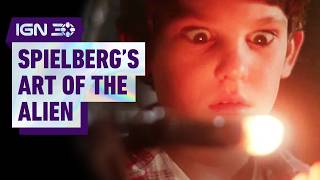

Spielberg's Alien Obsession
53sReveals how Spielberg's 60-year fascination with aliens connects his personal life to iconic films.
▶ Play Clip"The title accurately reflects the video's deep dive into how Spielberg's alien films are personal and thematic muses."
Steven Spielberg's alien films, from his teenage project 'Firelight' to the upcoming 'Disclosure Day', reveal a deeply personal exploration of family, divorce, and spirituality. This video analyzes how his UFO movies—'Close Encounters of the Third Kind', 'E.T.', 'A.I. Artificial Intelligence', 'War of the Worlds', and 'Indiana Jones and the Kingdom of the Crystal Skull'—use extraterrestrials as metaphors for his own life experiences, evolving from childhood anxieties to parental reflections.
At age 17, Spielberg made 'Firelight', a lost film about a man trying to convince the CIA of aliens. It combined Cold War paranoia with his parents' divorce, a theme that recurs in his later alien movies.
In 'Close Encounters of the Third Kind', the protagonist leaves his family to pursue aliens, mirroring Spielberg's feelings about his father leaving. The film uses religious imagery and replaces God with aliens.
Spielberg created an imaginary alien friend after his parents' divorce, which became the basis for 'E.T.'. The film is about a child yearning for a father figure, with E.T. acting as a conduit for that longing.
'A.I. Artificial Intelligence' explores a parent's fear of not being able to love a child (the robot David) due to his alien nature. The film reflects Spielberg's own experiences as a parent and his mother's abandonment.
Spielberg's 'War of the Worlds' uses alien invasion to depict post-9/11 fears, with imagery of dust-covered survivors and a helpless father. It marks a shift from wonder to cynicism.
Set in the 1950s, this film incorporates Cold War themes and alien B-movie aesthetics. It focuses on Indiana Jones confronting fatherhood and legacy, mirroring Spielberg's own life as his children became adults.
Spielberg's alien films are a continuous thread in his career, using extraterrestrials to explore personal themes of family, divorce, and spirituality. His upcoming 'Disclosure Day' promises to revisit these ideas, showing how his muse has evolved over 60 years.
Steven Spielberg
person
Joseph McBride
person
Paul Schrader
person
Stanley Kubrick
person
Richard Dreyfuss
person
Tom Cruise
person
Josh O'Connor
person
John Williams
person
George Lucas
person
Cecil B. DeMille
person
Satyajit Ray
person
H.G. Wells
person
Orson Welles
person
Byron Haskin
person
Roland Emmerich
person
Cate Blanchett
person
McBride's biography of Spielberg
book
Firelight
film
Close Encounters of the Third Kind
film
E.T. the Extra-Terrestrial
film
A.I. Artificial Intelligence
film
War of the Worlds (2005)
film
Indiana Jones and the Kingdom of the Crystal Skull
film
Disclosure Day
film
2001: A Space Odyssey
film
The Thing from Another World
film
The Ten Commandments
film
Independence Day
film
The Fabelmans
film
Jurassic Park
film
The Greatest Show on Earth
film
Taxi Driver
film
The Alien (unproduced script)
film
What was the title of Spielberg's first alien film made at age 17?
Firelight
01:04
How much profit did Firelight make?
$1 profit off a $500 budget
01:35
What personal experience inspired the protagonist leaving his family in Close Encounters?
Spielberg's father leaving the family
04:38
What did Spielberg create as a child to cope with his parents' divorce?
An imaginary alien friend
08:53
In E.T., what does Elliot first throw to meet E.T.?
A baseball
09:38
What percentage of E.T. is beer?
26%
10:18
What film did Spielberg cite as making him want to have children?
E.T. the Extra-Terrestrial
11:00
In A.I., what are the slender alien-like creatures at the end?
Advanced robots from 2,000 years in the future
12:01
What event influenced the imagery in War of the Worlds?
The September 11 attacks
17:04
What is the 'Spielberg face'?
People looking up in awe (or horror in War of the Worlds)
17:35
In Indiana Jones and the Kingdom of the Crystal Skull, what is the central McGuffin?
A psychic skull belonging to an extraterrestrial being
21:19
What does the alien hive mind in Crystal Skull symbolize?
Collectivism triumphing over individual ambition
21:49
Spielberg's Unconscious Parental Tribute
Spielberg realizes on live TV that the alien communication in Close Encounters combines his mother's music and father's computer science, a poignant moment of self-discovery.
06:32E.T. as Childhood Dream
Spielberg reveals that E.T. was based on his imaginary alien friend from age 10, making the film a direct wish fulfillment.
09:04War of the Worlds' 9/11 Reference
A character asks 'Is that a terrorist?' directly referencing 9/11, showing Spielberg's boldness in addressing contemporary trauma.
17:57[00:00] Alien films are a dime a dozen, but
[00:02] there's something uniquely interesting
[00:04] about Steven Spielberg returning to the
[00:06] world of UFOs with Disclosure Day, his
[00:09] 36th feature film. The Beard is a born
[00:12] entertainer, and he's left his mark on
[00:14] Hollywood in more ways than we can
[00:15] count. But several of his landmark
[00:17] movies and even some of his less beloved
[00:19] ones have circled back to the idea that
[00:22] when it comes to the universe, we may
[00:23] not be alone. The man has directed
[00:26] everything from monster movies to
[00:27] historical dramas. But why do
[00:30] Spielberg's alien films in particular
[00:32] make him such a fascinating filmmaker?
[00:35] Maybe it's that his UFO pictures all
[00:37] feel completely different. Or maybe it's
[00:39] that they share similar themes despite
[00:42] those big differences. Either way, we
[00:44] have to ask, what does it mean for an
[00:46] artist to return to the same well
[00:48] repeatedly for over 60 years, even as
[00:51] the world around him changes, and so
[00:53] does he?
[01:04] Spielberg's trrist with
[01:05] extraterrestrials dates back to his very
[01:07] first theatrical feature. No, Sugarland
[01:09] Express doesn't secretly have aliens
[01:12] watching the drama from offscreen. We're
[01:14] talking about a movie you might not have
[01:16] even heard of because very few people
[01:18] have actually seen it or will ever see
[01:20] it for that matter because it's
[01:22] practically lost. In fact, Spielberg
[01:24] himself calls it one of the worst films
[01:26] ever made, but he can sort of be
[01:28] forgiven. After all, he made it when he
[01:30] was only 17. Firelight screened at a
[01:33] single Phoenix movie theater and
[01:35] allegedly made $1 in profit off its $500
[01:38] budget, which not bad for a first try.
[01:41] We can't really dissect it as a whole
[01:43] because only three minutes of footage
[01:45] still exist. But what we do know can
[01:47] tell us a lot about Spielberg's
[01:49] cinematic foundations as a kid who was
[01:51] born around the time of the Roswell
[01:53] incident and grew up during the
[01:55] subsequent wellspring of conspiracies in
[01:57] popular media. As far as we can tell,
[01:59] Firelight feels inspired by both the
[02:02] Twilight Zone and UFO B pictures from
[02:04] the 1950s. It's steeped in their
[02:07] specific flavor of cold war paranoia and
[02:10] nuclear age skepticism against the US
[02:12] government with a character trying
[02:14] desperately to convince the CIA that
[02:16] aliens represented by fire lights in the
[02:18] sky are actually real. But what is
[02:21] probably more revealing is that even at
[02:23] 17, Spielberg was already making movies
[02:26] centering on couples with marital
[02:28] problems. In this case, in the form of a
[02:30] cheating husband. If you've seen his
[02:32] 2022 semi-autobiography, The Fableman's,
[02:35] or pretty much anything he's ever made,
[02:37] you'll know that unhappy marriages are a
[02:39] huge part of Spielberg's movies. Because
[02:42] by the time he made Firelight as a
[02:43] teenager, his parents had already been
[02:45] divorced for a couple of years. Even
[02:47] before he had the budget to make a
[02:49] splash, his stories tried to combine
[02:51] epic spectacle with the intimate
[02:52] domestic scenarios he knew best. Of
[02:55] course, just throwing what you know at
[02:57] what you imagine doesn't make a good
[02:59] movie. But by the time Spielberg
[03:01] returned to these ideas over a decade
[03:03] later, he had figured out a strange,
[03:05] melancholy, and surprising empathetic
[03:08] way to refashion a tale of divorce into
[03:10] one of fascination with the unknown.
[03:18] Inspired by his father showing him a
[03:20] meteor shower when he was a kid, Close
[03:22] Encounters of the Third Kind saw
[03:24] Spielberg returning to the story of
[03:26] Firelight and even recreating certain
[03:28] scenes shot for shot. According to the
[03:30] biography by Joseph McBride, there's
[03:32] also a bit of Stanley Kubri to be found
[03:34] in the visual department. Since at the
[03:36] time Spielberg was making Close
[03:37] Encounters, the influence of 2001, A
[03:39] Space Odyssey would have been hard to
[03:41] ignore. While it began as a short story
[03:43] called Experiences, about young couples
[03:45] at a lover's lane seeing mysterious
[03:47] lights in the sky, it would eventually
[03:49] be combined with Spielberg's idea to
[03:51] make a documentary or a low-budget
[03:53] feature about people who strongly
[03:55] believed in UFOs. Its original title was
[03:58] Watch the Skies. borrowed from a line in
[04:00] the 1951 sci-fi horror, The Thing from
[04:02] Another World.
[04:03] >> Tell the world. Tell this to everybody
[04:06] wherever they are. Watch the skies.
[04:09] >> But by the early 70s, under taxi driver
[04:12] screenwriter Paul Schrader, it nearly
[04:13] became a story about blowing the
[04:15] supposed lid off Project Blue Book, a US
[04:18] Air Force study in the 50s and 60s about
[04:20] the protocol for observing UFOs, which
[04:23] seems more in line with Disclosure Day.
[04:26] And while Close Encounters eventually
[04:28] used some of these ideas, like the heavy
[04:30] government presence, the final movie
[04:32] ended up pretty different from where it
[04:33] began by focusing on the abduction of a
[04:36] young boy and more importantly a father
[04:38] who becomes so obsessed with the idea of
[04:40] UFOs that he leaves his wife and kids to
[04:43] hang out with legendary filmmaker Franu
[04:45] Trufo. Oh, and to kiss another woman. As
[04:48] a child, it was Spielberg's
[04:49] understanding that his own father simply
[04:51] walked out on his family. However, the
[04:53] real truth of his mother's affair
[04:54] wouldn't come out until he was a teen.
[04:56] But even [music] in his late 20s, he was
[04:58] using cinema as a way to channel
[05:00] complicated feelings about his family
[05:02] history. In Close Encounters, Roy Neri,
[05:04] played by Richard Drifus, begins
[05:06] experiencing psychic visions of a
[05:08] mysterious mountain after his encounter
[05:10] with the lights, which makes him
[05:12] essentially leave his family behind to
[05:14] help the abducted toddler's mother.
[05:15] Coming from a director who resented his
[05:17] father for leaving, it feels like a
[05:19] fairy tale that projects a complicated
[05:21] sympathy onto Neri, giving him a good
[05:23] enough reason to leave, exploring the
[05:25] mysteries of the universe. There's also
[05:27] a bit of Spielberg himself in some of
[05:29] Ner's obsessions, like the introduction
[05:31] of a train set, which Neri later uses to
[05:33] depict the images he couldn't get out of
[05:35] his head. Much like Spielberg's
[05:37] childhood experience of recreating the
[05:38] train crash from Cesy Deill's The
[05:40] Greatest Show on Earth, it feels in some
[05:42] ways like Spielberg trying to understand
[05:44] his own father based on his teenage
[05:46] understanding of his parents' marriage
[05:48] and in some ways even why his own mother
[05:50] may have been compelled to leave in
[05:52] search of happiness elsewhere. For
[05:54] Spielberg, joy seems to lie in creating
[05:56] fantastical images of the universe. So
[05:59] having his characters chase those dreams
[06:01] somewhere out there in space makes
[06:03] perfect sense even though it also ends
[06:05] up being the story of a man leaving his
[06:07] family. It's bittersweet. Now how much
[06:10] of [music] his parental projection is
[06:12] intentional is anybody's guess. In fact,
[06:15] when interviewed on Inside the Actor's
[06:16] Studio, it was the first time that some
[06:18] of these ideas even occurred to
[06:20] Spielberg. like how communicating with
[06:22] the aliens through computerized music is
[06:24] a rich combination of his mother's work
[06:26] as a pianist and his father's as a
[06:28] computer engineer which eventually end
[06:30] up played on a massive cinemaized
[06:31] screen.
[06:32] >> Your father was a computer scientist.
[06:34] Your mother was a musician. When the
[06:37] spaceship lands, how do they
[06:39] communicate?
[06:41] >> That's a very good question. I like
[06:43] that. [laughter]
[06:44] >> You've answered the question.
[06:46] They make music on their computers and
[06:48] they are able to speak to each other.
[06:51] >> You see, I'd love to say, you know, I
[06:53] intended that and I realized that was my
[06:55] mother and father, but not until this
[06:56] moment.
[06:57] >> Regardless of intent, Close Encounters
[06:59] is a deeply personal, deeply spiritual
[07:02] film to the point of drawing on
[07:04] religious imagery. but replacing heaven
[07:06] and the afterlife with dazzling
[07:08] spaceships as people walk toward the
[07:10] light. Spielberg also seems to replace
[07:13] God and angels with aliens as a way to
[07:15] understand humanity's place in the grand
[07:18] scheme of things. Some scenes directly
[07:20] reference Spielberg's [music] influences
[07:21] like Deill's the Ten Commandments which
[07:24] seem to inspire the way he uses matte
[07:26] paintings [music] of landscapes and
[07:27] clouds converging overhead. Close
[07:30] Encounters might even be the closest
[07:31] thing Spielberg has made to a religious
[07:33] epic. The first time we actually see the
[07:35] aliens, the idea that they represent
[07:37] some divine forgiveness or salvation is
[07:40] extremely overt, as though Spielberg was
[07:43] using the genre to find answers to the
[07:45] mysteries in his own life by answering
[07:47] the question of why someone would be so
[07:49] spiritually compelled to abandon their
[07:52] family. Surely, they must have a good
[07:54] enough reason. But if using UFOs to
[07:57] channel childhood anxieties wasn't clear
[07:59] enough, Spielberg's next Alien story
[08:01] made things pretty direct.
[08:06] With his 1982 hit ET, the
[08:08] extraterrestrial [music]
[08:10] Spielberg practically created a new way
[08:12] of depicting kids in American cinema as
[08:15] little adventurers exploring the
[08:17] vastness of suburbia. But of course, the
[08:19] all ages tearjerker was about much more
[08:21] than just kids on bicycles against
[08:23] faceless government suits shot like the
[08:25] adults in Tom and Jerry. [music] While
[08:27] some believe ET was inspired by the
[08:29] alien, an unproduced script by Indian
[08:31] filmmaking legend Suchajit Ry, Spielberg
[08:34] maintains he had never read the draft
[08:35] that had circulated in Hollywood for
[08:37] several years. Even though Ryy's
[08:39] description of the alien as a cross
[08:40] between a gnome and a malnourished
[08:42] refugee matches what Spielberg would
[08:45] eventually do with ET. Still, what ends
[08:47] up on the screen is distinctly
[08:49] Spielbergian no matter what. So, for
[08:51] now, we'll take him at his word.
[08:53] According to McBride's biography, a
[08:55] young Spielberg dealt with his parents'
[08:57] separation by turning to an imaginary
[08:59] alien friend, which essentially makes
[09:01] ET, a childhood dream, come to life.
[09:04] >> I've been wishing for this since I was
[09:06] 10 years old.
[09:07] >> Like Close Encounters, ET is a story of
[09:10] suburban mundanity interrupted by the
[09:12] arrival of UFOs. Only this time,
[09:14] Spielberg tells it from the perspective
[09:15] of a child whose father has already left
[09:18] the family for another woman. It is, in
[09:20] some ways, a thematic successor. This
[09:22] tale of divorce from a kid's perspective
[09:24] unfolds quietly in the background, but
[09:26] it underscores the emotions that young
[09:28] Elliot feels when he first meets the
[09:30] titular alien, making ET a story about
[09:33] yearning for a friend or protective
[09:35] figure. In fact, Elliot even first meets
[09:38] ET by throwing a baseball his way into
[09:40] the empty space where his dad should be.
[09:42] While ET himself may not be imposing or
[09:45] traditionally masculine or paternal,
[09:47] [music]
[09:48] the kids dress him up in their father's
[09:49] old clothes, and he becomes a conduit
[09:51] for Elliot and for Spielberg himself to
[09:54] channel the lingering sensations of
[09:56] yearning for someone only to lose them
[09:58] and feel abandoned by them. This film's
[10:01] wish fulfillment is so powerful that it
[10:03] not only takes the form of magical
[10:05] flight but religious euphoria with a
[10:08] resurrected ET designed in the vein of
[10:10] the resurrected Christ robes and all
[10:12] combining questions of science fiction
[10:14] with questions of faith once again. The
[10:16] aliens in Spielberg's films may be flesh
[10:18] and blood and in ET's case about 26%
[10:21] beer, but they exist to fill spiritual
[10:24] holes in their characters' lives. While
[10:26] Spielberg would eventually go on to wear
[10:28] his faith on his sleeve, he spent his
[10:30] early years turning away from religion
[10:32] in his personal life, which makes his
[10:34] overt use of religious imagery and
[10:36] biblical epics on screen all the more
[10:39] interesting. As if he were using
[10:40] cinematic depictions of things he
[10:42] doesn't fully believe to better
[10:44] understand their utility or their place
[10:46] in people's lives. The more he mapped
[10:48] them on to significant personal
[10:50] experiences similar to his own, the more
[10:52] real they became. like accepting that
[10:54] sometimes you have to say goodbye. As it
[10:57] happens, making ET turned out to be a
[10:59] significant personal experience, too,
[11:00] since Spielberg cites it as the film
[11:02] that finally made him want to have
[11:04] children, a story he recreates in
[11:06] Jurassic Park. Intentional or not,
[11:09] Spielberg's alien stories are closely
[11:11] tied to the journey of parenthood. After
[11:13] all, how can you not think about your
[11:16] future and what you leave behind when
[11:17] you're forced to confront [music] your
[11:19] place in the universe? It would be
[11:21] nearly two decades until Spielberg
[11:22] returned to anything resembling aliens
[11:24] on the big screen, by which point he'd
[11:26] had seven kids in the 80s and 90s. So,
[11:29] it's safe to say that by the time the
[11:31] new millennium arrived, The King of All
[11:33] Ages cinema might have had a slightly
[11:35] different or slightly more evolved view
[11:37] on family ties. Which brings us to his
[11:40] next big alien adventure steeped in
[11:42] religious ideas.
[11:43] >> But in the beginning, didn't God create
[11:45] Adam to love him?
[11:51] Despite the similarity of its title
[11:53] structure to ET, the extraterrestrial AI
[11:57] artificial intelligence doesn't actually
[11:59] have any aliens in it. [music] At least
[12:01] not the kind from outer space. Even
[12:03] though some of you might remember the
[12:04] final act featuring slender alien-like
[12:06] creatures. Those were actually advanced
[12:09] robots from 2,000 years in the future,
[12:11] which had evolved from the ones we
[12:13] created in the movie's present. However,
[12:16] their similarity to aliens might not
[12:18] have been an accident and may have been
[12:20] suggested by Spielberg's visual language
[12:22] much earlier when he first introduces
[12:24] David, the artificial boy created for
[12:26] parents whose son was in a coma. The
[12:28] first time we see David, he's out of
[12:30] focus and appears as a lanky silhouette,
[12:32] not unlike the way Spielberg depicted
[12:34] the aliens in Close Encounters. And
[12:36] while Spielberg mapped a tale of
[12:38] childhood yearning onto an alien in ET,
[12:41] this is arguably when he flipped the
[12:43] script through his tale of parents who
[12:45] fear they may not be able to love their
[12:47] child the way he deserves because of his
[12:49] unfamiliar alien nature. David is
[12:52] programmed with a single goal, to be
[12:54] loved by his mother, Monica. But this
[12:57] love is not something she's capable of
[12:58] returning the same way. A parental
[13:01] anxiety Spielberg channels through yet
[13:03] another sci-fi story. only this time,
[13:05] it's hard not to read the film as a
[13:06] product of both a young parent and an
[13:09] adult who, after his own parents'
[13:11] divorce, learned that he was abandoned
[13:13] by his mother. The story of AI long
[13:15] predates Spielberg's involvement. In
[13:17] fact, it's something that Stanley Kubri
[13:19] had been trying to adapt since the 1970s
[13:21] and probably would have if he hadn't
[13:23] died in 1999. But what makes AI so
[13:26] powerful as a specifically Spielbergian
[13:28] film is the sincerity at its heart,
[13:31] which comes from a personal and painful
[13:33] place. For instance, listen closely to
[13:35] the score when David returns to a
[13:37] version of his home after 2,000 years.
[13:40] It's the first time John Williams' music
[13:42] is stripped down to its fundamentals
[13:44] with the use of a single instrument.
[13:46] Many people attribute AI's saccharine
[13:48] final act to the melodrama maestro, but
[13:51] David getting to experience one last day
[13:53] with his mother was always a part of
[13:55] Kubrick's script. This climax even bears
[13:57] similarities to the invisible aliens in
[13:59] Kubri's 2001, creating a room to observe
[14:01] an astronaut named Dave. As it turns
[14:04] out, it was some of the seedier elements
[14:05] of AI, like the red light district city,
[14:07] home to Jigalo Joe, that were
[14:09] Spielberg's additions, as a world too
[14:11] big and too complicated for the eyes of
[14:13] a child. But the way Spielberg captures
[14:15] David's innocent yearning to be a real
[14:17] boy so he can be loved by his mother
[14:19] fills the frame with beautiful
[14:21] curiosity. As for the not aliens near
[14:23] the end of the film, they're
[14:25] foreshadowed early on as things we've
[14:27] left behind. This explanation can't help
[14:30] but read like the anxieties of a baby
[14:32] boomer. Once the radical hippie
[14:34] generation whose rapid expansion felt
[14:36] like it would usher in a utopia, but who
[14:38] ended up responsible for climate change
[14:40] and other catastrophes. What are the
[14:42] ethics of bringing a child, real or
[14:44] otherwise, into a world you've already
[14:46] killed? This is a key part of what makes
[14:49] AI tick as a story steeped in fears
[14:52] associated with having children,
[14:54] especially losing them. The idea of
[14:56] creations meant to outlive us is a
[14:58] devastating expression of parenthood
[15:00] itself. The notion that what we create
[15:02] ends up saddled with our fears, our
[15:04] flaws, and our projections of
[15:06] encroaching morality in a dying world,
[15:08] whether they like it or not. But once
[15:11] you pull on that thread a little
[15:12] further, it also becomes an expression
[15:14] of artistry itself. The idea that what
[15:17] we create will last long beyond us. And
[15:20] in Spielberg's case, it's these sci-fi
[15:22] toys and cinematic aliens that will
[15:24] [music] carry on his legacy. Despite
[15:26] setting the film in a world destroyed by
[15:28] human hubris, there's a kind of utopian
[15:30] beauty to the evolved robots in the
[15:32] final act who communicate and share
[15:34] images as a hive mind, practically
[15:36] showing each other movies of David's
[15:38] memories. backing up the idea that for
[15:40] Spielberg, these robots and alien beings
[15:43] are manifestations of his own creativity
[15:46] and perhaps even his need to create
[15:48] something that alienates him from other
[15:50] people. There's a kind of purity to AI
[15:53] that makes it one of Spielberg's most
[15:54] touching modern works. But it also came
[15:57] out at the last possible time when he
[15:59] could have or would have made a movie of
[16:02] its kind. By the time he directed his
[16:04] next Alien feature just four years
[16:06] later, the world would have irreversibly
[16:08] changed.
[16:10] [music]
[16:14] War of the Worlds represents a full
[16:16] circle moment for Spielberg. The story
[16:18] written by HG Wells dates back to the
[16:20] 19th century, while the famous radio
[16:22] play by Orson Wells was broadcast in
[16:24] 1938. But Spielberg's version pays
[16:27] frequent homage to the 1953 film
[16:29] adaptation by Byron Haskin, another 50s
[16:32] sci-fi landmark steeped in Cold War
[16:34] paranoia and the kind of movie that
[16:36] inspired Spielberg's earlier works. It's
[16:38] worth noting that when Spielberg and
[16:39] George Lucas were writing the fourth
[16:41] Indiana Jones in the mid90s, the success
[16:43] of Roland Emmerick's Independence Day
[16:45] made Spielberg turn away from the idea
[16:47] of using aliens on screen. But this
[16:50] didn't necessarily apply to his
[16:51] adaptation of War of the Worlds. See,
[16:54] Independence Day was probably the last
[16:56] moment in time that widespread
[16:57] destruction of an American metropolis
[17:00] could be digested as turn your brain off
[17:02] entertainment because after the events
[17:04] of September 11th, 2001, this was
[17:06] something that became all too real. Some
[17:08] movies alluded to 9/11 in its aftermath.
[17:10] But Spielberg's War of the Worlds was
[17:12] the first Hollywood production to
[17:14] approach imagery reminiscent of the
[17:15] attacks in head-on fashion. It's a film
[17:18] whose story opens with the New York
[17:20] skyline about working people gathered on
[17:22] the streets covered in dust and ash. And
[17:24] it's about a country gone mad with fear
[17:26] and desperation after being attacked.
[17:28] Not to mention a film in which jet
[17:30] engines and similar technology are the
[17:32] source of unimaginable destruction. The
[17:35] Spielberg face has come to refer to
[17:37] people looking up in awe, but in War of
[17:40] the Worlds, they look up in horror
[17:41] instead. They capture horrifying images
[17:44] on cell phones and video cameras, not
[17:46] unlike the way the world experienced
[17:47] 9/11. And they search for their loved
[17:50] ones amidst rubble. And just in case you
[17:52] miss why the movie looks the way it
[17:54] does, Spielberg pretty much comes right
[17:56] out and tells you,
[17:57] >> "GET OUT. GET OUT. GET OUT. GET DOWN.
[18:00] >> IS THAT A TERRORIST?"
[18:01] >> HEY, you can't accuse the guy of being
[18:03] too subtle. Gone were the days of
[18:05] Spielberg's aliens being friendly,
[18:07] ethereal beings. Gone was the
[18:09] fascination and wonder. And gone were
[18:11] the religious and spiritual overtones
[18:13] brought on by questions of who else
[18:15] might be out there and what they might
[18:17] have to say about us in return. War of
[18:19] the Worlds is Spielberg at his most
[18:21] cynical about humanity. At a time when
[18:23] it seemed like the only things possible
[18:25] were war and anger.
[18:26] >> We get back at them.
[18:28] >> But in true Steven Spielberg fashion,
[18:30] War of the Worlds is also about children
[18:32] of divorce. Only this time, this is a
[18:35] default backdrop instead of the central
[18:37] tension. And maybe the film is a little
[18:38] worse for it. At times, it can be too
[18:40] simple and straightforward with events
[18:42] happening around Tom Cruz's Ray Frier in
[18:45] ways he can't influence or affect. But
[18:47] this also adds to the sense of
[18:49] helplessness running throughout the
[18:50] film, making it a story about a father
[18:52] who, no matter how hard he tries, can't
[18:55] protect his kids from the horrors of the
[18:56] world.
[19:00] So close your eyes,
[19:08] wave goodbye.
[19:12] >> In an intriguing change from previous
[19:14] versions, these horrors have already
[19:16] existed deep beneath the earth's
[19:18] surface. As if this attack were an
[19:20] inevitability, intentionally or not, it
[19:23] hints at a geopolitical complexity that
[19:25] many people weren't willing to accept in
[19:26] the mid200s. the idea that the attacks
[19:29] of September 11th were deeply rooted in
[19:31] America's own foreign policy and its
[19:33] actions abroad. This in turn gives parts
[19:35] of the opening prologue a whole new
[19:37] meaning. Even though the words are taken
[19:39] directly from the book,
[19:40] >> with infinite complacency, men went to
[19:43] and fro about the globe.
[19:47] confident of our empire over this world.
[19:51] >> The aliens this time are far less human,
[19:53] which doesn't bode well for the movie as
[19:55] a political metaphor, but it does allow
[19:58] Spielberg to make the country's fears a
[19:59] little more abstract and therefore a
[20:02] little more approachable at a time when
[20:03] patriotism was used to fuel invasions
[20:05] abroad. It allowed him to translate the
[20:07] sense of cold war paranoia seen
[20:09] throughout his beloved 50s sci-fi into a
[20:12] more modern Gulf War paranoia in which
[20:14] anger and grief are channeled in
[20:16] important ways. It may not be one of
[20:17] Spielberg's most polished works, but
[20:19] it's one of the most honest about the
[20:21] state of the world. And given its
[20:23] similarities to some of his biggest
[20:25] childhood influences, it may also have
[20:27] opened the door to the next time he
[20:28] depicted aliens on screen.
[20:35] The fourth Indiana Jones is one of the
[20:38] less admired ones in the series, but
[20:41] it's also a film that, like many of
[20:42] Spielberg's classics, hearkens back to
[20:44] his childhood influences while drawing
[20:46] from a specific place of adult
[20:48] experience. Like War of the Worlds and
[20:50] AI, it's about a parent looking back at
[20:53] his legacy and the world he leaves
[20:54] behind, which also makes it kind of a
[20:56] legacy sequel before these things were
[20:59] in vogue. Crystal Skull is set in the
[21:01] 1950s at a time when alien be movies
[21:04] were on the rise and were steeped in
[21:05] cold war themes like nuclear fears,
[21:08] government mistrust, and red scare
[21:10] anti-communist sentiment. All of which
[21:12] Spielberg gets to incorporate here and
[21:14] in some cases deconstruct.
[21:16] >> I'm a capitalist
[21:18] and I pay.
[21:19] >> The central mcguffin is a psychic skull
[21:22] belonging to an extraterrestrial being.
[21:24] But deep down, the film is about the
[21:26] quest for knowledge and power, or
[21:29] knowledge as power, which proves to be
[21:31] the villain's undoing yet again. It's
[21:33] repetitive, sure, but there's a kind of
[21:35] beauty to Kate Blanchett's Ireina being
[21:37] defeated by what could be one or maybe
[21:40] even a dozen powerful aliens who, like
[21:42] the future androids in AI, are a kind of
[21:44] hive mind, represented by the extremely
[21:47] blunt symbolism of them combining to
[21:49] form a single dude. like collectivism
[21:52] triumphing over individual ambition and
[21:54] hitting you over the head.
[21:55] >> More powerful together than they can
[21:57] ever be apart.
[21:59] >> But of course, to project a coherent
[22:01] ideology onto the series is a fool's
[22:03] errand, no matter how far left its
[22:05] screenwriter tends to lean, because at
[22:06] the end of the day, its director is a
[22:08] man of personal emotional vision first
[22:10] and foremost. Crystal Skull is buoied by
[22:13] its hero wrestling with the idea of
[22:14] being a father when he finally reunites
[22:16] with Mary and Crane, his love interest
[22:18] from the first film. And when he learns
[22:20] that his sidekick, Mut, is actually his
[22:22] son. Whether or not the film succeeds at
[22:25] centering these ideas emotionally,
[22:26] they're a constant undercurrent, and
[22:28] they occasionally touch on some of
[22:30] Spielberg's more familiar themes. Even
[22:32] some of the movies most lampuned scenes
[22:34] are filled with meaning, like Indie
[22:36] escaping through a facimile of modern
[22:38] American life, filled with mannequins
[22:40] representing the kind of simple domestic
[22:43] life he's never had or allowed himself
[22:45] to have. Something a filmmaker might
[22:46] reckon with when he's away on lengthy
[22:48] shoots for months or years on end. And
[22:50] in a particular funny irony, these
[22:52] images of nuclear families are all
[22:54] destroyed by
[23:03] Well, you get the idea. While War of the
[23:06] Worlds allowed Spielberg to transpose
[23:08] his childhood favorites onto the modern
[23:10] world, Crystal Skull allowed him to play
[23:12] in their specific sandbox, mirroring the
[23:15] circumstances that led to their
[23:16] creation. It was also the perfect venue
[23:18] for Spielberg to go back to basics, for
[23:20] better or worse, with extremely simple,
[23:23] streamlined alien and flying saucer
[23:25] designs, which may as well have been
[23:27] plucked from the early days of UFO
[23:28] paranoia when he was still a kid. It may
[23:31] not be the best Indiana Jones movie, but
[23:33] it's the only one set during Spielberg's
[23:36] lifetime, and it was made at a time when
[23:38] his own kids were entering their adult
[23:40] years, forcing him to question his own
[23:42] choices and his role in their
[23:43] upbringing, much like the aging Indiana
[23:46] Jones. But with Spielberg having handed
[23:48] his back to basics adventure series to a
[23:50] new director, this leaves the door open
[23:52] for more original genre experiments and
[23:54] explorations as he turns his attention
[23:56] to Disclosure Day, a movie which
[23:58] according to actor Josh Oconor follows
[24:00] up the lingering questions introduced in
[24:02] Close Encounters and returns to the
[24:04] sci-fi inspirations that first allowed
[24:06] Spielberg to put stories of aliens and
[24:08] UFOs on the silver screen. The paranoia,
[24:11] the awe and wonder, the religious
[24:13] overtones, and the tales of childhood
[24:15] filtered through grand sci-fi spectacle
[24:17] are all threads he's woven throughout
[24:19] his work. Which makes it incredibly
[24:22] exciting that at nearly 80 years of age,
[24:24] he's chosen to revisit the kind of story
[24:26] he's been telling in new and evolving
[24:28] ways ever since he was 17.



⚡ Saved you 0h 24m reading this? Transcribe any YouTube video for free — no signup needed.