
How I Made $42K in 30 Days with Faceless YouTube
60sHigh-income claims and a specific step-by-step strategy create curiosity and promise value, driving clicks and shares.
▶ Play Clip"The title promises a proof method, and the video delivers a structured framework, though it's padded with self-promotion and income claims."
This video presents a systematic framework for testing and validating faceless YouTube channel niches before committing significant resources. The creator, Mfan, shares his proven strategy for identifying high-demand, low-supply niches and creating videos that are more likely to succeed, based on his experience building multiple channels to profitability.
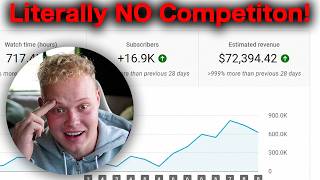
The video introduces a strategy to test if a channel will blow up, using the creator's own channel as an example, which earns $100-$120 daily after just five videos.
Key criteria include: under five smaller channels getting more views than subscribers (high demand, low supply), no channels over 100k subscribers, no smaller channels failing, niche not older than 6 months, ability to create better or longer videos, personal interest (optional), monetizable niche, and bonus for long-form content.
Recommends using new or personal accounts for best trust scores. Aged accounts (2006-2009) are also good, but pre-monetized accounts are not recommended for beginners due to cost and failure risk.
Need 5-15 good video topics. Find demand by looking for recent outlier videos and trending formats. Avoid copying popular videos directly; check supply via YouTube search—if done more than 3 times without a new angle, skip.
Topics must resonate with the audience, be posted on time (for trends), repeat what has worked (80% of content), and leverage negativity to drive engagement.
Use AI for scripts (ChatGPT), voiceovers (11 Labs or Geni Pro), and freelancers for editing ($15-$30 per video) and thumbnails (~$5). Videos should be 1.5x longer than competitors.
Post inconsistently (skip, post, skip) to appear human, not like an AI bot. Continue until all 15 videos are posted. If a video blows up, continue posting; if not, don't delete videos—they might gain views later.
Failure can be due to niche, topics, packaging, video length, or bad channel. If videos fail, try posting them on a different channel, as the creator did with a gymnastics video that got 1 million views after moving.
If a channel fails, go back to niche research and repeat the process. Use a 'good boat vs. bad boat' analogy: test with few videos in different directions, then double down on what works.
The key takeaway is to test faceless YouTube niches with a small batch of videos (5-15) to minimize losses and learn quickly. By following the niche research criteria and iterating based on results, creators can increase their chances of building a successful, monetized channel.
What is the primary criterion for identifying a high-demand, low-supply niche?
Under five smaller channels creating content in the niche that are constantly getting more views than they have subscribers.
02:30
Why should you avoid niches with channels over 100,000 subscribers?
Because YouTube already trusts these accounts and will keep pushing their videos, not new ones.
03:11
What is the recommended age for a niche to be considered viable?
The niche should not be older than 6 months in most cases.
03:38
Which account type is considered the most powerful on YouTube?
Personal accounts, because YouTube knows a human is behind them, skyrocketing the trust score.
05:31
What is the rule of thumb for video topics regarding supply?
If a topic has been done more than three times and you don't have a different angle, skip it.
08:22
What percentage of content should be doubling down on what works?
80% of content should be doubling down on what has already been working, and 20% should be new things being tested.
10:44
Why is it recommended to make videos 1.5 times longer than competitors?
Because longer videos have a better chance of being watched for a longer period, and YouTube will push them further.
13:13
What is the recommended posting pattern to avoid being flagged as an AI bot?
Post inconsistently, like skip, post, skip, post, to show YouTube you are human.
14:40
What should you do if a video gets no views?
Do not delete the videos; leave them on YouTube because they might start getting views in 5 months.
16:09
What is the 'good boat vs. bad boat' analogy?
Instead of loading everything into one massive shot, take a few videos and shoot in different directions until something hits, then double down.
18:31
High Demand, Low Supply
This is the core principle for niche selection, emphasizing the marketplace nature of YouTube.
02:30Avoid Established Channels
Explains why new channels struggle against established ones due to YouTube's trust system.
03:11Personal Accounts Have Highest Trust
Reveals a counterintuitive advantage of using personal accounts over new ones.
05:3180/20 Rule for Content
Provides a clear strategy for balancing proven content with experimentation.
10:44Inconsistent Posting to Avoid AI Detection
Challenges common advice about consistency, offering a unique perspective on YouTube's algorithm.
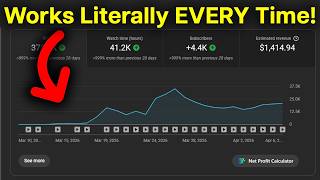
14:40[00:02] testing strategy to know if a channel is actually going to blow up or not. We used the exact same thing on this exact channel right here, which we posted, you here another one, then here two again. And this channel kind of blew up pretty
[00:16] quickly with like five videos, then got monetized and is now doing round about monetized and is now doing round about $100 to $120 very consistently every single day. It has made $1,400 already with the highest day of $180 in one
[00:29] single day. Now, in this video, I'll show you exactly how you can test faceless channels and actually make sure that you're posting videos that will actually, you know, make money somewhere down the line and not like most people
[00:41] of videos and never make money from the channel. That's the last thing we want. So, in this video, I'll show you my exact strategy. Now, for the people who don't know who I am, Mfan, 23 years old, currently making between 30 and $40,000
[00:55] a month, constantly building new channels, as you guys can see here. Just recently monetized four new channels. I've had I've made just $42,000 with just two videos. I've built a channel from, no joke, like 0 to $48,000 in just
[01:09] 30 days, which was absolutely crazy. Then I've helped hundreds of other people do the exact same thing. For example, here Martins who have helped to make $31,000 in one single month. Here student $24,000. Here another one
[01:22] $12,000. Here another one $4,000. And many, many more. Now, if you're looking first link in the video description. Book a call with me and we'll have a look if it makes sense to work together or not. Now, with that being said, I
[01:36] would say let's jump into the niche testing framework. This is one of my favorite things to actually explain on YouTube because this makes a massive difference in, you know, will your channel actually succeed or not. So, I
[01:49] follow this exact process with every single niche I get into to avoid spending money on videos that will never ever work. Many of you guys know the feeling or many of you guys know these channels that have posted 100 200 videos
[02:04] and they still not even monetized or like getting 100 200 views a video. And that is something that is very frustrating and with this whole uh strategy here we avoid it. Right? So the first thing we have to do is is niche
[02:17] research. Now we have a bit of a criteria when we're doing niche research. Like when we're kind of choosing a niche, we want to follow this niche research criteria. Otherwise, this will not work from the beginning. You
[02:30] have to keep in mind, all right, what you what you want to look for is they are f they are under five smaller channels creating content in this niche that are constantly getting more views than they have subscribers. This means
[02:42] that there's high demand and low supply. You have to understand that YouTube is a marketplace and every single marketplace has demand and supply. All right? And YouTube is a marketplace of videos. So we're looking for specific niches where
[02:57] you know there are a lot of people that want to see it but nobody is doing it right. So that's what we're looking for. Now we're also looking for that that there are no channels with over 100,000 subscribers. The reason for that is very
[03:11] very simple. If there are bunch of channels with over 100,000 subscribers the problem is that YouTube already trusts these accounts. YouTube already videos from that channel so we'll just keep pushing that that channel and not
[03:26] the new ones right there are no smaller channels failing why is this so important because if there bunch of smaller channels failing why should you succeed with YouTube right that's a very very good question you should ask
[03:38] yourself why should you succeed if you do the exact same thing as all of these small channels that are failing then the niche is not older than 6 months in most cases if the niche is older than 6 months like here. These will be crossed
[03:52] and not ticked. All right. Then I can create better videos than my competitors. This can also just be longer. We'll get to that in a bit. Then am I actually interested in this niche? This is not a must as long as you build
[04:06] a team that actually has interest in that specific niche. Then is the niche monetizable? Otherwise, you're not going to make any money in that niche. Okay. And then it's obviously a huge bonus if you can post long videos in that
[04:20] specific niche. Now, very important that this does not need to be a,000% with all niches you find. Very important. Reason for that is very simple. If you're going to try to hit this a,000 time, like a,000%. It's going to be extremely
[04:35] difficult for you to find a niche that is actually good. All right? um like a niche that you can actually go into. Not actually good, but um don't try to get this to a,000% every single time. Very rare that you will be able to find a
[04:50] niche exactly like this one. All right. Then I tools I would recommend for niche research are next level, which is like €13 a month, and then Vid IQ free plan this channel showing you exactly how to use these tools. I'll link them in the
[05:05] video description as well, but I would highly highly highly recommend them. highly highly highly recommend them. Okay, then what we do then is we need to account on which we want to post videos in. So we have new accounts, we have
[05:19] personal accounts, we have aged accounts and we have pre-monetized accounts. New accounts are brand new accounts you can just create right now. Then we have personal accounts. Personal accounts are basically YouTube accounts that you have
[05:31] been using for a very long time to, you know, just watch videos on YouTube or something. That's a personal account. These accounts are the most powerful accounts you can get on YouTube. Like they're literally not any accounts that
[05:46] are more powerful than personal accounts because YouTube knows that you are a human behind that account. So your trust score or how much YouTube actually trusts you is going to skyrocket. Then we have a aged account. You can get them
[06:00] on aged profiles. I don't know if I can say the the link. I'll just I'll just stay quiet. Um but yeah, you can you can buy these accounts. Um you can buy these accounts. They you know just very old accounts from 2006 to 2009. So also
[06:16] pretty good. Um often have a pretty decent trust score as well. Then we have pre-monetized accounts. These are accounts that are just basically already in the YouTube partnership program. These are accounts I would not recommend
[06:29] it's your first channel, I would not recommend you to start with a pre-monetized channel because, you know, they cost a bunch of money and there's a going to fail. So, rather start with a new account or a personal account. One
[06:44] of these two is kind of the best bet for you. Um, yeah, I would start with one of you. Um, yeah, I would start with one of these. Then what we need is five to 15 not 10 but 15 video topics but we need good video topics not just any video
[06:59] topics but actually good video topics. Now how does a good video topic look like? So what we have to keep in mind is that there is supply and demand in video topics. So supply and supply and demand is not just important in your niche but
[07:14] also in the video topics you choose. All right, very important because you know if there's no gap and in supply and topic nobody's going to watch the video
[07:28] because they just too many videos for the demand if that makes sense. Now how do you actually go ahead and find demand for video topics? So you look for recent outlier videos on competitor channels for that again you can use Vid IQ and
[07:43] Nexv then you look for recent trending formats. Okay. And very important, do not copy the most popular videos from competitors one- on-one. Why? This is
[07:55] what everyone does. And I promise you, if you do that, you will fail. And this is a big mistake that many, many, many, many, many, many, many people that are just starting out are doing. All right? They're just going ahead and copying the
[08:08] most popular videos of their competitors. Now, that's a problem. Everyone is doing it. So, there's way too much supply for the demand. All right? Very simple. Now, how do you find supply? You use your your YouTube search
[08:22] bar. Look for how many people have actually created the exact same video on that topic. Okay? If it's been done more than three times and you don't have a different angle to that specific video, you just go ahead and you look for a
[08:37] different topic. It does not make any sense to create another video on that. Why? Very simple. Because YouTube will always show the videos to the hardcore fans of that niche first. And if they have already seen that video multiple
[08:51] times, there's literally no reason why they should even click on that video except if it follows a completely different angle. Okay. Now, how does a perfect topic look like? A perfect topic resonates with your audience. So, you
[09:05] have to ask yourself, do or does my audience even want to watch this kind of content? Some topics sound interesting on the surface but are super boring. So because otherwise you're going to have a very very bad average video duration and
[09:21] again YouTube is going to think okay this video is not good enough and I'm make sure that your topics are not boring. Then your topic has to be posted on time if it's a trend. So if you go for example into the celebrity drama
[09:36] niche and there's a drama happening in January, you cannot go ahead and post a video on that in March because everyone has already created a video on that firstly and secondly most people aren't even more aren't even interested in that
[09:49] anymore. So you have to make sure that your topic is posted on time. All right. Then we want to repeat what has done well in the past. So we have one student, his name is Andre, where we, you know, we literally just repeated
[10:04] what worked. So we had one specific video topic or video style that did very, very well. And we did that over and over and over and over again, and he just recently hit $30,000 a month, which is absolutely insane. So if you're
[10:17] check out the first link in the video description, book a call with me, and we'll have a look if it makes sense to work together. But uh doubling down on what works is absolutely insane. So many people think that you cannot create a
[10:31] single um like like let's say for example five videos on one topic. If you just try to think outside of outside the box for most video topics you can create multiple videos on them. You want
[10:44] to do that over and over and over and over and over until it does not work anymore. All right. So 80% of your content is actually going to be content where you double down on what has already been working and 20% of your
[10:57] content is going to be new things that you're testing. Okay? Then we want to leverage negativity in our videos. Why? Because humans respond better to negative things. It's just normal. You know, humans have to act if there's
[11:12] something negative. So if there's a lion behind me, I have to act. If there's no lion behind me, I can sit here and record my videos. All right. So, this is kind of how a perfect video topic looks like. Very important. I write all of
[11:24] these things down. All right. Then now once we have our five to 15 perfect video topics, we actually go into the content creation part where we write the content creation part where we write the script with chatbt or no joke any like
[11:37] literally any kind of AI software that you whatever you want to use. All right. you whatever you want to use. All right. Then for the voiceover, we we use 11 labs, right? Or we also just use here geni pro which is even a cheaper version
[11:51] of 11 labs. So here for example you get a million credits for $22. Very very cheap. Voiceovers are very decent. We use them as well to test niches. So check it out. I'll link it in the video description. So this is going to be an
[12:05] AI voice over. All right. They by the way completely fine and you don't have to worry about that. Then for the editor we're always using a freelancer. We pay we're always using a freelancer. We pay round about on average 15 to $30 per
[12:20] video. All right. Now, these videos are up to 30 minutes long. Okay. Now, these up to 30 minutes long. Okay. Now, these prices are very kind of depending on how edited the video actually has to be. So, in most cases, I go into very simple
[12:34] niches. So, I only pay $15 a video. Okay? But these are the average prices our students get from the freelancers we actually hire for them. Okay? Then we have a thumbnail or for the thumbnail I would recommend a freelancer. Okay, if
[12:49] you have some experience you can also just do the thumbnail yourself. But if you have never ever in your whole life created a thumbnail then I would recommend a freelancer who's going to charge you maybe like $5 for pretty
[13:01] decent thumbnail. The thumbnail is the most important thing. So we always want to make sure that our thumbnail is actually good, you know, otherwise nobody's going to click on the video. Okay. Then what is also extremely
[13:13] important is the video length. So we always want to have our video 1.5 times longer. So if the competitive video is 10 minutes, 10 minutes, we want our video to be 15 minutes. Why?
[13:26] Because our video has a better chance of longer period of time. And because of that, YouTube is going to push our video way further than it would push this video. All right. Then for the thumbnail
[13:41] and the title, these are two things that many people go wrong with and that's why their channels fail. For the thumbnail and the title, we always want to work with specific things that have worked in the past. So, we do not want to randomly
[13:56] create a thumbnail and the title. We want to go ahead and actually do niche research or not niche research, but thumbnail research. So, we go ahead on YouTube and we literally scroll and we look for like trending or not trending.
[14:10] comes to thumbnail styles, but we're specifically looking for thumbnails that have already worked in the past. Okay? Same thing goes for title. These two you mess up on this, your video, there's no way your video is going to get views.
[14:25] All right? They always say, don't judge a book by its cover, but on YouTube, by it or the video by its cover. All right? very important. Now, once we have these things done, okay, then we actually go into the posting phase. Now,
[14:40] people always laugh at me when I when I explain this to them because everyone consistent as just possible with your posting and all of these things. I say like, hey, be as inconsistent with your posting as just possible. Why? because
[14:55] we want to show YouTube that we are humans and not some AI bot that spams out videos on autopilot. Okay, so that's why we post skip post post skip post
[15:08] post skip post. So we do not have any consistent pattern. Want to move away from that again because otherwise YouTube is going to think we're AI. happen. By the way, you want to do this until you have all of your 15 videos
[15:23] posted. Now, one of two things is going to happen. In the beginning, especially currently, we're not seeing a lot of views in the beginning and then YouTube starts pushing our videos and it completely blows up. Now, once this year
[15:36] hap happens, that is when we are going to continue to post videos. All right? Now, once this year happens, in most cases, we are basically already monetized, which is super powerful. All right. because you know the next videos
[15:52] going to make us money once we're monetized. I always say like you just need one video to get monetized. One video, that's all you need to be able to get monetized on YouTube. All right. Now, if this does not happen and there
[16:09] literally no views, do not delete the videos from YouTube. All right? So you leave the videos on YouTube because there's still a chance that the video or the videos in 5 months from now actually start to get views. YouTube is very
[16:22] funny. Anything and any like literally anything can happen on YouTube. Once this happens, then you start posting videos on this channel again. All right, but yeah, very rare that you know this happens, but it can happen. And we want
[16:35] to give it the chance for it to happen. Okay. Now, there are specific reasons why a channel might fail. So it could be your niche. So if you currently have a channel that failed, actually go back in this video and try to understand if your
[16:50] channel fits the niche criteria because if it doesn't, then you know, okay, for channel, I have to make sure that this here is actually on point. Okay, can be your video topics. So make sure to go back and check out, hey, does my channel
[17:05] actually or do my videos actually are my video topics actually good? or your packaging or your video length or maybe it's a bad channel. So, so in case of these videos not doing well, you can post these exact same videos on a
[17:20] if they maybe going to actually get views there. I've had that a lot in the past already. Um, we had just as an example a gymnastics channel where I posted the video on on a different channel and it got like five views in 3
[17:34] days and I deleted the video. I posted it on a different channel because back in the days like two years ago I was already doing this but I posted the videos or the that specific video on a different channel and it got a million
[17:46] views in the first 30 days. So this can be very powerful. Okay. So if they if if the videos down and post them to a different channel. Now in case of a channel failing you always want to go back and try to understand why did a
[18:03] channel fail. All right. Now if you use this strategy for long enough and you test test test and you try to understand every single time why is my channel failing trust me you will start to blow up faceless YouTube channels. All right.
[18:18] Now in case of the of a channel actually failing we actually go back to niche failing we actually go back to niche research and we start this process again and we go through this process as many times as just possible. I kind of you
[18:31] know I read I read a book and that's where I saw it. So let's say for example of came up with this strategy. All right. There's a good boat and then right. There's a good boat and then there's a bad boat. All right. Now the
[18:44] good boat actually wants to you know get rid of the bad boat. So what many people always do with most of the chance they start they load up everything they have and they shoot a massive shot and they miss. Now, what we do is we rather take
[19:00] like just a few videos and we shoot into a bunch of different directions until something hits and then we double down with what already worked. So then we shoot in the same direction again and the boat sinks.
[19:14] Just as an example. All right. So testing on YouTube is one of the biggest and the most underrated strategies that you can go into because you're not going to lose a lot of money if you just test 15 videos. All right? Because you learn
[19:29] you repeat. Okay? So rather test and learn very fast than you know test very slowly and learn very slowly. Okay? I hope this makes sense. This is kind of a a strategy that we you know follow with our students as well which are
[19:43] said, like if you're interested, you know, in working closer with me, maybe scaling your channel to 4K a month, maybe here to 8K, maybe here to a million views every 48 hours, whatever you want. Maybe here to $25,000 a week.
[19:58] That was absolutely crazy here. $25,000 a week. Like, check out the first link in the video description. Book a call with me and we'll have a look if I can results. Obviously, a lot of work is needed for this as well. Have to put in
[20:11] the work. And with that being said, I'll see you guys in the next
⚡ Saved you 0h 20m reading this? Transcribe any YouTube video for free — no signup needed.